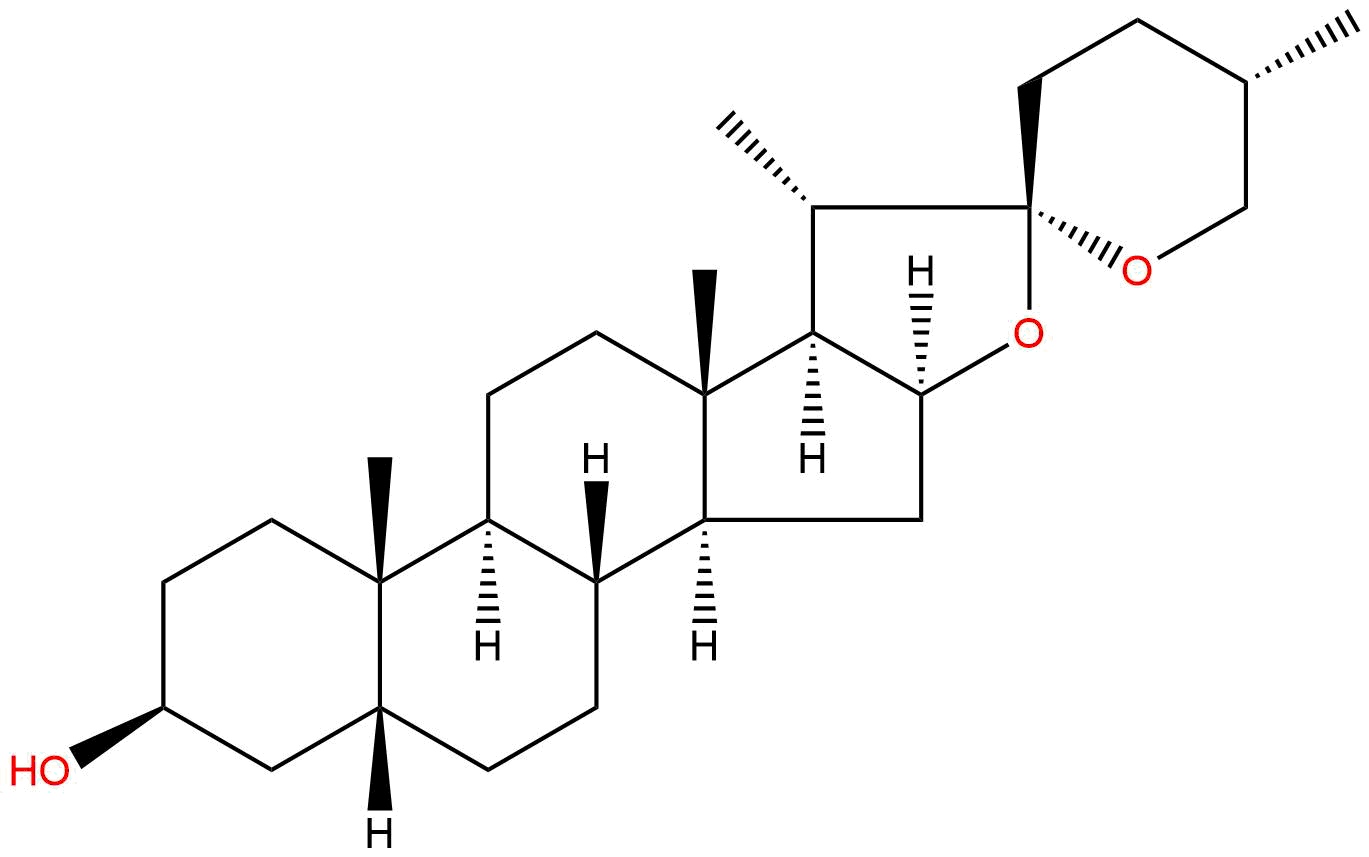


Synonym name: Parigenin
Catalogue No.: BP1257
Cas No.: 126-19-2
Formula: C27H44O3
Mol Weight: 416.646
Botanical Source: Radix sarsaparilla (sarsaparilla root)
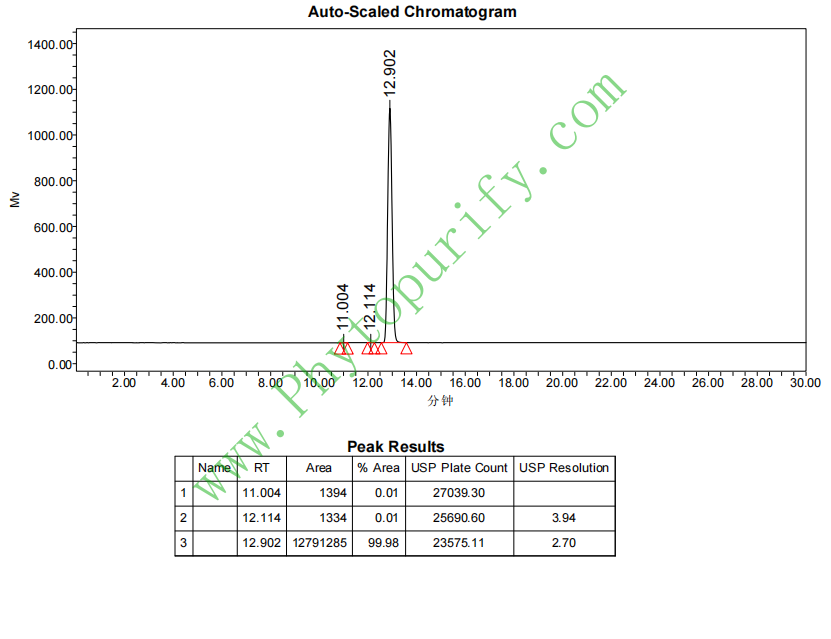
Purity: 95%~99%
Analysis Method: HPLC-DAD or/and HPLC-ELSD
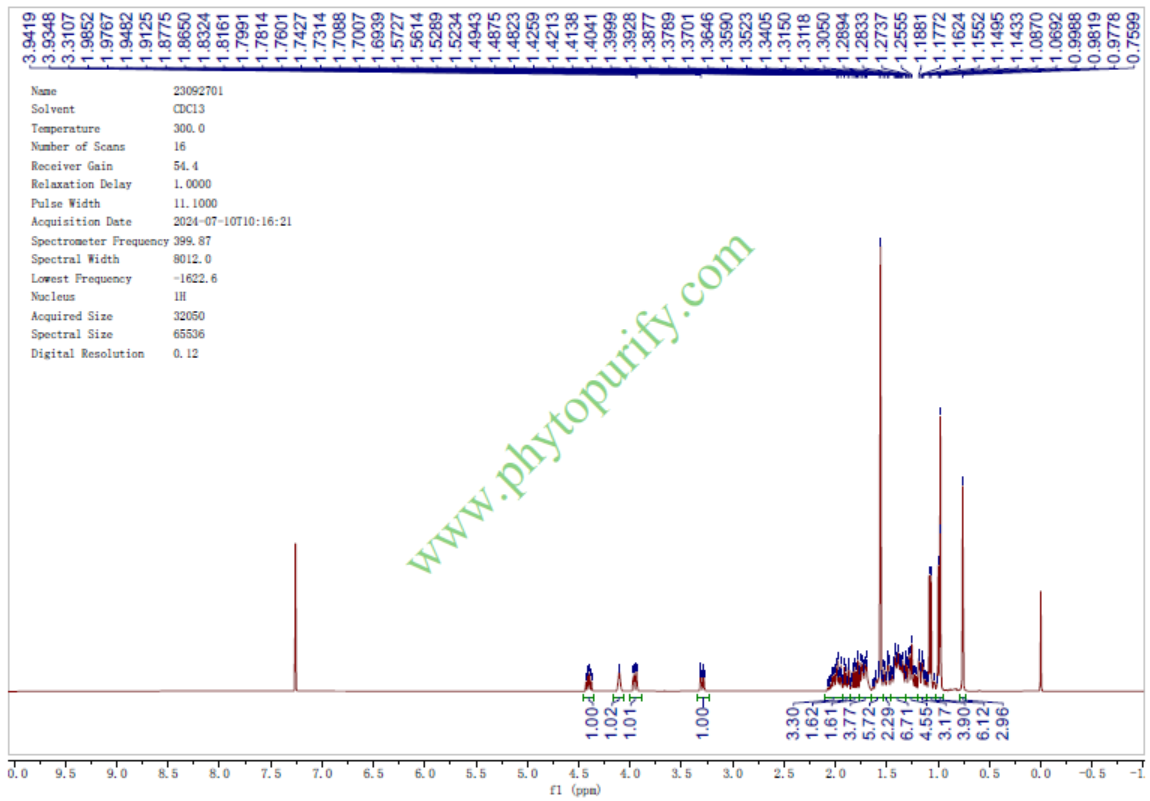
Identification Method: Mass, NMR
Packing: Brown vial or HDPE plastic bottle
Can be supplied from milligrams to grams, up to kilograms.
Inquire for bulk scale.
Description:
Sarsasapogenin is a steroidal sapogenin, that is the aglycosidic portion of a plant saponin. It is named after sarsaparilla (Smilax sp.), a family of climbing plants found in subtropical regions. It was one of the first sapogenins to be identified, and the first spirostan steroid to be identified as such. The identification of the spirostan structure, with its ketone spiro acetal functionality, was fundamental in the development of the Marker degradation, which allowed the industrial production of progesterone and other sex hormones from plant steroids.
Sarsasapogenin is unusual in that it has a cis-linkage between rings A and B of the steroid nucleus, as opposed to the more usual trans-linkage found in other saturated steroids. This 5β configuration is biologically significant, as a specific enzyme – sarsasapogenin 3β-glucosyltransferase – is found in several plants for the glycosylation of sarsasapogenin. The (S)-configuration at C-25 is also in contrast to other spirostan sapogenins: the epimer with a (25R)-configuration is known as smilagenin.
Sarsasapogenin has been used as a starting material for the synthesis of other steroids. It has also attracted pharmaceutical interest in its own right, and is found in the rhizome of Anemarrhena asphodeloides, called zhī mǔ (知母) in traditional Chinese medicine, from which it is extracted commercially.
Sarsasapogenin and its C-25 epimer smilagenin lowered blood sugar and reversed diabetic weight gain in experiments within mice with a mutant diabetes gene (db). Both steroids also halted the decline in muscarinic acetylcholine receptors (mAChRs) in animal models of Alzheimer's disease. In both cases, the effects seem to be specific to the 5β-configuration, the cis-linkage between rings A and B, as diosgenin (with a Δ5 double bond which can be hydrogenated in the body) had much lower anti-diabetic activity (and no significant effect on mAChRs) while tigogenin (the 5α-epimer of smilagenin) showed no effect at all in either study.
HPLC of Sarsasapogenin
HNMR of Sarsasapogenin
Storage conditions:Short-term storage at 2~8℃, long-term storage at -20 ~ -80℃
Sarsasapogenin (CAS number: 126-19-2) is an important steroidal sapogenin, mainly isolated from the traditional Chinese medicine Anemarrhena asphodeloides Bunge. As a typical steroid skeleton compound in natural products, Anemarrhena saponins have attracted much attention due to their diverse biological activities. In recent years, with the deepening of natural drug research, Anemarrhena asphodeloides saponins have shown broad application potential in many pharmacological effects such as anti diabetes, anti-oxidation, anti-cancer and anti-inflammatory. Its unique molecular structure endows it with high affinity for various biological targets, thereby regulating multiple cellular signaling pathways and exerting significant therapeutic effects. This article provides a systematic review of the chemical structure, sources, extraction methods, pharmacological activity, mechanism of action, pharmacological evaluation, and clinical application prospects of saponins from Anemarrhena henryi. The aim is to provide theoretical basis and reference for the in-depth research and drug development of this natural product.
Zhimu saponin is a typical steroidal saponin, with a molecular formula of C27H42O4 and a molecular weight of 416.6460. Its structural core is a steroid skeleton, consisting of four fused rings (A, B, C, D rings), with a typical steroid tricyclic six membered ring and one cyclic five membered ring structure. The molecule contains functional groups such as hydroxyl and ketone groups, which endow it with certain polarity and biological activity. The LogP value of Zhimu saponin is 5.4410, indicating its strong hydrophobicity and extremely low water solubility (0.0002), which has a significant impact on its absorption and distribution in vivo. Its polar surface area (TPSA) is 38.6900, indicating that the molecular polarity is moderate and conducive to binding with biomolecules. It is worth noting that Zhimu saponin has a high blood-brain barrier penetration ability, suggesting its potential role in central nervous system diseases. In addition, the hERG channel inhibition test result was negative, indicating a low risk of cardiac toxicity. The Ames test result was 0.0, indicating no significant genotoxicity and a good safety basis.
The saponins of Anemarrhena asphodeloides Bunge are mainly derived from the traditional Chinese medicine Anemarrhena asphodeloides Bunge, which is a perennial herbaceous plant in the Liliaceae family and widely distributed in northern China and the Korean Peninsula. Zhimu is widely used in traditional Chinese medicine for the treatment of clearing heat and purging fire, nourishing yin and moistening dryness, and has a long history of clinical use.
The process of extracting saponins from Ganoderma lucidum mainly includes the following steps:
In recent years, new technologies such as ultrasound assisted extraction, microwave-assisted extraction, and supercritical fluid extraction have also been applied to the extraction of saponins from Anemarrhena, improving extraction efficiency and purity.
Zhimu saponins have become a hot topic in natural medicine research due to their diverse biological activities. The existing research shows that it has significant pharmacological effects in anti diabetes, anti-oxidation, anti-cancer and anti inflammation.
Anemarrhena saponin can improve the blood sugar level of diabetes model animals by regulating insulin signaling pathway and glucose lipid metabolism. Its mechanism includes promoting pancreatic beta cell function, enhancing glucose uptake, and inhibiting gluconeogenesis. In vitro experiments have shown that saponins from Anemarrhena can activate the AMPK pathway, promote glucose metabolism, and alleviate insulin resistance.
Zhimu saponin has the ability to scavenge free radicals, significantly increasing intracellular antioxidant enzyme activity such as superoxide dismutase (SOD), glutathione peroxidase (GPx), etc., and reducing oxidative stress damage. Its antioxidant effect helps prevent and treat various diseases related to oxidative stress, such as cardiovascular disease, neurodegenerative diseases, etc.
Multiple in vitro and in vivo studies have shown that saponins from Anemarrhena chinensis have inhibitory effects on various cancer cells. It exerts anti-tumor effects by inducing cell apoptosis, blocking the cell cycle, inhibiting tumor cell migration and invasion, and other mechanisms. Research has found that saponins from Anemarrhena can regulate multiple signaling pathways, such as STAT3 and NF - κ B, inhibit the expression of tumor related genes, and slow down tumor growth.
Zhimu saponins have particularly outstanding anti-inflammatory properties. It can significantly inhibit the expression of inflammatory factors such as IL-6 and TNF - α, and alleviate the inflammatory response. Its anti-inflammatory activity has been validated in various inflammatory models, including arthritis, inflammatory bowel disease, and neuroinflammation.
The multiple pharmacological effects of Ganoderma lucidum saponins are attributed to their regulation of various molecular targets, especially in the field of anti-inflammatory mechanisms, which have been extensively studied. The main targets include:
The synergistic regulation of these targets enables the effective intervention of Anemarrhena saponins in inflammatory response and related pathological processes. In addition, Zhimu Saponin exerts its anti diabetes and anti-cancer effects by regulating cell apoptosis, oxidative stress and metabolic pathways.
The pharmacological evaluation of Zhimu saponins shows that they have certain potential for development. Its molecular weight is 416.6460, which meets the basic requirements of Lipinski's rule, but its high LogP value (5.4410) suggests strong hydrophobicity, which may affect its bioavailability and solubility. The extremely low water solubility (0.0002) is a major challenge in the development of its formulations, which needs to be improved through technologies such as nanocarriers, liposomes, or solid dispersions.
Zhimu saponin has a high blood-brain barrier penetration ability, indicating its potential advantages in the treatment of central nervous system diseases. The hERG channel inhibition test was negative and the Ames test showed no mutagenicity, indicating its good safety.
In terms of pharmacokinetics, existing research is relatively limited. In vivo experiments have shown that after oral administration, the absorption of Zhimu saponin is slow and widely distributed. Metabolism is mainly through the liver enzyme system, and excretion pathways are mainly through bile and urine. Its half-life is moderate and it has a certain degree of in vivo stability. In the future, further research is needed on its bioavailability, metabolic pathways, and drug interactions to provide data support for clinical applications.
Zhimu saponins have shown promising application prospects in various disease fields due to their multi-target and multi mechanism pharmacological properties. Its anti-inflammatory effect provides a new approach for treating chronic inflammatory diseases such as rheumatoid arthritis, inflammatory bowel disease, and neuroinflammation. Anti diabetes and antioxidant activity make it have potential value in the prevention and treatment of metabolic syndrome and related complications. The anti-cancer effect provides a foundation for the development of new natural anti-tumor drugs.
However, the clinical translation of Zhimu saponin still faces many challenges, including insufficient bioavailability due to low water solubility, metabolic complexity in vivo, and lack of systematic clinical trial data. In the future, it is necessary to strengthen its pharmacokinetic research, optimize the administration route and formulation technology, and conduct systematic preclinical and clinical studies to verify its safety and efficacy.
In addition, based on modern molecular biology and medicinal chemistry techniques, combined with structural modification and drug design, it is expected to develop derivatives with optimized structure, stronger activity, and lower side effects, promoting the transformation of Zhimu saponin into clinical drugs.
As a steroidal saponin derived from traditional Chinese medicine Anemarrhena, Zhimu saponins have important research value in the field of natural product pharmacology due to their diverse pharmacological activities and good safety. Its multiple mechanisms of anti diabetes, anti-oxidation, anti-cancer and anti inflammation provide a new therapeutic strategy for the prevention and treatment of many diseases. Although there are still certain limitations in the development of medicinal properties and clinical applications, with the continuous progress of extraction and purification technology, drug delivery systems, and molecular mechanism research, Zhimu saponin is expected to become an important candidate for future new natural medicines. Future research should focus on in-depth analysis of its mechanism of action, optimization of drug properties, and systematic clinical evaluation to promote its clinical translation and industrial application.
