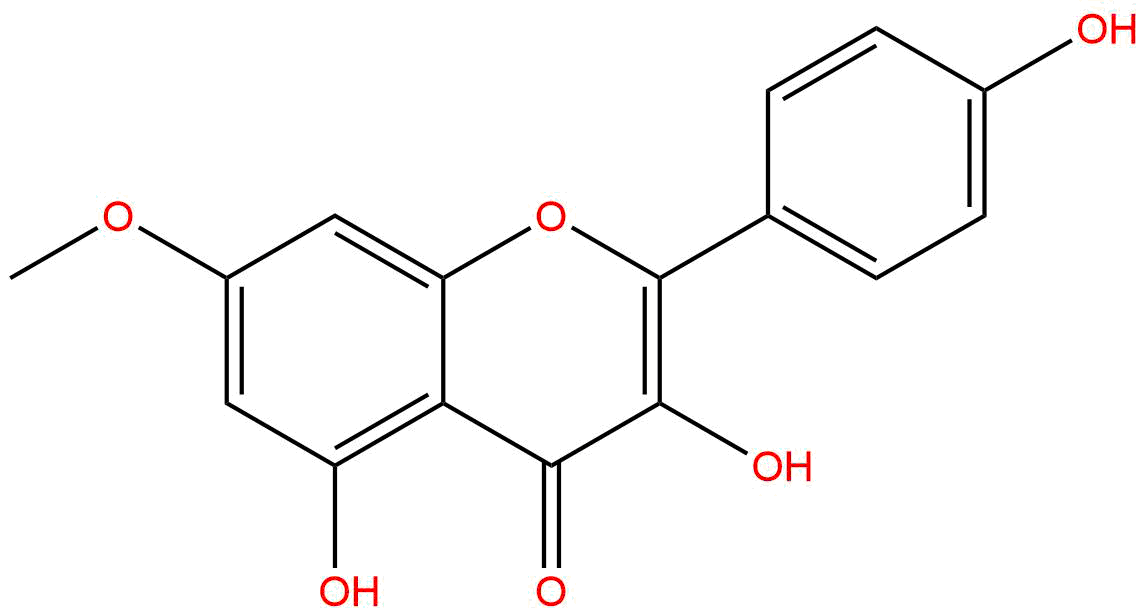


Product name: Rhamnocitrin
Synonym name:
Catalogue No.: SBP02530
Cas No.: 569-92-6
Formula: C16H12O6
Mol Weight: 300.266
Botanical Source:
Type of Compound: Flavonoids
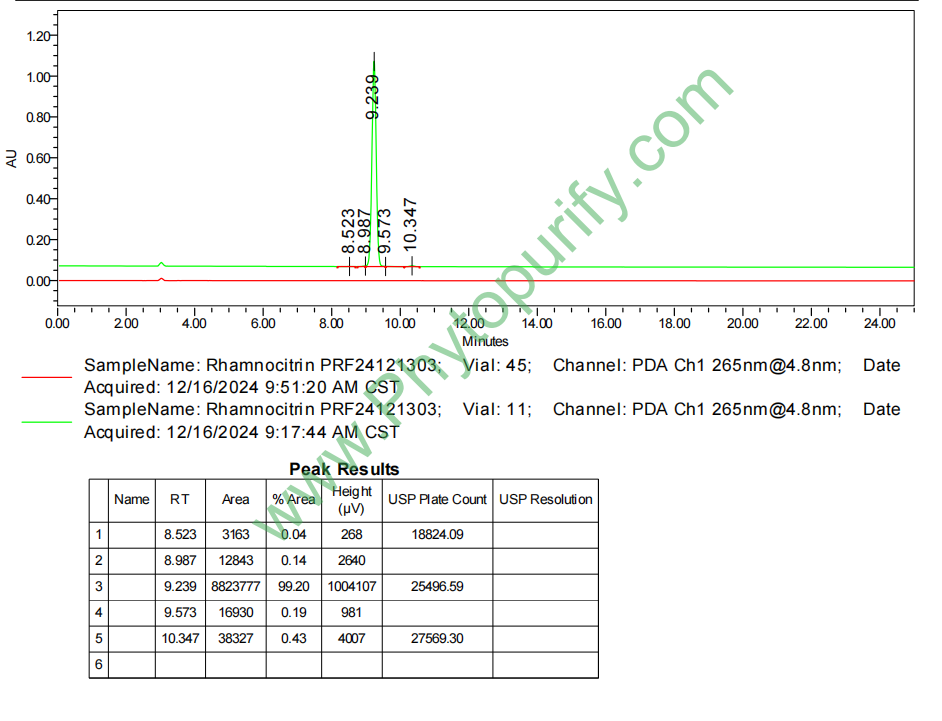
Purity: 95%~99%
Analysis Method: HPLC-DAD or/and HPLC-ELSD
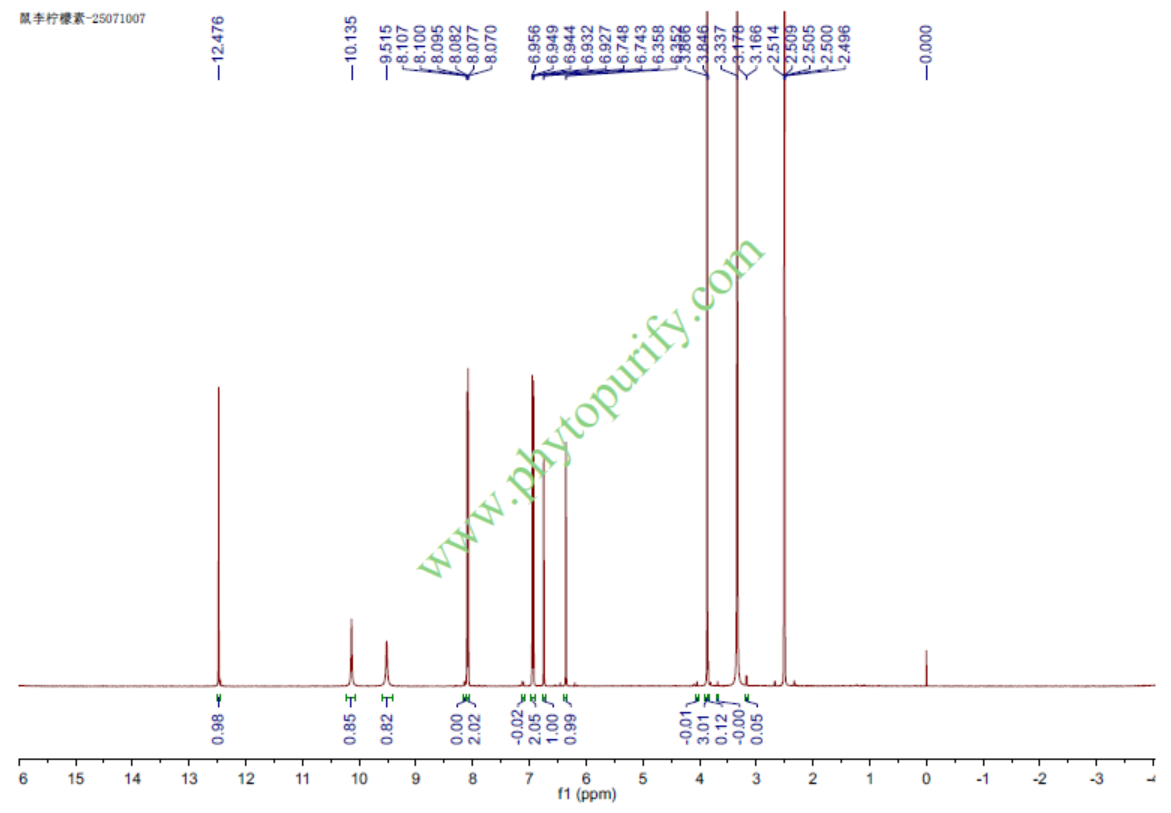
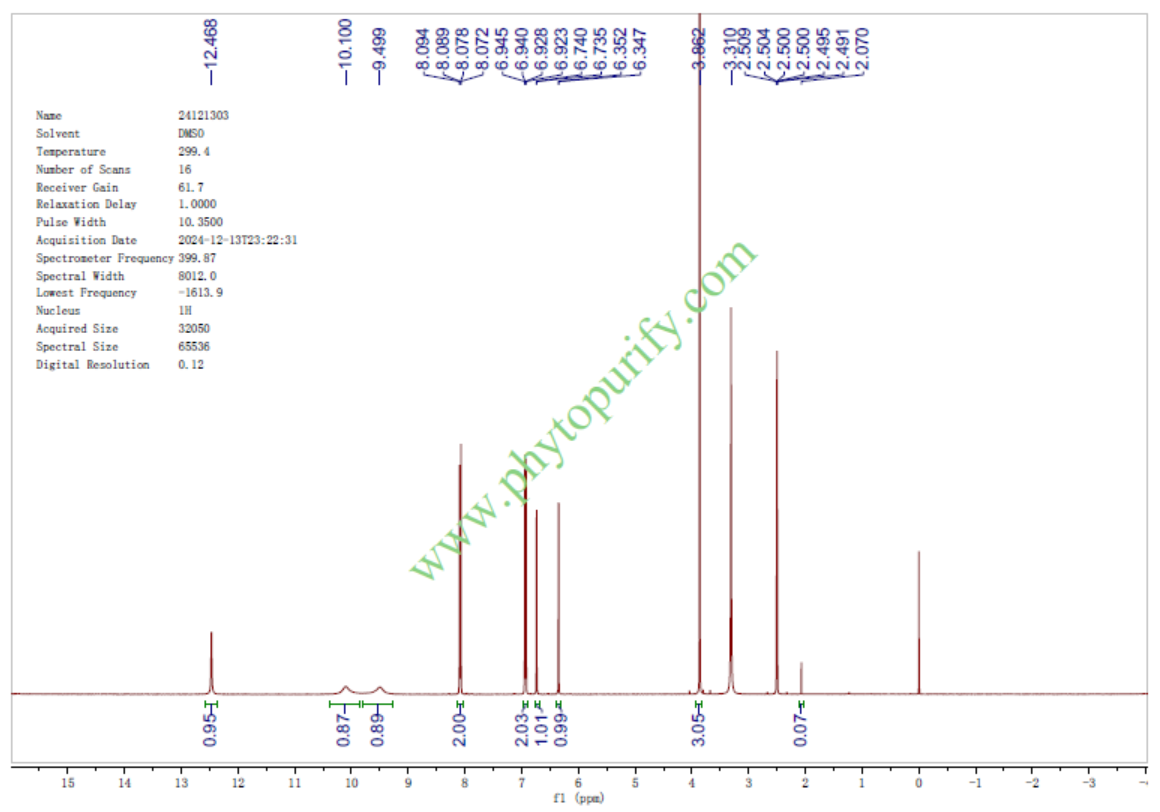
Identification Method: Mass, NMR
Packing: Brown vial or HDPE plastic bottle
Storage: Store in a well closed container, protected from air and light. Put into refrigerate or freeze for long term storage.
Whenever possible, you should prepare and use solutions on the same day. However, if you need to make up stock solutions in advance, we recommend that you store the solution as aliquots in tightly sealed vials at -20℃. Generally, these will be useable for up to two weeks.
The product could be supplied from milligrams to grams
Inquire for bulk scale.
For Reference Standard and R&D, Not for Human Use Directly.
HPLC of Rhamnocitrin
HNMR of Rhamnocitrin
HNMR of Rhamnocitrin
Storage conditions:Short-term storage at 2~8℃, long-term storage at -20 ~ -80℃
110.3800
2.1600
1.8900
Low
3.5400
null
No
No
No
No
No
Negative
null
Rhamnochrin (CAS number: 569-92-6) is a naturally occurring flavonoid compound that has received widespread attention in the field of pharmacology due to its significant anti-inflammatory and antioxidant activities. In recent years, with the increasing incidence of chronic inflammatory diseases and oxidative stress related pathological states, the research of natural products as potential therapeutic agents continues to increase. Due to its unique molecular structure and multi-target regulatory ability, resveratrol exhibits selective inhibitory effects on oxidative stress and inflammatory responses in vascular endothelial cells and nerve cells, making it an important molecular tool for studying anti-inflammatory, antioxidant, and neuroprotective mechanisms.
This review aims to systematically summarize the chemical structure and physicochemical properties, plant sources, and extraction methods of resveratrol, deeply analyze its pharmacological activity and mechanism of action, evaluate its pharmacological properties and pharmacokinetic characteristics, and explore its clinical application prospects in vascular endothelial related inflammatory diseases and neuroprotection, aiming to provide theoretical basis and research direction for subsequent basic research and clinical translation.
Lycopene belongs to the flavonoid class, with a molecular formula of C16H14O6 and a molecular weight of 290.26. Its chemical structure typically contains a flavonoid skeleton with multiple hydroxyl and methoxy substituents, endowing it with excellent biological activity. In the specific structure, there are a large number of hydroxyl groups (6 hydrogen bond acceptors) in resveratrol, which helps it form stable hydrogen bond interactions with various protein targets and regulate signaling pathways.
In terms of physical and chemical properties, the LogP value of resveratrol is 2.16, indicating its moderate lipid solubility, which is beneficial for membrane penetration and in vivo distribution. Its topological polar surface area (TPSA) is 110.38 Å ², indicating good solubility in polar environments, but low blood-brain barrier permeability (BBB is Low), which may limit its direct action in the central nervous system. Toxicological evaluation shows that resveratrol has no hepatotoxicity or cardiotoxicity, and does not inhibit hERG channels. The Ames mutagenicity test is negative, indicating its high safety and good potential for drug development.
Lycopene is mainly distributed in various plants, especially in Rhamnus spp. and lemon plants with abundant content. Its natural sources include the bark, leaves, and fruits of the Chinese chestnut tree. Plants containing such flavonoids in traditional Chinese medicinal materials are often used to treat inflammation and oxidative stress-related diseases.
In terms of extraction methods, organic solvent extraction combined with column chromatography separation technology is often used. The specific steps usually include:
In recent years, the application of ultrasound assisted extraction and microwave-assisted extraction technologies has improved extraction efficiency and purity, and reduced solvent usage, in line with the concept of green chemistry.
Lycopene exhibits significant anti-inflammatory effects, mainly by inhibiting the inflammatory signaling pathway and downstream pro-inflammatory cytokine expression. In vitro studies have shown that resveratrol can selectively inhibit inflammatory responses in vascular endothelial cells and nerve cells, reduce the release of pro-inflammatory cytokines such as IL-6 and IL-8, and decrease the expression of adhesion molecules ICAM-1 and VCAM-1, blocking the migration and adhesion of inflammatory cells.
In animal models, rhamnoletin has a protective effect on vascular endothelial related inflammatory diseases such as sepsis, acute lung injury and atherosclerosis, significantly reducing tissue damage and inflammatory reaction, suggesting that it has potential clinical application value.
As a natural antioxidant, resveratrol can efficiently scavenge free radicals. In DPPH free radical scavenging experiments, its IC50 was 28.38 mM, demonstrating excellent free radical scavenging ability. Its antioxidant effect is not only reflected in directly clearing free radicals, but also exerts its effects by regulating the intracellular antioxidant enzyme system.
Resveratrol upregulates the expression of heme oxygenase HO-1 and enhances the antioxidant defense ability of cells. At the same time, regulating the ERK/p38 MAPK signaling pathway promotes the expression of antioxidant enzymes such as SOD1, CAT, and GPX1, reduces oxidative stress damage, and protects cellular functional integrity.
In neural cell models, resveratrol has a significant protective effect against oxidative damage in PC12 cells. It inhibits oxidative stress-induced cell apoptosis, maintains intracellular calcium homeostasis, and reduces neuronal damage, indicating its potential application value in neurodegenerative diseases and cerebrovascular diseases.
The pharmacological effects of resveratrol involve multiple signaling pathways and molecular targets, forming a complex regulatory network.
Resveratrol upregulates miR-185 expression and inhibits STIM-1 (stromal interaction molecule 1) - mediated calcium pool manipulation calcium influx (SOCE). STIM-1, as a key regulatory factor of intracellular calcium signaling, its activity affects calcium ion homeostasis and downstream signal transduction. The inhibition of SOCE blocks the translocation of calcium dependent transcription factor NFATc3 (nuclear factor of activated T cells, cytoplasmic 3) to the nucleus, thereby reducing the transcription and expression of pro-inflammatory factors.
NFATc3 is a key transcription factor in inflammatory response, regulating the expression of various inflammatory mediators. Resveratrol inhibits NFATc3 nuclear translocation, reduces the production of pro-inflammatory cytokines such as IL-6 and IL-8, and alleviates inflammatory reactions.
Resveratrol regulates the ERK and p38 MAPK pathways, bidirectionally modulating cellular antioxidant and anti-inflammatory responses. By activating ERK/p38 MAPK, the expression of antioxidant enzymes is promoted, enhancing the cell's ability to resist oxidative stress; Simultaneously inhibiting pro-inflammatory signals and reducing the activity of adhesion molecules and inflammatory factors.
Lycopene promotes the activation of the NFE2L2 (nuclear factor erythroid 2-related factor 2, NRF2) signaling pathway, enhances the expression of intracellular antioxidant enzymes such as SOD1, SOD2, CAT, GPX1, and HMOX1, improves the ability of cells to clear reactive oxygen species (ROS), and reduces oxidative damage.
Lycopene may also regulate matrix metalloproteinases MMP1 and MMP3, affect extracellular matrix remodeling, participate in the regulation of inflammatory microenvironment, and further exert its anti-inflammatory and tissue protective effects.
The molecular weight of resveratrol is 290.26, which conforms to Lipinski's rule and is beneficial for oral absorption. The LogP value of 2.16 suggests that it has moderate lipid solubility, balancing water solubility and lipid solubility, which is beneficial for in vivo distribution. The TPSA is 110.38 Å ², indicating moderate polarity, but low blood-brain barrier permeability limits its direct action in the central nervous system.
Toxicological evaluation shows that resveratrol has no hepatotoxicity or cardiotoxicity, and does not inhibit hERG channels. Ames test is negative, indicating high safety. Its good safety lays the foundation for clinical application.
In terms of pharmacokinetics, existing research is relatively limited. It is speculated that the oral bioavailability of resveratrol is moderate, and its metabolism in vivo is mainly carried out through the liver enzyme system. Metabolites may involve hydroxylation and methylation modifications. Further in vivo pharmacokinetic studies are needed in the future to clarify its absorption, distribution, metabolism, and excretion characteristics, providing a basis for formulation development and clinical dosing regimens.
Due to its multi-target anti-inflammatory and antioxidant effects, resveratrol has broad clinical application potential.
Sepsis, acute lung injury and atherosclerosis are closely related to vascular endothelial inflammation and oxidative stress. Resveratrol has potential therapeutic value by inhibiting STIM-1/NFATc3 and regulating the MAPK pathway, reducing endothelial cell inflammation and oxidative damage. In the future, animal models and clinical samples can be combined to verify its efficacy and safety, and promote its clinical translation.
Although the blood-brain barrier permeability of resveratrol is low, its antioxidant and anti-inflammatory protective effects in neural cell models suggest that it can be used as an auxiliary neuroprotective agent or to improve brain accessibility through structural modification for the treatment of neurodegenerative diseases and cerebrovascular diseases.
Given its ability to regulate multiple signaling pathways, resveratrol may also be applied in fields such as chronic inflammation, autoimmune diseases, and tumor microenvironment regulation. Combining modern drug design techniques to develop its derivatives or combination therapy strategies will expand its clinical application scope.
As a natural flavonoid compound with significant anti-inflammatory and antioxidant activities, resveratrol has shown broad research and application prospects in the fields of vascular endothelial inflammation and neuroprotection due to its multi-target regulatory ability. Its good pharmaceutical properties and safety provide a solid foundation for clinical translation. In the future, it is necessary to strengthen its pharmacokinetic and in vivo efficacy research, combined with modern medicinal chemistry and molecular biology techniques, to promote the clinical application of resveratrol and its derivatives, and provide new treatment strategies for the prevention and treatment of inflammation related diseases.
