Introduction/Overview
Natural products have always been an important source of innovative drug discovery, among which phthalein compounds have attracted much attention due to their structural diversity and wide range of biological activities. Senkyunolide H, as a typical natural product of benzophenones, is one of the important active ingredients isolated from the traditional Chinese medicine Ligusticum chuanxiong Hort. Chuanxiong, as an essential medicine for promoting blood circulation, removing blood stasis, dispelling wind and relieving pain, has a long history of clinical application. Its modern pharmacological research reveals that it has multiple effects such as anti-inflammatory, antioxidant, neuroprotective, and cardiovascular protection. Yangchuan ligustilide H, as a key component of the volatile oil and lipid soluble parts of Ligusticum chuanxiong, has been proven to be one of the core substances exerting anti-inflammatory effects in recent years. Inflammation is the basic pathophysiological process for the body to deal with injury or infection, but uncontrolled chronic inflammation is the common pathological basis of many major diseases (such as atherosclerosis, neurodegenerative diseases, rheumatoid arthritis and cancer). Therefore, the search for efficient and low toxicity new anti-inflammatory drugs has always been a hot topic in pharmaceutical research. This article aims to systematically review the chemical properties, plant sources, extraction methods, pharmacological activities, especially its anti-inflammatory effects and multi-target mechanisms of action of ligustilide H. It also looks forward to its pharmacological properties and clinical application prospects, in order to provide comprehensive scientific references for the in-depth research and development of this compound.
Chemical structure and physicochemical properties
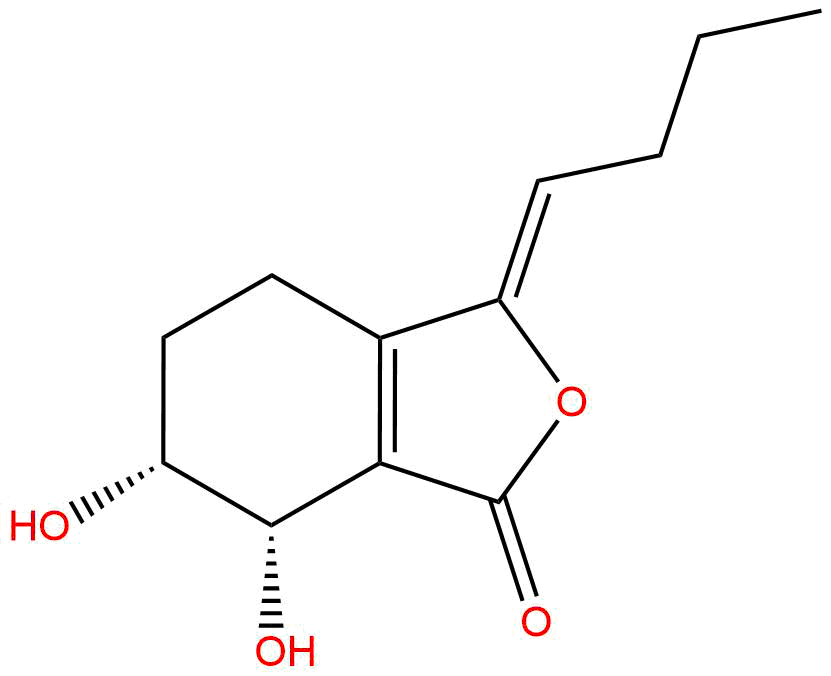
The chemical name of ligustilide H in Yangchuan is (3Z) -3-butenyl-1 (3H) - isobenzofuranone, and its CAS registration number is 94596-27-7. Structurally, it belongs to the phthalide class of compounds, with its parent nucleus being benzofuran-2-one. Specifically, its structural feature is the connection of a butenyl side chain through a double bond at the C-3 position of the phthalein parent nucleus, which is usually in the Z (cis) configuration. This unsaturated side chain is crucial for its biological activity.
Its molecular formula is C12H12O2 and its molecular weight is 224.2560 g/mol. The calculated lipid water partition coefficient (LogP) is approximately 1.0777, indicating that the compound has moderate lipophilicity, which facilitates its penetration of cell membranes but also ensures that it does not accumulate excessively in the body due to high lipid solubility. The topologically polar surface area (TPSA) is 66.7600 Å ², which is relatively small, further indicating its good membrane permeability. The predicted water solubility value is approximately 6.3427 mg/L, belonging to the range of slightly soluble to poorly soluble, which is consistent with its lipophilic characteristics and suggests that solubilization strategies may need to be considered in formulation development. Based on its physicochemical properties, it is predicted that ligustilide H has a high blood-brain barrier permeability, which provides potential advantages for its application in central nervous system related inflammatory diseases such as cerebral ischemia and Alzheimer's disease. In addition, preliminary pharmacological risk assessment showed a negative hERG inhibition risk and an Ames test predicted value of 0.0 (indicating no mutagenicity), providing early support for its relatively good safety.
Plant sources and extraction methods
Yangchuan ligustilide H mainly comes from the dried rhizomes of Ligusticum chuanxiong Hort., a plant in the family Apiaceae. Chuanxiong is mainly produced in Sichuan, Yunnan and other regions of China, and is a famous authentic Sichuan medicinal herb. Yangchuanxiong lactone H, together with other benzophenone compounds in Chuanxiong (such as Yangchuanxiong lactone A, I, ligustilide, etc.), constitutes the main active part of its volatile oil.
The main methods for extracting ligustilide H from Ligusticum chuanxiong are as follows:
1. Volatile oil extraction method The traditional steam distillation method can directly obtain the volatile oil of Ligusticum chuanxiong, in which ligustilide H is present, but the content is relatively low, and high temperature may cause some unstable components to decompose.
2. Organic solvent extraction method This is a more commonly used method in laboratory and industrial preparation. Usually, Chuanxiong powder is subjected to reflux extraction or cold soaking using low polarity organic solvents such as petroleum ether and ethyl acetate. Ethyl acetate is commonly used due to its good selectivity towards phthalein components. The crude extract was further separated and purified using various chromatographic techniques such as silica gel column chromatography, preparative thin-layer chromatography, high-performance liquid chromatography (HPLC), or high-speed countercurrent chromatography (HSCCC) to obtain high-purity ligustilide H.
3. Supercritical fluid extraction method The use of supercritical CO2 as an extractant has the advantages of low temperature, non toxicity, and adjustable selectivity, which can more efficiently extract heat sensitive phthalein components, and the resulting extract has fewer impurities, making it an advanced technology for obtaining high-quality ligustilide H.
The optimization of extraction process, such as solvent selection, temperature, pressure, time, and integration of subsequent separation and purification strategies, is the key to improving the yield and purity of ligustilide H.
Pharmacological activity research
Yangchuan ligustilide H exhibits various pharmacological activities, among which anti-inflammatory effects are the most prominent and extensively studied.
1. Anti inflammatory activity
Numerous in vitro and in vivo studies have confirmed the powerful anti-inflammatory effects of ligustilide H. In various acute and chronic inflammation models, ligustilide H has shown significant inhibitory effects.
* in vitro model In the lipopolysaccharide (LPS) - induced mouse macrophage (RAW264.7) inflammation model, ligustilide H can dose dependently inhibit the excessive production of nitric oxide (NO), prostaglandin E2 (PGE2), and various pro-inflammatory cytokines (such as TNF - α, IL-6).
* In vivo model In the mouse ear xylene induced inflammation model, carrageenan induced paw swelling model, and cotton ball induced chronic inflammation model, oral or intraperitoneal administration of ligustilide H can significantly reduce tissue swelling and inflammatory exudation, and its effect is comparable to some classic nonsteroidal anti-inflammatory drugs.
2. Neuroprotective activity
Relying on its anti-inflammatory and antioxidant properties, ligustilide H has shown protective effects in neurological disease models. Research suggests that it has an improving effect on focal cerebral ischemia/reperfusion injury, reducing the area of cerebral infarction and alleviating neurological deficits. Its mechanism is closely related to the inhibition of neuroinflammation mediated by excessive activation of microglia.
3. Cardiovascular protective activity
The traditional function of Chuanxiong is to promote blood circulation and remove blood stasis. Yangchuan ligustilide H, as its active ingredient, has been proven to have anti platelet aggregation, vasodilation, and microcirculation improving effects. In the myocardial ischemic injury model, it also exhibits a certain protective effect, which may be related to reducing the inflammatory response of myocarditis.
4. Other activities
In addition, studies have reported that ligustilide H has certain antioxidant, analgesic, and anti-tumor activities, which are often intertwined with its core anti-inflammatory mechanism.
Mechanism of action and molecular targets
The anti-inflammatory effect of ligustilide H in Yangchuan is not achieved through a single pathway, but involves a complex multi-target regulatory network, mainly targeting key nodes in the inflammatory signaling pathway. The known related targets include IL-6, STAT3, CASP1, TRPV1, PTGS1, TNF, TRPA1, NOS2, PTGS2, and NF - κ B.
- Inhibition of NF - κ B signaling pathway NF - κ B is a core transcription factor that regulates inflammatory responses. Yangchuan ligustilide H can inhibit the degradation of I κ B α and nuclear translocation of NF - κ B p65 subunit induced by LPS and other stimuli, thereby downregulating the expression of downstream target genes, including TNF - α, IL-6, IL-1 β, inducible nitric oxide synthase (NOS2), and cyclooxygenase-2 (PTGS2/COX-2). This is the main mechanism by which it reduces the production of pro-inflammatory cytokines and inflammatory mediators (NO, PGE2).
- Regulating the STAT3 signaling pathway STAT3 is another important pro-inflammatory and pro survival signaling pathway that often intersects with the NF - κ B pathway. Yangchuan ligustilide H can inhibit the phosphorylation and activation of STAT3 induced by cytokines such as IL-6, and block the expression of downstream inflammatory genes.
- Affects inflammasome activation The assembly and activation of inflammasomes (such as NLRP3) can lead to the activation of Caspase-1 (CASP1), which in turn promotes the maturation and secretion of IL-1 β and IL-18. Research has shown that ligustilide H may inhibit the activation of NLRP3 inflammasome, reduce the activation of Caspase-1, and thus suppress the release of IL-1 β.
- Adjusting ion channels Transient receptor potential vanillic acid subtype 1 (TRPV1) and transient receptor potential anchor protein subtype 1 (TRPA1) are key ion channels involved in pain perception and neurogenic inflammation. Yangchuan ligustilide H has been proven to be an effective antagonist of TRPA1 and can regulate the activity of TRPV1, which may be one of its direct targets for exerting analgesic and peripheral anti-inflammatory effects.
- Inhibition of cyclooxygenase (COX) activity Yangchuan ligustilide H has inhibitory effects on constitutive PTGS1/COX-1 and inducible PTGS2/COX-2, especially on COX-2, reducing the production of prostaglandin inflammatory mediators. This is partially similar to the mechanism of action of traditional nonsteroidal anti-inflammatory drugs, but may have better target selectivity.
In summary, ligustilide H forms a synergistic anti-inflammatory network by simultaneously acting on multiple targets such as transcription factors (NF - κ B, STAT3), enzymes (COX-2, iNOS), inflammasome components (CASP1), and ion channels (TRPA1/TRPV1). This may be the structural basis for its high anti-inflammatory efficacy and low potential side effects.
Evaluation of drug properties and pharmacokinetics
Based on the physical and chemical parameters mentioned earlier, ligustilide H exhibits good drug like properties. Its moderate LogP value and small TPSA are beneficial for oral absorption and cell infiltration. The prediction of high blood-brain barrier permeability provides unique advantages for its treatment of central nervous system diseases. The absence of hERG inhibition and mutagenicity warning provides preliminary positive signals for its safety assessment.
However, current research on the pharmacokinetics of ligustilide H-system in ligustilide is still relatively limited, which is a key link that must be addressed in future development. Based on its structural characteristics and research on similar compounds, it can be inferred that:
* absorb Due to its lipophilicity, there should be a certain degree of absorption after oral administration, but the absolute bioavailability needs to be determined through experiments. Formulation technologies such as nanoemulsions, liposomes, and cyclodextrin inclusion may help improve their solubility and absorption.
* distribution Predict that it has a large distribution volume and can be widely distributed in various tissues, especially lipid rich tissues and enter the central nervous system through the blood-brain barrier.
* Metabolism Phthalide compounds mainly undergo liver metabolism in the body, including epoxidation, hydroxylation, side chain oxidation, and subsequent glucuronic acid binding or sulfation reactions. It is crucial to clarify the main metabolic enzymes (such as CYP450 isoenzymes) and metabolites for evaluating drug interactions and toxicity.
* excretion Metabolites may be mainly excreted through the kidneys.
In the future, systematic ADME (absorption, distribution, metabolism, excretion) research is needed to clarify its pharmacokinetic characteristics in preclinical animal models such as rats and dogs, as well as in humans, providing a basis for dosage form design and administration plan formulation.
Clinical application prospects and prospects
The multi-target and potent anti-inflammatory properties of ligustilide H have demonstrated broad application prospects in the treatment of various inflammation related diseases.
- Inflammatory pain disease Such as migraine, arthritis (rheumatoid arthritis, osteoarthritis), neuropathic pain, etc. The combination of its TRPA1/TRPV1 antagonistic effect and anti-inflammatory effect may provide a novel analgesic strategy.
- Cardiovascular and cerebrovascular diseases: It is used for the prevention and treatment of atherosclerosis (inhibition of vascular inflammation), neuroprotection and repair after ischemic stroke (reduction of inflammatory reaction in the brain).
- Neurodegenerative diseases Alzheimer's disease, Parkinson's disease, etc. are all accompanied by significant neuroinflammation. The high BBB penetration ability of ligustilide H in Yangchuan makes it a potential candidate drug for intervening in such diseases.
- Other chronic inflammatory diseases Such as inflammatory bowel disease, chronic obstructive pulmonary disease, etc.
Looking ahead to the future, the research and development of ligustilide H in Yangchuan should focus on the following directions:
* In depth mechanism research Using chemical biology methods such as affinity fishing, molecular docking, and kinetic simulation to further accurately identify its direct target proteins and draw a more complete pharmacological action network map.
* Optimization of drug properties in the system Based on its poor water solubility, develop new drug delivery systems (such as nano formulations and prodrug strategies) to improve its bioavailability and targeting.
* Comprehensive preclinical evaluation Complete standardized pharmacological, pharmacokinetic, and toxicological (acute toxicity, long-term toxicity, reproductive toxicity, etc.) studies to provide solid data for its application for clinical research.
* Exploring the potential of combination therapy Studying its synergistic effect with existing anti-inflammatory drugs such as NSAIDs and biologics may help reduce the dosage and side effects of existing drugs.
Conclusion
Yangchuan ligustilide H, as a key active ingredient in traditional Chinese medicine Chuanxiong, is a natural benzophenone compound with multi-target anti-inflammatory effects. It exerts strong anti-inflammatory, neuroprotective, and cardiovascular protective effects by regulating multiple key signaling nodes such as NF - κ B, STAT3, inflammasome, COX/iNOS, and TRP ion channels. Its excellent drug like characteristics, especially its high blood-brain barrier permeability potential, provide unique advantages for its application in inflammation related diseases, especially in central nervous system diseases. Although a lot of work is still needed in the in-depth analysis of the mechanism of action and systematic evaluation of drug properties, ligustilide H is undoubtedly a highly valuable lead compound for development. With the deepening application of modern pharmaceutical technology, ligustilide H is expected to be successfully transformed from an active molecule in traditional Chinese medicine into an innovative drug for treating various major chronic inflammatory diseases, fully demonstrating the sustained vitality of natural products in drug discovery.