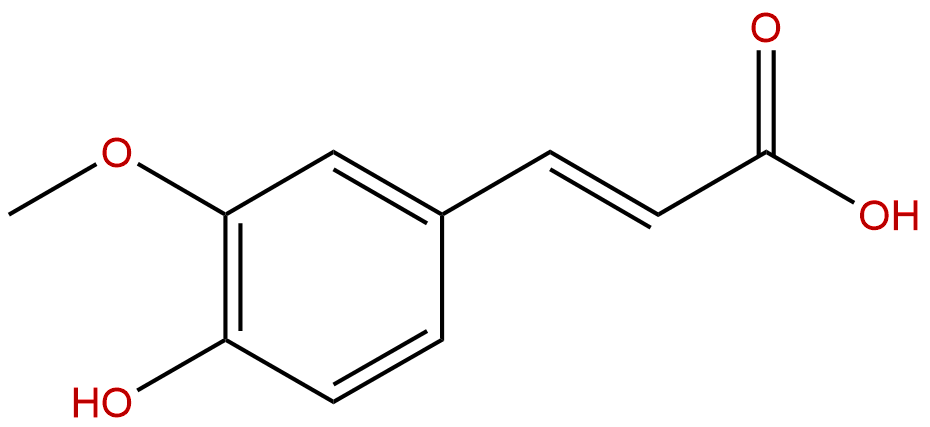


Product name: Ferulic Acid
Synonym name: Caffeic acid 3-methyl ether; (E)-form, 537-98-4
Catalogue No.: BP0586
Cas No.: 537-98-4
Formula: C10H10O4
Mol Weight: 194.186
Botanical Source: "Widely distributed in plants, first Ferula foetida (asafoetida). Metab. of a Penicillium sp. Found. by Bate-Smith in 33% of investigated dicotyledonous and 67% of monocotyledonous spp."
Physical Description: Powder
Type of Compound: Phenylpropanoids
Purity: 95%~99%
Analysis Method: HPLC-DAD or/and HPLC-ELSD
Identification Method: Mass, NMR
Packing: Brown vial or HDPE plastic bottle
The product could be supplied from milligrams to grams. Inquire for bulk scale.
We provide solution to improve the water-solubility of compounds, thereby facilitating the variety of activity tests and clinic uses.
For Reference Standard and R&D, Not for Human Use Directly.
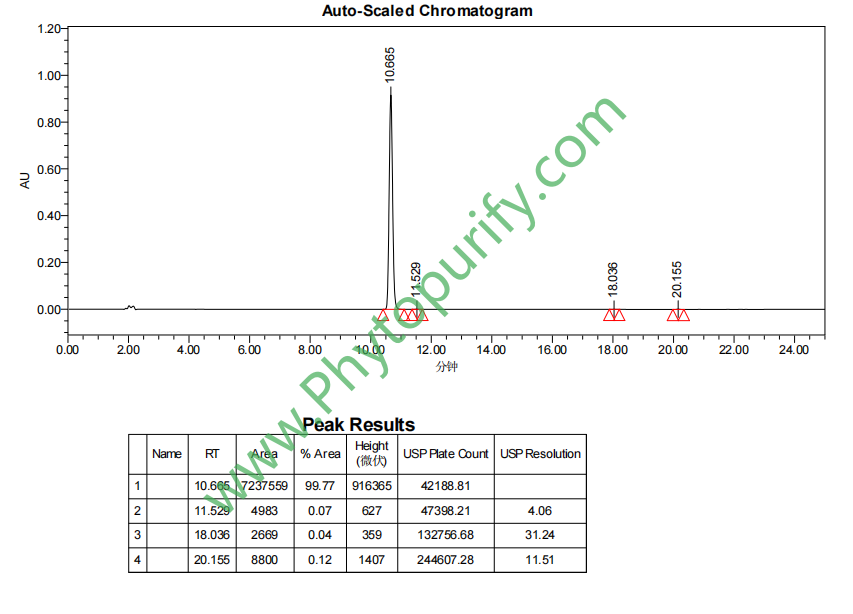
HPLC of Ferulic Acid
Storage conditions:Short-term storage at 2~8℃, long-term storage at -20 ~ -80℃
66.7600
1.8400
-.7651
1.6511
5.1758
11.5871
Low
85.9328
1.8691
Yes
No
No
No
Yes
No
0.0
Yes
Yes
Yes
Yes
Ferulic acid, also known as 4-hydroxy-3-methoxycinnamic acid, is a natural phenolic acid widely present in the plant kingdom. Its CAS number is 537-98-4, molecular formula is C10H10O4, and molecular weight is 194.1860 g/mol. As an important secondary metabolite in plants, ferulic acid is not only a key cross-linking molecule in plant cell wall structural components such as arabinoxylan, but also a hot topic in natural product pharmaceutical research due to its excellent biological activity. Traditionally, plants rich in ferulic acid, such as Ligusticum chuanxiong, have long been renowned in traditional Chinese medicine and are commonly used for promoting blood circulation, dispelling wind, and relieving pain. Modern pharmacological research has revealed that ferulic acid is far more than just an antioxidant. It exhibits powerful physiological functions such as cardiovascular protection, anti-inflammatory, and anti-tumor by acting on multiple key targets such as angiotensin-converting enzyme (ACE), endothelial nitric oxide synthase (NOS3), and vascular endothelial growth factor A (VEGFA). Especially its discovery as a fibroblast growth factor receptor 1 (FGFR1) inhibitor (IC50=3.78 μ M) has opened up new avenues for its application in metabolic diseases and cancer treatment. This article will systematically expound the scientific connotation and application prospects of ferulic acid, a natural product, from multiple dimensions such as chemistry, pharmacology, and medicinal properties.
The chemical structure of ferulic acid belongs to hydroxycinnamic acid derivatives, and its SMILES expression is COc1cc (/C=C/C (=O) O) ccc1O, which clearly demonstrates its core structure: a benzene ring (A ring) is replaced by methoxy (- OCH3) and hydroxyl (- OH) groups at positions 3 and 4, respectively, and is connected to a carboxyl group through an acrylic side chain (- CH=CH-COOH). The coexistence of adjacent methoxy and hydroxyl groups forms the structural basis for its strong electron donating ability and free radical scavenging activity.
From the analysis of pharmacological parameters, the molecular weight (MW) of ferulic acid is 194.19 g/mol, far less than 500, which meets the requirements of Lipinski's five rules for the molecular weight of oral drugs. The logarithm of its lipid water partition coefficient (LogP) is 1.84, indicating that it has moderate lipophilicity and is conducive to transmembrane absorption. However, its LogD (distribution coefficient at pH 7.4) is -0.77, indicating that at physiological pH, the molecule as a whole is more hydrophilic due to the dissociation of carboxyl groups. The topological polar surface area (TPSA) is 66.76 Å ², which is below the common limit of 140 Å ², indicating that its membrane permeability may be good. The water solubility is 1.65 mg/mL, which belongs to the category of slight solubility, which may affect its bioavailability to some extent. The permeability data of Caco-2 cells is 11.59 × 10 ⁻⁶ cm/s, which belongs to moderate permeability and indicates that its intestinal absorption potential is still acceptable. It is worth noting that its blood-brain barrier (BBB) penetration is marked as "low", which is related to its high polarity (TPSA value) and plasma protein binding rate (PPB) of up to 85.93%, indicating that ferulic acid is difficult to freely enter the central nervous system, and its pharmacological effects are mainly concentrated in the periphery.
Ferulic acid is widely distributed in nature and exists in various grains (such as rice bran, wheat, oats), fruits, vegetables, and traditional Chinese medicine. In medicinal plants,Ligusticum chuanxiong Hort It is a very important source for it. Chuanxiong is a plant belonging to the Umbelliferae family and the Ligusticum genus. Its dried rhizome is a famous herb for promoting blood circulation and removing blood stasis. It has been used in traditional Chinese medicine clinical practice for thousands of years to treat chest pain, angina pectoris (coronary heart disease angina), headache, menstrual disorders, rheumatism and other symptoms. Although Chuanxiong is not directly recorded in the "Shennong Bencao Jing", later classics such as the "Compendium of Materia Medica" highly praise it, believing that it can "ascend the head and descend the blood sea", vividly summarizing its therapeutic effects on the cardiovascular and cerebrovascular systems and gynecological blood stasis syndrome.
Modern plant chemistry research has confirmed that Chuanxiong contains abundant phthalates, alkaloids, and phenolic acids, among which ferulic acid and its derivatives (such as ferulic acid pine bark ester) are one of its main active ingredients. The use of traditional decoction allows ferulic acid to be effectively dissolved and absorbed by the human body, which explains the partial effects of Chuanxiong on promoting blood circulation, dilating blood vessels, and improving microcirculation on a material basis. Therefore, ferulic acid can be regarded as one of the modern scientific carriers of traditional pharmacological effects of Chuanxiong, connecting ancient experience with modern molecular pharmacology.
The pharmacological activity spectrum of ferulic acid is very broad, and its core mechanism revolves around antioxidant and Multi target regulation Expand, especially in Cardiovascular protection Outstanding performance in the field. The target information provided by the database (ACE, NOS3, AGTR1, VEGFA, EDN1) accurately outlines its network of action on the cardiovascular system.
4.1 Antioxidant and anti-inflammatory cornerstone effects
The phenolic hydroxyl group on the benzene ring of ferulic acid is a natural hydrogen donor, which can efficiently quench reactive oxygen species (ROS) such as superoxide anions and hydroxyl radicals, and interrupt the chain reaction of lipid peroxidation. This powerful antioxidant capacity is the foundation of all its physiological activities. Oxidative stress is the common soil for the occurrence and development of atherosclerosis, hypertension, diabetes and other cardiovascular diseases. By clearing free radicals, ferulic acid directly protects vascular endothelial cells from oxidative damage, while inhibiting the activation of inflammatory signaling pathways such as nuclear factor kappa B (NF - κ B), reducing the release of inflammatory factors (such as TNF - α, IL-6), and thus exerting anti-inflammatory effects.
4.2 Regulatory network targeting key cardiovascular targets
1. Inhibition of the renin-angiotensin system (RAS)ACE (angiotensin-converting enzyme) is a key enzyme in the RAS system, responsible for converting angiotensin I into the potent vasoconstrictor angiotensin II (Ang II). The inhibitory effect of ferulic acid on ACE is similar to that of Puli class antihypertensive drugs, which can reduce the production of Ang II, thereby relaxing blood vessels and lowering blood pressure. Meanwhile, another target of its action, AGTR1 (angiotensin II receptor type 1), is the main receptor for the action of Ang II. Inhibiting AGTR1 can block harmful effects such as vascular constriction, aldosterone secretion, and myocardial fibrosis caused by Ang II. This dual intervention of the RAS system's "enzyme receptor" constitutes one of its core mechanisms for lowering blood pressure and protecting the heart.
Enhancement of endothelial function and nitric oxide (NO) system NOS3 (endothelial nitric oxide synthase) is a key enzyme in the synthesis of NO by vascular endothelial cells. NO is the most important endogenous vasodilator and can inhibit platelet aggregation and vascular smooth muscle cell proliferation. Ferulic acid promotes the generation of NO by upregulating the expression or activity of NOS3, thereby improving endothelial dependent vasodilation function. This is crucial for reversing endothelial dysfunction, the initiating stage of cardiovascular disease.
Regulation of vascular remodeling factors:
4.3 Other important activities
* FGFR1 inhibitory effect As a new FGFR1 inhibitor, ferulic acid may interfere with FGF signaling pathway related to cell proliferation, differentiation and metabolism, which provides a theoretical basis for its application in the treatment of cancers driven by abnormal FGFR (such as breast cancer and lung cancer) and type 2 diabetes (FGF21 related).
* Antithrombotic and lipid-lowering effects Ferulic acid can inhibit platelet overactivation and aggregation through antioxidant activity, promotion of NO production, and possible regulation of cyclooxygenase. At the same time, studies have shown that it can reduce serum total cholesterol and low-density lipoprotein (LDL) levels and inhibit the formation of atherosclerotic plaque.
* Neuroprotection and anti diabetes Although BBB penetration is low, its peripheral antioxidant and anti-inflammatory effects can indirectly benefit the nervous system. In addition, its ability to improve insulin resistance and protect pancreatic beta cells is also related to antioxidant and regulatory signaling pathways.
In summary, the cardiovascular protective effect of ferulic acid is not achieved through a single target, but through a synergistic network:Inhibiting the vasoconstrictor system (ACE/Ang II/AGTR1, EDN1)+enhancing the vasodilator system (NOS3/NO)+basic antioxidant and anti-inflammatory effects+regulating vascular remodeling (VEGFA)This multi-target and mild regulation characteristic is precisely the manifestation of the overall regulatory advantages of many natural products through the "multi-component multi-target multi pathway" approach.
Based on the provided pharmacological parameters, we can systematically evaluate the potential of ferulic acid as a lead compound for drugs.
5.1 Evaluation based on Lipinski's Rule of Five:
1. Molecular weight (MW)<500 (194.19):Comply with。
2. LogP < 5(1.84):Comply with。
3. Number of hydrogen bond donors (HBDs): one carboxyl group and one phenolic hydroxyl group, totaling 2 (<5):Comply with。
4. Number of hydrogen bond acceptors (HBA): 4 (2 hydroxyl oxygen, 1 methoxy oxygen, 1 carboxyl carbonyl oxygen) (<10):Comply with。
Ferulic acid fully satisfies all four conditions of Lipinski's five rules, indicating its good oral absorption potential.
5.2 Analysis of Other Key Medicinal Parameters:
* Absorption and distribution Moderate LogP and TPSA, moderate Caco-2 permeability (11.59), and effective permeability (Peff: 5.18) all support its oral bioavailability. However,High plasma protein binding rate (PPB: 85.93%) It is a prominent feature. High PPB can reduce the concentration of free drugs in the blood, which may weaken their immediate efficacy, but at the same time, it may also prolong their half-life.Low BBB penetration This limits its application in the treatment of central nervous system diseases, but for its main battlefield - the peripheral cardiovascular system, this may actually reduce potential central side effects.
* Metabolism and toxicity:
* safety The AMES test result is 0.0, indicating no mutagenicity in this testing system. If hERG channel inhibition is set to 'no', it means that its risk of inducing QT interval prolongation and apical torsion ventricular tachycardia is low, which is a very important cardiac safety advantage. Skin sensitization (Skid_Sens) and respiratory sensitization (Resp_Sens) are both "no", and phototoxicity (Photo_tox) is "none", further supporting its good safety.
* Potential liver injury signals The data shows that serum alkaline phosphatase (Ser_LK), gamma glutamyltransferase (Ser_GGT), aspartate aminotransferase (Ser_ST), and alanine aminotransferase (Ser_LT) indicators are all marked as "yes", indicating that under specific experimental conditions (such as high doses), ferulic acid may affect liver function indicators or cause reversible elevation of liver enzymes. This provides important warnings for liver toxicity monitoring in preclinical and clinical studies.
* Genotoxicity Chromosomal aberration testing indicates' present ', which is a potential risk point that requires high attention. Although AMES is negative, a positive chromosomal aberration suggests that it may cause genetic material damage through non direct genetic mutation mechanisms, such as interfering with DNA replication or repair. This will be a key toxicity barrier that must be thoroughly evaluated and eliminated in the process of advancing towards drug development.
5.3 Comprehensive evaluation:
Ferulic acid is present Oral absorption, basic safety (especially cardiac safety) Excellent performance in all aspects, fully meeting the basic requirements of drug like molecules. its Multi-target activity And clearly Cardiovascular protective effect It is its core advantage. However, its main challenge lies in:High protein binding rate may affect the strength of therapeutic efficacy, and more importantly Potential liver influence signals and risk of chromosomal aberrations The latter is the key bottleneck that determines whether it can move from a safe dietary supplement/natural product to a higher dose, more strictly regulated therapeutic drug.
At present, research on ferulic acid has been quite in-depth. At the level of basic research, its antioxidant, anti-inflammatory, cardiovascular protective, anti-tumor, neuroprotective and other activities have been confirmed by a large number of in vitro and animal experiments, and its mechanism of action is becoming increasingly clear. At the application level, ferulic acid has been widely used as an active ingredient due to its excellent antioxidant and photoprotective properties cosmetics Industry (whitening, anti-aging, sunscreen enhancers). In food industry In China, it has been approved as an antioxidant to prevent oil rancidity. In pharmaceutical field It mainly serves as Auxiliary ingredients of prescription drugs or health products(Often used in combination with vitamin C, vitamin E, etc. to exert synergistic antioxidant effects), or present in standardized extracts of traditional Chinese medicine such as Chuanxiong.
Looking ahead to the future, the research and application of ferulic acid may have the following directions:
1. Structural modification and optimization Using it as the parent nucleus, chemical structural modifications (such as preparing ester prodrugs to improve lipid solubility and bioavailability, or synthesizing derivatives to enhance specific target activity and reduce potential toxicity) are carried out to develop new drugs with independent intellectual property rights, stronger efficacy, and higher safety.
2. In depth study of toxicity mechanisms and risk control It is necessary to conduct higher-level toxicology studies (such as in vivo micronucleus tests, long-term carcinogenicity tests, etc.) to clarify the clinical relevance, dose dependence, and mechanisms of its chromosomal aberration risk. Explore whether the elevation of liver enzymes is a reversible adaptive response or a true injury, and determine the safety window.
3. Drug delivery system development: New delivery technologies such as nanoparticles, liposomes, and microemulsions are used to improve their water solubility, improve their targeting (such as targeting atherosclerotic plaque), and reduce systemic exposure, so that some toxic risks may be avoided while enhancing the efficacy.
4. Exploring new indications in depth Exploring its therapeutic value in specific types of cancer and metabolic diseases based on its FGFR1 inhibitory activity. Meanwhile, its research in areas such as osteoporosis and skin fibrosis is also worthy of attention.
5. As a "drug sensitizer" or "multi-target therapy component"By utilizing its antioxidant and signaling pathway regulatory properties, it can be combined with existing chemotherapy drugs and targeted drugs to enhance efficacy, reduce drug resistance, or alleviate side effects.
In short, ferulic acid is a precious molecular template bestowed by nature. It originated from the traditional Chinese medicine Chuanxiong and has shown new vitality in modern pharmaceutical research due to its clear chemical structure, multi-target pharmacological effects, and good pharmacological basis. Despite facing toxicity challenges on the path towards innovative drugs, this natural gem is expected to be carved into even more brilliant modern drugs through the wisdom of modern pharmaceutical chemistry and toxicology, continuing to contribute to human cardiovascular health and even broader disease treatment.
