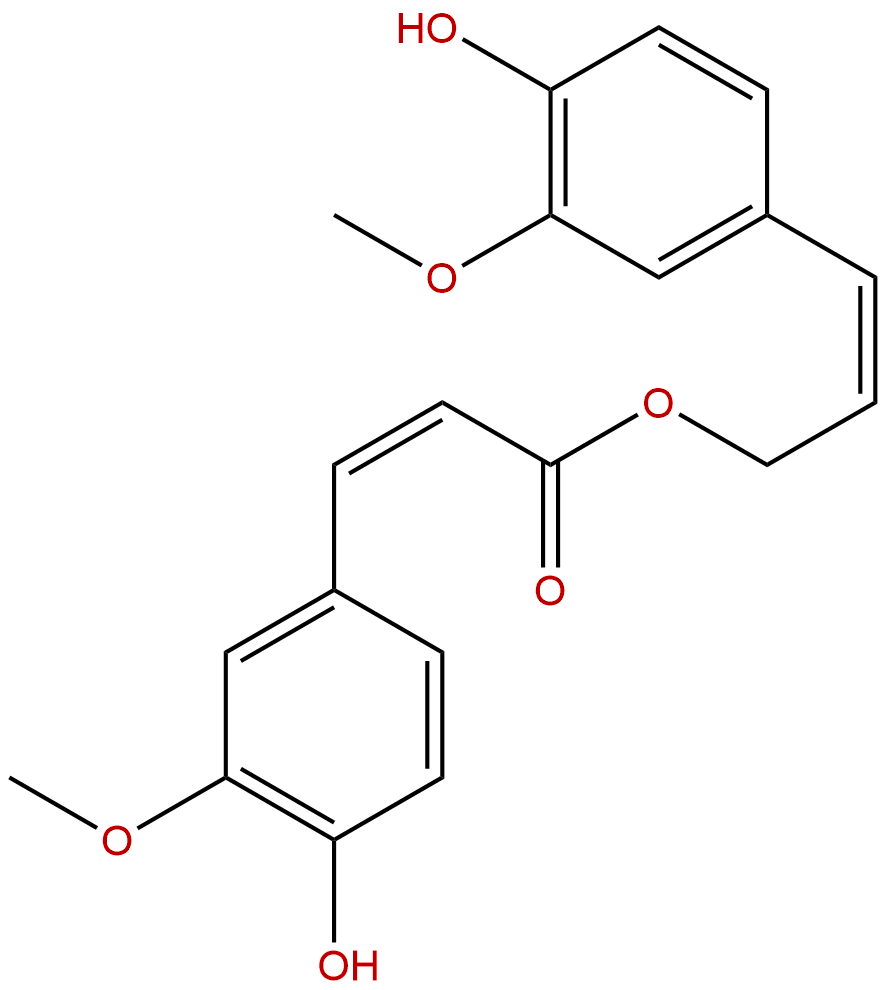


Product name: Coniferyl ferulate
Synonym name:
Catalogue No.: BP3100
Cas No.: 63644-62-2
Formula: C20H20O6
Mol Weight: 356.374
Botanical Source:
Physical Description:
Type of Compound:
Purity: 95%~99%
Analysis Method: HPLC-DAD or/and HPLC-ELSD
Identification Method: Mass, NMR
Packing: Brown vial or HDPE plastic bottle
The product could be supplied from milligrams to grams. Inquire for bulk scale.
We provide solution to improve the water-solubility of compounds, thereby facilitating the variety of activity tests and clinic uses.
For Reference Standard and R&D, Not for Human Use Directly.
Description:
Coniferyl ferulate can inhibit Glutathione S-transferase activity in a concentration-dependent manner and show a potential MDR reversal effect for antitumour adjuvant therapy.
References:
Planta Med. 2003 May;69(5):445-51.
Simultaneous analysis of seventeen chemical ingredients of Ligusticum chuanxiong by on-line high performance liquid chromatography-diode array detector-mass spectrometry.[Pubmed: 24058374 ]
Glutathione S-transferase (GST) is the key enzyme in multidrug resistance (MDR) of tumour. Inhibition of the expression or activity of GST has emerged as a promising therapeutic strategy for the reversal of MDR.
METHODS AND RESULTS:
Coniferyl ferulate (CF), isolated from the root of Angelica sinensis (Oliv.) Diels (Radix Angelicae sinensis, RAS), showed strong inhibition of human placental GST. Its 50% inhibition concentration (IC50) was 0.3 μ M, which was greater than a known GSTP1-1 inhibitor, ethacrynic acid (EA), using the established high-throughput screening model. Kinetic analysis and computational docking were used to examine the mechanism of GST inhibition by CF. Computational docking found that CF could be fully docked into the gorge of GSTP1-1. The further exploration of the mechanisms showed that CF was a reversible noncompetitive inhibitor with respect to GSH and CDNB, and it has much less cytotoxicity. Apoptosis and the expression of P-gp mRNA were evaluated in the MDR positive B-MD-C1 (ADR+/+) cell line to investigate the MDR reversal effect of CF. Moreover, CF showed strong apoptogenic activity and could markedly decrease the overexpressed P-gp.
CONCLUSIONS:
The results demonstrated that CF could inhibit GST activity in a concentration-dependent manner and showed a potential MDR reversal effect for antitumour adjuvant therapy.
Evid Based Complement Alternat Med. 2013;2013:639083.
Coniferyl Ferulate, a Strong Inhibitor of Glutathione S-Transferase Isolated from Radix Angelicae sinensis, Reverses Multidrug Resistance and Downregulates P-Glycoprotein.[Pubmed: 24058374 ]
Glutathione S-transferase (GST) is the key enzyme in multidrug resistance (MDR) of tumour. Inhibition of the expression or activity of GST has emerged as a promising therapeutic strategy for the reversal of MDR.
METHODS AND RESULTS:
Coniferyl ferulate (CF), isolated from the root of Angelica sinensis (Oliv.) Diels (Radix Angelicae sinensis, RAS), showed strong inhibition of human placental GST. Its 50% inhibition concentration (IC50) was 0.3 μ M, which was greater than a known GSTP1-1 inhibitor, ethacrynic acid (EA), using the established high-throughput screening model. Kinetic analysis and computational docking were used to examine the mechanism of GST inhibition by CF. Computational docking found that CF could be fully docked into the gorge of GSTP1-1. The further exploration of the mechanisms showed that CF was a reversible noncompetitive inhibitor with respect to GSH and CDNB, and it has much less cytotoxicity. Apoptosis and the expression of P-gp mRNA were evaluated in the MDR positive B-MD-C1 (ADR+/+) cell line to investigate the MDR reversal effect of CF. Moreover, CF showed strong apoptogenic activity and could markedly decrease the overexpressed P-gp.
CONCLUSIONS:
The results demonstrated that CF could inhibit GST activity in a concentration-dependent manner and showed a potential MDR reversal effect for antitumour adjuvant therapy.
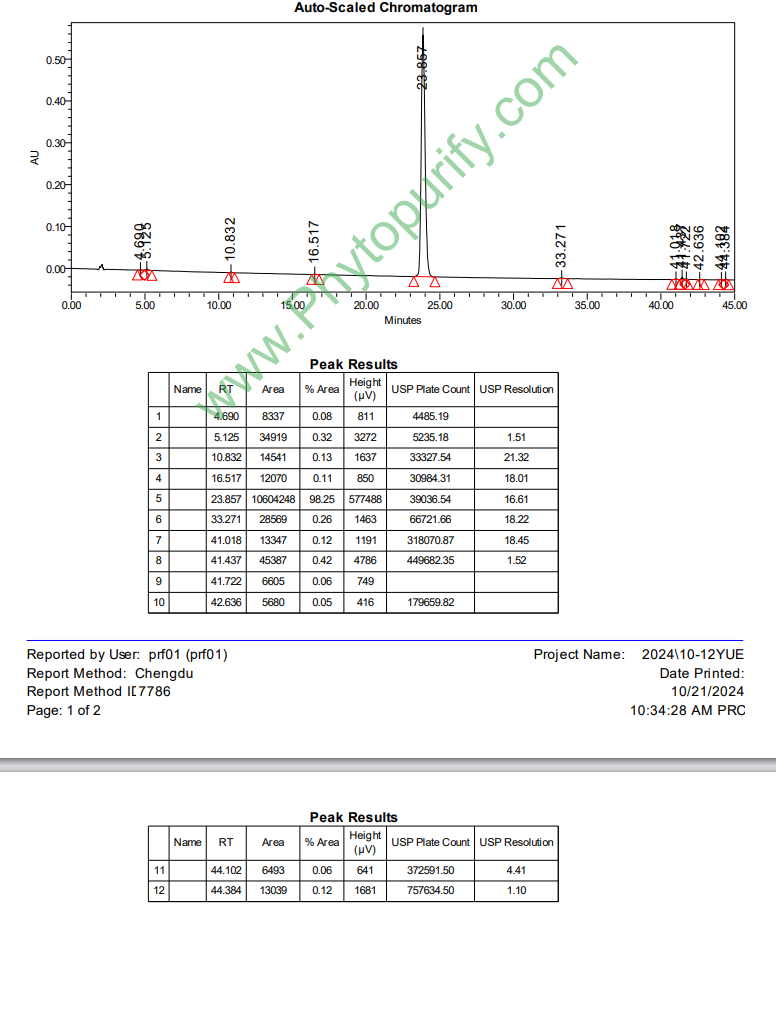
HPLC of Coniferyl ferulate
Storage conditions:Short-term storage at 2~8℃, long-term storage at -20 ~ -80℃
85.2200
3.3873
3.3751
.0455
6.4609
4.6482
High
91.9575
2.3364
Yes
Yes
Yes
No
No
No
0.0
No
Yes
Yes
Yes
Multidrug Resistance (MDR) and chronic inflammatory diseases are major challenges facing contemporary pharmacology and clinical medicine. In the field of cancer treatment, cross resistance of tumor cells to various chemotherapy drugs with different structures and mechanisms of action is one of the main reasons for treatment failure. At the same time, chronic diseases such as neurological and psychiatric disorders (such as depression), cardiovascular diseases, and intestinal inflammation require multi-target and high safety intervention strategies due to their complex pathological networks. Finding lead compounds from natural products that can overcome MDR or regulate complex disease networks has always been an important source of new drug development. Coniferyl ferulate (CF), a unique phenolic ester compound, exhibits remarkable multidimensional biological activity in this context.
Ferulic acid pine bark ester is not a widely existing simple phenolic acid, and its structure combines the active units of ferulic acid and pine bark alcohol. Early research revealed its potential as a potent inhibitor of glutathione S-transferase (GST), which is one of the key enzymes for detoxification and MDR production in tumor cells. Subsequent research has continuously expanded its pharmacological scope, from reversing tumor P-glycoprotein (P-gp) mediated MDR to exerting neuroprotective and antidepressant effects by intervening in the N-methyl-D-aspartate receptor (NMDAR) signaling pathway; From regulating gut microbiota to improving colitis, to reducing the damage of chemical toxins to the hematopoietic system, and even the potential regulatory effects on cardiovascular related targets. These findings outline a multifunctional molecular profile with the potential to kill multiple birds with one stone.
This article aims to provide a systematic review of the chemical properties, plant sources, multidimensional pharmacological activities, mechanisms of action, pharmacological properties, and clinical application prospects of ferulic acid pine bark ester, in order to provide a comprehensive academic perspective for the further development of this compound as a novel multi-target therapeutic agent.
Ferulic acid pine bark ester (CAS number: 63644-62-2), chemical name 4- [(2E) -3- (4-hydroxy-3-methoxyphenyl) prop-2-enoyl] oxy-3-methoxyphenylpropyl ester, molecular formula C20H20O6, molecular weight 356.37 g/mol.
Its structural core is composed of two parts connected by ester bonds: one end is a fragment of Ferulic acid, characterized by a phenylpropanoid skeleton, a 3-methoxy-4-hydroxy substitution mode, and a key acrylic double bond (usually in a trans configuration); The other end is a fragment of Coniferyl alcohol, which provides the structural unit of phenylpropanol and its 3-methoxy-4-hydroxy benzene ring substitution. This structure endows it with both the antioxidant and hydrogen bonding abilities of phenolic hydroxyl groups, the conjugated system and reactivity of acrylic double bonds, the specific enzymatic sensitivity of ester bonds, and the lipophilicity regulation brought by methoxy groups.
The drug properties related parameters calculated based on its structure show that the lipid water partition coefficient (LogP) is 3.39, indicating that it has moderate lipophilicity and is conducive to transmembrane transport. The topological polar surface area (TPSA) is 85.22 Å ², which falls within the common range of drug like molecules. Its low water solubility (about 0.0455 mg/mL) suggests that solubilization strategies may need to be considered in formulation development. It is worth noting that the predictive model shows a high blood-brain barrier (BBB) penetration ability, which is consistent with its central activity demonstrated in neurological and psychiatric disease models, and is a key advantage of it as a lead compound for central nervous system drugs. In addition, the key toxicity risk prediction results are positive: the hERG channel inhibition risk is "no", and the Ames mutagenicity test risk is 0.0, indicating a low risk of cardiac and genetic toxicity and a good safety starting point.
The distribution of ferulic acid pine bark ester in nature is relatively limited, mainly existing in a few traditional medicinal plants, which is related to its specific biosynthetic pathway. The main reported sources of plants currently include:
The extraction and separation method follows the conventional process of plant chemistry, but optimization is needed to address the potential instability of its ester bonds
* extraction process Alcohol extraction (such as methanol, ethanol) or aqueous alcohol solutions are often used for reflux extraction or ultrasound assisted extraction to fully extract the moderately polar phenolic acid ester components. Supercritical CO2 extraction technology also has potential applications due to its advantages of low temperature and no solvent residue, but precise control of entrainers is required to adjust polarity.
* Separation and purification After segmented extraction with solvents such as petroleum ether and ethyl acetate, the crude extract was mainly enriched in the ethyl acetate fraction. Further purification depends on a variety of chromatographic techniques: silica gel column chromatography is often used for preliminary separation, and combined with preparative thin layer chromatography (PTLC) or repeated gel LH-20 column chromatography for refining. Modern high-performance liquid chromatography (HPLC), especially preparative HPLC, has become a key technology for obtaining high-purity monomers. Typically, C18 reverse phase chromatography columns are used, with methanol water or acetonitrile water (containing a small amount of formic acid or acetic acid to adjust pH) as the mobile phase for gradient elution.
* Identification and content determination Structural identification mainly relies on mass spectrometry (MS, providing molecular weight and fragment information) and nuclear magnetic resonance spectroscopy (NMR, especially 1H-NMR and 13C-NMR, used to determine planar and stereo structures). Content determination is often carried out using high-performance liquid chromatography ultraviolet detection (HPLC-UV) or liquid chromatography-mass spectrometry (LC-MS/MS), which are more sensitive and specific methods.
Ferulic acid pine bark ester exhibits a wide range of pharmacological activities, covering multiple fields such as anti-tumor multidrug resistance, neuropsychiatric protection, anti-inflammatory and immune regulation, cardiovascular protection, and antibacterial effects.
1. Reversing tumor multidrug resistance and inducing apoptosis
This is one of the earliest extensively studied activities of ferulic acid pine bark ester. In the classic P-gp overexpressing multidrug resistant tumor cell model B-MD-C1 (ADR+/+), CF can effectively reverse its resistance to chemotherapy drugs such as Adriamycin. Its function is not limited to inhibiting the function of drug efflux pump P-gp, but can also downregulate the protein expression level of P-gp. Meanwhile, CF is a potent inhibitor of glutathione S-transferase (GST) with an IC50 of 0.3 μ M. GST is a phase II metabolic detoxifying enzyme that can catalyze the binding of glutathione with electrophilic chemotherapy drugs, promote their excretion, and is another important mechanism of MDR. By double inhibiting P-gp and GST, CF blocks the two key resistance pathways of tumor cells, thereby restoring the accumulation and toxicity of chemotherapy drugs in cells, ultimately inducing apoptosis of drug-resistant tumor cells.
2. Neuroprotection and antidepressant
Recent studies have found that CF has a significant protective effect in neurological disease models. In a chronic unpredictable mild stress (CUMS) - induced mouse depression model, oral administration of CF significantly improved depressive like behavior in mice. The mechanism involves the regulation of overactivation of the central glutamate system: CF can block the overactivation of N-methyl-D-aspartate receptors (NMDAR), especially receptors containing NR2B subunits, thereby inhibiting downstream calcium/calmodulin dependent protein kinase II (CaMKII) and mitogen activated protein kinase (MAPKs) signaling pathways. The inhibition of this pathway reduces the explosive production of reactive oxygen species (ROS), protects mitochondrial function, and thus inhibits neuronal apoptosis. In addition, CF can reshape the disrupted gut microbiota structure of depression model mice, increase the levels of beneficial metabolites such as short chain fatty acids, exert anti-inflammatory and neuroregulatory effects through the "gut brain axis" pathway, and synergistically improve symptoms of colitis and depression.
3. Anti inflammatory and immune regulation
The anti-inflammatory effect of CF is reflected in its improvement of colitis models. In addition to indirectly anti-inflammatory effects by regulating gut microbiota, its own structure endows it with the ability to clear free radicals and resist oxidative stress, which can directly inhibit the expression of pro-inflammatory factors such as TNF - α and IL-6. In the hematopoietic toxicity model, CF has been shown to alleviate the damage of toxins such as xylene to hematopoietic stem cells and progenitor cells (HSPCs) by targeting microsomal glutathione S-transferase 2 (MgSt2), protecting hematopoietic function, which is closely related to its regulation of cellular redox balance and detoxification ability.
4. Cardiovascular protective potential
Although there are few reports on direct animal models, network pharmacology and molecular docking analysis strongly suggest that CF has the potential of multi target cardiovascular protection. The potential targets predicted for its action include: inhibiting hydroxymethylglutaryl-CoA reductase (HMGCR, a statin target) to regulate blood lipids; Affects peroxisome proliferator activated receptor gamma (PPARG) to improve metabolism; Inhibiting angiotensin-converting enzyme (ACE) to regulate blood pressure; Regulating endothelial nitric oxide synthase (NOS3) to protect endothelial function; As well as inhibiting vascular cell adhesion molecule-1 (VCAM-1) and intercellular adhesion molecule-1 (ICAM1) to alleviate the inflammatory process of atherosclerosis. These predictions provide important theoretical directions for their application in the field of cardiovascular disease.
5. Antibacterial activity
CF exhibits certain antibacterial activity against Gram positive bacteria such as Bacillus subtilis and Staphylococcus aureus. The mechanism may be related to its disruption of bacterial cell membrane integrity, inhibition of bacterial enzyme systems, or interference with quorum sensing. Although the activity intensity may not be as strong as specialized antibiotics, as a naturally derived antibacterial ingredient, it still has value in combination therapy or specific local application scenarios.
The pleiotropy of ferulic acid pine bark ester is due to its interactions with multiple key biomolecules, forming a synergistic network.
Core direct targets:
Regulation of key signaling pathways:
Multi target network and cardiovascular protection Based on computational biology, CF may form a synergistic regulatory network through interactions with multiple cardiovascular disease-related target proteins such as SELP, HMGCR, PPARG, ACE, AKT1, ADRB2, KCNH2, NOS3, ICAM1, VCAM1, etc., exerting potential cardiovascular protective effects in multiple aspects such as lipid-lowering, hypotension, improvement of endothelial function, anti-inflammatory, and antithrombotic effects.
Although the in vitro activity of ferulic acid pine bark ester is excellent, its potential as a drug still requires systematic pharmacological evaluation.
Absorption, distribution, metabolism, excretion (ADME) characteristics:
Pre drug strategy and structural modification:
Given the easily hydrolyzed nature of ester bonds, CF may act as a "natural prodrug" in vivo, and some of its activity may be attributed to its metabolite ferulic acid. However, in order to prolong its action time and improve its targeting, structural modification is a reasonable research and development direction. For example, by preparing more stable amide analogues, making phenolic hydroxyl groups into prodrugs (such as esterification or etherification), or loading them into nanocarrier systems (such as liposomes, polymer micelles) to protect ester bonds, delay hydrolysis, and enhance accumulation at tumor or inflammatory sites.
Preliminary safety The existing computational predictions show no significant risk of hERG inhibition and genotoxicity, which is a positive signal. However, a comprehensive evaluation of its therapeutic window still needs to be conducted through systematic in vitro cytotoxicity experiments, acute and subacute animal toxicity experiments.
The multi-target and multi pathway action characteristics of ferulic acid pine bark ester have brought unique application prospects in multiple clinical fields, but also face challenges.
Potential application directions:
1. Tumor adjuvant therapy agents As a chemotherapy sensitizer, it is used in combination with conventional chemotherapy drugs such as doxorubicin and paclitaxel to overcome P-gp and/or GST mediated multidrug resistance in clinical tumor treatment, especially for refractory and recurrent tumors.
2. New type of antidepressant/neuroprotective agent In response to the problems of slow onset and significant side effects of existing antidepressants, CF may develop new antidepressants or dietary supplements with faster onset and fewer side effects by rapidly regulating NMDAR and the gut brain axis. Its potential in neurodegenerative diseases such as cerebral ischemia and Alzheimer's disease is also worth exploring.
3. Intestinal disease regulator Used for intestinal diseases such as ulcerative colitis and irritable bowel syndrome accompanied by dysbiosis and inflammation, it exerts therapeutic effects by regulating the microbiota and directly anti-inflammatory.
4. Prevention and Treatment of Cardiovascular Diseases As a multi target cardiovascular protective agent, it may be used for early intervention and adjuvant treatment of atherosclerosis and hypertension.
5. Hematopoietic system protectant Used to alleviate bone marrow suppression caused by chemotherapy or environmental toxins and protect hematopoietic function.
Challenges and future research directions:
1. Pharmacokinetic optimization How to solve the problem of fast metabolism and short half-life in the body is the key to drug development. It is necessary to conduct in-depth research on ADME in vivo and actively explore prodrug strategies and novel delivery systems (such as targeted nanoparticles and long-acting injection microspheres) to improve its bioavailability and duration of action.
2. Deep analysis of the mechanism of action Many predicted targets (especially cardiovascular targets) and pathways require more direct experimental evidence validation, such as the use of gene knockout, light affinity labeled probes, surface plasmon resonance, and other techniques to confirm direct interactions.
3. Attribution of Active Contribution It is necessary to clarify whether its pharmacological effects mainly come from the prototype compound CF, or its hydrolysis products ferulic acid or paclitaxel, or the synergistic effect of the two. This needs to be clarified by designing non hydrolyzable analogues for comparative studies.
4. System preclinical and clinical research After determining the optimal form and dosage of administration, standardized pharmacological and toxicological studies need to be conducted, and ultimately advanced to clinical trials to verify its safety and efficacy in humans.
Ferulic acid pine bark ester is a natural small molecule discovered from traditional medicinal plants, with a unique chemical structure and rich pharmacological activity. It is like a sophisticated "multi tasker", demonstrating regulatory abilities in multiple important pathological processes such as tumor multidrug resistance, neurological and psychiatric disorders, inflammation and immunity, and potential cardiovascular diseases. Its mechanism of action involves direct effects on key targets such as GST, NMDAR, and MgSt2, as well as systematic regulation of the CaMKII MAPKs signaling pathway and gut microbiota network. Although it still faces challenges such as metabolic stability on the path of drug development, its excellent preliminary activity, good blood-brain barrier penetration, and safety prediction make it a highly valuable lead compound for development. In the future, through interdisciplinary and in-depth research, especially pharmacokinetic modification and mechanism exploration, ferulic acid pine bark ester is expected to transform from an interesting natural molecule into a new therapeutic weapon for complex diseases, fully demonstrating the sustained vitality of natural products in modern innovative drug development.
