


Synonym name: Resibufogenin; Respigon
Catalogue No.: BP0289
Cas No.: 465-39-4
Formula: C24H32O4
Mol Weight: 384.516
Botanical Source: toad venom extract Ch'an Su (Bufo sp.)
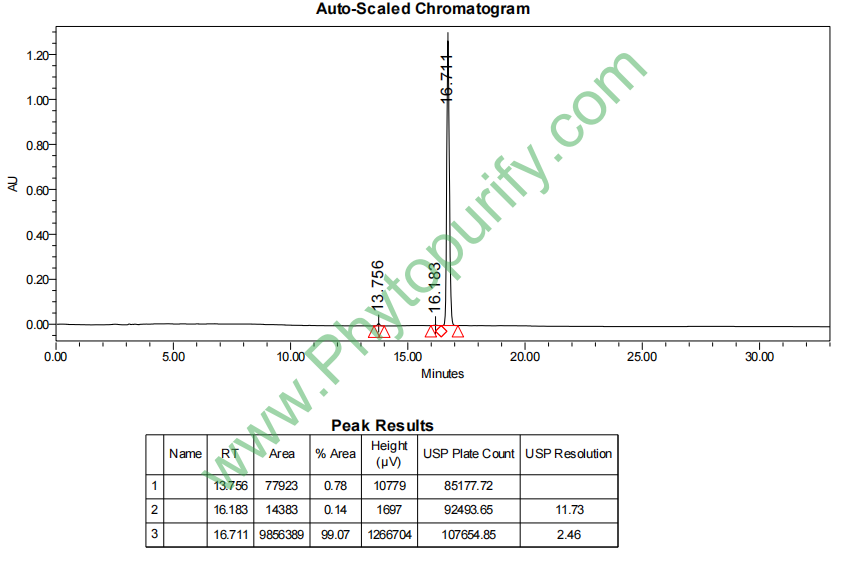
Purity: 95%~99%
Analysis Method: HPLC-DAD or/and HPLC-ELSD
Identification Method: Mass, NMR
Packing: Brown vial or HDPE plastic bottle
Can be supplied from milligrams to grams.
For Reference Standard and R&D, Not for Human Use Directly.
Inquire for bulk scale.
Description:
Resibufogenin is a cytotoxic steroid isolated from the Chinese drug ChanSu, which exhibits the anti-proliferative effect against cancer cells through the degradation of cyclin D1 caused by the activation of GSK-3β. Resibufogenin can inhibit rectifier potassium current ( I K ) and transient potassium current ( I A ), it has pathological effects on central nervous system. Resibufogenin corrects hypertension in a rat model of human preeclampsia, it not only prevents the advent of hypertension and proteinuria, but also the development of intrauterine growth restriction.
References:
Xenobiotica. 2013 May;43(5):479-85.
Isolation and identification of phase I metabolites of resibufogenin in rats.
1. Resibufogenin (1), a major bufadienolide of Chinese medicine Chan Su, had a wide range of pharmacological activities. In present work, the metabolism of 1 in male Sprague-Dawley rats was investigated by identifying the metabolites of Resibufogenin excreted in rat bile.
METHODS AND RESULTS:
2. Following an oral dose of 60 mg/kg resibufagenin, nine metabolites were isolated from bile of rats, and their structures were identified as 3-keto- Resibufogenin (2), 3-epi-Resibufogenin (3), 5β-hydroxy-3-epi-Resibufogenin (4), 1α, 5β-dihydroxy-3-epi-Resibufogenin (5), 3α, 5β, 14α, 15β-tetrahydroxyl-bufa- 20, 22-dienolide (6), 3α, 14α, 15β-trihydroxy-bufa-20, 22-dienolide (7), 3-epi- 5β-hydroxy-bufalin (8), 12α, 16β-dihydroxy-3-epi-Resibufogenin (9), and 5β, 16β-dihydroxy-3-epi-Resibufogenin (10), respectively, on the basis of widely spectroscopic methods including 2D-NMR technology. It is first time to describe the metabolites of 1 in vivo, and metabolites 5-7 and 9-10 are novel.
CONCLUSIONS:
3. On the basis of these identified metabolites, a possible metabolism pathway for 1 in rats has been proposed. This is the first systematic study on the phase I metabolites of Resibufogenin.
Hypertens Pregnancy. 2010 Jan;29(1):1-9.
Resibufogenin prevents the manifestations of preeclampsia in an animal model of the syndrome.
We have developed a rat model of preeclampsia which is based upon excessive volume expansion and includes hypertension, proteinuria and intrauterine growth restriction. In this model, the urinary excretion of the circulating steroid inhibitor of Na +/ K+ ATPase, marinobufagenin, is increased prior to the development of hypertension and proteinuria. An analogue of marinobufagenin, Resibufogenin, successfully treats the hypertension and proteinuria.
METHODS AND RESULTS:
We administered Resibufogenin early in pregnancy in this model, prior to the development of the syndrome. We found that Resibufogenin not only prevented the advent of hypertension and proteinuria, but also the development of intrauterine growth restriction.
CONCLUSIONS:
These results may have relevance to the human condition.
HPLC of Bufogenin
Storage conditions:Short-term storage at 2~8℃, long-term storage at -20 ~ -80℃
62.9700
3.9053
3.9048
.0071
4.7005
6.9956
High
89.6383
5.0725
No
No
No
No
Yes
No
0.0
No
No
No
Yes
Ester bufogenin, also known as ester bufogenin, is a natural active compound with a long history of application, and its CAS number is 465-39-4. As one of the core bufotoxin steroids isolated and identified from the traditional Chinese medicine Bufonis, it is not only the material basis for the traditional effects of Bufonis such as heart strengthening, pain relief, and anti-inflammatory, but also the key molecule for modern pharmacological research to reveal its multi-target and multi pathway anti-tumor activities. For a long time, cardiac glycoside drugs represented by digoxin have exerted positive inotropic effects by inhibiting Na+/K+- ATPase, while ester bufogenin, as a natural inhibitor of this enzyme, has pharmacological effects far beyond this. In recent years, with the deepening of molecular biology and oncology research, ester bufogenin has shown remarkable potential in anti-tumor treatment, especially for malignant diseases such as lung cancer. Its mechanism of action involves inducing apoptosis, inhibiting metastasis, regulating autophagy, and intervening in multiple key signaling pathways. This article aims to systematically review the chemical properties, sources, pharmacological activities, molecular mechanisms of action, pharmacological properties, and clinical application prospects of ester bufogenin, in order to provide comprehensive academic references for the in-depth development and transformation research of this natural product.
The ester bufadienolide is a C24 steroid derivative belonging to the bufadienolide family. Its basic skeleton is composed of a steroid core (cyclopentane dihydrophenanthrene) connected to an α - pyranone ring (hexagonal unsaturated lactone ring) at position C17, which is a key structural feature that distinguishes it from cardenolides, which are characterized by a pentagonal lactone ring. Its molecular formula is C24H32O4 and its molecular weight is 384.5160. The structure contains multiple oxygen-containing functional groups, including a hydroxyl group at the C3 position, a β - hydroxyl group at the C14 position, and an acetoxy group (ester bond) at the C16 position. Its name "ester bufotaxime" is derived from this acetyl ester structure. In addition, its B/C and C/D rings are both cis fused.
In terms of physical and chemical properties, the lipid water partition coefficient (LogP) of ester bufotoxin ligand is 3.9053, indicating its good lipophilicity. Its topological polar surface area (TPSA) is 62.97 Å ². Low water solubility (approximately 0.0071 mg/mL) is one of the main challenges it faces as a natural product in formulation development. This compound can penetrate biological membranes well, and its blood-brain barrier permeability is predicted to be "high", which is consistent with its reported central nervous system activity (such as respiratory excitation and analgesia). In the early safety screening, the hERG inhibition risk was negative, and the Ames mutagenicity test result was also negative (0.0), indicating a relatively low risk of cardiac toxicity (non hERG mediated) and genetic toxicity, but further in vitro and in vivo experiments are needed for verification.
The main source of ester toad venom ligand comes from the dried secretions secreted by the ear gland and skin gland of toads, such as the Chinese toad or the black eyed toad, which is the traditional Chinese medicine toad venom. Chansu is a mixture of various bufogenins, including ester bufogenins, as well as various active ingredients such as bufogenin, bufalin, and yuanhua bufogenin.
Its extraction and separation usually use organic solvent extraction combined with modern chromatographic techniques. The classic process is as follows: Dry toad venom powder is subjected to reflux extraction or ultrasound assisted extraction using organic solvents such as methanol, ethanol, or chloroform. Combine the extraction solutions and concentrate under reduced pressure to obtain the crude extract. The crude extract is often defatted with petroleum ether and extracted with chloroform or ethyl acetate to obtain the enriched fraction of bufogenin. Subsequently, preliminary separation was performed by silica gel column chromatography, with gradient elution using chloroform methanol or petroleum ether ethyl acetate systems in different ratios. The fraction rich in ester bufogenin can be further purified by preparative high-performance liquid chromatography, commonly using a reverse phase C18 column with methanol water or acetonitrile water as the mobile phase, to obtain high-purity monomer compounds. In recent years, preparation techniques such as high-speed countercurrent chromatography have also been applied to the separation and purification of such compounds due to their high recovery rate and the advantage of avoiding irreversible adsorption of solid adsorbents. Attention should be paid to the toxicity and standardization of the raw materials used in the extraction process to ensure the consistency and safety of the product.
The ester toad venom ligand has a wide and significant pharmacological activity, and its research has expanded from traditional cardiotonic effects to multiple modern medical fields such as anti-tumor, neuroprotective, anti-inflammatory, etc.
Heart strengthening and cardiovascular effects As a classic Na+/K+- ATPase inhibitor, ester bufogenin can increase the intracellular Na+concentration in cardiomyocytes, which in turn leads to an increase in intracellular Ca2+concentration through Na+/Ca2+exchangers, producing positive inotropic effects and enhancing myocardial contractility. Its effect is strong and rapid, but the treatment window is narrow, and excessive use can easily lead to toxic reactions such as arrhythmia.
Antitumor activity This is currently the most active field of research. A large number of studies have shown that ester bufogenin has significant inhibitory and pro apoptotic effects on various tumor cells, especially lung cancer, liver cancer, gastric cancer, colon cancer, etc. In lung cancer models, it can inhibit the growth of non-small cell lung cancer (NSCLC) and small cell lung cancer cells in a dose-dependent and time-dependent manner.
Central nervous system function Traditionally, it is believed to have respiratory excitation and analgesic effects. Modern research suggests that it may exert central effects by regulating neurotransmitters or related receptors. Its inhibition of Na+/K+- ATPase may also affect neuronal excitability.
Anti inflammatory and immune regulation The ester toad venom ligand exhibits certain anti-inflammatory activity, possibly by inhibiting the production of inflammatory factors (such as TNF - α, IL-6) and inflammatory signaling pathways (such as NF - κ B).
Other activities This also includes antiviral, antibacterial, and potential therapeutic effects for ulcers mentioned in the literature.
The anti-tumor mechanism of ester bufotaxime is complex and exhibits multi-target and multi pathway characteristics, especially in lung cancer research, involving the following key targets and pathways:
Core target: Na+/K+- ATPase This is its most classic target. Inhibition of this enzyme not only produces a cardiotonic effect, but recent studies have found that Na+/K+- ATPase can serve as a signal transduction scaffold, and its inhibition can trigger downstream signaling cascades such as Src/EGFR/ERK, ultimately affecting cell proliferation, apoptosis, and migration.
Inducing cell apoptosis:
Inhibition of cell proliferation and signal transduction:
Inhibit tumor invasion and metastasis:
Regulating oxidative stress and autophagy:
Other potential targets:
Although the pharmacological activity of ester bufotaxime is significant, its pharmacological development still faces challenges, and related pharmacokinetic studies are relatively limited.
The clinical application prospects of ester bufogenin are broad, but the path of transformation needs to be cautiously pursued.
Antitumor therapy, especially for lung cancer Given its multi-target anti-tumor mechanism, ester bufogenin is expected to be developed as a novel anti lung cancer drug for patients who are resistant to traditional chemotherapy or in advanced stages. The combination therapy strategy with key pathway inhibitors such as STAT3 and PI3K/Akt is worth exploring. Based on its ability to induce autophagy, the combination with autophagy inhibitors such as chloroquine may produce a synergistic effect.
Heart failure treatment Although its cardiotonic effect is clear, the risk of using it directly as a cardiotonic is high due to the narrow treatment window and toxicity issues. Future research could focus on developing derivatives with higher cardiac selectivity or achieving cardiac targeted drug delivery through formulation technology.
Neurological disorders Its high BBB permeability provides the possibility for treating central nervous system diseases such as neuropathic pain and ischemic stroke, but precise regulation of its bidirectional effects of neural excitation and inhibition is required.
Outlook and Research Direction:
As a natural active compound derived from the traditional Chinese medicine Chansu, the unique steroid lactone structure of ester bufogenin endows it with rich and powerful pharmacological activity. From traditional cardiac stimulants to star molecules in modern anti-tumor research, their value is constantly being re recognized and explored. Although its multi-target mechanism of action in fields such as lung cancer has shown great potential, inherent drug defects such as narrow therapeutic window, poor water solubility, and potential toxicity are major obstacles to its clinical application. Future research should adhere to the concept of "inheriting the essence, maintaining integrity and innovation", deeply integrate modern multidisciplinary technology, and overcome its existing limitations by clarifying the precise mechanism of action, carrying out reasonable structural transformation, developing intelligent delivery systems, and exploring optimized combination therapy. Only in this way can this ancient natural molecule be revitalized and ultimately developed into a new type of drug for treating major diseases such as lung cancer, contributing to the cause of human health.
