


Synonym name:
Catalogue No.: BP1487
Cas No.: 156980-60-8
Formula: C33H40O19
Mol Weight: 740.664
Botanical Source: Momordica grosvenorii and Siraitia siamensis; Luohanguo
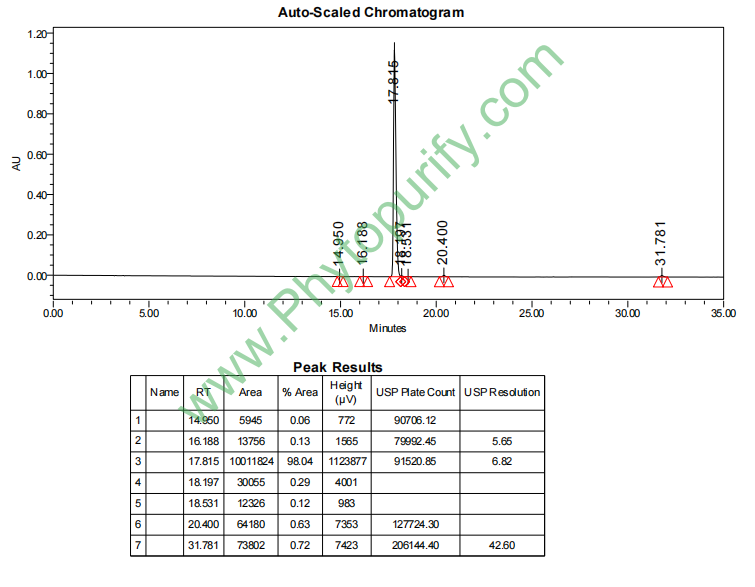
Purity: 95%~99%
Analysis Method: HPLC-DAD or/and HPLC-ELSD
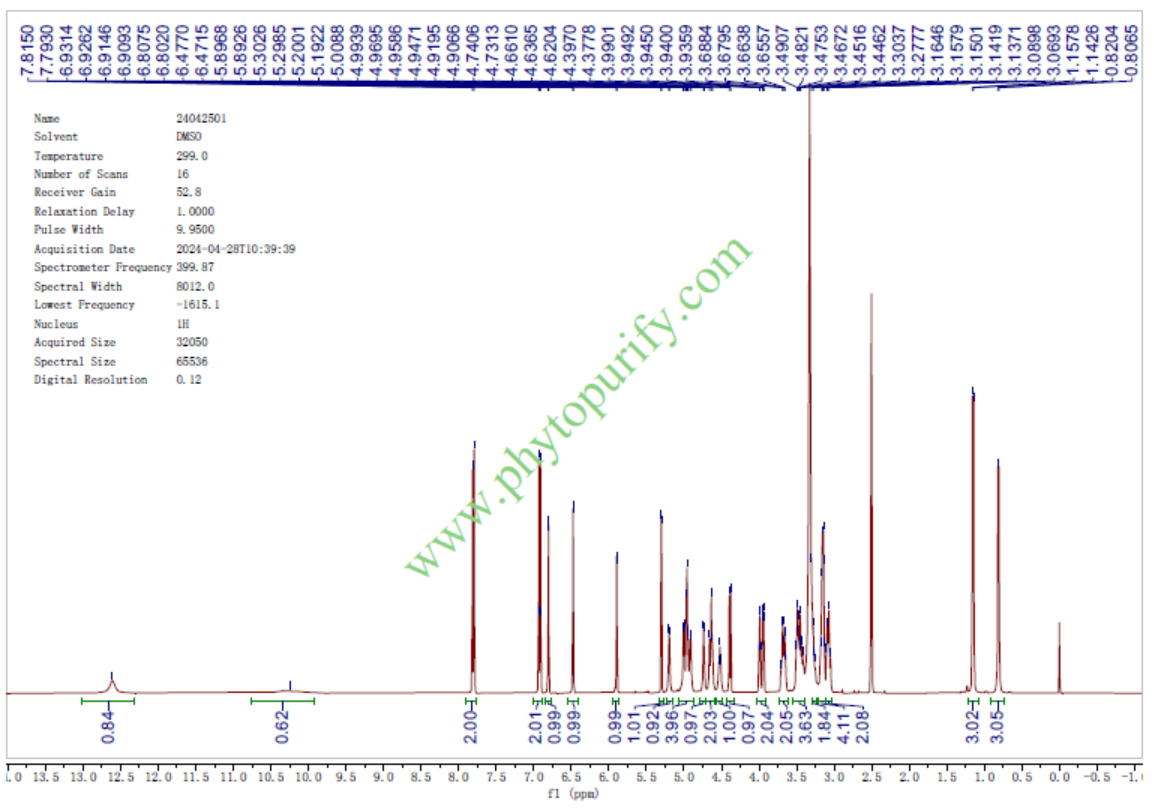
Identification Method: Mass, NMR
Packing: Brown vial or HDPE plastic bottle
Can be supplied from milligrams to grams. Inquire for bulk scale.
For Reference Standard and R&D, Not for Human Use Directly.
Description:
Grosvenorine exhibits good antibacterial and antioxidant activities, with its metabolites possessing more potent activities, intestinal bacteria play an important role in the gastrointestinal metabolism of grosvenorine and significantly affect its pharmacological activities.
References:
Chem Biodivers. 2015 Nov;12(11):1652-64.
The Gastrointestinal Tract Metabolism and Pharmacological Activities of Grosvenorine, a Major and Characteristic Flavonoid in the Fruits of Siraitia grosvenorii.
Grosvenorine is the major flavonoid compound of the fruits of Siraitia grosvenorii (Swingle) C. Jeffrey, a medical plant endemic to China.
METHODS AND RESULTS:
In the present study, for the first time, the Grosvenorine metabolism in an in vitro simulated human gastrointestinal tract (including artificial gastric juice, artificial intestinal juice and intestinal flora), as well as its pharmacological activities (including anti-complement, antibacterial and antioxidant activities), was investigated. The results showed that Grosvenorine was metabolized by human intestinal flora; its four metabolites were isolated by semi-preparative HPLC and identified by NMR as kaempferitrin, afzelin, α-rhamnoisorobin, and kaempferol. Further pharmacological evaluation showed that Grosvenorine exhibited good antibacterial and antioxidant activities, with its metabolites possessing more potent activities. Although Grosvenorine did not present obvious anticomplement activity, its metabolites showed interesting activities.
CONCLUSIONS:
This study revealed that intestinal bacteria play an important role in the gastrointestinal metabolism of Grosvenorine and significantly affect its pharmacological activities.
HPLC of Grosvenorine
HNMR of Grosvenorine
Storage conditions:Short-term storage at 2~8℃, long-term storage at -20 ~ -80℃
308.1200
-.5436
-.5521
4.5724
.3910
.1493
Low
75.0215
5.2860
Yes
No
Yes
No
No
No
0.0
Yes
Yes
Yes
Yes
Natural products, as an important treasure trove for drug discovery and development, play an irreplaceable role in the long history of human fight against diseases. Among them, flavonoids have attracted much attention due to their widespread distribution in the plant kingdom, diverse structures, and rich biological activities. Siraitia grosvenorii(Siraitia grosvenorii)As a traditional medicinal and edible plant in China, its sweet ingredient Momordica grosvenorii glycoside has been deeply studied and applied. However, in addition to glycosides, there are other chemical components with significant biological activities in Siraitia grosvenorine, which is a representative flavonoid compound. Since its discovery, siraitin has entered the research field because of its good antibacterial and antioxidant activities. In recent years, with the deepening of research, its anti-tumor potential has gradually become prominent, becoming an emerging hotspot in the study of natural anti-tumor drugs. The purpose of this paper is to systematically review the chemical structure, plant origin, pharmacological activity, especially the multi target mechanism of its anti-tumor effect, and preliminarily evaluate its pharmaceutical properties, in order to provide a comprehensive scientific reference for the in-depth research, development and utilization of this compound.
Grosvenorine, with chemical name of 5-hydroxy-3 ', 4', 6,7-tetramethoxyflavono-8-C - β - D-glucopyranoside, CAS No. 156980-60-8. Its molecular formula is C31H36O20 and its molecular weight is 740.6640 g/mol. From the structural point of view, siraitin belongs to flavonoid carbon glycosides. Its core structure is the flavonoid mother nucleus, which is directly connected to a β - D-glucopyranosyl at position 8, forming a stable C-C glycoside bond, which makes it more chemically stable and metabolically stable than the common O-glycosides. The 3 ', 4', 6 ', and 7 positions on the mother nucleus are all replaced by methoxy groups, while the 5 position is a free hydroxyl group. This specific substitution pattern is crucial for its biological activity.
According to the drug property parameters provided, the theoretical lipid water partition coefficient (LogP) of siraitin is -0.5436, indicating that the compound has good hydrophilicity. Its topological polar surface area (TPSA) is as high as 308.1200 Å ², mainly attributed to the presence of multiple methoxy groups, hydroxyl groups, and a glucose unit in the molecule, which provide a large number of hydrogen bond acceptor and donor sites. The high TPSA and negative LogP values together explain its good water solubility (calculated value of approximately 4.5724 mg/mL). These physicochemical properties indicate that oral absorption may face challenges, as high polarity is not conducive to passive transmembrane diffusion. In addition, its blood-brain barrier permeability is predicted to be "low", which means it is difficult for it to enter the central nervous system, which may be advantageous for treating peripheral system diseases, but also limits its potential role in brain tumors. In terms of early safety indicators, the prediction showed no risk of hERG potassium channel inhibition (low arrhythmogenic potential), and the Ames test predicted a result of 0.0, suggesting that it may not have direct genetic toxicity. These preliminary computer predictions provide positive signals for its security assessment.
Siraitin mainly comes from the cucurbitaceae plant Siraitia grosvenorii(Siraitia grosvenorii Dried fruits of Swingle C. Jeffrey ex A. M. Lu&Zhi Y. Zhang. Siraitia grosvenorii is mainly distributed in Guangxi, Guangdong, Hunan and other provinces and regions of China. It is a famous source of traditional Chinese medicinal materials and sweeteners. Siraitin is not the main component in the fruit, but as a characteristic flavonoid carbon glycoside, it is of great significance in the chemical fingerprint of Siraitin.
The organic solvent extraction method is usually used to extract siraitin from siraitia grosvenorii. The common process is as follows: After the dried Siraitia grosvenorii fruit is crushed, it is degreased with petroleum ether or n-hexane to remove oil and some fat soluble pigments. Subsequently, medium polarity solvents are used for the extraction of active ingredients, commonly including methanol, ethanol (such as 70% -95% ethanol), or acetone in aqueous solution. In order to improve extraction efficiency, modern extraction techniques such as ultrasound assisted extraction (UAE), microwave-assisted extraction (MAE), and pressurized solvent extraction (PSE) have been applied, which can significantly shorten extraction time, reduce solvent consumption, and improve the yield of target compounds.
The crude extract was obtained by vacuum concentration of the extraction solution. Due to the complex composition of siraitia grosvenorii extract, which contains a large number of siraitia grosvenorii glycosides, proteins, polysaccharides, etc., further separation and purification are required to obtain high-purity siraitin. The purification process usually combines multiple chromatographic techniques: firstly, macroporous adsorption resin (such as D101, AB-8) column chromatography is used to preliminarily enrich flavonoid components using its adsorption performance, and wash off some sugars and water-soluble impurities. Subsequently, further separation was performed using silica gel column chromatography, polyamide column chromatography, or Sephadex LH-20 column chromatography. The final high-purity preparation often relies on high-performance liquid chromatography (HPLC) or preparative thin layer chromatography (PTLC). At present, the reference substance of siraitin has been commercially available, providing convenience for related pharmacological and quality control research.
Luohanguoflavin shows various pharmacological activities. Early studies focused on its basic biological activities, while recent studies have revealed its anti-tumor potential more deeply.
1. Antibacterial and antioxidant activity:
As the initial discovery of biological activity, siraitin showed certain inhibitory activity against a variety of bacteria (such as Staphylococcus aureus, Escherichia coli) and fungi. Its antibacterial mechanism may be related to the destruction of microbial cell membrane structure or inhibition of key enzyme activity. At the same time, siraitin has strong antioxidant capacity in vitro, can effectively eliminate DPPH free radicals, ABTS free radicals, and shows the ability to reduce iron ions. Its antioxidant activity originates from the phenolic hydroxyl structure on its flavonoid mother nucleus, which can neutralize free radicals by providing hydrogen atoms or electrons, thereby protecting cells from oxidative stress damage. This characteristic is one of the foundations for many of its subsequent pharmacological effects, especially anti-inflammatory and anti-tumor effects.
2. Antitumor activity:
This is the core field of the study of siraitin. A large number of in vitro studies have shown that siraitin has significant proliferation inhibition and apoptosis inducing effects on a variety of human tumor cell lines, including but not limited to breast cancer, liver cancer, lung cancer, colon cancer and leukemia.
* Cell proliferation inhibition: Siraitin can inhibit the growth of tumor cells in a dose-dependent and time-dependent manner, and its half inhibitory concentration (IC50) is different in different cell lines, usually at the micromolar level.
* Inducing cell apoptosis: Flow cytometry and apoptosis related protein detection confirmed that siraitin could significantly increase the apoptosis rate of tumor cells. It can induce a decrease in mitochondrial membrane potential, promote the release of cytochrome C, activate the caspase cascade reaction, and ultimately lead to cell apoptosis.
* Inhibit cell migration and invasion: In cell models with high metastatic potential such as breast cancer and liver cancer, siraitin has been proved to be able to inhibit the migration and invasion of cells, which suggests that it may have the potential of anti tumor metastasis.
* Cell cycle arrest: Studies have shown that siraitin can block tumor cells at specific stages of the cell cycle, such as G0/G1 or G2/M, thus preventing their mitosis and proliferation.
3. Other potential activities:
Based on its antioxidant and anti-inflammatory properties, siraitin also shows potential value in the field of non tumor diseases, such as its protective effect on liver fibrosis and neuroinflammation related disease models, but these studies are still in the preliminary stage.
The anti-tumor effect of siraitin is not achieved by a single way, but involves a complex multi target regulatory network. Existing research, combined with the provided target information, has revealed its possible mechanism of action:
1. Regulating apoptosis related proteins (BCL2 family and MCL1):
Siraitin can down regulate the expression of anti apoptotic protein B-cell lymphoma 2 (BCL2) and myeloid leukemia 1 (MCL1), and may up regulate the expression of pro apoptotic proteins (such as BAX, BAK), destroy the permeability of outer membrane of mitochondria, and trigger the internal apoptosis pathway. This is one of the core mechanisms by which it induces apoptosis in tumor cells.
2. Inhibit signal transduction and transcription activator 3 (STAT3):
STAT3 is an important oncogenic transcription factor that is continuously activated in various tumors. Siraitin can inhibit the phosphorylation (activation) of STAT3, prevent its nuclear translocation and DNA binding, thus down regulating the expression of its downstream target genes (such as Cyclin D1, Bcl xL, Survivin), which are involved in cell proliferation, survival and angiogenesis. The inhibition of the STAT3 pathway is a key link in its broad-spectrum anti-tumor effect.
3. Inhibition of Matrix Metalloproteinase 2 (MMP2):
The invasion and metastasis of tumor cells are highly dependent on the degradation of extracellular matrix. Matrix metalloproteinase-2 (MMP2) is a key executor among them. Siraitin can down regulate the expression and activity of MMP2, thereby inhibiting the invasion of tumor cells to basement membrane, which provides a molecular basis for its anti metastasis activity.
4. Impact on DNA Topoisomerase (TOP1, TOP2A):
DNA topoisomerases I (TOP1) and II α (TOP2A) are key enzymes that maintain the topological structure of DNA and are also targets of various chemotherapy drugs. Studies have shown that siraitin may cause irreparable damage in the process of DNA replication and transcription by interfering with the function of these enzymes, thus causing cell death.
5. Inhibit hypoxia inducible factor-1 alpha (HIF1A):
In the tumor microenvironment, the stability and activation of HIF1A promote tumor adaptation, angiogenesis, and metastasis. Siraitin may interfere with the hypoxic adaptation mechanism of tumors by inhibiting the protein stability or transcriptional activity of HIF1A.
6. Regulating the mitogen activated protein kinase (MAPK1/ERK2) pathway:
The MAPK/ERK pathway regulates cell growth and survival. The regulation (possibly inhibition) of siraitin on MAPK1 (ERK2) activity may be involved in its complex regulation of cell proliferation and apoptosis.
7. Intervention of hormone related targets (ESR1, CYP19A1):
For hormone dependent tumors (such as breast cancer), siraitin may exert its effect by acting on estrogen receptor α (ESR1) or aromatase (CYP19A1, responsible for estrogen synthesis). It may act as a regulator of estrogen receptors or an inhibitor of aromatase, thereby blocking estrogen driven tumor growth signals.
To sum up, siraitin forms a synergistic anti-tumor network by simultaneously acting on multiple key biological processes and targets such as apoptosis regulation, signal transduction, extracellular matrix degradation, DNA metabolism, hypoxia response and hormone signaling, which may be the structural basis of its high efficiency and low toxicity potential.
Although siraitin shows excellent anti-tumor activity in vitro, whether it can be developed into a drug depends largely on its pharmaceutical properties, including pharmacokinetic properties and exploitability.
1. Pharmacodynamics (prediction and challenge):
Based on its physical and chemical properties (high TPSA, low LogP, high hydrophilicity), the oral bioavailability of siraitin may be low. Hydrophilicity and high molecular weight (740.66) limit its passive diffusion through gastrointestinal epithelial cells. It may require active transporters in the intestine, such as glucose transporters, to be effectively absorbed, but this is uncertain. Once it enters the bloodstream, its high water solubility is beneficial for distribution in plasma, but its larger molecular weight and polarity may also cause variability in its binding rate to plasma proteins and limit its penetration into tissues, especially with poor blood-brain barrier permeability. In terms of metabolism, as a flavonoid carbon glycoside, its C-glycosidic bond is more resistant to hydrolysis by gut microbiota and digestive enzymes than its O-glycosidic bond, which may be one of its advantages. However, it may still undergo extensive phase II metabolism in the liver, such as glucuronidation and sulfation, leading to rapid clearance. The prototype drug and its metabolites may be mainly excreted through the kidneys. At present, there are few reports on the pharmacokinetics of siraitin system in vivo, which is a gap that must be filled in the future transformation research.
2. Optimization strategy for drug properties:
In order to improve the drug performance of siraitin, the following strategies may be needed:
* Pre drug design: Esterification or etherification modification of its polar groups (such as hydroxyl) to prepare lipophilic prodrugs, in order to improve membrane permeability and oral absorption. The prodrug can be interpreted by enzymes in the body to release the original drug.
* New drug delivery system: Using nanotechnology, such as liposomes, polymer nanoparticles, micelles, etc. to wrap siraitin, can protect it from premature metabolism, enhance its efficiency in targeting tumor tissue (through EPR effect or active targeting), and possibly improve its pharmacokinetics.
* Simplification and Modification of Structure: Using its parent nucleus structure as a lead compound, structural modification and structure-activity relationship studies are conducted to search for derivatives or analogues with equivalent or better activity but better physicochemical properties (such as reducing molecular weight and optimizing LogP).
3. Preliminary safety assessment:
The computer prediction suggests that there is no risk of hERG inhibition and genotoxicity, which is a good starting point. However, a comprehensive preclinical safety evaluation is still needed, including acute toxicity, chronic toxicity, reproductive toxicity, etc., to confirm its treatment window.
As a multi target anti-tumor natural compound, siraitin has broad clinical application prospects, but also faces challenges.
1. Potential application directions:
* Antitumor adjuvant therapy or combination therapy: In view of its multi target characteristics and good safety prediction, siraitin is expected to be developed as an anti-tumor adjuvant drug. When combined with existing chemotherapy drugs (such as topoisomerase inhibitors, targeted drugs), it may produce synergistic effects, reduce the dose and side effects of chemotherapy drugs, and overcome or delay the generation of drug resistance.
* Preventing cancer or precancerous lesions: Its powerful antioxidant and anti-inflammatory properties make it potentially valuable in preventing cancers driven by chronic inflammation or oxidative stress, such as liver cancer and colon cancer, and can be developed as an ingredient in functional foods or dietary supplements.
* Treatment of specific subtypes of tumors: The therapeutic potential of ESR1 and CYP19A1 in hormone receptor positive breast cancer can be explored according to their possible targets.
2. Challenges faced:
* Insufficient validation of in vivo activity: At present, the vast majority of research focuses on in vitro cell experiments, lacking strong in vivo pharmacological evidence in animals, especially for the evaluation of clinically relevant models.
* Pharmacokinetic bottleneck: As mentioned earlier, its poor drug properties (oral absorption, distribution, metabolism) are one of the biggest obstacles to its clinical application.
* Insufficient depth of mechanism of action: Although many targets are known, the direct interaction between siraitin and these targets (such as whether they are directly bound, binding sites and affinity) has not been confirmed by biophysical methods (such as SPR, X-ray crystal diffraction), and the mechanism research still needs to be deepened.
* Raw material sources and preparation costs: The cost of extracting and purifying siraitin from siraitia grosvenorii is high, so it is necessary to develop an efficient and low-cost large-scale preparation process, or explore synthetic biological methods (such as microbial heterologous synthesis).
3. Future research directions and prospects:
Future research should focus on: ① conducting systematic in vivo pharmacological evaluations, establishing tumor bearing animal models, and verifying their anti-tumor and anti metastatic effects; ② Conduct comprehensive preclinical pharmacokinetic and toxicological studies to clarify its ADMET characteristics; ③ Using chemical biology methods to elucidate its direct interaction mechanism with key target proteins; ④ Design and synthesize derivatives with improved pharmacological properties based on structure-activity relationships; ⑤ Explore advanced nano delivery systems to overcome their delivery challenges. Through interdisciplinary cooperation, it is expected to gradually promote the clinical research and application of siraitin from a potential natural active molecule.
Siraitin, a flavonoid carbon glycoside derived from the traditional medicinal plant Siraitia grosvenorii, shows remarkable potential in the field of anti-tumor drug research and development by virtue of its unique chemical structure and multi-target mechanism of action. From basic antibacterial and antioxidant properties to complex multi-channel anti-tumor effects, research continuously reveals its extensive biological activities. It interferes with the survival, proliferation, invasion, and adaptability of tumor cells by regulating multiple key targets such as MCL1, BCL2, STAT3, MMP2, TOP1/2A, and HIF1A, forming a synergistic network. Although it faces challenges in drug formulation, especially in pharmacokinetic properties, these obstacles are expected to be overcome through modern medicinal chemistry and pharmacology techniques such as structural modification and the development of novel delivery systems. In the future, with more in-depth mechanism research, systematic preclinical evaluation and exploration of translational medicine, siraitin is expected to grow from an active molecule in a laboratory to a valuable candidate in the R&D pipeline of anti-tumor drugs, not only providing new options for tumor treatment, but also providing examples for modern research of natural products.
