Introduction/Overview
Malaria, as a type of malaria caused by malaria parasites(Plasmodium Parasitic infectious diseases caused by spp. and transmitted through female mosquitoes have long been a major challenge in the global public health field. According to the latest report from the World Health Organization (WHO), despite significant progress in malaria prevention and control worldwide in the past two decades, there are still over 200 million new cases each year, resulting in hundreds of thousands of deaths, with children under the age of five in Africa accounting for a very high mortality rate. The difficulty in preventing and controlling malaria largely stems from malaria parasites, especially malignant malaria parasites(Plasmodium falciparum)The widespread resistance to traditional antimalarial drugs such as chloroquine and sulfadoxine pyrimethamine. The discovery of artemisinin originated from Chinese scientist Tu Youyou and her team's research on the traditional Chinese medicine Artemisia annua(Artemisia annua L. The in-depth research on malaria has brought revolutionary breakthroughs to the global fight against malaria. Artemisinin and its derivatives, such as artemisinin, artemether, and dihydroartemisinin, have become the core components of artemisinin based combination therapies (ACTs) due to their rapid and efficient ability to kill malaria parasites. They are recommended by WHO as the first-line treatment for uncomplicated malignant malaria.
However, in recent years, in the Greater Mekong Subregion of Southeast Asia, there have been strains of malaria parasites with reduced sensitivity to artemisinin based drugs, characterized by prolonged clearance time in the body. This phenomenon is closely related to mutations in the Plasmodium Kelch13 (PfK13) gene, indicating a potential global risk of artemisinin resistance spreading. In this context, structural modification and optimization of artemisinin based compounds, as well as the search for novel antimalarial lead compounds with unique mechanisms of action and overcoming existing drug resistance, have become research hotspots in the fields of medicinal chemistry and natural product pharmacology. Deoxyartemisinin (CAS number: 126189-95-5), as an important member of the artemisinin family, is characterized by the reduction of the carbonyl group (C=O) at the C-10 position of artemisinin molecule to a methylene group (CH ₂). This seemingly simple structural modification endows the compound with unique physicochemical properties and pharmacological activity spectrum. This article aims to systematically review the chemical structure, physicochemical properties, plant origin, pharmacological activity, mechanism of action, drug evaluation, and clinical application prospects of artemisinin, in order to provide valuable references for the development of new antimalarial drugs.
Chemical structure and physicochemical properties
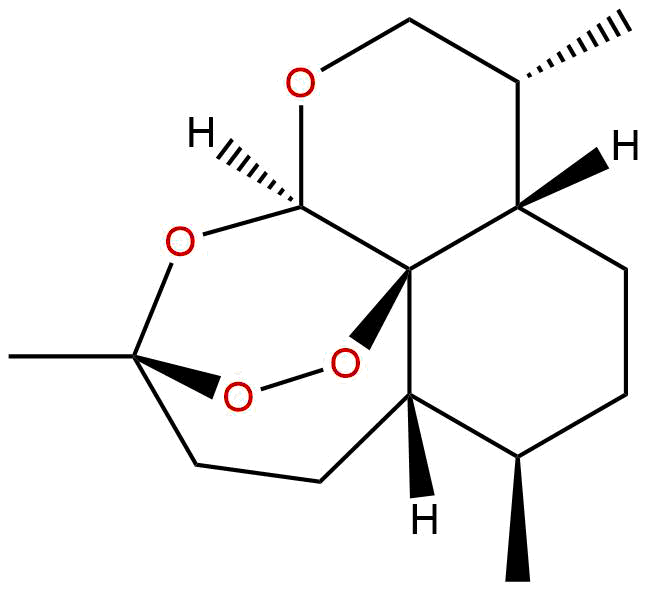
The chemical full name of Deoxoartemisinin is (3R, 5aS, 6R, 8aS, 9R, 12S, 12aR) - octahydro-3,6,9-trimethyl-3,12-epoxy-12H-pyrano [4,3-j] -1,2-benzodioxolane. Its core skeleton retains the unique 1,2,4-trioxahexane (peroxide bridge) structural unit of artemisinin, which is a key pharmacophore necessary for its antimalarial activity. Compared with the parent compound artemisinin, deoxyartemisinin undergoes a critical structural change at the C-10 position (i.e. the carbonyl carbon of the lactone ring): the C-10 position in artemisinin molecules is a carbonyl group (C=O), forming a delta lactone ring; And deoxyartemisinin reduces the carbonyl group to methylene (CH ₂), forming a more stable aldehyde structure. This structural modification eliminates the potential hydrolytic instability of the lactone ring, while altering the overall polarity and conformation of the molecule.
From the perspective of physical and chemical properties, deoxyartemisinin exhibits typical lipophilic characteristics. The calculated lipid water partition coefficient (LogP) is 3.1357, slightly higher than artemisinin (about 2.9), indicating an increase in its lipid solubility. The molecular weight is 268.3530 g/mol, slightly lower than artemisinin (282.33 g/mol), due to the removal of one oxygen atom. The topological polar surface area (TPSA) is 36.9200 Å ², which is a low value indicating a strong ability of molecules to penetrate biofilms. The water solubility data is 0.0133 mg/mL, which belongs to the category of extremely insoluble in water. This is consistent with its high LogP value and explains why artemisinin needs to rely on lipid carriers or special formulation techniques to improve its bioavailability after oral administration. It is worth noting that the blood-brain barrier (BBB) penetration ability of deoxyartemisinin has been evaluated as "high", which has potential advantages for the treatment of cerebral malaria, as cerebral malaria is one of the main causes of death and neurological sequelae, and whether the drug can effectively enter the central nervous system is crucial. In addition, the risk assessment of hERG inhibition is' no ', indicating a low risk of cardiac toxicity such as prolonged QT interval. The Ames test result is 1.5, indicating that it may have weak mutagenicity at a certain concentration, which requires more rigorous genetic toxicity evaluation in subsequent drug development.
Plant sources and extraction methods
Deoxyartemisinin is not naturally present in Artemisia annua(Artemisia annua L. The main secondary metabolites in plants. The main antimalarial active ingredient in Artemisia annua is artemisinin, with a content ranging from 0.01% to 1%, which varies depending on factors such as variety, place of origin, and harvesting time. Deoxyartemisinin is usually a derivative prepared from artemisinin as the starting material through a semi synthetic chemical method. Therefore, its "plant source" refers more to the plant extraction process of its precursor - artemisinin.
The extraction methods of artemisinin are quite mature, mainly including traditional solvent extraction methods and modern green extraction technologies. Traditional methods often use low boiling point organic solvents such as petroleum ether, ether, or n-hexane for cold soaking or reflux extraction of dried Artemisia annua leaves, followed by purification through steps such as column chromatography and recrystallization. In recent years, supercritical fluid extraction (SFE), especially using carbon dioxide as an extractant, has been widely used for efficient extraction of artemisinin due to its advantages of no solvent residue, high extraction efficiency, and environmental friendliness. In addition, technologies such as Microwave Assisted Extraction (MAE) and Ultrasonic Assisted Extraction (UAE) have shown the potential to shorten extraction time and improve yield.
After obtaining high-purity artemisinin, the synthesis of deoxyartemisinin usually follows the classical chemical reduction route. The most commonly used method is to dissolve artemisinin in anhydrous organic solvents (such as tetrahydrofuran or ether) and selectively reduce it using strong reducing agents such as sodium borohydride (NaBH ₄) or lithium aluminum hydride (LiAlH ₄) at low temperatures (such as -78 ° C or 0 ° C). The reaction requires strict control of conditions to avoid damage to the peroxide bridge. The reduction reaction first yields dihydroartemisinin (DHA), and then under acidic conditions, the C-10 hydroxyl group of DHA is further reduced to a methylene group through dehydration reaction or the use of other reduction systems (such as triethylsilane/trifluoroacetic acid), ultimately obtaining dehydroartemisinin. The entire synthesis route has a high yield and can be prepared on a scale of grams to hundreds of grams by optimizing reaction conditions.
Pharmacological activity research
The pharmacological activity research of deoxyartemisinin mainly focuses on the field of anti malaria, but its potential anti-tumor, anti-inflammatory and other activities are gradually receiving attention.
Antimalarial activity Deoxyartemisinin exhibits strong in vitro killing activity against various strains of malaria parasites, including chloroquine sensitive strains (such as 3D7) and resistant strains (such as W2, Dd2). Its half maximal inhibitory concentration (IC ₅₀) is usually in the nanomolar range, comparable to or slightly lower than artemisinin. In an in vivo animal model, after oral administration of artemisinin, there is an effect on the infection of Plasmodium bergii(Plasmodium berghei)The mice showed good therapeutic effects, effectively reducing protozoa and prolonging survival. It is worth noting that some studies have indicated that the activity of artemisinin may decrease less than artemisinin in some resistant strains carrying PfK13 mutations (such as C580Y), suggesting its potential to overcome partial resistance. This is attributed to changes in its C-10 structure that may affect the binding mode or metabolic pathway with the target protein.
Antitumor activity The anti-tumor activity of artemisinin based compounds has been widely reported, and its mechanism mainly involves iron dependent generation of reactive oxygen species (ROS) and induction of tumor cell apoptosis. Deoxyartemisinin also shows cytotoxicity in many human tumor cell lines (such as breast cancer MCF-7, lung cancer A549, leukemia HL-60, etc.). Research has shown that artemisinin can inhibit tumor cell proliferation, induce cell cycle arrest, and apoptosis. Compared with artemisinin, deoxyartemisinin may have stronger activity in certain tumor cell lines, which may be related to its higher lipid solubility and better cell membrane penetration ability.
Anti inflammatory and immune regulatory activity Partial studies suggest that artemisinin may exert anti-inflammatory effects by inhibiting the nuclear factor kappa B (NF - κ B) signaling pathway, reducing the release of pro-inflammatory cytokines such as tumor necrosis factor alpha (TNF - α) and interleukin-6 (IL-6). This activity provides preliminary clues for its application in autoimmune diseases or inflammation related diseases.
Mechanism of action and molecular targets
The mechanism of action of deoxyartemisinin is similar to other members of the artemisinin family, with its unique peroxide bridge structure at its core. The peroxide bridge undergoes reductive cleavage with high concentrations of free heme or ferrous ions (Fe ² ⁺) in red blood cells infected with malaria parasites, generating highly active carbon and oxygen free radicals. These free radicals can attack various biomolecules of the malaria parasite, including proteins, lipids, and nucleic acids, causing functional disorders and structural damage, ultimately leading to the death of the malaria parasite.
However, structural modifications at the C-10 position of artemisinin may affect its interaction with specific targets. Based on the target list you provided, we can conduct a thorough analysis of its potential action network:
-
PfATP6 (malignant malaria parasite sarcoplasmic reticulum/endoplasmic reticulum calcium ATPase)This is one of the classic targets of artemisinin based drugs. Artemisinin and its derivatives can inhibit the activity of PfATP6, disrupt the calcium homeostasis of malaria parasites, and lead to endoplasmic reticulum stress and cell death. Deoxyartemisinin may also covalently modify key cysteine residues on PfATP6 protein through the free radicals it generates, thereby inhibiting its function.
-
PfK13 (Kelch13 protein)PfK13 is a key molecular marker of artemisinin resistance. The mutated PfK13 protein (such as C580Y) is believed to slow down the development of malaria parasites in the early endosome stage, reduce the rate of hemoglobin internalization and degradation, thereby reducing the release of free hemoglobin and ultimately weakening the activation efficiency of artemisinin based drugs. The activity changes of artemisinin against PfK13 mutant strain are the core of evaluating its potential to overcome drug resistance. Due to the fact that the activation of deoxyartemisinin may not be entirely dependent on the hemoglobin degradation pathway, or the free radicals it produces have stronger diffusion ability, it may maintain high sensitivity to certain PfK13 mutant strains.
-
PfCRT (Plasmodium falciparum chloroquine resistance transporter) and PfMDR1 (Plasmodium falciparum multidrug resistance protein 1)These two proteins are transport proteins located on the membrane of the malaria parasite's digestive vesicles, responsible for pumping drugs out of the site of action. The mutations in PfCRT and PfMDR1 are the main causes of resistance to chloroquine and other antimalarial drugs. Deoxyartemisinin, as a lipophilic molecule, may have different efficiency in entering digestive vesicles and being excreted by transport proteins compared to artemisinin. Studying its interaction with these transporters can help understand its drug resistance spectrum.
-
PFDHFR (Plasmodium falciparum dihydrofolate reductase)This is the target of anti folate drugs. Deoxyartemisinin does not directly inhibit PFDHFR, but the free radicals it produces may indirectly affect the activity or expression of the enzyme through oxidative damage.
-
PFCYTb and PFCYT (malignant malaria parasite cytochrome b)As a component of mitochondrial electron transport chain complex III, PFCYTb is a target of the antimalarial drug Atovaquone. The reactive oxygen species produced by artemisinin may directly damage mitochondrial membranes and respiratory chain complexes, including PFCYTb, thereby interfering with the energy metabolism of malaria parasites.
-
PfATG8 (Autophagy related protein 8 of Plasmodium falciparum)Autophagy is an important process for maintaining cellular homeostasis. Artemisinin drugs have been shown to induce autophagic cell death in malaria parasites. Deoxyartemisinin may promote the self digestion of malaria parasites by activating or interfering with the PfATG8 mediated autophagy pathway.
-
PFPK (Plasmodium falciparum protein kinase)Protein kinases play a crucial role in signal transduction, cell cycle, and development of malaria parasites. Deoxyartemisinin may affect the activity of various PFPKs through non-specific oxidative modifications, thereby disrupting the fine regulatory network of malaria parasites.
In summary, the mechanism of action of artemisinin is not a single target, but a "multi-target" network involving multiple cellular processes. The structural changes at the C-10 position may subtly adjust its affinity, activation efficiency, and metabolic stability with different targets, thereby exhibiting a pharmacological activity spectrum that differs from artemisinin.
Evaluation of drug properties and pharmacokinetics
The evaluation of drug properties is a crucial step in determining whether candidate compounds can enter clinical development. The pharmacological parameters of artemisinin show significant advantages and challenges.
Advantage:
- Strong activity The nanomolar level antimalarial activity is its core advantage.
- Good oral absorption potential Although its water solubility is extremely poor, its high LogP value and high BBB penetration ability indicate good membrane permeability, which is beneficial for oral absorption and entry into the central nervous system.
- Low risk of cardiac toxicity HERG inhibition is negative, reducing the risk of drug-induced arrhythmia.
- Feasibility of synthesis The semi synthetic route using artemisinin as raw material is mature and the cost is relatively controllable.
challenge:
- Extremely low water solubility The water solubility of 0.0133 mg/mL is its main bottleneck. This will result in low oral bioavailability and difficulty in preparing for injection. It is necessary to use formulation technologies such as liposomes, nanoemulsions, solid dispersions, phospholipid complexes, etc. to improve their dissolution and bioavailability.
- Metabolic stability Artemisinin drugs are mainly metabolized by hepatic enzymes CYP450 (especially CYP2B6 and CYP3A4) in the body. The structural modification of the C-10 position of artemisinin may alter its metabolic pathway and rate. Preliminary studies suggest that the metabolic stability of deoxyartemisinin may be superior to artemisinin, but specific metabolites and clearance pathways still require further investigation.
- Potential genetic toxicity The Ames test result is 1.5, indicating that it may have weak mutagenicity. This needs to be comprehensively evaluated in subsequent in vivo micronucleus tests, chromosome aberration tests, etc. If it is confirmed that there is a risk of genetic toxicity, its clinical application will be severely limited, especially for children and pregnant women.
- Plasma protein binding rate High lipophilicity is usually accompanied by high plasma protein binding rate, which can affect the distribution volume and free drug concentration of drugs, and requires experimental determination.
Pharmacokinetic characteristics Currently, there is relatively limited pharmacokinetic data available for artemisinin. Animal experiments have shown that after oral administration, the absorption rate may be slower and the peak time (Tmax) may be longer. Due to poor water solubility, its absolute oral bioavailability may be lower than artemisinin. Its distribution volume is relatively large, indicating widespread tissue distribution, especially high BBB penetration, which results in higher concentrations in brain tissue. The elimination half-life (t ₁/₂) may be longer than artemisinin, thanks to the stability of its C-10 structure, which reduces the hydrolytic metabolism of the lactone ring. Its main metabolic pathways may include O-demethylation, hydroxylation, and ring opening reduction of peroxide bridges.
Clinical application prospects and prospects
The application prospects of artemisinin in the field of anti malaria mainly depend on whether it can overcome the resistance challenges faced by existing ACTs. Given its potential to maintain activity against some PfK13 mutant strains and its unique physicochemical properties, deoxyartemisinin is expected to be developed as a new generation of antimalarial drugs, particularly for the treatment of artemisinin resistant malaria and cerebral malaria.
-
As an alternative or complementary ingredient to ACTs Combining deoxyartemisinin with a long-acting combination drug (such as piperaquine, benflumetol, amodiaquine, etc.) to form a new combination therapy is a feasible development direction. Its longer half-life may allow for simpler dosing regimens (such as single dose administration) and improve patient compliance.
-
Treatment of cerebral malaria Its high BBB penetration is one of its most prominent advantages. Developing injectable forms of artemisinin (such as liposomes or nano formulations) for emergency treatment of severe cerebral malaria may have advantages over existing artemisinin injections, as it can more effectively eliminate brain parasites and reduce the incidence of neurological sequelae.
-
Expansion in the field of anti-tumor therapy Given its anti-tumor activity, deoxyartemisinin can be used as a lead compound to develop more selective and less toxic anti-tumor drugs through further structural modification. Especially its ability to penetrate the BBB makes it potentially valuable in the treatment of central nervous system tumors such as gliomas.
-
Synergistic effects with other drugs Studying the synergistic effects of deoxyartemisinin with other antimalarial, antitumor, or anti-inflammatory drugs may lead to the discovery of new highly effective and low toxicity treatment combinations.
Future research directions:
- In depth mechanism research Using techniques such as chemical proteomics and CRISPR screening, comprehensively reveal the molecular target network of artemisinin, especially its interaction details with resistance related proteins such as PfK13 and PfCRT.
- Optimize the formulation process Focus on developing formulation technologies that improve their water solubility and oral bioavailability, such as self microemulsifying drug delivery systems (SMEDS), phospholipid complexes, cyclodextrin inclusion complexes, etc.
- Comprehensive toxicological evaluation Conduct systematic studies on acute toxicity, chronic toxicity, reproductive toxicity, and genetic toxicity, particularly clarifying the clinical significance of positive Ames test results.
- Pharmacokinetic optimization Through prodrug design or structural modification, further improve its metabolic stability, prolong half-life, and reduce potential toxicity.
- Preclinical and clinical research After completing sufficient preclinical efficacy, pharmacokinetics, and toxicology evaluations, proceed to the clinical trial phase to verify its safety and efficacy in humans.
Conclusion
Deoxyartemisinin, as a structurally unique and promising derivative in the artemisinin family, successfully alters the physicochemical properties, metabolic stability, and pharmacological activity spectrum of the molecule by reducing the C-10 carbonyl group to a methylene group. Its high lipid solubility, blood-brain barrier penetration, and potential activity against some drug-resistant malaria strains make it uniquely valuable in addressing the increasingly severe challenge of artemisinin resistance and developing drugs for the treatment of cerebral malaria. Although its extremely low water solubility and potential genetic toxicity are key issues that urgently need to be addressed, these obstacles are expected to be overcome through advanced formulation technology and in-depth structural optimization. The continuous research on artemisinin not only helps us to gain a deeper understanding of the structure-activity relationship and mechanism of action of artemisinin based drugs, but also provides new ideas and candidate molecules for global anti malaria drug development. In today's still severe situation of malaria prevention and control, it is of great strategic significance to deeply explore compounds such as artemisinin, which are "old drugs for new use" or "structurally optimized", in order to ensure human health. Future research should focus on breaking through the bottleneck of drug development and actively exploring its applications in fields such as anti-tumor, in order to transform this potential molecule into a truly beneficial clinical drug for patients.