
| Catalog No | Package | Original Price | Price | Inventory | Quantity | Operating |
|---|---|---|---|---|---|---|
| BP1352-20mg | 20mg | $30.00 | Sign in |
|


Synonym name: Analeptin; Ethaphene; Oxedrine, BAN; Simpalon; Sympathol
Catalogue No.: BP1352
Cas No.: 94-07-5
Formula: C9H13NO2
Mol Weight: 167.208
Botanical Source:
Purity: 95%~99%
Analysis Method: HPLC-DAD or/and HPLC-ELSD
Identification Method: Mass, NMR
Packing: Brown vial or HDPE plastic bottle
Can be supplied from milligrams to grams.
For Reference Standard and R&D, Not for Human Use Directly.
Inquire for bulk scale.
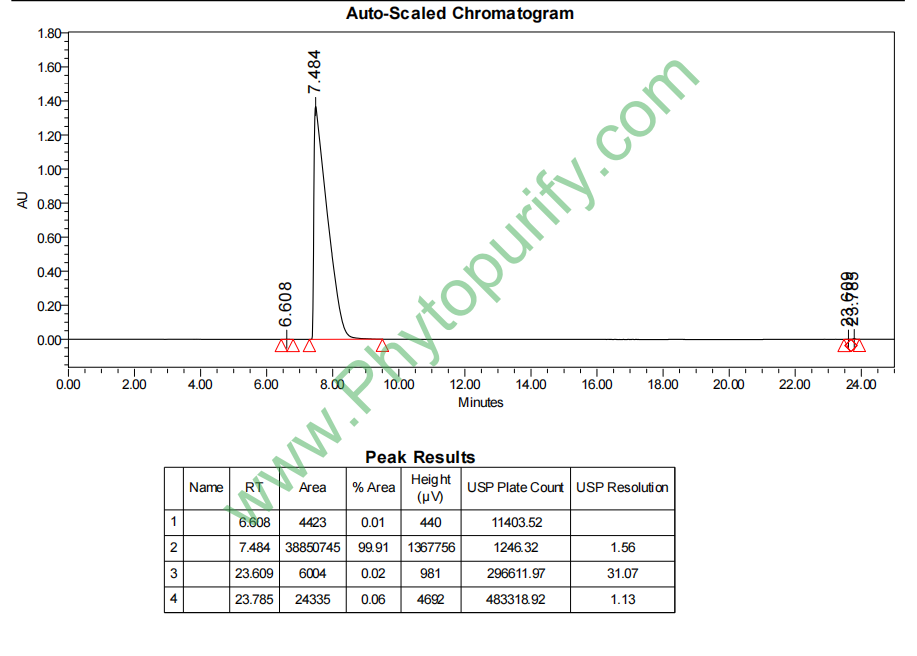
HPLC of Synephrine
Storage conditions:Short-term storage at 2~8℃, long-term storage at -20 ~ -80℃
52.4900
.5075
-1.1883
40.7128
.8452
2.6654
Low
18.2355
2.4001
No
No
No
No
No
No
0.6
No
Yes
No
No
Obesity has become a global public health challenge, which is closely related to the risk of cardiovascular disease, type 2 diabetes and some cancers. Among numerous weight management strategies, natural products have attracted much attention due to their wide range of sources and potential safety. Synephrine (CAS number: 94-07-5), also known as p-hydroxyforint or Oxedrine, is a phenylethylamine alkaloid extracted from the Rutaceae plant Citrus aurantium (bitter orange). As a sympathomimetic amine, sinomenine is widely used in dietary supplements due to its potential to promote energy expenditure and fat breakdown, claiming to have the effect of assisting weight loss. However, its exact pharmacological effects, molecular mechanisms, and long-term safety still need to be systematically reviewed and scientifically evaluated. This article aims to provide a systematic review of the chemical properties, plant sources, pharmacological activities, molecular mechanisms of action, medicinal properties, and clinical application prospects of sinomenine, in order to provide reference for the in-depth research and rational application of this natural product.
The chemical name of Synephrine is 1- (4-hydroxyphenyl) -2-methylaminoethanol, with a molecular formula of C9H13NO2 and a molecular weight of 167.2080. The core of its structure is a phenylethylamine skeleton, with a hydroxyl group attached to the para position of the benzene ring, a β - hydroxyethylamine side chain, and a methyl group attached to the amino group. This structure has similarities with endogenous catecholamines (such as adrenaline, norepinephrine) and ephedrine, but there is only one phenolic hydroxyl group on the benzene ring of sinomenine, which belongs to the monophenolic compound. This affects its affinity and metabolic stability with adrenergic receptors.
From the analysis of physical and chemical properties, the lipid water partition coefficient (LogP) of Simulin is about 0.5075, indicating its moderate lipophilicity. Its topological polar surface area (TPSA) is 52.49 Å ², which conforms to the general characteristics of oral medications. Simulin has good water solubility, with a calculated value of approximately 40.7128 mg/L, which is beneficial for its dissolution and absorption in the gastrointestinal tract. These basic pharmacological parameters suggest that sinomenine has good potential for oral bioavailability. Simulin usually exists in the form of hydrochloride or sulfate to enhance its stability and solubility.
Simulin mainly comes from citrus plants in the Rutaceae family, especially the fruits, peels, and flowers of lime (Citrus aurantium L.). Sour orange, also known as bitter orange or orange peel, has a history of application in traditional medicine. There are significant differences in the content of sinomenine among different varieties, origins, harvesting periods, and plant parts (such as those with higher content in young fruits).
There are various methods for extracting sinomenine, aiming to efficiently and environmentally obtain the target components. Traditional methods include solvent extraction, which commonly involves leaching or reflux extraction using water, methanol, ethanol, or acid aqueous solutions. Modern separation technology has significantly improved purification efficiency and selectivity:
1. Ultrasound assisted extraction/Microwave assisted extraction Utilizing physical fields to enhance mass transfer, shorten extraction time, and improve yield.
2. Column chromatography technology The use of macroporous adsorption resins (such as AB-8, D101), cation exchange resins, or silica gel columns for the separation and purification of crude extracts is a key step in obtaining high-purity sinomenine.
3. High-speed countercurrent chromatography A liquid-liquid distribution chromatography technique that does not require a solid phase carrier and is suitable for preparation grade separation, effectively avoiding irreversible adsorption.
4. Supercritical fluid extraction Using supercritical CO ₂ as the solvent and sometimes adding entrainers (such as methanol), this method has mild conditions and minimal solvent residue, but the equipment cost is relatively high.
The optimization of extraction process usually revolves around parameters such as solvent type, concentration, solid-liquid ratio, temperature, time, and pH value to achieve maximum extraction efficiency and economic feasibility.
The pharmacological activity research of sinomenine mainly focuses on metabolic regulation, with the core being its sympathetic like effect.
The weight loss effect of sinomenine involves a complex regulatory network with multiple targets and pathways, and its core mechanism revolves around the sympathetic nervous system and energy metabolism balance.
In summary, Simulin exerts a synergistic effect on the adrenergic receptor system (especially β 3-AR) and downstream energy metabolism key nodes (such as AMPK, PPARG, UCP1), forming a network that promotes fat breakdown, inhibits fat synthesis, and increases energy expenditure, thereby combating obesity.
Based on the provided parameters and existing research, a preliminary evaluation of the pharmacological properties of sinomenine is conducted
Simulin, as a natural weight loss supplement, has both clinical application prospects and challenges.
Current applications and potential:
1. Dietary supplement market Simulin is a common ingredient in current weight loss dietary supplements, often combined with caffeine, green tea extract, etc., claiming to enhance thermogenesis and fat oxidation through synergistic effects.
2. Assisted weight management For individuals with mild to moderate obesity, supplements containing sinomenine may provide additional metabolic boosting effects based on dietary control and exercise, but their weight loss effects when used alone are usually milder.
3. Improvement of metabolic syndrome related indicators In addition to weight loss, preliminary studies suggest that it may have certain benefits in improving blood lipid profiles (such as reducing triglycerides), but more high-quality clinical studies are needed to confirm this.
Challenges and Future Prospects:
1. Clarity and dose-dependent efficacy The existing clinical research results are inconsistent, with some showing slight weight loss effects and others being ineffective. In the future, large-scale, randomized double-blind, placebo-controlled clinical trials are needed to clarify the effective dose range, treatment duration, and differences in efficacy for different populations (such as different BMI and metabolic phenotypes).
2. Long term safety assessment Currently, there is a lack of safety data for long-term (>6 months) use of sinomenine. It is necessary to systematically evaluate its long-term effects on the cardiovascular system (dynamic blood pressure, heart rate variability), liver and kidney function, and metabolism. It is crucial to establish a safe usage guide based on risk benefit ratio.
3. Deep exploration of the mechanism of action In addition to the known adrenergic receptor pathway, the effects of sinomenine on emerging obesity related targets such as gut microbiota, adipose tissue inflammation, and mitochondrial function are worth exploring. The use of omics techniques (transcriptome, metabolome) can comprehensively reveal its functional network.
4. Development of new formulations To improve bioavailability, reduce side effects, and achieve targeted delivery, nanocarriers, liposomes, or sustained-release formulations of sinomenine can be developed. For example, designing delivery systems targeting adipose tissue may enhance local efficacy and reduce systemic exposure risk.
5. Research on rational combination therapy Exploring the scientific compatibility of sinomenine with other natural products or drugs with complementary mechanisms, such as AMPK activators and PPAR modulators, may result in synergistic effects, reduced single drug doses, and side effects.
6. Regulations and Quality Control The regulatory policies regarding Simulin in supplements vary globally. We need to strengthen the quality control of raw materials and products, ensure accurate content and no harmful pollutants (such as heavy metals and pesticide residues), and standardize product labels with clear warning information.
As a natural alkaloid derived from lime, sinomenine exhibits multiple pharmacological potentials by stimulating alpha - and beta adrenergic receptors and regulating key metabolic targets such as AMPK, PPARG, UCP1, etc., promoting fat breakdown, increasing energy expenditure, and regulating lipid metabolism, making it a valuable asset in the field of obesity management. Its pharmacological parameters show that it has good oral absorption characteristics, low central penetration, and low risk of hERG inhibition. However, its clinical application is still limited by challenges such as insufficient evidence of efficacy, potential cardiovascular risks, and lack of long-term safety data. Future research should strive to confirm its efficacy and safety boundaries through rigorous clinical trials, use modern scientific technology to deeply elucidate its multidimensional mechanisms of action, and explore novel delivery systems and rational combination strategies. Only under the premise of science and regulations can Simulin, a natural product, better realize its potential value and provide a relatively safe and effective supplementary option for global obesity prevention and control.
