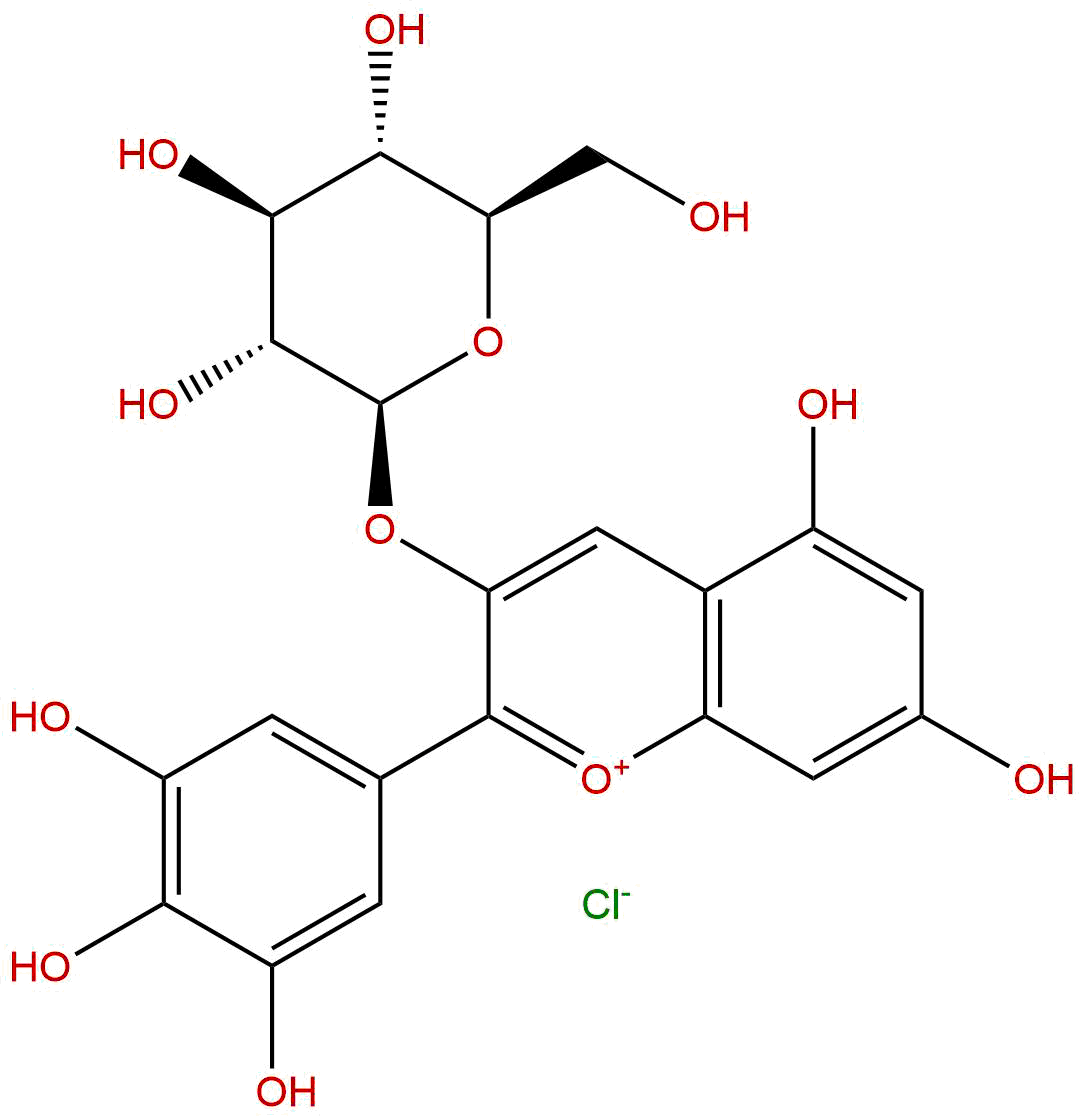


Product name: Delphinidin-3-O-β-D-glucoside chloride
Synonym name: Delphinidol 3-glucoside; Delphinin; Delphinin chloride; Mirtillin
Catalogue No.: BP5213
Cas No.: 6906-38-3
Formula: C21H21ClO12
Mol Weight: 500.837
Botanical Source:
Type of Compound: Anthocyanins
Purity: 95%~99%
Analysis Method: HPLC-DAD or/and HPLC-ELSD
Identification Method: Mass, NMR
Packing: Brown vial or HDPE plastic bottle
Storage: Store in a well closed container, protected from air and light. Put into refrigerate or freeze for long term storage.
Whenever possible, you should prepare and use solutions on the same day. However, if you need to make up stock solutions in advance, we recommend that you store the solution as aliquots in tightly sealed vials at -20℃. Generally, these will be useable for up to two weeks.
The product could be supplied from milligrams to grams
Inquire for bulk scale.
For Reference Standard and R&D, Not for Human Use Directly.
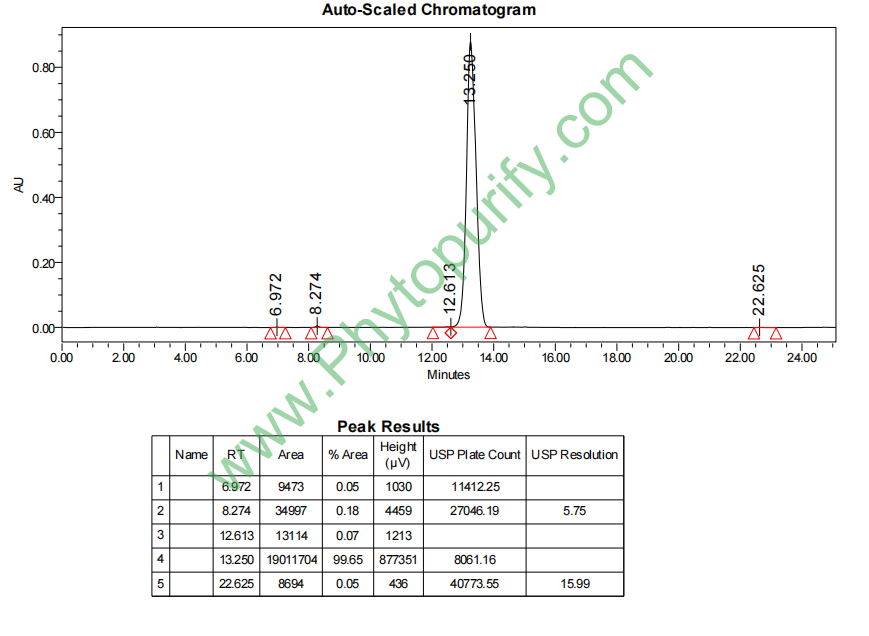
HPLC of Delphinidin-3-O-β-D-glucoside chloride
Storage conditions:Short-term storage at 2~8℃, long-term storage at -20 ~ -80℃
211.8300
-1.8944
-2.4890
.9217
.5381
.1163
Low
58.7686
4.4768
Yes
No
Yes
No
Yes
No
1.2
Yes
No
Yes
No
Delphinidin-3-O - β - D-glucoside chloride (CAS number: 6906-38-3) is an important anthocyanin glycoside widely present in various plants, especially in blue purple and purple red fruits and vegetables. As a type of polyphenolic compound in natural products, anthocyanins have attracted much attention in the field of pharmacology research in recent years due to their unique chemical structure and significant biological activity. Chlorinated delphinidin glucoside not only has good antioxidant properties, but also exhibits multiple biological effects such as anti-inflammatory, anti-tumor, and endocrine regulation, especially in the prevention and treatment of urinary system diseases such as benign prostatic hyperplasia (BPH), showing potential therapeutic value.
Benign prostatic hyperplasia is a common male benign disease, mainly characterized by non malignant hyperplasia of prostate tissue, leading to urinary tract obstruction and difficulty urinating, seriously affecting the quality of life of patients. Its pathogenesis involves multiple signaling pathways and molecular targets, including protein kinase C ε (PRKCE), estrogen receptor alpha (ESR1), aromatase (CYP19A1), androgen receptor (AR), caspase 3 (CASP3), transforming growth factor beta 1 (TGFB1), tumor suppressor genes PTEN, insulin-like growth factor 1 (IGF1), MYC oncogene, and 5 α - reductase type 2 (SRD5A2) related to the phosphatidylinositol 3-kinase/protein kinase B pathway. Chlorfenapyr glucoside exhibits the potential to regulate prostate cell proliferation and apoptosis by modulating the aforementioned targets and related signaling pathways.
This article provides a systematic review of the chemical structure and physicochemical properties, plant sources and extraction methods, pharmacological activity and mechanism of action, pharmacological evaluation and pharmacokinetic characteristics of chlorinated delphinidin glucoside. Combined with its molecular targets in diseases such as prostate hyperplasia, it explores its clinical application prospects and future research directions, aiming to provide theoretical basis and practical guidance for natural product pharmacology and related drug development.
Chlorinated delphinidin glucoside belongs to the class of anthocyanin glycosides, and its core structure is delphinidin. It forms a glycosidic bond with β - D-glucose through a 3-hydroxyl group and forms a salt structure with chloride ions. Its molecular formula is C21H21ClO12 and its molecular weight is 465.3870. The chemical structure contains multiple phenolic hydroxyl groups, endowing it with significant antioxidant capacity.
In terms of physical and chemical properties, the LogP value of this compound is -1.8944, indicating its high hydrophilicity and water solubility of 0.9217, which is conducive to absorption and distribution in vivo. The topological polar surface area (TPSA) is as high as 211.83 Å ², indicating its strong polarity, which may limit its ability to pass through lipid membranes, especially the low permeability of the blood-brain barrier (BBB), consistent with its low distribution in the central nervous system. The hERG channel inhibition experiment showed a negative result, indicating a lower risk of cardiac toxicity. The Ames test score is 1.2, indicating that the genotoxicity risk of this compound is low and has a good safety basis.
The UV visible absorption spectrum of chlorinated delphinidin glucoside exhibits typical anthocyanin characteristic peaks, and is stable under acidic conditions. However, it is prone to structural transformation in alkaline environments, which affects its biological activity. Therefore, special attention should be paid to the control of pH environment in the development and storage conditions of formulations.
Chlorinated delphinidin glucoside is widely present in various blue purple fruits, vegetables, and flowers, such as blueberries (Vaccinium spp.), blackcurrants (Ribes nigrum), purple cabbage (Brassica oleracea var. capitata f. rubra), and plants of the genus Delphinium spp. Its content is significantly affected by factors such as plant variety, growth environment, maturity, and harvesting time.
Traditional extraction methods often use a mixed system of polar solvents such as methanol, ethanol, or ethyl acetate with water, and improve extraction efficiency through ultrasound assisted extraction or hot reflux extraction. In recent years, with the promotion of green chemistry concepts, new technologies such as supercritical CO ₂ extraction, microwave-assisted extraction, and enzymatic hydrolysis have gradually been applied to the extraction of anthocyanin glycosides, significantly improving yield and purity while reducing solvent residue and environmental pollution.
After extraction, liquid-liquid separation, column chromatography (such as silica gel, C18 reverse phase column), and high-performance liquid chromatography (HPLC) techniques are usually used for purification and quantitative analysis. The identification methods include mass spectrometry (MS), nuclear magnetic resonance (NMR), and ultraviolet visible spectroscopy (UV Vis) to ensure the accuracy and purity of the compound structure.
Chlorinated delphinidin glucoside, as a natural anthocyanin glycoside, has various pharmacological activities, including antioxidant, anti-inflammatory, anti-tumor, endocrine regulation, and cardiovascular protection.
Anthocyanins have strong free radical scavenging ability due to their polyphenol structure. Chlorfenapyr glucoside protects cells from oxidative stress damage by capturing reactive oxygen species (ROS) and inhibiting lipid peroxidation. In vitro DPPH and ABTS free radical scavenging experiments have confirmed its significant antioxidant capacity, which is superior to some similar anthocyanins.
Inflammatory response plays an important role in the occurrence and development of various diseases. Research has shown that chlorinated delphinidin glucoside can inhibit the expression of pro-inflammatory factors such as TNF - α, IL-6, and COX-2, and alleviate inflammatory reactions. It exerts anti-inflammatory effects by regulating the NF - κ B signaling pathway, reducing the release of inflammatory mediators.
Chlorfenapyr glucoside has shown inhibitory effects on proliferation, induction of apoptosis, and inhibition of metastasis in various tumor cell lines. Research has shown that it can regulate cell cycle related proteins, activate the caspase family, and promote tumor cell apoptosis. In addition, its antioxidant and anti-inflammatory properties also contribute to the regulation of the tumor microenvironment.
Chlorfenapyr glucoside has a certain affinity for hormone receptors, especially estrogen receptor (ESR1) and androgen receptor (AR), which can regulate hormone signaling pathways and affect endocrine balance. In models of prostate hyperplasia and other diseases, it exhibits inhibitory effects on androgen mediated cell proliferation, indicating its potential application value in hormone related diseases.
The pathological mechanism of benign prostatic hyperplasia is complex, involving multiple signaling pathways and molecular targets. Chlorfenapyr glucoside regulates the proliferation, apoptosis, and differentiation of prostate cells through multi-target and multi-path synergistic effects.
PRKCE, as a member of the protein kinase C family, plays a crucial role in cell proliferation and apoptosis. Chlorinated delphinidin glucoside can regulate the activity of PRKCE, inhibit abnormal cell proliferation, promote apoptotic signaling, and alleviate excessive proliferation of prostate tissue.
ESR1 is involved in regulating the hormone response of prostate tissue. This compound regulates ESR1 signaling, balances the effects of estrogen and androgen, inhibits abnormal proliferation of prostate cells, and alleviates hormone dependent pathological changes.
CYP19A1 catalyzes the conversion of androgens to estrogens and regulates local hormone levels. The regulatory effect of chlorinated delphinidin glucoside on CYP19A1 helps maintain hormone homeostasis and prevent prostate lesions caused by hormone imbalance.
AR is an important regulatory factor for prostate hyperplasia. This compound exerts anti proliferative effects by binding to AR, blocking androgen signaling, inhibiting AR mediated cell proliferation.
CASP3, as a key apoptosis executing enzyme, can be activated by chlorinated delphinidin glucoside, promoting prostate cell apoptosis and inhibiting abnormal hyperplasia.
TGFB1 is involved in cell proliferation and fibrosis processes. This compound regulates TGFB1 signaling, inhibits fibrosis and pathological hyperplasia of prostate tissue.
PTEN, as a tumor suppressor gene, regulates the PI3K/AKT signaling pathway. Chlorfenapyr glucoside upregulates PTEN expression, inhibits AKT activity, blocks cell proliferation signals, and promotes apoptosis.
IGF1 promotes cell growth and survival. This compound inhibits IGF1 signaling and slows down prostate cell proliferation.
MYC regulates the cell cycle and metabolism. Chlorpheniramine glucoside inhibits MYC expression, blocks cell cycle progression, and suppresses proliferation.
SRD5A2 catalyzes the conversion of testosterone to dihydrotestosterone (DHT), which is an important pathogenic factor in prostate hyperplasia. Chlorfenapyr glucoside inhibits SRD5A2 activity, reduces DHT production, and alleviates prostate enlargement.
In summary, the synergistic regulation of chlorinated delphinidin glucoside through multiple targets intervenes in the pathological process of prostate hyperplasia, demonstrating its potential as a multifunctional natural medicine.
The pharmacological evaluation of chlorinated delphinidin glucoside shows that it has good safety and pharmacological basis. The molecular weight is 465.3870, which meets the Lipinski rule for the upper limit of molecular weight. The LogP is -1.8944, indicating good water solubility and facilitating oral absorption. A high TPSA (211.83 Å ²) indicates strong polarity, which may limit cell membrane permeability, especially low blood-brain barrier permeability, and reduce the risk of central nervous system side effects.
The hERG channel inhibition test result was negative, indicating a low risk of cardiac toxicity. The Ames test score is 1.2, indicating low genotoxicity risk and meeting safety requirements.
In terms of pharmacokinetics, the absorption of chlorfenapyr glucoside is relatively fast after oral administration, but its bioavailability is limited due to its high polarity. The distribution in the body is mainly concentrated in the liver, kidney, and urinary system tissues, which meets the targeted needs for treating prostate diseases. The metabolic pathway mainly involves the hydrolysis of glucosides and corresponding phenolic hydroxyl metabolism through the liver enzyme system, and the metabolites have certain biological activity. Excretion is mainly through urine and bile.
In the future, improving its bioavailability and targeting through structural modification or nanocarrier delivery technology will help optimize its clinical application performance.
Chlorfenapyr glucoside has shown broad application prospects in prostate hyperplasia and related hormone dependent diseases due to its multi-target regulatory ability and good safety. It provides a new approach for the comprehensive treatment of prostate diseases by inhibiting androgen signaling, regulating hormone metabolism, promoting cell apoptosis, and exhibiting anti-inflammatory and antioxidant effects.
At present, relevant preclinical studies have confirmed its effectiveness and safety in animal models, but there is still a lack of systematic clinical trial data. In the future, multi center, randomized, double-blind clinical trials need to be conducted to verify its efficacy and dose safety range. In addition, combining modern pharmaceutical formulation technology to develop oral sustained-release formulations or targeted delivery systems will further enhance their clinical application value.
In addition, chlorinated delphinidin glucoside also has potential application value in the adjuvant therapy of other diseases such as cardiovascular disease, metabolic syndrome, and certain tumors, which is worth further exploration.
Chlorinated delphinidin glucoside, as a typical anthocyanin glycoside, has important research value in the field of natural product pharmacology due to its unique chemical structure and diverse biological activities. The multi-target mechanism of action in diseases such as benign prostatic hyperplasia provides a theoretical basis and practical path for the development of new natural medicines. In the future, through systematic pharmacological research, optimization of drug properties, and clinical validation, chlorinated delphinidin glucoside is expected to become an effective natural medicine for the treatment of prostate hyperplasia and related diseases, bringing new treatment options to patients.
