


Product Name: Delphinidin chloride
Synonym name: Delphinidol; Delphinidin
Catalogue No.: BP0466
Cas No.: 528-53-0
Formula: C15H11ClO7
Mol Weight: 338.70
Botanical Source: Pigment various plants. Widespread for example in the Plumbaginaceae, Hamamelidaceae and Anacardiaceae
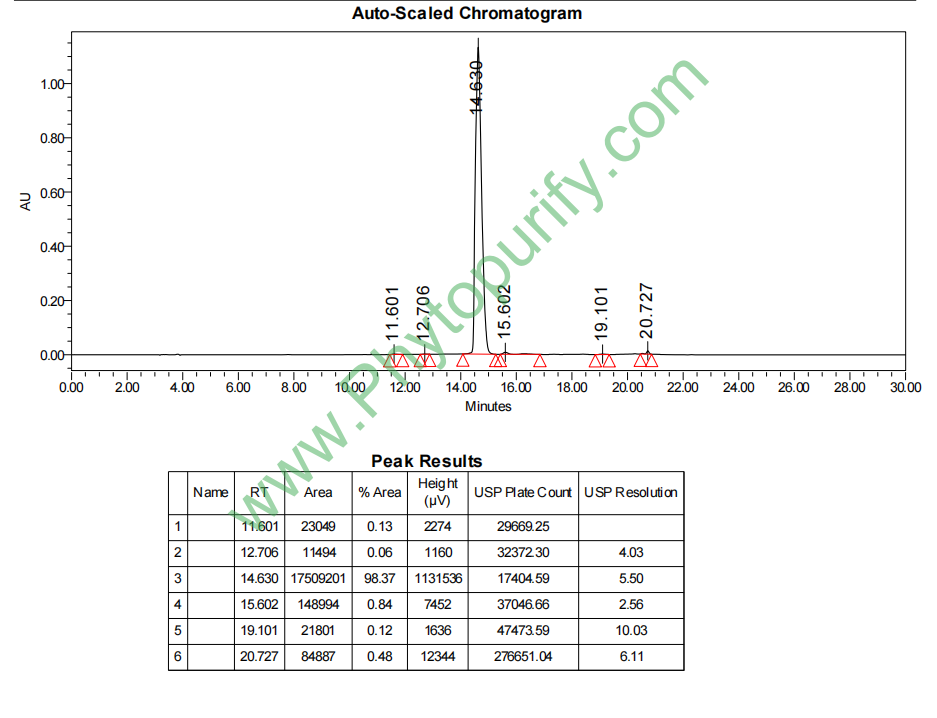
Purity: 95%~99%
Analysis Method: HPLC-DAD or/and HPLC-ELSD
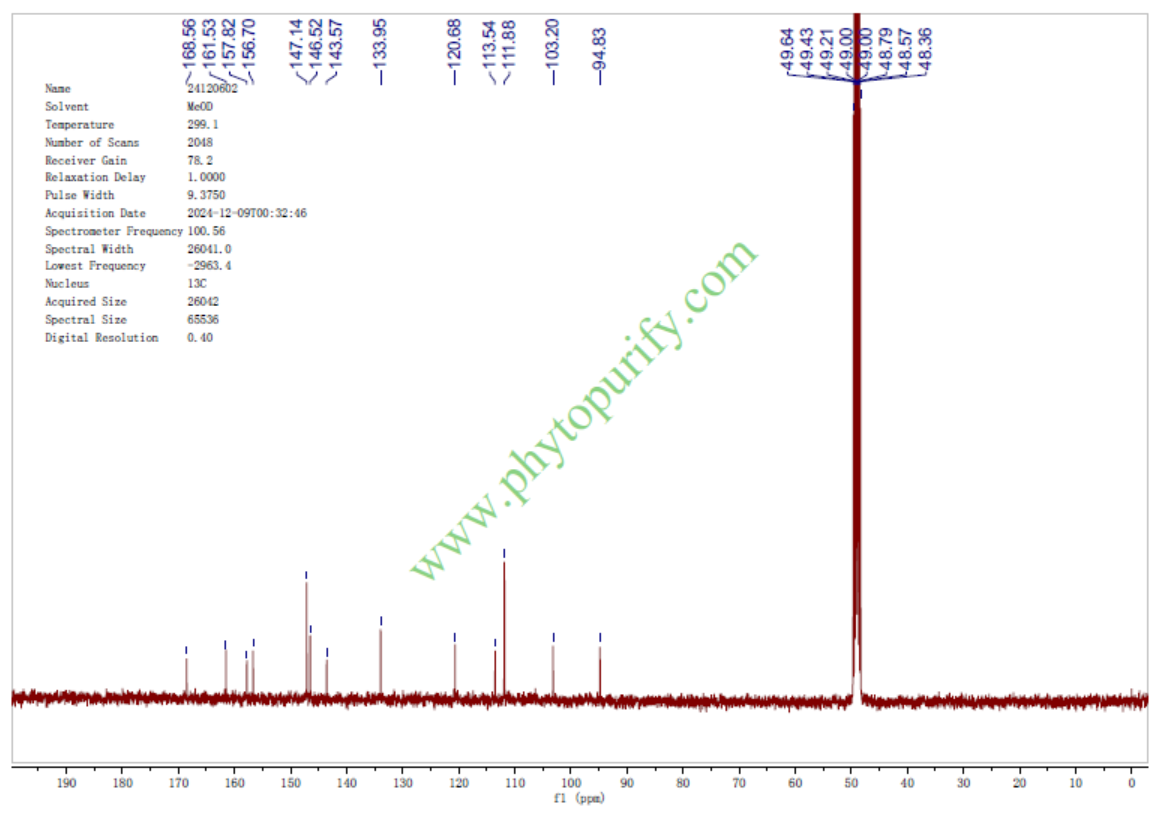
Identification Method: Mass, NMR
Packing: Brown vial or HDPE plastic bottle
Can be supplied from milligrams to grams.
For Reference Standard and R&D, Not for Human Use Directly.
Inquire for bulk scale.
HPLC of Delphinidin
NMR of Delphinidin
Storage conditions:Short-term storage at 2~8℃, long-term storage at -20 ~ -80℃
Delphinidin chloride (CAS number: 528-53-0) is a typical anthocyanin natural product widely found in berries, red wine, and various plants. As a water-soluble natural pigment, chlorfenapyr not only gives plants a bright blue purple color, but also receives widespread attention in the fields of pharmacology and natural product chemistry due to its diverse biological activities. In recent years, with the deepening of research on the antioxidant, anti-inflammatory, and anti-tumor effects of natural products, chlorfenapyr has become a potential candidate molecule for multi-target drug development due to its significant endothelial dependent vasodilation, anticancer activity, and signaling pathway regulation ability.
The purpose of this review is to systematically summarize the chemical structure and physicochemical properties, plant sources and extraction methods, pharmacological activities and mechanisms of action of chlorinated swiftgrass extract, and explore its clinical application prospects and development directions based on pharmacological parameters and pharmacokinetic characteristics, providing theoretical basis and reference for subsequent basic research and clinical translation.
Chlorfenapyr belongs to the Anthocyanin family and is a flavonoid compound substituted with 3,5,7,3 ', 4', 5 '- hydroxyl groups. Its molecular formula is C15H11ClO7 and its molecular weight is 303.2460. Structurally, the core of Chlorfenapyr is a flavonoid tricyclic structure (C6-C3-C6), which contains multiple hydroxyl groups and a chloride ion coordination, endowing it with unique chemical properties and biological activity.
In terms of physical and chemical properties, the LogP value of Chlorfenapyr is -0.8871, indicating its strong hydrophilicity and water solubility of 0.0882 (unit not specified, but indicating moderate solubility). Its topological polar surface area (TPSA) is 132.68 Å ², indicating a high molecular polarity that may affect its cell membrane permeability and bioavailability. The low permeability of the blood-brain barrier indicates its limited distribution in the central nervous system. The hERG channel inhibition experiment showed a negative result, indicating a low risk of cardiac toxicity. The Ames test value is 1.2, indicating a low risk of genotoxicity.
In summary, the chemical structure of Chlorfenapyr endows it with good water solubility and low lipid solubility, making it suitable for distribution in the blood and extracellular fluid environment within the body. However, its ability to penetrate the central nervous system is limited.
Chlorfenapyr is mainly present in various berry fruits (such as blueberries, blackberries, blackcurrants) and red wines, and is an important component of these plant pigments. Its content is greatly influenced by plant species, growth environment, maturity, and processing methods.
Traditional extraction methods often use acidic methanol or ethanol solutions to extract plant materials, taking advantage of the stability advantage of anthocyanins under acidic conditions to prevent their degradation. Common steps include:
In recent years, modern technologies such as ultrasound assisted extraction, microwave-assisted extraction, and enzymatic assisted extraction have been applied to improve extraction efficiency and yield, while reducing solvent usage and extraction time. In addition, the introduction of nanotechnology and membrane separation technology has provided new ideas for the industrial production of chlorfenapyr.
The pharmacological activities of Chlorfenapyr include cardiovascular protection, antioxidant, anti-inflammatory, and anti-tumor effects, demonstrating a wide range of biological functions.
Chlorfenapyr can induce vascular smooth muscle relaxation by promoting the release of nitric oxide (NO) from endothelial cells and regulating calcium ion channels, exhibiting significant vasodilatory effects. In vitro experiments have shown that it has a protective effect on models of endothelial dysfunction, which may help prevent and treat cardiovascular diseases such as hypertension and arteriosclerosis.
As a natural antioxidant of anthocyanins, delphinidin chloride can effectively eliminate free radicals and alleviate oxidative stress damage to cells. It can also inhibit the expression of pro-inflammatory factors such as TNF - α and IL-6, alleviate inflammatory reactions, and has potential anti-inflammatory efficacy.
Chlorfenapyr has shown anti proliferative and apoptosis inducing effects in various cancer cell lines. Especially in colon cancer HCT116 cells, berberine chloride promotes cell apoptosis and inhibits tumor growth by regulating the JAK/STAT3 and MAPK signaling pathways. In addition, as an effective inhibitor of epidermal growth factor receptor (EGFR) with an IC50 of 1.3 μ M, it can shut down the downstream signaling cascade of EGFR and block the proliferation and metastasis signals of tumor cells.
Some studies suggest that chlorfenapyr may have neuroprotective and metabolic regulatory effects, but related research is still in its preliminary stage and needs further validation.
The pharmacological effects of Chlorfenapyr are mainly achieved through multiple signaling pathways, involving multiple molecular targets:
The JAK/STAT3 pathway plays a crucial role in cell proliferation, differentiation, and apoptosis. Chlorfenapyr can inhibit the activation of this pathway, reduce the phosphorylation level of STAT3, block its nuclear transcriptional activity, induce apoptosis of HCT116 cells, and inhibit tumor growth.
The MAPK pathway includes subtypes such as ERK, JNK, and p38, which regulate cellular stress response and apoptosis. Chlorfenapyr promotes programmed cell death in cancer cells by regulating the activation status of the MAPK pathway.
EGFR is an important driving factor for the proliferation of various tumor cells. Chlorfenapyr, as an effective inhibitor of EGFR, can bind to its kinase domain, block receptor activation and downstream signaling, and inhibit tumor cell proliferation and migration.
Chlorfenapyr promotes the activity of NO synthase in endothelial cells, increases NO production, leads to vasodilation, improves hemodynamics, and exerts cardiovascular protective effects.
By directly clearing reactive oxygen species (ROS) and activating the Nrf2/ARE antioxidant signaling pathway, chlorfenapyr enhances the antioxidant defense ability of cells and reduces oxidative damage.
The pharmacological evaluation of Chlorfenapyr shows that it has certain advantages and limitations:
In response to its insufficient pharmacological properties, researchers have attempted to improve its bioavailability and targeting through nanocarriers, liposome encapsulation, and structural modification.
Chlorfenapyr, as a multifunctional natural product, has good pharmacological activity and safety, and has broad clinical application potential:
Future research should focus on:
Chlorfenapyr, as a typical anthocyanin natural product, has shown extensive potential in cardiovascular protection, anti-tumor and anti-inflammatory fields due to its unique chemical structure and diverse biological activities. It exerts multi-target synergistic effects by regulating key molecular targets such as JAK/STAT3, MAPK, and EGFR, and has good safety and drug advantages. Although there are still some challenges in its pharmacokinetic characteristics and clinical applications, with the continuous advancement of extraction and purification technology and drug delivery systems, chlorinated delphinidin is expected to become an important direction for the development of natural product drugs in the future. Future research should further integrate chemistry, pharmacology, and clinical science to promote the transition of chlorfenapyr from laboratory to clinical use, contributing new natural medicinal resources to human health.
