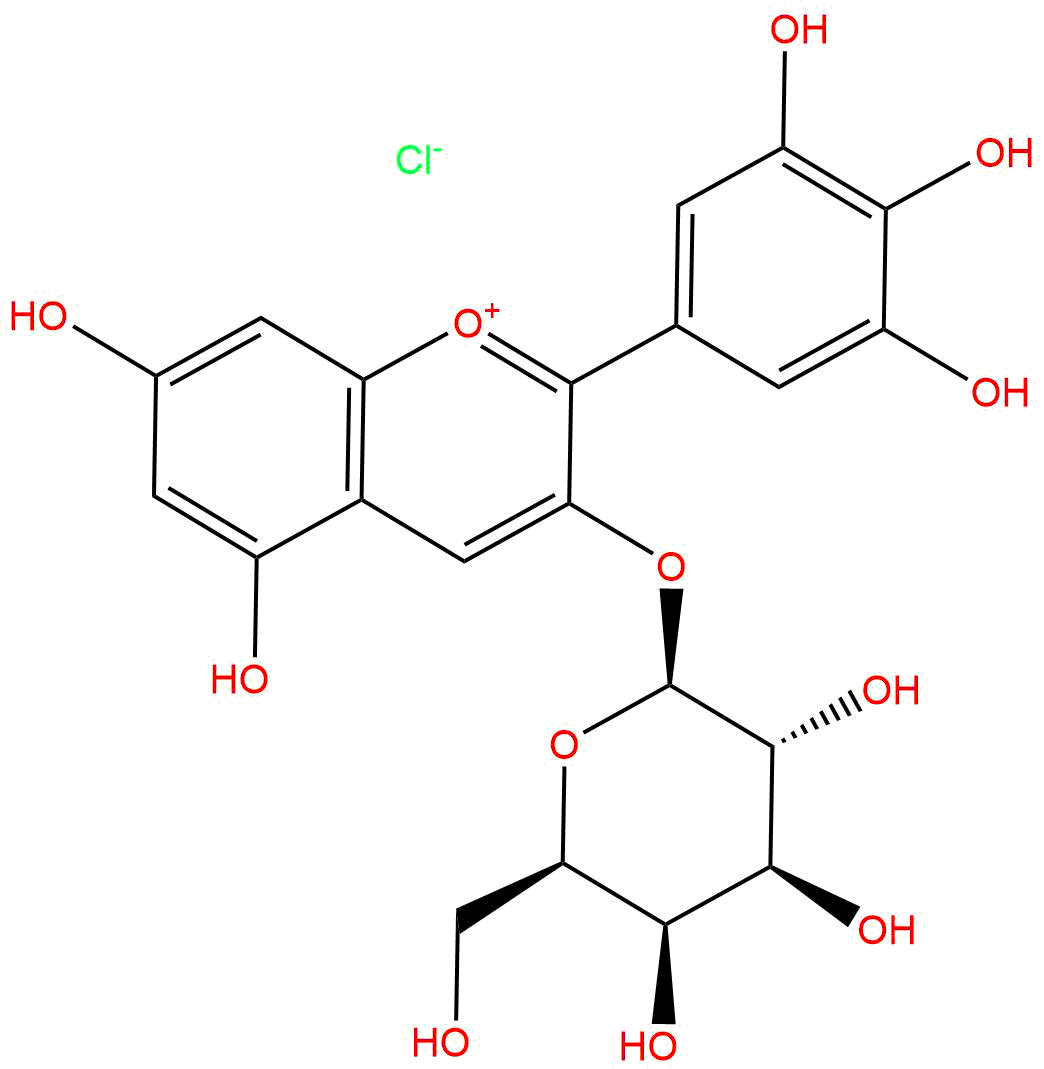


Product Name: Delphinidin-3-O-galactoside chloride
Synonym name: Empetrin;68852-84-6;Delphinidin 3-Galactoside
Catalogue No.: BP0468
Cas No.: 28500-00-7
Formula: C21H21ClO12
Mol Weight: 500.84
Botanical Source: Empetrum nigrum, Nymphaea x marliacea and other plant spp.
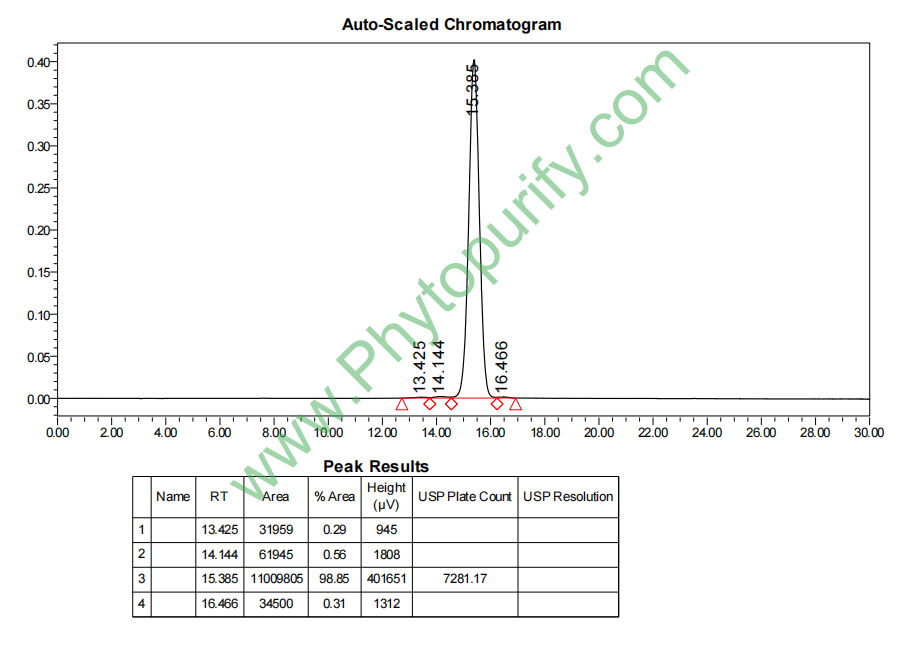
Purity: 95%~99%
Analysis Method: HPLC-DAD or/and HPLC-ELSD
Identification Method: Mass, NMR
Packing: Brown vial or HDPE plastic bottle
Can be supplied from milligrams to grams.
For Reference Standard and R&D, Not for Human Use Directly.
Inquire for bulk scale.
HPLC of Delphinidin 3-Galactoside
Storage conditions:Short-term storage at 2~8℃, long-term storage at -20 ~ -80℃
211.8300
-1.9056
-2.4637
1.0496
.4961
.1188
Low
58.5287
4.3669
Yes
No
Yes
No
Yes
No
1.2
Yes
No
Yes
No
Natural products, as an important source of drug discovery, play an irreplaceable role in the long history of human struggle against diseases. Among them, anthocyanins, as a water-soluble pigment widely present in the plant kingdom, not only endow fruits, vegetables, and flowers with brilliant colors, but also receive much attention due to their rich biological activity. Among numerous anthocyanin monomers, Delphinidin-3-O-galactoside chloride (Dp-3-gal) has gradually become a research hotspot in the field of natural product pharmacology due to its unique chemical structure and significant pharmacological potential.
Chlorinated delphinidin galactoside belongs to the Delphinidin derivative of anthocyanins. Fei Yan Cao Su is one of the six major anthocyanins known in nature, and its characteristic B-ring trihydroxy structure (3 ', 4', 5 '- trihydroxy) endows it with stronger antioxidant activity and electron donor ability than other anthocyanins such as cyanidins and geraniums. When the 3-hydroxy group of Feiyancao su is linked to a molecule of galactose through a glycosidic bond and forms a chloride salt form, Dp-3-gal is obtained. This glycosylation modification not only enhances the water solubility and stability of the molecule, but also profoundly affects its absorption, metabolism, and bioavailability in vivo.
From the source, Dp-3-gal is widely present in various dark berries and vegetables, especially in cranberries(Vaccinium myrtillus)Black gallon(Ribes nigrum)And purple cabbage(Brassica oleracea var. capitata f. rubra)Rich in medium content. Traditionally, these plants rich in anthocyanins have been used in folk medicine to improve vision, fight inflammation, and promote blood circulation. Modern scientific research has gradually revealed the enormous potential of Dp-3-gal in antioxidant, anti-inflammatory, anti-tumor, cardiovascular protection, and neuroprotection.
However, despite the multifaceted pharmacological activities exhibited by Dp-3-gal, its development as a candidate drug still faces many challenges. Its extremely low bioavailability, rapid in vivo metabolism, and chemical instability are the main bottlenecks restricting its clinical translation. In recent years, with the development of nano drug delivery systems, structural modifications, and metabolomics technologies, researchers are attempting to overcome these obstacles from different perspectives in order to maximize the health benefits of this natural molecule.
This article aims to systematically review the current research status of chlorinated delphinidin galactoside, comprehensively sorting out its chemical structure and physicochemical properties, plant sources and extraction processes, pharmacological activity, mechanism of action, drug evaluation, and clinical application prospects, in order to provide reference for the in-depth research and development of this compound.
The chemical structure of chlorinated delphinidin galactoside has a typical flavonoid skeleton. Its core structure is the 2-phenylbenzopyran cation, which is the basis for anthocyanin coloration. Specifically, its A ring is a triphenylphenol structure (5,7-dihydroxy), the C ring is an oxygen-containing heterocyclic ring, and the B ring has a unique 3 ', 4', 5 '- trihydroxy substitution pattern. At the 3-position of the C ring, a molecule of D-galactose is connected by a β - glycosidic bond. Due to the stable red or blue cationic form of anthocyanins under acidic conditions, commercial products are usually provided in the form of chloride salts, where the positive charge in the molecule is balanced by chloride ions (Cl ⁻).
The molecular formula of this compound is C ₂₁ H ₂₁ ClO ₁ ₂, with a molecular weight of 465.3870 g/mol. From the perspective of physical and chemical properties, Dp-3-gal exhibits typical hydrophilic characteristics. The calculated lipid water partition coefficient (LogP) is -1.9056, indicating that its solubility in the aqueous phase is much higher than that in the lipid phase, which is closely related to the presence of multiple hydroxyl and sugar groups in the molecule. Its topological polar surface area (TPSA) is as high as 211.83 Å ², much higher than the recommended threshold of 140 Å ² for oral drugs, indicating that the molecule is difficult to passively diffuse through biofilms, especially the blood-brain barrier.
In terms of water solubility, Dp-3-gal exhibits good solubility (with a water solubility parameter of 1.0496 mg/mL), which makes it easy to disperse under physiological conditions. However, the chemical stability of anthocyanins is a key issue in their application. The stability of Dp-3-gal is significantly affected by pH, temperature, light, and oxygen. In strongly acidic environments (pH<3), it exists in the form of stable yellow salt cations, appearing red or purple red. As the pH increases, molecules undergo rapid hydration reactions, generating colorless carbinol pseudobases, which then transform into chalcone forms, leading to color fading and loss of activity. Under neutral or alkaline conditions, anthocyanins are easily degraded. In addition, the presence of light, heat, and oxidants can accelerate its degradation process. Glycosylation modification has to some extent improved the stability of Dp-3-gal relative to its aglycone delphinidin, but compared to other anthocyanins such as cyanidin-3-glucoside, its B ring trihydroxy structure makes it more sensitive to oxidative degradation.
Chlorpyriformes galactoside is widely distributed in nature, but not all plants are abundant in it. Its main dietary source includes cranberries(Vaccinium myrtillus)Black fruit gland rib Sichuan pepper(Aronia melanocarpa Commonly known as blackcurrant, blackcurrant(Ribes nigrum)And some varieties of purple cabbage and eggplant skins. Among them, cranberry fruit is one of the most famous sources of Dp-3-gal, traditionally used to improve night vision and microcirculation in the eyes. Research has shown that Dp-3-gal is usually one of the highest content anthocyanin monomers in cranberry extract, and together with cyanidin-3-glucoside, it constitutes its main active ingredient.
In order to obtain high-purity Dp-3-gal for scientific research, it usually requires three steps: extraction, purification, and identification. The extraction method is mainly based on the stability of anthocyanins under acidic conditions. The commonly used extraction solvents are methanol, ethanol, or aqueous solutions containing small amounts of inorganic acids (such as 0.1% -1% hydrochloric acid or formic acid). Acidification can inhibit the hydrolysis and oxidation of anthocyanins, maintaining the stability of their cationic form. In recent years, green extraction techniques such as ultrasound assisted extraction, microwave-assisted extraction, enzyme assisted extraction, and supercritical fluid extraction have been widely used to reduce the use of organic solvents and improve extraction efficiency. For example, ultrasound assisted extraction can achieve higher extraction rates in a shorter period of time by destroying plant cell walls through cavitation effects.
The crude extract after extraction contains a large amount of sugars, organic acids, phenolic acids, and other flavonoid impurities. The purification process usually uses solid-phase extraction (SPE) or column chromatography techniques. Macroporous adsorption resin (such as XAD-7HP, AB-8) is a classic method for separating anthocyanins, which removes water-soluble impurities through adsorption desorption process. Subsequently, using preparative high performance liquid chromatography (HPLC) combined with C18 reverse phase chromatography column, gradient elution with acidic water acetonitrile or water methanol system can obtain Dp-3-gal monomer with a purity of over 95%. Identification relies on UV visible spectroscopy (with characteristic absorption peaks typically at 520-540 nm), mass spectrometry (MS, providing molecular ion peaks and fragment information), and nuclear magnetic resonance spectroscopy (NMR, determining glycosidic bond attachment positions and configurations).
It is worth noting that due to the coexistence of Dp-3-gal with other anthocyanins in plants and its highly similar structure, achieving complete separation from its isomers (such as delphinidin-3-glucoside) still poses certain technical challenges.
In recent years, significant progress has been made in the pharmacological activity research of chlorinated delphinidin galactoside, which covers multiple aspects such as antioxidant, anti-inflammatory, anti-tumor, cardiovascular protection, neuroprotection, and metabolic regulation.
antioxidant activity This is the most fundamental and extensively studied activity of Dp-3-gal. The catechol structure of its B ring endows it with extremely strong free radical scavenging ability. In vitro experiments have shown that Dp-3-gal can effectively scavenge DPPH radicals, ABTS cationic radicals, superoxide anions, and hydroxyl radicals. Its antioxidant capacity is usually stronger than that of vitamin C and vitamin E. In addition, Dp-3-gal can chelate transition metal ions (such as Fe ² ⁺, Cu ² ⁺), inhibit reactive oxygen species (ROS) produced by Fenton reaction, and activate endogenous antioxidant defense systems in cells, such as the nuclear factor E2 related factor 2 (Nrf2) pathway, upregulate the expression of superoxide dismutase (SOD), glutathione peroxidase (GPx), and heme oxygenase-1 (HO-1).
anti-inflammatory activity Chronic inflammation is the common pathological basis of many diseases (such as cardiovascular disease, diabetes, cancer). Dp-3-gal has been shown to significantly inhibit lipopolysaccharide (LPS) - induced macrophage inflammatory response. The mechanism involves inhibiting the activation of nuclear factor kappa B (NF - κ B) and mitogen activated protein kinase (MAPK) signaling pathways, thereby reducing the expression of cyclooxygenase-2 (COX-2) and inducible nitric oxide synthase (iNOS), and decreasing the release of pro-inflammatory factors such as tumor necrosis factor alpha (TNF - α), interleukin-6 (IL-6), and prostaglandin E2 (PGE2).
Antitumor activity Dp-3-gal exhibits cytotoxic effects on multiple cancer cell lines. It is reported that Dp-3-gal can inhibit the proliferation of human breast cancer cells (MCF-7, MDA-MB-231), colon cancer cells (HT-29, HCT-116), liver cancer cells (HepG2) and lung cancer cells (A549). Its anti-tumor mechanism is relatively complex, mainly including: inducing cell apoptosis by regulating the Bax/Bcl-2 ratio and activating the Caspase cascade reaction; Inducing autophagic cell death by inhibiting the PI3K/Akt/mTOR pathway; And by inhibiting the activity of matrix metalloproteinases (MMPs) to suppress the migration and invasion of tumor cells. It is worth noting that Dp-3-gal usually has low toxicity to normal cells and exhibits a certain degree of selectivity.
Cardiovascular protective effect Epidemiological studies have shown that a diet rich in anthocyanins is associated with a reduced risk of cardiovascular disease. Dp-3-gal exhibits pleiotropy in cardiovascular protection. It can inhibit the oxidative modification of low-density lipoprotein (LDL), which is a key step in the initiation of atherosclerosis. In addition, it can improve endothelial function by activating endothelial nitric oxide synthase (eNOS) to promote the production of nitric oxide (NO), thereby relaxing blood vessels and lowering blood pressure. In the myocardial ischemia-reperfusion injury model, Dp-3-gal pretreatment can reduce myocardial infarction area, alleviate oxidative stress and inflammatory response.
Neuroprotective effect Given its strong antioxidant and anti-inflammatory properties, the potential application of Dp-3-gal in neurodegenerative diseases such as Alzheimer's disease and Parkinson's disease has also attracted attention. In vitro studies have shown that Dp-3-gal can protect neurons from toxicity induced by β - amyloid protein (A β), reduce excessive phosphorylation of tau protein, and inhibit acetylcholinesterase activity. However, due to the extremely low blood-brain barrier penetration ability of Dp-3-gal, whether its neuroprotective effect in vivo is directly derived from the prototype drug or mediated by its metabolites remains a key issue that needs to be clarified.
Metabolic regulation effect Dp-3-gal has also been found to have the potential to regulate glucose and lipid metabolism. In a cell model of insulin resistance, it can activate AMP activated protein kinase (AMPK), promote glucose uptake, and improve insulin sensitivity. In animal models, Dp-3-gal supplementation helps reduce weight gain and fat accumulation induced by a high-fat diet.
The pharmacological activity of chlorinated delphinidin galactoside is not derived from the interaction of a single target, but is achieved through multi-target and multi pathway network regulation. Its core mechanism of action can be summarized as follows:
Direct antioxidant and signaling pathway regulation The direct free radical scavenging activity of Dp-3-gal is the basis for its biological effects. More importantly, it can activate key adaptive stress pathways by regulating intracellular redox balance. among which,Nrf2/ARE pathway It is one of the core targets. Dp-3-gal or its metabolites may modify the cysteine residues on Kelch like ECH related protein 1 (Keap1), promoting the dissociation and translocation of Nrf2 from Keap1 to the nucleus, binding to antioxidant response elements (ARE), and initiating the transcription of a series of phase II detoxifying enzymes and antioxidant enzymes (such as NQO1, HO-1, GST).
Inhibition of anti-inflammatory signaling pathway Dp-3-gal is a powerful inhibitor of inflammatory signaling pathways. Its main target NF - κ B pathway By inhibiting the activity of I κ B kinase (IKK) and preventing the phosphorylation and degradation of I κ B α, the NF - κ B p65 subunit is retained in the cytoplasm and unable to enter the nucleus to initiate the transcription of pro-inflammatory genes. Meanwhile, Dp-3-gal can also inhibit MAPK pathway Phosphorylation of ERK, JNK, and p38 further weakens the cascade amplification effect of inflammatory signals.
Epigenetic regulation Recent studies have found that anthocyanins may exert their effects by influencing epigenetic mechanisms. Dp-3-gal has been reported to inhibit the activity of histone deacetylase (HDAC) and DNA methyltransferase (DNMT), thereby reactivating certain silenced tumor suppressor genes. This epigenetic regulation provides a new perspective for understanding its anti-tumor activity.
Interaction with cell membrane and receptors Although the hydrophilicity of Dp-3-gal makes it difficult to enter the cell interior, it can interact with lipid rafts on the cell membrane, affecting membrane fluidity and the formation of signaling complexes. In addition, studies suggest that Dp-3-gal may directly bind to certain membrane receptors (such as estrogen receptor beta, ER beta) and exert estrogenic or antiestrogenic effects. Meanwhile, it can also inhibit the phosphorylation of vascular endothelial growth factor receptor (VEGFR) and epidermal growth factor receptor (EGFR), thereby suppressing angiogenesis and tumor growth.
Mitochondrial function regulation Dp-3-gal can target mitochondria by regulating mitochondrial membrane potential, inhibiting the opening of mitochondrial permeability transition pores (mPTP), and regulating mitochondrial dynamics (fusion and division) to protect mitochondrial function, reduce the release of cytochrome c, and thus inhibit cell apoptosis.
Although Dp-3-gal exhibits rich pharmacological activity in both in vitro and in vivo models, its pharmacological evaluation reveals significant challenges in developing it into a clinical drug.
Analysis of drug properties parameters According to the provided parameters, the molecular weight of Dp-3-gal (465.39 Da) is slightly higher than the threshold of molecular weight less than 500 in the Lipinski Five Rules. Its LogP is -1.9056, far below the optimal range (0-3), indicating strong hydrophilicity and insufficient lipid solubility, which is not conducive to its penetration of cell membranes and biological barriers. The TPSA reached 211.83 Å ², further confirming its extremely poor membrane permeability. Good water solubility (1.0496 mg/mL) is its advantage, but excessive hydrophilicity actually limits its absorption. The assessment of blood-brain barrier penetration ability is' low ', which is consistent with high TPSA and low LogP, indicating that it is difficult to directly target central nervous system targets. The risk assessment of hERG inhibition is' no ', which is a positive signal indicating a lower risk of cardiac toxicity. The Ames test result is 1.2 (usually considered negative or weakly positive if less than 2), indicating a low risk of genetic toxicity.
Pharmacokinetic characteristics The pharmacokinetic characteristics of Dp-3-gal are the main bottleneck for its clinical translation. After oral administration, its absolute bioavailability is extremely low (usually less than 2%). This is mainly attributed to the following aspects:
1. Chemical instability Dp-3-gal is prone to degradation in the physiological pH environment of the oral cavity, stomach, and small intestine.
2. Poor intestinal absorption Due to its high polarity and large molecular weight, Dp-3-gal is difficult to passively diffuse through intestinal epithelial cells. Although there have been reports suggesting that it may be actively transported through glucose transporters (such as SGLT1) or organic anion transport peptides (OATP), its efficiency is limited.
3. Rapid metabolism After absorption into intestinal epithelial cells, Dp-3-gal is rapidly hydrolyzed by β - glucosidase in the cytoplasm to form the aglycone delphinidin. Fei Yan Cao Su subsequently undergoes extensive phase II metabolism, including methylation (catalyzed by catechol-O-methyltransferase, COMT), glucuronidation, and sulfation. Therefore, the concentration of the prototype Dp-3-gal detected in blood and urine is extremely low, mainly in the form of its methylation, glucuronidation, and sulfation metabolites.
4. Metabolism of gut microbiota After entering the colon, unabsorbed Dp-3-gal will be further degraded by the gut microbiota, producing phenolic acids (such as gallic acid and protocatechuic acid) and ring opening products. These low molecular weight metabolites may be absorbed into the circulation and exert certain biological activities.
Therefore, current research generally suggests that the in vivo biological activity of Dp-3-gal may be mainly mediated by its circulating phase II metabolites and gut microbiota metabolites, rather than the prototype drug itself. This "metabolite hypothesis" is the key to understanding the differences between its in vivo efficacy and in vitro activity.
Despite facing challenges in pharmacokinetics, chlorinated delphinidin galactoside and its rich plant extracts have been widely used in the fields of dietary supplements and functional foods. The clinical application prospects mainly focus on the following aspects:
Eye Health Bilberry extract (rich in Dp-3-gal) has traditionally been used to improve vision and alleviate visual fatigue. Although there is controversy in modern clinical research, some meta-analyses suggest that supplementing with cranberry extract may have certain benefits in improving night vision, delaying cataract progression, and reducing retinal ganglion cell damage in glaucoma patients. The antioxidant and anti-inflammatory properties of Dp-3-gal are believed to play a key role in it.
Cardiovascular disease prevention Based on its properties of improving endothelial function, inhibiting LDL oxidation, and anti-inflammatory, Dp-3-gal can be considered as a candidate component for primary prevention of cardiovascular disease. Long term dietary supplementation with Dp-3-gal rich berries has been confirmed by multiple epidemiological studies and clinical trials to be associated with lowering blood pressure, improving lipid profiles, and reducing the risk of cardiovascular events.
Management of metabolic syndrome Dp-3-gal has the potential to improve insulin resistance and regulate glucose and lipid metabolism, making it a potential auxiliary means to manage type 2 diabetes and obesity. Future research requires higher quality randomized controlled trials to validate its clinical efficacy.
Neurodegenerative diseases Although the blood-brain barrier penetration is low, the metabolites of Dp-3-gal, such as phenolic acids, may be more easily accessible to the brain. In addition, by regulating the gut brain axis, Dp-3-gal's regulatory effect on gut microbiota may indirectly affect brain function. This provides a new approach for using Dp-3-gal to intervene in neurodegenerative diseases.
Future Prospects To overcome the pharmacological barriers of Dp-3-gal, future research should focus on the following directions:
- Development of drug delivery system Using nanotechnology (such as liposomes, polymer nanoparticles, phospholipid complexes) to encapsulate Dp-3-gal, in order to improve its stability, intestinal absorption, and bioavailability.
- Structural modification Design prodrugs (such as acetylation and phosphorylation) for the sugar or phenolic hydroxyl groups of Dp-3-gal to enhance its lipid solubility and membrane permeability, allowing it to be converted into its active form in vivo.
- Metabolite research The system identifies the in vivo metabolites of Dp-3-gal and evaluates their respective biological activities, targets, and pharmacokinetic characteristics to determine the true "effector molecule".
- Precision Nutrition Based on the differences in individual gut microbiota composition, study the differences in Dp-3-gal metabolism and response among different individuals to achieve personalized dietary intervention.
As a typical natural anthocyanin monomer, chlorinated delphinidin galactoside exhibits excellent multiple pharmacological activities such as antioxidant, anti-inflammatory, anti-tumor, and cardiovascular protection due to its unique B-ring trihydroxy structure. Its mechanism of action involves precise regulation of key signaling pathways such as Nrf2, NF - κ B, MAPK, etc., reflecting the multi-target and multi pathway characteristics of natural products. However, the extremely low bioavailability and rapid in vivo metabolism are the core bottlenecks that restrict its transformation from "dietary components" to "clinical drugs". The current research paradigm is shifting from simply focusing on prototype drugs to exploring overall regulatory mechanisms such as "metabolome" and "gut brain axis". With the development of new drug delivery technologies and structural modification strategies, as well as in-depth analysis of their in vivo metabolic networks, Dp-3-gal and its derivatives are expected to exert greater health benefits in the fields of functional foods, dietary supplements, and even adjuvant therapy drugs. Future research needs to further validate its effectiveness and safety in different disease states within a rigorous clinical trial framework, ultimately transforming this gift from nature into a guardian of human health.
