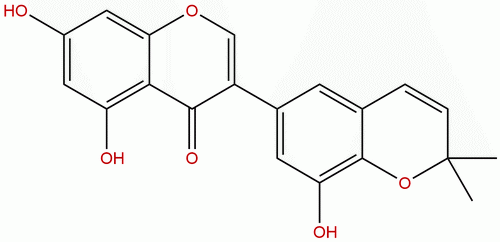


Product name: Semilicoisoflavone B
Synonym name: Semilicoisoflavone B
Catalogue No.: SBP03403
Cas No.: 129280-33-7
Formula: C20H16O6
Mol Weight: 352.342
Botanical Source:
Physical Description:
Type of Compound: Flavonoids
Purity: 95%~99%
Analysis Method: HPLC-DAD or/and HPLC-ELSD
Identification Method: Mass, NMR
Packing: Brown vial or HDPE plastic bottle
The product could be supplied from milligrams to grams
Inquire for bulk scale.
For Reference Standard and R&D, Not for Human Use Directly.
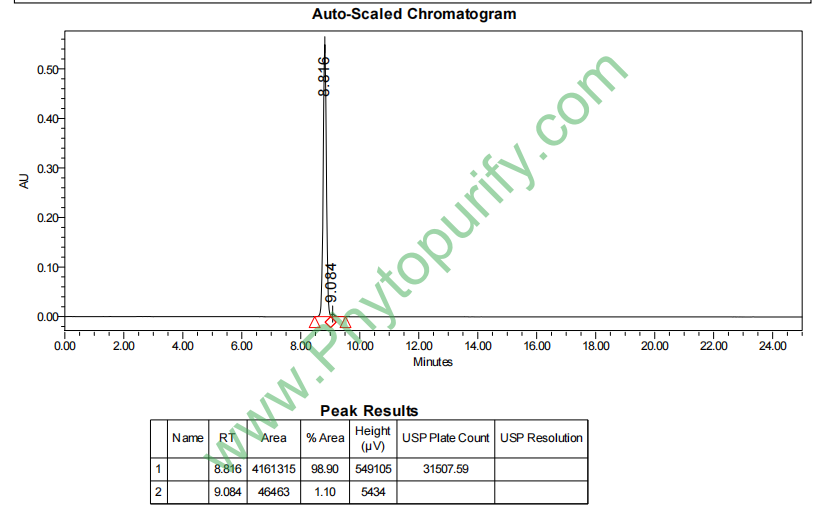
HPLC of Semilicoisoflavone B
Storage conditions:Short-term storage at 2~8℃, long-term storage at -20 ~ -80℃
111.8400
2.5000
Low
Unknown
Unknown
Unknown
Unknown
Unknown
Unknown
Unknown
Unknown
Alzheimer's disease (AD) is a degenerative disease of the central nervous system characterized by progressive cognitive impairment and behavioral damage, and has become a major challenge in the global public health field. According to the World Health Organization, there are approximately 55 million dementia patients worldwide, with AD accounting for 60% -70%. It is expected that this number will increase to 139 million by 2050. The pathological features of AD mainly include senile plaques formed by extracellular amyloid beta (A β) deposition, neurofibrillary tangles formed by excessive phosphorylation of tau protein in cells, as well as neuronal loss and synaptic dysfunction. Among the many hypotheses about the pathogenesis of AD, the "amyloid cascade hypothesis" still holds a central position, which suggests that the imbalance between the production and clearance of A β is the starting and key link in the onset of AD.
A β is produced by the sequential cleavage of amyloid precursor protein (APP) by β - secretase 1 (BACE1) and γ - secretase. Among them, BACE1 is the rate limiting enzyme in the process of A β production, and its abnormal increase in expression and activity is considered an important driving factor for the onset of AD. Therefore, the search for safe and effective BACE1 inhibitors has become a hot topic in the development of anti AD drugs. However, currently, synthetic BACE1 inhibitors entering clinical trials have mostly failed due to poor efficacy or toxic side effects (such as liver toxicity, skin pigmentation, etc.), making the search for new BACE1 inhibitors from natural products a highly promising research strategy.
Licorice (Glycyrrhiza uralensis Fisch.), as one of the most widely used herbs in traditional Chinese medicine, is known as the "old man of the country" and has the effects of tonifying the spleen and qi, clearing heat and detoxifying, expelling phlegm and cough, relieving pain, and harmonizing various medicines. Modern pharmacological research has confirmed that licorice and its active ingredients have various biological activities such as anti-inflammatory, antioxidant, antiviral, hepatoprotective, and neuroprotective effects. Semilicuosoflavone B is an flavonoid compound isolated from licorice, which has received widespread attention in recent years due to its unique anti AD pharmacological activity - inhibiting BACE1 expression and activity and reducing A β production by regulating the PPAR γ/STAT3 signaling pathway. This article will provide a systematic review of the research progress on semi licorice isoflavone B from the aspects of chemical structure, plant origin, pharmacological activity, mechanism of action, medicinal properties, and clinical application prospects.
Semilicorice Isoflavone B (SIFB) belongs to the flavonoid class of compounds. Its chemical name is 5,7-dihydroxy-3- [4-hydroxy-3- (3-methyl-2-butenyl) phenyl] -4H-1-benzopyran-4-one, with a molecular formula of C ₂₀ H ₁ O ₆ and a molecular weight of 352.34 g/mol. Its structural features are as follows: the C-5 and C-7 positions of the A ring each have a hydroxyl substitution, the C-4 'position of the B ring has a hydroxyl substitution, and the C-3' position is connected to a 3-methyl-2-butenyl (isopentenyl) side chain. The presence of the isopentenyl side chain is an important structural feature that distinguishes semi licorice isoflavone B from other isoflavones, and may be closely related to its biological activity and membrane permeability.
From the perspective of physicochemical properties, the lipid water partition coefficient (LogP) of semi glycyrrhizic isoflavone B is 2.50, indicating that it has moderate lipophilicity and theoretically can penetrate biofilms well. Its topological polar surface area (TPSA) is 111.84 Å ², which meets the requirement of Lipinski's "Five Rules" that TPSA is less than 140 Å ², indicating its good oral absorption potential. The number of hydrogen bond acceptors is 6, and the number of hydrogen bond donors is 3 (two phenolic hydroxyl groups and one alcohol hydroxyl group), which enable it to form stable hydrogen bond interactions with the target protein. Half licorice isoflavone B is a yellow or light yellow crystalline powder that is soluble in organic solvents such as methanol, ethanol, and dimethyl sulfoxide, and slightly soluble in water. In UV spectroscopy, isoflavone compounds typically have two characteristic absorption peaks at 240-280 nm (band II) and 300-400 nm (band I), with the maximum absorption wavelength of half licorice isoflavone B being approximately 260 nm and 320 nm, respectively.
It is worth noting that the isopentenyl side chain in the semi licorice isoflavone B molecule not only increases the lipophilicity of the molecule, but may also enhance its binding affinity with target proteins through hydrophobic interactions between the isopentenyl group and biomolecules. In addition, the double bond structure on the side chain gives it certain chemical reactivity, which may participate in redox reactions in vivo or Michael addition reactions with nucleophilic groups, which may be one of the chemical bases for its biological activity.
Half licorice isoflavone B mainly comes from leguminous plants of the licorice genus, among which Glycyrrhiza uralensis Fisch. is the most abundant. In addition, it has also been found in the roots and rhizomes of Glycyrrhiza glabra L., Glycyrrhiza inflata Bat., as well as certain plants in the genus Glycyrrhiza. Licorice, as a traditional Chinese medicinal herb, is widely distributed worldwide, with major production areas including Northwest China (Gansu, Inner Mongolia, Xinjiang, Ningxia, etc.), Central Asia, West Asia, and the Mediterranean coastal regions. Among them, Chinese Ural licorice is considered an authentic medicinal herb due to its excellent quality and high content of active ingredients.
Half licorice isoflavone B has a relatively low content in licorice, usually 0.01% -0.05% of dry weight, and belongs to trace active ingredients. The extraction method usually includes the following steps:
(1) Raw material pretreatment: Take dried licorice roots or rhizomes and grind them to an appropriate particle size (usually 20-40 mesh) to improve extraction efficiency. Research has shown that the drying method of raw materials (shade drying, sun drying, or oven drying) has a significant impact on the retention of isoflavone components, and low-temperature drying is more conducive to maintaining the stability of the components.
(2) Solvent extraction: Common extraction solvents include organic solvents such as methanol, ethanol, and ethyl acetate. Considering the needs of food safety and industrial production, ethanol water mixed solvents (usually 50% -80% ethanol) are an ideal choice. The extraction methods can be reflux extraction, ultrasound assisted extraction, or microwave-assisted extraction. Ultrasound assisted extraction is widely used due to its advantages of easy operation, high extraction efficiency, and short time. The optimized extraction conditions are usually: a solid-liquid ratio of 1:10-1:20 (w/v), an extraction temperature of 50-70 ℃, an extraction time of 30-60 minutes, and 2-3 extractions.
(3) Separation and purification: The crude extract contains a large number of compounds with similar polarity, which requires multi-step chromatographic separation to obtain high-purity semi liquorice isoflavone B. Common separation methods include: silica gel column chromatography (using gradient elution systems such as chloroform methanol or petroleum ether acetone), Sephadex LH-20 gel column chromatography (using methanol or ethanol as mobile phase), preparative high-performance liquid chromatography (Pre HPLC), etc. In recent years, new separation technologies such as high-speed countercurrent chromatography (HSCCC) and supercritical fluid chromatography (SFC) have also been applied to the separation and purification of glycyrrhizic isoflavones, which have the advantages of high separation efficiency and low solvent consumption.
(4) Structural identification: The purified compound was structurally confirmed by nuclear magnetic resonance spectroscopy (¹ H-NMR, ¹ ³ C-NMR, HMBC, HSQC, etc.), mass spectrometry (HR-ESI-MS), and ultraviolet spectroscopy. The nuclear magnetic resonance characteristics of Half Glycyrrhiza Isoflavones B include active hydrogen signals at the C-5 and C-7 hydroxyl groups of the A ring (δ 12-13 ppm and δ 10-11 ppm), ene hydrogen signals on the isopentenyl side chain (δ 5.2-5.3 ppm), and two methyl signals (δ 1.7-1.8 ppm).
It should be pointed out that due to the low content of semi licorice isoflavone B in licorice, the cost of direct extraction is relatively high. In recent years, research on chemical synthesis and biosynthesis methods has provided a new pathway for obtaining sufficient amounts of semi glycyrrhizic isoflavone B. Chemical synthesis usually uses substituted acetophenone and substituted benzaldehyde as raw materials, and is completed through steps such as Aldol condensation, cyclization, and deprotection. And biosynthesis utilizes genetic engineering methods to reconstruct the biosynthesis pathway of isoflavones in microorganisms such as Escherichia coli or yeast, achieving heterologous production of target compounds.
The most noteworthy pharmacological activity of Half Glycyrrhiza Isoflavones B is its anti AD effect. Multiple in vitro and in vivo studies have confirmed that half licorice isoflavone B can significantly reduce the generation and aggregation of A β, and improve cognitive function in AD model animals.
(1) Inhibition of A β production: In SH-SY5Y human neuroblastoma cells and primary cortical neurons, semi glycyrrhizin B (1-10 μ M) reduces the secretion levels of A β ₁₋₄₀ and A β ₁₋₄₂ in a concentration dependent manner. Western blot and ELISA analysis showed that after 48 hours of treatment with half licorice isoflavone B, the level of A β in the cell culture supernatant decreased by 40% -60%, and the β - cleavage product sAPP β of APP was also significantly reduced, indicating that its target is located in the β - secretase cleavage stage of APP.
(2) Reduce neurotoxicity induced by A β: In neuronal models treated with A β ₂₅₋③₅ or A β ₁₋₄₂, pretreatment with semi glycyrrhizin B significantly improved cell survival, reduced lactate dehydrogenase (LDH) release, decreased reactive oxygen species (ROS) production, and inhibited caspase-3 activation. These results indicate that half licorice isoflavone B not only reduces the production of A β, but also directly counteracts oxidative stress and cell apoptosis caused by A β.
(3) Improving cognitive function: In the APP/PS1 dual transgenic AD mouse model, oral administration of semi glycyrrhizic isoflavone B (20 mg/kg/d, continuous for 8 weeks) significantly improved the spatial learning and memory abilities of mice in the Morris water maze experiment, manifested as shortened escape latency and prolonged target quadrant dwell time. At the same time, the deposition area of A β plaques in the mouse brain decreased by about 50%, and the expression level of BACE1 protein significantly decreased.
Neuroinflammation is an important link in the pathological process of Alzheimer's disease. Half licorice isoflavone B exhibits significant anti-inflammatory effects in various inflammatory models. In BV-2 microglia stimulated by lipopolysaccharide (LPS), semi glycyrrhizin B (5-20 μ M) can inhibit the release of pro-inflammatory factors such as nitric oxide (NO), prostaglandin E ₂ (PGE ₂), tumor necrosis factor - α (TNF - α), and interleukin-6 (IL-6), while downregulating the expression of inducible nitric oxide synthase (iNOS) and cyclooxygenase-2 (COX-2). Mechanism studies have shown that its anti-inflammatory activity is related to the inhibition of nuclear factor kappa B (NF - κ B) and mitogen activated protein kinase (MAPK) signaling pathways.
Isoflavones generally have antioxidant activity. The DPPH free radical scavenging ability (IC ₅₀ about 25 μ M) and ABTS free radical scavenging ability (IC ₅₀ about 15 μ M) of half licorice isoflavone B are superior to the positive control vitamin C. In the oxidative damage model induced by hydrogen peroxide (H ₂ O ₂), half licorice isoflavone B can upregulate the activities of superoxide dismutase (SOD), glutathione peroxidase (GPx), and catalase (CAT), reduce the content of malondialdehyde (MDA), and protect cells from oxidative stress damage.
The preliminary study also found that hemiglycyrrhiza isoflavone B has anti-tumor activity (inhibiting the proliferation of breast cancer MCF-7 cells and hepatoma HepG2 cells, with IC ₀ 12.5 μ M and 18.3 μ M respectively), liver protection activity (reducing carbon tetrachloride induced hepatocyte damage) and antibacterial activity (inhibiting Staphylococcus aureus and Candida albicans to a certain extent). However, further in vivo experiments are needed to validate these activities.
The core mechanism of the anti AD effect of half licorice isoflavone B is to inhibit the expression and activity of BACE1 by regulating the PPAR γ/STAT3 signaling pathway, thereby reducing the production of A β.
BACE1 (β - site APP cleansing enzyme 1) is a transmembrane aspartic protease and a key rate limiting enzyme in the APP amyloid protein generation pathway. The expression of BACE1 is regulated by multiple transcription factors, among which signal transduction and transcription activator 3 (STAT3) is an important positive regulatory factor. Activated STAT3 (phosphorylated STAT3, p-STAT3) can directly bind to STAT3 response elements in the promoter region of the BACE1 gene, promoting BACE1 transcription. In addition, peroxisome proliferator activated receptor gamma (PPAR gamma) acts as a negative regulatory factor, inhibiting the transcriptional activity of STAT3 by competitively binding to transcription co activators or directly interacting with STAT3, thereby downregulating the expression of BACE1.
Research has shown that half licorice isoflavone B exerts its anti AD effect through the following molecular mechanisms:
(1) Upregulation of PPAR γ expression: Half licorice isoflavone B can significantly increase the mRNA and protein expression levels of PPAR γ. In SH-SY5Y cells, after 24 hours of treatment with semi glycyrrhizin B, the expression level of PPAR γ increased by 2-3 times. PPAR γ is a ligand activated nuclear receptor transcription factor that can form a heterodimer with the retinol X receptor (RXR) upon activation, bind to the PPAR response element (PPRE) in the promoter region of the target gene, and regulate the transcription of downstream genes. Half licorice isoflavone B may act as a partial agonist of PPAR γ or upregulate PPAR γ expression through indirect pathways such as activating upstream kinases.
(2) Inhibition of STAT3 phosphorylation: Half licorice isoflavone B can inhibit Janus kinase 2 (JAK2) - mediated phosphorylation of STAT3 at the Tyr705 site, thereby blocking STAT3 activation and nuclear translocation. In neurons stimulated by A β, treatment with semi glycyrrhizin B (10 μ M) can reduce p-STAT3 levels by approximately 60%. It is worth noting that the inhibitory effect of half licorice isoflavone B on STAT3 is selective, with little effect on the phosphorylation of STAT1 and STAT5.
(3) PPAR γ - STET3 interaction: Upregulated PPAR γ can physically interact with activated STAT3 to form a PPAR γ - STAT3 complex, thereby preventing the binding of STAT3 to the BACE1 promoter. Immunoprecipitation experiments confirmed that after treatment with half licorice isoflavone B, the binding of PPAR γ to STAT3 was enhanced, while the binding of STAT3 to the BACE1 promoter was reduced. This protein-protein interaction is a key link in the regulation of BACE1 expression by half licorice isoflavone B.
(4) Inhibition of BACE1 enzyme activity: In addition to regulating the expression of BACE1, half licorice isoflavone B can also directly inhibit the enzymatic activity of BACE1. Molecular docking and enzyme kinetics studies have shown that half licorice isoflavone B can form hydrogen bonds and hydrophobic interactions with the catalytic active sites (Asp32 and Asp228) of BACE1, with an IC ₅₀ of approximately 8.5 μ M. This dual mechanism of action (reducing BACE1 expression+inhibiting BACE1 activity) results in a synergistic effect of half licorice isoflavone B in reducing A β production.
The effect of half licorice isoflavone B is not limited to a single PPAR γ/STAT3 pathway. The study also found that half licorice isoflavone B can activate the PI3K/Akt signaling pathway, promote the phosphorylation of GSK-3 β (inhibit its activity), thereby reducing the excessive phosphorylation of tau protein. In addition, half licorice isoflavone B can enhance the expression of antioxidant enzymes by activating the Nrf2/ARE pathway and alleviate neuroinflammation by inhibiting the NF - κ B pathway. These multi-target and multi pathway action characteristics make semi glycyrrhizic isoflavone B have comprehensive advantages in anti AD effects.
According to the classic rules of medicinal chemistry, the pharmacological parameters of semi glycyrrhizic isoflavone B are as follows:
Overall, half licorice isoflavone B conforms to Lipinski's "five rules" and has good medicinal properties. However, its poor water solubility (about 0.1 mg/mL) may limit its oral bioavailability.
The BBB permeability of half licorice isoflavone B has been evaluated as "Low", which is the main challenge it faces as a candidate drug for anti AD treatment. Isoflavones are often difficult to penetrate the BBB due to the high number of phenolic hydroxyl and polar groups in their molecules. However, the isopentenyl side chain in the semi licorice isoflavone B molecule increases its lipophilicity, which may improve its BBB permeability to some extent. Research has shown that the BBB permeability of certain isopentenyl isoflavones (such as 8-isopentenyl daidzein) is significantly higher than that of their non isopentenyl analogues. In addition, semi glycyrrhizic isoflavone B may enter brain tissue through carrier mediated transport (such as organic anion transport peptide OATP) or passive diffusion. At present, there is still limited data on the pharmacokinetics of semi glycyrrhizic isoflavone B in the brain, and further research is needed.
At present, there is insufficient systematic research on the pharmacokinetics of half licorice isoflavone B, but preliminary data is available:
The safety data of half licorice isoflavone B is currently limited. Current information shows:
It is worth noting that licorice, as a medicinal and edible herb, has been validated for its safety in long-term clinical applications. Half licorice isoflavone B, as a trace component in licorice, may have low toxicity risk, but it still needs to undergo comprehensive preclinical safety evaluation according to the requirements of new drug development.
Half licorice isoflavone B has a unique mechanism of inhibiting BACE1 expression and activity by regulating the PPAR γ/STAT3 signaling pathway, which gives it the following advantages in the development of anti AD drugs:
(1) Multi target effect: Unlike single target synthetic BACE1 inhibitors, semi glycyrrhizic isoflavone B has multiple activities such as inhibiting BACE1, antioxidant, anti-inflammatory, and anti apoptotic, which can intervene in the pathological process of AD from multiple aspects and may have better comprehensive therapeutic effects.
(2) The safety of natural sources: As a natural active ingredient in licorice, semi licorice isoflavone B inherits the safety basis of long-term clinical application of licorice and may avoid the common toxic side effects of synthetic drugs.
(3) PPAR γ agonistic effect: PPAR γ agonists (such as Rosiglitazone) have shown neuroprotective effects in AD animal models, but there are cardiovascular risks involved. Half licorice isoflavone B, as a partial agonist or indirect activator of PPAR γ, may have better safety.
Despite its promising prospects, the clinical translation of semi glycyrrhizic isoflavone B still faces the following challenges:
(1) Insufficient BBB permeability: This is the main obstacle that limits its clinical application. The solution strategy includes: a) developing nano formulations (such as liposomes, polymer nanoparticles, solid lipid nanoparticles, etc.) to increase drug concentration in the brain; b) Design prodrugs, such as esterification modification of phenolic hydroxyl groups to enhance lipophilicity; c) Using nasal administration route to bypass BBB and directly deliver drugs into the brain; d) Conjugate with substrates of BBB transporters, such as glucose and amino acids, to achieve carrier mediated targeted delivery.
(2) Low bioavailability: Oral absorption can be improved through formulation techniques such as self microemulsifying drug delivery systems and phospholipid complexes; Or develop non oral routes of administration (such as transdermal or inhaled administration).
(3) Low content and limited sources: Large scale production can be achieved through chemical synthesis, biosynthesis, or cell engineering (such as licorice hairy root culture); Derivatives with stronger activity and better properties can also be obtained through structural modification.
(4) Insufficient security data: Systematic toxicology studies need to be conducted in accordance with ICH guidelines, including acute toxicity, long-term toxicity, reproductive toxicity, genetic toxicity, and cardiac toxicity.
(1)In depth mechanism research: Using CRISPR-Cas9 gene editing, proteomics, and metabolomics technologies, comprehensively analyze the molecular targets and signaling network of semi glycyrrhizic isoflavone B.
(2)Structural optimization and structure-activity relationship: By synthesizing a series of derivatives of semi licorice isoflavone B and studying the relationship between structural characteristics such as isopentenyl side chains and hydroxyl substitution patterns and activity, we aim to identify candidate compounds with stronger activity and better properties.
(3)Combination therapy research: Explore the synergistic effects of half licorice isoflavone B with other anti AD drugs such as cholinesterase inhibitors and NMDA receptor antagonists, and develop a combination therapy plan.
(4)Clinical translational studies: After completing sufficient preclinical research, conduct clinical trials to verify its safety, tolerability, and efficacy in AD patients.
Half licorice isoflavone B, as a unique isopentenyl structure flavonoid compound in licorice, exhibits significant anti Alzheimer's disease potential by regulating the PPAR γ/STAT3 signaling pathway to inhibit BACE1 expression and activity, reduce A β production, and exhibit remarkable anti Alzheimer's disease potential. Its multi-target and multi pathway characteristics meet the therapeutic needs of the complex pathological mechanism of AD, and the safety background of natural sources also provides favorable conditions for its clinical translation. However, issues such as insufficient BBB permeability, low bioavailability, and limited sources remain the main bottlenecks restricting its development. With the advancement of nanomedicine delivery systems, structural optimization, and biosynthetic technologies, semi glycyrrhizic isoflavone B is expected to become an important lead compound in the development of anti AD drugs. In the future, it is necessary to collaborate across multiple disciplines such as pharmacology, medicinal chemistry, pharmacy, and clinical medicine to promote the transition of this natural product from the laboratory to clinical practice, bringing new therapeutic hope to AD patients.
