| Catalog No | Package | Original Price | Price | Inventory | Quantity | Operating |
|---|---|---|---|---|---|---|
| BP4955-5mg | 5mg | $630.00 | Sign in |
|


Storage conditions:Short-term storage at 2~8℃, long-term storage at -20 ~ -80℃
506.1300
-4.5057
-4.5057
46.4068
.4185
.1511
Low
17.4091
6.0664
Yes
No
No
No
Yes
No
0.0
Yes
Yes
Yes
Yes
Natural products, as important sources of drug lead compounds, play an irreplaceable role in the history of human health maintenance and disease treatment. Among the diverse natural products, oligosaccharides have received increasing attention in recent years due to their unique physicochemical properties, diverse biological activities, and good safety. Raffinose Family Oligosaccharides (RFOs) are a class of functional oligosaccharides widely present in the plant kingdom, including raffinose, raffinose, verbascose, and higher degree of polymerization homologs. They are not only important forms of transportation of photosynthetic products and energy storage substances in plants, but also play critical roles in physiological processes such as seed germination and stress response. In recent years, an increasing number of studies have revealed the potential health benefits of RFOs in regulating gut microbiota, enhancing immune function, improving mineral absorption, and combating osteoporosis.
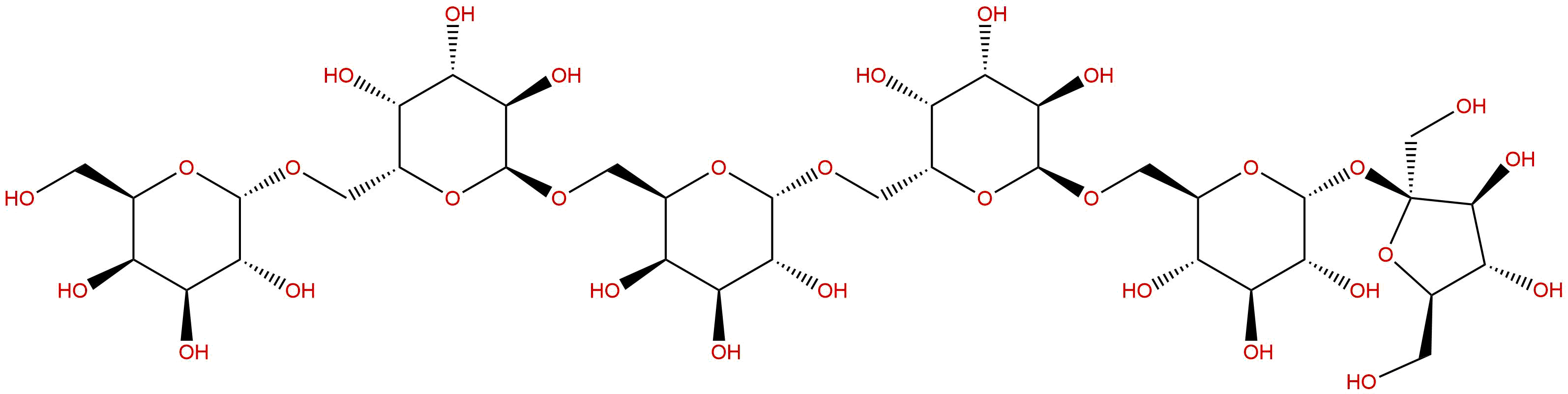
Ajugose, as a structurally clear six sugar, is an advanced member of the oligosaccharides in the raffinose family. Its chemical name is O - α - D-galactopyranosyl - (1 → 6) - O - α - D-galactopyranosyl - (1 → 6) - O - α - D-glucopyranosyl - (1 → 2) - β - D-fructofuranyl - (1 → 1) - α - D-galactopyranosyl - (1 → 6) - α - D-galactopyranosyl, with a CAS number of 512-72-1. Structurally, jingucao sugar can be regarded as an extension product of verbascose (a pentasaccharide), which is connected to an additional alpha-D-galactose unit through an alpha-1,6 glycosidic bond at its terminal galactose residue. This unique chain like structure endows it with physicochemical properties and potential biological activity that distinguish it from other oligosaccharides.
Although the distribution of polysaccharides in the plant kingdom is relatively limited, they mainly exist in certain leguminous plants such as black mung beans(Vigna mungo L. However, in recent years, with the advancement of separation and purification technology and the improvement of biological activity screening systems, its unique pharmacological value, especially in the field of bone health, has gradually been revealed. Research has shown that jingu cao sugar may exert anti osteoporosis effects by regulating the estrogen receptor (ESR1), osteoprotegerin (TNFRSF11B/OPG), nuclear factor kappa B receptor activator ligand (RANKL) system, as well as various key transcription factors for bone metabolism (such as RUNX2, SP7/Osterix) and enzymes (such as MMP9, CTSK). This discovery provides new ideas for the development of new, safe, and effective anti osteoporosis drugs or functional foods.
This article aims to provide a comprehensive professional review of Jin Gu Cao Tang, systematically elaborating on its chemical structure, physicochemical properties, plant sources and extraction methods, pharmacological activity, mechanism of action, drug evaluation, and clinical application prospects, in order to provide reference for the in-depth research and development of this natural product.
The chemical structure of jingucao sugar is the basis of its biological activity. It is a linear oligosaccharide composed of six monosaccharide units connected by specific glycosidic bonds. The structural unit composition is as follows:
- Monosaccharide composition Composed of four D-galactoses, one D-glucose, and one D-fructose.
- Connection sequence and key type Starting from the reducing end, the sequence is: fructose (furan type, beta configuration) → glucose (pyran type, alpha configuration) → galactose (pyran type, alpha configuration) → galactose (pyran type, alpha configuration) → galactose (pyran type, alpha configuration) → galactose (pyran type, alpha configuration). Among them, there is a β -1,2 glycosidic bond between fructose and glucose, an α -1,6 glycosidic bond between glucose and galactose, and an α -1,6 glycosidic bond between galactose and galactose. Therefore, the precise structure of Jin Gu Cao sugar can be expressed as: α - D-Galp - (1 → 6) - α - D-Galp - (1 → 6) - α - D-Galp - (1 → 6) - α - D-Galp - (1 → 6) - α - D-Glcp - (1 → 2) - β - D-Fruf. This structure makes it one of the most polymerized natural linear oligosaccharides in the raffinose family.
From the perspective of physicochemical properties, Jin Gu Cao sugar exhibits typical hydrophilic oligosaccharide characteristics.
- Molecular weight and formula Its molecular formula is C ∝₆ H ₆₂ O ∝₁, and its molecular weight is 990.8610 Da. This molecular weight is between small molecules and biomacromolecules, bringing unique challenges and opportunities for its oral absorption and bioavailability.
- Lipid water partition coefficient (LogP)The calculated LogP value is -4.5057, which is an extremely low value, indicating that Hericium glycosides have strong hydrophilicity and are almost insoluble in lipids or organic solvents. This high water solubility makes it mainly distributed in aqueous environments such as blood, extracellular fluid, and intestines within living organisms.
- Polarized surface area (TPSA)Its TPSA is as high as 506.13 Å ². TPSA is an important parameter for predicting drug oral absorption and blood-brain barrier penetration ability. It is generally believed that molecules with TPSA greater than 140 Å ² have poor oral absorption and are difficult to penetrate the blood-brain barrier. The extremely high TPSA value of Jin Gu Cao sugar suggests that its oral bioavailability may be low and almost impossible to enter the central nervous system.
- Water solubility Its calculated water solubility is 46.4068 mg/mL, which belongs to highly water-soluble compounds. This is consistent with its extremely low LogP value, which is beneficial for its dissolution in the digestive tract, but also limits its transmembrane transport ability.
- Blood-brain barrier penetrability Based on its extremely high polarity and molecular weight, the ability of Jin Gu Cao sugar to penetrate the blood-brain barrier is evaluated as "low". This means that its pharmacological effects are mainly limited to peripheral tissues and are unlikely to produce central nervous system side effects.
- HERG inhibition and Ames test The risk assessment of hERG inhibition is' no ', indicating a low potential risk of inducing QT interval prolongation and arrhythmia in the heart. The Ames test result is 0.0, indicating no significant mutagenicity and low risk of genetic toxicity. These preliminary safety evaluations provide favorable conditions for its use as a candidate drug or health supplement ingredient.
The distribution of polysaccharides in nature is not widespread, and it is currently known that they mainly exist in certain specific plants, especially leguminous plants. Its name "Ajugose" comes from the plant that first discovered it - the genus Ajugose(Ajuga)Plants, but subsequent research has confirmed that black mung beans(Vigna mungo L. The seeds of () are its more abundant and stable source. In addition, trace amounts of gluten sugar may also be present in some other legume seeds, such as chickpeas, beans, etc., but the content is usually low.
The main way to obtain this compound is to extract and purify polysaccharides from black mung bean seeds. The extraction method usually follows the classic process for polar small molecules (especially oligosaccharides) in natural product chemistry, which mainly includes the following steps:
Raw material pretreatment Select dry black mung bean seeds and grind them to an appropriate particle size to improve extraction efficiency. Defatting treatment (such as using petroleum ether or n-hexane) can remove fat soluble impurities and reduce interference in subsequent separation.
Extract Taking advantage of the high water solubility of Caryophyllum glycosides, water or low concentration ethanol (such as 50-70% ethanol) is usually used as the extraction solvent. Extraction methods include room temperature immersion, heating reflux, or ultrasound assisted extraction. Heating reflux can improve extraction efficiency, but it should be noted that the temperature should not be too high (usually controlled at 60-80 ℃) to avoid damaging glycosidic bonds. Ultrasound assisted extraction is more gentle and efficient.
Preliminary purification After centrifugation or filtration to remove insoluble residue, the extract is concentrated. Subsequently, ethanol precipitation method is often used to remove large molecular impurities such as proteins and polysaccharides. The specific operation is to add several times the volume of ethanol to the concentrated solution, so that the final ethanol concentration reaches 70-80%. After settling, centrifuge, and the supernatant is the crude extract rich in oligosaccharides.
chromatographic separation This is a key step in obtaining high-purity bone marrow sugar. Due to its structural similarity and polarity with other RFOs such as raffinose, raffinose, and verbascose, it is difficult to separate them. Common chromatographic techniques include:
Structural Identification The purified compound needs to be structurally confirmed by techniques such as nuclear magnetic resonance spectroscopy (NMR, including ¹ H-NMR, ¹ ³ C-NMR, COSY, HSQC, HMBC, etc.) and mass spectrometry (MS, such as ESI-MS, MALDI-TOF-MS) to confirm that it is the target compound, Jin Gu Cao Tang.
At present, research on the direct pharmacological activity of Ganoderma lucidum sugar is still in its infancy, and literature reports are relatively limited. However, based on its chemical structure as a senior member of the raffinose family oligosaccharides and the prediction of its related targets (especially those related to bone metabolism), it can be inferred that it has multiple potential pharmacological activities, among which the anti osteoporosis effect is the most concerned area.
Anti osteoporosis activity This is the most promising pharmacological research direction for Jin Gu Cao Tang. Osteoporosis is a systemic bone disease characterized by low bone mass and destruction of bone microstructure, leading to increased bone fragility and increased risk of fractures. Its pathogenesis is complex, involving an imbalance between osteoblast mediated bone formation and osteoclast mediated bone resorption. The predicted target network reveals that Jin Gu Cao Tang may intervene in osteoporosis through the following pathways:
Other potential activities As a member of RFOs, Jin Gu Cao Tang may also possess common activities of this class of compounds, such as:
- Probiotic activity RFOs are not digested or absorbed in the small intestine and can enter the large intestine intact. They are selectively fermented and utilized by beneficial bacteria such as bifidobacteria and lactobacilli, promoting their proliferation and inhibiting the growth of harmful bacteria, thereby improving the intestinal microbiota.
- Immune regulatory activity RFOs can indirectly affect the host immune system by regulating the gut microbiota. In addition, some oligosaccharides can directly interact with receptors on the surface of immune cells, such as Toll like receptors, to exert immune regulatory functions.
- Promote mineral absorption The short chain fatty acids produced by the fermentation of RFOs in the intestine can lower the pH value of the intestine, increase the solubility of minerals such as calcium, magnesium, and iron, and promote their passive absorption.
Based on the pharmacological activity analysis mentioned above, the mechanism of anti osteoporosis effect of Jin Gu Cao Tang can be further refined, with its core being the precise regulation of multiple key nodes in the bone metabolism network. These targets do not act in isolation, but form a complex signal network.
Wnt/β - catenin signaling pathway This is the core pathway that regulates osteoblast differentiation and bone formation. SOST (Osteocalcin) is a potent inhibitor of this pathway. Jin Gu Cao Tang may release the inhibition of Wnt signaling by inhibiting the expression or activity of SOST, thereby stabilizing β - catenin and allowing it to enter the nucleus, bind with TCF/LEF transcription factors, and initiate the transcription of downstream target genes (such as RUNX2). RUNX2, as the "main switch" for osteoblast differentiation, further activates SP7 (Osterix), which synergistically promotes the differentiation of osteoblast precursor cells into mature osteoblasts and upregulates the expression of COL1A1 and BGLAP, ultimately promoting bone matrix formation and mineralization.
OPG/RANKL/RANK system This is the ultimate common pathway for regulating osteoclast differentiation and activation. Jin Gu Cao Tang may intervene in this system through the following ways:
Estrogen signaling pathway ESR1 is the main receptor mediating the bone protective effect of estrogen. Jin Gu Cao Tang may act as a selective estrogen receptor modulator (SERM) that binds to ESR1. The combined ESR1 can directly or indirectly regulate the transcription of OPG and RANKL, and rapidly activate signaling pathways through non genomic effects, affecting the activity of osteoblasts and osteoclasts. In addition, ESR1 signaling can interact with the Wnt/β - catenin pathway to jointly promote bone formation.
Regulation of bone matrix degrading enzymes Mature osteoclasts degrade bone matrix by secreting MMP9 and CTSK. MMP9 is mainly responsible for degrading collagen in non mineralized areas, while CTSK can efficiently degrade type I collagen in mineralized bone. Jin Gu Cao Tang may weaken the bone resorption ability of osteoclasts by inhibiting the expression of these enzymes in osteoclasts or directly inhibiting their enzyme activity. The activation of VDR can promote the absorption of calcium in the intestine, providing raw materials for bone mineralization. At the same time, VDR signals can also affect the function of osteoblasts and osteoclasts.
In summary, the anti osteoporosis mechanism of Jin Gu Cao Tang is not achieved through a single target, but through the synergistic action of multiple targets and pathways. It can promote bone formation by activating Wnt and ESR1 signals, and inhibit bone resorption by upregulating OPG/RANKL ratio and inhibiting matrix degrading enzymes, presenting a "bidirectional regulation" of bone metabolism balance, which is highly consistent with the development concept of ideal anti osteoporosis drugs (such as drugs that promote bone formation and inhibit bone resorption).
The evaluation of the pharmacological properties of Jin Gu Cao Tang is crucial in developing it into a clinical drug. Based on its physicochemical properties and preliminary toxicological data, a preliminary assessment of its pharmacological properties can be conducted.
Advantage:
- High security Preliminary toxicological evaluations (hERG inhibition negative, Ames test negative) indicate that it has low potential cardiac and genetic toxicity, and the safety window may be broad.
- Good water solubility High water solubility is beneficial for making it into oral preparations (such as solutions, granules) and injections.
- Clear target and novel mechanism Its multi-target and bidirectional regulation of bone metabolism mechanism is in line with the forefront direction of current research and development of anti osteoporosis drugs, and has a differentiated competitive advantage.
challenge:
- Oral bioavailability is extremely low This is the biggest challenge faced by the development of medicinal herbs using Jin Gu Cao Tang. Its molecular weight is close to 1000 Da, TPSA exceeds 500 Å ², and LogP is extremely low. These parameters indicate that it is difficult for it to penetrate the intestinal epithelial cell membrane through passive diffusion. In addition, as a hydrophilic macromolecule, it is also difficult to be absorbed through cellular pathways. Therefore, its oral bioavailability is expected to be extremely low (possibly less than 1%). This greatly limits its development as an oral medication.
- Metabolic stability Although RFOs are not hydrolyzed by digestive enzymes such as alpha amylase and sucrase in the small intestine, they may be degraded by enzymes of certain intestinal bacteria. After entering the large intestine, it will be fermented and utilized by the gut microbiota to produce short chain fatty acids, while the parent drug itself may be difficult to absorb into the bloodstream. Therefore, its system exposure may be very limited.
- Difficulty in formulation development To overcome oral absorption barriers, special drug delivery systems such as nanoparticles, liposomes, microemulsions, prodrug designs, etc. need to be developed, which increases research and development costs and complexity.
Prediction of pharmacokinetic characteristics:
- absorb After oral administration, the vast majority of bone marrow sugar will remain in the gastrointestinal tract and not be absorbed. A small amount may be absorbed through special pathways such as intestinal M cells or neonatal Fc receptor mediated transport, but the absorption rate is extremely low. Intravenous or subcutaneous injection may be effective ways to achieve systemic exposure.
- distribution Once it enters the bloodstream, due to its high water solubility, it will mainly distribute in the extracellular fluid and may have a low binding rate with plasma proteins. Due to the inability to penetrate the blood-brain barrier, the distribution of the central axis can be ignored.
- Metabolism In the liver and blood, there may be a lack of enzymes that hydrolyze its glycosidic bonds, so its metabolism may mainly occur in the gut and be completed by the gut microbiota. The main metabolites are short chain fatty acids and monosaccharides.
- excretion The unabsorbed part is excreted in its original form with feces. The part absorbed into the bloodstream, due to its high polarity and molecular weight, may be mainly filtered and excreted in its original form through the kidneys, or may be excreted through bile.
Despite facing significant challenges in developing medicinal properties through oral administration, the unique pharmacological activity and good safety of Jin Gu Cao Tang have opened up multiple possibilities for its clinical application, especially in the field of anti osteoporosis.
1. As a functional food or dietary supplement ingredient This is the most direct and realistic development direction for Jin Gu Cao Tang. Given its extremely low oral absorption rate, it is reasonable to develop it as a functional food or dietary supplement as a "prebiotic" and "bone health nutrient". Its mechanism of action may not directly affect bone cells, but indirectly promote bone health by regulating gut microbiota, promoting mineral absorption, and producing beneficial short chain fatty acids. This regulation mode of the gut bone axis is becoming a research hotspot in nutritional science. Developing daily granules, capsules, or adding them to beverages and dairy products has broad market prospects.
2. Develop drugs for local intestinal action By utilizing its non absorbable properties, it can be developed into drugs for treating intestinal diseases such as inflammatory bowel disease (IBD), irritable bowel syndrome (IBS), etc. By regulating gut microbiota, enhancing intestinal barrier function, and local anti-inflammatory effects, intestinal health can be improved.
3. Develop non oral drug delivery formulations To directly exert its systemic regulatory effect on bone metabolism, non oral administration routes can be explored.
- injection Developed into sustained-release formulations for subcutaneous or intramuscular injection, directly entering the bloodstream and bypassing the absorption barrier. This can maximize its pharmacological activity, but patient compliance is poor and the cost is high, making it suitable for patients with severe osteoporosis.
- Transdermal drug delivery system: With its high water solubility, it can be developed into a patch or gel, which can be absorbed through the skin. But high molecular weight is the main obstacle to its transdermal absorption, which requires the use of physical permeation techniques such as microneedles and ion introduction.
4. Modify the structure as a lead compound To address its poor oral absorption, structural modification can be carried out through medicinal chemical methods.
- Prodrug design Introducing lipophilic groups (such as acetyl and palmitoyl groups) onto the hydroxyl group of jingucao sugar to make prodrugs, improving its lipophilicity and membrane permeability. After entering the body, the original drug is released under the action of esterase.
- Molecular optimization Although it is extremely difficult, theoretically, its analogues can be synthesized to reduce molecular weight and polarity while retaining key pharmacophores, improving its drug like properties.
prospect:
In the future, research on Jin Gu Cao sugar should focus on the following aspects:
1. In depth mechanism research Using gene knockout mice, cell models, and molecular biology techniques, systematically validate its molecular targets and signaling pathways for anti osteoporosis, particularly elucidating whether it works through the "gut bone axis".
2. Pharmacokinetic study Conduct pharmacokinetic experiments in vitro and in vivo to clarify its absorption, distribution, metabolism, and excretion characteristics, especially the metabolic fate and systemic exposure levels after oral administration.
3. Pharmaceutical research Focus on developing new delivery systems that can improve their oral bioavailability, or exploring the feasibility of non oral administration routes.
4. toxicological evaluation Conduct long-term toxicity, reproductive toxicity, and immunotoxicity studies on the system to comprehensively evaluate its safety.
5. Clinical translational research After completing sufficient preclinical research, design rigorous clinical trials to evaluate their effectiveness and safety in patients with osteoporosis or high-risk populations.
As a naturally occurring six sugar with a unique structure, jingu cao sugar is an important member of the oligosaccharides in the raffinose family. It originates from plants such as black mung beans and has high water solubility, low toxicity, and good safety. Although its oral bioavailability is extremely low, which is a major bottleneck in its development as a systemic drug, it has unique value in the field of anti osteoporosis by regulating bone metabolism through multiple targets (ESR1, RUNX2, OPG, MMP9, etc.), promoting bone formation, and inhibiting bone resorption.
At present, research on Jin Gu Cao Tang is still in its early stages, and there is still a long way to go from basic research to clinical application. Future research should focus on elucidating its mechanism of action (especially the indirect effects mediated by gut microbiota), developing innovative drug delivery systems, and exploring its application as a functional food ingredient. With the deepening of research and the advancement of technology, Jin Gu Cao Tang is expected to become a new, safe, and multifunctional bone health promoter, providing new strategies and choices for the prevention and treatment of metabolic bone diseases such as osteoporosis. The transformation from "natural products" to "health products" is both challenging and contains great hope.
Batch can search by a CAS number,one per line
