| Catalog No | Package | Original Price | Price | Inventory | Quantity | Operating |
|---|---|---|---|---|---|---|
| BP4949-5mg | 5mg | $590.00 | Sign in |
|


Storage conditions:Short-term storage at 2~8℃, long-term storage at -20 ~ -80℃
144.5200
2.0234
2.0235
.0823
1.0659
4.3334
Low
66.5793
5.2839
No
No
No
No
No
No
0.0
Yes
No
No
Yes
Natural products, as an important source of drug discovery, play an irreplaceable role in human health. Among the numerous natural product families with novel structures and diverse activities, ecdysteroids have attracted much attention due to their unique chemical structure and extensive biological activity. This type of steroid hormone, originally found in insects and crustaceans, is responsible for regulating molting, metamorphosis, and reproductive processes. It was later confirmed to be widely present in the plant kingdom and is known as phytoecdysteroids. Plant derived molting steroids are structurally similar to animal steroid hormones, but typically have higher safety and lower hormone like side effects, exhibiting significant pharmacological activities such as promoting protein synthesis, regulating glucose and lipid metabolism, protecting nerves, anti-inflammatory, antioxidant, and promoting bone health.
Ajugasterone C 2-acetate (CAS number: 154510-93-7) is an important member of the molting steroid family. The term 'Carnosterone C' in its name suggests that it may have originally originated from the genus Carnosteroides(Ajuga)The origin found in plants, and the precise structural feature of "2-acetyl" - acetylation modification on the hydroxyl group at position 2 of the mother nucleus. This compound can be obtained from the family Commelinaceae plant spider silk hairy blue ear grass(Cyanotis arachnoidea)Obtained through separation. In recent years, with the deepening understanding of the pathogenesis of metabolic bone diseases such as osteoporosis, as well as concerns about the side effects of long-term use of existing therapeutic drugs (such as bisphosphonates, selective estrogen receptor modulators, etc.) (such as jawbone necrosis, atypical femoral fractures, increased risk of thrombosis, etc.), the search for efficient and low toxicity bone metabolic modulators has become a hot topic in drug development. Due to its potential anti osteoporosis activity, particularly its association with multiple key bone metabolism targets such as ESR1, RUNX2, VDR, etc., 2-acetyl rutinosine C has gradually entered the field of researchers. This article will provide a comprehensive and in-depth review of the chemical structure, plant origin, pharmacological activity, mechanism of action, medicinal properties, and clinical application prospects of the compound, in order to provide a systematic scientific basis for the subsequent research and development of this natural product.
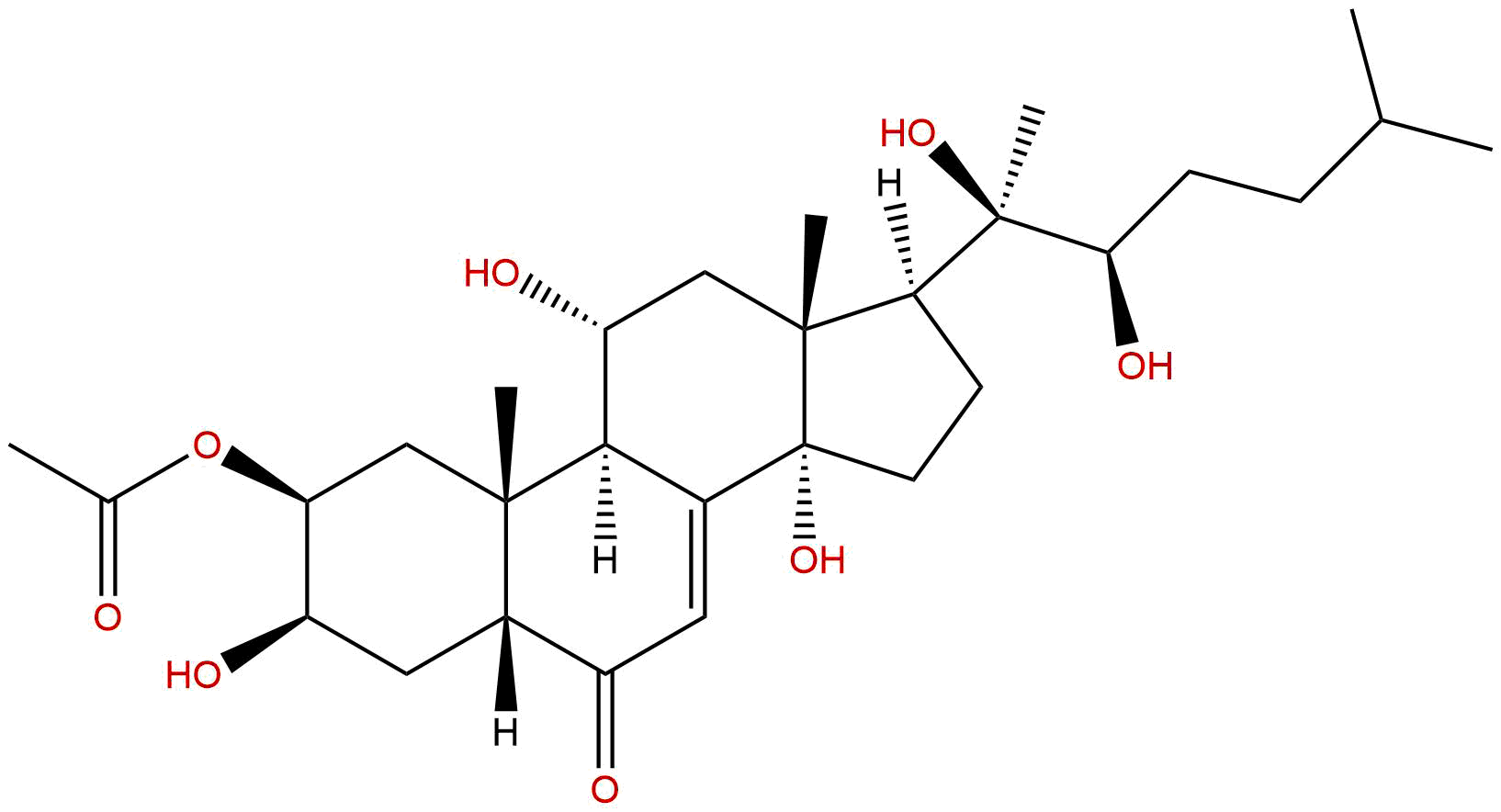
2-Acetyl Carnosterone C is a typical molting steroid, with its core skeleton being the cholestane nucleus, consisting of cis fused A/B rings (5 β - H) and trans fused B/C, C/D rings. Compared with the classic molting hormone 20 Hydroxyecdysone (20E), its structural characteristics are mainly reflected in the specific substitution patterns of the mother nucleus and side chains.
Specifically, the chemical structure of 2-acetyl Caryophyllone C can be described as: 2 β, 3 β, 14 α, 20R, 22R, 25-hexahydroxy-5 β - cholestan-7-en-6-one-2-acetate. Its molecular formula is C ₂₉ H ₄₆ O ₈, and its molecular weight is 522.6790 g/mol. The key features of this molecular structure include: 1) On the A ring, both the 2nd and 3rd positions are β - oriented hydroxyl groups, with the 2nd hydroxyl group being esterified by an acetyl group (- COOH3), which is the key structural difference that distinguishes it from Ajugasterone C; 2) In the B ring, a double bond (Δ ⁷) is formed between the C-7 and C-8 positions, and the C-6 position is a ketone group, which is a common UV absorption characteristic group of ecdysteroids; 3) C-14 is an alpha hydroxyl group; 4) On the side chain, both C-20 and C-22 are hydroxyl groups, and C-25 is a hydroxyl group, forming a typical 20,22,25-trihydroxy side chain.
From the perspective of physicochemical properties, this compound exhibits typical steroid glycoside characteristics. Its lipid water partition coefficient LogP is 2.0234, indicating that it has a certain lipophilicity, but overall it is within a moderate range, which is conducive to its transmembrane transport and binding with target proteins. Its topological polar surface area (TPSA) is 144.5200 Å ², which is relatively high and mainly attributed to the presence of multiple hydroxyl groups and one ketone group in the molecule. This usually means that its oral absorption may be limited to some extent, but it also indicates its strong ability to form hydrogen bonds with the target. The water solubility parameter is 0.0823 mg/mL, belonging to the category of slight solubility, which is related to the balance between the hydrophilicity brought by its multi hydroxyl structure and the hydrophobicity brought by the steroid core. This compound exhibits characteristic absorption in the ultraviolet region, with a maximum absorption wavelength typically around 240-250 nm, which is attributed to the Δ -6-keto conjugated system. In addition, due to the absence of alkaline nitrogen atoms in its structure, its pKa value is mainly determined by phenolic hydroxyl groups (if any) or alcohol hydroxyl groups, and it usually exists in neutral molecular form at physiological pH. These physicochemical properties collectively determine the biopharmaceutical characteristics and subsequent formulation design strategies of the compound.
2-Acetyl Carnosterone C was initially identified as a member of the plant molting steroid family. Although its name "Carnosterone C" implies a relationship with the genus Carnosteroides(Ajuga)The association between plants, but the main reported source so far is the Commelinaceae family's Blue Ear Grass genus(Cyanotis)Plant - Silk Haired Blue Ear Grass(Cyanotis arachnoidea C. B. Clarke)。 This plant is mainly distributed in southern regions such as Yunnan, Guangxi, and Guangdong in China, as well as Southeast Asian countries. It is a perennial herbaceous plant, and its whole plant is often used in folk medicine to treat rheumatism, rheumatism, pain, and traumatic injuries, which coincides with its potential anti osteoporosis and anti-inflammatory activities.
Spider silk hairy blue ear grass is one of the known "rich minerals" of plant molting steroids, and the total content of molting steroids in its underground parts (rhizomes) can be as high as 2% -5% of dry weight, far higher than other common plant sources such as spinach, quinoa, etc. In this plant, the composition of ecdysteroids is complex, with the coexistence of 20 hydroxyecdysterone, ergosterol A, B, C, and various acetylated or glycosylated derivatives in addition to 2-acetyl ergosterol C. Therefore, the efficient and selective extraction and isolation of 2-acetyl rutinosine C from this plant requires a sophisticated process.
A typical extraction process typically includes the following steps:
1. Raw material pretreatment Collect fresh spider silk and blue ear grass roots, wash and slice them, dry or freeze dry them at low temperature (40-50 ° C), crush and sieve them to obtain a dry powder.
2. Rough extraction Extract using polar solvents. Given the polyhydroxy nature of ecdysteroids, commonly used solvents are methanol, ethanol, or aqueous ethanol (such as 70% -95% ethanol). Usually, cold soaking, percolation, or reflux extraction methods are used to extract 2-3 times, combine the extracted liquids, concentrate under reduced pressure to recover the solvent, and obtain the extract.
3. Preliminary purification Disperse the extract in water and perform liquid-liquid extraction using solvents such as petroleum ether, ethyl acetate, and n-butanol in sequence. Molt steroids are mainly enriched in the n-butanol extraction layer, which can remove a large amount of lipid soluble impurities (such as chlorophyll and oil) and water-soluble impurities (such as polysaccharides and tannins).
4. chromatographic separation This is the key to obtaining high-purity 2-acetyl ergosterol ketone C. The n-butanol extract was separated by silica gel column chromatography, and gradient elution was performed using chloroform methanol or dichloromethane methanol systems. Due to the very close polarity of 2-acetyl rutinosine C and structurally similar compounds such as rutinosine C, it is often difficult to completely separate them on a single silica gel column. Therefore, it is necessary to combine other chromatographic techniques, such as:
- Reverse phase silica gel column chromatography Using ODS (C18) packing, wash with methanol water or acetonitrile water system, and separate according to the difference in hydrophobicity. Acetylated derivatives typically have stronger hydrophobicity than their parent compounds, resulting in longer retention times.
- Preparation type high performance liquid chromatography (Prep HPLC)As the final purification method, a C18 column was used, and the mobile phase conditions were optimized (such as acetonitrile water or methanol water). The target peak was collected by monitoring with a UV detector (usually set at 242 nm or 248 nm), and the purity of 2-acetyl jingucao ketone C monomer exceeded 98%.
5. Structural Identification The final pure product was structurally confirmed by nuclear magnetic resonance spectroscopy (¹ H-NMR, ¹ ³ C-NMR, 2D-NMR), high-resolution mass spectrometry (HR-MS), as well as ultraviolet and infrared spectroscopy, and compared with literature data.
It is worth noting that due to the relatively low content of 2-acetyl Caryophyllone C in plants and its coexistence with numerous structurally similar compounds, its isolation and purification pose certain challenges. In recent years, new separation methods such as high-speed countercurrent chromatography (HSCCC) and molecular imprinting technology have also been applied to the separation of ecdysteroids, which are expected to improve separation efficiency and yield.
The pharmacological activity research of 2-acetyl ergosterol ketone C is still in its infancy, but its anti osteoporosis activity is the most concerned research direction based on its membership in the molting steroid family and its association with multiple bone metabolism targets. The existing evidence mainly comes from in vitro cell experiments and activity comparisons of homologous compounds.
1. Promote osteoblast differentiation and mineralization
Bone formation is mainly mediated by osteoblasts. Multiple studies have shown that molting steroids such as 20 hydroxyecdysterone can significantly promote the differentiation of bone marrow mesenchymal stem cells (BMSCs) or pre osteoblast cell lines (such as MC3T3-E1) into mature osteoblasts. Its signature effects include upregulation of osteogenic specific transcription factors RUNX2 and Osterix (SP7) expression; Promote the synthesis and secretion of type I collagen (COL1A1); Enhance the activity of alkaline phosphatase (ALP); Ultimately promoting the deposition of calcium salts and the formation of mineralized nodules. Given the high similarity in structure between 2-acetyl Caryophyllone C and 20 hydroxyecdysterone, it can be reasonably inferred that they also have the ability to promote osteogenic differentiation. In fact, its target list includes RUNX2 and SP7, which strongly suggests its mechanism of driving osteogenic differentiation by regulating the core transcriptional network.
2. Inhibit osteoclast activity and bone resorption
The maintenance of bone homeostasis depends on the dynamic balance between osteoblast mediated bone formation and osteoclast mediated bone resorption. The essence of osteoporosis is that bone resorption exceeds bone formation. The excessive activation of osteoclasts is the key factor leading to bone loss. Molt shedding steroids have been reported to have inhibitory effects on osteoclastogenesis and activity. The mechanism may be related to the inhibition of the NF - κ B and MAPK signaling pathways induced by RANKL (receptor activator of nuclear factor kappa B ligand). The target list of 2-acetyl rutinosterone C includes CTSK (protease K, a key enzyme secreted by osteoclasts responsible for degrading bone collagen) and MMP9 (matrix metalloproteinase 9, also involved in bone matrix degradation). Therefore, this compound may inhibit the bone resorption function of osteoclasts by directly or indirectly downregulating the expression or activity of these bone resorption related enzymes.
3. Regulating hormones and factors related to bone metabolism
The target list of this compound also includes ESR1 (estrogen receptor alpha), VDR (vitamin D receptor), and TNFRSF11B (osteoprotegerin, OPG)。 These targets are all core nodes in the bone metabolism regulatory network.
- ESR1 Estrogen plays a crucial role in maintaining bone health by binding to ESR1. The decrease in estrogen levels in postmenopausal women is the main cause of osteoporosis. 2-Acetyl Carnosterone C may act as a plant estrogen or selective estrogen receptor modulator (SERM), mimicking the bone protective effect of estrogen by binding to ESR1, inhibiting bone resorption, and avoiding excessive stimulation of tissues such as the breast and uterus.
- VDR Active vitamin D (1,25-dihydroxyvitamin D3) promotes intestinal calcium absorption by binding to VDR and directly acts on osteoblast and osteoclast precursors, regulating bone metabolism. This compound may enhance the body's utilization efficiency of calcium by regulating the VDR signaling pathway, or synergize with vitamin D.
- TNFRSF11B (OPG)OPG is a bait receptor for RANKL, which can competitively bind to RANKL, thereby blocking the binding of RANKL to its receptor RANK and inhibiting the differentiation and activation of osteoclasts. The increase in OPG/RANKL ratio is beneficial for bone formation. This compound may inhibit bone resorption by upregulating the expression of OPG or downregulating the expression of RANKL.
4. Other potential activities
In addition to anti osteoporosis, the ecdysteroid family also generally has effects such as promoting protein synthesis (non androgen pathway), lowering blood sugar, lowering blood lipids, protecting the liver, anti-inflammatory, and neuroprotective effects. 2-Acetyl Carnosterone C may also possess these activities. For example, its LogP value is moderate and its blood-brain barrier permeability is low, suggesting that it may mainly act on peripheral tissues, while low brain permeability also reduces the risk of side effects in the central nervous system.
Based on the pharmacological activity mentioned above, the mechanism of action of 2-acetyl jingucao ketone C can be analyzed in depth at the molecular level. Its function is not limited to a single target, but rather through the coordinated regulation of the bone metabolism network through multiple targets and pathways.
1. Nuclear receptor-mediated transcriptional regulation
This is its most core mechanism of action. 2-Acetyl Carnosterone C, as a steroid analogue, is most likely to exert its biological effects by binding and activating specific nuclear receptors. The ESR1 and VDR in its target list are typical nuclear receptors.
- ESR1 pathway This compound may directly bind to the ligand binding domain of ESR1, induce conformational changes in the receptor, promote its binding to co activators or co repressors, and thereby regulate the transcription of downstream target genes. In osteoblasts, activated ESR1 can upregulate the expression of genes such as RUNX2, OPG, and COL1A1, while inhibiting the expression of osteoclast differentiation factors such as RANKL. This dual mode of action (promoting bone formation+inhibiting bone resorption) makes it an ideal candidate molecule for anti osteoporosis.
- VDR pathway This compound may serve as a ligand or allosteric regulator for VDR, enhancing the transcriptional activity of VDR/RXR heterodimers. The activation of VDR not only promotes the expression of intestinal calcium binding protein (Calbindin-D9k) to increase calcium absorption, but also directly acts on osteoblasts, upregulating the expression of osteogenic markers such as osteocalcin (BGLAP).
2. Regulation of key signaling pathways
In addition to nuclear receptors, this compound may also exert its effects by affecting multiple intracellular signaling pathways.
- Wnt/β - catenin pathway This is the core pathway that regulates osteoblast differentiation and bone formation. The osteocalcin encoded by the SOST gene is a potent inhibitor of this pathway. The target list of this compound includes SOST, suggesting that it may promote osteogenic differentiation by inhibiting the expression or activity of SOST, thereby relieving inhibition of the Wnt/β - catenin pathway. The activated Wnt signal stabilizes β - catenin, allowing it to enter the nucleus and bind to TCF/LEF transcription factors, initiating the expression of osteogenic genes such as RUNX2.
- RANKL/RANK/OPG pathway This is the core pathway that regulates osteoclast differentiation and activity. This compound may increase the OPG/RANKL ratio by upregulating the expression of OPG (TNFRSF11B) or downregulating the expression of RANKL, effectively blocking the binding of RANKL to RANK receptors on the surface of osteoclast precursors, inhibiting the activation of NF - κ B and MAPK (such as JNK, p38, ERK) signaling pathways, and ultimately inhibiting osteoclast generation and bone resorption activity. Meanwhile, inhibition of CTSK and MMP9 directly weakens the bone matrix degradation ability of mature osteoclasts.
3. Integration of transcription factor networks
RUNX2 and SP7 (Osterix) are the "dominant" transcription factors in osteogenic differentiation. This compound ultimately converges to regulate the expression and activity of RUNX2 and SP7 through the synergistic action of the aforementioned nuclear receptors and signaling pathways, such as Wnt and BMP. RUNX2 initiates the early stages of osteogenic differentiation, while SP7 promotes the maturation and mineralization of osteoblasts in the later stages. This compound targets both key factors simultaneously, indicating its ability to systematically drive the entire osteogenic differentiation program.
4. Regulation of bone matrix components
COL1A1 encodes the alpha 1 chain of type I collagen, which is the main component of bone organic matrix. BGLAP encodes osteocalcin, a non collagenous protein secreted by mature osteoblasts that participates in the regulation of bone mineralization and bone turnover. This compound upregulates the expression of COL1A1 and BGLAP, not only increasing the synthesis of bone matrix, but also promoting matrix maturation and mineralization, thereby directly enhancing the biomechanical strength of bones.
In summary, 2-acetyl jingucao ketone C plays a dual role in promoting bone formation (via RUNX2, SP7, COL1A1, BGLAP, Wnt pathways) and inhibiting bone resorption (via OPG/RANKL, CTSK, MMP9) through a network regulation mode of "multi-target multi pathway multi link", demonstrating the characteristics of an ideal bidirectional regulator of bone metabolism.
To develop natural products into clinical drugs, it is necessary to rigorously evaluate their drug-induced and pharmacokinetic (ADME) properties. Based on the provided parameters and structural features, a preliminary evaluation of the pharmacological properties of 2-acetyl jingucao ketone C can be conducted.
1. Physical and chemical properties and drug like properties
According to the Lipinski Five Rules (molecular weight<500, LogP<5, hydrogen bond donor<5, hydrogen bond acceptor<10), the molecular weight of this compound (522.68) slightly exceeds 500, and the number of hydrogen bond donors (5 hydroxyl groups) and acceptors (8 oxygen atoms) is also at a critical value. This indicates that its oral absorption may face challenges, but it is not absolutely insurmountable. Many marketed drugs, such as some macrolides and natural product derivatives, have also broken through the "five rules". Its LogP is 2.02, which is within the ideal range, indicating moderate lipophilicity and favorable membrane permeability. The TPSA is 144.52 Å ², and it is generally believed that compounds with good oral absorption should have a TPSA of less than 140 Å ². This value is relatively high, indicating that it may be difficult to efficiently absorb through passive diffusion and may require the use of transporters or design as prodrugs to improve absorption.
2. Preliminary safety assessment
- HERG inhibition The result is' no ', which is a very positive signal. The inhibition of hERG potassium channels is the main cause of drug-induced QT interval prolongation and fatal arrhythmias (apical twisted ventricular tachycardia) in the heart. This compound has no hERG inhibitory effect, greatly reducing its risk of cardiac toxicity.
- Ames test The result is 0.0, indicating that no mutagenicity was shown in the standard bacterial recovery mutation test, suggesting a low risk of genetic toxicity.
- blood-brain barrier The permeability is "low". This is an advantage for a drug aimed at treating peripheral bone diseases, as it can avoid potential central nervous system side effects such as dizziness, sedation, etc.
3. Pharmacokinetic characteristics (speculation)
At present, there is no publicly available data on the pharmacokinetics of 2-acetyl Caryophyllone C in vivo, but reasonable speculation can be made based on its structural characteristics and studies on similar compounds such as 20 hydroxyecdysterone.
- absorb Oral absorption may be poor and bioavailability may be low. This is mainly due to its large molecular weight, high polar surface area, and poor water solubility. Its slight solubility in water (0.0823 mg/mL) limits its dissolution in the gastrointestinal tract. In addition, esterases in the intestine may hydrolyze the acetyl group at position 2, converting it into Caryophyllone C, which is both a challenge (first pass effect) and an opportunity (as a prodrug).
- distribution Due to its low blood-brain barrier permeability, it is mainly distributed in peripheral tissues. Its moderate LogP value suggests that it may have a certain degree of binding with plasma proteins and may be distributed to tissues such as the liver, kidneys, and bones. Whether there is specific affinity for bone tissue is the key to determining its anti osteoporosis efficacy, and further research is needed.
- Metabolism The main metabolic pathways may include: 1) esterase mediated hydrolysis to produce Caryophyllone C; 2) hydroxylation, glucuronic acid or sulfuric acid binding reactions to increase water solubility for excretion. The liver and intestines are the main metabolic organs.
- excretion Metabolites and small amounts of prototype drugs may be mainly excreted through bile (feces) and urine.
4. Optimization strategy for drug properties
Given its potential excellent drug efficacy and preliminary safety, but its oral bioavailability may be poor, future drug efficacy optimization can be approached from the following aspects:
- Prodrug design Reversible modification of multiple hydroxyl groups (especially polar groups that affect absorption) in molecules, such as preparing phosphate esters, amino acid esters, or long-chain fatty acid esters, to improve lipid solubility and intestinal permeability. The 2-position acetyl moiety can be considered a natural prodrug modification.
- Formulation design Modern formulation technologies such as solid dispersions, liposomes, nanoemulsions, and phospholipid complexes are used to improve their solubility and dissolution rate, thereby enhancing oral absorption.
- Structural modification On the premise of maintaining the core active groups (such as Δ - β -6-one, 14 α - OH, 20,22-diol) unchanged, modify the side chain or A ring to search for derivatives with higher activity and better pharmacokinetic properties.
2-Acetyl Carnosterone C, as a natural molting steroid with multi-target regulation of bone metabolism, has shown promising clinical application prospects in the treatment of metabolic bone diseases represented by osteoporosis.
1. New options for anti osteoporosis drugs
At present, first-line clinical anti osteoporosis drugs mainly include anti bone resorption drugs (bisphosphonates, denosumab, SERMs) and bone formation promoting drugs (teriparatide). However, these drugs have their own limitations. Long term use of bisphosphonates is associated with mandibular necrosis and atypical femoral fractures; SERMs increase the risk of thrombosis; Teriparatide is expensive and has a risk warning for osteosarcoma. The unique advantage of 2-acetyl jingucao ketone C is that it may have a dual action of inhibiting bone resorption and promoting bone formation, similar to the mode of action of osteogenic monoclonal antibodies (such as Romosozumab). However, as a small molecule drug, its production cost may be lower and the administration method (oral potential) may be more convenient. If the oral bioavailability problem can be solved through formulation or prodrug methods, it is expected to become an ideal "oral osteodermin inhibitor analogue".
2. Collaborative application with other drugs
This compound can be used in combination with existing anti osteoporosis drugs to achieve the goal of enhancing efficacy and reducing toxicity. For example:
- Combined with calcium supplements and vitamin D Given that its target includes VDR, combined supplementation of calcium and vitamin D may have a synergistic effect, better promoting calcium absorption and bone mineralization.
- Combined with bisphosphonates Bisphosphonates mainly inhibit bone resorption, while this compound can simultaneously promote bone formation. The combination of the two may produce a "1+1>2" effect, increasing bone density faster.
- Combined with SERMs Both act on the estrogen signaling pathway, but their modes of action may be different. Combined use may enhance bone protective effects while reducing their respective adverse reactions.
3. Potential applications beyond osteoporosis
Based on its mechanism of action, this compound also has potential application value in other bone related diseases.
- Fracture healing Accelerate the healing process of fracture ends by promoting osteoblast differentiation and bone matrix synthesis.
- Osteoarthritis Although osteoarthritis mainly involves cartilage degeneration, abnormal remodeling of subchondral bone is also involved. The regulatory effect of this compound on bone metabolism may be beneficial for improving the pathological process of osteoarthritis.
- Corticosteroid induced osteoporosis (GIOP)Long term use of glucocorticoids can inhibit osteoblast function and promote osteoclast activity, leading to severe bone loss. This compound may counteract the bone toxicity of glucocorticoids by activating the Wnt pathway and inhibiting SOST.
4. Challenges faced and future research directions
Despite its promising prospects, the compound still faces many challenges in transitioning from laboratory to clinical applications.
- Pharmacokinetic optimization This is the most crucial bottleneck. It is necessary to conduct preclinical pharmacokinetic studies systematically, clarify their absorption, distribution, metabolism, and excretion characteristics, and develop effective delivery systems or prodrugs based on this.
- In vivo efficacy verification At present, the activity is mainly based on target prediction and in vitro homologous data. It is necessary to directly verify the anti osteoporosis efficacy in classic animal models such as ovariectomy (OVX) rats and glucocorticoid induced osteoporosis mice by measuring indicators such as bone density, bone microstructure, and bone biomechanics.
- Long term toxicological evaluation Although the Ames test and hERG inhibition results are good, complete studies on acute toxicity, chronic toxicity, reproductive toxicity, etc. are still needed, especially to evaluate their potential effects on the liver, kidneys, and endocrine system (such as the sex hormone axis).
- In depth elucidation of the mechanism of action Molecular biology techniques such as gene knockout, ChIP seq, surface plasmon resonance, etc. need to be used to clarify the direct binding mode, binding affinity, and fine regulation mechanism of downstream signal networks with targets such as ESR1 and VDR.
2-Acetyl Carnosterone C, as a molting steroid derived from the natural plant spider silk and blue ear grass, has shown great potential as a novel lead compound for anti osteoporosis drugs due to its unique chemical structure and close association with key bone metabolism targets (ESR1, VDR, RUNX2, OPG, SOST, etc.). Its mechanism of action exhibits the characteristics of multi-target and multi pathway synergistic regulation, theoretically capable of promoting bone formation and inhibiting bone resorption simultaneously, meeting the standards of an ideal bone metabolism regulator. The preliminary pharmacological evaluation shows that it has a good safety starting point (no hERG inhibition, no Ames mutagenicity), but its low oral bioavailability is the main shortcoming restricting its development.
In the future, research on this compound should focus on: 1) solving its oral absorption problem through medicinal chemistry and modern pharmaceutical methods; 2) Systematically validate its anti osteoporosis efficacy and safety in an in vivo animal model; 3) Using advanced molecular biology techniques to precisely elucidate its interaction mode with target proteins. The research on 2-acetyl jingucao ketone C not only provides an example for the development of innovative drugs derived from traditional Chinese medicinal plants, but also brings new hope to the increasingly severe problem of osteoporosis prevention and treatment worldwide. Discovering and optimizing molecules with unique modes of action from natural products will be an important direction for future research in medicinal chemistry and pharmacology.
Batch can search by a CAS number,one per line
