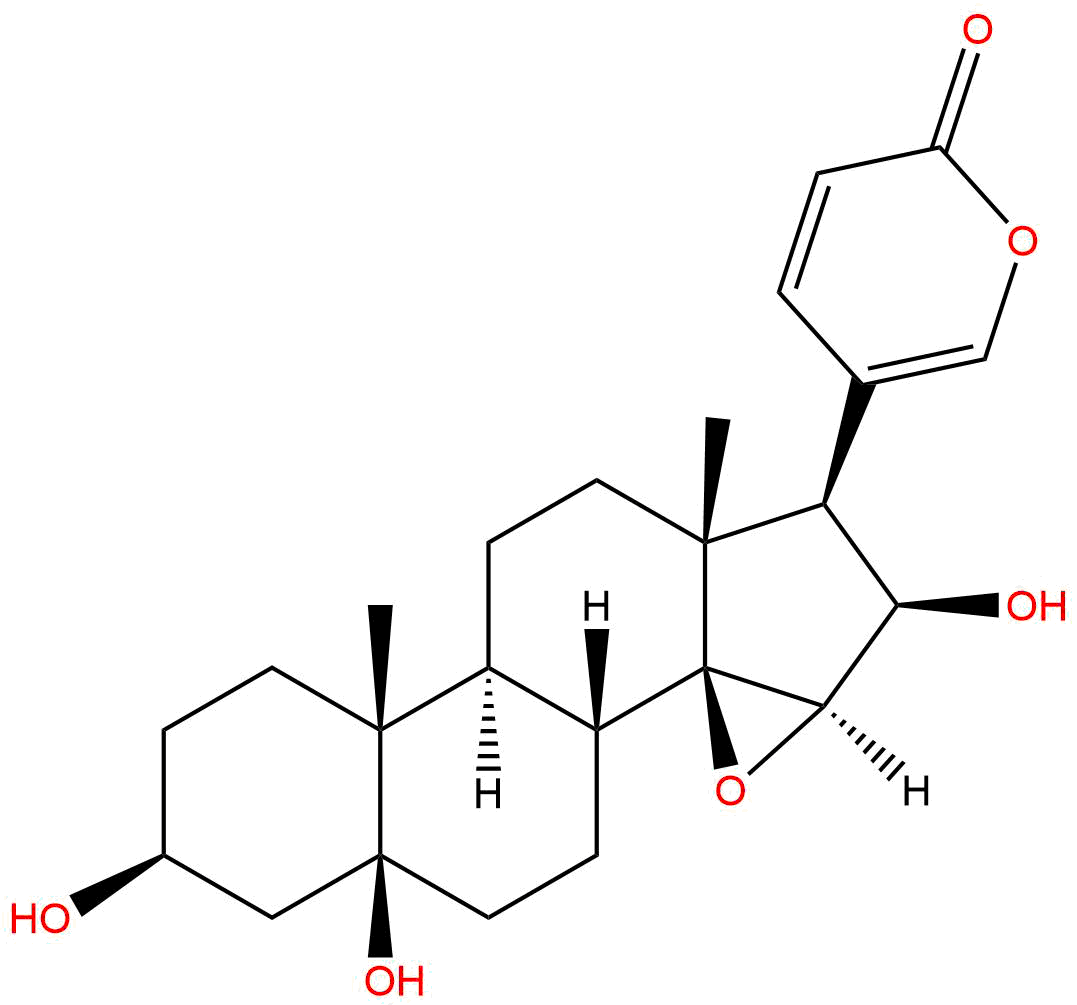


Synonym name:
Catalogue No.: BP0482
Cas No.: 4099-30-3
Formula: C24H32O6
Mol Weight: 416.514
Botanical Source: the nuchal glands of the snake Rhabdophis tigrinus and from toad venom. Component of Chan Su
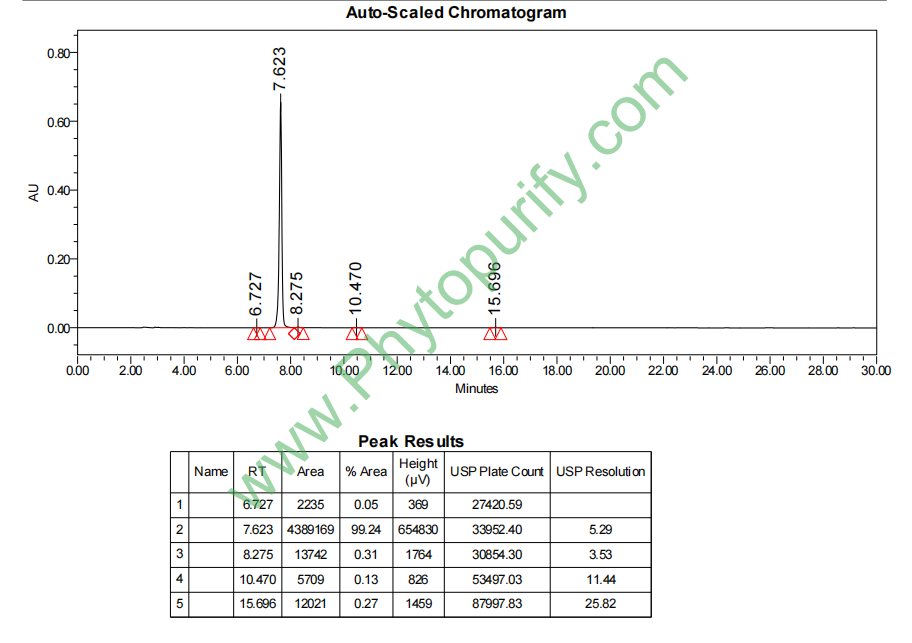
Purity: 95%~99%
Analysis Method: HPLC-DAD or/and HPLC-ELSD
Identification Method: Mass, NMR
Packing: Brown vial or HDPE plastic bottle
Can be supplied from milligrams to grams.
For Reference Standard and R&D, Not for Human Use Directly.
Inquire for bulk scale.
HPLC of De-O-acetylcinobufotalin
Storage conditions:Short-term storage at 2~8℃, long-term storage at -20 ~ -80℃
103.4300
2.1928
2.1929
.0326
1.9283
4.3808
High
76.3461
5.3782
No
No
No
No
Yes
No
0.0
Yes
No
No
Yes
Cardiotonic glycoside drugs play an important role in the treatment history of cardiovascular diseases such as heart failure. Representative drugs such as digoxin and sildenafil enhance myocardial contractility by inhibiting Na+/K+- ATPase on the myocardial cell membrane. However, traditional cardiac glycosides have a narrow therapeutic window and are prone to serious toxic side effects such as arrhythmia, which limits their clinical application. Therefore, the search for efficient and low toxicity new cardiac active compounds has always been an important direction in drug development. Chansu, as a traditional Chinese medicine, has various pharmacological activities such as heart strengthening, anti-inflammatory, and anti-tumor. Its active ingredients are mainly bufotoxin compounds. De-O-acetylcinobufotalin (DCB) is an important member of the bufogenide family, with a CAS number of 4099-30-3. Compared to its acetylated precursor, Huabufotalin, DCB exhibits unique physicochemical properties and pharmacological activity spectrum due to its deacetylated structure. In recent years, with the deepening application of modern pharmacology and molecular biology techniques, significant progress has been made in the study of DCB's cardiotonic effects and mechanisms, revealing its complex network of multiple ion channels and transporters, exhibiting different characteristics from traditional cardiac glycosides, and providing scientific basis for its potential as a new type of cardiac drug candidate. This article aims to systematically review the chemical structure, plant origin, pharmacological activity, mechanism of action, drug properties, and clinical application prospects of DCB, in order to provide comprehensive references for the in-depth research and development of this compound.
Deacetylated bufotalin is a steroidal bufotalin compound. Its molecular formula is C24H32O6 and its molecular weight is 416.5140. Its basic skeleton is a steroid nucleus with a hexagonal unsaturated lactone ring (α - pyranone ring), which is a characteristic structure of cardiac glycosides. Compared with Hua Chan Du Ta Ling, DCB did not undergo acetylation on the C-16 hydroxyl group of the steroid nucleus, hence it is called "deacetylation". This structural difference directly affects its physicochemical properties.
From the analysis of drug parameters, the lipid water partition coefficient (LogP) of DCB is 2.1928, indicating that it has moderate lipophilicity and is conducive to transmembrane transport and absorption. Its topological polar surface area (TPSA) is 103.4300 Å ², reflecting the polarity brought by multiple hydroxyl and carbonyl groups in the molecule. The water solubility data (0.0326 mg/mL) indicates that it is a poorly soluble compound, which may be one of the challenges faced by its oral administration. It is worth noting that the prediction shows that it has a high blood-brain barrier permeability, suggesting that it may have an impact on central nervous system related targets, but potential neurotoxic risks also need to be considered. In early toxicity screening, DCB did not show hERG potassium channel inhibitory activity (predicted as' no '), which is a positive signal as hERG inhibition is a common mechanism leading to cardiac toxicity such as acquired long QT syndrome and apical torsion ventricular tachycardia. The Ames test predicted a value of 0.0, indicating that it may not be mutagenic, but further experimental verification is needed. These physicochemical and preliminary toxicological parameters provide important foundations for subsequent formulation design and safety evaluation.
DCB mainly comes from animals in the family Bufonidae, such as the Chinese toad (Bufo gargarizans) or the black eyed toad (Bufo melanostictus), whose ear gland and skin gland secrete a dry substance called toad venom. In toad venom, DCB often coexists with its acetylated form (bufalin) and other bufalins (such as bufalin, lipobufalin, etc.), and the content varies depending on the type of toad, place of origin, collection season, and processing method.
The extraction of DCB usually involves a process of organic solvent extraction combined with chromatographic separation. The classic method is as follows: first, dry toad venom powder is subjected to reflux extraction or ultrasound assisted extraction with organic solvents such as methanol, ethanol, or chloroform to obtain the crude extract of total bufotoxin. Subsequently, preliminary separation is performed using silica gel column chromatography, often carried out using gradient elution systems such as chloroform methanol or petroleum ether ethyl acetate. Due to the similar polarity of DCB and structurally similar compounds, separation and purification are key challenges. High performance liquid chromatography (HPLC), especially preparative HPLC, is currently the most effective method for obtaining high-purity DCB. It often uses a reverse phase C18 chromatographic column with methanol water or acetonitrile water as the mobile phase for fine separation. In recent years, new separation techniques such as high-speed countercurrent chromatography have also been applied to the preparation of bufalin monomers, which have the advantages of large sample loading capacity and irreversible adsorption. During the extraction process, attention should be paid to the toxicity of toad venom raw materials and the safe operation of organic solvents. The structure of the final product was confirmed by mass spectrometry (MS), nuclear magnetic resonance (NMR, especially 1H-NMR and 13C-NMR), and comparison with standard samples.
The pharmacological activity research of DCB mainly focuses on the cardiovascular system, and its cardiotonic effect is particularly prominent, but research also suggests that it has a wider range of biological activities.
1. Cardiotonic effect:
A large number of ex vivo and in vivo experiments have confirmed the strong cardiac activity of DCB. DCB can significantly enhance myocardial contractility (positive inotropic effect) in isolated frog hearts, guinea pig atria, and papillary muscle specimens, and shows a dose-dependent effect within a certain concentration range. Compared with digoxin, some studies suggest that DCB may take effect faster and have a relatively lower tendency to cause arrhythmia at high concentrations, but the specific range of its "therapeutic window" still needs to be strictly defined. In animal models of heart failure, such as the rat coronary artery ligation induced heart failure model, intravenous administration of DCB can improve cardiac pumping function, increase cardiac output and left ventricular systolic pressure, and reduce left ventricular end diastolic pressure, demonstrating clear anti heart failure effects.
2. Other pharmacological activities:
In addition to its cardiotonic effect, research has also found that DCB has anti-tumor activity. It can inhibit the proliferation of various tumor cells (such as liver cancer, lung cancer, and gastric cancer cells), and its mechanism may be related to inducing cell cycle arrest, apoptosis, and downstream signaling pathway changes caused by inhibition of Na+/K+- ATPase. In addition, DCB has also shown certain anti-inflammatory and analgesic effects, which may be related to the traditional Chinese medicine's efficacy of "detoxification, swelling reduction, and pain relief" of toad venom. These multifaceted activities indicate that DCB is a natural product with multi-target effects, but its cardiotonic effects remain the core of current research and the main direction of potential clinical applications.
The cardiotonic mechanism of DCB is complex, involving the regulation of multiple ion channels and transporters on the myocardial cell membrane, forming a unique network of action different from traditional cardiac glycosides (which mainly inhibit Na+/K+- ATPase). Existing research has revealed its interactions with the following key targets:
1. Na+/K+- ATPase (sodium pump) subtypes:
DCB is an inhibitor of Na+/K+- ATPase, which is the classic basis for its positive inotropic effect. Na+/K+- ATPase is composed of an alpha catalytic subunit and a beta regulatory subunit. Research suggests that DCB may have different affinities for specific alpha subunit subtypes (such as ATP1A1, ATP1A2, ATP1A3) and beta subunits (such as ATP1B1, ATP1B3). Inhibiting the sodium pump leads to an increase in intracellular Na+concentration, which in turn increases Ca2+influx through the Na+/Ca2+exchanger (NCX, encoded by the SLC8A1 gene) in a reverse mode, causing an increase in intracellular Ca2+concentration and ultimately enhancing myocardial contractility. This selectivity towards specific subtypes may be related to its toxicity profile being different from that of digoxin.
2. Voltage gated calcium channel (CACNA1C):
L-type calcium channels (mainly encoded by CACNA1C) are the main pathway for Ca2+influx in the excitation contraction coupling of cardiomyocytes. Research has shown that DCB may have a direct or indirect regulatory effect on L-type calcium channels. At therapeutic concentrations, it may moderately promote calcium influx by altering the voltage dependent activation or inactivation characteristics of channels, thereby synergistically enhancing positive inotropic effects. However, this effect requires precise regulation, and excessive activation may lead to calcium overload and arrhythmia.
3. Lanine receptor 2 (RYR2):
RYR2 is a calcium release channel on the sarcoplasmic reticulum of the myocardium, playing a central role in calcium induced calcium release. There is evidence to suggest that bufotoxin compounds may regulate the release of sarcoplasmic reticulum Ca2+by affecting the stability of RYR2 or sensitivity to cytoplasmic Ca2+. DCB may increase the frequency or amplitude of calcium sparks during systole through this pathway, further elevating cytoplasmic calcium transients.
4. Internally rectified potassium channel (KCNJ2):
The Kir2.1 channel encoded by KCNJ2 is responsible for forming the background inward rectifying potassium current (IK1) in cardiomyocytes, which is crucial for maintaining resting membrane potential and action potential terminal repolarization. DCB may have an inhibitory effect on IK1, leading to prolonged action potential duration. On the one hand, this may help enhance contraction (by prolonging calcium influx time), but on the other hand, it may also increase the risk of early afterdepolarization, which is one of the potential mechanisms of arrhythmogenic effects.
5. Na+/Ca2+exchanger (SLC8A1):
As mentioned earlier, NCX plays a central role in the mechanism of action of DCB. The increased intracellular Na+after sodium pump inhibition directly drives the reverse rotation of NCX, becoming a key source of increased Ca2+during systole. DCB may also have a direct allosteric regulatory effect on NCX itself.
In summary, DCB exerts a synergistic effect on multiple targets, finely regulating the calcium homeostasis and electrophysiological properties of myocardial cells, resulting in a cardiotonic effect. This multi-target characteristic may make its effects more "balanced", but it also means that the mechanism is more complex, and the separation of its therapeutic and toxic effects is a key focus of future research.
Based on its physicochemical properties, the pharmacological properties of DCB face some challenges, but there are also opportunities.
Pharmacokinetic characteristics:
At present, pharmacokinetic studies on the DCB system are relatively limited. Based on its moderate LogP value and molecular weight, it is predicted that its oral absorption may be acceptable, but its low water solubility and potential as a substrate for P-glycoprotein (most bufotoxins are) may result in low oral bioavailability and significant individual differences. Animal experiments (rats) suggest that after intravenous administration, DCB rapidly distributes in the body and may be widely distributed in blood rich tissues such as the heart, liver, and kidneys. The higher predictive value of blood-brain barrier permeability needs to be validated in in vivo distribution experiments. In terms of metabolism, DCB, as a steroid compound, is expected to be mainly metabolized by the liver cytochrome P450 enzyme system (such as CYP3A4), and may undergo reactions such as hydroxylation and demethylation. The 16 deacetylation structure may affect its metabolic rate and pathway. The main excretion pathways may be bile and renal excretion. Clarifying the process of ADME (absorption, distribution, metabolism, excretion) in its body, especially the active metabolites, is crucial for understanding its efficacy and toxicity.
Challenges and strategies for drug development:
The main challenges include: ① poor water solubility, which affects formulation development and oral absorption; ② The treatment window may be narrow, and precise control of blood drug concentration is required; ③ Potential multi-target effects may lead to a complex spectrum of side effects; ④ As a natural product, there may be issues with raw material supply and quality uniformity.
Improvement strategies include: ① Formulation innovation: developing nanocrystals, liposomes, cyclodextrin inclusion complexes and other formulations to improve solubility and bioavailability, or designing sustained-release formulations to maintain stable blood drug concentrations. ② Structural modification: Chemical modification of DCB to optimize its solubility, metabolic stability, and target selectivity while retaining the core pharmacophore, in order to reduce toxicity. ③ Combination therapy: Explore rational combination therapy with other cardiovascular drugs (such as diuretics, angiotensin-converting enzyme inhibitors) to enhance efficacy, reduce dosage and side effects.
DCB, as a novel multi-target natural product with strong cardiac activity, has the following clinical application prospects:
1. Treatment of acute heart failure:
Given its potential rapid onset of action and clear positive inotropic effects after intravenous administration, DCB may be developed as an intravenous injection for the treatment of acute decompensated heart failure, as an alternative or supplementary option to traditional inotropic drugs such as dobutamine and milrinone, particularly suitable for patients who have poor response to conventional treatment.
2. Long term management of chronic heart failure:
If derivatives with wider safety windows and better pharmacokinetic properties can be obtained through dosage form improvement (such as oral sustained-release formulations) or structural optimization, DCB is expected to be used for long-term treatment of chronic heart failure. Its multi-target effects may have beneficial effects on neuroendocrine overactivation and myocardial remodeling, but this requires further preclinical and clinical research to confirm.
3. Anti tumor adjuvant therapy:
Its anti-tumor activity provides the possibility for its use in tumor therapy, especially considering that certain tumor cells highly express specific subtypes of Na+/K+- ATPase. However, its cardiac toxicity is an issue that requires extreme caution in cancer treatment. In the future, it may be explored to combine it with targeted drugs or develop tumor targeted delivery systems to reduce exposure to the heart.
Future research direction outlook:
First,Deep analysis of the mechanism of action It is necessary to use techniques such as electrophysiology, molecular docking, and gene knockout/knockdown to accurately elucidate the molecular details, binding sites, and structure-activity relationships of the interactions between DCB and various targets (Na+/K+- ATPase subtypes, ion channels), and identify the key targets that produce therapeutic effects and toxicity. Secondly,Optimization of drug properties in the system Conduct comprehensive preclinical pharmacokinetic and toxicological studies to determine the safe dosage range. Strengthen structure based drug design, synthesize and screen derivatives with higher activity, stronger cardiac selectivity, and lower toxicity. again Clinical translational research After obtaining sufficient non clinical safety data support, initiate standardized clinical trials to evaluate its effectiveness, safety, and pharmacokinetic characteristics in patients with heart failure. Finally,Quality Control and Sustainable Production Establish quality control standards for the entire industry chain from toad venom raw materials to DCB monomers and their formulations, explore the use of plant cell culture or synthetic biology techniques to achieve sustainable production, and eliminate dependence on wildlife resources.
Deacetylated Bufalin is a bufalin compound with significant cardiac activity isolated from traditional Chinese medicine Bufonis. Its unique deacetylation structure endows it with specific physicochemical properties. Pharmacological studies have shown that DCB synergistically regulates the calcium homeostasis and electrical activity of myocardial cells through a multi-target mechanism, including inhibition of Na+/K+- ATPase, regulation of L-type calcium channels, ryanodine receptors, and inward rectifying potassium channels, resulting in clear cardiotonic effects. Despite facing challenges such as water solubility and therapeutic window in drug development, its non hERG inhibitory properties and potential multi-target synergistic advantages make it an important candidate molecule for the development of novel cardiac drugs. Future research should focus on elucidating its precise mechanism of action, optimizing its drug properties through medicinal chemistry and pharmacology, and promoting standardized clinical evaluation. With the deep integration of modern science and technology with traditional pharmaceutical wisdom, DCB is expected to provide new strategies and choices for the treatment of cardiovascular diseases such as heart failure, demonstrating the sustained value of natural products in innovative drug development.
