


Synonym name: Citrifolioside
Catalogue No.: BP1132
Cas No.: 14941-08-3
Formula: C28H34O14
Mol Weight: 594.566
Botanical Source: Calamintha nepeta, Citrus spp., Acinos spp., Eremocitrus glauca, Microcitrus spp. and others
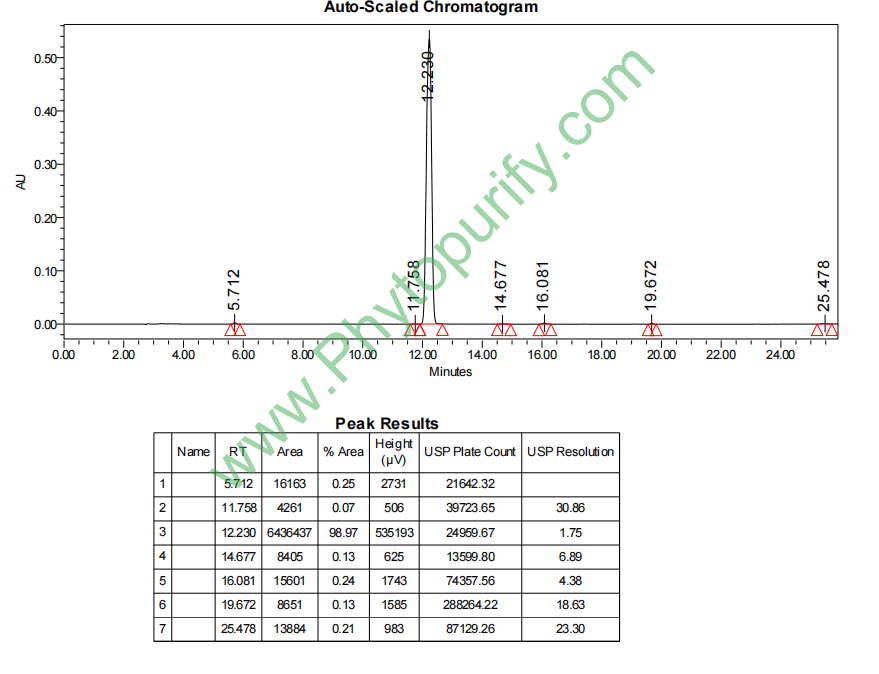
Purity: 95%~99%
Analysis Method: HPLC-DAD or/and HPLC-ELSD
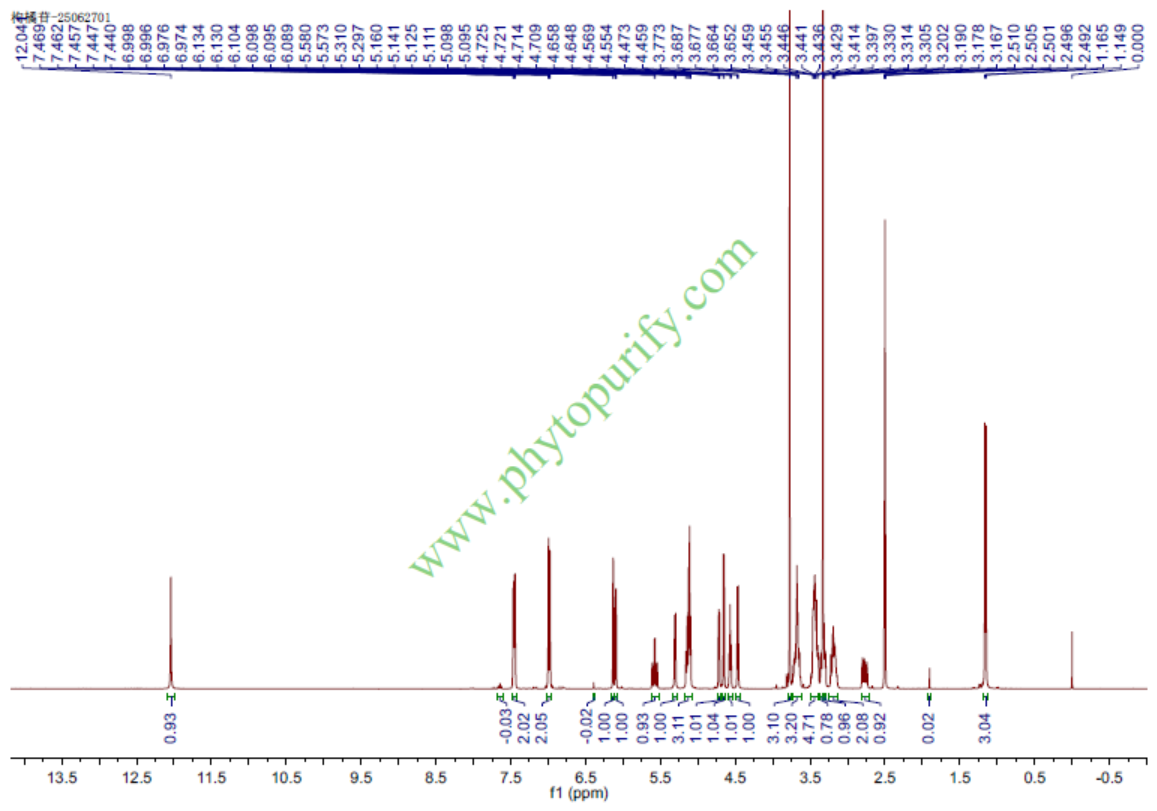
Identification Method: Mass, NMR
Packing: Brown vial or HDPE plastic bottle
Can be supplied from milligrams to grams.
For Reference Standard and R&D, Not for Human Use Directly.
Inquire for bulk scale.
HPLC of Poncirin
HNMR of Poncirin
Storage conditions:Short-term storage at 2~8℃, long-term storage at -20 ~ -80℃
214.0600
.4123
.3888
3.7266
.4799
.2668
Low
74.3601
4.6864
No
No
No
No
No
No
0.0
Yes
No
Yes
No
Poncirin, also known as isosakurin-7-O-nodecanoside, is a naturally occurring flavonoid compound with a CAS number of 14941-08-3. This compound was originally isolated from the Rutaceae plant Poncirus trifoliata (L.) Raf. and named after it. As an important class of plant secondary metabolites, flavonoids have always been a hot topic in natural product pharmacology research due to their wide range of biological activities, such as anti-inflammatory, antioxidant, anti allergic, and anti-tumor effects. As one of them, hesperidin has attracted much attention in recent years due to its significant activity in inflammation and pain related disease models. Especially in the mouse model of inflammatory pain induced by complete Freund's adjuvant (CFA), hesperidin can effectively alleviate mechanical hyperalgesia and allodynia, indicating its potential application value in the treatment of chronic inflammatory diseases. This article aims to systematically review the chemical structure, plant origin, pharmacological activity, mechanism of action, pharmacological evaluation, and clinical application prospects of hesperidin, in order to provide comprehensive scientific references for the in-depth research and development of this natural product.
The molecular formula of hesperidin is C28H34O14, with a molecular weight of 594.5660. Its chemical structure belongs to the flavanone glycoside in flavonoids, with the parent nucleus being flavanone (Isosakuranetin), and the disaccharide Neohesperidose (rhamnose - α -1,2-glucose) attached to the hydroxyl group at position 7. This glycosidic structure has a decisive impact on its water solubility and biological activity.
From the analysis of physical and chemical properties, the theoretical lipid water partition coefficient (LogP) of hesperidin is 0.4123, indicating that it has a certain degree of lipophilicity, but overall tends to be hydrophilic. Its topological polar surface area (TPSA) is as high as 214.0600 Å ², mainly attributed to the numerous oxygen atoms and sugar moieties in the molecule, indicating its good water solubility. The calculated water solubility value is 3.7266 (usually measured in mg/mL or log mol/L, indicating moderate to high solubility), which is consistent with high TPSA values. These properties determine the distribution characteristics of hesperidin in organisms. If its blood-brain barrier permeability is predicted to be "low", it means that it is not easily able to enter the central nervous system, which may reduce the risk of central side effects for anti-inflammatory and anti allergic drugs that mainly act on the peripheral system. In addition, preliminary pharmacological risk assessment showed that hesperidin had no inhibitory activity on hERG potassium channels (hERG inhibition: no), and the Ames test result was 0.0 (usually indicating no mutagenicity), providing preliminary favorable data for its safety.
Citrus glycosides are mainly derived from Rutaceae plants, with the fruit, seeds, and leaves of Poncirus trifoliata (L.) Raf. being the most abundant. Gouju, also known as Fructus Aurantii, is a traditional Chinese medicinal herb. Its immature fruit (Fructus Aurantii) and mature fruit (Fructus Aurantii) are commonly used in traditional Chinese medicine to regulate qi, promote circulation, and relieve bloating. In addition, the compound is also present in some closely related species of Citrus and plants such as Trifolium species, reflecting its certain distribution breadth in the plant kingdom.
The extraction of hesperidin from plant materials is usually carried out using solvent extraction method. Common solvents include methanol, ethanol, acetone, or their aqueous solutions. In order to improve extraction efficiency, modern extraction techniques such as ultrasound assisted extraction (UAE), microwave-assisted extraction (MAE), and supercritical fluid extraction (SFE) have been widely used. For example, using a 70% ethanol aqueous solution for ultrasonic extraction can effectively extract hesperidin from dried tangerine peel. The crude extract after extraction needs to undergo further separation and purification steps, often using macroporous adsorption resins (such as AB-8, D101) for initial enrichment, followed by fine separation using techniques such as silica gel column chromatography, polyamide column chromatography, preparative high-performance liquid chromatography (HPLC), or high-speed countercurrent chromatography (HSCCC), ultimately obtaining high-purity hesperidin monomers. The optimization of extraction process usually considers extraction rate, purity, and cost as comprehensive indicators.
A large number of in vitro and in vivo pharmacological studies have shown that hesperidin has various biological activities, among which anti-inflammatory and anti allergic effects are the most prominent.
Anti inflammatory and analgesic activity One of the core pharmacological activities of hesperidin. In the CFA induced chronic inflammatory pain model in mice, intraperitoneal injection or oral administration of hesperidin can dose dependently significantly reduce paw swelling and decrease mechanical hyperalgesia (pain response to non nociceptive stimuli) and thermal hyperalgesia. Its strength of action is comparable to some classic nonsteroidal anti-inflammatory drugs. In vitro studies have shown that hesperidin can effectively inhibit the production of nitric oxide (NO), prostaglandin E2 (PGE2), and pro-inflammatory cytokines such as tumor necrosis factor - α (TNF - α), interleukin-1 β (IL-1 β), and IL-6 in macrophages (such as RAW264.7 cells) stimulated by lipopolysaccharide (LPS).
Antiallergic activity Citrus glycosides have a clear inhibitory effect on type I hypersensitivity reactions (i.e., immediate hypersensitivity reactions). In compound 48/80 or anti IgE induced mouse systemic allergic reaction models, pretreatment with hesperidin significantly reduced mortality, plasma histamine levels, and mast cell degranulation. In addition, in a mouse model of allergic asthma induced by ovalbumin (OVA), hesperidin can alleviate airway hyperresponsiveness, inflammatory cell infiltration (especially eosinophils), excessive mucus secretion, and levels of Th2 cytokines (such as IL-4, IL-5, IL-13).
Other activities The study also suggests that hesperidin has antioxidant, anti osteoporosis, hepatoprotective, and certain anti-tumor adjuvant potential. For example, it can alleviate liver cell damage through antioxidant pathways and inhibit bone loss by regulating the balance of osteoblast and osteoclast activity.
The multiple pharmacological activities of hesperidin stem from its regulatory effects on multiple signaling pathways and molecular targets, especially in the fields of anti-inflammatory and anti allergic effects, and its network of action is relatively clear.
Anti inflammatory and analgesic mechanisms:
The anti-inflammatory effect of kumquat glycoside is mainly related to the inhibition of nuclear factor kappa B (NF - κ B) and mitogen activated protein kinase (MAPKs) signaling pathways. In LPS stimulated macrophages, hesperidin inhibits NF - κ B activation by blocking the degradation of I κ B α and p65 nuclear translocation, while downregulating the levels of phosphorylated ERK, JNK, and p38 MAPK. In addition, it can upregulate the expression of antioxidant transcription factor Nrf2 and its downstream heme oxygenase-1 (HO-1), indirectly exerting anti-inflammatory effects through antioxidant stress. In pain regulation, in addition to the systemic anti-inflammatory effects mentioned above, hesperidin may also be involved in regulating pain related mediators (such as COX-2, iNOS) in the spinal cord and dorsal root ganglia.
Anti allergic mechanism:
The anti allergic effect of hesperidin involves multiple key targets, forming a multi-target intervention network:
* Stable mast cells By inhibiting Fc ε RI (a high affinity IgE receptor encoded by the FCER1A gene) mediated signaling, the degranulation of mast cells and eosinophils is directly suppressed, reducing the release of mediators such as histamine and trypsin. The histamine receptor HRH1 is also a potential link of action.
* Regulating lipid inflammatory mediators Citrus glycoside has been reported to inhibit the activity of 5-lipoxygenase (ALOX5) and reduce the production of leukotrienes (LTs). Meanwhile, it may antagonize the thromboxane A2 receptor (TBXA2R), thereby alleviating bronchial constriction and inflammation.
* Regulating Th2 immune response This is the core of its anti asthma effect. Citrus glycoside can significantly inhibit the production of Th2 cytokines IL-4, IL-5, and IL-13. Its upstream mechanism involves inhibiting the activation of transcription factor STAT6 (a key transducer of IL-4/IL-13 signaling). In addition, it can downregulate the expression of thymic stromal lymphopoietin (TSLP), an important epithelial cytokine that initiates and maintains Th2 type immune responses.
* Inhibit the recruitment of inflammatory cells By reducing the expression of IL-5 (a key growth and chemotactic factor for eosinophils) and adhesion molecules, the recruitment and activation of inflammatory cells such as eosinophils to allergic sites can be reduced.
In summary, hesperidin forms a synergistic network by acting on multiple targets such as ALOX5, HRH1, FCER1A, TBXA2R, STAT6, TSLP, and IL-4/5/13, thereby inhibiting allergic reactions at multiple stages.
Although hesperidin has shown good activity in preclinical studies, its pharmacological properties still require systematic evaluation.
Pharmacokinetic properties As a flavonoid glycoside compound, the oral bioavailability of hesperidin is usually influenced by its molecular size, polarity, and intestinal metabolism. Limited animal pharmacokinetic studies have shown that naringin is moderately absorbed after oral administration and mainly undergoes phase II metabolic reactions in vivo, including hydrolysis (hydrolyzed by β - glucosidase in gut microbiota or tissues to form aglycone isocherry blossom extract), binding (glucuronidation and sulfation), etc. Its glycoside derived metabolites may have different or stronger activity than the original drug. The prototype drug and metabolites are mainly excreted through urine and bile. Its blood-brain barrier permeability is low, which is consistent with its predicted physicochemical properties.
ADMET property analysis:
* Absorption (A)Moderate water solubility and moderate LogP are beneficial for its passive diffusion absorption in the small intestine, but glycoside structure may affect transmembrane rate.
* Distribution (D)A high TPSA value indicates that its tissue permeability may be limited and its distribution volume may not be large, mainly distributed in blood and extracellular fluid.
* Metabolism (M)It is the main elimination pathway and is easily hydrolyzed and metabolized.
* Excretion (E)Mainly excreted through the kidneys and biliary tract.
* Toxicity (T)The existing data is relatively optimistic. The absence of hERG inhibition suggests a lower risk of cardiac toxicity; A negative Ames test indicates no genetic toxicity warning. However, comprehensive preclinical assessments of subacute, chronic, and reproductive toxicity are still required.
Challenges and optimization of drug development The main challenges in the pharmacological development of hesperidin may lie in its oral bioavailability, metabolic stability, and potential content and supply issues as a natural product. Future research can be optimized through structural modifications (such as preparing prodrugs, modifying glycosides or aglycones), developing novel drug delivery systems (such as nanoliposomes, solid dispersions to improve solubility and stability), or exploring their active metabolites as lead compounds.
Citrus glycoside, as a natural active molecule with multiple targets and functions, has shown broad application prospects in the prevention and treatment of various diseases.
Potential therapeutic areas:
Research and Development Prospects and Challenges:
Citrus glycoside is a flavonoid glycoside compound found in traditional medicinal plants with significant anti-inflammatory and anti allergic activities. Its pharmacological effects are extensive, and its mechanism research has delved into the regulation of multiple signaling pathways such as NF - κ B, MAPK, STAT6, as well as the intervention of multiple allergy related targets such as ALOX5, FCER1A, TSLP, showing multi-target action characteristics. Despite facing common challenges in drug development such as bioavailability, its good initial safety and clear multifunctional activity make it a highly promising lead compound for the development of new drugs for the treatment of allergic diseases, chronic inflammation, and pain. Future research should focus on its in-depth molecular mechanisms, systematic preclinical pharmacokinetic/toxicological evaluation, and formulation optimization, in order to promote the transformation of this ancient plant component into modern therapeutic drugs and provide new treatment options for patients with related diseases.
