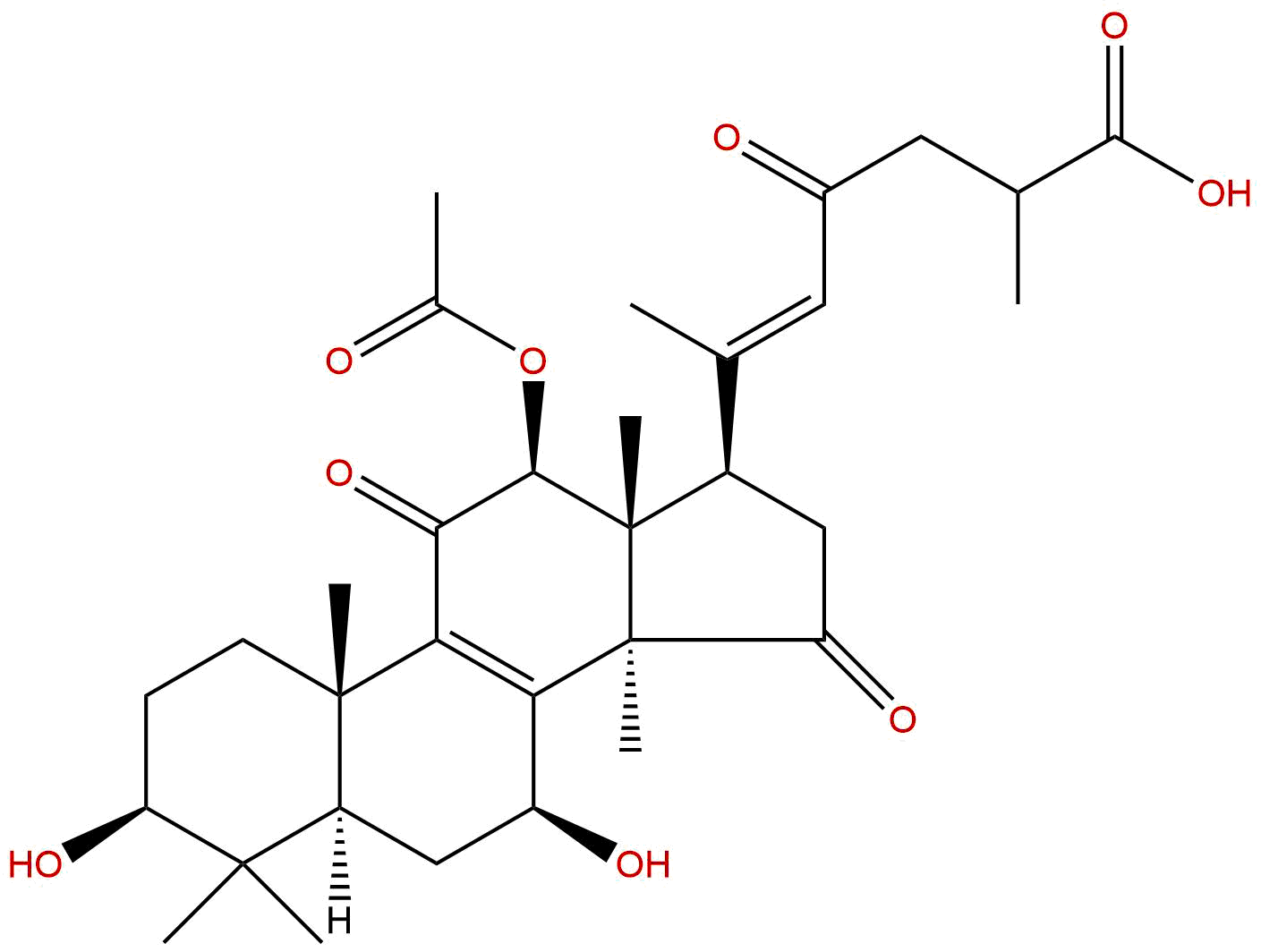


Product name: Ganoderenic acid K
Synonym name:
Catalogue No.: BP2273
Cas No.: 942950-94-9
Formula: C32H44O9
Mol Weight: 572.695
Botanical Source: Ganoderma
Type of Compound: Triterpenoids
Purity: 95%~99%
Analysis Method: HPLC-DAD or/and HPLC-ELSD
Identification Method: Mass, NMR
Packing: Brown vial or HDPE plastic bottle
Storage: Store in a well closed container, protected from air and light. Put into refrigerate or freeze for long term storage.
Whenever possible, you should prepare and use solutions on the same day. However, if you need to make up stock solutions in advance, we recommend that you store the solution as aliquots in tightly sealed vials at -20℃. Generally, these will be useable for up to two weeks.
The product could be supplied from milligrams to grams
Inquire for bulk scale.
For Reference Standard and R&D, Not for Human Use Directly.
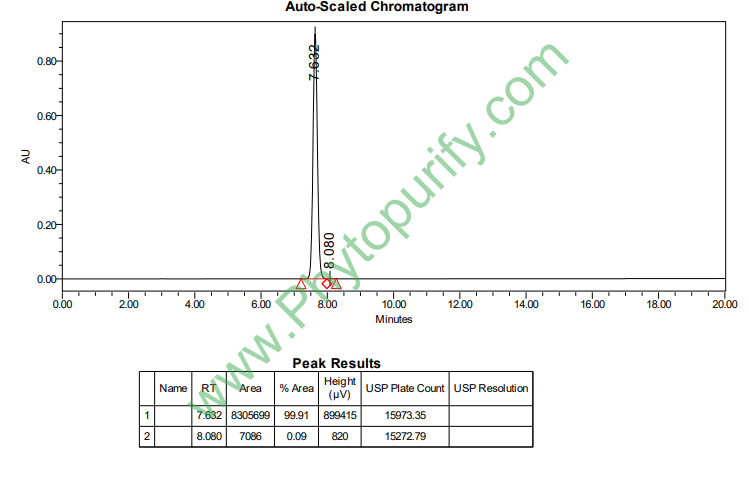
HPLC of Ganoderenic acid K
Storage conditions:Short-term storage at 2~8℃, long-term storage at -20 ~ -80℃
Ganoderma lucidum, as a traditional Chinese medicinal herb, has attracted much attention due to its rich triterpenoid compounds and polysaccharide active ingredients. Ganoderma acid K is an important triterpenoid natural product isolated from Ganoderma lucidum fruiting bodies, which has significant biological activity and potential pharmacological value, especially in regulating cholesterol metabolism and anti-tumor effects. In recent years, with the in-depth study of the molecular mechanism of multiple myeloma (MM), ganoderic acid K has become a research hotspot due to its regulatory effect on multiple key tumor related targets. This article provides a systematic review of the chemical structure and physicochemical properties, plant sources and extraction methods, pharmacological activity, mechanism of action and molecular targets, pharmacological evaluation, and clinical application prospects of Ganoderma lucidum acid K. The aim is to provide a theoretical basis and research direction for the drug development of this natural product.
The molecular formula of Ganoderma lucidum acid K is C30H44O10, with a molecular weight of 572.6950, and it belongs to the triterpenoid class of Ganoderma lucidum. Its structural features include a polycyclic triterpenoid skeleton with multiple hydroxyl and carboxyl functional groups, giving it high polarity. In terms of physical and chemical properties, the LogP value of Ganoderma lucidum acid K is 2.4834, indicating that it has moderate lipid solubility and is conducive to cell membrane penetration. Its topological polar surface area (TPSA) is 155.27 Å ², indicating strong polarity and hydrogen bonding ability, which may affect its bioavailability and ability to penetrate the blood-brain barrier. Low water solubility (0.0373 mg/mL) suggests limited solubility in aqueous phase and may require improvement of its dissolution performance through pharmaceutical formulation technology. The low permeability of the blood-brain barrier indicates limited distribution in the central nervous system. The hERG channel inhibition experiment showed a negative result, indicating a low risk of cardiac toxicity. The Ames mutagenicity test result is 0.0, indicating a low risk of genotoxicity and a good safety basis.
Ganoderma lucidum acid K mainly comes from the fruiting body of Ganoderma lucidum. As a fungus of the genus Ganoderma in the family Polyporus, Ganoderma lucidum is widely distributed in temperate and subtropical regions of Asia. Ganoderma lucidum fruiting bodies are rich in various triterpenoids, among which ganoderic acid K is one of the important active ingredients. Traditional extraction methods often use organic solvent extraction combined with column chromatography for separation and purification. The specific process generally includes: crushing the dried Ganoderma lucidum fruiting body, using ethanol or methanol for multiple reflux extractions, concentrating the extract, separating and purifying it through a silica gel column or C18 reverse phase column, and finally performing purity detection and structural identification through high performance liquid chromatography (HPLC). Modern extraction techniques such as ultrasound assisted extraction and microwave-assisted extraction have also been applied to improve the extraction efficiency and purity of ganoderic acid K. In addition, the structural identification of ganoderic acid K mainly relies on various analytical methods such as nuclear magnetic resonance (NMR), mass spectrometry (MS), and infrared spectroscopy (IR).
Ganoderma lucidum acid K exhibits significant pharmacological effects in various biological activities, particularly known for its inhibitory effect on HMG CoA reductase (HMGCR). HMGCR is the rate limiting enzyme in cholesterol biosynthesis, with an IC50 of 16.5 μ M for ganoderic acid K, indicating strong inhibitory activity, suggesting its potential in regulating blood lipids and preventing cardiovascular disease. In addition, ganoderic acid K has shown positive effects in anti-tumor research, especially in cell models of multiple myeloma, which can affect tumor cell proliferation, apoptosis, and signaling pathways through multi-target regulation.
In vitro experiments have shown that ganoderic acid K can inhibit the proliferation of multiple myeloma cells, induce cell apoptosis, and suppress the activation of tumor related signaling pathways. Its anti-inflammatory and immune regulatory effects also provide auxiliary support for its anti-tumor activity. Animal model studies further confirmed the potential of ganoderic acid K in delaying tumor growth and improving immune function.
Multiple myeloma is a malignant plasma cell disease that involves multiple signaling pathways and key molecules in its occurrence and development. Lingzhi acid K exerts anti-tumor effects through a multi-target mechanism, with main targets including BCL2, STAT3, TOP1, TP53, NFKB1, AKT1, BRAF, NRAS, CDKN2A, and CXCR4.
In summary, ganoderic acid K regulates tumor cell proliferation, apoptosis, and microenvironment through multi-target and multi pathway synergistic effects, demonstrating a complex and effective anti-tumor mechanism.
The pharmacological evaluation of Ganoderma lucidum acid K shows that it has certain potential for drug development. Although the molecular weight of 572.7 is slightly higher than the recommended value of 500 by Lipinski's rule, its LogP value of 2.48 is moderate, which is beneficial for cell membrane penetration. A higher TPSA (155.27) may limit its oral absorption and blood-brain barrier permeability, consistent with experimental data of low blood-brain barrier permeability. Low water solubility suggests the need to improve bioavailability through formulation optimization. HERG channel inhibition was negative and Ames test showed no mutagenicity, indicating good safety.
At present, there is limited research on the pharmacokinetics of ganoderic acid K in Ganoderma lucidum. Preliminary data indicate that it is widely distributed in the body, but the metabolic pathways and clearance mechanisms still need to be systematically studied. Its higher polar functional groups may be metabolized by liver metabolic enzymes such as cytochrome P450, and the activity and toxicity of metabolites also need to be further evaluated. In the future, systematic in vivo pharmacokinetic and toxicological studies are needed to comprehensively evaluate the feasibility of its clinical application.
Lingzhi acid K, as a natural product with multi-target anti-tumor activity, has shown broad application prospects in the adjuvant therapy of malignant tumors such as multiple myeloma. Its inhibitory effect on HMG CoA reductase also suggests its potential in regulating blood lipids and preventing cardiovascular disease, which may become a new direction for the development of multifunctional drugs.
Future research should focus on:
In addition, the synergistic effect of ganoderic acid K with existing anti-tumor drugs and its role in immune regulation are also key directions for future research.
As an important triterpenoid active ingredient in Ganoderma lucidum, ganoderic acid K exhibits excellent pharmacological activity and potential for drug development due to its significant inhibitory activity on HMG CoA reductase and multiple regulation of multiple myeloma related targets. Its complex mechanism of action, multi-target characteristics, and good safety have laid the foundation for its development as a new drug for anti-tumor and cardiovascular disease treatment. In the future, through systematic pharmacological, pharmacokinetic, and clinical research, it is expected to promote the transition of ganoderic acid K from laboratory to clinical use, becoming an important representative in the field of natural product drug research.
