Introduction/Overview
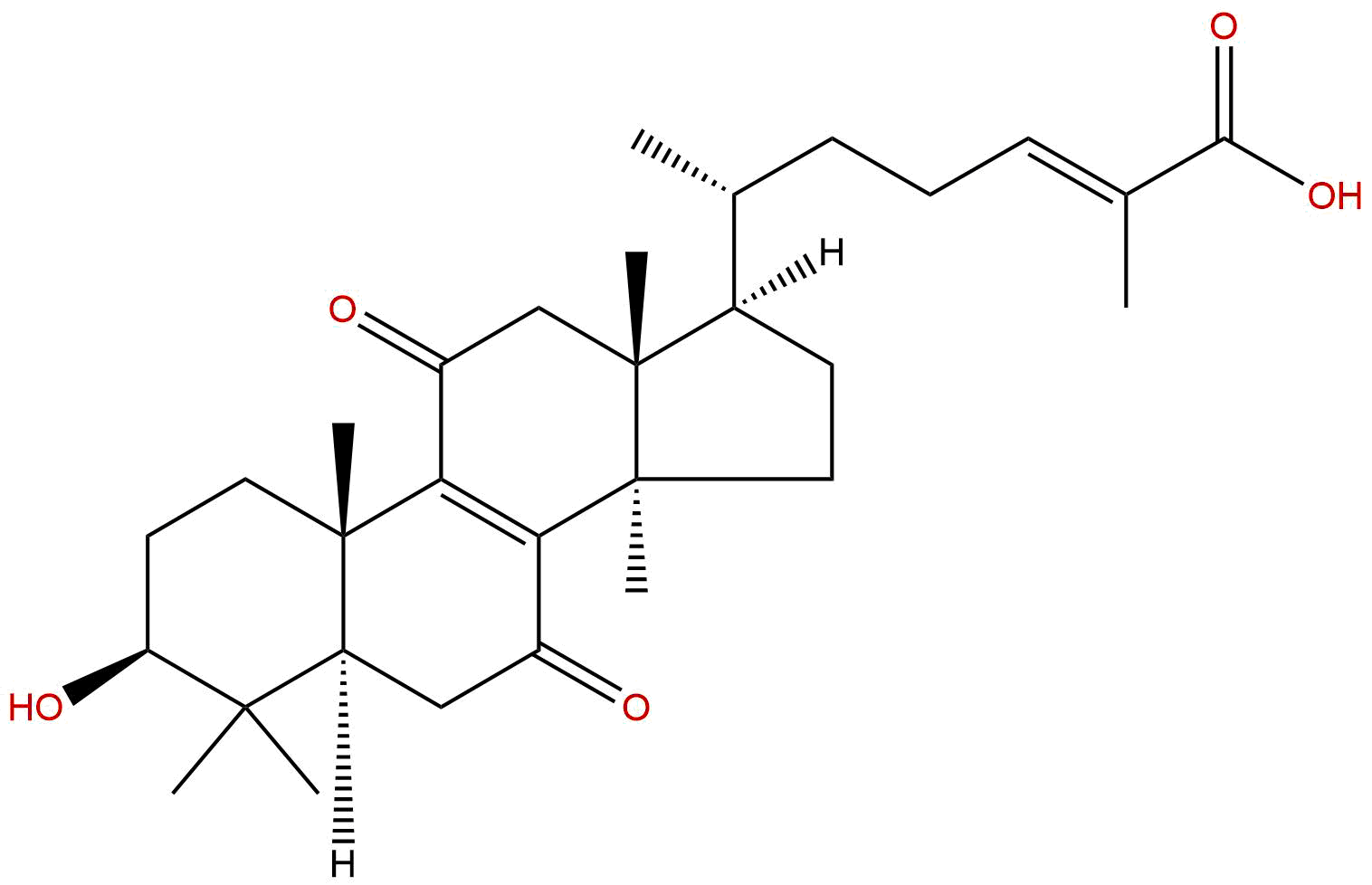
Lung cancer is one of the malignant tumors with the highest incidence rate and mortality in the world. Although its treatment strategies are constantly innovating, the problems of chemotherapy resistance, targeted treatment escape and serious side effects are still serious. Therefore, exploring efficient and low toxicity anti-cancer lead compounds from natural products has always been an important direction for drug development. Ganoderma lucidum(Ganoderma lucidum)As a treasure of traditional Chinese medicine, its anti-tumor activity has attracted much attention, and one of the main active ingredients is Ganoderma triterpenoids. 7-Oxo-ganoderic acid Z2 (hereinafter referred to as 7-Oxo-GA Z2) is an oxidative ganoderic acid derivative with significant biological activity isolated and identified from Ganoderma lucidum in recent years. Compared with many Ganoderma triterpenoids with similar parent nucleus structures, the carbonyl modification at the C-7 position may endow it with unique pharmacological activity and mechanism of action. Preliminary studies have revealed that 7-Oxo-GA Z2 exhibits the potential for multi-target and multi pathway intervention in lung cancer models, involving multiple pathways such as inducing apoptosis, inhibiting metastasis, and regulating immunity. This article aims to systematically review the chemical properties, plant sources, pharmacological activities, molecular mechanisms, and drug properties of 7-Oxo-GA Z2, in order to provide comprehensive scientific references for the in-depth study of this compound and the development of anti lung cancer drugs.
Chemical structure and physicochemical properties
The chemical name of 7-carbonyl-ganoderic acid Z2 is (4 β, 7 β, 15 α) -3,7,15-trihydroxy-4,4,14-trimethyl-7-oxo-11,16-dioxo-5 α - cholestan-8-ene-26-oic acid, with a CAS number of 1446104-52-4. Its molecular formula is C30H44O7 and its molecular weight is 484.6770. This compound belongs to the highly oxidized lanostane type triterpenoid, and its core structural feature is the introduction of a carbonyl (ketone) group at the C-7 position of ganoderic acid Z2, forming a 7-carbonyl structure. This oxidative modification significantly alters the electronic distribution and spatial conformation of the molecule, which may affect its binding ability to biological targets.
From the analysis of physicochemical parameters related to drug properties, the lipid water partition coefficient (LogP) of 7-Oxo-GA Z2 is 4.7707, indicating its strong lipophilicity. The topological polar surface area (TPSA) is 91.6700 Å ², which is relatively moderate. Its predicted water solubility is low (about 0.0052 mg/mL), which is consistent with the characteristics of most triterpenoids, suggesting that structural modification or solubilization techniques may be needed in formulation development to improve its bioavailability. The molecular weight is moderate, but its strong lipophilicity and low water solubility may affect its dissolution and absorption.
Plant sources and extraction methods
7-Oxo-GA Z2 is mainly derived from the fungus Ganoderma lucidum in the family Myceliaceae(Ganoderma lucidum The fruiting body, mycelium, or spore powder of (Leyss. ex Fr.) Karst. There are significant differences in the types and contents of active triterpenoids in Ganoderma lucidum of different varieties, origins, growth conditions, and harvesting periods. The natural content of this compound in Ganoderma lucidum is usually low and belongs to trace components.
Its extraction and separation follow the conventional process of natural product chemistry. Firstly, the dried Ganoderma lucidum material is crushed and subjected to reflux extraction or ultrasound assisted extraction using high concentration ethanol (such as 95% ethanol) or methanol to fully extract lipid soluble components including triterpenes. The extract is concentrated under reduced pressure to obtain a crude extract. Subsequently, using a system separation strategy, organic solvents such as petroleum ether and ethyl acetate are often sequentially used for liquid-liquid extraction to enrich triterpenoid components in the ethyl acetate fraction. Further purification relies on various chromatographic techniques: initial separation is often performed by silica gel column chromatography, followed by elution using solvent systems of different polarities (such as chloroform methanol gradient elution); Then, combined with reverse phase medium pressure or high pressure liquid chromatography (such as ODS C18 column), fine separation is performed using methanol water or acetonitrile water as the mobile phase; Finally, it may be necessary to use preparative thin-layer chromatography or high-performance liquid chromatography (HPLC) to obtain high-purity 7-Oxo-GA Z2 monomer. Its structure was identified by nuclear magnetic resonance (NMR, including 1H-NMR, 13C-NMR, 2D-NMR), mass spectrometry (MS), and comparison with literature data. Given its rarity, obtaining this compound through synthetic biology methods (such as fungal fermentation metabolic engineering) or semi synthetic methods (using high content ganoderic acid as a precursor for C-7 selective oxidation) is an important research direction for ensuring drug sources in the future.
Pharmacological activity research
The pharmacological activity research of 7-Oxo-GA Z2 is currently mainly focused on the field of anti-tumor, especially in lung cancer models where it has shown multiple inhibitory effects.
1. Inhibit lung cancer cell proliferation and induce apoptosis: In vitro studies have shown that 7-Oxo-GA Z2 can dose - and time-dependent inhibit the proliferation activity of various human lung cancer cell lines, such as A549, NCI-H460, NCI-H292, etc. Its effect is stronger than some unoxidized ganoderic acid analogues, suggesting that the C-7 carbonyl group may be a key pharmacophore. Cellular morphological observation and flow cytometry detection showed that the compound can significantly induce apoptosis in lung cancer cells, characterized by typical features such as cell shrinkage, nuclear chromatin agglutination, sub G1 phase cell peaks, and phosphatidylserine eversion.
2. Inhibit the migration and invasion of lung cancer cells: Metastasis is the main cause of death in lung cancer patients. Transwell and chamber experiments have shown that 7-Oxo-GA Z2 can effectively inhibit the migration and invasion ability of lung cancer cells. This anti metastatic activity is closely related to its downregulation of the expression of extracellular matrix degradation related proteins.
3. Anti angiogenic effect: Preliminary research suggests that 7-Oxo-GA Z2 may interfere with the luminal formation ability of human umbilical vein endothelial cells (HUVEC) by inhibiting the expression and secretion of vascular endothelial growth factor (VEGF), thereby exerting anti angiogenic effects in the tumor microenvironment and cutting off the nutritional supply to the tumor.
4. Potential immunomodulatory and anti-inflammatory effects: As a compound derived from Ganoderma lucidum, it may inherit the overall immune regulatory properties of Ganoderma lucidum. Although there is limited direct immunological research on 7-Oxo-GA Z2, its regulation of certain inflammation related signaling pathways (see below) suggests that it may indirectly exert anti-tumor effects by regulating tumor associated immunity or inflammatory microenvironment.
Mechanism of action and molecular targets
The anti lung cancer effect of 7-Oxo-GA Z2 involves a complex molecular network, and its multi-target properties are its outstanding advantage. According to existing research, its mechanism of action mainly revolves around the following key targets and pathways:
1. Induce endogenous apoptosis pathway (targeting BCL2 family and mitochondria): 7-Oxo-GA Z2 can downregulate the expression of anti apoptotic protein BCL2 and upregulate the expression of pro apoptotic proteins such as BAX, leading to a decrease in mitochondrial membrane potential, release of cytochrome C, and activation of caspase-9 and caspase-3 cascade reactions, ultimately executing the cell apoptosis program. This is one of the core pathways through which it induces apoptosis in lung cancer cells.
2. Inhibition of STAT3 signaling pathway: Signal transducer and activator of transcription factor 3 (STAT3) is continuously activated in lung cancer, promoting cell proliferation, survival, and immune escape. 7-Oxo-GA Z2 can effectively inhibit the phosphorylation (activated form) and nuclear translocation of STAT3, thereby downregulating the expression of downstream target genes (such as Cyclin D1, Survivor, MMP2, etc.), achieving a multifunctional anti-tumor effect.
3. Regulating the NF - κ B signaling pathway (targeting RELA/p65): Nuclear factor kappa B (NF - κ B) is an important transcription factor for inflammation and survival. 7-Oxo-GA Z2 can inhibit the degradation of I κ B α or activation of RELA subunits, hinder the nuclear translocation and transcriptional activity of NF - κ B, thereby suppressing the expression of inflammatory factors and anti apoptotic genes regulated by it, enhancing chemotherapy sensitivity, and inhibiting tumor progression.
4. Intervention in the PI3K/Akt pathway (targeting PIK3CG): PI3K/Akt is a classic survival promoting pathway. 7-Oxo-GA Z2 may inhibit Akt phosphorylation activation by affecting the catalytic subunit p110 γ (encoded by PIK3CG) or upstream signal of PI3K, thereby blocking its downstream pro proliferative and anti apoptotic signals.
5. Inhibit extracellular matrix degradation (targeting MMP2): Matrix metalloproteinase-2 (MMP2) is a key enzyme involved in the invasion and metastasis of tumor cells. 7-Oxo-GA Z2 can significantly downregulate the mRNA and protein expression levels of MMP2, while upregulating the expression of its tissue inhibitor TIMP-1/2, thereby protecting the extracellular matrix and inhibiting the invasion and metastasis ability of lung cancer cells.
6. Impact on other potential targets:
* ABCA1: As a key protein involved in cholesterol reverse transport, its expression changes may affect the lipid raft structure and signal transduction of tumor cell membranes.
* TLR4: By regulating Toll like receptor 4 signaling, it may affect the immune inflammatory response in the tumor microenvironment.
* ESR2 and MAPT: It suggests that its role may involve the regulation of hormone related pathways or cytoskeletal stability, and the specific mechanism needs to be elucidated.
* TOP2A: As a potential direct target of DNA topoisomerase II α, it may interfere with DNA replication and repair.
In summary, 7-Oxo-GA Z2 forms a networked pharmacological effect by synergistically acting on multiple targets mentioned above, jointly inhibiting the proliferation of lung cancer cells, promoting their apoptosis, and inhibiting their migration and invasion.
Evaluation of drug properties and pharmacokinetics
Based on the given computational chemical parameters and preliminary biological characteristics, a preliminary evaluation of the pharmacological properties of 7-Oxo-GA Z2 is conducted
Advantage:
1. Moderate molecular weight The molecular weight is 484.6770, which meets the requirement of molecular weight less than 500 in the "Five Rules" for generic drugs.
2. No clear genetic toxicity risk The Ames test predicted a result of 0.0 (negative), indicating that it may not have direct mutagenicity and has a good safety starting point.
3. No significant risk of cardiac toxicity Prediction of no inhibition of hERG potassium channels reduces the risk of cardiac toxicity in inducing long QT syndrome and apical torsion ventricular tachycardia, which is one of the key reasons for the failure of many drug development.
4. Clear and diverse targets The multi-target mechanism of action may bring synergistic therapeutic effects and reduce the risk of drug resistance.
Challenges and research questions:
1. Solubility and permeability The high LogP value (4.77) and extremely low water solubility (0.0052 mg/mL) are the main obstacles to its drug development. This may lead to poor oral absorption and low bioavailability. Formulation strategies such as nanocrystals, liposomes, cyclodextrin inclusion, and prodrug design will be the focus of development.
2. Blood-brain barrier permeability Predict low blood-brain barrier permeability. This is an unfavorable factor for treating lung cancer brain metastases, but it may also reduce the risk of central nervous system side effects. If brain metastasis needs to be treated, structural modifications are required to improve penetrability.
3. Lack of pharmacokinetic data At present, there is almost no research on the in vivo pharmacokinetics of 7-Oxo-GA Z2. Key information such as oral absorption rate, plasma protein binding rate, tissue distribution characteristics, main metabolic pathways (expected to be metabolized by the liver CYP450 enzyme system, especially the possible reduction reaction at the C-7 position), elimination half-life, and the presence of enterohepatic circulation urgently need to be systematically studied through animal experiments (rats, mice).
4. In vivo efficacy and toxicity verification At present, the activity data is mainly based on cell experiments, and there is an urgent need to conduct in vivo pharmacological validation in lung cancer transplant mouse models or human derived tumor xenograft (PDX) models, and simultaneously carry out preclinical safety evaluations such as acute toxicity and long-term toxicity.
Clinical application prospects and prospects
As a natural product with novel structure and multi-target anti lung cancer activity, 7-Oxo-GA Z2 has broad clinical application prospects, but the road ahead is long, and breakthroughs need to be made in the following directions:
As a novel lead compound for anti lung cancer: Its core value lies in providing an excellent chemical framework for the development of anti lung cancer drugs with novel mechanisms of action. By studying the structure-activity relationship of the system and optimizing the substituents at C-7 and other positions, it is expected to obtain derivatives with stronger activity and better drug properties.
2. Explorer of Combination Therapy Strategies: Given that it exerts its effects through pathways such as STAT3, NF - κ B, PI3K/Akt, which are often associated with EGFR-TKI and chemotherapy drug resistance. Therefore, the combination of 7-Oxo-GA Z2 or its optimized derivatives with existing standard chemotherapy, targeted therapy, or immune checkpoint inhibitors (such as PD-1/PD-L1 antibodies) is expected to reverse drug resistance and enhance efficacy, and has important translational medicine research value.
3. Target audience for innovative application of formulation technology: It is crucial to actively develop modern drug delivery systems to address the bottleneck of poor water solubility. For example, preparing it into nanosuspensions, polymer micelles, actively targeted liposomes, etc. can significantly improve its solubility, stability, and tumor targeting properties, and improve its pharmacokinetic behavior.
4. Deep exploration of the mechanism of action: The current target network still needs to be deepened. It is necessary to utilize cutting-edge technologies such as chemical proteomics (such as affinity fishing techniques), CRISPR-Cas9 screening, transcriptomics, and metabolomics to comprehensively and impartially reveal its direct acting proteins and downstream effector networks, especially its regulatory effects on immune cells (such as T cells and macrophages) in the tumor microenvironment.
5. Expand the spectrum of disease research: In addition to lung cancer, its targets (such as STAT3, NF - κ B, MMP2) are also crucial in liver cancer, breast cancer, colorectal cancer and inflammatory diseases. In the future, its activity evaluation in different disease models should be expanded to explore broader therapeutic potential.
Conclusion
7-carbonyl-ganoderic acid Z2 is a unique active molecule in the triterpenoid family of Ganoderma lucidum due to the modification of the C-7 carbonyl group. Existing research clearly indicates that it exhibits multiple pharmacological activities in lung cancer models, including inhibition of proliferation, induction of apoptosis, and anti metastasis, by targeting multiple key nodes such as BCL2, STAT3, RELA, PIK3CG, and MMP2. Although its excellent in vitro activity and multi-target properties are encouraging, its low solubility, unknown pharmacokinetic properties, and incomplete in vivo pharmacological evidence are the gaps that it must overcome to advance into clinical practice. Future research should focus on optimizing its drug properties, exploring its mechanism of action in depth, and developing innovative formulations. With the deepening of these works, 7-Oxo-GA Z2 is expected to gradually grow from a promising natural product lead compound to a new star in the field of anti lung cancer drug development, providing new treatment options for lung cancer patients and an important paradigm for multi-target drug design based on natural products.