Introduction/Overview
Malaria, as a type of malaria caused by malaria parasites(Plasmodium Parasitic diseases caused by spp. and transmitted by mosquitoes have long been a major challenge in the global public health field. Although the global incidence rate and mortality of malaria have declined significantly in the past two decades, according to the latest report of the World Health Organization (WHO), there will still be about 249 million malaria cases worldwide in 2022, resulting in more than 600000 deaths, of which children under the age of five in Africa account for the vast majority of deaths. The situation of malaria prevention and control remains severe, and the emergence and spread of multidrug-resistant malaria parasites, especially malignant malaria parasites resistant to artemisinin based combination therapies (ACTs), have emerged(Plasmodium falciparum)The spread in Southeast Asia and some parts of Africa has made the development of antimalarial drugs with novel mechanisms of action a top priority.
Artemisinin is derived from the traditional Chinese medicine Artemisia annua(Artemisia annua L. Professor Tu Youyou was awarded the 2015 Nobel Prize in Physiology or Medicine for the discovery of sesquiterpene lactones isolated from the compound. Artemisinin and its derivatives (such as dihydroartemisinin, artemether, and artemether) have become the core components of ACTs due to their rapid and potent killing activity against malaria parasites. However, artemisinin based drugs generally have problems such as short half-life, poor water solubility, and possible neurotoxicity. More importantly, with the development of drug resistance, the search for artemisinin analogues with novel structures, different targets of action, and the ability to overcome existing drug resistance has become a hot direction in the research and development of antimalarial drugs.
In this context, Dihydroepideoxyartemisinin B (DEBAB), as a natural artemisinin analogue isolated from Artemisia annua, has attracted widespread attention from researchers. Its CAS number is 104196-16-9. Compared with the classical artemisinin structure, DEBAB exhibits significant differences in the presence or absence of peroxide bridging bonds (- O-O -), oxidation state of lactone rings, and stereochemical configuration. This structural uniqueness suggests that it may have a pharmacological activity spectrum and mechanism of action different from artemisinin. Preliminary studies have shown that DEBAB not only exhibits significant antimalarial activity, but may also be effective against certain drug-resistant strains of malaria parasites, making it a potential lead compound for developing a new generation of antimalarial candidate drugs. This article will provide a comprehensive review of dihydrodeoxyartemisinin B from the aspects of chemical structure, plant origin, pharmacological activity, mechanism of action, medicinal properties, and clinical application prospects, aiming to provide a systematic theoretical basis for the in-depth research and development of this compound.
Chemical structure and physicochemical properties
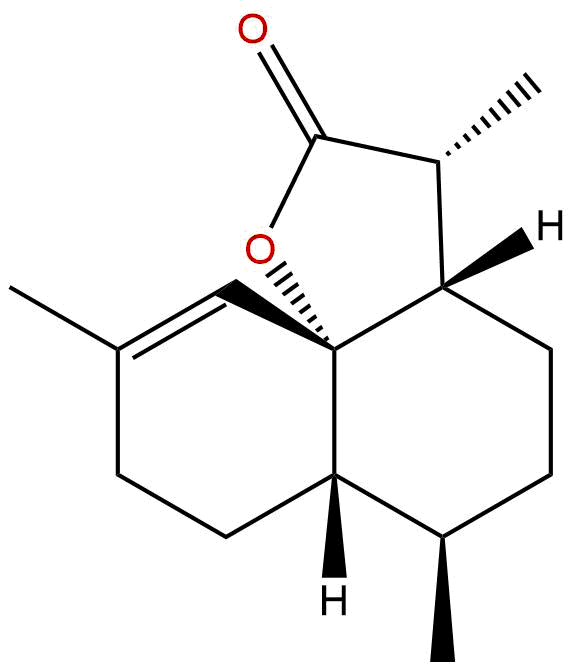
The chemical structure of dihydrodeoxyartemisinin B belongs to the sesquiterpene class, and its core skeleton is a simplified or modified version of the artemisinin parent nucleus. From the naming, its structural features can be inferred: "Dihydro" refers to the possibility of a reduced double bond in the molecule; Table "refers to the configuration of a chiral center that is different from artemisinin B; Deoxygenation "means that the number of oxygen atoms in the molecule is less than that of artemisinin B or artemisinin. Specifically, the molecular formula of DEBAB is C ₁₅ H ₂₂ O ₂, with a molecular weight of 234.3390 g/mol. Its structural feature is that, unlike classical artemisinin containing peroxide bridge bonds (1,2,4-trioxadecane ring), the peroxide bridge bond of DEBAB may have been reduced or lost, replaced by a more stable lactone ring or inner hemiacetal structure. This structural change fundamentally alters its chemical properties and biological activity.
From the perspective of physical and chemical properties, DEBAB exhibits typical lipophilic small molecule characteristics. Its oil-water partition coefficient (LogP) is 3.9276, indicating that the compound has strong lipid solubility and is easy to penetrate biological membranes, which is consistent with its possible high tissue distribution and blood-brain barrier penetration ability in vivo (blood-brain barrier penetration evaluation is "high"). Its topological polar surface area (TPSA) is only 26.3000 Å ², far below the recommended upper limit of 140 Å ² for oral drugs, which further supports its good membrane permeability and oral absorption potential. However, its water solubility (0.0406 mg/mL) is extremely poor, making it a poorly soluble compound. This characteristic is a common bottleneck in the development of many natural products and drugs, which may lead to low oral bioavailability and needs to be improved through formulation techniques such as nanocrystals, liposomes, cyclodextrin inclusion complexes, etc. In terms of safety prediction, the risk assessment of hERG inhibition is "no", indicating a low risk of causing QT interval prolongation and arrhythmia in the heart; The Ames test result is 0.0, indicating that it did not show mutagenicity in the standard genetic toxicity test and has preliminary good safety. Overall, DEBAB possesses some advantageous properties as an oral drug candidate, such as high permeability and low toxicity risk, but its poor water solubility is a key obstacle to overcome in terms of drug development.
Plant sources and extraction methods
Dihydrodeoxyartemisinin B is mainly derived from the Artemisia annua plant in the Asteraceae family(Artemisia annua L.)。 As a natural treasure trove of artemisinin and its analogues, Artemisia annua has an extremely complex chemical composition. In addition to artemisinin, it also contains artemisinin acid, artemisinin B, artemisinin C, artemisinin D, artemisinin E, artemisinin G, artemisinin H, artemisinin I, artemisinin J, artemisinin K, as well as various flavonoids and volatile oil components. The content of DEBAB in Artemisia annua is usually low and belongs to trace components. Its discovery and separation often rely on high-sensitivity analysis and detection techniques and fine separation and purification processes.
The classic process of extracting DEDAB typically includes the following steps:
1. Raw material pretreatment Dry aboveground parts of Artemisia annua (usually harvested during flowering period) are crushed to appropriate particle size.
2. Crude extraction Organic solvents such as petroleum ether, n-hexane, ether, ethyl acetate, or low concentration ethanol are used for cold soaking, percolation, or reflux extraction. Due to the strong lipophilicity of DEBAB, non-polar or moderately polar solvents are more commonly used. The extract is concentrated under reduced pressure to obtain a paste.
3. Preliminary separation Perform liquid-liquid extraction (such as using petroleum ether water, chloroform water, etc.) or silica gel column chromatography (using petroleum ether ethyl acetate or chloroform methanol gradient elution) on the extract to remove a large amount of highly polar impurities and enrich the fraction containing DEBAB.
4. Fine purification: Conduct repeated column chromatography on the enriched stream, such as silica gel, alumina, Sephadex LH-20 gel column, and preparative HPLC. Due to the similar properties of structurally similar compounds such as artemisinin B and deoxyartemisinin B, the separation of DEBAB is difficult and usually requires the combination of normal and reverse phase chromatography techniques. In modern separation, high-speed countercurrent chromatography (HSCCC) and supercritical fluid chromatography (SFC) are also applied to improve separation efficiency and purity.
5. Structural Identification The purified compound was structurally confirmed by mass spectrometry (MS), nuclear magnetic resonance spectroscopy (¹ H-NMR, ¹ ³ C-NMR, 2D-NMR), and circular dichroism (CD) techniques, particularly to determine its stereochemical configuration.
It is worth noting that due to the extremely low content of DEBAB in plants, obtaining large amounts directly from natural raw materials is costly and inefficient. Therefore, the study of chemical synthesis and biosynthetic pathways is crucial for their subsequent drug development. At present, literature has reported a semi synthetic route for DEAB using artemisinin B or artemisinic acid as starting materials, through steps such as selective reduction, deoxygenation, and isomerization. In addition, utilizing synthetic biology methods to reconstruct the sesquiterpene metabolism pathway of Artemisia annua in engineered hosts such as yeast or tobacco is also a promising strategy for achieving heterologous and efficient production of DEAB.
Pharmacological activity research
The pharmacological activity research of dihydrodeoxyartemisinin B is still in the early exploration stage, but existing data has shown its unique anti malaria potential and may be expanded to other disease fields.
Antimalarial activity This is the core research direction of DEDAB. Compared with artemisinin and its derivatives (such as dihydroartemisinin), the anti malarial activity mechanism of DEBAB may be different. Classic artemisinin based drugs rely on peroxide bridges within their molecules, which undergo cleavage under the action of high concentrations of free hemoglobin (Fe ² ⁺) released by the digestion of hemoglobin by malaria parasites, producing carbon free radicals that alkylate various proteins of malaria parasites, leading to their death. However, the peroxide bridge bonds of DEBAB may have been reduced to hydroxyl or ether bonds, indicating that its antimalarial mechanism may not rely on classical iron mediated peroxide bridge cleavage. Preliminary in vitro experiments have shown that DEBAB exhibits certain inhibitory activity against various strains of malaria parasites, including chloroquine sensitive strains (such as 3D7) and drug-resistant strains (such as Dd2, W2), with half maximal inhibitory concentration (IC ₅₀) values typically at the micromolar level. Although its activity intensity may be weaker than artemisinin (at the nanomolar level), it may still remain active against certain artemisinin resistant strains (such as those carrying PfK13 mutations), suggesting that its target is different from artemisinin and has the potential to overcome existing resistance.
Other pharmacological activities Given its unique sesquiterpene lactone skeleton, the activity of DEBAB has also been explored in other disease models. Preliminary research suggests that it may have:
- Antitumor activity Some artemisinin analogues have been reported to have selective cytotoxicity. DEDAB may inhibit some cancer cell lines (such as leukemia, breast cancer and lung cancer cells) by inducing the production of reactive oxygen species (ROS), affecting cell cycle or inducing apoptosis.
- Anti inflammatory and immune regulatory activity Sesquiterpene lactones often have anti-inflammatory effects. DEBAB may play a role in inflammatory disease models by inhibiting the nuclear factor kappa B (NF - κ B) signaling pathway and reducing the production of pro-inflammatory cytokines such as TNF - α and IL-6.
- Antiviral activity There have been studies exploring the inhibitory effects of artemisinin analogues on certain viruses such as hepatitis B virus and cytomegalovirus, and it remains to be verified whether DEBAB has similar activity.
It should be emphasized that current reports on the pharmacological activity of DEDAB are mostly in vitro experiments or preliminary in vivo pharmacological studies, and systematic and in-depth pharmacological evaluations, especially validation in various animal models, are still very scarce. Its activity spectrum, selectivity, and dose-response relationship need further clarification.
Mechanism of action and molecular targets
Elucidating the mechanism of action of dihydrodeoxyartemisinin B, particularly its anti malarial mechanism, is crucial for its preclinical development. Based on its structural characteristics (no peroxide bridge bonds) and preliminary activity data, it can be inferred that its mechanism of action is significantly different from classical artemisinin drugs.
Differences in Mechanism with Artemisinin The antimalarial effect of artemisinin relies on its peroxide bridge bond being activated by heme iron in the food vacuoles of malaria parasites, producing free radicals. DEBAB lacks this key pharmacophore, therefore its antimalarial activity cannot be achieved through the same free radical alkylation mechanism. This is both a challenge and an opportunity. The challenge lies in identifying its target from the hair; The opportunity lies in its potential to act on a completely new, yet to be targeted by existing drugs, essential pathway for the survival of malaria parasites, effectively avoiding existing resistance mechanisms.
Potential targets and pathways of action Based on the list of related diseases and targets you provided, DEBAB may exert its effects by interfering with multiple key physiological processes of malaria parasites
1. Interference with heme detoxification pathway Malaria parasites release large amounts of toxic hemoglobin when digesting host hemoglobin. Malaria parasites detoxify by aggregating heme into non-toxic hemozoin. Although DEBAB cannot directly inhibit heme polymerase (PfHDP) like chloroquine, it may interfere with heme metabolism in other ways, such as forming complexes with free heme or affecting the function of heme transporters (such as PfCRT, PfMDR1). The PFCRT and PFMDR1 listed are transporters associated with resistance to chloroquine and multiple antimalarial drugs. DEBAB may act as a substrate or inhibitor for these transporters, affecting the distribution and accumulation of drugs within malaria parasites.
2. Affects folate metabolism pathway PFDHFR is a dihydrofolate reductase and a target of the antimalarial drug ethambutol. The structure of DEBAB is not significantly similar to folate analogues, and the possibility of directly inhibiting PFDHFR is small. However, it may indirectly interfere with folate synthesis by affecting its upstream or downstream metabolic nodes.
3. Targeting mitochondrial function PFATP6 is a calcium ATPase on the endoplasmic reticulum of malaria parasites and is considered a potential target of artemisinin. Although DEDAB may not directly act on PFATP6, it may affect the calcium homeostasis or mitochondrial function of malaria parasites. PFCYTBC, PFCYT, PFCYTb and other targets are associated with cytochrome c oxidase (mitochondrial respiratory chain complex IV). DEBAB may kill malaria parasites by interfering with the mitochondrial electron transport chain, leading to energy depletion and reactive oxygen species (ROS) production.
4. Interference with autophagy pathway PfATG8 is a key protein in the autophagy process of malaria parasites. Autophagy plays an important role in the response of malaria parasites to nutritional and drug stress. DEBAB may enhance its killing effect by inhibiting the function of PfATG8, blocking the self protective autophagy of malaria parasites.
5. Targeted protein kinase PFPK represents various Plasmodium protein kinases that regulate key life activities such as cell cycle, transcription, and metabolism. DEBAB may serve as a multi-target kinase inhibitor, producing synergistic anti malarial effects by simultaneously acting on multiple kinases and reducing the probability of drug resistance.
Challenges in the study of mechanisms of action At present, the precise molecular targets of DEBAB have not been clearly identified. Traditional techniques such as affinity chromatography, drug affinity response target stability (DARTS), and cell thermal transition analysis (CETSA), combined with proteomics and metabolomics analysis, are effective strategies for discovering their targets. In addition, using malaria parasite strains with gene knockout or overexpression for drug resistance screening is also an important method for reverse identification of targets. Future research should focus on: ① confirming whether DEBAB works through non radical mechanisms; ② Using systems biology methods, comprehensively describe the signal network affected by it; ③ Clarify whether it has synergistic or antagonistic effects with known antimalarial drugs, especially artemisinin.
Evaluation of drug properties and pharmacokinetics
Based on the provided pharmacological parameters, a preliminary evaluation of the pharmacological properties of dihydrodeoxyartemisinin B can be conducted, and its possible pharmacokinetic characteristics can be predicted.
Analysis of drug properties parameters:
- Molecular weight (234.34 Da)Far below the upper limit of the "Lipinski Five Rules" of 500 Da, it conforms to the typical characteristics of small molecule drugs and is conducive to oral absorption and diffusion.
- LogP(3.93)Being at the upper limit of the ideal range (2-4) indicates strong lipophilicity. This is beneficial for its penetration through cell membranes and the blood-brain barrier, but it may also lead to poor water solubility and higher protein binding rates.
- TPSA(26.30 Ų)Very low, far below the threshold of 140 Å ², indicating excellent oral absorption and cell membrane penetration ability. This is also the structural basis for its prediction of high blood-brain barrier penetration.
- Water solubility (0.0406 mg/mL)This is the most critical negative parameter. According to the classification of the United States Pharmacopeia, this solubility belongs to the category of "extremely slightly soluble" or even "almost insoluble". Low water solubility is a major obstacle in the development of oral drugs, which can lead to poor dissolution, low oral bioavailability, significant individual differences, and significant food effects.
- HERG inhibition (No)This is an important safety advantage that reduces the risk of cardiac toxicity.
- Ames test (0.0)A negative result has preliminarily ruled out the genetic toxicity risk of the compound.
Pharmacokinetic prediction:
- absorb The high lipid solubility and low TPSA of DEBAB suggest its high membrane permeability, which theoretically makes it easy to be absorbed by the gastrointestinal tract through passive diffusion. However, its extremely poor water solubility will severely limit its dissolution rate and solubility, becoming the rate limiting step in absorption. Therefore, its oral bioavailability is expected to be very low. It may be necessary to adopt strategies such as solid dispersion, lipid formulation, nanomaterialization, or prodrug design to improve its dissolution and bioavailability.
- distribution High LogP and low TPSA indicate a large apparent volume of distribution (Vd), which can be widely distributed in tissues throughout the body, including brain tissue (with high blood-brain barrier penetration). This may be beneficial for its treatment of cerebral malaria, but it may also increase the risk of accumulation in non target tissues.
- Metabolism As a lipophilic small molecule, DEBAB is likely to undergo oxidative metabolism (such as hydroxylation and dehydrogenation) mainly through the liver's cytochrome P450 enzyme system (such as CYP3A4, CYP2D6, etc.), and then be excreted from the body through phase II metabolism (such as glucuronic acid binding). Its metabolic stability requires experimental evaluation. Due to the absence of typical metabolic sites (such as ester bonds and amide bonds) in its structure, its half-life may be relatively long.
- excretion Metabolites and small amounts of prototype drugs may be mainly excreted through bile and urine.
Comprehensive evaluation of drug properties DEBAB has some advantageous properties as an oral medication (small molecular weight, good permeability, no hERG inhibition and Ames toxicity), but its poor water solubility is its biggest Achilles heel. In addition, while its high blood-brain barrier penetration brings therapeutic advantages, it is also necessary to be vigilant about potential central nervous system side effects. The future optimization of drug properties should focus on: ① solving water solubility problems through formulation methods; ② Conduct comprehensive in vitro ADME (absorption, distribution, metabolism, excretion) and in vivo pharmacokinetic studies to obtain real PK parameters; ③ Assess its metabolic stability, identification of metabolites, and risk of drug drug interactions; ④ Conduct a broader toxicological evaluation, including acute toxicity, subchronic toxicity, and reproductive toxicity.
Clinical application prospects and prospects
Dihydrodeoxyartemisinin B, as a structurally novel natural artemisinin analogue, although research is still in its early stages, its unique chemical structure and preliminary pharmacological activity have outlined a possible blueprint for its clinical application prospects.
Core values in the field of anti malaria The greatest potential application value of DEDAB lies in addressing the increasingly severe problem of artemisinin resistance. Due to its potential non dependence on peroxide bridges to exert antimalarial effects, its mechanism of action is different from artemisinin based drugs in existing ACTs. Therefore, it is expected to become a lead compound for the new generation of antimalarial drugs, especially for the treatment of malaria parasite infections resistant to artemisinin and its derivatives. If its target is indeed PfCRT, PfMDR1, PfATP6, or PfATG8, it may be used as a new component in combination therapy, in combination with existing drugs (such as artemisinin derivatives, lumefantrine, piperaquine, etc.), to delay or overcome the development of drug resistance through multi-target synergistic effects. In addition, its high blood-brain barrier penetration gives it potential advantages in the treatment of severe cerebral malaria.
Expansion in other disease areas In addition to anti malaria, the sesquiterpene lactone skeleton of DEDAB also provides possibilities for its application in other therapeutic fields. For example, in the field of anti-tumor therapy, its efficacy can be explored for specific solid tumors or hematological tumors, especially those that are resistant to traditional chemotherapy drugs. In terms of anti-inflammatory and immune regulation, its application in autoimmune diseases (such as rheumatoid arthritis, inflammatory bowel disease) or organ transplant rejection can be studied. In addition, given that many artemisinin analogues exhibit antiviral activity, the potential of DEBAB in the field of antiviral activity (such as anti Zika virus, anti EB virus, etc.) is also worth exploring.
Challenges faced and future research directions:
1. Optimization of drug properties As mentioned earlier, poor water solubility is the primary obstacle. Future research must focus on formulation development or structural modification (such as introducing water-soluble groups and preparing prodrugs) to enhance their bioavailability.
2. Mechanism clarification Clarifying the precise molecular targets and mechanisms of action of DEDAB is the foundation for rational drug design and evaluation of its resistance potential. Further exploration is needed using modern chemical biology and systems biology techniques.
3. In vivo efficacy and safety It is necessary to systematically evaluate the in vivo antimalarial efficacy, pharmacokinetic characteristics, and toxicity in various animal models of malaria, such as mice, rats, and even non-human primates. Especially, attention should be paid to the safety of long-term medication and the potential impact on important organs such as the central nervous system, liver, and kidneys.
4. Study on Structure Activity Relationship Using DEBAB as a lead, a series of structurally similar compounds were synthesized, and the effects of different sites (such as lactone rings, side chains, stereoisomers) on antimalarial activity, water solubility, metabolic stability, and toxicity were systematically studied to find the optimal candidate compounds.
5. Synthetic Biology and Green Production Develop efficient and low-cost chemical synthesis or biosynthetic routes to meet the potential demand for a large number of compounds in preclinical and clinical research in the future.
Conclusion
Dihydrodeoxyartemisinin B, a "new star" discovered from the traditional antimalarial plant Artemisia annua, has opened up new ideas for the development of antimalarial drugs with its unique non peroxide bridge structure. It challenges the traditional understanding that artemisinin must rely on peroxide bridges to fight malaria, suggesting the existence of more diverse anti malaria molecular mechanisms in nature. Although research on DEBAB is still in its early stages and key issues such as poor water solubility and unclear mechanism of action urgently need to be addressed, its preliminary potential for resistance to malaria parasites, good preliminary safety, and unique physicochemical properties make it a highly valuable and promising lead compound for research and development.
Future research needs to integrate multidisciplinary forces such as natural product chemistry, medicinal chemistry, pharmacology, toxicology, pharmacy, and synthetic biology, systematically and deeply elucidate their mechanisms of action, optimize their drug properties, and comprehensively evaluate their in vivo efficacy and safety. We have reason to believe that with the continuous deepening of research, dihydroartemisinin B and its derivatives are expected to provide new and effective chemical entities for the global fight against malaria, especially in addressing the challenge of drug resistance, in the near future, continuing the glorious chapter of artemisinin based drugs benefiting humanity. At the same time, the revelation of its mechanism of action will deepen our understanding of malaria parasite biology and drug target interactions, and promote progress in the entire field of antimalarial drug development.