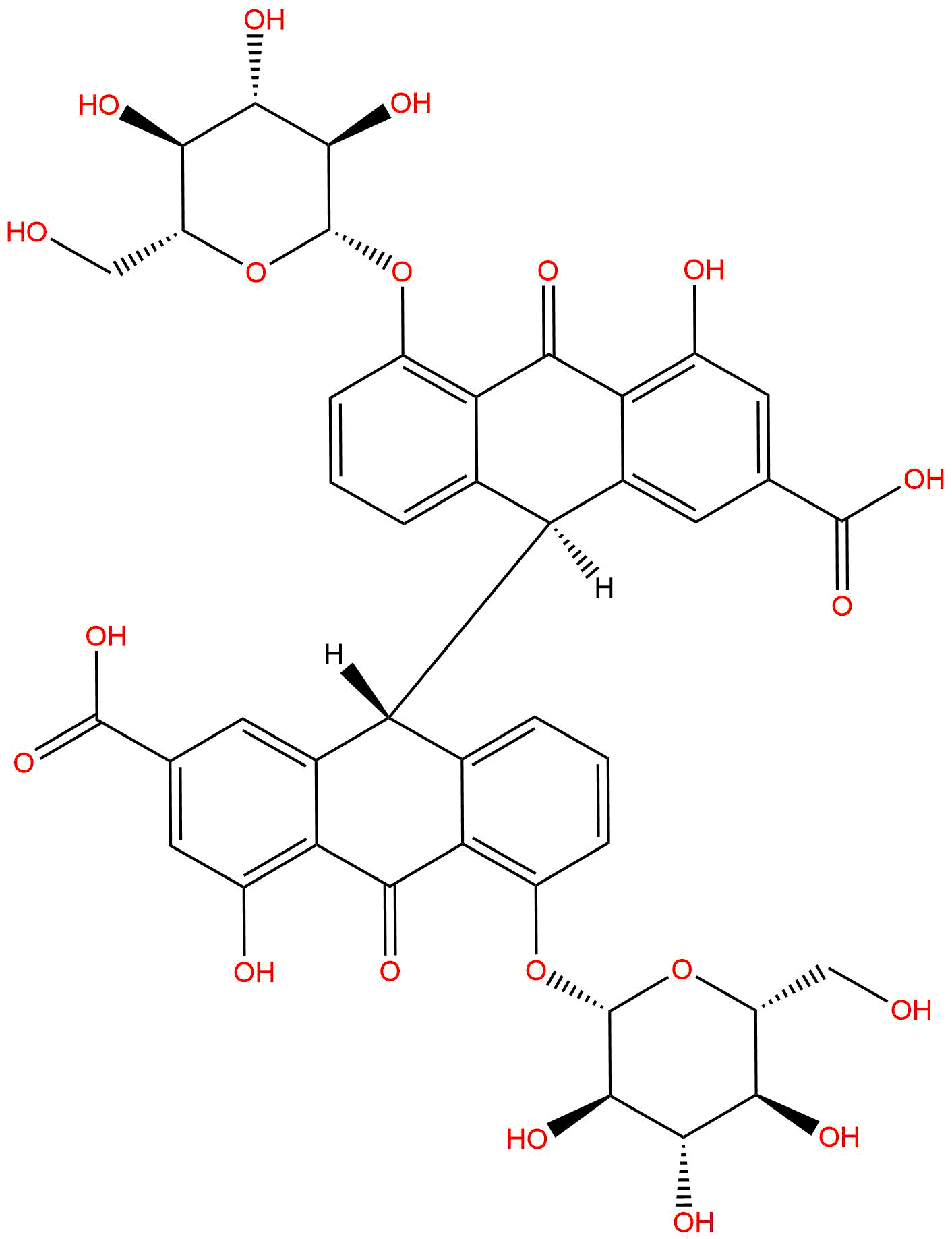


Product Name: Sennoside B
Synonym name: Tisasen B
Catalogue No.: BP1293
Cas No.: 128-57-4
Formula: C42H38O20
Mol Weight: 862.746
Botanical Source: senna
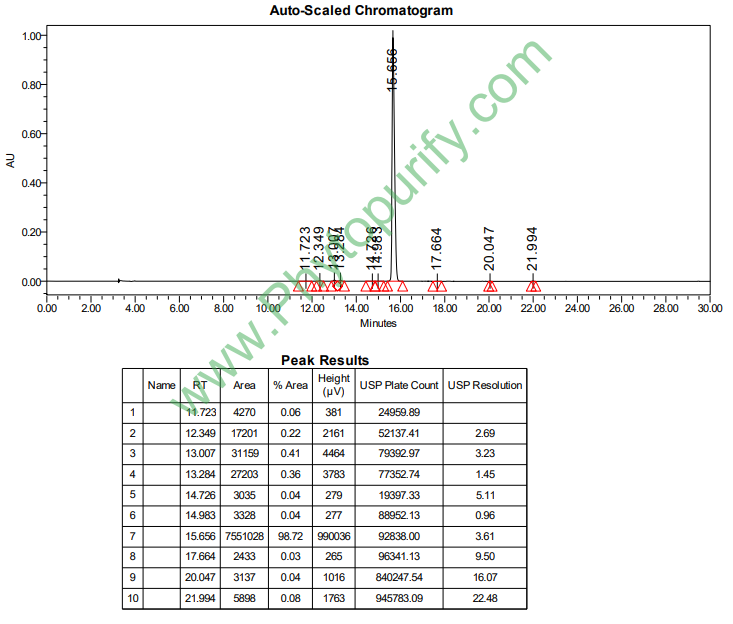
Purity: 95%~99%
Analysis Method: HPLC-DAD or/and HPLC-ELSD
Identification Method: Mass, NMR
Packing: Brown vial or HDPE plastic bottle
Can be supplied from milligrams to grams.
For Reference Standard and R&D, Not for Human Use Directly.
Inquire for bulk scale.
Description:
Sennoside B, a major purgative component, has a potential utility in the treatment of proliferative diseases, through inhibiting PDGF-stimulated cell proliferation by binding to PDGF-BB and its receptor and by down-regulating the PDGFR-beta signaling pathway. It and sennoside A also possess significant gastroprotective activities .
References:
Life Sci. 2009 Jun 19;84(25-26):915-22.
Sennoside B inhibits PDGF receptor signaling and cell proliferation induced by PDGF-BB in human osteosarcoma cells.
AIMS: To address the possibility that Sennoside B inhibition of cell proliferation is mediated via interference with platelet-derived growth factor (PDGF) signaling. MAIN METHODS: Human osteosarcoma MG63 cells were treated with PDGF in the presence or absence of Sennoside B. Activation of the PDGF signaling pathway was monitored using western immunoblotting with specific antibodies against the PDGF receptor, phosphotyrosine and components of the downstream signaling cascade. Activation of cell metabolism and proliferation was assessed by chromogenic reduction of MTT. KEY FINDINGS: Sennoside B was found to inhibit PDGF-BB-induced phosphorylation of the PDGF receptor (PDGFR) in human MG63 osteosarcoma cells. Downstream signaling was also affected; pre-incubation of PDGF-BB with Sennoside B inhibited the phosphorylation of pathway components including Ak strain To address the possibility that Sennoside Binhibition of cell proliferation is mediated via interference with platelet-derived growth factor (PDGF) signaling.
METHODS AND RESULTS:
Human osteosarcoma MG63 cells were treated with PDGF in the presence or absence of Sennoside B. Activation of the PDGF signaling pathway was monitored using western immunoblotting with specific antibodies against the PDGF receptor, phosphotyrosine and components of the downstream signaling cascade. Activation of cell metabolism and proliferation was assessed by chromogenic reduction of MTT. Sennoside B was found to inhibit PDGF-BB-induced phosphorylation of the PDGF receptor (PDGFR) in human MG63 osteosarcoma cells. Downstream signaling was also affected; pre-incubation of PDGF-BB with Sennoside B inhibited the phosphorylation of pathway components including Ak strain transforming protein (AKT), signal transducer and activator of transcription 5 (STAT-5) and extracellular signal-regulated kinase 1/2 (ERK1/2). Further, we found that Sennoside B can bind directly to the extracellular domains of both PDGF-BB and the PDGF-beta receptor (PDGFR-beta). The effect was specific for Sennoside B; other similar compounds including aloe-emodin, rhein and the meso isomer (sennoside A) failed to inhibit PDGFR activation or downstream signaling. Sennoside B also inhibited PDGF-BB stimulation of MG63 cell proliferation.
CONCLUSIONS:
These results indicate that Sennoside B can inhibit PDGF-stimulated cell proliferation by binding to PDGF-BB and its receptor and by down-regulating the PDGFR-beta signaling pathway. Sennoside B is therefore of potential utility in the treatment of proliferative diseases in which PDGF signaling plays a central role.
HPLC of Sennoside B
Storage conditions:Short-term storage at 2~8℃, long-term storage at -20 ~ -80℃
Sennoside B (CAS number 128-57-4), as a natural product, has received widespread attention in the field of pharmacology research in recent years due to its unique biological activity and potential medicinal value. Fanxie glycoside B is mainly found in plants such as Senna Alexandrina and has traditionally been used as a laxative with significant laxative effects. With the deepening development of molecular pharmacology, senoside B not only exhibits good laxative effects, but has also been found to have activity in inhibiting the platelet-derived growth factor (PDGF) signaling pathway, demonstrating gastroprotective and anti-inflammatory potential, especially in the study of gastritis related diseases, showing important value.
This review aims to systematically summarize the chemical structure and physicochemical properties, plant sources, and extraction methods of senoside B, with a focus on its pharmacological activity and mechanism of action, evaluating its pharmacological properties and pharmacokinetic characteristics, and exploring its clinical application prospects and future research directions, providing scientific references for researchers in the field of natural product pharmacology.
Fanxie glycoside B is a bimolecular flavonoid glycoside with a molecular formula of C42H38O20 and a molecular weight of 862.7460. Its structure is formed by connecting two anthraquinone units through glycosidic bonds, exhibiting typical characteristics of anthraquinone glycosides. The LogP value of senoside B is 0.8278, indicating its moderate lipophilicity, which facilitates its distribution and absorption in the body. The TPSA (Topological Polarity Surface Area) is as high as 347.9600, indicating strong polarity, with a water solubility of 0.7029 and moderate solubility, which is conducive to oral administration.
From a pharmacokinetic perspective, the blood-brain barrier penetration ability of senoside B is relatively low, indicating a lower risk of side effects in the central nervous system. The negative result of hERG channel inhibition experiment indicates a low risk of cardiac toxicity. The Ames mutagenicity test result is 0.0, indicating a low risk of genotoxicity and a good safety basis.
Fanxie glycoside B is mainly found in Senna Alexandrina, Senna obtusifolia, and related species. Fanxie plant is widely used in traditional Chinese medicine and Indian Ayurvedic medicine, mainly as a laxative. The content of senoside B in plants is greatly affected by the planting environment, harvesting period, and processing methods.
Common extraction methods include hot water extraction, alcohol extraction, and ultrasound assisted extraction. Hot water extraction is commonly used for industrial preparation due to its simplicity and high safety. After extraction, purification and quantitative analysis were carried out using liquid chromatography (HPLC) technology to ensure the stability of the quality and content of senoside B. In recent years, the application of ultrasound assisted extraction and microwave-assisted extraction technologies has improved extraction efficiency and purity, providing technical support for the large-scale production of senoside B.
Fanxie glycoside B, as the main active ingredient of traditional laxatives, can promote intestinal peristalsis, increase intestinal water content, and improve constipation symptoms. Its laxative mechanism mainly involves regulating ion channels and aquaporins in intestinal epithelial cells, including CFTR (cystic fibrosis transmembrane conductance regulator), SLC9A3 (sodium hydrogen exchange protein 3), AQP3, AQP4, and AQP8 and other aquaporins. The regulation of these targets promotes intestinal fluid secretion and water transport, enhancing the fluidity of intestinal contents.
Fanxie glycoside B has been found to be an effective oral PDGF inhibitor. PDGF and its receptor PDGFR - β play a crucial role in cell proliferation, migration, and tissue repair. Abnormal activation is associated with various diseases such as fibrosis, tumors, and inflammation. Fanxie glycoside B can inhibit PDGF-BB-induced PDGFR - β phosphorylation, thereby downregulating signaling pathways such as STAT-5, AKT, and ERK, inhibiting cell proliferation and inflammatory response.
Research has shown that senoside B has a protective effect on gastric mucosa and can alleviate pathological damage in gastritis and gastric ulcers. The mechanism may be related to inhibiting the release of inflammatory factors, regulating oxidative stress, and promoting gastric mucosal repair. Fanxie glycoside B exhibits significant anti-inflammatory and protective effects in gastritis models, indicating its potential application value in the treatment of gastrointestinal diseases.
The multi-target mechanism of action of senoside B reflects its complex pharmacological activity. Its main targets and mechanisms are as follows:
Inhibition of PDGFR - β signaling pathway
Fanxie glycoside B directly or indirectly inhibits PDGF-BB-induced PDGFR - β receptor phosphorylation, blocking downstream signaling. Inhibition of the STAT-5, AKT, and ERK pathways leads to inhibition of cell proliferation and migration, exerting anti fibrotic and anti-tumor effects.
Regulation of intestinal ion channels and water channels
By regulating CFTR and SLC9A3 ion channels, sennoside B promotes the secretion of chloride and sodium ions in the intestinal lumen, increasing intestinal fluid secretion. The expression regulation of aquaporins AQP3, AQP4, and AQP8 promotes water transport and synergistically achieves laxative effects.
Anti inflammatory and antioxidant effects
Fanxie glycoside B can inhibit the release of inflammatory mediators, alleviate oxidative stress damage, protect gastric mucosal cells, and promote tissue repair. These effects provide a molecular basis for its gastroprotective activity.
The pharmacological evaluation of sennoside B shows that it has certain potential for drug development. Its molecular weight is relatively high (862.7460) and TPSA is high, indicating that its oral absorption may be limited, but a moderate LogP value (0.8278) can help improve bioavailability. Moderate water solubility (0.7029) is beneficial for formulation development.
Low blood-brain barrier permeability reduces the risk of central nervous system side effects. HERG channel inhibition is negative, indicating a low risk of cardiac toxicity. The Ames test is negative, indicating a low risk of genotoxicity and good safety.
In terms of pharmacokinetics, existing research is relatively limited, and further systematic evaluation of its absorption, distribution, metabolism, and excretion (ADME) characteristics is needed. Given its high polarity and molecular weight, there may be an issue of incomplete intestinal absorption. In the future, its pharmacokinetic properties can be optimized through drug carriers or structural modifications.
Fanxie glycoside B, as the active ingredient of traditional laxatives, has been widely recognized for its laxative effect. With a deeper understanding of its molecular mechanism, the application prospects of senoside B in gastrointestinal diseases are even broader. Its PDGF inhibitory activity provides a new approach for the treatment of gastritis, gastric ulcers, and related fibrotic diseases, especially showing potential in anti-inflammatory and gastric mucosal protection.
Future research should focus on:
In addition, the design and synthesis of derivatives based on the structure of senoside B may provide an innovative platform for the development of novel gastrointestinal drugs.
Fanxie glycoside B, as a natural product, has both traditional medicinal value and modern pharmacological research potential. Its unique chemical structure endows it with multiple biological activities, particularly outstanding in promoting bowel movements, anti PDGF signaling, and gastric protection. The drug efficacy evaluation shows that it has a good safety basis, but its pharmacokinetic properties still need to be optimized.
In the future, with further elucidation of molecular mechanisms and advancement of clinical research, senoside B is expected to become an important natural drug candidate molecule in the field of gastrointestinal disease treatment. By comprehensively utilizing modern drug research and development technologies, the development of senoside B and its derivatives will bring new breakthroughs in natural product pharmacology and clinical treatment.
