


Product name: Sennidin A
Synonym name:
Catalogue No.: BP1290
Cas No.: 641-12-3
Formula: C30H18O10
Mol Weight: 538.464
Botanical Source: Aglycone from Sennoside A
Physical Description: Yellow powder
Type of Compound: Anthraquinones
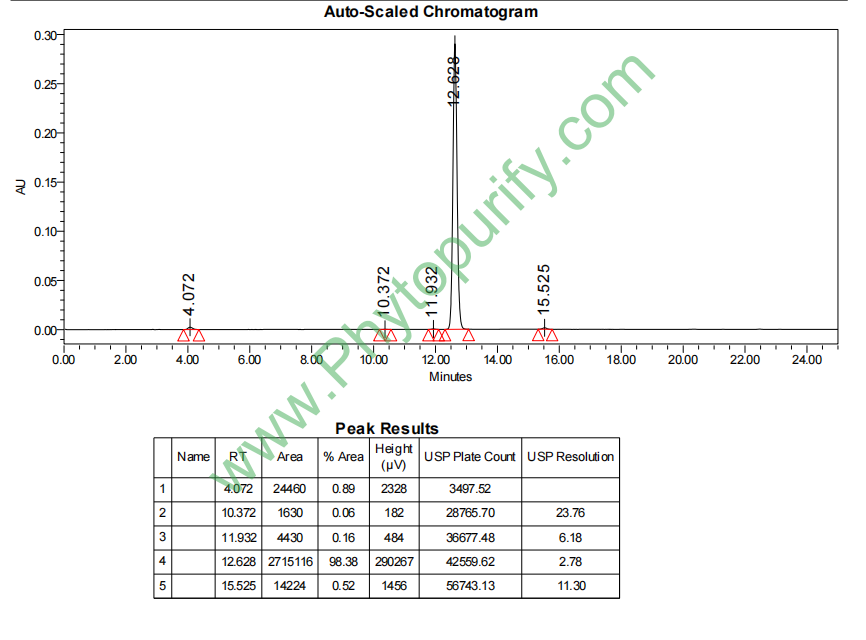
Purity: 95%~99%
Analysis Method: HPLC-DAD or/and HPLC-ELSD
Identification Method: Mass, NMR
Packing: Brown vial or HDPE plastic bottle
Storage: Store in a well closed container, protected from air and light. Put into refrigerate or freeze for long term storage.
Whenever possible, you should prepare and use solutions on the same day. However, if you need to make up stock solutions in advance, we recommend that you store the solution as aliquots in tightly sealed vials at -20℃. Generally, these will be useable for up to two weeks.
The product could be supplied from milligrams to grams, up to kilograms
Inquire for bulk scale.
Descriptions:
Sennidin A in combination with necrosis inducing drugs/therapies may generate synergetic tumoricidal effects on solid malignancies by means of primary debulking and secondary cleansing process.[1]
Sennidin A stimulates glucose incorporation in the phosphatidylinositol 3-kinase (PI3K)- and Akt-dependent in rat adipocytes, but in the IR/IRS1-independent manner.[2]
Sennidin A, has two hydroxyanthraquinone-like moieties, exerts inhibition on NS3 helicase with IC50 values of 0.8 uM.[3]
References:
[1] Ji Y, Jiang C, Zhang X, et al. Oncotarget, 2014, 5(10):2934-46.
[2] Abe D, Saito T, Sekiya K. Life Sci, 2006, 79(11):1027-33.
[3] Furuta A, Tsubuki M, Endoh M, et al. Int J Mol Sci, 2014, 16(8):18439-53.
[4] Sun Y, Li XT, Yu XG,et al. Chinese Journal of Chromatography, 2004, 22(1):48-50.
HPLC of Sennidin A
Storage conditions:Short-term storage at 2~8℃, long-term storage at -20 ~ -80℃
189.6600
3.6773
.5656
.0370
3.9375
1.8957
Low
92.4107
3.6474
Yes
No
No
No
Yes
Yes
0.0
Yes
No
Yes
No
Sennidin A (CAS number: 641-12-3) is a natural anthraquinone product with important biological activity, mainly derived from the traditional laxative herb, narrow leaved sennidin(Cassia angustifolia)It belongs to the same genus of plants. For a long time, medicinal plants represented by senna have been widely used in the treatment of clinical constipation due to their precise laxative effects. Their active ingredients are considered to be senoside compounds, and senoside A is one of the main active metabolites of these compounds under the action of gut microbiota. Traditionally, its pharmacological effects have been attributed to stimulating intestinal motility and regulating ion channels, thereby exerting a laxative effect.
With the deepening of modern pharmacological research techniques, the biological activity spectrum of senoside A has far exceeded the traditional scope of laxative function. In recent years, research has found that it has shown remarkable potential in antiviral and glucose metabolism regulation. For example, studies have shown that senoside A can effectively inhibit the activity of hepatitis C virus (HCV) NS3 helicase and affect glucose metabolism by regulating the Akt signaling pathway and phosphorylation of glucose transporter 4 (GLUT4). These findings open up new directions for re examining and developing the therapeutic value of this traditional natural product.
This article aims to provide a systematic review of the chemical properties, plant sources, pharmacological activities, molecular mechanisms of action, pharmacological properties, and clinical application prospects of senoside A, in order to provide comprehensive scientific references for the in-depth research and potential drug development of this compound.
The chemical name of senoside A is (9R, 9'R) -9,9 ', 10,10' - tetrahydroxy-3,3 '- dimethyl - [9,9' - anthracene] -10,10 '- dione, with a molecular formula of C30H26O10 and a molecular weight of 538.4640. Its structure belongs to the class of dimeric anthraquinone compounds, consisting of two rhein type anthraquinone units connected by C9-C9 'bonds. Each unit contains an anthraquinone core (9,10-anthraquinone) and is connected to hydroxyl and methyl groups at different positions. This unique dimeric structure is a key characteristic that distinguishes it from other monoanthraquinone compounds such as emodin and aloe emodin, and profoundly affects its physicochemical properties and biological activity.
In terms of physical and chemical properties, senoside A appears as a yellow to orange yellow crystalline powder. Its lipophilic water partition coefficient (LogP) is 3.6773, indicating that the compound has moderate lipophilic properties. The theoretical polar surface area (TPSA) is as high as 189.66 Å ², mainly attributed to the presence of multiple hydroxyl and carbonyl oxygen atoms in the molecule. The higher TPSA and certain lipophilicity jointly determine its solubility characteristics: it has a lower solubility in water (about 0.0370 mg/mL) and is easily soluble in organic solvents such as methanol, ethanol, and dimethyl sulfoxide (DMSO). Its solubility increases in alkaline aqueous solutions (such as sodium bicarbonate solution), forming salts.
From the perspective of chemical stability, anthraquinone compounds are relatively sensitive to light, heat, and oxygen, especially in solution state. The phenolic hydroxyl group in the structure of senoside A endows it with certain antioxidant capacity, but it is also prone to oxidative reactions. In the body, its glycoside form (i.e. senoside A) is usually produced by intestinal bacteria hydrolyzing its precursor - senoside (such as senoside A, B), which is a necessary step for it to exert its traditional laxative effect.
Fanxie Glycogen A is mainly derived from Fabaceae, a genus of Cassia in the legume family(Cassia, now partially included Senna Genus) plants, among which Narrow leaf diarrhea(Cassia angustifolia Vahl) and Sharp leaf diarrhea(Cassia acutifolia Delile) Most importantly, the two are commonly known as Senna Leaf, which is a legally recognized medicinal herb included in the Chinese Pharmacopoeia and pharmacopoeias of various countries. In addition, in plants of the same genus such as the sausage tree(Cassia fistula)Waiting also exists.
In plants, sennoside A is not present in large quantities in its free form, but rather in its glycoside form - mainly sennoside A and sennoside B - as the main storage and transport forms. These senosides are glycoside compounds formed by the binding of senoside A with glucose, which have better water solubility but do not have direct biological activity themselves. When senna leaves are harvested and dried, partial degradation may occur during storage or extraction, generating small amounts of free glycosides.
Extraction and Separation Process Usually targeting its glycoside precursors to obtain total sennoside or further purify to obtain monomers. Classic methods include:
1. Solvent extraction method The most commonly used method. Usually, methanol, ethanol, or water alcohol mixed solvents with different ratios are used to heat reflux or ultrasound assisted extraction of dried senna leaf powder. The alcohol extraction method has high efficiency and can effectively extract senoside.
2. Purification and Separation After the crude extract is concentrated under reduced pressure, it can be enriched and purified using macroporous adsorption resins (such as AB-8, D101). Impurities are washed away with water first, and then eluted with different concentrations of ethanol to obtain the enriched site of senoside. Further monomer separation usually adopts silica gel column chromatography, reversed phase silica gel column chromatography (such as ODS), Sephadex gel chromatography (LH-20) and high-performance liquid chromatography (HPLC) preparation methods.
3. Obtain senoside A There are usually two ways to obtain sensenoside A: one is to directly isolate trace amounts of free sensenoside from plants; The main method is through Acid hydrolysis or Enzymatic hydrolysis(such as β - glucosidase) hydrolyze the purified senoside (such as senoside A), remove the sugar group, and generate senoside A, which is then purified by crystallization or chromatography.
Modern green extraction technologies such as supercritical CO2 extraction (which requires the addition of entrainers such as ethanol) and microwave-assisted extraction have also been applied research, aiming to improve efficiency and reduce the amount of organic solvents used.
The pharmacological activity research of Fanxie Glycoside A has expanded from traditional intestinal effects to multiple fields such as antiviral and metabolic regulation, demonstrating the characteristics of multi-target action.
1. The function of defecation and intestinal function
This is the most classic and extensively studied function of senoside A. It itself and its precursor senoside are key substances in the laxative effect of senna leaves. The characteristic of action is "mild and slow", taking effect about 6-12 hours after oral administration. Its laxative mechanism does not directly stimulate the intestinal wall, but relies on the gut microbiota (especially Clostridium) to hydrolyze its glycoside precursors into active aglycones (such as senoside A). Glycosides directly act on the colonic mucosa and promote intestinal contents and water secretion through multiple pathways, including stimulating intestinal neurons, inhibiting Na+/K+- ATPase to reduce water absorption, and regulating specific ion channels and aquaporins (see next section for details). Long term or excessive use may lead to electrolyte imbalance, damage to the intestinal muscle plexus (risk of "colonic melanosis"), and drug dependence.
2. Antiviral activity
An important study has found that senoside A has an effect on Hepatitis C virus (HCV) Has inhibitory activity. The NS3 protein of HCV has helicase/protease activity, which is crucial for the replication of viral RNA. Research has shown that senoside A can inhibit the activity of HCV NS3 helicase, with a half maximal inhibitory concentration (IC50) of 0.8 μ M, demonstrating strong inhibitory potential. This suggests that senoside A or its structurally optimized derivatives may serve as lead compounds for anti HCV drugs, particularly targeting the NS3 helicase.
3. Regulating sugar metabolism activity
Recent studies have revealed a new role of senoside A in energy metabolism. Experiments have shown that senoside A can Inducing phosphorylation (activation) of Akt (protein kinase B)Akt is a key node molecule in the insulin signaling pathway, and its activation downstream promotes Glucose transporter 4 (GLUT4) Transposition to the cell membrane increases glucose uptake by cells. Research data confirms that treatment with senoside A can stimulate the phosphorylation of GLUT4 and significantly promote it Glucose incorporation Cells. This finding suggests that sennoside A may have a similar effect as an insulin sensitizer, which provides a new molecular clue for the development of potential drugs to treat insulin resistance or type 2 diabetes.
4. Other potential activities
Based on its anthraquinone core structure, senoside A may also possess biological activities shared by anthraquinone compounds such as antioxidant and anti-inflammatory properties. However, there are relatively few specialized research reports on these activities specific to this particular compound, and further exploration is needed.
The multiple pharmacological activities of Fanxie Glycogen A stem from its interactions with different biological targets, and its mechanisms of action are focused on both intestinal and extraintestinal effects.
(1) Molecular target mechanism of laxative effect
The laxative effect of senoside A mainly occurs in the colon, involving complex regulation of ion transport and permeability of epithelial cells, with the core being to increase the water and electrolyte content in the intestinal lumen. The key targets include:
1. Cystic fibrosis transmembrane conductance regulator (CFTR)CFTR is a cAMP dependent chloride ion channel expressed on the apical membrane of epithelial cells. Research has shown that active ingredients of sennoside can activate prostaglandin E2 (PGE2) or histamine signaling in intestinal epithelial cells, increase intracellular cAMP levels, and thereby Activate CFTR chloride channel Promote the secretion of chloride ions (accompanied by sodium ions and water) into the intestinal lumen.
2. Sodium hydrogen exchanger 3 (SLC9A3, NHE3)NHE3 is located on the apical membrane of intestinal epithelial cells and is responsible for exchanging sodium ions in the intestinal lumen with hydrogen ions inside the cells. It is the main pathway for intestinal sodium absorption. Fanxie Glycogen A can Inhibit the activity of NHE3 This reduces the absorption of sodium ions and indirectly preserves the water in the intestinal lumen.
3. Aquaporins (AQPs)AQPs are proteins that specifically transport water on the cell membrane. Research suggests that senoside A may affect the expression or function of multiple AQPs in the colon, particularly AQP3, AQP4, and AQP8 These AQPs are mainly involved in the absorption of water by the colon. Fanxie Glycoside A may downregulate the expression or alter the localization of these AQPs,Inhibit the reabsorption of water by the colon Keep the feces soft.
In summary, senoside A effectively increases the volume and water content of colon contents, stimulates intestinal peristalsis, and produces a laxative effect through a dual mechanism of "promoting secretion (activating CFTR)+inhibiting absorption (inhibiting NHE3 and AQPs)".
(2) Molecular mechanisms of antiviral and metabolic regulation
1. Inhibition of HCV NS3 helicase Fanxie Glycoside A directly interacts with the ATP binding site or nucleic acid binding site of HCV NS3 helicase, competitively inhibiting its helicase activity, thereby blocking the replication of HCV RNA genome. Its IC50 value of 0.8 μ M indicates that it is a moderate strength inhibitor with room for structural optimization.
2. Activate Akt/GLUT4 signaling pathway In terms of glucose metabolism, the specific upstream receptors of senoside A are not yet fully understood, which may involve indirect activation of insulin receptors or proximal kinases. The clear downstream events are Promote phosphorylation of Akt at Ser473 site Activated Akt subsequently phosphorylates and activates its downstream substrates, such as AS160 (TBC1D4), which, upon inactivation, releases the inhibition of GLUT4 vesicle transport and promotes GLUT4 translocation from intracellular vesicles to the cell membrane,Increase cellular uptake of glucose(i.e. 'glucose incorporation'). This mechanism intersects with the insulin pathway, indicating its potential insulin sensitization effect.
Based on the provided parameters and existing knowledge, a preliminary evaluation of the pharmacological properties of senoside A is conducted
1. Drug similarity analysis
* Molecular weight (538.46)Slightly higher than the 500 Dalton upper limit recommended by Lipinski's "Five Rules", this may be a slight adverse factor for oral absorption, but many natural product drugs have molecular weights in this range, which is not an absolute barrier.
* LogP(3.68)This indicates that the compound has moderate lipophilicity, which is beneficial for penetrating cell membranes, but excessive LogP may also lead to low solubility and rapid metabolism.
* TPSA(189.66 Ų)The high value reflects the presence of multiple hydrogen bond donors/acceptors in the molecule. High TPSA is usually not conducive to passive transmembrane diffusion, especially through the blood-brain barrier.
* Water solubility (0.037 mg/mL)Poor, which may be a major limiting factor for its oral bioavailability. The key to improving its dissolution and absorption lies in the use of pharmaceutical methods such as solid dispersions, cyclodextrin inclusion complexes, nanocrystals, or prodrugs such as senoside.
* Preliminary Conclusion Fanxie Glycoside A basically conforms to the principle of drug likeness, but Solubility and permeability These are two key attributes that need to be optimized in the development of its medicinal properties.
2. Prediction and Challenges of Pharmacokinetic (PK) Characteristics
There are few reports on the systematic pharmacokinetic studies of senoside A itself, but it can be inferred based on its glycoside precursor and anthraquinone compound characteristics:
* absorb Oral absorption of free aglycones may be limited due to their low solubility. In clinical practice, after oral administration of its precursor senoside, most of it reaches the colon without absorption and is hydrolyzed by gut microbiota into aglycones (such as senoside A), which then take effect locally. If you want to exert systemic effects (such as antiviral and regulating glucose metabolism), it is necessary to improve its dissolution and absorption in the upper intestine through formulation technology.
* distribution Predict that its plasma protein binding rate may be high (due to anthraquinone properties).Low blood-brain barrier permeability This is consistent with high TPSA, which means its direct effect on central nervous system related diseases is limited, but it also reduces the risk of central nervous system side effects.
* Metabolism Anthraquinone compounds are mainly metabolized by the liver and undergo II binding reactions such as glucuronidation and sulfation. The phenolic hydroxyl group of senoside A is the main metabolic site. Metabolites are mostly excreted through bile and urine.
* excretion The prototype drug and its metabolites are mainly excreted through feces, with some excreted through urine.
3. Preliminary evaluation of safety
* HERG inhibition The data shows' no ', indicating a low potential risk of causing QT interval prolongation in the heart, which is a favorable cardiac safety signal.
* Genotoxicity (Ames test)The data shows 0.0 (usually indicating no mutagenicity under testing conditions), which is a positive safety indicator. However, it should be noted that the metabolites of some anthraquinone compounds may interact with DNA when used at high doses or for a long time, so comprehensive genetic toxicity and long-term toxicity studies are still necessary.
* Main safety concerns: Caused by long-term use Intestinal dependence, electrolyte imbalance (especially hypokalemia), and possible occurrence of colonic melanosis When it is developed for chronic diseases (such as diabetes), the safety of long-term drug use must be strictly evaluated.
The diverse biological activities of senoside A provide multiple potential directions for its clinical application development, but also face many challenges.
1. Potential application areas
* Gastrointestinal diseases As:Laxative Its position is stable, but future research and development should focus on Reduce its side effects and dependency For example, developing delivery systems that can accurately release in the colon, or finding the lowest effective dose, or combining with other mild laxative ingredients to enhance safety. Based on its clear mechanism of action on intestinal ion channels, it may also provide new ideas for the treatment of certain secretory diarrhea (developed through inhibitors) or constipated irritable bowel syndrome (IBS-C).
* antiviral therapy As:Anti HCV lead compound The prospect is broad. The IC50 value of 0.8 μ M is a good starting point. Through Structural modification Optimizing its binding activity and selectivity with NS3 helicase, while improving its pharmacokinetic properties such as solubility and metabolic stability, is expected to develop novel non nucleoside HCV inhibitors, such as synthetic derivative libraries. Considering that direct antiviral drugs (DAAs) are highly effective, the new compound may be targeted for the treatment of existing drug-resistant strains or as a component of combination therapy.
* Metabolic diseases: In Type 2 diabetes and insulin resistance The most attractive field. Its role in promoting glucose uptake through the Akt/GLUT4 pathway suggests that it may become a novel approach Insulin sensitizer The next step of research is to validate its efficacy in more cell and animal models of insulin resistance, such as ob/ob mice and high-fat diet induced models, and elucidate its precise upstream mechanism of activating Akt (whether it involves insulin receptors, PPAR γ, etc.). Compared with classical thiazolidinedione drugs, it is worth exploring whether they have different side effect profiles.
2. Challenges and Prospects Faced
* challenge:
* Multi target and selectivity Its multi-target nature is a double-edged sword. The multiple effects of CFTR, NHE3, and AQPs may be synergistically beneficial in the treatment of constipation; But when developing antiviral or hypoglycemic drugs, it is necessary to ensure that their effects are sufficient Target selectivity To avoid unnecessary intestinal side effects or other off target effects.
* Optimization of drug properties As mentioned earlier, solubility, permeability, and metabolic stability are the main pharmaceutical bottlenecks that need to be addressed Pharmaceutical Chemistry and Pharmacy Solution by means of system.
* Re evaluation of safety For new indications for long-term systemic administration, comprehensive preclinical and clinical safety evaluations beyond traditional short-term laxative use must be conducted.
* Future research directions:
* Study on Structure Activity Relationship (SAR)The system synthesized a series of derivatives and analogues of senoside A, and conducted structure-activity relationship analysis on its laxative, antiviral, and hypoglycemic activities, aiming to "differentiate" its activity and obtain more selective candidate molecules.
* Development of a new delivery system Utilizing nanotechnology (liposomes, polymer nanoparticles), prodrug strategies, or targeted formulations to enhance their bioavailability, or achieve targeted delivery to specific tissues (such as liver for antiviral purposes and muscle/adipose tissue for hypoglycemic purposes).
* Deep analysis of the mechanism of action Using chemical biology methods such as affinity fishing and proteomics to identify protein targets that directly interact with each other, especially upstream targets that mediate Akt activation, laying the foundation for rational drug design.
* Exploration of clinical translation: Under the full support of preclinical research, explore to improve the dosage form of its existing catharsis application, and gradually promote its early clinical research in the field of antiviral and diabetes.
Fanxie Glycoside A, as a dimeric anthraquinone compound derived from traditional medicinal plants, is a model that connects traditional medicine with modern pharmacological research. It is no longer just a classic laxative ingredient, but its new function of inhibiting the activity of HCV NS3 helicase and regulating the Akt/GLUT4 pathway to promote glucose uptake reveals its enormous potential therapeutic value. Despite facing challenges in terms of selectivity, drug development, and safety on the path towards new drug development, this is also the core issue of modern natural product research.
Through interdisciplinary collaboration and the comprehensive application of research methods in medicinal chemistry, pharmacology, pharmacy, and clinical medicine, a systematic and in-depth exploration and modification of senoside A can be carried out. It is entirely possible to develop it from a traditional "local action component of the intestine" to a treatment for viral hepatitis or metabolic diseases New candidate drugs or lead compounds In depth research on it not only helps to expand the application boundaries of senna leaves, a traditional medicinal herb, but also provides important insights for discovering multi-target and multi-functional active molecules from the treasure trove of natural products.
