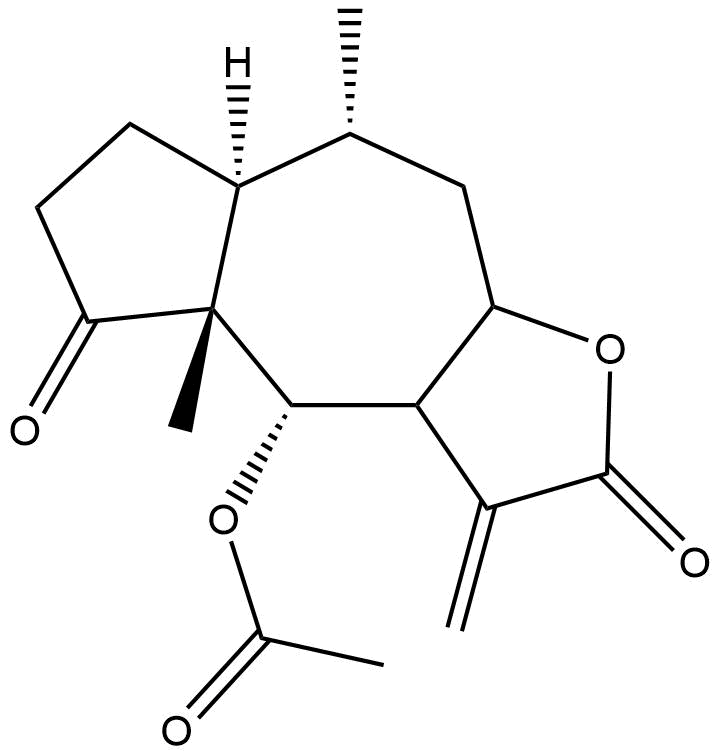


Product name: Ergolide
Synonym name:
Catalogue No.: BP2078
Cas No.: 54999-07-4
Formula: C17H22O5
Mol Weight: 306.358
Botanical Source:
Physical Description:
Type of Compound:
Purity: 95%~99%
Analysis Method: HPLC-DAD or/and HPLC-ELSD
Identification Method: Mass, NMR
Packing: Brown vial or HDPE plastic bottle
Storage: Store in a well closed container, protected from air and light. Put into refrigerate or freeze for long term storage.
Whenever possible, you should prepare and use solutions on the same day. However, if you need to make up stock solutions in advance, we recommend that you store the solution as aliquots in tightly sealed vials at -20℃. Generally, these will be useable for up to two weeks.
The product could be supplied from milligrams to grams
Inquire for bulk scale.
For Reference Standard and R&D, Not for Human Use Directly.
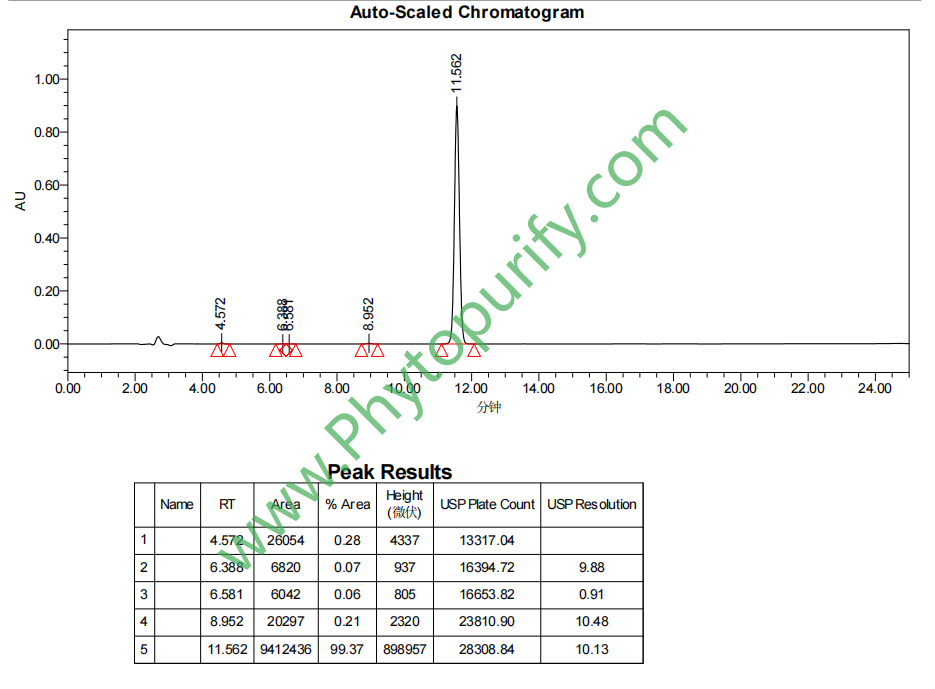
HPLC of Ergolide
Storage conditions:Short-term storage at 2~8℃, long-term storage at -20 ~ -80℃
69.6700
1.5029
1.5028
.2160
4.8121
7.3374
High
59.5150
4.4405
No
No
No
No
Yes
No
0.0
Yes
No
Yes
Yes
Ergolide (CAS number: 54999-07-4) is a natural sesquiterpene lactone isolated from dried flowers of Inula Britanica. As a sesquiterpene lactone compound, ergot lactone has a unique chemical structure and significant biological activity, which has attracted widespread attention in the field of natural product pharmacology in recent years. Its main pharmacological effect is manifested by inhibiting the nuclear factor kappa B (NF - κ B) signaling pathway, thereby downregulating the expression of inducible nitric oxide synthase (iNOS) and cyclooxygenase-2 (COX-2) in macrophages, demonstrating good anti-inflammatory activity. In addition, ergotamine has shown potential targeting effects in the field of migraine treatment, involving key targets such as serotonin receptor subtypes (HTR1B, HTR1D), prostaglandin synthase PTGS2 (COX-2), calcitonin gene-related peptide (CGRP), and its precursor CalcA.
This article aims to systematically review the chemical structure, plant sources, extraction methods, pharmacological activities, and mechanisms of action of ergotamine. Combining its pharmacological parameters and pharmacokinetic characteristics, it explores in depth its clinical application potential and future development directions in related diseases such as migraine, providing theoretical basis and research reference for the drug development of this natural product.
The molecular formula of ergot lactone is C2H_30O3, with a molecular weight of 306.3580, belonging to the sesquiterpene lactone class. Its core structure contains a typical sesquiterpene skeleton with lactone rings, endowing it with certain chemical stability and biological activity. The LogP value of ergotamine is 1.5029, indicating that it has moderate lipid solubility, which is beneficial for cell membrane penetration and in vivo distribution. The polarization surface area (TPSA) is 69.67 Å ², indicating that its polarity is moderate and conducive to binding with biomolecules. Low water solubility (0.2160 mg/mL) suggests limited solubility in aqueous phase, but suitable for transmission through lipid environment.
It is worth noting that ergotamine has a high ability to penetrate the blood-brain barrier, which is particularly important for the treatment of central nervous system diseases such as migraine. In addition, ergotamine did not exhibit hERG channel inhibitory activity, indicating a low risk of cardiac toxicity, and the Ames test result was 0.0, indicating no significant genotoxicity. These pharmacological characteristics provide a good safety basis for further drug development.
Ergolactone is mainly derived from Inula Britanica, a plant widely distributed in temperate regions of Eurasia. It is a commonly used traditional Chinese medicine for clearing heat, detoxifying, expectorant, and cough suppressant. The dried flowers of Eurasian spiral flowers are the main extraction site of ergotamine.
The extraction process usually uses organic solvent extraction method. The specific steps include: first, crushing the dried Eurasian spiral flowers, and using polar organic solvents such as ethanol or methanol for reflux extraction to improve the dissolution rate of sesquiterpene lactones. After vacuum concentration, the extraction solution is subjected to crude separation and purification using liquid-liquid partitioning, silica gel column chromatography, and other methods. High performance liquid chromatography (HPLC) and mass spectrometry (MS) techniques are commonly used for qualitative and quantitative analysis of ergotamine in extracts.
In recent years, ultrasound assisted extraction and microwave-assisted extraction technologies have also been introduced to shorten extraction time, improve extraction efficiency and purity. In addition, the use of green solvents such as ethyl acetate and its hydrates is gradually increasing, which is in line with the environmental trend of modern natural product extraction.
The pharmacological activity of ergot lactone mainly focuses on anti-inflammatory and neuroprotective effects. Numerous in vitro and in vivo studies have shown that ergotamine significantly inhibits the expression of inducible nitric oxide synthase (iNOS) and cyclooxygenase-2 (COX-2) in macrophages (such as RAW 264.7 cells) by regulating the inflammatory signaling pathway, reducing the production of pro-inflammatory mediators such as nitric oxide (NO) and prostaglandin E2 (PGE2), thereby exerting anti-inflammatory effects.
In addition, the therapeutic potential of ergotamine for central nervous system diseases, especially migraines, is gradually gaining attention. During migraine attacks, the serotonin receptors (HTR1B, HTR1D) and calcitonin gene-related peptide (CGRP) signaling pathways are abnormally activated, leading to vasodilation and neuroinflammation. Ergolactone alleviates migraine symptoms by regulating the expression and activity of these targets, reducing neuroinflammation and vascular reactions.
In vivo experiments, ergotamine has shown good analgesic and anti-inflammatory effects, with no significant toxic side effects. Its protective effect on nerve cells also provides new ideas for the study of neurodegenerative diseases.
The main mechanism of action of ergotamine involves inhibition of the NF - κ B signaling pathway. NF - κ B, as a key transcription factor, regulates the expression of various inflammatory factors, including iNOS and COX-2. Ergolactone inhibits the inflammatory response by blocking the activation of NF - κ B, reducing its nuclear translocation, and lowering the transcription levels of pro-inflammatory genes.
In terms of targets related to migraine treatment, ergotamine has a certain affinity with serotonin receptor subtypes HTR1B and HTR1D, which may inhibit neurotransmitter release and vascular dilation by exciting these receptors. In addition, the inhibition of PTGS2 (COX-2) expression by ergotamine reduces the synthesis of prostaglandins, further alleviating inflammation and pain. The calcitonin gene-related peptide (CGRP) encoded by the CalcA gene is an important mediator of migraine attacks, and ergotamine alleviates the neurovascular symptoms of migraine by regulating the expression and release of CGRP.
Molecular docking and cell experiments both support the pharmacological effects of ergotamine through multi-target synergistic action, which provides advantages for its development as a complex disease treatment drug.
The pharmacological parameters of ergotamine indicate that it has good potential for drug development. Its molecular weight is 306.3580, which conforms to Lipinski's rule. The LogP value of 1.5029 indicates moderate lipid solubility, which is beneficial for cell membrane penetration and in vivo distribution. TPSA is 69.67 Å ², suitable for binding to target proteins and facilitating oral absorption.
The water solubility is 0.2160 mg/mL, although relatively low, its bioavailability can be improved through pharmaceutical formulation technology. The high blood-brain barrier penetration ability is an important advantage in the treatment of central nervous system diseases. The negative results of hERG channel inhibition and Ames test indicate high safety and low risk of cardiac toxicity and genotoxicity.
Pharmacokinetic studies are still in the preliminary stage, and it is speculated that the metabolic pathways in vivo are mainly metabolized by the liver cytochrome P450 enzyme system. Metabolites need further identification. There is an urgent need for systematic research on parameters such as half-life, oral bioavailability, and tissue distribution to guide clinical dosage form design and dosing regimen optimization.
Migraine, as a common and complex neurovascular disease, has limited efficacy and many side effects in existing treatment methods. Ergolactone, with its multi-target regulatory properties and good drug properties, has shown the potential to become a new type of migraine treatment drug.
Future research should focus on the preclinical efficacy evaluation of ergotamine, optimize its pharmacokinetic characteristics, and develop formulations suitable for oral or other routes of administration. At the same time, by combining modern molecular pharmacology techniques, we will further elucidate its mechanism of action and target network, and promote its clinical translation.
In addition, the potential application of ergotamine in other inflammatory and neurodegenerative diseases is also worth paying attention to. By structural modification and drug design, improving its targeting and bioavailability will open up broader space for its clinical application.
As an important sesquiterpene lactone natural product in Eurasian spiral flowers, ergot lactone has significant anti-inflammatory and neuroprotective activities. It exhibits good pharmacological effects and safety by inhibiting the NF - κ B signaling pathway, regulating various inflammatory factors and migraine related targets. The pharmacological parameters support its potential as a therapeutic drug for central nervous system diseases.
In the future, by combining modern medicinal chemistry, molecular biology, and pharmacology methods, systematic pharmacokinetic, toxicological, and preclinical studies of ergotamine will be conducted, laying a solid foundation for its clinical application. Ergolactone is expected to become an important candidate molecule in the development of natural product drugs, providing new strategies and choices for the treatment of migraine and related diseases.
