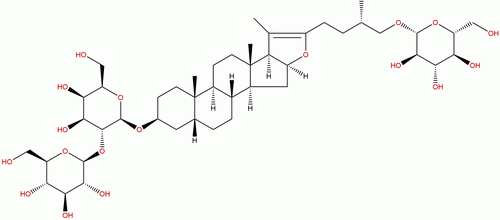


Product name: Timosaponin BIII
Synonym name: 139051-27-7; Anemarsaponin BIII; Anemarrhenasaponin IV; Pseudoprototimosaponin A III; Timosaponin B;Anemarsaponin B
Catalogue No.: BPF0778
Cas No.: 142759-74-8
Formula: C45H74O18
Mol Weight: 903.069
Botanical Source:
Physical Description:
Type of Compound: Steroids
Purity: 95%~99%
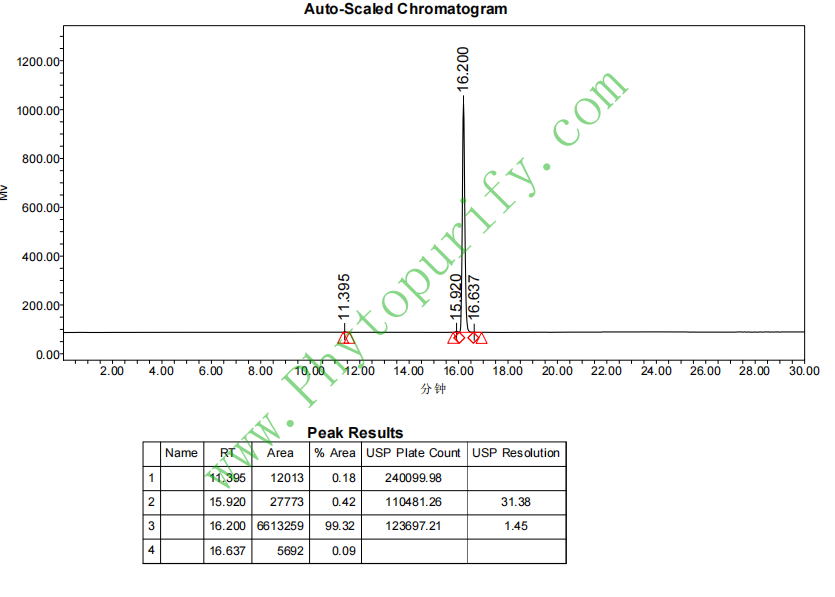
Analysis Method: HPLC-DAD or/and HPLC-ELSD
Identification Method: Mass, NMR
Packing: Brown vial or HDPE plastic bottle
The product could be supplied from milligrams to grams
Inquire for bulk scale.
For Reference Standard and R&D, Not for Human Use Directly.
HPLC of Timosaponin BIII
Storage conditions:Short-term storage at 2~8℃, long-term storage at -20 ~ -80℃
287.1400
1.5729
1.5728
.2065
.5106
.4545
Low
62.9739
6.2397
No
No
No
No
No
No
0.0
Yes
No
No
No
Natural products, as an important source of drug discovery, play an irreplaceable role in the long history of human fight against diseases. From the practical experience of traditional medicine to the in-depth exploration of modern pharmacological research, countless natural compounds with biological activity have been discovered, identified, and ultimately transformed into clinical therapeutic drugs. Among them, active ingredients from traditional Chinese medicine have always been a research hotspot in the field of new drug development due to their unique chemical structure and diverse pharmacological activities. Timosaponin BIII (TBIII), as a traditional Chinese medicine derived from the herb Anemarrhena(Anemarrhena asphodeloides The steroidal saponins isolated from the rhizomes of Bunge have received widespread attention in recent years due to their significant pharmacological activities such as anti-inflammatory, anti-tumor, neuroprotective, and cognitive improvement.
Zhimu is a traditional Chinese medicine with a long history of application, first recorded in the "Shennong Bencao Jing" and classified as a middle grade. It has the effects of clearing heat, purging fire, nourishing yin, and moistening dryness. It is commonly used to treat diseases such as fever and thirst, lung heat and dry cough, bone steaming and hot flashes, internal heat and thirst, and intestinal dryness and constipation. Modern pharmacological studies have shown that the main active ingredients of Anemarrhena chinensis include steroidal saponins (such as Anemarrhena chinensis saponins AIII, BII, BIII, etc.), benzophenones (such as mangiferin, isomangiferin), and lignans. Among them, saponins BIII from Anemarrhena chinensis are one of the representative components with abundant content and outstanding biological activity in Anemarrhena chinensis. Its chemical structure belongs to the furostane type saponin, with a complex sugar chain structure, which is closely related to its biological activity and physicochemical properties.
In recent years, with the continuous deepening of research on TBIII, its potential in the field of anti-inflammatory is particularly prominent. Inflammation is a defensive response of the body to infection, tissue damage or endogenous stimulation, but excessive or uncontrolled inflammatory response is the common pathological basis of many chronic diseases, such as cardiovascular disease, diabetes, neurodegenerative disease and cancer. TBIII exhibits multi-target and multi pathway anti-inflammatory properties by regulating multiple inflammatory signaling pathways, such as nuclear factor kappa B (NF - κ B), signal transducer and activator of transcription 3 (STAT3), and NLRP3 inflammasome. In addition, its pharmacological parameters, such as appropriate lipid water partition coefficient, low blood-brain barrier permeability, and good safety (Ames test negative), also provide favorable conditions for its development as a candidate drug molecule. This article aims to provide a systematic review of the chemical structure, plant origin, pharmacological activity, mechanism of action, pharmacological evaluation, and clinical application prospects of saponins BIII from Anemarrhena chinensis, in order to provide reference for the in-depth research and development of this natural product.
Timosaponin BIII is a typical furostane type steroid saponin. Its chemical structure consists of two parts: aglycones and sugar chains. The aglycone moiety consists of the Furostanol skeleton, specifically 5 β - Furostan-20 (22) - ene-3 β, 26 diol. Its structural feature is the presence of a hemiacetal structure at position C-22, forming a furan ring, which is the key structural feature that distinguishes furostane saponins from spirostane saponins. The sugar chain is partially connected to the C-3 and C-26 positions of the aglycone. Specifically, the C-3 position connects a trisaccharide chain consisting of two molecules of D-glucose and one molecule of D-galactose, typically in the form of β - D-galactose - (1 → 2) - [β - D-glucose - (1 → 4)] - β - D-glucose. The C-26 position is connected to a molecule of β - D-glucose. Therefore, the complete chemical name of TBIII can be expressed as: (25S) -26-O - β - D-glucopyranosyl-5 β - furostan-20 (22) - ene-3 β, 26-diol-3-O - β - D-galactopyranosyl - (1 → 2) - [β - D-glucopyranosyl - (1 → 4)] - β - D-glucopyranoside.
From the perspective of physical and chemical properties, the molecular formula of TBIII is C ₄₅ H ₇₄ O ₁₉, with a molecular weight of 903.0690 g/mol, belonging to macromolecular compounds. Its lipophilic water partition coefficient (LogP) is 1.5729, indicating that the compound has a certain degree of lipophilicity, but overall tends to be hydrophilic. The topologically polar surface area (TPSA) is as high as 287.1400 Å ², mainly attributed to the numerous hydroxyl and ether oxygen atoms contained in its molecular structure, indicating its good water solubility. The actual calculated water solubility value is 0.2065 mg/mL, which belongs to moderate solubility. High TPSA and larger molecular weight usually indicate poor transmembrane transport ability, especially difficulty in crossing the blood-brain barrier (BBB), and its blood-brain barrier permeability is evaluated as "low". This characteristic is both a challenge and an opportunity for its application in central nervous system diseases: on the one hand, it limits its ability to directly act on targets in the brain, and on the other hand, it reduces potential neurotoxicity. In addition, the hERG inhibition risk assessment of TBIII is "no", and the Ames test result is 0.0, indicating low risks of cardiac toxicity and genetic toxicity, demonstrating good preliminary safety characteristics. These physicochemical properties and early safety data provide important basis for the development of TBIII as a candidate molecule for oral or topical use.
Zhimu saponin BIII mainly comes from the Liliaceae plant Zhimu(Anemarrhena asphodeloides Bunge's dried rhizomes. Zhimu is mainly distributed in China, Korea, Mongolia, Japan and other places, and is mainly produced in Hebei, Shanxi, Shaanxi, Inner Mongolia and other places in China. The medicinal herb of Zhimu is usually harvested in the spring and autumn seasons. After removing the roots and sediment, it is dried and called "Mao Zhimu" or "Zhimu meat" after peeling off the outer skin while fresh and drying. Except for Zhimu, the distribution of TBIII in nature is relatively limited, and high levels have not been reported in other plants. Therefore, Zhimu is currently the only known main natural source of TBIII.
The content of TBIII in the rhizomes of Anemarrhena asphodeloides varies depending on the place of origin, harvesting season, processing methods, and medicinal parts. Generally speaking, its content is relatively high in Anemarrhena, and it is one of the monomers with a high content of saponins in Anemarrhena. Traditional extraction methods are mostly based on solvent extraction, utilizing the solubility of TBIII in polar organic solvents such as methanol and ethanol. The classic extraction process usually includes crushing the dried rhizomes of Anemarrhena asphodeloides, heating and refluxing with a certain concentration of ethanol (such as 70% -95% ethanol) for extraction, concentrating the extraction solution, and sequentially extracting with solvents such as petroleum ether, ethyl acetate, and n-butanol. TBIII is mainly enriched in the n-butanol extraction layer. Subsequently, high-purity TBIII monomers can be obtained through modern separation and purification techniques such as normal phase silica gel column chromatography, reverse phase ODS column chromatography, macroporous adsorption resin column chromatography (such as D101, AB-8 type), and preparative high-performance liquid chromatography (Pre HPLC).
In recent years, some new extraction techniques have also been applied in the preparation of TBIII to improve extraction efficiency and purity, such as ultrasound assisted extraction, microwave-assisted extraction, etc. These methods can significantly shorten extraction time and improve the dissolution rate of target components. In addition, high-speed countercurrent chromatography (HSCCC) technology has been successfully applied to the rapid separation and purification of TBIII due to its high separation efficiency, low solvent consumption, and ease of amplification. In terms of quality control, high performance liquid chromatography (HPLC) or ultra high performance liquid chromatography (UPLC) combined with evaporative light scattering detector (ELSD) or mass spectrometry (MS) detector has become the standard method for determining the content of TBIII in Chinese medicinal herbs and their extracts, providing a reliable technical means for quality evaluation of medicinal herbs and optimization of extraction processes.
In recent years, significant progress has been made in the pharmacological activity research of Zhimu saponin BIII, revealing its potential in multiple aspects such as anti-inflammatory, anti-tumor, neuroprotective, improving cognitive function, and regulating metabolism.
1. Anti inflammatory activity
The most notable pharmacological activity of TBIII is its anti-inflammatory effect. Numerous in vitro and in vivo studies have confirmed that TBIII can effectively inhibit inflammatory responses in various inflammatory models. In the lipopolysaccharide (LPS) - stimulated macrophage model (such as RAW264.7 cells), TBIII can significantly reduce the production of pro-inflammatory cytokines such as tumor necrosis factor - α (TNF - α), interleukin-6 (IL-6), and nitric oxide (NO). In animal models, TBIII showed significant protective effects against dextran sulfate sodium (DSS) - induced colitis in mice, carrageenan induced foot swelling in mice, and LPS induced acute lung injury, reducing tissue edema, inflammatory cell infiltration, and tissue damage.
2. Antitumor activity
TBIII exhibits inhibitory effects on proliferation and induces apoptosis in various tumor cell lines. Research shows that TBIII can inhibit the growth of human liver cancer cells (HepG2), human breast cancer cells (MCF-7), human lung cancer cells (A549), human colon cancer cells (HT-29) and human glioblastoma cells (U87MG). Its anti-tumor mechanism involves multiple aspects, including inducing cell cycle arrest (such as G0/G1 phase arrest), inducing apoptosis by activating mitochondrial pathways or death receptor pathways, inhibiting tumor cell migration and invasion, and reversing multidrug resistance of tumor cells. It is worth noting that TBIII has relatively low toxicity to normal cells and exhibits certain selective anti-tumor activity.
3. Neuroprotection and improvement of cognitive function
Based on the effects of Zhimu in traditional medicine for "nourishing yin and moistening dryness" and "improving intelligence", the neuroprotective effect of TBIII has attracted much attention. Research has shown that TBIII can improve the learning and memory abilities of various cognitive impairment model animals, such as those induced by scopolamine, A β - amyloid protein, and aging model mice. The mechanism may be related to inhibiting acetylcholinesterase (AChE) activity, reducing oxidative stress damage, suppressing neuroinflammatory responses, and regulating the expression of synaptic plasticity related proteins. In addition, TBIII has shown protective effects against cerebral ischemia-reperfusion injury, Parkinson's disease models, and can reduce neuronal apoptosis and infarct size.
4. Other pharmacological activities
In addition to the main activities mentioned above, TBIII has also been reported to have various other pharmacological effects. For example, it can improve insulin resistance by regulating AMPK signaling pathway, showing the potential of anti diabetes; Can inhibit platelet aggregation and exhibit antithrombotic activity; And improve metabolic endotoxemia by regulating gut microbiota and inhibiting inflammatory responses.
The pharmacological activity of Zhimu saponin BIII is the result of the combined action of multiple targets and pathways. Its core mechanism of action, especially in the field of anti-inflammatory, mainly involves the regulation of key signaling pathways and inflammasomes.
1. Regulating the NF - κ B signaling pathway
NF - κ B is the core transcription factor of inflammatory response. In the resting state, NF - κ B (usually a p50/p65 heterodimer) binds to its inhibitory protein I κ B and exists in an inactive form in the cytoplasm. When stimulated by LPS, TNF - α, etc., I κ B kinase (IKK, composed of IKK α, IKK β, and IKK γ) is activated, phosphorylating I κ B protein, leading to its ubiquitination degradation. The released NF - κ B is immediately translocated into the nucleus, initiating the transcription of downstream pro-inflammatory genes such as TNF - α, IL-6, IL-1 β, COX-2, iNOS, etc. Research has shown that TBIII can inhibit the activity of IKK β (IKBKB), thereby blocking the phosphorylation and degradation of I κ B, preventing nuclear translocation of NF - κ B, and ultimately inhibiting the expression of pro-inflammatory genes. RELA (i.e. p65) is a major member of the NF - κ B family, and the inhibition of its activity by TBIII is one of the key components of its anti-inflammatory effect.
2. Inhibit the STAT3 signaling pathway
STAT3 is another signaling pathway that plays an important role in inflammation and tumors. Multiple cytokines (such as IL-6) and growth factors can activate JAK kinase, which phosphorylates STAT3 to form dimers and integrate into the nucleus, regulating the transcription of target genes (such as Bcl-2, Cyclin D1, VEGF, etc.). TBIII was found to inhibit IL-6-induced STAT3 phosphorylation (Tyr705 site), thereby blocking STAT3 signaling transduction. By inhibiting the STAT3 pathway, TBIII can not only reduce the production of pro-inflammatory cytokines, but also induce tumor cell apoptosis and inhibit their proliferation.
3. Regulating NLRP3 inflammasome
NLRP3 inflammasome is an important component of the innate immune system, and its abnormal activation is associated with various inflammatory diseases. The NLRP3 inflammasome is composed of NLRP3, ASC, and Caspase-1 (CASP1). After activation, Caspase-1 cleaves pro-IL-1 β and pro-IL-18 into mature IL-1 β and IL-18 and releases them, while inducing cell apoptosis. Research has shown that TBIII can inhibit the assembly and activation of NLRP3 inflammasomes, possibly by suppressing upstream signals such as the production of reactive oxygen species (ROS) or potassium ion efflux, or directly interacting with NLRP3 protein, thereby reducing the activation of Caspase-1 and the secretion of IL-1 β.
4. Adjust TRP channel
Transient receptor potential (TRP) channels, such as TRPV1 and TRPA1, are non selective cation channels located on the cell membrane that play a critical role in sensory conduction and inflammatory responses. TRPV1 can be activated by capsaicin, heat, acid, etc., mediating pain and neurogenic inflammation. TRPA1 can be activated by various environmental stimuli and pro-inflammatory mediators. TBIII has been found to inhibit the activity of TRPV1 and TRPA1, which may be another important mechanism for its analgesic and anti-inflammatory effects, especially in disease models related to neuroinflammation.
5. Other targets
In addition, TBIII has been reported to directly or indirectly affect other targets. For example, it can reduce the synthesis of prostaglandins by inhibiting the activity of cyclooxygenase-1 (PTGS1/COX-1), thereby exerting anti-inflammatory and analgesic effects. Inhibition of inducible nitric oxide synthase (NOS2/iNOS) reduces the production of large amounts of NO during the inflammatory process, alleviating oxidative stress damage. The inhibitory effect of TBIII on TNF also directly weakens the TNF mediated inflammatory cascade.
In summary, TBIII forms a complex and interwoven regulatory network by simultaneously acting on multiple key nodes such as NF - κ B, STAT3, NLRP3 inflammasome, TRP channel, etc., thereby achieving multidimensional and multi-level inhibition of inflammatory response. This multi-target mode of action is an important reason for its strong anti-inflammatory activity and wide range of effects, and also provides a theoretical basis for its treatment of complex inflammatory diseases.
The evaluation of drug properties and pharmacokinetic studies are crucial steps in advancing natural products from laboratory research to clinical applications. The pharmacological characteristics of Zhimu saponin BIII have both advantages and challenges.
1. Pharmaceutical advantages
As mentioned earlier, the early safety assessment results of TBIII are relatively optimistic. A negative Ames test indicates no significant genetic toxicity; The risk of hERG inhibition is' no ', reducing the likelihood of serious adverse reactions such as prolonged QT interval in the heart. Its LogP value is about 1.57, which is within the ideal range for oral medication (usually 0-3), indicating that it has a reasonable lipophilic hydrophilic balance, which is beneficial for oral absorption. In addition, its water solubility (0.2065 mg/mL) is acceptable, providing certain convenience for the development of formulations.
2. Challenges in drug development
The main challenge faced by TBIII in drug development lies in its bioavailability. As a large molecule saponin with a molecular weight exceeding 900, its oral absorption is usually poor. The presence of high TPSA (287 Å ²) and multiple glycosides makes it difficult for it to passively diffuse through intestinal epithelial cells. In addition, the metabolic effects of gut microbiota on saponins, such as deglycosylation, also significantly affect their absorption and final entry into the systemic circulation. Research has shown that after oral administration, TBIII may be partially metabolized by gut microbiota into secondary glycosides or aglycones (such as saikosaponin), which may be the true active forms that exert in vivo pharmacological effects. Therefore, the low oral bioavailability of TBIII is the main bottleneck limiting its development as an oral drug.
3. Pharmacokinetic characteristics
At present, research on the pharmacokinetics of TBIII is relatively limited, but there are some preliminary understandings. After intravenous administration, TBIII is widely distributed in the body, but its elimination half-life may be short. After oral administration, the blood drug concentration is usually very low and difficult to detect. Its metabolic pathways mainly include gut microbiota mediated deglycosylation and liver phase I and II metabolism. The main excretion pathways may be bile and feces. Due to its low blood-brain barrier permeability, the concentration of TBIII or its prototype drugs in the central nervous system may be low, which poses a challenge to its neuroprotective effects, suggesting that structural modifications or special delivery systems (such as nanocarriers) may be needed to improve its brain delivery efficiency.
Based on the rich pharmacological activity and preliminary safety data of Zhimu saponin BIII, its clinical application prospects are broad, especially in the following fields, showing great potential:
1. Inflammatory diseases
The multi-target anti-inflammatory mechanism of TBIII makes it an ideal candidate molecule for the treatment of chronic inflammatory diseases. For example, in the treatment of inflammatory bowel disease (such as ulcerative colitis and Crohn's disease), rheumatoid arthritis, acute lung injury, psoriasis, etc., TBIII has shown positive preclinical efficacy. It can comprehensively control the inflammatory response by inhibiting NF - κ B, STAT3, and NLRP3 inflammasomes, and is expected to be developed into a new type of anti-inflammatory drug.
2. Neurodegenerative diseases
Despite the challenge of low blood-brain barrier permeability, the protective role of TBIII in neurodegenerative disease models such as Alzheimer's disease and Parkinson's disease cannot be ignored. Future research directions may include: developing intranasal formulations of TBIII to bypass the blood-brain barrier; Design prodrugs or utilize nano delivery systems to enhance their brain distribution; Or explore the possibility of indirectly affecting the central nervous system by regulating peripheral immunity and metabolism.
3. Tumor adjuvant therapy
The anti-tumor activity of TBIII, especially its ability to induce apoptosis, inhibit metastasis, and reverse multidrug resistance, makes it a potential chemotherapy sensitizer or adjuvant therapy drug. Its relatively low toxicity when combined with traditional chemotherapy drugs may help improve efficacy and reduce side effects.
4. Metabolic disorders
The role of TBIII in improving insulin resistance and regulating intestinal flora provides a basis for its application in metabolic diseases such as type 2 diabetes and non-alcoholic fatty liver disease.
Future prospects:
- Structural modification and optimization To address the issue of low oral bioavailability of TBIII, modifying its structure through medicinal chemical methods, such as introducing specific functional groups to enhance its metabolic stability or intestinal permeability, or designing it as a prodrug, is a key direction to improve its drug efficacy.
- New drug delivery system Using modern drug delivery technologies such as liposomes, nanoparticles, and micelles, TBIII is encapsulated to enhance its solubility, stability, oral bioavailability, or achieve targeted delivery (such as brain targeting, inflammatory tissue targeting).
- In depth mechanism research Using omics techniques (such as proteomics and metabolomics) and systems pharmacology methods, comprehensively reveal the in vivo action network and precise molecular targets of TBIII, providing a theoretical basis for its precise application.
- Clinical translational research Under strict GLP regulations, complete systematic pharmacological, pharmacokinetic, and toxicological evaluations, and advance to the clinical trial stage to verify its safety and efficacy in humans.
As an important active ingredient in traditional Chinese medicine, Zhimu saponin BIII exhibits diverse pharmacological activities, including anti-inflammatory, anti-tumor, and neuroprotective effects, thanks to its unique structure of furostane type saponins. Its mechanism of action involves the regulation of multiple key signaling nodes and targets such as NF - κ B, STAT3, NLRP3 inflammasomes, and TRP channels, reflecting the multi-target and multi pathway nature of natural products. Despite challenges in oral bioavailability and brain targeted delivery, its good preliminary safety, reasonable physicochemical properties, and precise efficacy in various disease models make it a highly promising natural drug lead compound for development. Future research should focus on overcoming the bottleneck of drug formation through structural modification, new formulation technologies, and other means, and using modern molecular biology and pharmacology tools to deeply elucidate its mechanism of action, ultimately promoting the clinical application of the active ingredients of this ancient Chinese medicine and making new contributions to human health.
