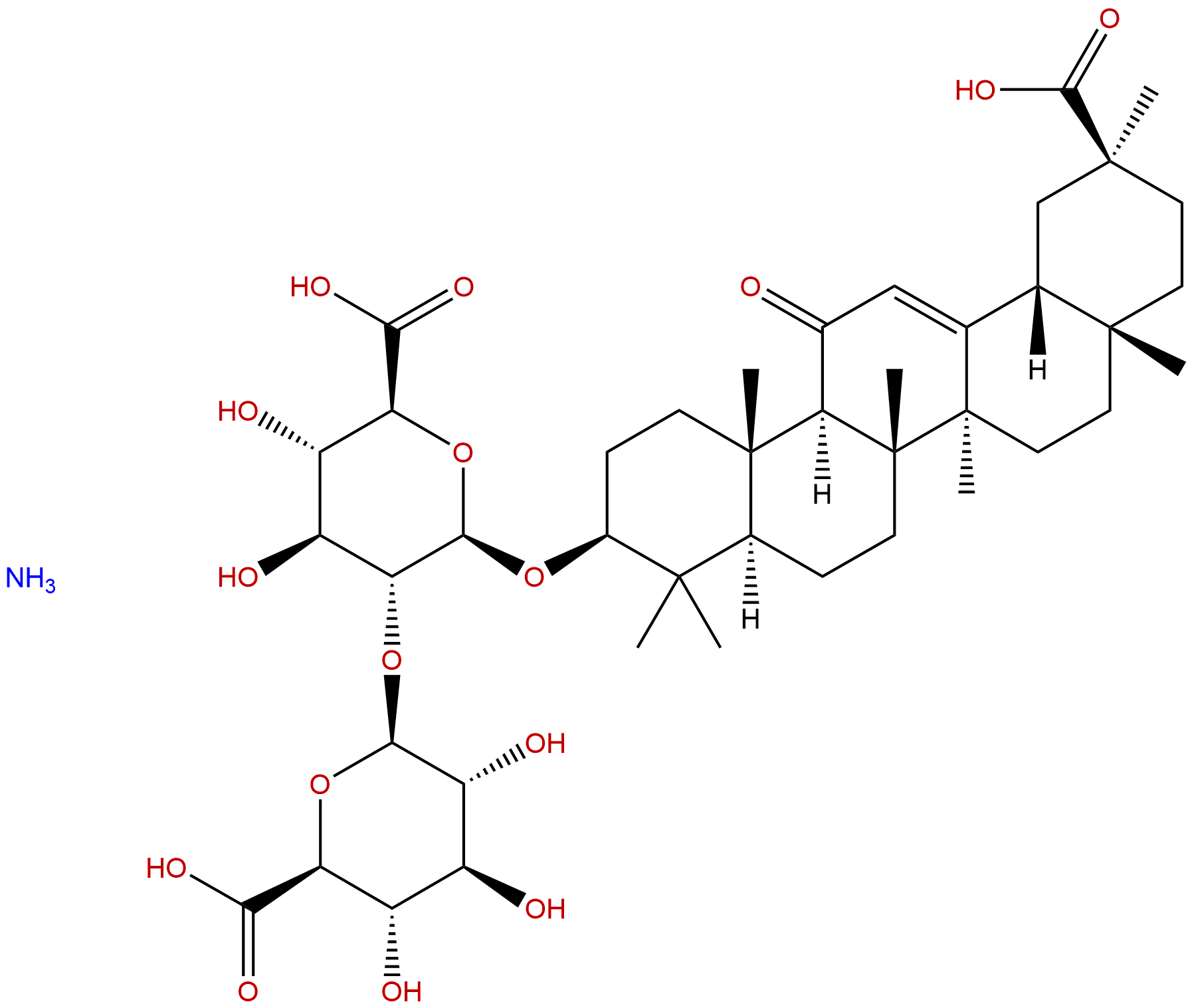


Product name: Monoammonium glycyrrhizinate
Synonym name: Magnasweet; Monoammonium 18β-glycyrrhizinate; Monoammonium glycyrrhizate
Catalogue No.: BP0956
Cas No.: 53956-04-0
Formula: C42H65NO16
Mol Weight: 839.973
Botanical Source: Glycyrrhiza Radix Et Rhizoma
Physical Description:
Type of Compound: Triterpenoids
Purity: 95%~99%
Analysis Method: HPLC-DAD or/and HPLC-ELSD
Identification Method: Mass, NMR
Packing: Brown vial or HDPE plastic bottle
Storage: Store in a well closed container, protected from air and light. Put into refrigerate or freeze for long term storage.
Whenever possible, you should prepare and use solutions on the same day. However, if you need to make up stock solutions in advance, we recommend that you store the solution as aliquots in tightly sealed vials at -20℃. Generally, these will be useable for up to two weeks.
The product could be supplied from milligrams to grams
Inquire for bulk scale.
Description:
Glycyrrhizic acid ammonium salt has wound healing activity.
References:
Eksp Klin Farmakol. 2014;77(9):38-42.
Study of the influence of original multicomponent gels on the process of pathological scar formation using new methodological approach.
A new method of the quantitative macroscopic assessment of the process of a complex infected wound healing has been created. It was verified by example of the influence of original multicomponent gels consisting of cycloferon, amino acid glycine, glycyram (Glycyrrhizic acid ammonium salt), and vegetable oils on the process of infected wound healing and pathological scar formation. Simultaneously, the wound healing was monitored by the conventional histomorphological method. The proposed gels more effectively prevent the formation of pathological scars in comparison to reference preparation Contractubex.
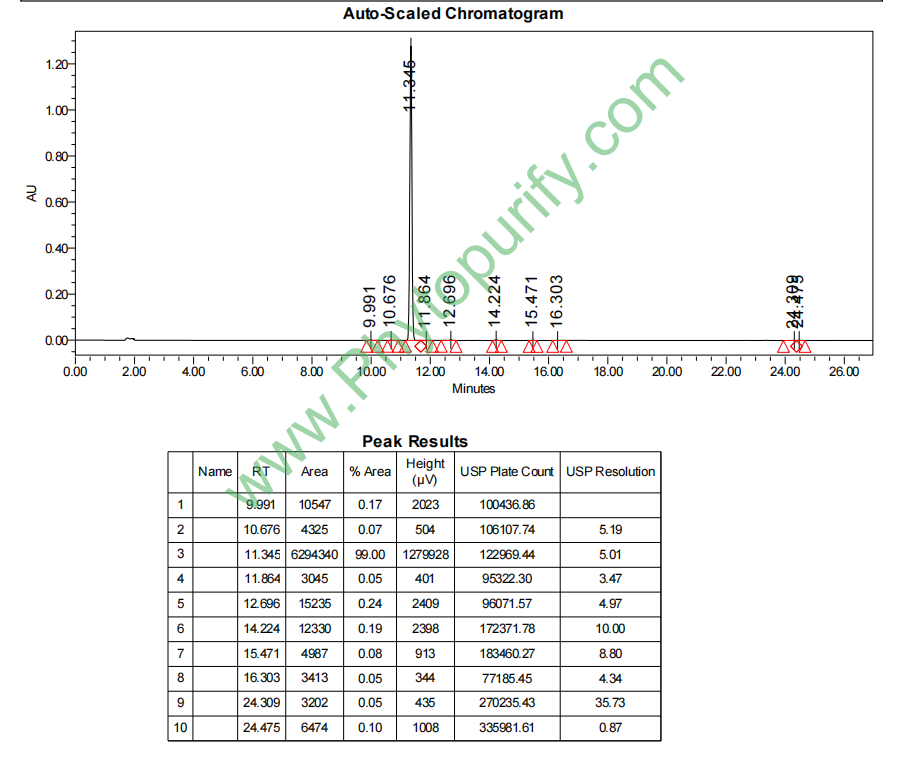
HPLC of Monoammonium glycyrrhizinate
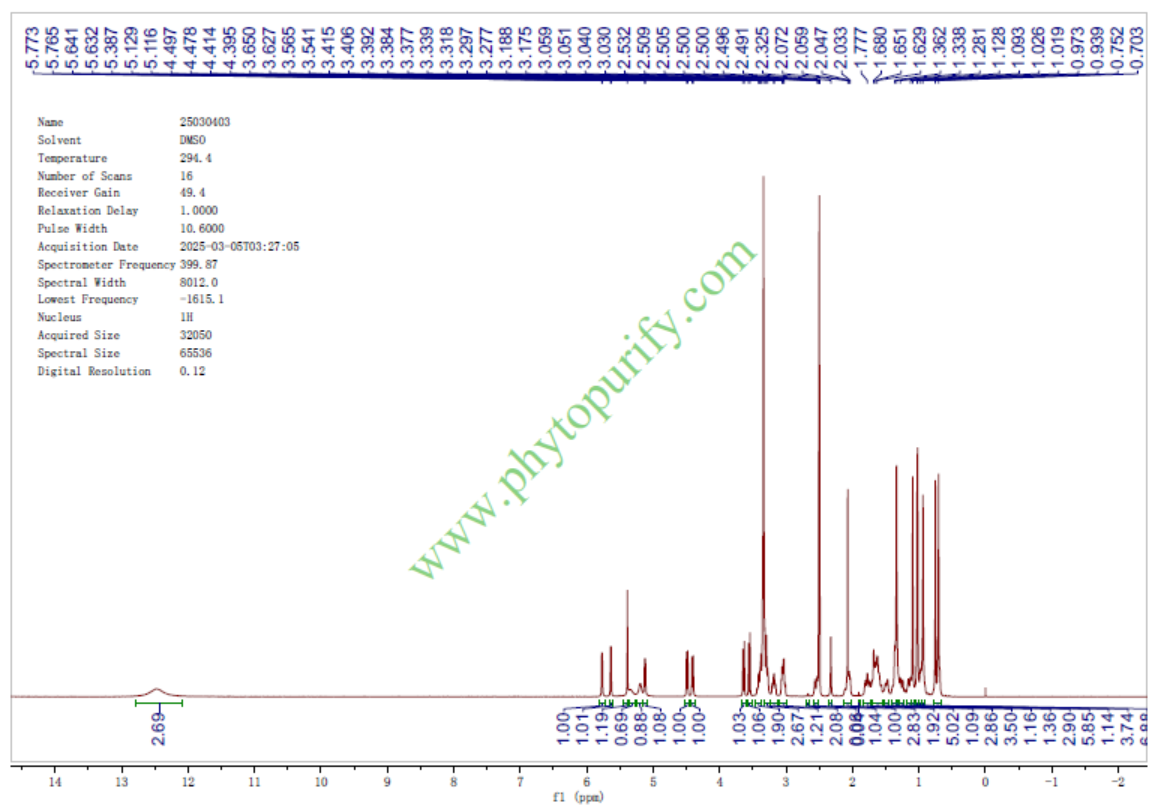
HNMR of Monoammonium glycyrrhizinate
Storage conditions:Short-term storage at 2~8℃, long-term storage at -20 ~ -80℃
Monoammonium glycyrrhizinate (CAS number: 53956-04-0) is a natural product derived from licorice (Glycyrrhiza spp.) and is a salt derivative of glycyrrhetinic acid. As a traditional Chinese medicine ingredient with a long history of use, glycyrrhetinic acid monoammonium has attracted much attention in the field of natural medicine research in recent years due to its significant pharmacological activity and good safety. It exhibits a wide range of biological effects in anti-inflammatory, antiviral, immune regulation, and liver protection, especially in the prevention and treatment of liver diseases such as hepatitis.
This article will systematically review the chemical structure and physicochemical properties, plant sources and extraction methods, pharmacological activity and mechanism of action, pharmacological evaluation and pharmacokinetic characteristics of glycyrrhetinic acid monoammonium, and explore its future development prospects in combination with the current clinical application status. We hope to provide theoretical basis and reference for the in-depth research and clinical translation of glycyrrhetinic acid monoammonium.
Glycyrrhizic acid monoammonium is the monoammonium salt form of glycyrrhizic acid, with a molecular formula of C42H65NO16 and a molecular weight of 822.9420. Glycyrrhetinic acid itself is a triterpenoid saponin, which is composed of a glycyrrhetinic acid glycoside and two glucose residues connected by glycosidic bonds. Glycyrrhetinic acid monoammonium forms a monoammonium salt on the carboxyl group of glycyrrhetinic acid, enhancing its water solubility and stability.
In terms of physical and chemical properties, the LogP value of glycyrrhetinic acid monoammonium is about 2.35, indicating that it has moderate lipid solubility and is conducive to cell membrane penetration. The polar surface area (TPSA) is 267.04 Å ², and a higher polar surface area indicates that the molecule has strong polar groups, which is beneficial for water solubility. The measured water solubility is 0.1297 mg/mL, which belongs to the category of moderately water-soluble substances. The low permeability of the blood-brain barrier suggests limited distribution in the central nervous system. The negative result of hERG channel inhibition experiment indicates a low risk of cardiac toxicity. The Ames mutagenicity test result is 0.0, indicating a low risk of genotoxicity.
The structural characteristics and physicochemical properties of glycyrrhetinic acid monoammonium provide a basis for its pharmacokinetic behavior and pharmacological efficacy in vivo, and also provide important parameter references for its drug development.
The parent compound of glycyrrhizic acid monoammonium mainly comes from plants of the licorice genus, especially licorice (Glycyrrhiza glabra L.), licorice (Glycyrrhiza uralensis Fisch.), and licorice (Glycyrrhiza inflata Batalin). Licorice, as a traditional Chinese medicinal herb, contains abundant glycyrrhetinic acid and its derivatives in its roots and rhizomes, making it the main raw material for preparing glycyrrhetinic acid monoammonium.
The extraction process usually includes the following steps:
Modern extraction techniques also include ultrasound assisted extraction, microwave-assisted extraction, and membrane separation technology, aiming to improve extraction efficiency and purity, reduce production costs, and meet industrial production needs.
Glycyrrhetinic acid monoammonium, as a salt derivative of glycyrrhetinic acid, inherits and enhances various pharmacological activities of glycyrrhetinic acid, especially in the field of liver diseases.
Glycyrrhetinic acid monoammonium has significant anti-inflammatory activity and can alleviate inflammatory reactions by inhibiting the expression of inflammatory factors such as TNF - α, IL-6, and IL-1 β. Its mechanism of action involves downregulating the nuclear factor kappa B (NF - κ B) signaling pathway, reducing the release of pro-inflammatory cytokines, and alleviating tissue inflammatory damage.
Multiple studies have shown that glycyrrhetinic acid monoammonium has inhibitory effects on hepatitis B virus (HBV), hepatitis C virus (HCV), and other viruses. It interferes with the virus replication cycle and enhances host immune response, reduces viral load, and promotes liver cell repair.
Glycyrrhetinic acid monoammonium can enhance the activity of glutathione peroxidase 1 (GPX1), eliminate free radicals, and alleviate cell damage caused by oxidative stress. At the same time, it has a regulatory effect on apoptosis regulatory proteins such as BCL2 and CASP3, protecting liver cells from damage.
Glycyrrhetinic acid monoammonium can regulate immune cell function, promote immune tolerance, regulate inflammatory microenvironment, and contribute to the repair and regeneration of liver tissue.
The therapeutic effect of glycyrrhetinic acid monoammonium in diseases such as hepatitis depends on its regulation of multiple key molecular targets:
In summary, glycyrrhetinic acid monoammonium achieves comprehensive regulation of liver inflammation, viral infection, and cell damage through multi-target and multi pathway synergistic effects.
The pharmacological parameters of glycyrrhizic acid monoammonium show that it has good potential for drug development. The molecular weight is 822.9420, which is relatively large, but its moderate LogP (2.35) and high polar surface area (TPSA 267.04) give it both lipid solubility and water solubility advantages, which is beneficial for in vivo distribution.
Its water solubility is 0.1297 mg/mL, suitable for oral and injectable development. Low blood-brain barrier permeability reduces the risk of central nervous system side effects. HERG channel inhibition is negative, indicating good cardiac safety. Ames test negative, low risk of genotoxicity.
Pharmacokinetic studies have shown that glycyrrhetinic acid monoammonium is well absorbed orally and enriched in the liver, mainly through liver metabolism and bile excretion. Its half-life is moderate and it can maintain effective blood drug concentration. The main metabolites in the body are glycyrrhizic acid and its derivatives, which have certain biological activities.
However, the high molecular weight and strong polarity of glycyrrhetinic acid monoammonium may limit its cell membrane penetration rate and affect its bioavailability. In the future, drug formulation optimization and structural modification are needed to enhance its pharmacokinetic performance.
Glycyrrhetinic acid monoammonium, as a safe and effective natural medicinal ingredient, has demonstrated good clinical application potential in the treatment of various liver diseases. Its anti-inflammatory, antiviral, and liver protective effects provide new treatment options for diseases such as hepatitis, liver fibrosis, and fatty liver.
At present, monoammonium glycyrrhizinate has been widely used in traditional Chinese patent medicines and simple preparations, such as compound glycyrrhizin injection, and clinical data show that it can significantly improve liver function indicators, reduce liver cell damage, and promote liver repair. Meanwhile, its good safety makes it suitable for long-term use.
Future research should focus on the following directions:
In summary, glycyrrhizic acid monoammonium, as a multifunctional natural medicinal ingredient, has broad clinical application prospects and development potential.
Glycyrrhetinic acid monoammonium, as a derivative of glycyrrhetinic acid monoammonium salt, exhibits significant anti-inflammatory, antiviral, antioxidant, and liver protective effects due to its unique chemical structure and good physicochemical properties. It plays an important role in the prevention and treatment of liver diseases such as hepatitis by regulating multiple key molecular targets. The drug efficacy evaluation shows that it has good safety and pharmacokinetic characteristics, making it suitable for further drug development.
In the future, with the in-depth analysis of molecular mechanisms and innovation in formulation technology, glycyrrhetinic acid monoammonium is expected to become an effective drug in the treatment of liver diseases, bringing new treatment options for patients. Continuous basic research and clinical validation will promote the widespread adoption of its clinical applications, advance the development of natural product pharmacology, and modernize the utilization of natural medicines.
