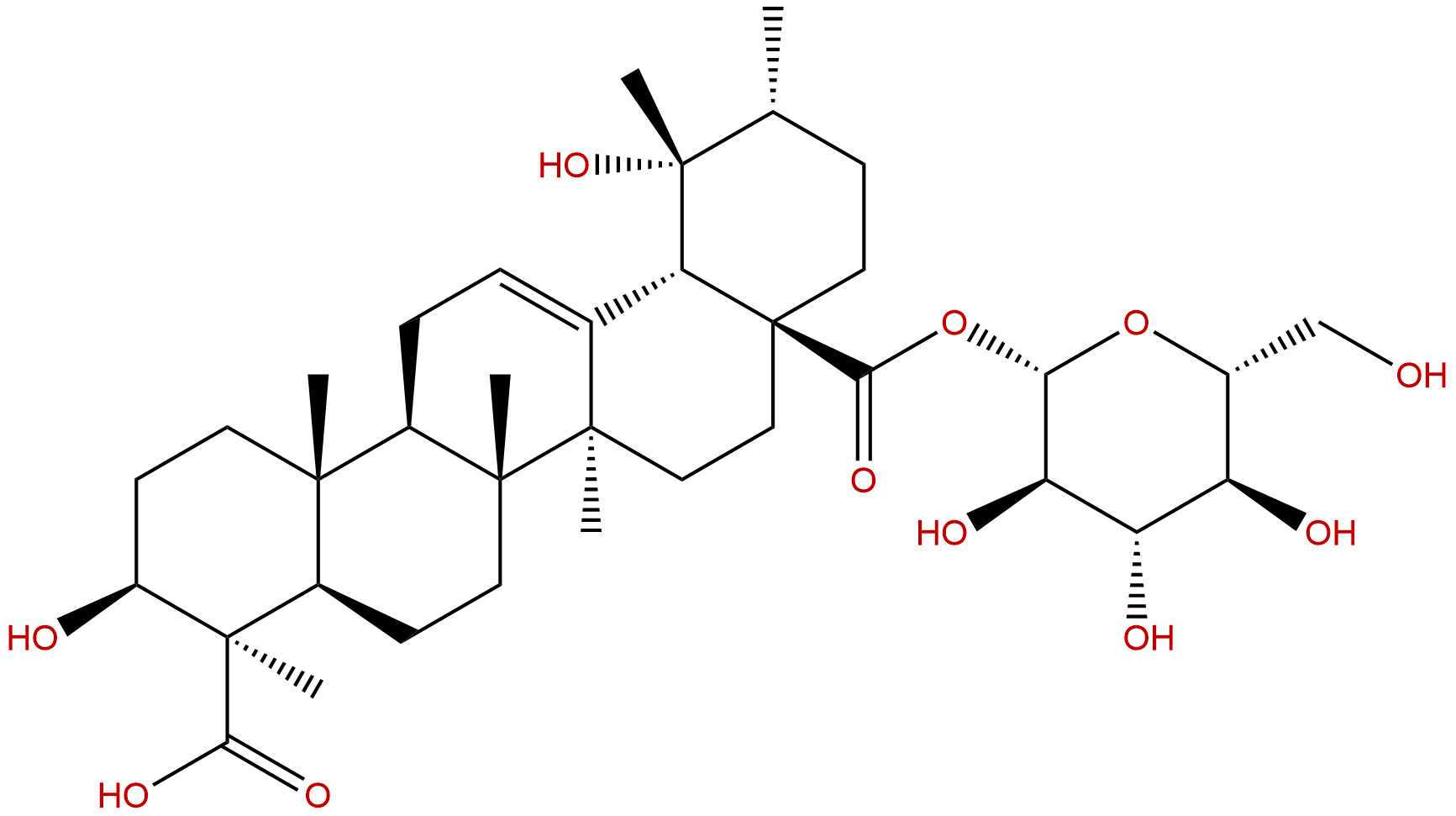


Product name: Ilexsaponin A1
Synonym name: Ilexsaponina A
Catalogue No.: BP1758
Cas No.: 108524-93-2
Formula: C36H56O11
Mol Weight: 664.833
Botanical Source: llexhainanensis Merr(Hainan holly leaf); Ilex pubescens
Physical Description:
Type of Compound:
Purity: 95%~99%
Analysis Method: HPLC-DAD or/and HPLC-ELSD
Identification Method: Mass, NMR
Packing: Brown vial or HDPE plastic bottle
The product could be supplied from milligrams to grams. Inquire for bulk scale.
We provide solution to improve the water-solubility of compounds, thereby facilitating the variety of activity tests and clinic uses.
For Reference Standard and R&D, Not for Human Use Directly.
Description:
Ilexsaponin A shows protective effects on ischemia-reperfusion-induced myocardial injury through anti-apoptotic pathway.
References:
PLoS One. 2017 Feb 9;12(2):e0170984.
Ilexsaponin A attenuates ischemia-reperfusion-induced myocardial injury through anti-apoptotic pathway.
The protective effects of Ilexsaponin A on ischemia-reperfusion-induced myocardial injury were investigated.
METHODS AND RESULTS:
Myocardial ischemia/reperfusion model was established in male Sprague-Dawley rats. Myocardial injury was evaluated by TTC staining and myocardial marker enzyme leakage. The in vitro protective potential of Ilexsaponin A was assessed on hypoxia/reoxygenation cellular model in neonatal rat cardiomyocytes. Cellular viability and apoptosis were evaluated by MTT and TUNEL assay. Caspase-3, cleaved caspase-3, bax, bcl-2, p-Akt and Akt protein expression levels were detected by western-blot. Ilexsaponin A treatment was able to attenuate the myocardial injury in ischemia/reperfusion model by reducing myocardial infarct size and lower the serum levels of LDH, AST and CK-MB. The in vitro study also showed that Ilexsaponin A treatment could increase cellular viability and inhibit apoptosis in hypoxia/reoxygenation cardiomyocytes. Proapoptotic proteins including caspase-3, cleaved caspase-3 and bax were significantly reduced and anti-apoptotic protein bcl-2 was significantly increased by Ilexsaponin A treatment in hypoxia/reoxygenation cardiomyocytes. Moreover, Ilexsaponin A treatment was able to increase the expression levels of p-Akt in hypoxia/reoxygenation cellular model and myocardial ischemia/reperfusion animal model.
CONCLUSIONS:
Coupled results from both in vivo and in vitro experiments indicate that Ilexsaponin A attenuates ischemia-reperfusion-induced myocardial injury through anti-apoptotic pathway.
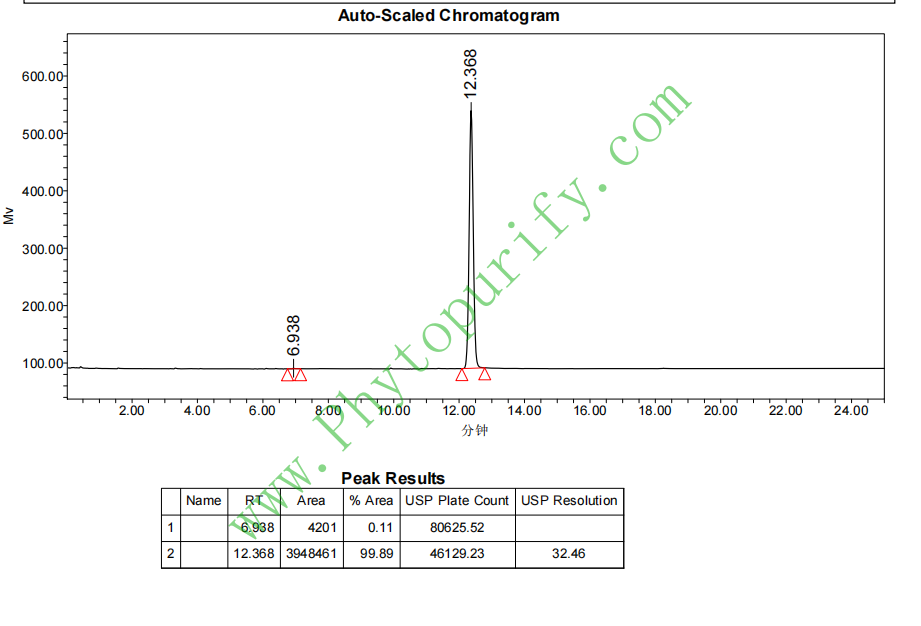
HPLC of Ilexsaponin A1
Storage conditions:Short-term storage at 2~8℃, long-term storage at -20 ~ -80℃
194.2100
2.2912
.4211
.0788
.6141
.5932
Low
81.2078
5.5508
No
No
No
No
No
No
0.0
Yes
No
No
Yes
Hepatocellular carcinoma is one of the malignant tumors with the highest incidence rate and mortality in the world. Although its treatment methods have made continuous progress, the problems such as chemotherapy resistance, recurrence and metastasis, and drug toxicity and side effects are still serious challenges faced by the clinic. Therefore, exploring highly efficient and low toxicity anti liver cancer lead compounds from natural products has always been an important direction for drug development. Ilexsaponin A1, a pentacyclic triterpenoid saponin isolated from traditional medicinal plants, has attracted much attention in recent years due to its significant pharmacological activity in various tumor models, especially in liver cancer. Its CAS number is 108524-93-2. Preliminary studies have revealed that Mao Dongqing saponin A can exert anti liver cancer effects by intervening in multiple signaling pathways such as cell apoptosis, proliferation, invasion and metastasis, and inflammatory response, targeting key targets such as BCL2, STAT3, and TP53. This article aims to provide a systematic review of the chemical structure, plant origin, pharmacological activity, molecular mechanism of action, pharmacological characteristics, and clinical application potential of saponin A from Ilex mongolica, in order to provide comprehensive scientific references for the in-depth study of this natural product and the development of new anti liver cancer drugs.
Mao Dongqing saponin A belongs to the oleane type pentacyclic triterpenoid saponin. Its basic parent nucleus is oleanolic acid, which is usually connected to a sugar chain at the C-3 position, which is one of the key structural features for its biological activity. Its molecular formula is C36H56O11 and its molecular weight is 664.8330. According to the analysis of the parameters related to drug properties, its lipophilic water partition coefficient (LogP) is 2.2912, indicating that the compound has a certain degree of lipophilicity but is not highly hydrophobic. Its topological polar surface area (TPSA) is 194.2100 Å ², a relatively high value, mainly attributed to the contribution of oxygen atoms on multiple hydroxyl and sugar groups in the molecule, which usually affects its transmembrane permeability. The water solubility parameter is 0.0788, indicating its low solubility in water, which may be a potential limiting factor for its oral bioavailability. Based on its molecular weight, TPSA, and LogP values, Maodongqing Saponin A basically conforms to the category of Rule of Five, but its high TPSA and low water solubility deserve special attention in formulation development. In addition, preliminary toxicity predictions indicate that the hERG inhibition risk is "no", and the Ames test predicted a value of 0.0, suggesting that it may have low potential cardiac toxicity and mutagenicity, providing preliminary positive signals for its safety evaluation.
Mao Dongqing Saponin A is mainly derived from plants of the Ilex genus in the Ilex family, among which Ilex pubescens Hook. et Arn The roots and leaves are the main sources. Mao Dongqing is a commonly used folk herb in southern China, which has the effects of clearing heat and detoxifying, promoting blood circulation and unblocking meridians. It is traditionally used to treat cardiovascular and inflammatory diseases. In addition, plants of the same genus Ilex cornuta Lindl. et Paxt It may also contain the compound or its analogues.
Its extraction and separation usually follow the conventional process of natural product chemistry. Firstly, crush the dried holly roots or leaves and use Alcohol extraction (such as methanol, ethanol) or Alcohol water mixed solvent Perform reflux extraction or ultrasound assisted extraction to enrich saponin components. The extract is concentrated under reduced pressure to obtain a paste. Subsequently, utilizing Macroporous adsorption resin (such as D101, AB-8) Preliminary enrichment and decolorization are carried out using gradient elution with ethanol water solutions of different concentrations. Saponins are usually eluted in the medium to high concentration ethanol range (such as 50% -70%). Further purification depends on Positive or reverse phase silica gel column chromatography, and High performance liquid chromatography (HPLC) or Preparation type high-performance liquid chromatography (pre HPLC) Technology The combination of reverse phase C18 chromatography column with methanol water or acetonitrile water system is an effective method for separating and purifying saponin compounds such as Ilex japonicus saponin A. Structural identification involves the comprehensive use of nuclear magnetic resonance (NMR, including 1H-NMR, 13C-NMR, 2D-NMR), mass spectrometry (MS), and comparison with literature data.
The pharmacological activity research of Mao Dongqing saponin A mainly focuses on the field of anti-tumor, especially in the area of anti liver cancer, showing multiple effects.
Inhibition of proliferation and induction of apoptosis in liver cancer cells Multiple in vitro studies have confirmed that Mao Dongqing saponin A can significantly inhibit the proliferation activity of various liver cancer cell lines (such as HepG2, Hep3B, SMMC-7721) in a dose - and time-dependent manner. Its mechanism of action is closely related to inducing cell apoptosis, manifested as changes in cell morphology, phosphatidylserine efflux, decreased mitochondrial membrane potential, and activation of Caspase cascade reaction.
Inhibit the invasion and metastasis of liver cancer cells The high mortality rate of liver cancer is closely related to metastasis. Research has shown that saponin A from Ilex japonicus can effectively inhibit the migration and invasion ability of liver cancer cells. This is related to its downregulation of the expression of matrix metalloproteinases (such as MMP9) and its impact on the expression levels of epithelial mesenchymal transition (EMT) related proteins (such as E-cadherin, N-cadherin, Vimentin).
Anti inflammatory and immune regulation Chronic inflammation is an important driving factor for the occurrence and development of liver cancer. Mao Dongqing Saponin A can inhibit the excessive production of inflammatory factors (such as TNF - α, IL-6) induced by stimuli such as lipopolysaccharide (LPS), and its effect is related to the inhibition of inflammatory signaling pathways such as nuclear factor kappa B (NF - κ B). In addition, its potential immunomodulatory effects on the tumor microenvironment also deserve further exploration.
In vivo anti-tumor activity In a nude mouse model of liver cancer transplantation, intraperitoneal injection or oral administration of Ilex foliaceus saponin A can significantly inhibit tumor growth, and no significant systemic toxicity such as weight loss was observed, indicating its in vivo anti-tumor activity and therapeutic window.
The anti liver cancer effect of Mao Dongqing saponin A involves multi-target and multi pathway synergistic regulation, and its action network is closely related to multiple key targets listed in the title:
Regulating the apoptotic pathway (targeting BCL2 and TP53)Mao Dongqing Saponin A can downregulate the expression of anti apoptotic protein BCL2, while possibly upregulating the expression of pro apoptotic proteins such as BAX, disrupting mitochondrial membrane stability and leading to the release of cytochrome C, thereby activating endogenous apoptotic pathways. In addition, it may enhance the transcriptional activity of tumor suppressor factor TP53 by stabilizing or activating it, thereby promoting the expression of apoptosis related genes.
Inhibition of proliferation and survival signals (targeting STAT3, PIK3CA/Akt, MAPK1/ERK, EGFR)Signal transduction and transcription activator 3 (STAT3) is a key factor in the sustained proliferation and survival of liver cancer cells. Mao Dongqing Saponin A can inhibit the phosphorylation activation of STAT3 and block the transcription of its downstream target genes (such as Cyclin D1, Survivin). At the same time, it can also inhibit the activity of phosphatidylinositol 3-kinase catalytic subunit alpha (PIK3CA) and its downstream Akt, as well as the phosphorylation of mitogen activated protein kinase 1 (MAPK1, ERK2), thereby interfering with the two key survival and proliferation signaling pathways of PI3K/Akt and MAPK/ERK. Inhibition of the epidermal growth factor receptor (EGFR) signaling pathway may also contribute to its anti proliferative effect.
Inhibition of telomerase activity (targeting TERT)The activation of telomerase reverse transcriptase (TERT) is an important mechanism for the unlimited proliferation of cancer cells. Research has shown that the saponin A of Ilex mongolica may downregulate the expression or activity of TERT through a certain mechanism, thereby accelerating the shortening of telomeres in liver cancer cells and inducing cell aging or apoptosis.
Inhibition of invasion and metastasis (targeting MMP9)As mentioned earlier, saponin A from Ilex japonicus can significantly reduce the expression and secretion of matrix metalloproteinase 9 (MMP9). MMP9 is a key enzyme that degrades extracellular matrix, promotes tumor invasion, and angiogenesis. Its downregulation is one of the core processes of the anti metastatic effect of Ilex mongolica saponin A.
Inhibit inflammation and related enzyme activity (targeting PTGS2/COX-2, TOP1)Cyclooxygenase-2 (PTGS2/COX-2) is a key enzyme in inflammatory response and tumorigenesis. Mao Dongqing saponin A can inhibit the expression of COX-2 and reduce the production of prostaglandin pro-inflammatory mediators. In addition, some studies suggest that certain triterpenoids may affect the activity of DNA topoisomerase I (TOP1), interfere with DNA replication and repair, which may be one of their potential mechanisms of action. However, further verification is needed for the specific action of Ilex mongolica saponin A.
In summary, Mao Dongqing saponin A exerts its anti liver cancer effect through a complex network that simultaneously acts on multiple targets related to apoptosis, proliferation, invasion, and inflammation.
Although Mao Dongqing saponin A has shown good pharmacological activity in preclinical studies, its pharmacological properties still need to be comprehensively evaluated.
Absorption, distribution, metabolism, excretion (ADME)At present, there are relatively limited research reports on the pharmacokinetics of the saponin A system in Ilex mongolica. Based on its physicochemical properties (molecular weight>500, high TPSA, low water solubility), predict its Oral bioavailability may be low Saponins are easily hydrolyzed (deglycosylated) by acids, enzymes, and gut microbiota in the gastrointestinal tract, producing aglycones. The lipophilicity of these aglycones (such as oleanolic acid) is enhanced, and absorption may be improved, but their biological activity may be altered. its Prediction of blood-brain barrier permeability as' low 'This is not beneficial for the treatment of central nervous system diseases, but for the treatment of liver cancer that mainly acts on peripheral organs, it may help reduce central neurotoxicity. The metabolic pathways in the body may involve liver phase I (such as CYP450 enzyme system) and phase II (such as glucuronidation, sulfation) reactions, as well as bile and renal excretion. All of these need to be clarified through in vitro and in vivo experiments.
Formulation strategy To improve its bioavailability, it may be necessary to develop new drug delivery systems. For example,nano-formulation Liposomes, polymer nanoparticles, and solid lipid nanoparticles can encapsulate the saponin A of Ilex japonicus, increasing its solubility and stability, and enhancing passive targeted accumulation at the tumor site (EPR effect).Phospholipid complex or Cyclodextrin inclusion complex Technology can also be used to improve its lipophilicity and solubility.
Preliminary Safety Assessment Based on computational predictions, there is no significant risk of hERG channel inhibition and mutagenicity (Ames), which is a positive signal. However, a comprehensive safety evaluation still needs to be completed through systematic preclinical toxicology studies, including acute toxicity, long-term toxicity, genetic toxicity, reproductive toxicity, etc., to determine its safe dose range and treatment index.
As a natural compound with multi-target anti liver cancer activity, Mao Dongqing saponin A has broad clinical application prospects, but also faces challenges.
As a candidate drug for liver cancer treatment Its multi-target action characteristics may help overcome the resistance problem of single target drugs, and its combination with existing chemotherapy drugs (such as sorafenib, oxaliplatin, etc.) may produce synergistic effects and reduce toxic side effects, which is a direction worthy of further exploration.
As a chemical preventive agent Due to its anti-inflammatory and antioxidant activities, Ilex japonicus saponin A may be used for chemoprevention of liver cancer, especially in high-risk populations such as cirrhosis and chronic hepatitis.
Challenges faced and future research directions:
Mao Dongqing Saponin A is a pentacyclic triterpenoid saponin with significant anti liver cancer potential isolated from traditional Chinese medicine Mao Dongqing. It exerts synergistic effects through multiple pathways in inhibiting liver cancer cell proliferation, inducing apoptosis, blocking invasion and metastasis, and anti-inflammatory effects by regulating multiple key targets such as BCL2, STAT3, TP53, and MMP9. Although there are certain challenges in its physicochemical properties and pharmacokinetics, such as low water solubility and potentially limited oral bioavailability, optimization through modern medicinal chemistry and pharmacology methods is feasible. Based on its multi-target mechanism of action and preliminary safety prediction, Mao Dongqing saponin A is expected to be developed as a novel therapeutic or adjuvant therapy for liver cancer. Future research should focus on its precise molecular mechanisms, systematic ADME characteristics, development of novel drug delivery systems, and standardized clinical translational studies to fully explore the medicinal value of this natural product and provide new treatment options for liver cancer patients.
