
| Catalog No | Package | Original Price | Price | Inventory | Quantity | Operating |
|---|---|---|---|---|---|---|
| BP0628-20mg | 20mg | $130.00 | Sign in |
|


Synonym name: Monotropitoside; Monotropitin
Catalogue No.: BP0628
Cas No.: 490-67-5
Formula: C19H26O12
Mol Weight: 446.405
Botanical Source: Monotropa hypopithys, Betula lenta, Gaultheria spp., Ostryopsis davidiana and others
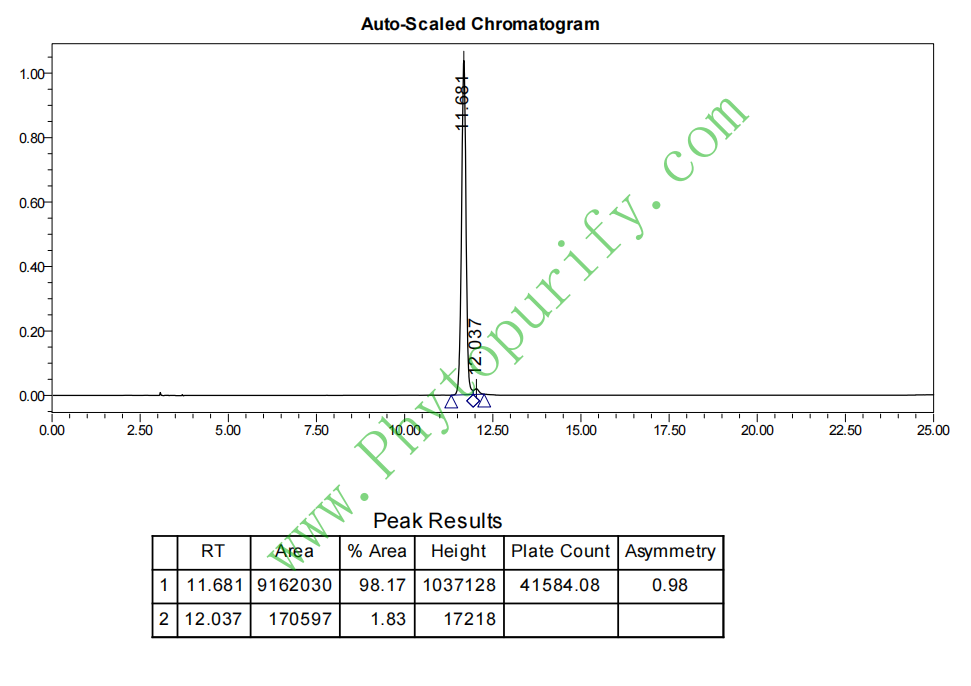
Purity: 95%~99%
Analysis Method: HPLC-DAD or/and HPLC-ELSD
Identification Method: Mass, NMR
Packing: Brown vial or HDPE plastic bottle
Can be supplied from milligrams to grams.
For Reference Standard and R&D, Not for Human Use Directly.
Inquire for bulk scale.
HPLC of Gaultherin
Storage conditions:Short-term storage at 2~8℃, long-term storage at -20 ~ -80℃
Gaultherin (CAS number: 490-67-5) is a naturally occurring nonsteroidal anti-inflammatory agent (NSAID) primarily found in plants of the holly family. As an orally effective compound, winter green glycoside has received widespread attention due to its significant anti-inflammatory, antipyretic, and analgesic effects. Compared with traditional NSAIDs, Winter Green Glycoside exhibits selective inhibition of inflammation related enzymes and signaling pathways, especially strong inhibitory effects on key targets such as COX-2, LOX, and NF - κ B. At the same time, its impact on COX-1 is relatively small, effectively avoiding the gastrointestinal side effects caused by commonly used NSAIDs such as aspirin. In addition, winter green glycoside also exhibits certain antioxidant activity, further enhancing its anti-inflammatory effect. In recent years, with the increase of the incidence rate of inflammation related diseases, such as inflammatory bowel disease, rheumatoid arthritis, osteoarthritis and gout, the research value of wintergreen glycoside has become increasingly prominent, and has become a research hotspot in the field of natural product pharmacology.
This article will provide a systematic review of the chemical structure and physicochemical properties, plant sources and extraction methods, pharmacological activity and mechanism of action, drug evaluation and pharmacokinetic characteristics of winter green glycoside, combined with its potential applications in inflammation related diseases, and prospects for its future clinical translation.
The molecular formula of winter green glycoside is C20H26O12, with a molecular weight of 446.4050. Its chemical structure is a glycoside compound formed by the connection of salicylic acid and β - D-glucose through glycosidic bonds, with typical phenolic hydroxyl and glycoside structural units. The LogP value of Winter Green Glycoside is -0.93, indicating its strong hydrophilicity and water solubility of 46.03 mg/mL, indicating its good solubility in aqueous phase. The polar surface area (TPSA) is 184.6 Å ², indicating a high molecular polarity that may affect its cell membrane permeability and bioavailability.
Winter green glycoside exhibits low blood-brain barrier permeability in the body, reducing the risk of central nervous system side effects. The negative result of hERG channel inhibition experiment indicates a low risk of cardiac toxicity. The Ames mutagenicity test result is 0, indicating that winter green glycoside does not have genotoxicity and has good safety.
Winter green glycoside has high chemical stability and is stable under physiological pH conditions, making it suitable for the development of oral formulations. The phenolic hydroxyl groups in its structure endow the molecule with certain antioxidant capacity, which helps alleviate oxidative stress-related inflammatory reactions.
Winter green glycoside is mainly found in plants of the genus Gaultheria spp., especially in the common Gaultheria procumbens and related species found in cold temperate regions of the Northern Hemisphere. In traditional Chinese medicine, holly leaves are often used as anti-inflammatory and analgesic herbs, and winter green glycoside is one of its main active ingredients.
The common methods for extracting winter green glycosides include solvent extraction, ultrasound assisted extraction, and high-performance liquid chromatography (HPLC) purification. Generally, ethanol or methanol aqueous solution is used as the extraction solvent, and ultrasonic assisted extraction technology can improve the extraction efficiency. The extract was concentrated, liquid-liquid separated, and purified by column chromatography to obtain high-purity winter green glycoside.
In recent years, green extraction techniques such as supercritical CO2 extraction and microwave-assisted extraction have also been applied to the extraction of anthocyanins, which not only improves the yield but also reduces the use of organic solvents, in line with the environmental trend of modern natural product extraction.
The pharmacological activity of winter green glycoside is mainly reflected in its anti-inflammatory, antipyretic, analgesic, and antioxidant effects. A large number of in vitro and in vivo experimental studies have confirmed that winter green glycoside exerts its pharmacological effects through multiple targets and pathways, and has good safety and efficacy.
Winter green glycoside can selectively inhibit COX-2 (IC50=0.35 mg/mL) and LOX (IC50=0.56 mg/mL), significantly reduce the synthesis of prostaglandins and leukotrienes, and inhibit the release of inflammatory mediators. In addition, winter green glycoside inhibits the activity of NF - κ B signaling pathway, reduces the expression of pro-inflammatory factors such as IL-6 and TNF - α, and alleviates inflammatory response. Its inhibitory effect on HYAL (hyaluronidase, IC50=28.58 μ g/mL) helps protect the extracellular matrix and prevent tissue damage at the site of inflammation.
Winter green glycoside exerts antipyretic and analgesic effects by inhibiting the synthesis of inflammatory mediators and the release of neurotransmitters. Its regulation of pain related receptors such as TRPV1 and TRPA1 further enhances analgesic effects. Animal experiments have shown that oral administration of winter green glycoside can effectively alleviate inflammatory pain and fever reactions, with fewer side effects.
Winter green glycoside exhibits moderate antioxidant activity, capable of clearing free radicals and reducing cellular damage caused by oxidative stress. Its antioxidant effect is better demonstrated in cell models, suggesting that it may indirectly inhibit inflammatory responses by regulating intracellular redox balance.
In various inflammation related disease models such as inflammatory bowel disease, rheumatoid arthritis, osteoarthritis, and gout, winter green glycoside has shown significant therapeutic potential. It inhibits inflammatory signaling and tissue damage through multi-target regulation, improving pathological conditions.
The anti-inflammatory and related pharmacological effects of winter green glycoside involve multiple signaling pathways and molecular targets, reflecting its multi-target regulatory characteristics.
NF - κ B is a core transcription factor in inflammatory response, regulating the expression of multiple inflammatory factors. Winter green glycoside inhibits the activation of NF - κ B, reduces the production of pro-inflammatory factors such as IL-6 and TNF - α, and alleviates inflammatory reactions.
Members of the MAPK family, such as MAPK1, are involved in cellular stress response and inflammatory signaling. Winter green glycoside inhibits the MAPK signaling pathway, blocks the transmission of inflammatory signals, and reduces the release of inflammatory mediators.
Winter green glycoside selectively inhibits COX-2 and LOX, reduces the synthesis of prostaglandins and leukotrienes, blocks the pathway of inflammatory mediators, and alleviates inflammation and pain.
By inhibiting HYAL, winter green glycoside protects the extracellular matrix structure and prevents tissue degradation and damage during inflammation.
Winter green glycoside exerts comprehensive anti-inflammatory and protective effects through the synergistic action of multiple targets mentioned above, demonstrating its advantages as a natural multi-target drug.
The pharmacological parameters of winter green glycoside show that it has good development potential. The molecular weight is 446.4, belonging to the category of medium-sized molecules, with a LogP of -0.93, indicating excellent water solubility and facilitating oral absorption. TPSA is relatively high, which may limit its passive diffusion through the cell membrane, but its hydrophilicity helps with dissolution and distribution.
The low permeability of the blood-brain barrier reduces the risk of central nervous system side effects. The hERG channel has no inhibitory effect and may reduce cardiac toxicity. Ames test negative, with good safety.
In terms of pharmacokinetics, Winter Green Glycoside can be effectively absorbed after oral administration, and its metabolism in the body is mainly carried out through the liver enzyme system, with high safety of metabolites. Its half-life is moderate and suitable for daily administration. Due to its glycosidic structure, winter green glycosides may be hydrolyzed by microorganisms or enzymes in the intestine, releasing the active ingredient salicylic acid and exerting pharmacological effects.
In the future, further systematic research is needed on its bioavailability, metabolic pathways, and drug interactions to provide a basis for clinical applications.
Winter green glycoside, as a natural nonsteroidal anti-inflammatory agent, has a unique multi-target mechanism of action and good safety, demonstrating broad clinical application prospects.
In chronic inflammatory diseases such as inflammatory bowel disease, rheumatoid arthritis, osteoarthritis, and gout, winter green glycoside can be used as an alternative or adjuvant treatment drug to alleviate symptoms, reduce inflammation, and protect tissue structure. Its low inhibition of COX-1 is expected to avoid common gastrointestinal adverse reactions of traditional NSAIDs and improve patient compliance.
In addition, the antioxidant effect of winter green glycoside also has a regulatory effect on chronic inflammation related oxidative stress, which may expand its potential application in neurodegenerative diseases and metabolic syndrome.
Future research should focus on:
With the development of natural product pharmacology and molecular pharmacology, winter green glycoside is expected to become a safe and effective new anti-inflammatory drug, providing a new option for the treatment of inflammation related diseases.
Winter green glycoside, as a natural non steroidal anti-inflammatory agent, exhibits significant anti-inflammatory, antipyretic, analgesic, and antioxidant activities through its multi-target regulation of key inflammatory factors such as NF - κ B, MAPK, COX-2, LOX, and HYAL. Its good pharmacological parameters and safety characteristics make it widely applicable in various inflammation related diseases such as inflammatory bowel disease, rheumatoid arthritis, osteoarthritis, and gout.
In the future, through in-depth pharmacokinetic research and clinical validation, combined with modern pharmaceutical formulation technology, Winter Green Glycoside is expected to develop into a new generation of safe and efficient anti-inflammatory drugs, bringing new breakthroughs to the field of natural product pharmacology and clinical treatment.
