| Catalog No | Package | Original Price | Price | Inventory | Quantity | Operating |
|---|---|---|---|---|---|---|
| BP3164-5mg | 5mg | $490.00 | Sign in |
|


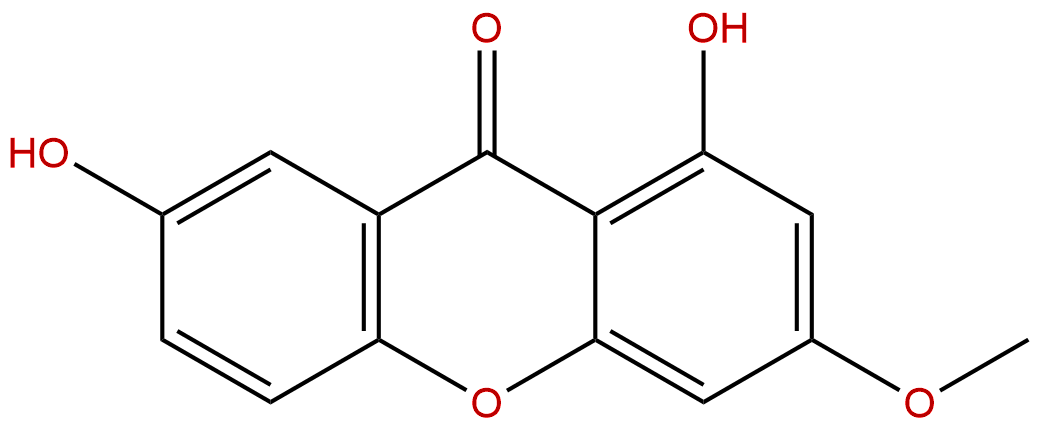
Product name: Gentisin
Synonym name:
Catalogue No.: BP3164
Cas No.: 437-50-3
Formula: C14H10O5
Mol Weight: 258.229
Botanical Source:
Physical Description:
Type of Compound: Xanthones
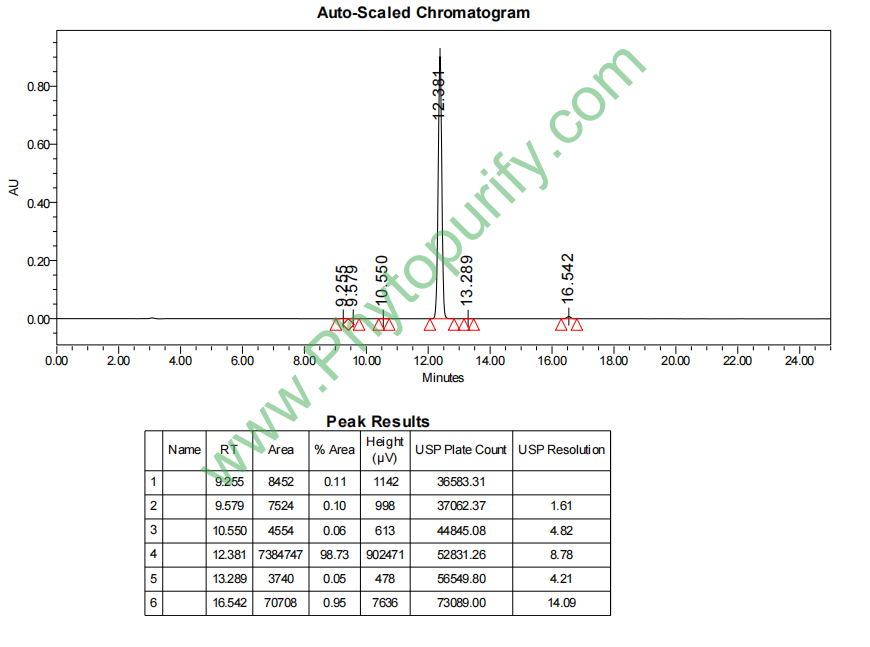
Purity: 95%~99%
Analysis Method: HPLC-DAD or/and HPLC-ELSD
Identification Method: Mass, NMR
Packing: Brown vial or HDPE plastic bottle
The product could be supplied from milligrams to grams. Inquire for bulk scale.
We provide solution to improve the water-solubility of compounds, thereby facilitating the variety of activity tests and clinic uses.
For Reference Standard and R&D, Not for Human Use Directly.
HPLC of Gentisin
Storage conditions:Short-term storage at 2~8℃, long-term storage at -20 ~ -80℃
79.9000
2.2016
2.1817
.0798
3.6312
18.2358
Low
88.4520
2.2096
Yes
No
No
No
Yes
Yes
1.2
Yes
Yes
Yes
No
Natural products have long been an important treasure trove for the discovery and development of new drugs, among which flavonoids have attracted much attention due to their wide range of biological activities. Gentisin, also known as 1,7-dihydroxy-3-methoxyxanthone, is a natural compound with a xanthone (oxanthrone) skeleton. Its CAS number is 437-50-3. It originally originated from the Gentiana plant in the Gentianaceae family(Gentiana macrophylla Pall. was isolated from the dried roots of Gentianaceae plants (commonly used medicinal herbs such as Gentiana macrophylla and Gentiana rhizome) and named after it. Traditionally, plant medicinal materials containing gentian ketone have been commonly used in folk medicine to treat liver and gallbladder diseases, rheumatism, rheumatism, and fever, indicating their potential pharmacological value. Modern research has shown that gentian ketone not only has basic anti-inflammatory and antioxidant activities, but also exhibits unique potential in protecting the liver and gallbladder system. Its effects involve regulating multiple key targets related to oxidative stress and metabolism, such as catalase (CAT), superoxide dismutase 2 (SOD2), cytochrome P450 2E1 (CYP2E1), ethanol dehydrogenase 1B (ADH1B), and aldehyde dehydrogenase 2 (ALDH2). Although early studies have reported that it may have mutagenic activity at high concentrations, considering its pharmacological parameters and targeting effects, gentian ketone remains a promising lead compound for further exploration in vascular smooth muscle research and treatment of liver and gallbladder diseases. This article aims to provide a systematic review of the chemical properties, plant sources, pharmacological activities, mechanisms of action, and medicinal properties of gentian ketone, and to explore its clinical application prospects.
The molecular formula of gentian ketone is C14H10O5, with a molecular weight of 258.2290 g/mol. Its core structure is xanthenone, which is a tricyclic system composed of two benzene rings (A ring and C ring) fused together through an oxygen-containing heterocyclic ring (B ring, pyranone ring). Specifically, gentian ketone has a phenolic hydroxyl group (- OH) at position 1 of the A ring and position 7 of the C ring, and a methoxy group (- OCH3) at position 3 of the A ring. The substitution mode of 1,7-dihydroxy-3-methoxy is the key chemical basis for its biological activity.
Its physical and chemical properties are as follows: the calculated lipid water partition coefficient (LogP) is 2.2016, indicating that the compound has moderate lipophilicity, which is conducive to transmembrane transport, but does not significantly increase the risk of accumulation in the body due to excessive lipid solubility. The topological polar surface area (TPSA) is 79.9000 Å ², reflecting the surface area occupied by polar atoms (mainly oxygen atoms) in the molecule, indicating a certain degree of polarity. The water solubility data is 0.0798 mg/mL, which belongs to the category of slightly soluble to poorly soluble. This is related to its crystal structure and intramolecular hydrogen bonds, and is also a common feature of most flavonoids and xanthones. Solubilization strategies may need to be considered in formulation development. Preliminary pharmacological risk assessment shows that its ability to cross the blood-brain barrier is low, which reduces its potential risk of central nervous system side effects; There is no significant inhibitory effect on hERG potassium channels, indicating a lower risk of causing QT interval prolongation in the heart; The Ames test result is 1.2 (usually considered positive if the ratio is greater than 2), indicating that its mutagenicity is negative or extremely weak under the conditions of this experiment. However, the "mutagenic activity" mentioned in early literature may originate from specific high concentrations or special testing systems, and should be interpreted with caution. Overall, gentian ketone possesses basic physicochemical and safety properties as a lead compound.
Gentianaceae is mainly derived from Gentianaceae plants, especially the Gentianaceae genus(Gentiana)And the genus Swertia(Swertia)A variety of plants. Its most classic source is the traditional Chinese medicine Gentiana macrophylla(Gentiana macrophylla Dry roots (Gentiana radix) of Pall. In addition, the commonly used plant in Tibetan medicine, the Western Sichuan Swertia(Swertia mussotii Franch.)、 Indian Swertia(Swertia chirayita)Longdan ketone and its derivatives can also be isolated from other plants of the same genus. These plants are often used in traditional medical systems to clear dampness and heat, relieve jaundice, and treat liver and gallbladder diseases, which is highly consistent with the modern pharmacological research focus of gentian ketone.
The extraction of gentian ketone from plant materials usually follows the conventional process of natural product chemistry. Firstly, crush the dried plant roots and extract them using a suitable solvent. Due to the moderate polarity of gentian ketone, commonly used extraction solvents include methanol, ethanol, acetone, or their mixed solutions with water. For example, using 70% -80% ethanol for hot reflux extraction or ultrasound assisted extraction is an effective method. After filtration and concentration, the crude extract is separated and purified using various chromatographic techniques. The silica gel column chromatography method is commonly used for preliminary separation using gradient elution systems such as chloroform methanol or petroleum ether ethyl acetate. Subsequently, further purification was carried out using preparative thin layer chromatography (PTLC) or high-performance liquid chromatography (HPLC, especially reverse phase C18 column, with methanol water or acetonitrile water as mobile phase) to obtain high-purity gentian ketone monomer. Modern green extraction techniques such as supercritical CO2 extraction also have potential applications, but conditions need to be optimized to improve the extraction efficiency of polar components. The extraction rate is influenced by various factors such as plant variety, place of origin, harvest season, and extraction process.
The pharmacological activity research of Longdan Mountain Ketone mainly focuses on liver and gallbladder protection, antioxidant, anti-inflammatory and other aspects, and has shown potential value in vascular system research.
1. Hepatobiliary protective effect: This is the most highly anticipated activity of gentian ketone. Multiple in vitro and in vivo studies have confirmed that gentian ketone has significant protective effects against chemical liver injury (induced by carbon tetrachloride, acetaminophen, D-galactosamine) and alcoholic liver injury. In animal models, pre - or simultaneous administration of gentian ketone can effectively reduce serum transaminase (ALT, AST), alkaline phosphatase (ALP), and total bilirubin levels, alleviate liver tissue pathological damage such as hepatocyte necrosis, steatosis, and inflammatory infiltration. Its hepatoprotective effect is closely related to the antioxidant and metabolic enzyme regulation mechanisms that will be described in detail later.
2. Antioxidant activity: The 1,7-dihydroxy structure of gentian ketone is the chemical basis for its strong antioxidant capacity. Research has shown that it can directly scavenge various reactive oxygen species (ROS), such as DPPH radicals, ABTS radicals, superoxide anions, and hydroxyl radicals. More importantly, it can upregulate the activity of key enzymes in the endogenous antioxidant defense system of the liver, including catalase (CAT) and superoxide dismutase (SOD), while reducing the content of malondialdehyde (MDA), a final product of lipid peroxidation. This dual antioxidant mechanism is crucial for alleviating oxidative stress-induced liver cell damage.
3. Anti inflammatory effect: Inflammation is the core pathological link of many liver and gallbladder diseases. Longdan Mountain Ketone can inhibit the excessive production of pro-inflammatory mediators such as nitric oxide (NO), prostaglandin E2 (PGE2), tumor necrosis factor - α (TNF - α), interleukin-6 (IL-6), and IL-1 β in lipopolysaccharide (LPS) - induced macrophage inflammation models and animal hepatitis models. Its anti-inflammatory effect may be related to the inhibition of the activation of inflammatory signaling pathways such as nuclear factor kappa B (NF - κ B) and mitogen activated protein kinase (MAPK).
4. Effects on vascular smooth muscle: The literature suggests that gentian ketone can be used for vascular smooth muscle research. Preliminary studies have shown that it may affect the contractile function of vascular smooth muscle by regulating ion channels or affecting intracellular calcium signals, which suggests that it may have potential applications in vascular diseases such as hypertension and atherosclerosis, but the related research is still in the initial stage and needs to be further deepened.
5. Other activities: There are also reports showing that gentian ketone has certain antibacterial, antiviral, and mild sedative effects, but these are not the mainstream of its research.
The reports on its "mutagenic activity" are mainly seen in the positive results of some early in vitro bacterial reverse mutation tests (Ames tests) at high concentrations. However, as indicated by the pharmacokinetic parameters, the more standardized Ames test results were negative (1.2). This difference may be related to the testing system, concentration, and metabolic activation conditions. In subsequent extensive biological studies, no significant genetic toxicity risk has been observed, therefore this activity needs to be carefully evaluated in specific contexts and its main therapeutic potential should not be obscured.
The hepatobiliary protective effect of gentian ketone involves a synergistic mechanism of multiple targets and pathways, with the core being the regulation of redox balance and ethanol/exogenous substance metabolism.
1. Enhance endogenous antioxidant defense (targeting CAT and SOD2): Oxidative stress is a common pathway for liver injury. Longdan Mountain Ketone can significantly upregulate the expression and activity of catalase (CAT) and mitochondrial superoxide dismutase (SOD2) in the liver. CAT is responsible for decomposing hydrogen peroxide (H2O2) into water and oxygen, while SOD2 is a key enzyme in mitochondria that clears superoxide anions. By activating these two core antioxidant enzymes, gentian ketone effectively enhances the cell's ability to clear ROS, protects mitochondrial function and cell membrane integrity, thereby reducing hepatocyte apoptosis and necrosis.
2. Regulating the cytochrome P450 enzyme system (targeting CYP2E1): CYP2E1 is a key enzyme involved in the metabolism of ethanol and various small molecule liver toxins, such as carbon tetrachloride and acetaminophen. Excessive activity can lead to the production of a large amount of ROS, triggering oxidative stress. Research has shown that gentian ketone can selectively inhibit the excessive activation or expression of CYP2E1, reduce the production of toxic metabolites, which is an important molecular mechanism for its anti alcoholic and drug-induced liver injury.
3. Regulating the ethanol metabolism pathway (targeting ADH1B and ALDH2): In alcohol metabolism, ethanol is first oxidized by alcohol dehydrogenase (ADH, especially ADH1B isoenzymes) to acetaldehyde, which is then oxidized by aldehyde dehydrogenase (ALDH, especially mitochondrial ALDH2) to harmless acetic acid. Acetaldehyde is a highly toxic and carcinogenic intermediate. Longdan Mountain Ketone has been proven to regulate the activity of ADH1B and ALDH2. There are studies showing that it may slow down the conversion rate of ethanol to acetaldehyde by moderately inhibiting ADH activity, while enhancing the activity of ALDH2 and accelerating the clearance of acetaldehyde. This dual regulation of "one inhibition and one promotion" helps to reduce the accumulation level of acetaldehyde in the body, thereby alleviating acetaldehyde mediated protein addition, lipid peroxidation, and DNA damage, fundamentally alleviating the progression of alcoholic liver disease.
4. Inhibit inflammatory signaling pathways: In addition to its direct antioxidant effect, gentian ketone can also inhibit the nuclear translocation of NF - κ B and the degradation of I κ B α, downregulate the phosphorylation levels of MAPK family (such as p38, JNK, ERK), thereby blocking inflammatory signal transduction, reducing the expression of downstream pro-inflammatory cytokines and mediators, and synergistically exerting anti-inflammatory and hepatoprotective effects.
5. Possible vascular mechanisms of action: In terms of vascular smooth muscle, its specific targets are not yet clear, and it is speculated that it may involve regulating potassium channels, calcium channels, or affecting the Rho kinase pathway, thereby affecting vascular tone, which needs further research to confirm.
In summary, gentian ketone forms a synergistic network by simultaneously acting on multiple targets closely related to liver and gallbladder health, such as CAT, SOD2, CYP2E1, ADH1B, ALDH2, etc., to reduce toxin activation, accelerate toxin clearance, enhance antioxidant defense, and inhibit inflammatory response. This provides a solid theoretical basis for its multi-target action in the treatment of complex liver and gallbladder diseases.
Based on the parameters provided in the previous text, a preliminary evaluation of the pharmacological properties of gentian ketone is conducted: its molecular weight is moderate (258 Da), which meets the basic requirements of the Rule of Five. The LogP value is about 2.2, indicating that it has good membrane permeability. The TPSA value is about 80 Å ², and it is generally believed that less than 140 Å ² is beneficial for oral absorption. However, its water solubility is poor (<0.1 mg/mL), which may be the main limiting factor for its oral bioavailability. The low permeability of the blood-brain barrier limits its central role, but for peripheral target drugs such as liver and gallbladder, it is actually beneficial for reducing the risk of central side effects. The absence of hERG inhibition and Ames mutagenicity risk (based on existing data) provides preliminary assurance for its safety.
The pharmacokinetic research on gentian ketone is currently relatively limited, but it can be inferred based on its structural analogues. After oral administration, its glycoside form may be absorbed in the gastrointestinal tract, but due to poor solubility, the absorption rate and degree may be limited. In the body, the phenolic hydroxyl structure of gentian ketone makes it prone to undergo II phase binding metabolism, such as glucuronidation and sulfation, forming more water-soluble metabolites that are excreted through bile and urine. Its methoxy group may also undergo demethylation metabolism. Preliminary in vitro liver microsomal metabolism studies have shown that it has a moderate metabolic rate in the liver. Due to its multi-target effects on liver metabolic enzymes (such as CYP2E1, ADH, ALDH), it may have a certain self-regulation effect on its own metabolism. This pharmacokinetic pharmacodynamic (PK-PD) interaction deserves further investigation. In the future, systematic ADME (absorption, distribution, metabolism, excretion) research is needed to clarify its absolute bioavailability, plasma protein binding rate, tissue distribution characteristics (especially liver enrichment), and main metabolites and pathways.
Longdan Mountain Ketone has shown clear application prospects in the treatment of liver and gallbladder diseases. Based on its multi-target liver protection mechanism, it is expected to be developed as a drug or functional ingredient for the treatment or adjuvant therapy of the following diseases:
1. Alcoholic liver disease (ALD): By regulating the balance of ADH1B/ALDH2 to accelerate acetaldehyde clearance and inhibit CYP2E1 and antioxidant activity, targeting the core pathological process of ALD.
2. Drug induced liver injury (DILI): Prevent or alleviate liver damage caused by drugs such as acetaminophen by inhibiting specific CYP enzyme activity and enhancing antioxidant capacity.
3. Non alcoholic fatty liver disease (NAFLD)/Non alcoholic fatty hepatitis (NASH): Its powerful antioxidant and anti-inflammatory effects help alleviate oxidative stress and chronic inflammation in NAFLD/NASH.
4. Chemical liver injury: Suitable for protecting against liver damage caused by occupational exposure or environmental toxins.
5. Cholestasis related diseases: Its choleretic effect (some studies suggest) may be beneficial for bile stasis.
In addition, its preliminary research on vascular smooth muscle provides clues for exploring its application in vascular diseases such as hypertension and pulmonary arterial hypertension.
Looking ahead to the future, research and development of gentian ketone should focus on the following directions:
- Structural optimization and derivative development: To address its poor water solubility, its pharmaceutical properties can be improved by salt formation, preparation of prodrugs (such as phosphate prodrugs), or structural modification to introduce hydrophilic groups. Meanwhile, through structure-activity relationship studies, activity and safety are optimized while retaining the core pharmacophore.
- Application of formulation technology: Utilizing modern formulation technologies such as solid dispersion, cyclodextrin inclusion, nanocrystals, liposomes, etc., to improve their solubility and oral bioavailability.
- In depth mechanism research: Using omics techniques (transcriptomics, proteomics, metabolomics) and gene editing tools, comprehensively elucidate its functional network and discover new potential targets. Clarify its specific mechanism of action in the vascular system.
- Preclinical and clinical studies: Complete the toxicological evaluation of the system (acute toxicity, long-term toxicity, reproductive toxicity, etc.) and establish reliable pharmacodynamic biomarkers. Ultimately advancing to clinical trials to validate its safety and efficacy in patients.
- Exploration of compound application: As one of the main active ingredients of traditional Chinese medicine such as Gentiana macrophylla, we aim to study its contribution in traditional compound formulations and its synergistic effects with other ingredients, and develop modern compound formulations based on natural products.
As a natural xanthenone compound derived from traditional medicinal plants, gentian ketone exhibits a series of pharmacological activities centered on multi-target synergistic protection of liver and gallbladder due to its unique 1,7-dihydroxy-3-methoxy chemical structure. It exerts comprehensive benefits in combating oxidative stress, regulating ethanol metabolism, and inhibiting inflammatory responses by precisely regulating key metabolic and antioxidant targets such as CAT, SOD2, CYP2E1, ADH1B, and ALDH2. It provides an attractive molecular template for the treatment of various liver injuries such as alcoholic, drug-induced, and metabolic disorders. Although there are challenges in interpreting solubility and early safety data, its good drug like basis and clear mechanism of action have laid a solid foundation for its subsequent development. With the deepening application of modern medicinal chemistry, pharmacy, and systems biology technologies, gentian ketone is expected to transform from a traditional plant active ingredient into a modern innovative drug or important lead compound for treating liver and gallbladder diseases, continuing the glorious chapter of natural products in human health.
