


Product name: Cyclogalegenol
Synonym name: Astramembrangenin; Cyclosieversigenin; Cyclosiversigenin
Catalogue No.: BP0434
Cas No.: 78574-94-4
Formula: C30H50O5
Mol Weight: 490.725
Botanical Source: Sapogenin from Astragalus galegiformis
Physical Description: Cryst.
Type of Compound: Triterpenoids
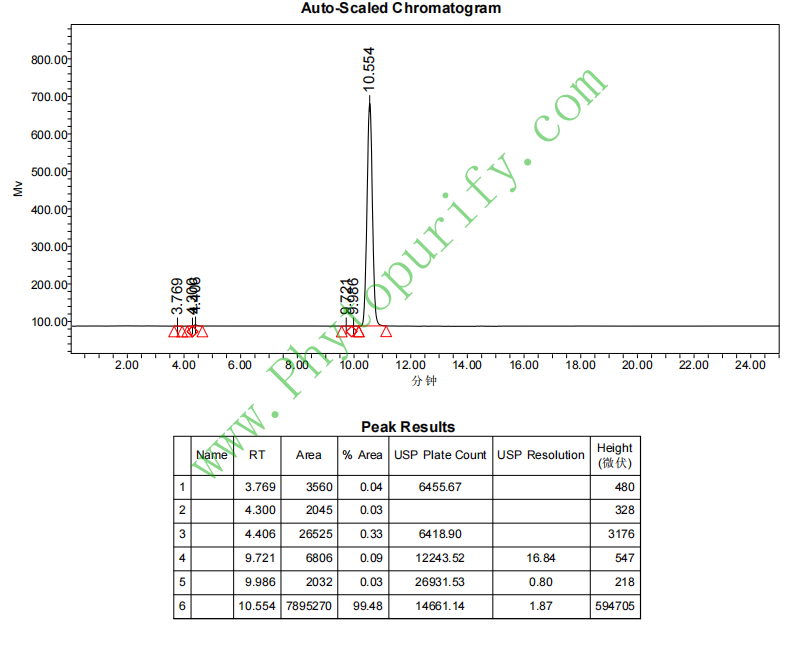
Purity: 95%~99%
Analysis Method: HPLC-DAD or/and HPLC-ELSD
Identification Method: Mass, NMR
Packing: Brown vial or HDPE plastic bottle
Storage: Store in a well closed container, protected from air and light. Put into refrigerate or freeze for long term storage.
Whenever possible, you should prepare and use solutions on the same day. However, if you need to make up stock solutions in advance, we recommend that you store the solution as aliquots in tightly sealed vials at -20℃. Generally, these will be useable for up to two weeks.
The product could be supplied from milligrams to grams, up to kilograms
Inquire for bulk scale.
Descriptions:
Cycloastragenol(CAG), a triterpene aglycone derived from Radix astragali , can suppress the accumulation of cytoplasmic lipid droplet in 3T3-L1 adipocytes.[1]
Two Chinese herb-derived small molecule telomerase activators, astragaloside IV (AG-IV) and cycloastragenol, have recently been shown to improve the proliferative response of CD8+ T lymphocytes from HIV-infected patients by upregulating telomerase activity, they also may exert their cellular effects through the activation of the Src/MEK/ERK pathway.[2]
Cycloastragenol is the aglycone derivative of astragaloside IV which has recently been demonstrated to activate telomerase and represents a potential drug candidate for the treatment of degenerative diseases, it is efficiently absorbed through intestinal epithelium; it moderately increases telomerase activity and proliferative capacity of both CD4 and CD8 T cells. [3,4]
Cycloastragenol and astragaloside IV suppress ROS-associated ER stress and then inhibited TXNIP/NLRP3 inflammasome activation with regulation of AMPK activity, and thereby ameliorated endothelial dysfunction by inhibiting inflammation and reducing cell apoptosis, they are equally effective in regulation of endothelial homeostasis.[5]
Cycloastragenol can remarkably inhibit CYP3A4 and activate CYP2E1 in rats.[6]
Cycloastragenol has been shown to extend T cell proliferation by increasing telomarase activity showing that it may also help delay the onset of cellular aging ; it is an extraordinary wound healing agent; it inhibits the apoptosis of PC12 induced by 6-OHDA, may be as potential neuroprotective agents in the treatment of Parkinson's disease. [7]
References:
[1] Wang S, Zhai C, Liu Q, et al. Biochem Bioph Res Co, 2014, 450(1):306-11.
[2] Yung L Y, Lam W S, Ho M K, et al. Planta Med, 2011, 78(2):115-21.
[3] Zhu J, Lee S, Ho M K C, et al. Drug Metab Pharmacok, 2010, 25(5):477-86.
[4] Valenzuela H F, Fuller T, Edwards J, et al. J Immunol, 2009, 182.
[5] Yan Z, Qiang L, Zhao W, et al.J Ethnopharmacol, 2015, 169(20):210-8.
[6] Wei B H, Jing Y E, Xue B J, et al. Chinese Journal of New Drugs, 2014, 23(4):476-9.
[7] Nesil T, ürkmez A ?, Bedir E. Planta Med, 2011, 77(12):1444.
[8] Wang J S. Strait Pharmacy, 2009, 21 (2): 39-41.
HPLC of Cyclogalegenol
Storage conditions:Short-term storage at 2~8℃, long-term storage at -20 ~ -80℃
Cyclocalegenol (CAS number: 78574-94-4), as an important natural pentacyclic triterpenoid saponin, has attracted widespread attention in the field of natural product pharmacology in recent years. It is a glycoside derivative of Astragaloside IV, which is the main active saponin component in the roots of Astragalus membranaceus and has various biological activities. Huangqi alcohol not only functions as a metabolite of Huangqi glycoside IV, but its unique chemical structure and multi-target regulatory ability make it potentially valuable for drug development in immune regulation, anti-inflammatory and other related disease treatments. This article aims to provide a systematic review of the chemical structure, sources, pharmacological activity, mechanism of action, and pharmacological evaluation of cycloastragaloside, and explore its prospects and challenges in clinical applications.
Cycloastragaloside belongs to the pentacyclic triterpenoid class, structurally derived from the hydride of 5 α - monane. Its molecular formula is C30H50O5, with a molecular weight of 490.71. The structure contains tetrahydrofuran ring and tetraol group, giving it high polarity and diverse chemical reactivity. The LogP value of cycloastragaloside is 4.5, indicating its moderate lipid solubility, which facilitates cell membrane penetration without excessive hydrophobicity. Its topological polar surface area (TPSA) is 82.93 Å ², and the number of hydrogen bond acceptors is 5, indicating that the molecule contains multiple polar groups, which facilitate stable hydrogen bonding with protein targets. The low permeability of the blood-brain barrier suggests limited distribution in the central nervous system. The existing data has not yet clarified its hepatotoxicity and cardiotoxicity, and the hERG channel inhibition experiment results are negative, indicating that its cardiac safety has been preliminarily guaranteed.
Huangqi alcohol mainly comes from the root of Astragalus membranaceus, which is a traditional Chinese medicinal herb widely used in traditional Chinese medicine for immune regulation and anti fatigue treatment. Huangqi root contains various saponin compounds, among which Huangqi IV is an important saponin component, and Huangqi alcohol is its main glycoside metabolite. Usually, cyclohexanol is obtained by acid-base hydrolysis or enzymatic hydrolysis of astragalus saponins. The specific extraction methods include:
In recent years, with the development of green extraction technology, methods such as ultrasound assisted extraction and microwave-assisted extraction have also been attempted to be applied to the extraction of cyclohexanol, improving extraction efficiency and purity.
The pharmacological activity of Huangqi alcohol is mainly reflected in its immune regulatory function. As the main glycoside of astragalus saponins, cycloastragaloside exerts multiple biological effects in vivo by regulating immune cell function and inflammatory response.
Numerous in vitro and in vivo studies have shown that cycloastragaloside can significantly regulate various key factors of the immune system, including promoting T cell proliferation, regulating cytokine secretion, and modulating immune checkpoint molecule expression. Its mechanism of action involves multiple signaling pathways, such as NF - κ B, JAK/STAT, etc., which can balance pro-inflammatory and anti-inflammatory responses and enhance the body's immune defense ability.
Huangqi alcohol inhibits the TLR4 mediated signaling pathway, reduces the release of pro-inflammatory factors such as TNF - α and IL-6, and alleviates the inflammatory response. Related studies have shown that it has a protective effect on chronic inflammatory disease models, suggesting its potential application value in inflammation related diseases.
Although research on the anti-tumor effects of cycloastragaloside is still in its early stages, there is evidence to suggest that it may affect the immune escape mechanism in the tumor microenvironment by regulating the expression of STAT3 and FOXP3, and has certain potential for anti-tumor immune regulation.
Some studies have also reported that cycloastragaloside has antioxidant, anti fatigue, and protective effects on liver function, but the specific mechanism and clinical significance still need further verification.
The pharmacological effects of Huangqi alcohol are closely related to its multi-target regulation. The main targets include:
The multiple regulation of these targets enables cycloastragaloside to play a complex and delicate regulatory role in the immune system, enhancing the body's immune defense and preventing immune overreaction.
The pharmacological evaluation of Huangqi alcohol shows that it has certain potential, but there are also challenges.
The molecular weight of Huangqi alcohol is 490.71, which is a natural product with a medium molecular weight. The LogP value is 4.5, indicating moderate lipid solubility and favorable cell membrane permeability, but excessive hydrophobicity may affect its water solubility and bioavailability. The TPSA is 82.93 Å ², which meets the polarity requirements of most oral medications. The number of hydrogen bond acceptors is 5, indicating its excellent ability to form hydrogen bonds in target binding.
At present, there is limited pharmacokinetic data on cycloastragaloside. Its blood-brain barrier permeability is low, indicating its limited distribution in the central nervous system, which may limit its application in neurological diseases. Hepatotoxicity and cardiotoxicity are not yet clear, and the hERG inhibition test results were negative, indicating good cardiac safety. The Ames mutagenicity test data is lacking, and further evaluation of its genetic toxicity is needed.
As a glycoside of Astragaloside IV, cycloastragaloside is mainly produced in the body through intestinal microbiota and liver metabolism, with high metabolic stability. Its low water solubility may affect oral absorption efficiency. Future pharmaceutical improvements, such as nanocarriers and liposome encapsulation, are expected to enhance their bioavailability.
Huangqi alcohol, as a natural immune modulator, has broad clinical application prospects. Its potential is particularly prominent in immune related diseases, inflammatory diseases, and tumor immunotherapy.
Huangqi alcohol may help treat autoimmune diseases such as rheumatoid arthritis and systemic lupus erythematosus by regulating various immune factors. Its ability to regulate the balance of T cell subsets provides a theoretical basis for the development of novel immune modulators.
Huangqi alcohol inhibits the TLR4/NF - κ B signaling pathway, reduces inflammatory response, and is suitable for adjuvant therapy of chronic inflammatory diseases, such as chronic obstructive pulmonary disease, inflammatory bowel disease, etc.
By regulating STAT3, FOXP3, and CTLA4, cyclohexanol is expected to improve the tumor microenvironment and enhance anti-tumor immune response. The future combination therapy strategy with immune checkpoint inhibitors is worth exploring.
Although cycloastragaloside has multiple pharmacological activities, its pharmacological properties and pharmacokinetic characteristics still require further research. In the future, safety evaluation, in vivo metabolic mechanisms, and preclinical pharmacological research should be strengthened. At the same time, developing efficient extraction and preparation techniques, improving purity and stability, is the key to promoting its clinical translation.
As the main glycoside of astragalus saponins, cycloastragaloside exhibits extensive pharmacological activity and good potential as a drug due to its unique pentacyclic triterpenoid structure and multi-target immunomodulatory effects. It has important research value and application prospects in the fields of immune regulation, anti-inflammatory, and tumor immunotherapy. In the future, by combining modern medicinal chemistry, pharmacokinetics, and clinical research methods, we will deeply reveal its mechanism of action and safety, providing a solid foundation for the drug development of cycloastragaloside and promoting it as an important candidate for new natural immunomodulatory drugs.
