Introduction/Overview
Hypertension is one of the cardiovascular diseases with the highest incidence rate and the heaviest disease burden in the world. Its effective control is the key to reduce the risk of damage to target organs such as heart, brain and kidney. Although modern synthetic drugs dominate in antihypertensive treatment, natural products derived from traditional medicine have always been an important source of innovative drug development due to their multi-target, multi pathway action characteristics and relatively low risk of side effects. Gouteng plants have a long history of application in traditional medical systems in Asia, Africa, and South America, often used to treat fever, pain, inflammation, and neurological diseases. Some species have particularly remarkable blood pressure lowering effects. Gouteng alkaloid C, as a characteristic indolizine alkaloid isolated from this genus of plants, has become a hot topic in natural product pharmacology research due to its significant antihypertensive activity since its structure was elucidated. This article aims to systematically review the chemical properties, plant sources, pharmacological activities, mechanisms of action, pharmacological properties, and clinical application potential of crocetin C, in order to provide comprehensive scientific references for the development of innovative antihypertensive drugs based on this compound.
Chemical structure and physicochemical properties
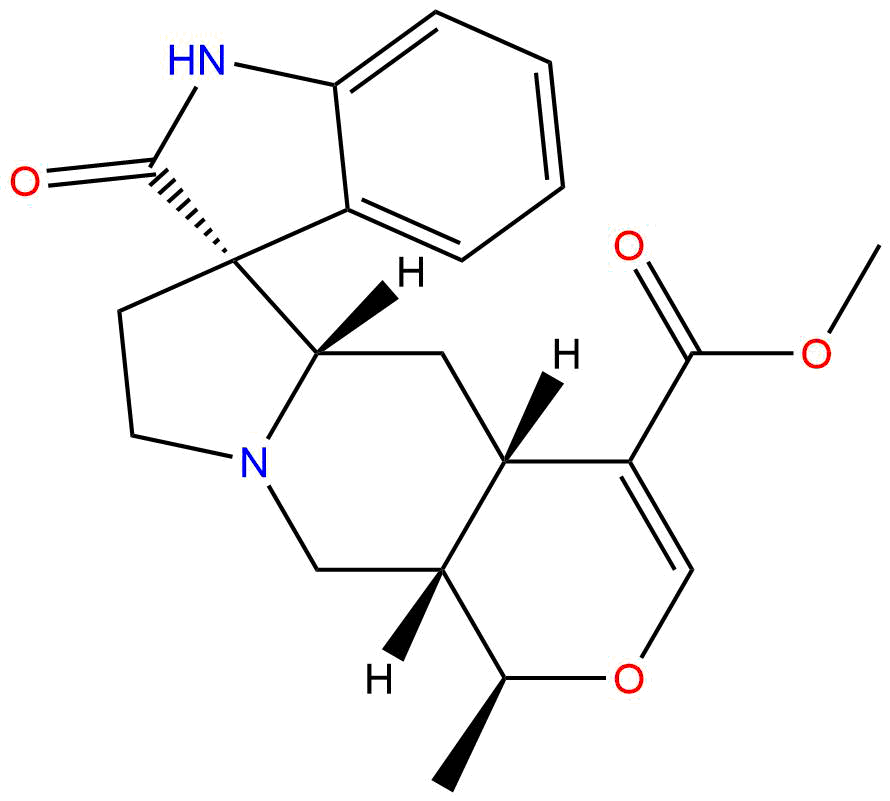
Gouteng alkaloid C is a structurally unique indolizine alkaloid. Its core skeleton is composed of a five ring fused system, which contains an indole or oxidized indole unit connected to a complex polycyclic system. The molecule usually contains multiple chiral centers, which determines the complexity of its stereochemistry and the specificity of its interaction with biological targets. Its CAS number is 5629-60-7, molecular formula is C21H24N2O4, and molecular weight is 368.4330.
From the analysis of physicochemical parameters related to medicinal properties, crocetine C exhibits relatively balanced properties. The logarithmic LogP value of its lipid water partition coefficient is 1.9061, indicating that the compound has moderate lipophilicity, which is beneficial for penetrating cell membranes and avoiding the risk of rapid metabolism or tissue accumulation caused by high lipid solubility. The topological polarity surface area is 67.8700 Å ², which is within an acceptable range for oral absorption (typically<140 Å ²). The water solubility value is 0.5889 mg/mL, which belongs to the category of slight solubility. This suggests that in the process of formulation development, it may be necessary to improve its dissolution characteristics through techniques such as salt formation, solid dispersion, or cyclodextrin inclusion. It is particularly noteworthy that its predicted blood-brain barrier permeability is "high", which means that crocetine C may act on relevant targets in the central nervous system, providing a physicochemical basis for explaining its possible central hypotensive mechanism. In addition, preliminary toxicity predictions indicate that the hERG inhibition risk is "no", and the Ames test result is 0.0, suggesting that its potential arrhythmogenic risk and genetic toxicity are low, and its safety characteristics are favorable.
Plant sources and extraction methods
Gouteng alkaloid C mainly comes from plants of the Gouteng genus in the Rubiaceae family. There are approximately 34 species of this genus of plants worldwide, widely distributed in tropical and subtropical regions. In China, the traditional medicinal hook vine mainly refers to Gambir Plant、Large leaved hooked vine、Hairy vine、Hua Gou Teng and Untamed fruit hook vine Dried hooked stems and branches of other species are recorded in the Chinese Pharmacopoeia. Hook vine alkaloid C and its homologs often coexist with hook vine alkaloid, isohook vine alkaloid, dehydrohook vine alkaloid, etc. in these plants, forming their characteristic alkaloid spectrum together.
The extraction method usually follows the conventional process of natural product chemistry. Dried and crushed plant materials (usually stems or roots) are first extracted by cold soaking or heating reflux with polar organic solvents (such as methanol, ethanol, or aqueous ethanol) to maximize the extraction of alkaloid components. After the crude extract is concentrated under reduced pressure, it is dissolved in acidic water (such as dilute hydrochloric acid or citric acid solution) to salt the alkaloids and transfer them to the aqueous phase. Then, it is alkalized (such as ammonia or sodium hydroxide) to free the alkaloids, and extracted with organic solvents such as chloroform, dichloromethane, or ethyl acetate to obtain the total alkaloid fraction. The separation and purification of crocetin C mainly rely on column chromatography technology, often using silica gel, alumina or reverse phase silica gel (such as C18) as the stationary phase, and gradient elution with different polarity solvent systems (such as chloroform methanol, petroleum ether ethyl acetate, etc.). High performance liquid chromatography, especially preparative HPLC, is the final key step in obtaining high-purity crocetin C monomer. In recent years, modern separation techniques such as supercritical fluid extraction and high-speed counter current chromatography have also been applied to the extraction and separation of alkaloids from Houttuynia cordata to improve efficiency and yield.
Pharmacological activity research
The most prominent and widely studied pharmacological activity of crocetin C is its Hypotensive effect Numerous in vivo pharmacological experiments have confirmed that whether administered intravenously or orally, crocetine C can produce dose-dependent blood pressure lowering effects in various hypertensive animal models (such as spontaneously hypertensive rats, renal hypertensive rats, etc.), with a relatively stable onset and a longer duration of action. Its blood pressure lowering characteristics not only involve reducing peripheral vascular resistance, but may also involve regulating cardiac output.
In addition to its core antihypertensive activity, the study also suggests that crocetine C may have other related pharmacological effects, which may synergistically contribute to its cardiovascular protective effects. For example, some studies have shown that it has certain anti-inflammatory and antioxidant Activity may help alleviate endothelial inflammation and oxidative stress damage associated with hypertension. In addition, based on its chemical structure similarity with other bioactive indole alkaloids and its high blood-brain barrier permeability, the potential regulatory effects of crocetine C on the central nervous system (such as sedation and anti anxiety) are also worth noting, which may indirectly affect sympathetic nervous tension and participate in blood pressure regulation. However, further in-depth and systematic research is still needed to confirm the pharmacological activities of these extensions.
Mechanism of action and molecular targets
The antihypertensive mechanism of crocetin C exhibits multi-target characteristics, involving multiple key blood pressure regulatory pathways such as the renin-angiotensin system, nitric oxide pathway, and adrenergic receptors, which is consistent with its complex mode of action as a natural product.
-
Inhibition of angiotensin-converting enzyme Angiotensin converting enzyme is a key enzyme in the renin-angiotensin system, catalyzing the conversion of angiotensin I to the potent vasoconstrictor angiotensin II. Studies have shown that crocetin C can inhibit the activity of ACE, reduce the production of angiotensin II, thereby weakening its induced vasoconstriction and aldosterone secretion, leading to vasodilation and reduced blood volume, resulting in a hypotensive effect. This is one of its possible mechanisms of action.
-
Promote the production of nitric oxide The nitric oxide produced by endothelial nitric oxide synthase catalysis is an important endogenous vasodilator. Gouteng alkaloid C has been shown to upregulate the expression or activity of NOS3, promote the release of NO from vascular endothelial cells, activate the guanylate cyclase cyclic guanosine monophosphate pathway, and cause vascular smooth muscle relaxation. This mechanism is of great significance for improving endothelial function and combating endothelial damage caused by hypertension.
-
Antagonistic angiotensin II type 1 receptor AGTR1 is the main receptor for angiotensin II to exert most of its cardiovascular effects. Gouteng alkaloid C may act as an antagonist of AGTR1, directly blocking the binding of angiotensin II to this receptor, thereby inhibiting its induced vasoconstriction, cell proliferation, and inflammatory response. This is the same target as the commonly used "sartan" drugs in clinical practice.
-
Regulating adrenergic receptors Adrenergic receptors are the core targets of the sympathetic nervous system in regulating cardiovascular function. Gouteng alkaloid C ADRB1 and ADRA1 All show regulatory potential. Possible blockade of cardiac β 1 receptors can reduce myocardial contractility and heart rate, and decrease cardiac output; Antagonism of the α 1 receptor in vascular smooth muscle can directly lead to vasodilation and reduce peripheral resistance. This dual regulation of adrenergic receptors may be another important mechanism for achieving stable blood pressure reduction.
In summary, crocetin C exerts a synergistic antihypertensive effect by simultaneously acting on multiple key targets such as ACE, NOS3, AGTR1, ADRB1, ADRA1, and reducing vasoconstrictor substances, increasing vasodilator factors, blocking vasoconstrictor signals, and lowering sympathetic tone through multiple pathways, demonstrating the advantages of "multi-target, multi pathway" integrated regulation.
Evaluation of drug properties and pharmacokinetics
Based on the predicted physicochemical parameters mentioned earlier, crocetin C has the preliminary basis to become an oral medication. Moderate LogP and TPSA values indicate good membrane permeability and oral absorption potential. However, its micro solubility is the primary challenge that needs to be overcome in formulation development. By making it into suitable salt forms (such as hydrochloride and sulfate), or utilizing drug delivery systems such as nanocrystals, liposomes, and self microemulsions, its bioavailability is expected to be significantly improved.
The pharmacokinetic research on crocetin C is still relatively limited, which is a blank area that needs to be filled in future translational research. The key research directions should include:
* absorb Clarify its absorption rate and degree under different administration routes, as well as whether there is a first pass effect.
* distribution Study its tissue distribution characteristics in vivo, especially whether it can be effectively distributed to cardiovascular target organs, and its actual manifestation of high blood-brain barrier permeability in vivo.
* Metabolism Identify its main metabolic organ (likely liver), key enzyme systems involved in metabolism (such as CYP450 isoenzymes), and major metabolites, and evaluate the risk of drug drug interactions.
* excretion Clarify its main excretion pathways (bile, kidneys) and elimination half-life.
In addition, although the preliminary toxicity prediction results are optimistic, it is still necessary to comprehensively evaluate its safety window through systematic preclinical safety evaluation, including studies on acute toxicity, long-term toxicity, reproductive toxicity, etc. Its "multi-target" mechanism of action may bring therapeutic advantages, but it may also increase the risk of off target effects, which requires careful observation at the overall animal and organ levels.
Clinical application prospects and prospects
The clinical application prospects of crocetin C mainly revolve around Prevention and treatment of hypertension and its complications open. Its multi-target mechanism of action makes it potentially applicable to hypertensive patients with different etiologies and pathophysiological stages, especially for patients with refractory hypertension or specific target organ damage (such as endothelial dysfunction and myocardial hypertrophy), which may have unique value. Compared with synthetic drugs targeting a single target, crocetin C or derivatives optimized with its lead structure are expected to provide more comprehensive blood pressure control and organ protection effects, while potentially reducing the decline in efficacy caused by compensatory mechanism activation.
Looking ahead to the future, the research and development of crocetin C will face the following opportunities and challenges:
1. In depth mechanism research Modern technologies such as molecular docking, surface plasmon resonance, and gene knockout/knockdown are needed to accurately elucidate their interaction patterns, binding sites, and affinities with the aforementioned targets, distinguishing between primary and secondary targets.
2. Structural optimization and derivative development Using it as the parent nucleus, systematic structural modifications are carried out to enhance activity, improve water solubility and pharmacokinetic properties, reduce potential toxicity, and thus obtain candidate drugs with greater development value.
3. Strengthen research on pharmacokinetics and toxicology Conduct systematic and standardized preclinical pharmacokinetic and toxicological studies to provide solid data support for subsequent clinical trial applications.
4. Explore the application of compound formulas As one of the effective ingredients of traditional Chinese medicine Gouteng, the synergistic effect of Gouteng alkaloid C with other Gouteng alkaloids (such as Gouteng alkaloid, IsoGouteng alkaloid) or antihypertensive drugs with different mechanisms of action is studied, and a new fixed dose compound preparation is developed, which conforms to the compatibility concept of traditional Chinese medicine "Jun Chen Zuo Shi".
5. Expand indications Based on its anti-inflammatory, antioxidant and potential neuroregulatory activities, explore the possibility of its application in atherosclerosis, heart failure, anxiety and other related diseases.
Conclusion
Gouteng alkaloid C, as a type of indolizine alkaloid derived from traditional medicinal plants, has become an important molecule in cardiovascular pharmacology research of natural products due to its clear antihypertensive activity and unique multi-target mechanism of action. It systematically intervenes in the blood pressure regulatory network by inhibiting ACE, antagonizing AGTR1, activating the NOS3/NO pathway, and regulating ADRB1/ADRA1 through multiple pathways. Although it has shown some potential in drug development, it still faces challenges such as solubility and lack of systematic pharmacokinetic data. Future research should focus on in-depth mechanism of action analysis, rational structural optimization, comprehensive preclinical evaluation, and innovative formulation development. With the continuous integration of modern pharmaceutical technology, crocetin C is expected to stand out from the valuable experience of traditional medicine, providing important lead compounds and scientific basis for the development of a new generation of multi-target, high-efficiency and low toxicity antihypertensive drugs, and building a bridge between traditional wisdom and modern medicine.