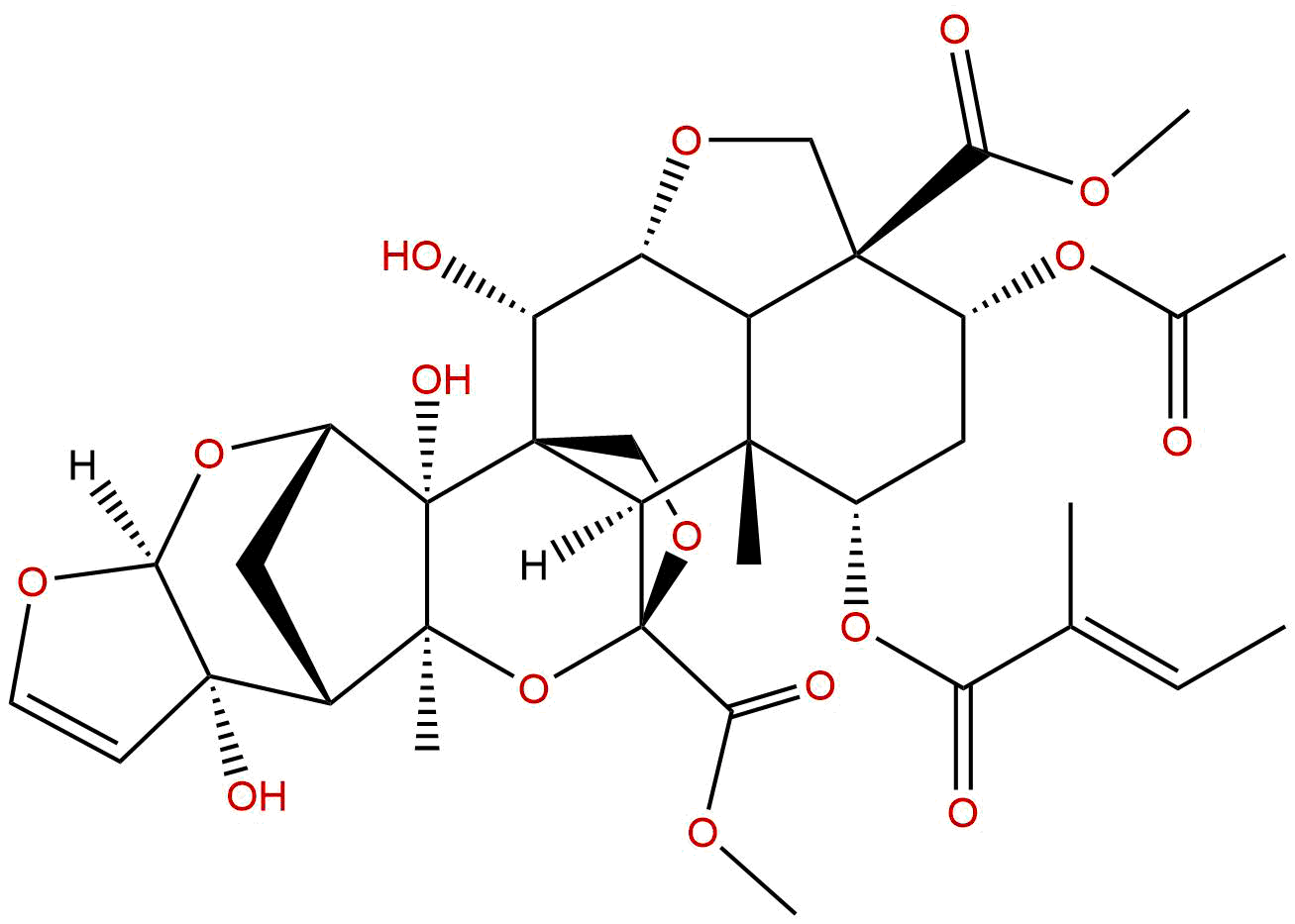


Product Name: Azadirachtin
Synonym name: Azadirachtin A
Catalogue No.: BP0224
Cas No.: 11141-17-6
Formula: C35H44O16
Mol Weight: 720.721
Botanical Source: Indian neem tree Azadirachta indica
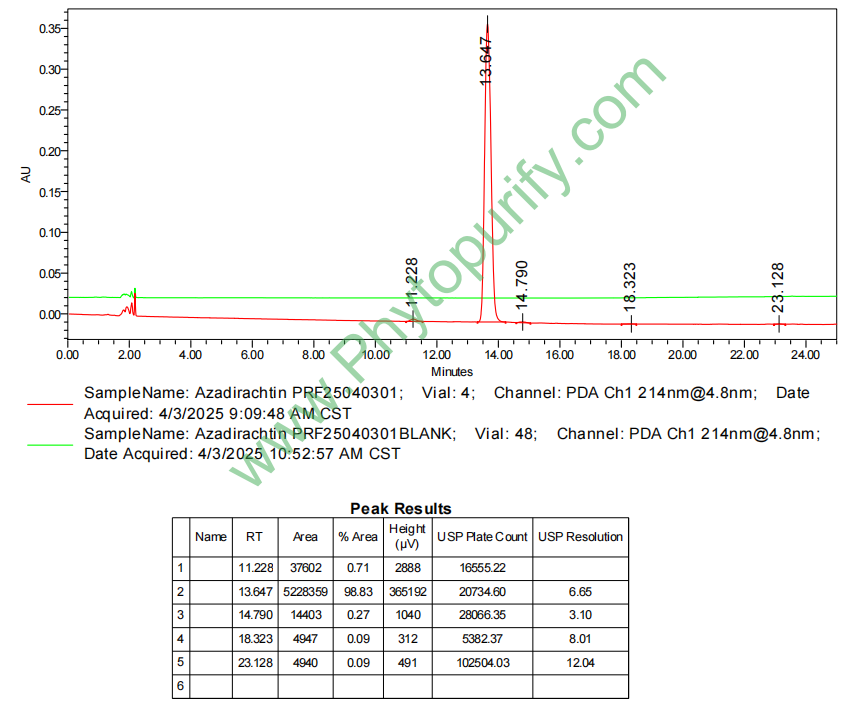
Purity: 95%~99%
Analysis Method: HPLC-DAD or/and HPLC-ELSD
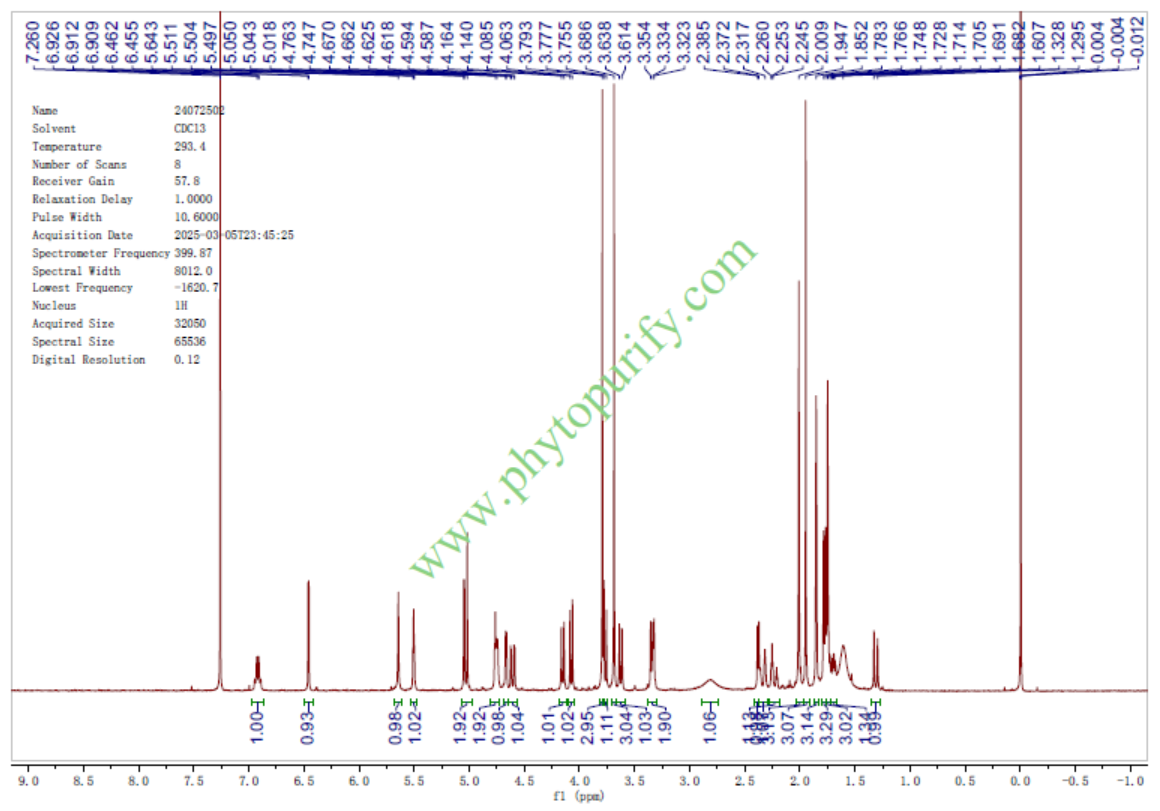
Identification Method: Mass, NMR
Packing: Brown vial or HDPE plastic bottle
Can be supplied from milligrams to grams.
For Reference Standard and R&D, Not for Human Use Directly.
Inquire for bulk scale.
Description:
Azadirachtin has antifungal activity, it used as insecticides.
References:
Annu Rev Entomol. 2019 Oct 8.
Botanical Insecticides in the Twenty-First Century-Fulfilling Their Promise?
METHODS AND RESULTS:
Academic interest in plant natural products with insecticidal properties has continued to grow in the past 20 years, while commercialization of new botanical insecticides and market expansion of existing botanicals has lagged considerably behind. Insecticides based on pyrethrum and neem (Azadirachtin) continue to be standard bearers in this class of pesticides, but globally, their increased presence is largely a consequence of introduction into new jurisdictions. Insecticides based on plant essential oils are just beginning to emerge as useful plant protectants. Some countries (such as Turkey, Uruguay, the United Arab Emirates, and Australia) have relaxed regulatory requirements for specific plant extracts and oils, while in North America and the European Union, stricter requirements have slowed progress toward commercialization of new products.
CONCLUSIONS:
Botanicals are likely to remain niche products in many agricultural regions and may have the greatest impact in developing countries in tropical regions where the source plants are readily available and conventional products are both expensive and dangerous to users.
Toxins (Basel). 2019 Oct 5;11(10). pii: E579.
In Vitro Activity of Neem (Azadirachta indica) Oil on Growth and Ochratoxin A Production by Aspergillus carbonarius Isolates.
Aspergillus carbonarius is a saprobic filamentous fungus, food spoiling fungus and a producer of ochratoxin A (OTA) mycotoxin.
METHODS AND RESULTS:
In this study, the in vitro antifungal activity of neem oil (0.12% p/p of Azadirachtin) was evaluated against the growth of six strains of A. carbonarius and the production of OTA. Four different concentrations of neem oil were tested in addition to three incubation times. Only the concentration of 0.3% of neem oil inhibited more than 95% of the strain's growth (97.6% ± 0.5%), while the use of 0.5% and 1.0% of neem oil showed lower antifungal activity, 40.2% ± 3.1 and 64.7% ± 1.1, respectively. There was a complete inhibition of OTA production with 0.1% and 0.3% neem oil in the four strains isolated in the laboratory from grapes.
CONCLUSIONS:
The present study shows that neem essential oil can be further evaluated as an auxiliary method for the reduction of mycelial growth and OTA production.
HPLC of Azadirachtin
HNMR of Azadirachtin
Storage conditions:Short-term storage at 2~8℃, long-term storage at -20 ~ -80℃
Azadirachtin is a natural triterpenoid compound derived from the fruit of the Azadirachta indica tree, which has attracted much attention due to its significant biological activity. As one of the most important active ingredients in the neem tree, azadirachtin has various pharmacological effects, including anticancer, antimalarial, anti-inflammatory, and insecticidal activities. In recent years, with the advancement of natural product pharmacology and molecular biology techniques, the mechanism of action of azadirachtin has gradually been revealed, especially in inducing cell apoptosis, regulating signaling pathways, and targeting various disease-related molecules, showing unique advantages. This article aims to systematically review the chemical structure and physicochemical properties, plant sources and extraction methods, pharmacological activity and mechanism of action, pharmacological evaluation and pharmacokinetic characteristics of azadirachtin, and explore its potential and future development directions in clinical applications.
Azadirachtin belongs to the tetracyclic triterpenoid class, with a molecular formula of C35H44O16 and a molecular weight of 720.7 Da. Its structure is complex, containing multiple oxidative functional groups and a cyclic skeleton, and has highly stereochemical characteristics. The LogP value of azadirachtin is about 1.9, indicating its moderate lipid solubility, which is beneficial for cell membrane penetration. Its polar surface area (TPSA) is as high as 260.6 Å ², indicating strong molecular polarity that may affect its bioavailability and transmembrane transport capacity. Azadirachtin contains 16 hydrogen bond receptor sites, giving it the potential to form multiple hydrogen bonds with protein targets.
From the perspective of physicochemical properties, azadirachtin is not easily able to pass through the blood-brain barrier (BBB), which limits its application in central nervous system diseases, but at the same time reduces the risk of central nervous system toxicity. Toxicological evaluation shows that the LD50 of azadirachtin is as high as 5000 mg/kg, and its liver toxicity, cardiac toxicity, and hERG channel inhibition are all negative. In addition, the Ames mutagenicity test result is negative, indicating its high safety and good pharmaceutical basis.
Azadirachta mainly exists in the fruits of Azadirachta indica trees widely distributed in India and Southeast Asia, especially in the seeds and peels of mature fruits where the content is relatively high. As a traditional medicinal plant, the neem tree is widely used in folk medicine for antibacterial, anti-inflammatory, and deworming purposes.
The extraction of azadirachtin is usually carried out by organic solvent extraction, and commonly used solvents include ethanol, methanol, ethyl acetate, etc. The extraction process generally includes steps such as fruit drying, crushing, solvent extraction, filtrate concentration, and purification. To improve purity, column chromatography (silica gel column, reverse phase column) and high-performance liquid chromatography (HPLC) techniques are often combined for separation and purification. In recent years, the application of supercritical CO2 extraction and microwave-assisted extraction technology has significantly improved the extraction efficiency and purity of azadirachtin, and is more environmentally friendly and energy-saving.
Azadirachtin exhibits significant cytotoxicity and inhibitory effects on proliferation in various cancer cell lines. Its anti-cancer mechanism is mainly achieved by inducing tumor cell apoptosis, blocking the cell cycle, and inhibiting tumor related signaling pathways. Research has shown that azadirachtin can regulate the expression of Bcl-2 family proteins, inhibit the anti apoptotic protein Bcl-2, promote the activity of pro apoptotic protein Bax, and activate the mitochondrial pathway to induce cell apoptosis. In addition, azadirachtin activates Apaf-1 and caspase-3, promotes the cascade of apoptosis, and ultimately leads to tumor cell death.
Azadirachtin has inhibitory effects on malaria parasites, especially showing potential pharmacological effects in drug-resistant strains of malaria. Its mechanism of action may involve inhibiting the metabolic enzyme activity of malaria parasites and interfering with the developmental cycle of parasites in host cells, which has the potential to develop new anti malaria drugs.
Azadirachtin exerts anti-inflammatory effects by inhibiting the activation of the nuclear factor kappa B (NF - κ B) signaling pathway, reducing the expression of pro-inflammatory factors such as TNF - α, IL-1 β, and IL-6. This mechanism has been validated in various inflammatory models, demonstrating its potential application in the treatment of inflammatory diseases.
As a natural insecticide, azadirachtin exhibits potent insect resistance by inducing cell apoptosis and interfering with insect development processes. Its mechanism of action involves the activation of apoptosis signals within insect cells and interference from the nervous system, and has been widely used in agricultural pest control.
The main mechanism by which azadirachtin induces cell apoptosis includes the synergistic effect of mitochondrial pathway and death receptor pathway. In the mitochondrial pathway, azadirachtin regulates the Bcl-2/Bax ratio, promotes the loss of mitochondrial membrane potential, releases cytochrome c, and activates Apaf-1 and caspase-3, initiating the apoptotic program. In the death receptor pathway, azadirachtin promotes cell apoptosis by regulating tumor necrosis factor receptor (TNFR) signaling.
In addition, azadirachtin exerts anti-inflammatory effects by inhibiting the NF - κ B signaling pathway and blocking the transcription of pro-inflammatory genes. NF - κ B, as a key regulatory factor of various inflammation and tumor related genes, its inhibition helps alleviate inflammatory response and inhibit tumor progression.
In disease models such as otitis media, azadirachtin acts on multiple key targets, including signal transducer and activator of transcription factor 3 (STAT3), protein kinase C delta (PRKCD), nuclear factor E2 related factor 2 (NFE2L2), hypoxia inducible factor 1 alpha (HIF1A), and topoisomerase II alpha (TOP2A). These targets involve cell proliferation, oxidative stress response, inflammation regulation, and cell apoptosis, indicating that azadirachtin has the potential to regulate diseases through multiple targets and pathways.
The high molecular weight (720.7 Da) and polar surface area (TPSA 260.6 Å ²) of azadirachtin pose certain challenges to its oral bioavailability. The high number of hydrogen bond receptors (16) may limit its transmembrane diffusion ability and affect absorption. However, its LogP value is moderate (1.9), which is beneficial for cell membrane penetration.
Toxicological evaluation shows that azadirachtin has good safety, no significant liver and cardiac toxicity, and does not inhibit hERG channels, reducing the potential risk of arrhythmia. A negative Ames test indicates that it does not have mutagenicity and is suitable for further drug development.
The current pharmacokinetic research is relatively limited, and the metabolic pathways in vivo are not fully understood. Preliminary data indicate that azadirachtin is metabolically stable in the body, mainly through the liver enzyme system, with excretion pathways including bile and urine. It is not easy to cross the blood-brain barrier, which limits the development of indications related to the central nervous system.
Azadirachtin has shown broad clinical application prospects due to its multiple pharmacological activities. In the field of anti-cancer, azadirachtin can be used as an adjuvant therapy drug to enhance chemotherapy efficacy and reduce side effects. The anti-inflammatory effect makes it potentially applicable in chronic inflammatory diseases such as rheumatoid arthritis and inflammatory bowel disease. For infectious diseases such as otitis media, azadirachtin may improve inflammatory status and promote tissue repair by regulating STAT3, NFE2L2 and other targets.
In addition, the natural insecticidal properties of azadirachtin provide a green and environmentally friendly solution for the development of agricultural biopesticides, reducing the use of chemical pesticides and lowering environmental pollution.
Future research should focus on improving the bioavailability of azadirachtin, optimizing drug delivery routes and formulation design, and combining nanocarrier technology to achieve targeted delivery. At the same time, in-depth analysis of its pharmacokinetic characteristics and long-term safety evaluation lays the foundation for clinical translation. The systematic study of multi-target mechanisms of action can also help discover new indications and promote the translation of azadirachtin into clinical drugs.
As a complex and diverse natural triterpenoid compound, azadirachtin has become a hot topic in natural product pharmacology research due to its significant anti-cancer, anti malaria, anti-inflammatory, and insecticidal activities. Its unique mechanism of action involves inducing cell apoptosis, regulating signaling pathways, and multi-target intervention, reflecting the advantages of natural products in multidimensional regulation of diseases. Despite the challenges of drug formation such as high molecular weight and strong polarity, azadirachtin still exhibits good safety and potential clinical application value. In the future, the combination of modern drug design and delivery technology is expected to promote the widespread application of azadirachtin in the fields of medicine and agriculture, becoming an important model for the development of innovative natural product drugs.
