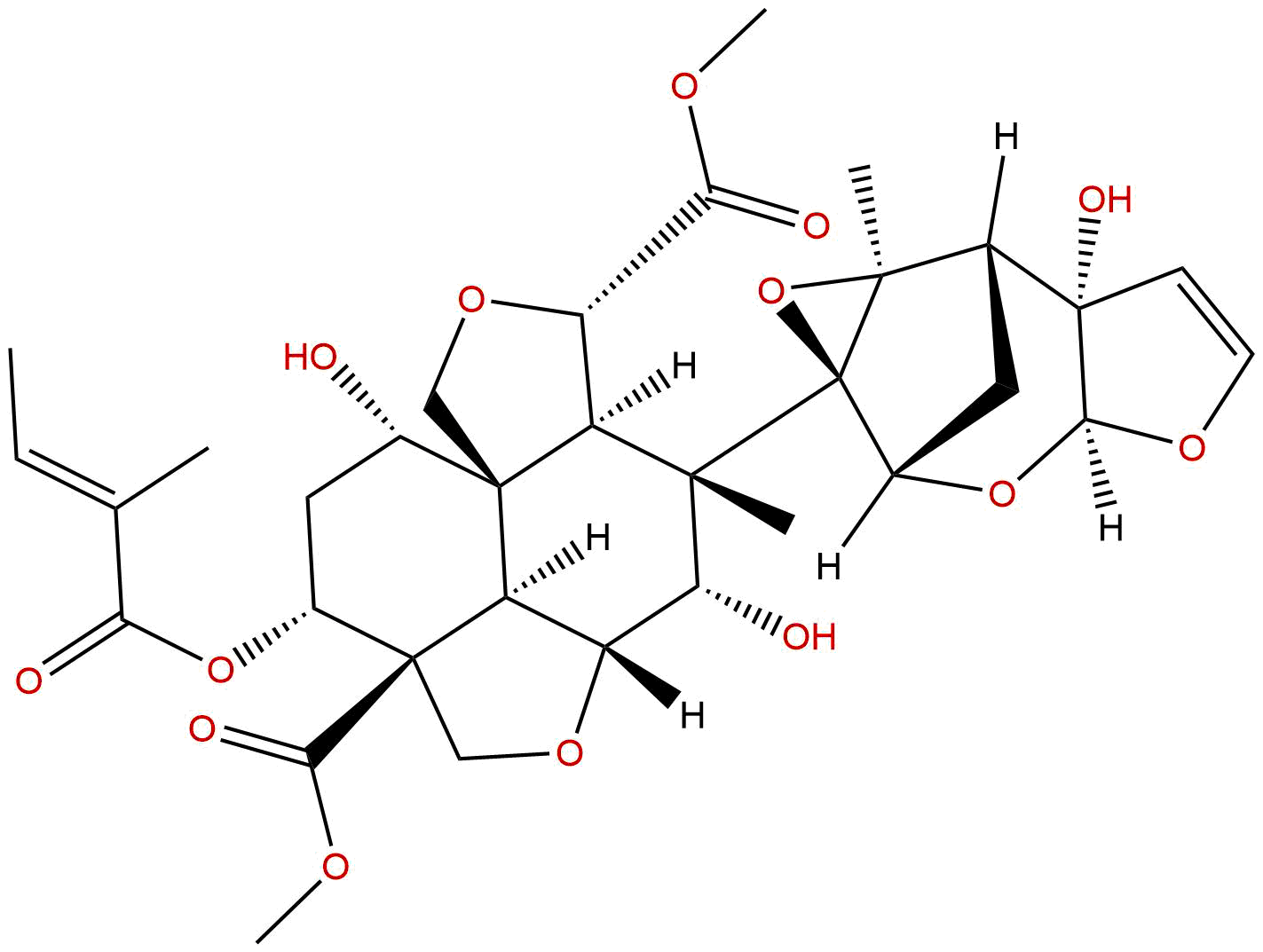


Product name: Azadirachtin B
Synonym name: 3-Tigloylazadirachtol; Deacetylazadirachtinol
Catalogue No.: BP5407
Cas No.: 106500-25-8
Formula: C33H42O14
Mol Weight: 662.685
Botanical Source: Azadirachta indica
Type of Compound:
Purity: 95%~99%
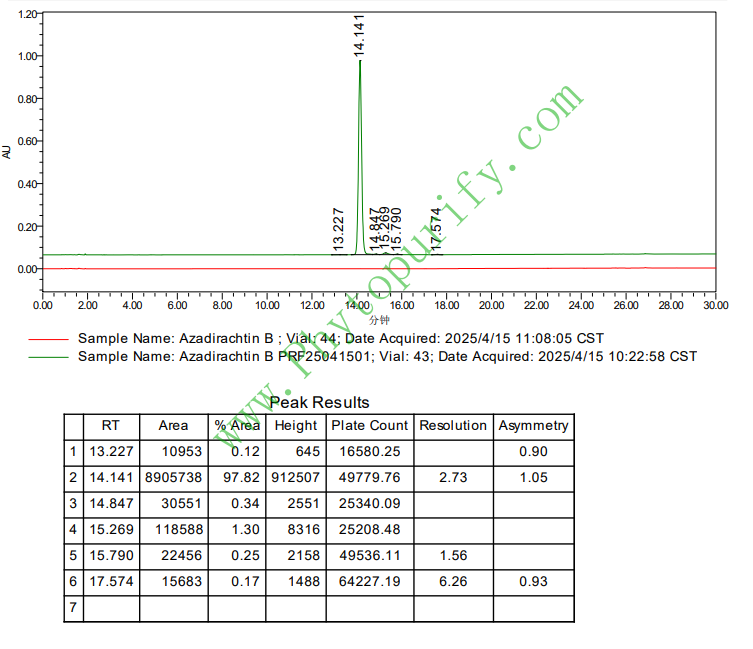
Analysis Method: HPLC-DAD or/and HPLC-ELSD
Identification Method: Mass, NMR
Packing: Brown vial or HDPE plastic bottle
Storage: Store in a well closed container, protected from air and light. Put into refrigerate or freeze for long term storage.
Whenever possible, you should prepare and use solutions on the same day. However, if you need to make up stock solutions in advance, we recommend that you store the solution as aliquots in tightly sealed vials at -20℃. Generally, these will be useable for up to two weeks.
The product could be supplied from milligrams to grams
Inquire for bulk scale.
For Reference Standard and R&D, Not for Human Use Directly.
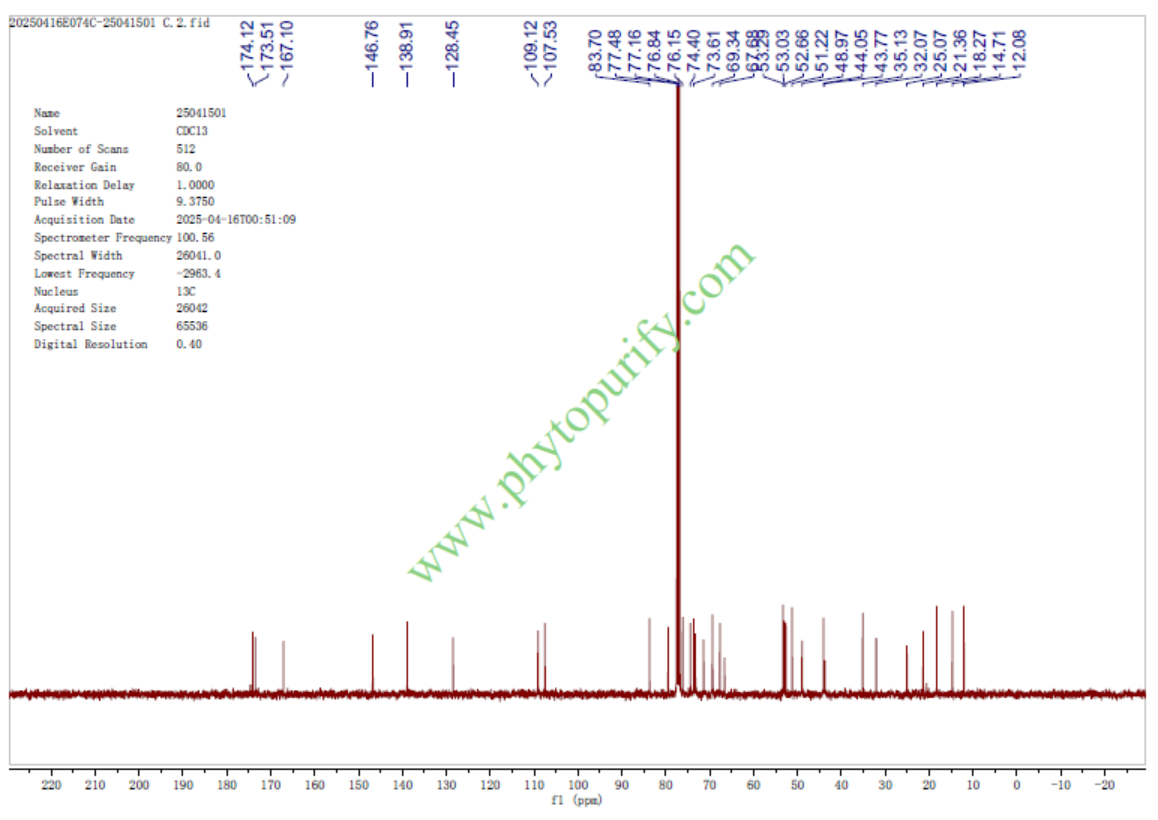
NMR of Azadirachtin B
HPLC of Azadirachtin B
Storage conditions:Short-term storage at 2~8℃, long-term storage at -20 ~ -80℃
189.0400
1.2073
1.2074
.0595
1.2283
1.5614
Low
63.5270
7.5318
No
No
No
No
Yes
No
0.6
Yes
No
Yes
Yes
Natural products, as an important source of drug discovery, have long played an irreplaceable role in the history of human fight against diseases. Among numerous natural compounds with biological activity, from the Meliaceae plant Azalea(Azadirachta indica A. Azadirachtin B, a limonoid compound isolated from Juss, is gradually becoming a research hotspot in the field of natural product pharmacology due to its unique chemical structure and extensive pharmacological activity. Azalea, as a traditional medicinal plant native to the Indian subcontinent, has been used in Ayurvedic medicine for thousands of years. Its various parts (leaves, bark, seeds, flowers, fruits) are used to treat various diseases ranging from infections, inflammation to metabolic disorders. The discovery of azadirachtin, especially its application as an efficient and low toxicity biopesticide, was hailed as a major breakthrough in the field of agricultural chemistry in the 20th century. However, as research deepens, scientists have discovered that azadirachtin is not a single compound, but a structurally similar family, with azadirachtin A and azadirachtin B being the two most abundant and active main components.
Compared with the well-known azadirachtin A, azadirachtin B (CAS number: 106500-25-8), although slightly inferior in insecticidal activity, exhibits unique pharmacological activities in mammalian cells and disease models, especially in the areas of skeletal system, immune regulation, and anti-tumor effects, making it of unique value in the field of drug development. The molecular structure of azadirachtin B is complex, containing multiple oxygen-containing functional groups and a condensed ring system. This structural complexity not only endows it with diverse biological activities, but also provides rich chemical space for its structural modification and structure-activity relationship research. In recent years, research on azadirachtin B has expanded from its simple insecticidal activity to multiple directions such as anti-inflammatory, antiviral, anticancer, and promoting osteoblast differentiation. Especially the discovery that it can increase alkaline phosphatase (ALP) activity and stimulate osteoblast differentiation provides a new candidate molecule for the treatment of bone metabolism diseases such as osteoporosis. In addition, the inhibitory activity of azadirachtin B on Epstein Barr virus early antigen (EBV-EA) also suggests its potential applications in chemoprevention and antiviral therapy.
This review aims to systematically review the latest research progress on the chemical structure, plant origin, extraction process, pharmacological activity, mechanism of action, and pharmacological evaluation of azadirachtin B. Through the integration and analysis of existing literature, we will delve into the potential of azadirachtin B as a multi-target natural product, evaluate its opportunities and challenges in transitioning from laboratory research to clinical applications, in order to provide comprehensive scientific evidence for the further development and utilization of this compound.
The chemical structure of azadirachtin B belongs to highly oxidized limonoid triterpenoids. Its core skeleton is composed of tetracyclic triterpenoids (A, B, C, D rings), which undergo complex rearrangement and oxidation modification to form a unique fused ring system. Specifically, the molecular structure of azadirachtin B includes a dihydrofuran ring (F ring) and an epoxy structure, as well as multiple hydroxyl, acetoxy, and ester functional groups. Compared with azadirachtin A, the main structural difference of azadirachtin B lies in the different substituents at positions C-1, C-3, and C-11, which leads to significant differences in their physicochemical properties and biological activities. The molecular formula of azadirachtin B is C ∝₅ H ₄₄ O ₁₆, with a molecular weight of 662.6850 g/mol. Its precise stereochemical structure determines the specificity of its interaction with biomolecules.
From the perspective of physical and chemical properties, azadirachtin B exhibits typical natural product characteristics. Its lipid water partition coefficient (LogP) is 1.2073, indicating that the compound has a certain lipophilicity, but overall it tends to be moderately polar, which is beneficial for its transmembrane transport and distribution in organisms. However, its extremely high topological polar surface area (TPSA) of 189.0400 Å ² is mainly attributed to the large number of hydroxyl and ester bonded oxygen atoms in the molecule. A high TPSA value usually indicates that the compound has poor membrane permeability, especially in terms of penetrating the blood-brain barrier (BBB). In fact, the evaluation of pharmacological parameters shows that the blood-brain barrier penetration ability of azadirachtin B is "low", which to some extent limits its application in the treatment of central nervous system diseases, but also means that the potential side effects on the central nervous system after peripheral administration are relatively small. The water solubility of azadirachtin B is poor, with a calculated value of 0.0595 mg/mL, which is related to its complex rigid structure and numerous hydrophobic regions. Poor water solubility is one of the main challenges faced by many natural products in drug development, which may lead to low oral bioavailability and formulation difficulties. In terms of safety, the predicted result of hERG inhibition is' no ', indicating a low risk of inducing QT interval prolongation and arrhythmia in the heart. The Ames test result is 0.6, which is near the critical value, indicating a low potential genetic toxicity risk, but further in vitro and in vivo experiments are still needed for verification. These physicochemical properties together outline the profile of azadirachtin B as a natural product with a complex structure, moderate polarity, low water solubility, low BBB penetration, and preliminary good safety, providing direction for its subsequent pharmaceutical chemical modification and formulation design.
The main plant source of Azadirachtin B is Azadirachtin(Azadirachta indica)The seed kernels. Azalea trees are widely distributed in tropical and subtropical regions of India, Myanmar, Pakistan, Bangladesh, Southeast Asia, and Africa. Among different parts of Azadirachta, the seed kernel is the tissue with the richest content of Azadirachtin compounds, among which Azadirachtin A and Azadirachtin B are the main active ingredients, and their content ratios vary depending on the place of origin, variety, harvesting time, and extraction method. Usually, the content of azadirachtin B in seed kernels is lower than that of azadirachtin A, but it is still one of the main limonoid compounds. In addition, the leaves and bark of Azadirachta also contain trace amounts of Azadirachtin B, but the content is much lower than that of seed kernels, and it does not have industrial extraction value.
The extraction method of azadirachtin B has undergone an evolution from traditional solvent extraction to modern green extraction technology. The traditional extraction process usually uses organic solvent extraction method. Firstly, the dried neem seeds are shelled and crushed to obtain seed kernel powder. Then, use polar solvents such as methanol, ethanol, acetone, or their mixed solvents with water for soaking or percolation extraction. Due to the good solubility of azadirachtin compounds in ethanol, as well as the low toxicity and easy recovery of ethanol, ethanol water mixed solvents (such as 95% ethanol or 70% ethanol) are the most commonly used extraction solvents in laboratory and industrial production. The crude extract is obtained by filtering and concentrating the extract under reduced pressure. However, the crude extract contains a large amount of oil, fatty acids, pigments, and other impurities, which require further purification steps. Classic purification methods include liquid-liquid extraction (such as defatting with petroleum ether or n-hexane), column chromatography (such as silica gel column, C18 reverse phase column), and preparative high-performance liquid chromatography (Prep HPLC). Silica gel column chromatography is a key step in separating azadirachtin A and azadirachtin B. It usually uses gradient elution systems such as chloroform methanol or n-hexane ethyl acetate, and is monitored by thin layer chromatography (TLC) to collect the fraction rich in azadirachtin B. Ultimately, high-purity azadirachtin B monomer can be obtained through recrystallization or preparative HPLC.
With the promotion of green chemistry concepts, some new extraction technologies have emerged in recent years, aimed at improving extraction efficiency, reducing the use of organic solvents, and protecting the environment. For example, supercritical fluid extraction (SFE) technology, especially using carbon dioxide as a solvent, has been attempted for the extraction of azadirachtin due to its non-toxic, non flammable, and mild critical conditions. Research has shown that by adding a small amount of ethanol as an entrainer, SFE can effectively extract azadirachtin from Azadirachta seeds, and the purity of the extract is high. In addition, microwave-assisted extraction (MAE) and ultrasound assisted extraction (UAE) techniques have also been used for the extraction of azadirachtin, which utilizes the physical effects of microwaves or ultrasound to destroy cell walls, accelerate the dissolution of target compounds, thereby shortening extraction time and improving yield. Although these modern extraction techniques have high equipment costs, they have shown great potential in improving extraction efficiency and product purity, providing more options for the large-scale preparation and subsequent research of azadirachtin B.
The pharmacological activity spectrum of azadirachtin B is very broad, covering multiple aspects such as insecticidal, anti-inflammatory, antiviral, anticancer, and promoting bone formation, demonstrating its enormous potential as a multi-target natural product.
1. Insecticidal and nematode killing activity
The most classic application of azadirachtin B is its insecticidal activity. As a member of the azadirachtin family, it has anti food, repellent, growth regulating, and direct toxic effects on over 400 agricultural pests. Its mechanism of action mainly involves interfering with the endocrine system of insects, especially inhibiting the release of pre thymic hormone (PTTH) from brain neurosecretory cells, thereby blocking the synthesis of molting hormones, resulting in the inability of insects to molt, pupate or eclosion normally, and ultimately leading to death. In addition, azadirachtin B can also affect the feeding behavior, mating, and oviposition of insects. Compared with azadirachtin A, azadirachtin B usually has weaker insecticidal activity, but still exhibits significant activity on certain specific pests, such as certain Lepidoptera and Homoptera pests. In terms of killing nematodes, azadirachtin B has also shown efficacy against root knot nematodes(Meloidogyne The inhibitory effect of plant parasitic nematodes, such as spp, is exerted by affecting the egg hatching, larval survival, and reproductive ability of nematodes, providing candidate molecules for the development of plant-based nematodes.
2. Anti inflammatory and immune regulatory activity
Inflammation is a common pathological basis for many chronic diseases. Research has shown that azadirachtin B can exert anti-inflammatory effects through multiple pathways. In a macrophage model stimulated by lipopolysaccharide (LPS), azadirachtin B can significantly inhibit the production of pro-inflammatory factors such as tumor necrosis factor - α (TNF - α), interleukin-6 (IL-6), and prostaglandin E2 (PGE2). The mechanism may be related to the inhibition of the activation of the nuclear factor kappa B (NF - κ B) signaling pathway. NF - κ B is a key transcription factor that regulates inflammatory responses. Azadirachtin B inhibits the nuclear translocation of NF - κ B by blocking the phosphorylation and degradation of I κ B α, thereby downregulating the expression of downstream inflammatory genes. In addition, azadirachtin B can also inhibit the expression of nitric oxide synthase (iNOS) and cyclooxygenase-2 (COX-2), reducing the production of nitric oxide (NO) and prostaglandins. These anti-inflammatory activities indicate that azadirachtin B has potential value in the treatment of inflammatory diseases such as rheumatoid arthritis and inflammatory bowel disease.
3. Antiviral activity
The antiviral activity of azadirachtin B is another important research direction. Early research found that azadirachtin B has a significant inhibitory effect on Epstein Barr virus (EBV). EBV is a gamma herpesvirus associated with various human malignancies, such as nasopharyngeal carcinoma, Burkitt lymphoma, and Hodgkin lymphoma. In the cell model of EBV infection, azadirachtin B can effectively inhibit the expression of EBV early antigen (EBV-EA), suggesting that it may exert antiviral effects by interfering with the early replication cycle of the virus. This discovery makes azadirachtin B a potential anti EBV drug or chemopreventive agent. In addition, some studies have preliminarily explored the inhibitory effect of azadirachtin B on other viruses such as dengue fever virus and influenza virus, but the specific mechanism is still unclear and needs further research.
4. Anti cancer activity
The anticancer activity of azadirachtin B has been confirmed in many cancer cell lines, including breast cancer, prostate cancer, lung cancer, colon cancer and leukemia cells. Its anti-cancer mechanism involves multiple levels: firstly, azadirachtin B can induce apoptosis of cancer cells. It can activate the mitochondrial pathway (endogenous pathway), leading to loss of mitochondrial membrane potential, release of cytochrome c, and subsequently activate Caspase-9 and Caspase-3, ultimately triggering cell apoptosis. Meanwhile, it can also upregulate the expression of Fas/FasL by activating the death receptor pathway (exogenous pathway). Secondly, azadirachtin B can induce cell cycle arrest. Research has shown that it can block cancer cells in the G2/M phase, which is associated with downregulating the expression of Cyclin B1 and cyclin dependent kinase 1 (CDK1). In addition, azadirachtin B can also inhibit the migration and invasion ability of cancer cells, which may be related to the inhibition of the expression and activity of matrix metalloproteinases (MMPs). It is worth noting that azadirachtin B has relatively low toxicity to normal cells and exhibits certain selective anti-tumor activity, making it an ideal lead compound for the development of low toxicity anticancer drugs.
5. Osteogenic activity
One of the most notable new discoveries of azadirachtin B is its ability to promote osteoblast differentiation. Osteoporosis is a metabolic bone disease characterized by reduced bone mass and destruction of bone microstructure. Its core pathological mechanism is the imbalance between bone formation mediated by osteoblasts and bone resorption mediated by osteoclasts. Research has found that azadirachtin B can significantly increase the activity of alkaline phosphatase (ALP) in osteoblasts. ALP is an early biomarker for osteoblast differentiation and bone formation. In addition, azadirachtin B can upregulate the expression of other osteogenic differentiation related genes, such as osteocalcin (OCN), osteopontin (OPN), and Runt related transcription factor 2 (Runx2). Runx2 is the main transcription factor regulating osteoblast differentiation. Azadirachtin B promotes the phosphorylation and transcriptional activity of Runx2 by activating the bone morphogenetic protein (BMP) signaling pathway or mitogen activated protein kinase (MAPK) signaling pathway (such as p38 and ERK), thereby driving mesenchymal stem cells to differentiate towards osteoblasts. This discovery provides important candidate molecules for the development of new drugs to treat osteoporosis and promote fracture healing.
The diverse pharmacological activities of azadirachtin B stem from its ability to interact with multiple molecular targets and regulate multiple signaling pathways. A deep understanding of its mechanism of action is crucial for optimizing its pharmacological activity, reducing toxic side effects, and carrying out structural modifications.
1. Mechanism and targets of anti malaria action
Although the antimalarial activity of azadirachtin B is not as well-known as its insecticidal activity, research has explored its potential against malaria parasites. The problem of resistance of malaria parasites to traditional antimalarial drugs such as chloroquine and artemisinin is becoming increasingly severe, and it is urgent to find drugs with new mechanisms of action. Azadirachtin B may exert its effect by interfering with multiple key proteins of malaria parasites. The relevant targets include:PfCRT(Chloroquine resistant transporter protein of Plasmodium falciparum) and PfMDR1(Multidrug resistance protein 1 of Plasmodium falciparum), these two proteins are closely related to the drug efflux and resistance of Plasmodium falciparum;PfDHFR Dihydrofolate reductase is a key enzyme in the folate metabolism pathway and a target of the classic antimalarial drug ethambutol;PfK13 Kelch protein 13 is the main target of artemisinin based drugs, and its mutations are associated with artemisinin resistance;PfATP6(sarcoplasmic reticulum/endoplasmic reticulum calcium ATPase) is another potential target for artemisinin based drugs; and PfATG8 Autophagy related protein 8 is involved in the autophagy process of malaria parasites. Azadirachtin B may exert synergistic anti malarial effects by simultaneously acting on multiple of these targets, and may overcome some resistance mechanisms. However, the specific molecular mechanisms underlying the antimalarial effects of azadirachtin B are not yet fully understood, and its direct binding mode, binding affinity, and downstream signaling pathway changes with these targets still need to be validated through experimental methods such as molecular docking, surface plasmon resonance (SPR), and cellular thermal transition analysis (CETSA).
2. Mechanism of osteogenic differentiation
The mechanism by which azadirachtin B promotes osteoblast differentiation is relatively clear. Its core is activation BMP/Smad and MAPK Signal pathway. BMP (Bone morphogenetic protein) is a key growth factor that induces osteogenic differentiation. Azadirachtin B may promote phosphorylation of Smad1/5/8 proteins by upregulating the expression of BMP receptors or directly binding to BMP receptors. Phosphorylated Smad protein forms a complex with Smad4, translocates into the nucleus, and works synergistically with transcription factors such as Runx2 to initiate transcription of osteogenic related genes (such as ALP, OCN, OPN, Collagen I). Meanwhile, azadirachtin B can also activate p38 and ERK1/2 in the MAPK pathway. These kinases can directly phosphorylate Runx2, enhancing its transcriptional activity. In addition, azadirachtin B may also inhibit Wnt/β-catenin The negative regulatory factors of the pathway (such as GSK-3 β) stabilize β - catenin, promote its nuclear entry and binding with TCF/LEF transcription factors, and further synergistically promote osteogenic differentiation. Therefore, azadirachtin B integrates multiple signaling pathways such as BMP, MAPK, and Wnt to form a complex regulatory network, ultimately driving the differentiation and maturation of osteoblasts.
3. Mechanisms of anti-cancer and anti-inflammatory effects
In terms of anti-cancer and anti-inflammatory effects, the mechanism of action of azadirachtin B overlaps, mainly involving its effects on NF-κB and PI3K/Akt/mTOR Regulation of signaling pathways. In various cancer cells, the NF - κ B and PI3K/Akt pathways are typically in a sustained activation state, promoting cell proliferation, inhibiting apoptosis, inducing angiogenesis, and metastasis. Azadirachtin B can inhibit the activity of I κ B kinase (IKK), prevent the degradation of I κ B α, and isolate NF - κ B in the cytoplasm, preventing it from exerting its transcriptional function. This leads to downregulation of downstream anti apoptotic proteins (such as Bcl-2, Bcl xL, Survivin), cell cycle proteins (such as Cyclin D1), and pro-inflammatory factors (such as TNF - α, IL-6) expression. At the same time, azadirachtin B can also inhibit the activity of the PI3K/Akt/mTOR pathway, by reducing the phosphorylation level of Akt and relieving its inhibition on downstream pro apoptotic proteins such as Bad and Caspase-9, thereby promoting cell apoptosis through the mitochondrial pathway. In addition, azadirachtin B can induce the production of reactive oxygen species (ROS), which act as second messengers to further activate stress kinases (such as JNK) and synergistically promote mitochondrial dysfunction and cell apoptosis. This multi-target and multi pathway regulatory mode enables azadirachtin B to exhibit strong efficacy in inhibiting tumor growth and inflammatory response, and is less likely to develop drug resistance.
To promote the clinical application of azadirachtin B from laboratory research, it is necessary to conduct a systematic evaluation of its pharmacological properties, including pharmacokinetic characteristics, safety, and formulation feasibility.
1. Pharmacokinetic characteristics
As mentioned earlier, the physicochemical properties of azadirachtin B pose a challenge to its pharmacokinetic behavior. its Poor water solubility(0.0595 mg/mL) and High TPSA(189.04 Å ²) indicates that oral absorption may be poor, leading to Low oral bioavailability At present, there is relatively limited data on the pharmacokinetics of azadirachtin B in mammals. However, based on the study of its structural analogue azadirachtin A, it can be inferred that the absorption, distribution, metabolism, and excretion (ADME) process of azadirachtin B in vivo may be more complex. After oral administration, most drugs may be excreted in their original form with feces, with only a small amount being absorbed into the bloodstream. its Low blood-brain barrier penetration It is a beneficial characteristic that can reduce central nervous system side effects. In terms of metabolism, azadirachtin B contains multiple ester bonds and hydroxyl groups, which may be metabolized by esterases and cytochrome P450 enzymes (CYP450) in the liver and intestine, producing various metabolites. Whether these metabolites are active or toxic remains to be clarified. Key parameters such as half-life (t1/2) and apparent volume of distribution (Vd) also need to be determined through intravenous administration experiments.
2. Safety evaluation
Preliminary pharmacological parameters show that azadirachtin B Low risk of hERG inhibition,Ames test result negative(0.6) indicates a low risk of inducing cardiac toxicity and genetic toxicity. However, this is only based on computer simulation predictions, and comprehensive in vitro and in vivo toxicological evaluations are still needed. Acute toxicity testing, subchronic toxicity testing, reproductive toxicity testing, and teratogenicity testing are essential steps in drug development. Previous studies have shown that the acute toxicity of azadirachtin B to mammals is much lower than its toxicity to insects, demonstrating a certain degree of selective toxicity. However, whether long-term high-dose exposure will cause damage to organs such as the liver and kidneys still needs to be verified through animal experiments. In addition, the immunotoxicity of azadirachtin B also needs attention, as it has immunomodulatory activity and long-term use may affect the normal immune function of the body.
3. Formulation strategy
Given the poor water solubility and low oral bioavailability of azadirachtin B, developing a suitable drug delivery system is key to improving its pharmacological properties. At present, research on formulations of azadirachtin compounds mainly focuses on the following aspects:liposome、nanoparticle、Cyclodextrin inclusion complex and Solid dispersion Liposomes can encapsulate azadirachtin B in lipid bilayers, improving its water solubility, stability, and bioavailability, and achieving targeted delivery. Polymer nanoparticles, such as PLGA nanoparticles, can control the release rate of drugs and prolong their circulation time in the body. Hydroxypropyl - β - cyclodextrin (HP - β - CD) inclusion complex can significantly increase the apparent solubility of azadirachtin B and may improve its oral absorption. Solid dispersion technology disperses drugs in water-soluble polymer carriers (such as PVP, PEG) to form high-energy amorphous dispersions, significantly improving dissolution rates and bioavailability. In addition, for local applications (such as skin cancer and wound healing), gel or cream formulations can be considered. For systemic applications, intravenous injection of liposomes or nanoemulsions may be an effective way to bypass oral absorption barriers. The development of these formulation strategies will greatly promote the clinical translation of azadirachtin B.
As a natural product with multiple pharmacological activities, azadirachtin B has broad clinical application prospects, but also faces many challenges.
1. Treatment of bone metabolism disorders
The discovery that azadirachtin B promotes osteoblast differentiation and ALP activity makes it a potential candidate drug for treating osteoporosis, bone defects, and non healing fractures. Compared with existing anti bone resorption drugs (such as bisphosphonates) and bone formation promoting drugs (such as parathyroid hormone analogs), azadirachtin B, as a natural small molecule, may have advantages such as low cost, few side effects, and oral administration (requiring formulation technology). Future research should focus on: validating its in vivo bone formation promoting effect in osteoporotic animal models such as ovariectomized rats; Evaluate the improvement of bone quality and strength after long-term use; Explore its synergistic effect with existing anti osteoporosis drugs.
2. Anti tumor adjuvant therapy
The multi-target anticancer activity of azadirachtin B, especially its ability to induce apoptosis, inhibit proliferation and migration, makes it a potential chemotherapy sensitizer or adjuvant therapy drug. It can be used in combination with conventional chemotherapy drugs such as cisplatin and paclitaxel to synergistically kill tumor cells through different mechanisms, while potentially reducing the dosage and toxic side effects of chemotherapy drugs. In addition, its inhibitory activity against EBV-EA makes it uniquely valuable for chemoprevention of EBV related tumors such as nasopharyngeal carcinoma. Future research needs to use xenograft tumor models (PDX models) to validate their in vivo anti-tumor effects and explore the possibility of combining them with immune checkpoint inhibitors (such as PD-1/PD-L1 antibodies) to enhance anti-tumor immune responses.
3. Anti inflammatory and antiviral applications
The anti-inflammatory activity of azadirachtin B makes it potentially applicable in the treatment of chronic inflammatory diseases such as rheumatoid arthritis, inflammatory bowel disease, and dermatitis. Its antiviral activity, especially its anti EBV activity, provides new ideas for the development of drugs targeting EBV infection and related diseases. However, these applications also face the challenge of low oral bioavailability. Developing local drug delivery formulations (such as intra-articular injection, rectal administration, topical application on the skin) may be an effective strategy to bypass systemic absorption barriers and achieve local high concentration therapy.
4. Challenges and Future Directions Faced
Despite the promising prospects, the clinical translation of azadirachtin B still faces severe challenges.The primary challenge is pharmacokinetic issues How to improve its water solubility and oral bioavailability. This requires the joint efforts of medicinal chemists, pharmacologists, and pharmacologists. On the one hand, structural modifications such as prodrug design and introduction of polar groups are used to improve its physicochemical properties. On the other hand, advanced formulation technologies such as nanodelivery systems are used to achieve efficient delivery.The second challenge is the in-depth analysis of the mechanism of action Although multiple targets and pathways have been identified, the "main target" or "key binding protein" of azadirachtin B is still unclear. The use of chemical biology methods, such as activity-based proteomic analysis and drug affinity response target stability techniques, to identify the proteins directly bound to them is crucial for understanding their pharmacological activity profiles and predicting potential toxicity.The third challenge is large-scale production Azadirachtin B has a low content in plants, and its chemical total synthesis is extremely difficult and costly. Therefore, developing efficient extraction and purification processes, or utilizing synthetic biology techniques such as engineering yeast or plant cell culture to achieve heterologous production, is key to meeting future clinical needs.
Azadirachtin B, a limonoid derived from the ancient medicinal plant Azadirachta, is moving from the traditional field of agricultural insecticides to the stage of modern drug development due to its unique chemical structure and remarkable multi effect pharmacological activity. This review systematically summarizes its progress in chemistry, botany, pharmacology, mechanism research, and drug evaluation, and clearly outlines its profile as a "multi-target natural product". From promoting osteogenic differentiation, inhibiting tumor growth to regulating immune inflammation, azadirachtin B has shown great potential in treating various complex diseases. However, the transformation of azadirachtin B from active molecules in the laboratory to effective drugs in clinical practice is not a smooth road. The inherent physical and chemical property defects, especially poor water solubility and low oral bioavailability, are the core bottlenecks restricting its development. Future research must focus on drug chemical modification and the development of advanced formulation technologies while delving into the molecular mechanisms to overcome these obstacles. At the same time, a systematic and comprehensive toxicological evaluation is also a necessary path for it to enter preclinical research. We have reason to believe that with the continuous deepening of interdisciplinary research, azadirachtin B and its derivatives have the potential to become a new generation of natural medicines for the treatment of osteoporosis, tumors, and inflammatory diseases in the future, contributing to human health. The exploration of azadirachtin B is not only an exploration of the value of a natural product, but also a vivid interpretation of the perfect combination of traditional plant medicine wisdom and modern pharmaceutical science.
