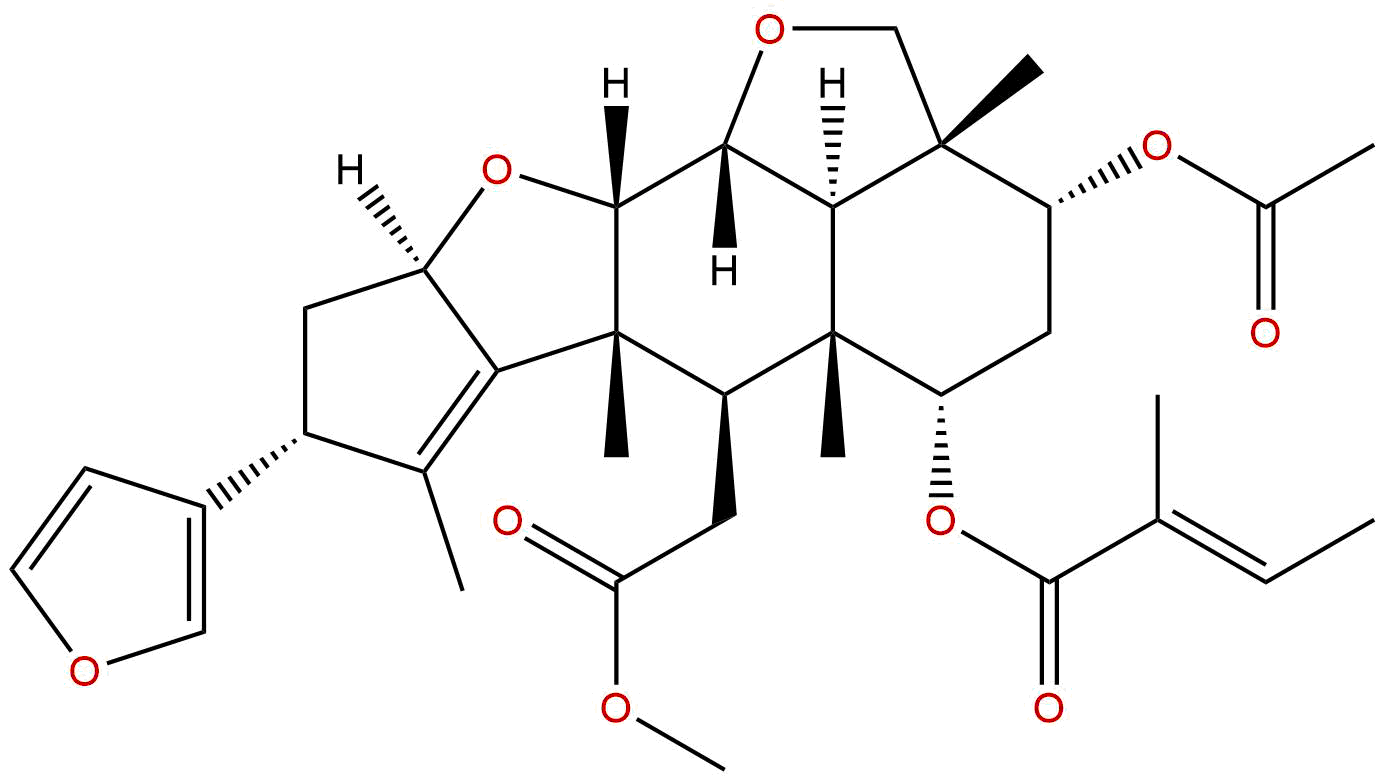


Product name: Salannin
Synonym name: Azadriactin
Catalogue No.: BP5472
Cas No.: 992-20-1
Formula: C34H44O9
Mol Weight: 596.717
Botanical Source:
Type of Compound: Terpenoids
Purity: 95%~99%
Analysis Method: HPLC-DAD or/and HPLC-ELSD
Identification Method: Mass, NMR
Packing: Brown vial or HDPE plastic bottle
Storage: Store in a well closed container, protected from air and light. Put into refrigerate or freeze for long term storage.
Whenever possible, you should prepare and use solutions on the same day. However, if you need to make up stock solutions in advance, we recommend that you store the solution as aliquots in tightly sealed vials at -20℃. Generally, these will be useable for up to two weeks.
The product could be supplied from milligrams to grams
Inquire for bulk scale.
For Reference Standard and R&D, Not for Human Use Directly.
Storage conditions:Short-term storage at 2~8℃, long-term storage at -20 ~ -80℃
130.6800
4.5000
No
No
No
No
Unknown
No
Unknown
Natural products, as an important source of drug discovery, play an irreplaceable role in the long history of human struggle against diseases. The secondary metabolites produced by plant chemical defense systems have always been a "gold mine" for new drug development due to their structural diversity and biological activity specificity. Among the numerous biologically active natural product families, limonoids have attracted much attention for their unique chemical skeletons and extensive biological activities. This type of compound mainly exists in plants of the Meliaceae and Rutaceae families, and its name comes from the earliest discovered limonin. Salannin, as an important member of the limonin family, originated from the famous medicinal plant, Azalea(Azadirachta indica A. Since its isolation and identification, Juss has attracted extensive research interest from natural product chemists and pharmacologists due to its unique chemical structure and various biological activities, especially its insecticidal, antibacterial, and anti ulcer effects.
Azalea(Azadirachta indica)Also known as Indian Melia or Indian Melia, it is an evergreen tree native to the Indian subcontinent. It has been used in the traditional Indian medical system Ayurveda for thousands of years and is known as the "pharmacy of the countryside". Various parts of the neem tree, including bark, leaves, seeds, and flowers, are used to treat various diseases such as infections, inflammation, ulcers, and skin diseases. Modern scientific research has confirmed that Azadirachtin contains over 300 bioactive compounds, among which the most famous is Azadirachtin, a potent insect repellent and growth regulator. However, as one of the main limonenes in the seed oil of Azalea, its importance cannot be ignored. It not only plays an important role in the insecticidal activity of Azalea, but also demonstrates potential application value in the field of human health due to its pharmacological activities such as anti ulcer, antibacterial, and spermicidal effects in mammalian cell models and in vivo experiments.
This article aims to provide a systematic review of the research progress of Zanthoxylum bungeanum, covering its chemical structure and physicochemical properties, plant sources and extraction processes, various pharmacological activities, potential mechanisms of action and molecular targets, drug efficacy evaluation and pharmacokinetic characteristics. It also looks forward to its future clinical application prospects, in order to provide comprehensive references for the in-depth research and development of this natural product.
Salannin is a highly oxidized limonoid compound with a complex and intricate chemical structure. The basic skeleton of limonoid compounds is usually tetranortriterpenoid, which is a C26 skeleton formed by the loss of four carbon atoms due to the breakage of the side chains of the triterpenoid skeleton. The structural core of Azadirachtin is based on this skeleton and has undergone a series of complex oxidation, rearrangement, and esterification modifications.
Specifically, the molecular formula of Azadirachtin is C34H44O9, with a molecular weight of 580.70 g/mol. The key features of its chemical structure include a furan ring attached to the C-17 position of the D ring, which is a characteristic structural unit of most limonoid compounds and is generally considered closely related to its various biological activities. In addition, its molecule contains multiple functional groups, including an acetoxy group, a tigloyloxy group, and a methyl ester group. The presence of these ester groups not only increases the hydrophobicity of the molecule, but also provides potential binding sites for its interaction with biological targets. There is also a cyclic ether structure in the structure of Azadirachtin, namely the oxygen bridge between C-7 and C-15, and the lactone ring between C-6 and C-28, which together constitute its unique molecular conformation.
From the perspective of physical and chemical properties, Azadirachtin is a white to slightly yellow crystalline powder. Its lipid water partition coefficient (LogP) is 4.5, indicating that it has strong lipophilicity, which is consistent with its characteristics as a plant metabolite that is easy to function in lipid soluble environments such as insect epidermis or cell membranes. Its topological polar surface area (TPSA) is 130.68 Å ², which is relatively high and suggests that it may have some polarity characteristics, but overall it is still mainly hydrophobic. Azadirachtin contains 9 hydrogen bond acceptors, but no hydrogen bond donors, which affects its interaction mode with solvents and biomolecules. In terms of solubility, Azadirachtin is easily soluble in organic solvents such as methanol, ethanol, chloroform, ethyl acetate, etc., while its solubility in water is extremely low. Its stability is affected by temperature, pH value, and light, and may undergo hydrolysis under acidic or alkaline conditions, especially the ester bonds in its molecules. Therefore, strict control of conditions is required in extraction, separation, storage, and subsequent biological activity testing to ensure its structural integrity.
The main plant source of Zanthoxylum bungeanum is the Meliaceae plant Zanthoxylum bungeanum(Azadirachta indica). There are significant differences in the distribution of its content in different tissues of Azalea, with the most abundant content found in seeds. The seed kernels of Melia azedarach contain about 40-50% oil, and Azadirachtin is one of the most abundant limonoid compounds in the seed oil of Melia azedarach, with a content ranging from 0.1% to 0.5% of the seed oil weight, second only to Azadirachtin. In addition, the leaves, bark, and flowers of Azadirachta also contain Azadirachta galanin, but the content is much lower than that of seeds. It is worth noting that the chemical structure of Azadirachtin is similar to Azadirachtin, but the latter has more hydroxyl groups and more complex ester substitutions at positions C-1, C-3, resulting in greater polarity and stronger biological activity.
The extraction of Azadirachtin from Azadirachta seeds usually follows the classic natural product separation process, including extraction, liquid-liquid distribution, and various chromatographic separation techniques. The typical extraction steps are as follows:
Raw material pretreatment and degreasing Remove the shell from the dried neem seeds and crush the kernels. Due to the high content of oil in seeds, degreasing treatment is necessary first. The common method is to use non-polar solvents such as petroleum ether or n-hexane for Soxhlet extraction or cold soaking extraction of seed powder to remove most triglycerides and some weakly polar lipid soluble impurities. The defatted cake is rich in limonoid compounds.
Polar solvent extraction Extract the defatted cake with a polar solvent to extract target compounds such as azadirachtin. Common solvents include methanol, ethanol, or their aqueous solutions. The extraction method can be room temperature cold soaking, ultrasound assisted extraction, or heating reflux extraction. Research has shown that using 90% methanol or 95% ethanol for cold extraction at room temperature can achieve higher extraction rates while avoiding damage to heat sensitive components caused by high temperatures.
Liquid-liquid distribution Concentrate the extract under reduced pressure to a paste, suspend it in water, and then perform liquid-liquid distribution extraction using organic solvents of different polarities. For example, first extract with petroleum ether or n-hexane to remove residual lipophilic impurities, and then extract the target component with ethyl acetate or n-butanol. Due to its equipolarity, Azadirachtin is mainly enriched in the ethyl acetate extraction phase.
chromatographic separation Ethyl acetate extract is a complex mixture that requires multiple chromatographic separations to obtain high-purity azadirachtin. Common methods include:
In recent years, in order to meet the needs of large-scale production and green chemistry, new extraction technologies such as supercritical fluid extraction and microwave-assisted extraction have also been explored for the extraction of Azadirachtin, aiming to improve extraction efficiency, shorten time, and reduce the use of organic solvents.
The pharmacological activity research of Azadirachtin mainly focuses on its insecticidal, antibacterial, anti ulcer, and spermicidal properties, demonstrating its potential as a multifunctional bioactive molecule.
Azadirachtin is one of the most important insecticidal active ingredients in Azadirachta, apart from azadirachtin. Its modes of action are diverse, mainly including:
* Food refusal effect To various agricultural pests, such as the striped armyworm(Spodoptera litura)Plutella xylostella(Plutella xylostella)And desert locusts(Schistocerca gregaria)Wait, Azadirachtin exhibited significant anti food activity. Its mechanism of action is believed to be by inhibiting the chemical receptors on insect mouthparts, interfering with their recognition of food, and leading to insect refusal to feed.
* Regulation of insect growth Azadirachtin can interfere with the endocrine system of insects, affecting their molting and metamorphosis processes. Research has shown that it can inhibit the synthesis of juvenile hormones or interfere with the activity of molting hormones, leading to delayed larval development, molting failure, formation of malformed pupae or adults, and ultimately resulting in death. This effect is effective against various Lepidoptera, Coleoptera, and Hemiptera pests.
* Oviposition avoidance effect Azadirachtin can also inhibit female adult insects from laying eggs on plants, thereby reducing the population density of the next generation of pests.
Azadirachtin has inhibitory effects on various pathogenic microorganisms. Research has confirmed that it is effective against Gram positive bacteria such as Staphylococcus aureus Staphylococcus aureus Bacillus subtilis Bacillus subtilis)And Gram negative bacteria (such as Escherichia coli) Escherichia coli Pseudomonas aeruginosa Pseudomonas aeruginosa)All showed certain antibacterial activity. Its minimum inhibitory concentration is usually in the range of tens to hundreds of micrograms per milliliter. In addition, there are also reports indicating that azadirachtin has an effect on certain fungi, such as Candida albicans(Candida albicans)It has an inhibitory effect on dermatophytes. Its antibacterial mechanism may involve disrupting the integrity of bacterial cell membranes, inhibiting cell wall synthesis, or interfering with nucleic acid metabolism.
Azadirachtin exhibited a protective effect in a gastric ulcer model. In rat gastric ulcer models induced by ethanol, aspirin, or stress, oral or intraperitoneal injection of azadirachtin can significantly reduce ulcer area and ulcer index. Its anti ulcer mechanism may be related to its antioxidant, anti-inflammatory, and promotion of gastric mucosal repair. Specifically, azadirachtin may exert gastroprotective effects by clearing free radicals, inhibiting lipid peroxidation, enhancing gastric mucosal barrier function, increasing gastric mucus secretion, and regulating prostaglandin synthesis.
Azadirachtin has been found to have significant in vitro spermicidal activity. At low concentrations, it can rapidly render human or rat sperm inactive and ultimately lead to sperm death. This effect is concentration and time-dependent. Its spermicidal mechanism may involve disrupting the integrity of sperm cell membranes, inhibiting sperm acrosome enzyme activity, or interfering with sperm energy metabolism. This discovery makes it a potential candidate compound for developing new male topical contraceptives.
In addition to the main activities mentioned above, preliminary studies also suggest that Azadirachtin may have anti-inflammatory, antioxidant, and anti-tumor activities. For example, in a lipopolysaccharide stimulated macrophage model, azadirachtin can inhibit the production of inflammatory factors such as tumor necrosis factor alpha and nitric oxide. However, research in these areas is still in its early stages and requires more in-depth experimental verification.
Despite the multifaceted pharmacological activities exhibited by Azadirachtin, its exact mechanism of action and molecular targets have not been fully elucidated. Based on existing research, the following possible mechanisms can be summarized:
The impact on the nervous and endocrine systems of insects The anti feeding and growth regulating effects of Azadirachtin are believed to be related to interference with the neuroendocrine system of insects. Research has shown that it may act on the corpora allata of insects, inhibiting the biosynthesis of juvenile hormones. Juvenile hormone is a key hormone that regulates insect molting, metamorphosis, and reproduction. By reducing the titer of juvenile hormone, Azadirachtin disrupts the normal developmental rhythm of insects, leading to molting failure and abnormal metamorphosis. In addition, it may directly or indirectly affect the synthesis or signal transduction of ecdysteroids. At the molecular target level, azadirachtin may bind to and inhibit certain key cytochrome P450 enzymes involved in the synthesis and metabolism of insect hormones.
Effect on cell membrane The antibacterial and spermicidal activity of Azadirachtin is likely due to its direct effect on the cell membrane. As a hydrophobic molecule, it can insert into the lipid bilayer of the cell membrane, altering the fluidity and permeability of the membrane. This membrane disruption can cause leakage of important ions (such as K ⁺, Ca ² ⁺) and metabolites within the cell, disrupting the ion homeostasis and transmembrane potential, ultimately leading to cell death. For sperm cells, this membrane damage can quickly lead to their loss of motility.
Antioxidant and anti-inflammatory mechanisms The anti ulcer activity of Azadirachtin is closely related to its antioxidant and anti-inflammatory abilities. It may alleviate oxidative stress damage to the gastric mucosa by directly clearing reactive oxygen species such as hydroxyl radicals and superoxide anions, or by activating the antioxidant enzyme system in the body such as superoxide dismutase and glutathione peroxidase. At the same time, it can inhibit the activation of nuclear factor - κ B, thereby downregulating the expression of cyclooxygenase-2, inducible nitric oxide synthase, and various pro-inflammatory cytokines, exerting anti-inflammatory effects and promoting ulcer healing.
Inhibition of enzyme activity The molecular structure of Azadirachtin contains multiple ester groups and furan rings, which enable it to interact with various enzymes. For example, its spermicidal activity may be partially due to inhibition of sperm acrosin (a serine protease). In addition, its toxicity to insects may also be related to the inhibition of acetylcholinesterase or gamma aminobutyric acid receptors, but the evidence is not yet sufficient.
Overall, the mechanism of action of Azadirachtin is multi-target and multi pathway. Its different pharmacological activities may be dominated by different molecular mechanisms. Future research requires the use of techniques such as chemical biology, proteomics, and gene knockout to more accurately identify the protein targets it directly binds to, providing a theoretical basis for structure based drug design and activity optimization.
To push natural products from the laboratory to clinical applications, a systematic evaluation of their drug-induced and pharmacokinetic (ADME) properties is necessary. The preliminary pharmacological parameters of Azadirachtin provide us with important clues.
According to Lipinski's "Five Rules", the molecular weight of Azadirachtin (580.7 Da) exceeds the threshold of 500 Da, the LogP value (4.5) is slightly higher than 5, and the number of hydrogen bond acceptors (9) exceeds 10. This indicates that it does not fully meet the standards of traditional oral medications and may pose a risk of low oral bioavailability. However, many successful natural medicines, such as cyclosporine A, have also broken through the "five rules", so this is not an absolute obstacle. Its TPSA value is 130.68 Å ², which is lower than 140 Å ², indicating that it still has a certain potential for cell membrane penetration. The key pharmacological evaluation results show that azadirachtin does not have blood-brain barrier penetration, which to some extent limits its application in central nervous system diseases, but also avoids potential neurotoxicity. More importantly, preliminary toxicity predictions indicate that it has no hepatotoxicity or cardiotoxicity (low risk of hERG inhibition), providing a positive signal for its safety. However, the Ames test results are unknown, and its genetic toxicity risk still needs to be experimentally verified.
Regarding pharmacokinetics, there is currently very limited research on the absorption, distribution, metabolism, and excretion of azadirachtin in mammals. Based on its physical and chemical properties, it can be inferred that:
* absorb Due to its high lipophilicity and high molecular weight, oral absorption may be poor, and it is susceptible to the influence of intestinal P-glycoprotein efflux. Improving its solubility and oral bioavailability through formulation technologies such as liposomes, nanoemulsions, and solid dispersions is an important research direction for the future.
* distribution Due to its high LogP value, azadirachtin may be widely distributed in lipid rich tissues such as liver, adipose tissue, and brain in vivo (although it is predicted that there will be no blood-brain barrier penetration, the actual distribution still needs to be verified). Its high plasma protein binding rate is also worth noting.
* Metabolism The ester bonds (acetoxy, angelica acyloxy, methyl ester) in the molecule of Azadirachtin are the main metabolic sites. Esterases in the liver and plasma may hydrolyze it, producing corresponding carboxylic acid and alcohol metabolites. In addition, furan rings may also undergo oxidative metabolism through cytochrome P450 enzymes. Whether these metabolites are active or toxic is the key to metabolic research.
* excretion Metabolites and small amounts of prototype drugs may be mainly excreted through bile and feces, with a lower proportion excreted through the kidneys.
In summary, the main challenge for the pharmacological properties of Azadirachtin lies in its oral bioavailability. Future pharmacokinetic studies require the use of sensitive LC-MS/MS methods to determine blood drug concentration time curves, tissue distribution, metabolite profiles, and excretion pathways in animal models, providing data support for subsequent formulation design and clinical dosing regimens.
The unique chemical structure and multifaceted pharmacological activities of Azadirachtin have opened up prospects for its application in multiple fields, but it also faces many challenges.
1. Agricultural Applications: Development of Green Pesticides
The most direct application prospect of Azadirachtin is in the agricultural field, as an active ingredient in a new, safe, and environmentally friendly biopesticide. Compared with traditional chemically synthesized pesticides, it has the following advantages: lower toxicity to non target organisms such as mammals, birds, and bees; Easy to degrade in the environment, with low residual risk; The mechanism of action is diverse and it is not easy to develop drug resistance. However, its application also faces challenges: it is unstable to light and heat, and has a short shelf life in the field; Poor water solubility makes it difficult to prepare stable water-based formulations. Future research directions include: developing efficient microcapsules, nano formulations, or sustained-release formulations to improve their stability and bioavailability; Cooperate with other biopesticides or low toxicity chemical pesticides to achieve synergistic effects; Optimize the extraction process and reduce production costs.
2. Pharmaceutical Applications: Exploration of New Drug Candidate Molecules
* Digestive system drugs Its anti ulcer activity is worth further development. If the oral bioavailability problem can be solved through structural modification or new dosage forms, azadirachtin or its derivatives are expected to become a new type of drug for treating gastric ulcers and gastritis.
* Reproductive health drugs Its rapid and powerful spermicidal activity in vitro makes it an attractive candidate for the development of male external contraceptives (such as contraceptive gel and suppository). Its natural origin and relatively low cytotoxicity (to vaginal mucosa) are its potential advantages. However, strict in vivo safety and efficacy evaluations are required, including assessments of vaginal microbiota, local irritation, and long-term safety of use.
* Antimicrobial agents Given the increasing severity of antibiotic resistance, Azadirachtin, as an antibacterial lead compound with a new mechanism of action, deserves further research. By studying the structure-activity relationship, optimizing its antibacterial activity and selectivity, and exploring its synergistic effect with existing antibiotics, it is expected to provide new options for anti infective treatment.
3. Future research directions
* Research on Structure Modification and Structure Activity Relationship Using azadirachtin as the parent nucleus, the key functional groups (such as furan ring, ester group, hydroxyl group) of azadirachtin were modified through chemical synthesis or biotransformation methods. The relationship between structural changes and biological activity (insecticidal, antibacterial, anti ulcer, spermicidal) was systematically studied to search for derivatives with higher activity, lower toxicity, and better pharmacokinetic properties.
* In depth mechanism research Using modern molecular biology techniques such as surface plasmon resonance, drug affinity reaction target stability technology, and CRISPR-Cas9 gene editing, accurately identify the direct protein targets of Azadirachtin and elucidate its mechanism of action at the molecular level, providing precise guidance for drug design.
* Toxicological evaluation of the system Conduct comprehensive in vitro and in vivo toxicology studies, including acute toxicity, subchronic toxicity, reproductive and developmental toxicity, genetic toxicity, and immunotoxicity, to comprehensively evaluate their safety and lay the foundation for preclinical research.
* Pharmacokinetic optimization Establish a sensitive biological sample analysis method and systematically study the ADME characteristics of Azadirachtin under different administration routes. Explore strategies such as prodrug design and nano drug delivery systems to overcome the bottleneck of low oral bioavailability.
Azadirachtin, a limonoid derived from the ancient medicinal plant Azadirachtin, vividly illustrates the enormous potential of natural products in drug discovery with its complex chemical structure and remarkable biological activity. From the green prevention and control of agricultural pests to human digestive system diseases, reproductive health, and even anti infection treatment, Azadirachtin has demonstrated unique application value. Despite the challenges in developing drug properties, particularly in terms of oral bioavailability, these obstacles are not insurmountable through the collaborative efforts of modern medicinal chemistry, pharmacy, and pharmacology. Future research should focus on elucidating its mechanism of action, optimizing its pharmacokinetic properties, and obtaining better derivatives through structural modifications. We have reason to believe that with the continuous deepening of research, Azadirachtin and its analogues will eventually move from the laboratory to practical applications, contributing to ensuring food security and human health. The study of Azadirachtin is not only an exploration of a natural product molecule, but also a beneficial practice for the integration of traditional plant wisdom and modern science.
Batch can search by a CAS number,one per line
