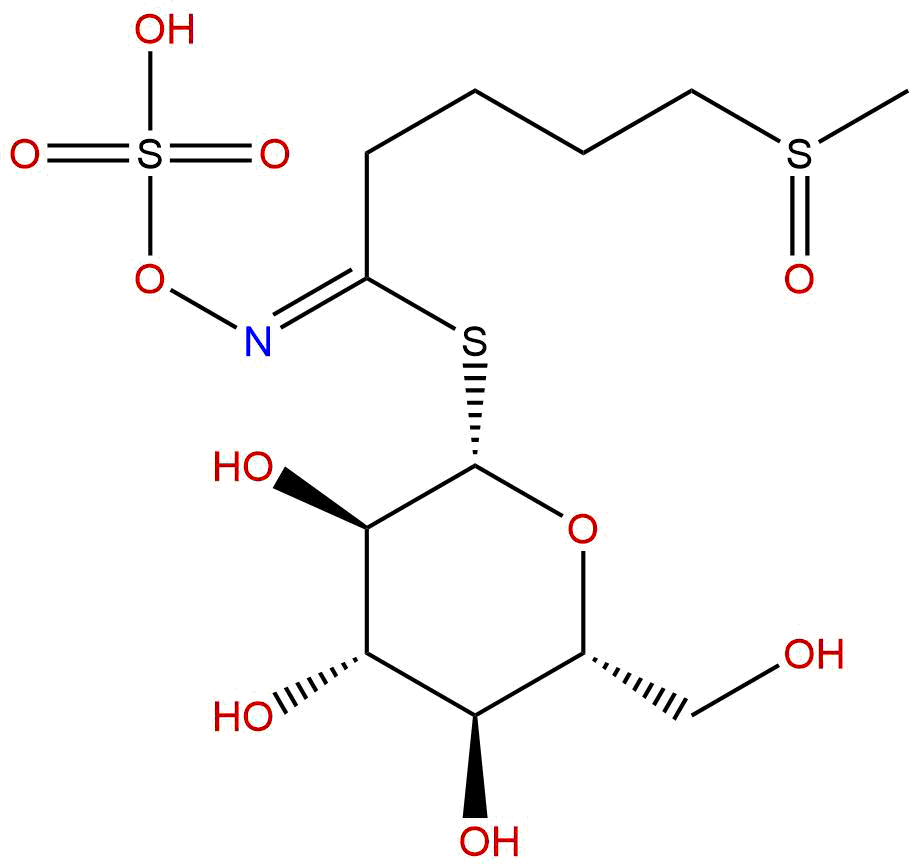


Product name: Glucoraphanin
Synonym name: 4-(Methylsulfinyl)butyl glucosinolate
Catalogue No.: BP0676
Cas No.: 21414-41-5
Formula: C12H23NO10S3
Mol Weight: 437.51
Botanical Source:
Physical Description:
Type of Compound: Aliphatics
Purity: 95%~99%
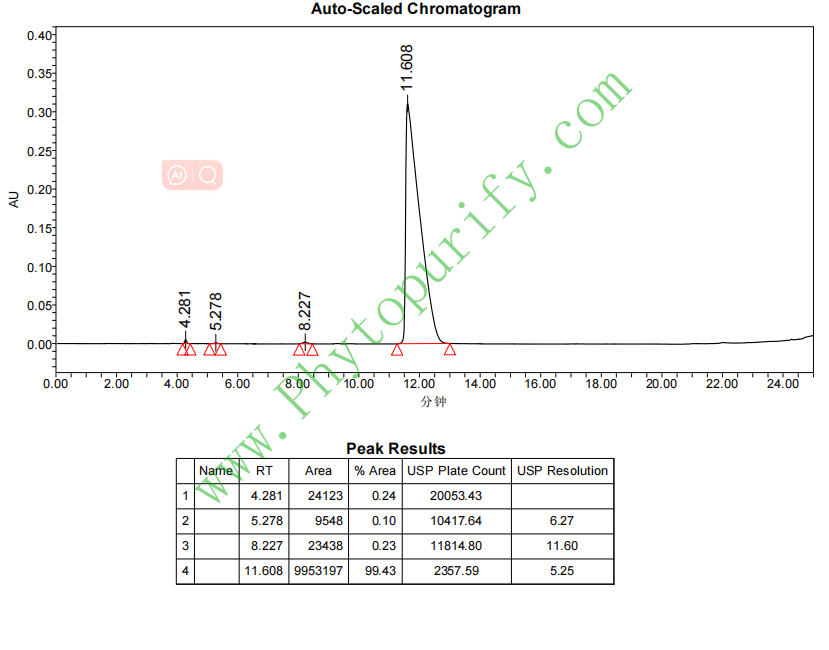
Analysis Method: HPLC-DAD or/and HPLC-ELSD
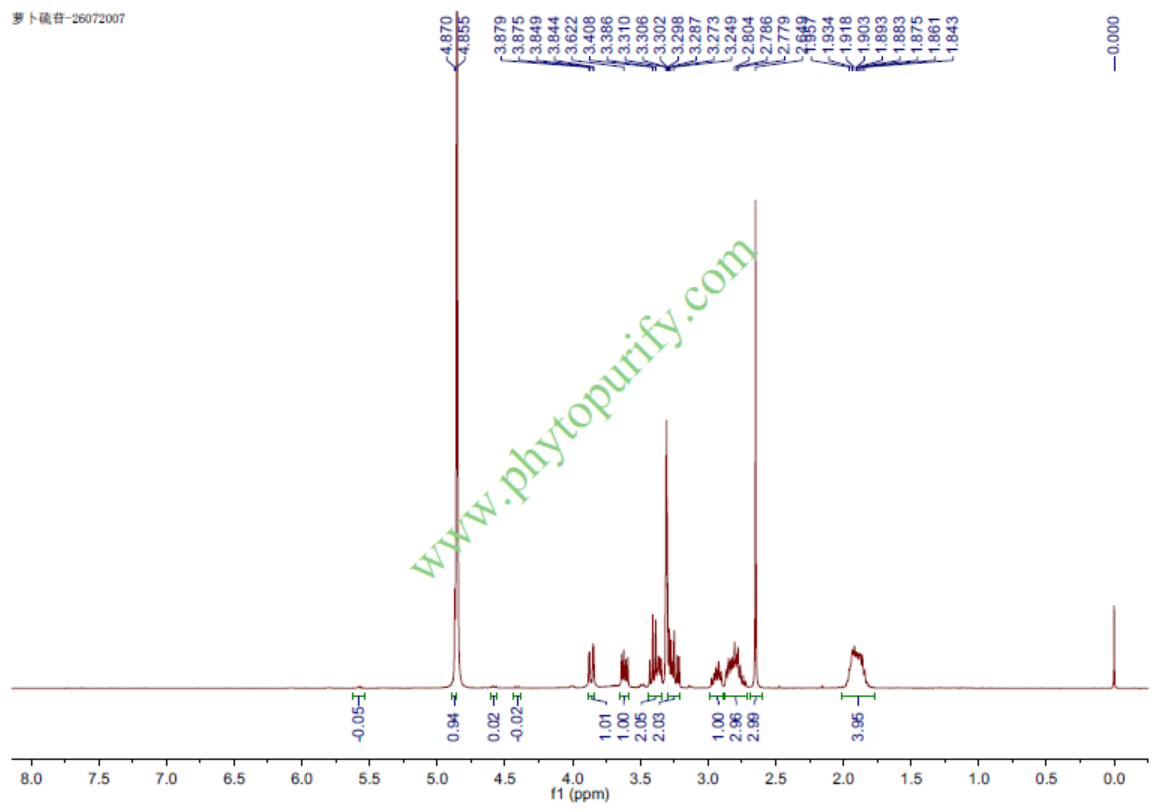
Identification Method: Mass, NMR
Packing: Brown vial or HDPE plastic bottle
Storage: Store in a well closed container, protected from air and light. Put into refrigerate or freeze for long term storage.
The product could be supplied from milligrams to grams
Inquire for bulk scale.
For Reference Standard and R&D, Not for Human Use Directly.
Description:
Glucoraphanin, the bioprecursor of the widely extolled chemopreventive agent sulforaphane found in broccoli, it has antioxidant activity, it induces phase-I xenobiotic metabolizing enzymes and increases free radical generation in rat liver. Glucoraphanin can ameliorates obesity and insulin resistance through adipose tissue browning and reduction of metabolic endotoxemia in mice. Glucoraphanin and Glucoerucin effectively act as antagonists for the aryl hydrocarbon receptor, and this may contribute to their established chemoprevention potency.
References:
Asian Pac J Cancer Prev. 2015;16(14):5801-5.
Naturally-Occurring Glucosinolates, Glucoraphanin and Glucoerucin, are Antagonists to Aryl Hydrocarbon Receptor as Their Chemopreventive Potency.
As a cytosolic transcription factor, the aryl hydrocarbon (Ah) receptor is involved in several patho- physiological events leading to immunosuppression and cancer; hence antagonists of the Ah receptor may possess chemoprevention properties.
METHODS AND RESULTS:
It is known to modulate carcinogen-metabolising enzymes, for instance the CYP1 family of cytochromes P450 and quinone reductase, both important in the biotransformation of many chemical carcinogens via regulating phase I and phase II enzyme systems. Utilising chemically-activated luciferase expression (CALUX) assay it was revealed that intact glucosinolates, Glucoraphanin and glucoerucin, isolated from Brassica oleracea L. var. acephala sabellica and Eruca sativa ripe seeds, respectively, are such antagonists. Both glucosinolates were poor ligands for the Ah receptor; however, they effectively antagonised activation of the receptor by the avid ligand benzo[a]pyrene. Indeed, intact glucosinolate Glucoraphanin was a more potent antagonist to the receptor than glucoerucin.
CONCLUSIONS:
It can be concluded that both glucosinolates effectively act as antagonists for the Ah receptor, and this may contribute to their established chemoprevention potency.
Diabetes. 2017 May;66(5):1222-1236.
Glucoraphanin Ameliorates Obesity and Insulin Resistance Through Adipose Tissue Browning and Reduction of Metabolic Endotoxemia in Mice.
Low-grade sustained inflammation links obesity to insulin resistance and nonalcoholic fatty liver disease (NAFLD). However, therapeutic approaches to improve systemic energy balance and chronic inflammation in obesity are limited. Pharmacological activation of nuclear factor (erythroid-derived 2)-like 2 (Nrf2) alleviates obesity and insulin resistance in mice; however, Nrf2 inducers are not clinically available owing to safety concerns.
METHODS AND RESULTS:
Thus, we examined whether dietary Glucoraphanin, a stable precursor of the Nrf2 inducer sulforaphane, ameliorates systemic energy balance, chronic inflammation, insulin resistance, and NAFLD in high-fat diet (HFD)-fed mice. Glucoraphanin supplementation attenuated weight gain, decreased hepatic steatosis, and improved glucose tolerance and insulin sensitivity in HFD-fed wild-type mice but not in HFD-fed Nrf2 knockout mice. Compared with vehicle-treated controls, Glucoraphanin-treated HFD-fed mice had lower plasma lipopolysaccharide levels and decreased relative abundance of the gram-negative bacteria family Desulfovibrionaceae in their gut microbiomes. In HFD-fed mice, Glucoraphanin increased energy expenditure and the protein expression of uncoupling protein 1 (Ucp1) in inguinal and epididymal adipose depots. Additionally, in this group, Glucoraphanin attenuated hepatic lipogenic gene expression, lipid peroxidation, classically activated M1-like macrophage accumulation, and inflammatory signaling pathways.
CONCLUSIONS:
By promoting fat browning, limiting metabolic endotoxemia-related chronic inflammation, and modulating redox stress, Glucoraphanin may mitigate obesity, insulin resistance, and NAFLD.
HPLC of Glucoraphanin
HNMR of Glucoraphanin
Storage conditions:Short-term storage at 2~8℃, long-term storage at -20 ~ -80℃
189.1700
-1.1776
-1.4926
35.5716
.3651
.1017
Low
44.8133
4.7180
Yes
No
No
No
No
No
0.9
Yes
No
No
No
Glucoraphanin (CAS number: 21414-41-5) is a naturally occurring glucosinolate compound in cruciferous vegetables, particularly abundant in broccoli, cabbage, mustard greens, and other vegetables. As an effective inducer of the Nrf2 (nuclear factor erythroid 2-related factor 2) signaling pathway, sulforaphane, a metabolite of glucosinolate, has been widely studied due to its significant antioxidant, anti-inflammatory, and anticancer activities. In recent years, with the in-depth understanding of the pathogenesis of chronic diseases, the potential pharmacological effects of glucosinolate on atherosclerosis, tumors, neurodegenerative diseases and other pathological conditions have gradually been revealed, and it has become the focus of natural product pharmacology research.
This paper reviewed the chemical structure, physical and chemical properties, plant sources and extraction methods of radish glucosinolate, systematically summarized its pharmacological activity and mechanism, focused on its molecular targets and signal pathway regulation in atherosclerosis and other diseases, evaluated its pharmaceutical properties and pharmacokinetic characteristics, and looked forward to its clinical application prospects, in order to provide theoretical basis and research direction for the drug development of this natural product.
The molecular formula of radish glucosinolate is C ₁₂ H ₂ ∝ NO ₉ S ₂, with a molecular weight of 437.5140. Its structural core is glucosinolate, which contains a glucose group and a thioisothiocyanate group connected by a sulfur atom. The chemical structure contains multiple hydroxyl groups and sulfur elements, giving it strong hydrophilicity. In terms of physical and chemical properties, the LogP value of radish glucosinolate is -1.1776, indicating its strong hydrophilicity, water solubility of 35.5716 mg/mL, and polar surface area (TPSA) of up to 189.1700 Å ², suggesting that its molecular polarity is high and difficult to diffuse freely through lipid membranes. Its blood-brain barrier permeability is low, and the hERG channel inhibition test result is negative, indicating a low risk of cardiac toxicity. The Ames test score is 0.9, indicating a low risk of genotoxicity and a good safety foundation.
Radish glucosinolates themselves have limited biological activity and are mainly hydrolyzed by gut microbiota or β - glucosidase in plants to produce sulforaphane, an active metabolite with significant biological effects.
Radish glucosinolates are mainly found in cruciferous plants, especially in broccoli (Brassica oleracea var. italica), cabbage (Brassica oleracea var. gemmifera), mustard (Brassica oleracea var. alboglabra), and radish (Raphanus sativus), which have higher content. Its content is greatly affected by the variety, planting environment, harvesting time, and processing method. The content of radish glucosinolates in Xilan flower bud seedlings is particularly rich, and therefore it is widely used as an extraction material.
The extraction methods mainly include water extraction, alcohol extraction, ultrasound assisted extraction, and enzymatic hydrolysis. The traditional water extraction method is widely used due to the good water solubility of radish glucosinolates, and the extraction conditions are usually controlled in a neutral or weakly acidic environment to prevent the activation of glucosinolates and the conversion of active ingredients. Ultrasound assisted extraction can improve extraction efficiency and shorten time. In recent years, supercritical CO ₂ extraction technology has also been attempted to be applied to the extraction of glucosinolates from radish, with the advantages of strong selectivity and no solvent residue. After extraction, quantitative analysis is usually performed by high-performance liquid chromatography (HPLC) to ensure the accuracy of the content of glucosinolates in the extract.
The pharmacological activity of radish glucosinolates mainly depends on their active metabolite thioglucose isothiocyanate. Numerous in vitro and in vivo studies have shown that glucosinolates and their metabolites have multiple biological effects:
Antioxidant effect
By activating the Nrf2 signaling pathway, the expression of downstream antioxidant enzymes such as glutathione peroxidase (GPx), superoxide dismutase (SOD), and glutathione S-transferase (GST) is promoted, enhancing cellular antioxidant defense capabilities and reducing oxidative stress damage.
anti-inflammatory effect
Inhibiting the NF - κ B signaling pathway, reducing the expression of pro-inflammatory cytokines (such as TNF - α, IL-6, IL-1 β), alleviating chronic inflammatory responses, and helping to alleviate inflammation related diseases.
Anti-cancer effect
By regulating the cell cycle, inducing apoptosis, and inhibiting tumor cell invasion and migration, sulforaphane and its metabolites have shown the potential to inhibit tumor growth in various cancer models.
Cardiovascular protective effect
Studies have shown that sulforaphane can improve blood lipid metabolism, inhibit the formation of atherosclerotic plaque, reduce vascular endothelial dysfunction, and has a potential role in the prevention and treatment of atherosclerosis.
Neuroprotective effect
Through antioxidant and anti-inflammatory mechanisms, sulforaphane exhibits neuroprotective effects in neurodegenerative disease models such as Alzheimer's disease and Parkinson's disease.
The pharmacological effects of radish glucosinolates are mainly mediated by their metabolic product thioglucosinolate isothiocyanate, with the key mechanism focused on the activation of the Nrf2 signaling pathway. Nrf2, as an intracellular transcription factor, regulates the expression of antioxidant genes and maintains cellular redox homeostasis. Thioglucose isothiocyanate modifies cysteine residues on Keap1 protein to prevent its inhibition of Nrf2, promote Nrf2 nuclear translocation, and activate antioxidant enzyme gene expression.
In the pathological mechanism of atherosclerosis, sulforaphane affects a variety of key targets:
LOX-1(Lectin-like oxidized low-density lipoprotein receptor-1)
LOX-1 is a receptor for oxidized low-density lipoprotein (ox LDL), mediating endothelial cell damage and inflammatory response. Radish glucosinolates alleviate ox LDL induced vascular damage by downregulating LOX-1 expression.
AMPK(5' AMP-activated protein kinase)
AMPK, as a regulator of energy metabolism, promotes lipid metabolism and inflammation inhibition. Turnip glucoside activates AMPK signal, improves abnormal lipid metabolism, and inhibits the progression of atherosclerosis.
EHMT2(Euchromatic histone-lysine N-methyltransferase 2)
EHMT2 participates in histone methylation and regulates gene expression. Radish glucosinolates may regulate inflammation and apoptosis related genes by affecting EHMT2 mediated epigenetic regulation.
MCL1 and BCL2
These two anti apoptotic proteins play a crucial role in cell survival. Radish glucosinolates regulate its expression, promote apoptosis of abnormal cells under pathological conditions, and inhibit disease progression.
RECQ1
As a DNA helicase, RECQ1 is involved in maintaining genomic stability. Radish glucosinolates may enhance the cell's ability to repair oxidative damage by regulating RECQ1.
ABCA1(ATP-binding cassette transporter A1)
ABCA1 mediates cholesterol efflux and is an important target to prevent atherosclerosis. Radish glucosinolates promote ABCA1 expression, improve cholesterol metabolism, and inhibit plaque formation.
In addition, sulforaphane exerts synergistic anti-inflammatory, antioxidant, and cell protective effects by regulating multiple signaling pathways such as NF - κ B, MAPK, PI3K/Akt, etc.
The physicochemical properties of sulforaphane showed good water solubility (35.5716 mg/mL), but the LogP was -1.1776, indicating its low lipid solubility, which limits its cell membrane penetration ability, especially its weak blood-brain barrier permeability, limiting its direct application in central nervous system diseases. Its large polar surface area (189.1700 Å ²) further supports this point.
In terms of safety, sulforaphane does not inhibit hERG channels, reducing the risk of cardiac toxicity. The Ames test result is 0.9, indicating a low genotoxicity risk and a good safety foundation.
Pharmacokinetic studies have shown that after oral administration, sulforaphane is hydrolyzed by microorganisms and endogenous enzymes in the intestine to form thioglucose isothiocyanate, which is rapidly absorbed and enters the circulatory system. Thioglucose isothiocyanates have good cell membrane permeability and can exert biological effects. Radish glucosinolates themselves have low bioavailability in the body and are easily affected by the gastrointestinal environment, which limits their direct pharmacological effects.
Therefore, the development of drugs targeting glucosinolates in radish mainly focuses on the stable formulation of its metabolic product, glucosinolate isothiocyanate, or on improving its bioavailability and targeting through strategies such as nanocarriers and prodrug design.
Radish glucosinolates and their metabolites, thioglucose isothiocyanates, have shown broad application prospects in the prevention and treatment of various chronic diseases due to their multi-target and multi mechanism pharmacological activities.
Atherosclerosis and cardiovascular disease
By regulating lipid metabolism, inhibiting inflammatory reaction and oxidative stress, radish glucosinolate is expected to become an auxiliary anti atherosclerosis drug. Related clinical studies are currently underway to evaluate its impact on blood lipid levels, vascular function, and inflammatory markers.
Cancer Prevention and Treatment
Thioglucose isothiocyanates have shown potential in inhibiting tumor growth and metastasis in various tumor models. In the future, by optimizing formulations and dosages, sulforaphane related products are expected to enter the field of tumor adjuvant therapy.
Neurodegenerative diseases
Although sulforaphane itself has poor blood-brain barrier permeability, its antioxidant and anti-inflammatory properties provide a theoretical basis for neuroprotection. Improving brain delivery through structural modifications or carrier systems will be a future research focus.
Metabolic syndrome and diabetes
By activating metabolic regulatory pathways such as AMPK, sulforaphane has the potential to improve insulin resistance and lipid metabolism abnormalities, assisting in the management of metabolic diseases.
Future research needs to focus on addressing the bioavailability and targeted delivery of glucosinolates from radish, and explore their safety and efficacy in clinical settings by combining modern pharmaceutical formulation technologies. Meanwhile, in-depth analysis of its molecular mechanism and multi-target synergistic effects will help promote its clinical translation.
Radish glucosinolate, as an important natural glucosinolate, has become a focus of research in natural product pharmacology due to the multiple biological effects of its metabolic product, glucosinolate isothiocyanate. Its potential in antioxidant, anti-inflammatory, anti-cancer and cardiovascular protection has been confirmed by a large number of in vivo and in vitro studies, especially in chronic diseases such as atherosclerosis, showing significant therapeutic prospects.
Although its physical and chemical properties limit its direct application, with the development of drug delivery technology and prodrug design, the clinical potential of sulforaphane is constantly being explored. In the future, it is necessary to strengthen its pharmacokinetic and safety research, optimize formulation design, promote its transformation from laboratory research to clinical application, and provide new ideas and strategies for the development of natural product drugs.
