| Catalog No | Package | Original Price | Price | Inventory | Quantity | Operating |
|---|---|---|---|---|---|---|
| BP1353-20mg | 20mg | $30.00 | Sign in |
|


Product name: Synephrine hydrochloride
Synonym name: Oxedrine hydrochloride
Catalogue No.: BP1353
Cas No.: 5985-28-4
Formula: C9H14ClNO2
Mol Weight: 203.666
Botanical Source:
Physical Description: Powder
Type of Compound: Alkaloids
Purity: 95%~99%
Analysis Method: HPLC-DAD or/and HPLC-ELSD
Identification Method: Mass, NMR
Packing: Brown vial or HDPE plastic bottle
The product could be supplied from milligrams to grams. Inquire for bulk scale.
We provide solution to improve the water-solubility of compounds, thereby facilitating the variety of activity tests and clinic uses.
For Reference Standard and R&D, Not for Human Use Directly.
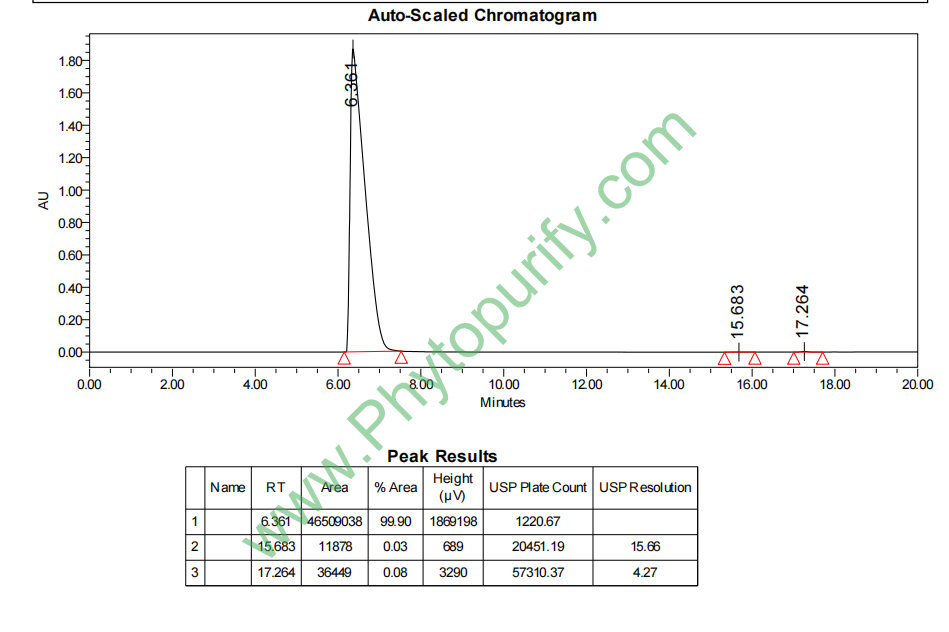
HPLC of Synephrine hydrochloride
Storage conditions:Short-term storage at 2~8℃, long-term storage at -20 ~ -80℃
52.4900
.5100
-1.1949
38.2897
.8363
2.6836
Low
18.3422
2.5564
No
No
No
No
No
No
0.6
No
Yes
No
No
Natural products are an important source of drug discovery and development, and their diverse chemical structures and unique biological activities provide a rich material basis for modern pharmacological research. Among numerous natural compounds with biological activity, Synephrine is derived from the Rutaceae plant, lime(Citrus aurantium)The natural alkaloids have attracted much attention due to their significant sympathetic like effects. Synephrine hydrochloride (CAS number: 5985-28-4) is its hydrochloride form, which has better water solubility and stability compared to free bases, making it convenient for the development and application of pharmaceutical formulations.
Synephrine is structurally similar to adrenaline and noradrenaline, and can act as an agonist of alpha adrenergic receptors and beta adrenergic receptors, exerting sympathetic like effects. This characteristic demonstrates its potential in promoting fat breakdown, increasing energy expenditure, and suppressing appetite, making it widely studied for weight management and the treatment of obesity. However, the use of sinomenine is also accompanied by concerns about its cardiovascular safety, especially when combined with stimulants such as caffeine. In recent years, with the deepening understanding of the pathogenesis of obesity and the increasing demand for the treatment of metabolic diseases, the pharmacological activity, mechanism of action, and pharmacological properties of sinomenine and its derivatives have once again become a hot topic. This article aims to systematically review the chemical properties, plant sources, pharmacological activities, molecular mechanisms, pharmacological evaluation, and clinical application prospects of sinomenine hydrochloride, in order to provide reference for the in-depth research and rational development of this compound.
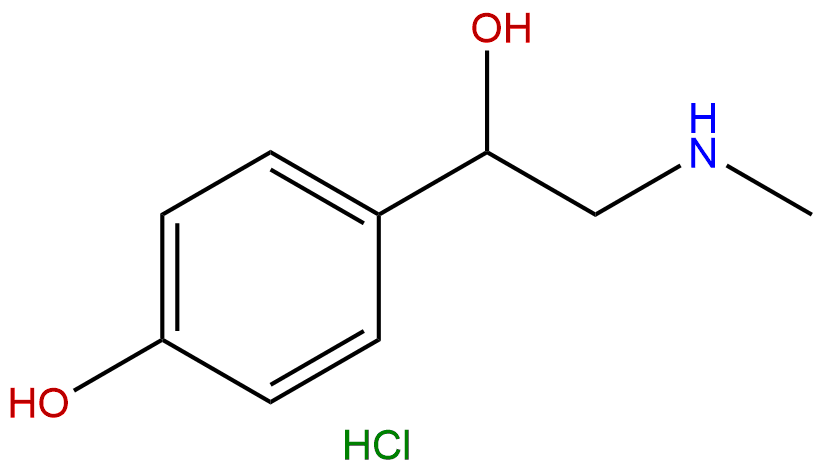
The chemical name of sinomenine hydrochloride is 4- [1-hydroxy-2- (methylamino) ethyl] phenol hydrochloride, with a molecular formula of C ₉ H ₁ ∝ NO ₂ · HCl and a molecular weight of 167.2080 (free base 167.21). The core of its structure is a phenylethylamine skeleton, with a hydroxyl group attached to the para position of the benzene ring, a hydroxyl group attached to the β - carbon of the side chain, and a methyl substitution on the amino group. This structural feature makes it highly similar to adrenaline and norepinephrine, except for the number and position of hydroxyl groups on the benzene ring (adrenaline is 3,4-dihydroxy, while sinomenine is 4-monohydroxyl). This structural similarity is the basis for its ability to bind to adrenergic receptors and produce excitatory effects.
In terms of physicochemical properties, the LogP value of sinomenine hydrochloride is 0.51, indicating its hydrophilicity, which is related to the presence of polar groups such as phenolic hydroxyl and amino groups in the molecule. Its topological polar surface area (TPSA) is 52.49 Å ², which falls within the general range of small molecule drugs. Water solubility is a key parameter for evaluating drug absorption and bioavailability. The water solubility value of sinomenine hydrochloride is as high as 38.2897 mg/mL, indicating good water solubility, which is beneficial for its dissolution and absorption in the gastrointestinal tract. In addition, the blood-brain barrier (BBB) penetration ability of sinomenine hydrochloride is relatively low, which means that its peripheral effects are relatively dominant, and the risk of adverse reactions in the central nervous system may be low. The hERG inhibition test result was negative, indicating a lower risk of inducing cardiac QT interval prolongation at therapeutic concentrations. The Ames test result is 0.6, indicating a low risk of genetic toxicity, but further confirmation is needed in combination with in vivo experiments. Overall, sinomenine hydrochloride has good drug like characteristics, laying the foundation for its development as an oral or topical drug.
Simulin mainly comes from citrus plants in the Rutaceae family, among which sour oranges are used(Citrus aurantium L., Also known as bitter orange, the immature fruit has the richest content. In addition, in the field of Fructus Aurantii(Poncirus trifoliata)Sweet Orange(Citrus sinensis)Lemon(Citrus limon)Simulin has also been detected in citrus plants. It is worth noting that sinomenine typically exists in various forms within plant bodies, including free base and salt forms bound to organic acids. In traditional Chinese medicine, dried young fruits (Fructus Aurantii) and immature fruits (Fructus Aurantii) of sour oranges are often used to treat digestive disorders, indigestion, and other diseases. Modern research has confirmed that their promoting gastrointestinal motility and metabolic regulation effects are closely related to alkaloids such as sinomenine.
The extraction method of Simulin is mainly based on its polarity and alkaline characteristics. Traditional methods include solvent extraction, which typically uses ethanol or methanol as extraction solvents to extract from plant powders through soaking, reflux, or percolation. Due to its alkalinity, sinomenine is more easily extracted under acidic conditions (such as hydrochloric acid or acetic acid aqueous solution), making acid water extraction method more common. To improve extraction efficiency and purity, modern extraction techniques such as ultrasound assisted extraction, microwave-assisted extraction, and supercritical fluid extraction have been applied in the preparation of sinomenine. For example, ultrasound assisted extraction can destroy cell walls through cavitation effect, accelerate the dissolution of target components, and achieve higher extraction rates in a shorter period of time.
The crude extract after extraction usually needs to undergo purification steps to obtain high-purity sinomenine. The commonly used purification methods include cation exchange resin chromatography, which utilizes the positively charged property of sinomenine under acidic conditions to bind it to the resin, and then elutes it with alkaline eluent. In addition, preparative high-performance liquid chromatography (Prep HPLC) can also be used for the separation of high-purity sinomenine monomers. For the preparation of sinomenine hydrochloride, the purified sinomenine free base is usually reacted with hydrochloric acid to obtain stable hydrochloride crystals after crystallization and drying. In terms of quality control, high-performance liquid chromatography (HPLC) and liquid chromatography-mass spectrometry (LC-MS) are commonly used qualitative and quantitative analysis methods.
The pharmacological activity of sinomenine hydrochloride mainly revolves around its sympathomimetic effect, especially in the fields of energy metabolism regulation and obesity intervention, where research is most in-depth.
1. Promote fat breakdown and energy expenditure
The most notable pharmacological activity of sinomenine is its ability to promote fat breakdown. In vitro studies have shown that sinomenine can directly act on adipocytes by activating β - adrenergic receptors (especially β 3-AR), stimulating adenylate cyclase, increasing intracellular cyclic adenosine monophosphate (cAMP) levels, and thereby activating protein kinase A (PKA). PKA phosphorylates hormone sensitive lipase (HSL), promoting the hydrolysis of triglycerides into free fatty acids and glycerol. Animal experiments have shown that oral or intraperitoneal injection of sinomenine can significantly reduce body weight, body fat percentage, and serum triglyceride levels in obese mice induced by a high-fat diet. In addition, sinomenine can increase the thermogenic activity of brown adipose tissue (BAT) and upregulate the expression of uncoupling protein 1 (UCP1), thereby increasing energy expenditure.
2. Appetite suppression and weight control
The regulatory effect of sinomenine on appetite may be related to its dual effects on the central and peripheral nervous systems. Although sinomenine has a lower ability to penetrate the blood-brain barrier, some studies suggest that it may indirectly affect the release of appetite regulating neuropeptides by acting on adrenergic receptors in the hypothalamus. In addition, sinomenine can delay gastric emptying and increase satiety. Multiple clinical trials have evaluated the weight loss effect of sinomenine (usually in combination with caffeine or other plant extracts) on overweight or obese individuals. The results showed that compared with the placebo group, the Simulin group had a more significant weight loss within 4-12 weeks, and waist circumference and body fat percentage also improved. However, the sample size of these studies is generally small, and the formula often contains caffeine, so the weight loss effect of using sinomenine alone still needs to be validated through larger randomized controlled trials.
3. Cardiovascular effects
As an adrenergic receptor agonist, sinomenine has a clear effect on the cardiovascular system. It can constrict blood vessels, raise blood pressure, and may increase heart rate. This effect is used clinically to treat hypotension and shock. However, in weight loss applications, its cardiovascular safety has become a focus of attention. Research has shown that the use of sinomenine alone has minimal effects on blood pressure and heart rate at recommended doses (typically 10-50 mg/day), but high doses or in combination with stimulants such as caffeine and ephedrine may lead to significant increases in blood pressure, palpitations, arrhythmia, and other adverse reactions. Therefore, the use of sinomenine in weight loss products is strictly regulated, and many countries have restricted its content in dietary supplements or banned its combination with caffeine.
4. Other pharmacological activities
In addition to metabolic and cardiovascular effects, sinomenine also exhibits other pharmacological activities. For example, it can promote gastrointestinal peristalsis, enhance gastric emptying and intestinal propulsion function, which is consistent with its use in traditional Chinese medicine for treating digestive disorders. In addition, sinomenine also has anti-inflammatory and antioxidant activities, which can inhibit the release of macrophage inflammatory factors (such as TNF - α, IL-6) induced by lipopolysaccharide (LPS) and clear free radicals. These activities may provide a basis for their potential application in metabolic syndrome related inflammatory responses.
The pharmacological effects of sinomenine hydrochloride are mainly achieved through its interaction with adrenergic receptors, involving multiple downstream signaling pathways and metabolic regulatory targets. The mechanism of action for the core indication of obesity can be summarized as follows:
1. Adrenergic receptor agonistic effect
Synephrine is a non selective agonist of alpha - and beta adrenergic receptors. In adipose tissue, the β 3-adrenergic receptor (ADRB3) is a key target mediating lipolysis. After binding to ADRB3, sinomenine activates Gs protein, which in turn activates adenylate cyclase, leading to an increase in cAMP levels. CAMP, as a second messenger, activates PKA, phosphorylates HSL and Perilipin, promoting triglyceride hydrolysis. In addition, sinomenine also has a certain excitatory effect on β 1- and β 2-AR, which is related to its effects on the smooth muscles of the heart and bronchi. On vascular smooth muscle, sinomenine induces vasoconstriction and increases blood pressure by stimulating α 1-AR.
2. Energy metabolism related targets
Simflin exerts weight loss effects by regulating multiple key molecules related to energy metabolism. Among them, AMP activated protein kinase (AMPK, encoded by the PRKAA1 gene) is the core sensor of cellular energy homeostasis. Research has shown that sinomenine can activate AMPK, inhibit the activity of acetyl CoA carboxylase (ACC), thereby reducing fatty acid synthesis and promoting fatty acid oxidation. Meanwhile, the activation of AMPK can also inhibit the mTOR signaling pathway, reduce protein synthesis and cell proliferation, indirectly affecting adipocyte differentiation.
Peroxisome proliferator activated receptor gamma (PPARG) is the main regulatory factor for adipocyte differentiation and lipid storage. Simulin can inhibit the proliferation of adipose tissue by suppressing the expression of PPARG, reducing the differentiation of preadipocytes into mature adipocytes. Sterol regulated element binding protein 1 (SREBF1) is an important transcription factor that regulates the synthesis of fatty acids and triglycerides. Simulin can downregulate the expression of SREBF1 and its target gene fatty acid synthase (FASN), reducing the synthesis of endogenous fatty acids. In addition, leptin (LEP) and its receptor (LEPR) play a crucial role in appetite regulation and energy balance. Simulin may improve leptin resistance by affecting the leptin signaling pathway, thereby suppressing appetite.
3. Heat production and fat browning
The thermogenic function of brown adipose tissue (BAT) and beige adipocytes is an important pathway for energy expenditure. Simferon upregulates the expression of uncoupling protein 1 (UCP1) by stimulating β 3-AR. UCP1 is located in the inner membrane of mitochondria and can decouple the electron transport chain from ATP synthesis, converting the proton electrochemical gradient into thermal energy and increasing energy consumption. Meanwhile, sinomenine can also promote the transformation of white adipose tissue into beige adipocytes (i.e. "browning"), which involves changes in the expression of markers such as fatty acid binding protein 4 (FABP4). FABP4 is responsible for the transport and storage of fatty acids in adipocytes, and the regulation of its expression by sinomenine may affect the allocation and utilization of fatty acids.
4. Other related targets
Transient receptor potential vanillic acid subtype 1 (TRPV1) is a non selective cation channel involved in pain conduction and energy metabolism regulation. Some studies suggest that sinomenine may activate TRPV1, promote calcium influx, and thus affect the function and thermogenesis of adipocytes. However, more direct evidence is needed to support this mechanism.
In summary, Simulin exerts its comprehensive effects of promoting fat breakdown, inhibiting fat synthesis, increasing energy expenditure, and regulating appetite through multi-target and multi pathway synergistic effects. Its functional network involves multiple levels, from membrane receptors (ADRB3) to nuclear transcription factors (PPARG, SREBF1), to metabolic enzymes (FASN, AMPK) and thermogenic protein (UCP1).
The evaluation of drug properties is a crucial step in determining whether natural products can be converted into clinical drugs. Simulin hydrochloride has shown certain advantages in physical and chemical properties, safety, and pharmacokinetics, but there are also limitations.
1. Physical and chemical properties and drug like properties
As mentioned earlier, the molecular weight of sinomenine hydrochloride (167.2 Da) meets the criteria for small molecule drugs (<500 Da), the LogP value (0.51) is moderate, the water solubility is good (38.3 mg/mL), and the TPSA (52.5 Å ²) is within a reasonable range. These properties give it good oral absorption potential. According to Lipinski's "Five Rules", Simuline hydrochloride only violates one criterion (the number of hydrogen bond donors may be slightly higher, but still within an acceptable range), and overall it has good drug properties.
2. Safety evaluation
Safety is the core consideration for the development of sinomenine drugs. A negative hERG inhibition test indicates a low risk of cardiac toxicity. The Ames test result (0.6) suggests no significant mutagenicity. However, the cardiovascular risks associated with its sympathetic nervous system activity cannot be ignored. Long term or high-dose use may lead to elevated blood pressure, increased heart rate, arrhythmia, etc. In addition, the combination of sinomenine and monoamine oxidase inhibitors (MAOIs) may trigger a hypertensive crisis. Therefore, in drug development, it is necessary to strictly control the dosage and avoid using it in combination with other stimulants.
3. Pharmacokinetic characteristics
The pharmacokinetic studies on sinomenine are relatively limited, but existing data indicate that oral absorption is rapid, with a peak time (Tmax) of approximately 1-2 hours. Due to its good water solubility, its bioavailability may be high, but the first pass effect may reduce its absolute bioavailability. In terms of distribution, sinomenine is mainly distributed in peripheral tissues, and due to its low blood-brain barrier penetration, the exposure to the central nervous system is relatively low. The metabolic pathways are not fully understood and may involve the roles of catechol-O-methyltransferase (COMT) and monoamine oxidase (MAO). Excretion is mainly carried out through the kidneys in its original form or metabolite form, with a half-life (t1/2) of about 2-3 hours, indicating the need for multiple daily administrations to maintain effective blood drug concentrations.
4. Formulation development
Simulin hydrochloride has good stability and can be made into oral tablets, capsules, or liquid formulations. New delivery systems such as sustained-release formulations or transdermal patches are being explored to improve their pharmacokinetic properties. For example, transdermal drug delivery can avoid first pass effects, provide stable blood drug concentrations, and reduce gastrointestinal irritation.
The application prospects of sinomenine hydrochloride in the field of obesity treatment are broad, but it still faces many challenges.
1. Potential as a weight loss medication
Given that obesity has become a global public health issue, there is a huge demand for safe and effective weight loss drugs. Simulin demonstrates its potential as a natural weight loss medication through multiple mechanisms that promote fat breakdown, increase energy expenditure, and suppress appetite. Compared with synthetic drugs such as sibutramine (which has been withdrawn from the market), the cardiovascular risk of sinomenine is relatively low; Compared with orlistat, its mechanism of action is different and can provide complementary therapeutic strategies. However, the existing clinical evidence is not sufficient to support the use of sinomenine as a monotherapy for the treatment of obesity. In the future, larger scale and longer period randomized controlled trials are needed to clarify their optimal dosage, efficacy, and long-term safety.
2. Collaborative application with other components
Simulin is often used in combination with caffeine, green tea extract, capsaicin, etc. to enhance weight loss effects. Caffeine can reduce cAMP degradation by inhibiting phosphodiesterase (PDE) and has a synergistic effect with sinomenine. However, this combination also increases the risk of cardiovascular adverse reactions. Therefore, developing safe and effective compound formulations requires precise proportion optimization and rigorous clinical evaluation. In addition, the combination of sinomenine with plant polyphenols such as epigallocatechin gallate (EGCG) may alleviate its potential adverse reactions through antioxidant and anti-inflammatory mechanisms.
3. Exploration of new indications
In addition to obesity, the application of sinomenine in other metabolic diseases is also worth exploring. For example, non-alcoholic fatty liver disease (NAFLD) is closely associated with obesity, and sinomenine may reduce liver lipid deposition by activating AMPK and inhibiting SREBF1. In addition, the prokinetic effect of sinomenine can be used to treat functional dyspepsia and gastroparesis. Its anti-inflammatory activity may also play a role in chronic low-grade inflammation associated with metabolic syndrome.
4. Challenges and Future Directions
The main challenges in the clinical translation of sinomenine include: ① further clarification of cardiovascular safety, especially in high-risk populations such as hypertension and heart disease patients; ② The pharmacokinetic characteristics need to be optimized, and the short half-life requires frequent administration, which may affect patient compliance; ③ Although the mechanism of action has been partially elucidated, the multi-target network and its interactions still require systematic research; ④ Lack of high-quality large-scale clinical trial evidence.
Future research directions should focus on: ① using systems pharmacology and network pharmacology methods to comprehensively analyze the multi-target mechanism of action of sinomenine; ② Develop new delivery systems (such as nanoparticles, liposomes) to improve bioavailability and targeting; ③ Conduct precision medicine research based on biomarkers to identify the obese subgroups most likely to benefit from treatment with sinomenine; ④ Explore the structural modification of sinomenine and develop novel derivatives with higher selectivity and lower side effects.
Simulin hydrochloride, as a natural plant derived sympathomimetic alkaloid, exhibits unique pharmacological activity and potential applications in the field of obesity treatment. It activates multiple signaling pathways such as AMPK, PPARG, SREBF1, UCP1 by stimulating adrenergic receptors, synergistically promoting fat breakdown, inhibiting fat synthesis, increasing energy expenditure, and regulating appetite. The good physical and chemical properties and low genetic toxicity risk lay the foundation for its drug development, but cardiovascular safety and pharmacokinetic properties remain key bottlenecks restricting its clinical translation.
With the continuous deepening of understanding of the pathogenesis of obesity and the advancement of natural product drug development technology, sinomenine hydrochloride is expected to become a safe and effective weight loss drug or functional food ingredient through structural optimization, new formulation development, or compound compatibility. However, there are still many scientific and regulatory barriers to overcome from laboratory research to clinical application. Future research should pay more attention to the systematic analysis of mechanisms, accumulation of clinical evidence, and improvement of safety evaluation, in order to promote the rational application of this ancient natural product in the treatment of modern metabolic diseases.
