

Synonym name:
Catalogue No.: BP0371
Cas No.: 93236-42-1
Formula: C36H48O20
Mol Weight: 800.76
Botanical Source: Cystanchis Herba, dried whole plants of Cistanche salsa and of Buddleja officinalis
Purity: 95%~99%
Analysis Method: HPLC-DAD or/and HPLC-ELSD
Identification Method: Mass, NMR
Packing: Brown vial or HDPE plastic bottle
Can be supplied from milligrams to grams.
For Reference Standard and R&D, Not for Human Use Directly.
Inquire for bulk scale.
Description:
Cistanoside A possesses protective activities on CCl4 induced hepatotoxicity in mice, which is involved with increasing free radicals clearing activities, alleviating lipid-overoxidation damage, and improving respiratory chain function in mitochondria.
References:
Latin American Journal of Pharmacy; 2012 vol. 31, no. 3
Protective Activities of Cistanoside A on CCl4 Induced Hepatotoxicity in Mice
METHODS AND RESULTS:
To evaluate the protective efficacy of Cistanoside A (C.A), a phenylethanol glycoside isolated from Cistanche deserticola, on CCl4 induced hepatotoxicity in mice, 50 animals were divided into five different protocols, and hepatic functional index were detected by diagnostic kits.To confirm the effect of Cistanoside A on free radical, tests on the free radical scavenging activities were also carried out in vitro. We found treatment with Cistanoside A (10, 20 mg/kg o.p. for 7 days) could significantly ameliorated the levels of hepatic function indices (AST, ALT, ALP and LDH) (P < 0.05). The biochemical results were also confirmed by histopathological examination. Cistanoside A treatment decreased the ballooning degeneration, moderated the hepatocytes apoptosis, and alleviated centrilobular and bridging necrosis which were observed in the CCl4 control group. Following experiments revealed that Cistanoside A could increase the activities of mitochondrial antioxidant enzymes (GST, SOD, and CAT) and respiratory marker enzymes (MDH, SDH, NADH dehydrogenase, and cytochrome c oxidases) (P < 0.05). In vitro, Cistanoside A exhibited strong scavenging activities for DPPH radical and superoxide anion radical.
CONCLUSIONS:
Our results revealed that Cistanoside A possess protective activities on CCl4 induced hepatotoxicity in mice, which was involved with increasing free radicals clearing activities, alleviating lipid-overoxidation damage, and improving respiratory chain function in mitochondria.
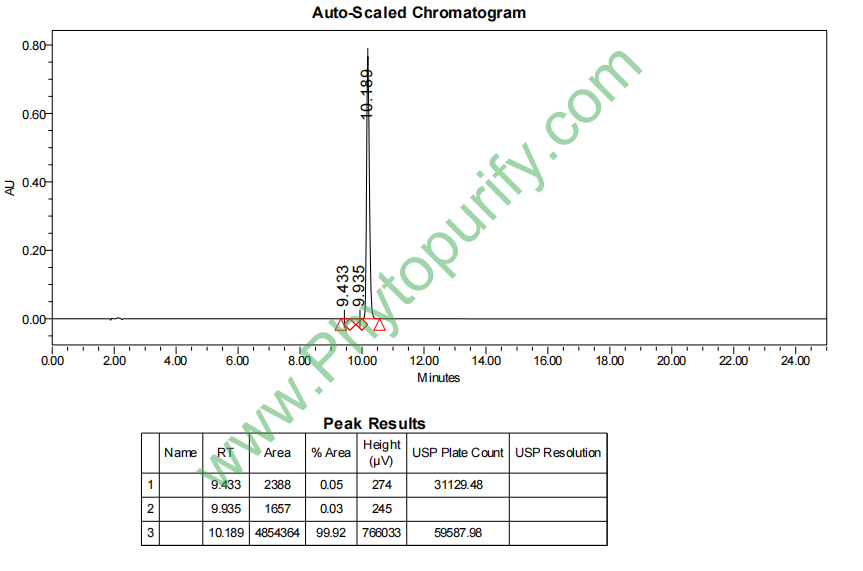
HPLC of Cistanoside A
Storage conditions:Short-term storage at 2~8℃, long-term storage at -20 ~ -80℃
349.9700
-2.0000
-2.0000
Low
No
No
No
Unknown
No
Unknown
No
Cistanche glycoside A is a phenylpropanoid natural product isolated from the traditional Chinese medicine Cistanche spp. Cistanche deserticola, as an important kidney tonifying and yang strengthening herb in traditional Chinese medicine, has always been used to treat symptoms such as kidney deficiency, soreness and weakness of the waist and knees, impotence and premature ejaculation. In recent years, with the advancement of natural product pharmacology and molecular biology techniques, the active ingredients and their mechanisms of action in Cistanche deserticola have gradually been revealed. Cistanche glycoside A, as a representative phenylpropanoid compound, has attracted widespread attention due to its unique biological activity.
Previous studies have shown that Cistanche deserticola glycoside A has significant anti-inflammatory activity and can effectively reduce the aggregation of nitric oxide (NO). However, it has no significant effect on the mRNA and protein expression and activity of inducible nitric oxide synthase (iNOS). In addition, Cistanche deserticola glycoside A has shown potential pharmacological value in the field of neuroprotection, with related targets covering key proteins such as BCL2, APP, BACE1, MAPT, SIRT1, MAPK1, ACHE, CASP3, SNCA, and NRF2, suggesting that it may achieve therapeutic effects on neurological diseases through multi-target and multi pathway regulation.
This article will provide a systematic review of the chemical structure and physicochemical properties, plant sources and extraction methods, pharmacological activity and mechanism of action, pharmacological evaluation and pharmacokinetic characteristics of Cistanche glycosides A, and explore its potential prospects and development directions in clinical applications. The aim is to provide theoretical basis and reference for the in-depth research and drug development of this natural product.
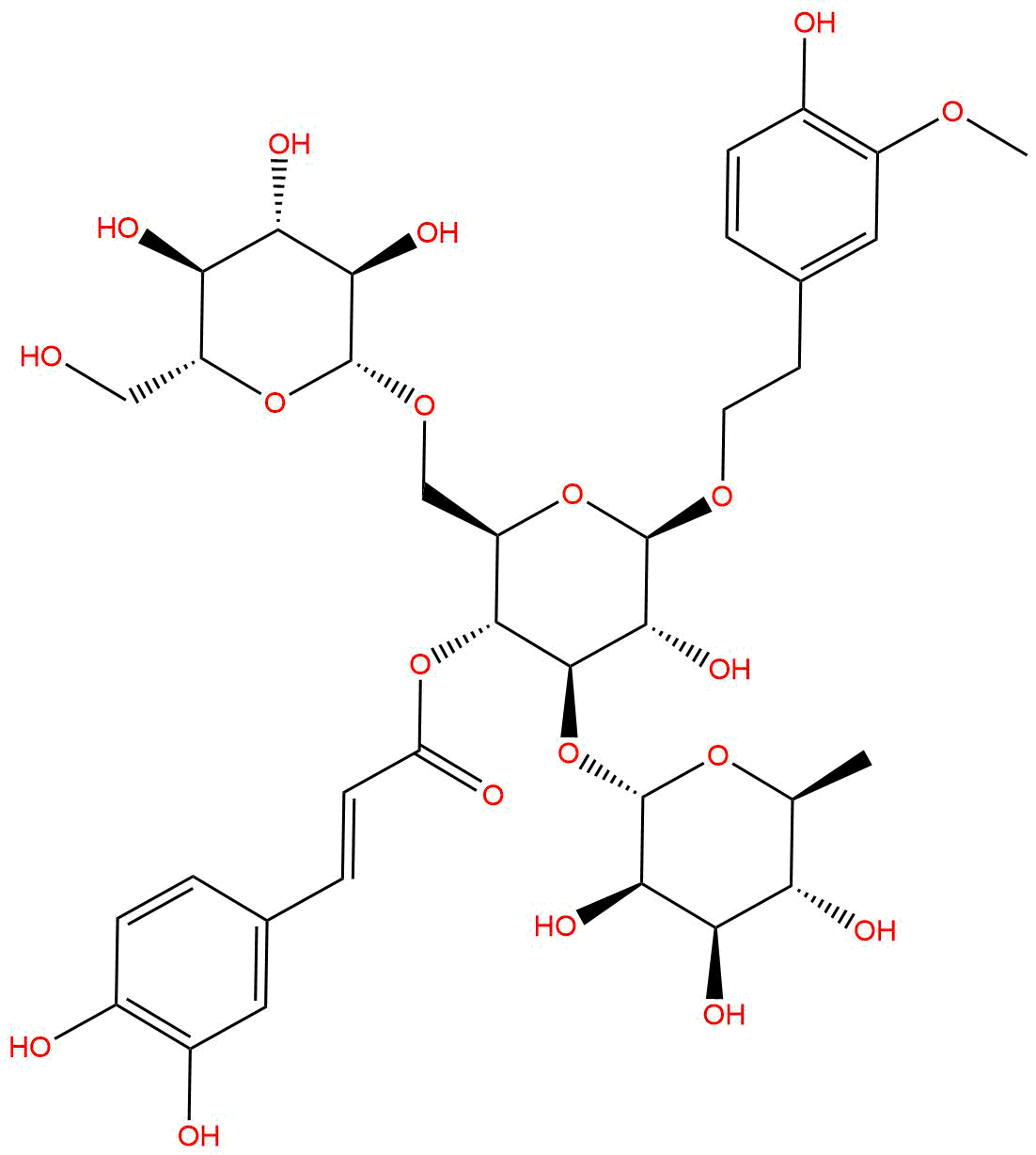
The molecular formula of Cistanche deserticola glycoside A is C37H52O19, with a molecular weight of 784.6900, belonging to the phenylpropanoid glycoside class. Its structural features mainly include a phenylpropanoid skeleton connected to multiple sugar groups through glycosidic bonds, with abundant hydroxyl and ether bonds, resulting in strong polarity. Its LogP value is -2.0000, indicating strong hydrophilicity and weak lipid solubility. The extremely high topological polar surface area (TPSA) is 349.9700, and the number of hydrogen bond acceptors is as high as 20, further confirming its polarity and water solubility characteristics.
The structure of Cistanche deserticola glycoside A is complex, containing multiple phenolic hydroxyl and glycosidic groups, which not only endows it with good water solubility, but also limits its absorption and distribution in organisms. Its low blood-brain barrier permeability suggests that its ability to directly act on the central nervous system is relatively limited, but there is a greater possibility of exerting neuroprotective effects through regulating the peripheral nervous system or indirect mechanisms.
In terms of physicochemical properties, Cistanche glycosides A have high stability, no significant risk of hepatotoxicity or cardiotoxicity, and do not inhibit hERG channels, demonstrating good safety characteristics. However, its Ames mutagenicity is not yet clear and further toxicological evaluation is needed.
Cistanche glycosides A mainly come from plants of the Cistanche genus, especially Cistanche deserticola and Cistanche tubulosa. Cistanche deserticola grows in desert and semi desert environments in arid northwest China and is a leaf free parasitic herbaceous plant that parasitizes on plant roots. The dried stem nodes are traditional medicinal parts, rich in phenylpropanoid glycosides, volatile oils, polysaccharides, and other active ingredients.
The common methods for extracting Cistanche glycosides A include:
Solvent extraction Dry Cistanche deserticola powder was subjected to reflux or ultrasonic extraction using methanol, ethanol, or a mixture of water and alcohol solvents to extract phenylpropanoid glycosides.
Separation and purification Further separation and purification of Cistanche deserticola glycoside A were achieved through techniques such as liquid-liquid distribution, silica gel column chromatography, and reverse phase high performance liquid chromatography (RP-HPLC). High performance liquid chromatography-mass spectrometry (HPLC-MS/MS) is commonly used for qualitative and quantitative analysis.
Structural Identification Use nuclear magnetic resonance (NMR), mass spectrometry (MS), infrared spectroscopy (IR) and other methods to confirm the structure of the purified product.
In recent years, the application of supercritical fluid extraction and membrane separation technology has provided new ideas for the efficient extraction and purification of Cistanche glycosides A, which is expected to improve yield and purity and reduce production costs.
The anti-inflammatory activity of Cistanche deserticola glycoside A is one of its earliest discovered pharmacological properties. In vitro experiments have shown that Cistanche glycosides A can significantly reduce the aggregation of NO, inhibit the release of inflammatory mediators, and alleviate inflammatory reactions. However, its effect on the mRNA and protein expression and enzyme activity of inducible nitric oxide synthase (iNOS) was not significant, suggesting that its anti-inflammatory mechanism may be achieved by regulating downstream signaling pathways of NO or other inflammation related factors.
In animal model studies, Cistanche deserticola glycoside A has shown potential application value in chronic inflammatory diseases by reducing inflammatory tissue damage, inhibiting inflammatory cell infiltration, and regulating the expression of inflammatory factors.
The research on Cistanche deserticola glycoside A in the field of neuroprotection is gradually increasing, mainly focusing on models of neurodegenerative diseases such as Alzheimer's disease (AD) and Parkinson's disease (PD). Its related targets include:
In summary, Cistanche deserticola glycoside A exerts neuroprotective functions through multi-target and multi pathway synergistic effects, and has the potential to be developed as a therapeutic drug for neurodegenerative diseases.
In addition to anti-inflammatory and neuroprotective effects, some studies have also reported that Cistanche glycosides A have immunomodulatory, antioxidant, and anti-tumor activities, but the relevant mechanisms still need further clarification.
The pharmacological effects of Cistanche deserticola glycoside A depend on its regulation of multiple molecular targets, reflecting the multi-target pharmacological characteristics of natural products.
Anti inflammatory mechanism
Cistanche glycoside A reduces NO aggregation, inhibits the release of inflammatory mediators, and alleviates inflammatory reactions. It does not directly affect iNOS expression, suggesting that its effect may be in signal transduction after NO synthesis or NO mediated oxidative stress processes. In addition, Cistanche deserticola glycoside A may regulate inflammatory signaling pathways such as NF - κ B and MAPK, and reduce the expression of inflammatory factors such as TNF - α and IL-1 β.
Neuroprotective mechanism
Protein aggregation regulation Regulating SNCA, reducing alpha synuclein aggregation, and alleviating Parkinson's disease-related pathology.
Signal pathway regulation
Cistanche glycoside A participates in the regulation of cellular metabolism, inflammatory response, and stress response by regulating signaling pathways such as MAPK and SIRT1, reflecting its multidimensional pharmacological effects.
The pharmacological evaluation of Cistanche deserticola glycoside A shows that it has certain advantages and challenges:
Molecular weight and polarity
Its molecular weight is relatively large (784.69 Da) and its polarity is strong (LogP=-2.0, TPSA=349.97), with a large number of hydrogen bond receptors (20), which is usually not conducive to oral absorption and blood-brain barrier penetration, limiting its systemic bioavailability and central nervous system potential.
Blood-brain barrier permeability
It is predicted that its blood-brain barrier permeability is low, indicating limited ability to directly act on targets in the brain, and may need to be enhanced through carrier mediation or structural modification.
safety
There is no hepatotoxicity, cardiotoxicity, or hERG inhibition, indicating a good safety basis. However, the mutagenicity of Ames is not yet clear and further toxicological evaluation is needed.
pharmacokinetics
At present, there is limited data on the in vivo absorption, distribution, metabolism, and excretion (ADME) of Cistanche deserticola glycoside A. Its high polarity and high molecular weight may lead to low oral bioavailability, and it is easily hydrolyzed or metabolized by intestinal enzymes. In the future, pharmacokinetic studies are needed to clarify its in vivo behavior and optimize the dosing regimen.
Structural optimization and formulation development
To overcome the lack of drug properties, the application of new technologies such as structural modification, prodrug design, and nanocarriers will be the focus of future research to enhance their bioavailability and targeting.
Cistanche glycosides A, as an important phenylpropanoid active ingredient in Cistanche deserticola, have significant anti-inflammatory and neuroprotective effects, especially in the prevention and treatment of neurodegenerative diseases, demonstrating broad application potential. With the rising incidence rate of nervous system diseases, the development of safe and effective multi-target natural drugs has become a research hotspot, and cistanche glycoside A just meets this demand.
The future clinical application prospects include:
Treatment of neurodegenerative diseases
Develop adjuvant or alternative therapeutic drugs for diseases such as Alzheimer's disease and Parkinson's disease by utilizing its regulation of APP, BACE1, Tau protein, and antioxidant mechanisms.
Anti inflammatory disease management
In the field of chronic inflammatory diseases such as rheumatoid arthritis and inflammatory bowel disease, Cistanche deserticola glycoside A can serve as a potential natural anti-inflammatory drug.
Combination therapy strategy
Combined with other neuroprotective or anti-inflammatory drugs, it exerts a synergistic effect, reduces single drug dosage, and minimizes side effects.
Development of new dosage forms
By using nanotechnology, liposome encapsulation and other methods to enhance its in vivo stability and targeting, the clinical indications can be expanded.
However, the clinical translation of Cistanche deserticola glycoside A still faces many challenges, such as low bioavailability, poor blood-brain barrier permeability, and lack of systematic toxicological and pharmacokinetic data. In the future, it is necessary to strengthen basic research, improve pharmacological and safety evaluations, conduct preclinical and clinical trials, and promote its clinical application.
Cistanche glycoside A, as an important phenylpropanoid natural product in Cistanche deserticola, exhibits excellent anti-inflammatory and neuroprotective potential due to its unique chemical structure and multi-target pharmacological activity. It has broad prospects as a therapeutic drug for neurodegenerative diseases by regulating multiple key molecular pathways, affecting neuronal apoptosis, protein metabolism, and oxidative stress.
Although there are certain limitations to its pharmacological properties, especially low blood-brain barrier permeability and insufficient bioavailability, modern drug design and delivery techniques have the potential to overcome these obstacles and achieve clinical translation. In the future, combining systematic pharmacokinetic and toxicological studies to deeply reveal its mechanism of action will provide a solid foundation for the drug development of Cistanche glycosides A.
In summary, Cistanche deserticola glycoside A not only enriches the pharmacological research content of Cistanche deserticola, but also provides new ideas and targets for the development of natural product drugs, which is worthy of continuous attention and in-depth exploration in the fields of natural medicine and neurological disease treatment.
