


Product name: Echinacoside
Synonym name:
Catalogue No.: BP0520
Cas No.: 82854-37-3
Formula: C35H46O20
Mol Weight: 786.733
Botanical Source: Cistanches herba
Physical Description:
Type of Compound: Phenols
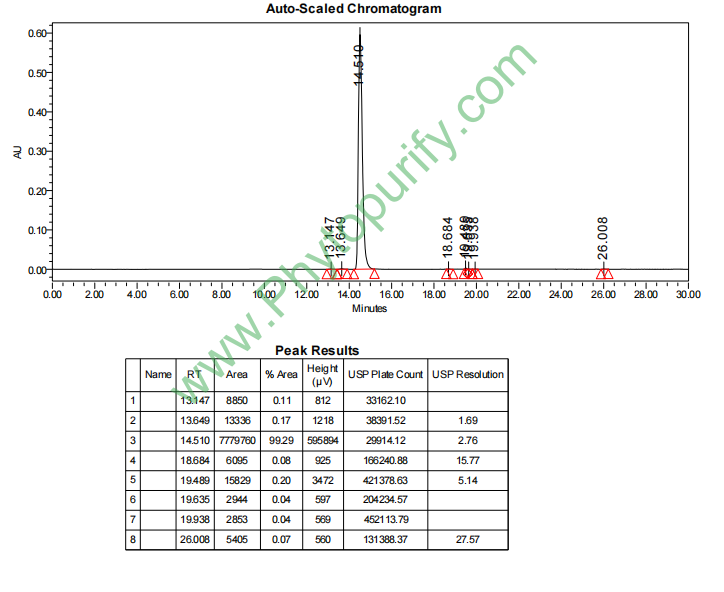
Purity: 95%~99%
Analysis Method: HPLC-DAD or/and HPLC-ELSD
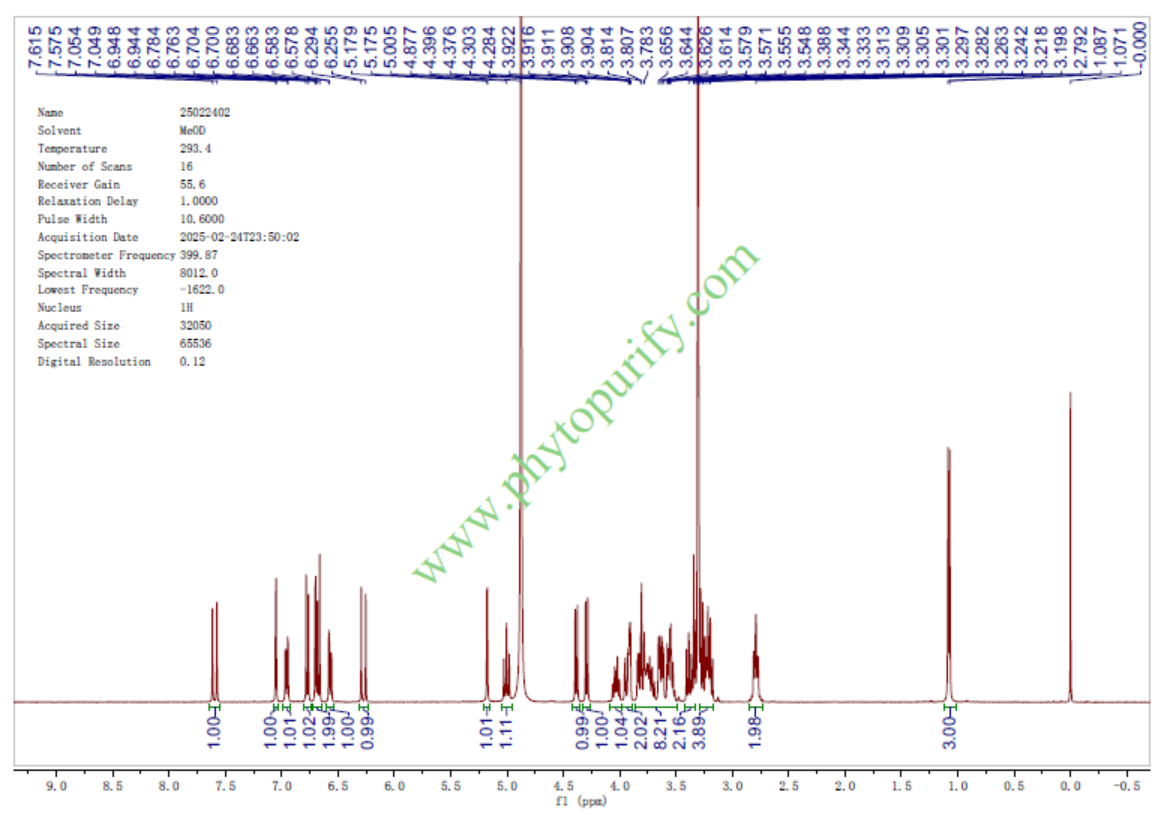
Identification Method: Mass, NMR
Packing: Brown vial or HDPE plastic bottle
Storage: Store in a well closed container, protected from air and light. Put into refrigerate or freeze for long term storage.
Whenever possible, you should prepare and use solutions on the same day. However, if you need to make up stock solutions in advance, we recommend that you store the solution as aliquots in tightly sealed vials at -20℃. Generally, these will be useable for up to two weeks.
The product could be supplied from milligrams to grams
Inquire for bulk scale.
Description:
Echinacoside is a natural polyphenolic compound, has various kinds of pharmacological activities, such as anti-senescence, anti-hypoxia, anti-cancer, anti-osteoporosis, antioxidative, anti-inflammatory, neuroprotective, hepatoprotective, nitric oxide radical-scavenging and vasodilative ones. Echinacoside can improve the hematopoietic function of bone marrow in 5-FU-induced myelosuppression mice, it induces apoptotic cancer cell death by inhibiting the nucleotide pool sanitizing enzyme MTH1. Echinacoside inhibits cytochrome c release and caspase-3 activation caused by ensuing rotenone exposure via activating Trk-extracellular signal-regulated kinase (ERK) pathway in neuronal cells.
References:
Int J Biol Macromol. 2015 Jan;72:243-53.
Echinacoside inhibits amyloid fibrillization of HEWL and protects against Aβ-induced neurotoxicity.
We investigated the protection provided by Echinacoside against neurotoxicity induced by β-amyloid protein (Aβ). Through spectroscopic analyses, electron microscopy, cell viability assay, and hemolysis assay, we found that Echinacoside dose dependently inhibited HEWL aggregation, and this inhibition occurred in different fiber-forming stages. Echinacoside could also scavenge the DPPH and OH free radicals in a concentration-dependent manner. 3-(4,5-dimethylthiazol-2-yl)-2,5-diphenyltetrazolium bromide (MTT) and 2',7'-dichlorodihydrofluoresceindiacetate (DCFH-DA) fluorescent measurement results indicated that Echinacoside could increase viability of rat pheochromocytoma PC12 cells injured by Aβ and suppress the increase in intracellular reactive oxygen species (ROS) triggered by Aβ. The present study findings facilitate a better understanding of the interaction between Echinacoside and amyloid-forming proteins and also shed light on the protection of Echinacoside against amyloid fibril-induced neuronal cell death.
J Pharmacol Sci. 2014;126(2):155-63.
Antiproliferative effect of echinacoside on rat pulmonary artery smooth muscle cells under hypoxia.
The main purpose of this study is to evaluate the effect of Echinacoside (ECH) on hypoxia-induced proliferation of rat pulmonary artery smooth muscle cells (PASMCs) and the underlying mechanism.
METHODS AND RESULTS:
PASMCs were incubated under normoxia (nor), hypoxia (hyp), hypoxia + 0.35 mM ECH (hyp + ECH0.35), or hypoxia + 0.4 mM ECH (hyp + ECH0.4) for 24 h. Cell viability was assessed by MTS assays. The morphology of apoptosis was observed by DAPI staining, and apoptosis was quantified by flow cytometric analysis. Caspase-3 activity was determined by immunohistochemistry and real-time PCR, and the expressions of HIF-1α, Bax, Bcl-2, and Fas were determined by real-time PCR. Hypoxia induced significant proliferation of PASMCs, which could be inhibited by ECH in a concentration-dependent manner. This was associated with apoptosis of PASMCs. Z-DEVD-FMK could partly reduce the suppression effect of ECH; protein and gene expression of caspase-3 were significantly higher in the hyp + ECH0.4 and hyp + ECH0.35 groups. ECH significantly increased the expressions of Bax and Fas, but decreased the expressions of Bcl-2 and HIF-1α.
CONCLUSIONS:
ECH could inhibit hypoxia-induced proliferation of rat PASMCs, which is associated with apoptosis of PASMCs and improvement of hypoxia. ECH might be a potential agent for prevention and treatment of hypoxia-induced PAH.
Onco Targets Ther. 2015 Dec 8;8:3649-64.
Echinacoside induces apoptotic cancer cell death by inhibiting the nucleotide pool sanitizing enzyme MTH1.
Inhibition of the nucleotide pool sanitizing enzyme MTH1 causes extensive oxidative DNA damages and apoptosis in cancer cells and hence may be used as an anticancer strategy. As natural products have been a rich source of medicinal chemicals, in the present study, we used the MTH1-catalyzed enzymatic reaction as a high-throughput in vitro screening assay to search for natural compounds capable of inhibiting MTH1.
METHODS AND RESULTS:
Echinacoside, a compound derived from the medicinal plants Cistanche and Echinacea, effectively inhibited the catalytic activity of MTH1 in an in vitro assay. Treatment of various human cancer cell lines with Echinacoside resulted in a significant increase in the cellular level of oxidized guanine (8-oxoguanine), while cellular reactive oxygen species level remained unchanged, indicating that Echinacoside also inhibited the activity of cellular MTH1. Consequently, Echinacoside treatment induced an immediate and dramatic increase in DNA damage markers and upregulation of the G1/S-CDK inhibitor p21, which were followed by marked apoptotic cell death and cell cycle arrest in cancer but not in noncancer cells.
CONCLUSIONS:
Taken together, these studies identified a natural compound as an MTH1 inhibitor and suggest that natural products can be an important source of anticancer agents.
HPLC of Echinacoside
HNMR of Echinacoside
Storage conditions:Short-term storage at 2~8℃, long-term storage at -20 ~ -80℃
324.4400
-.6741
-.6829
9.3742
.4330
.0585
Low
70.1765
5.3716
No
No
No
No
No
No
0.0
Yes
No
Yes
Yes
In the field of natural product chemistry and pharmacology research, phenylethanoid glycosides have attracted much attention due to their extensive biological activities. Echinacoside (CAS number: 82854-37-3), as a typical representative of this type of compound, is mainly derived from the traditional tonifying Chinese medicine Cistanche deserticola(Cistanche deserticola). Since its isolation and identification, a large number of studies have revealed its pharmacological potential in various aspects such as neuroprotection, anti osteoporosis, anti-inflammatory, antioxidant, and immune regulation. Especially with the aging of the population, the incidence rate of neurodegenerative diseases (such as Alzheimer's disease, Parkinson's disease) and osteoporosis is increasing year by year, so it is urgent to develop safe and effective prevention and treatment drugs. Pinecone chrysanthemum glycoside exhibits unique therapeutic advantages by regulating multiple key signaling pathways such as Wnt/β - catenin and Trk receptors. This article aims to provide a systematic review of the chemical properties, plant sources, pharmacological activities, molecular mechanisms of action, pharmacological evaluation, and clinical application prospects of pineal glycoside, in order to provide comprehensive scientific references for the in-depth research and development of this compound.
Pinecone glycoside is a water-soluble phenylethanoid glycoside compound, with the chemical name 2- (3,4-dihydroxyphenyl) ethyl-O - α - L-rhamnopyranosyl - (1 → 3) - O - β - D-glucopyranosyl - (1 → 6) -4-O-caffeoyl - β - D-glucopyranoside. Its molecular formula is C ∝₅ H ₄₆ O ₂₀, and its molecular weight is 786.7330. The structural core consists of caffeoyl, phenylethanolic aglycone, and three glycosides (glucose and xylose), and this complex glycosylation and acylation modification is an important structural basis for its biological activity.
From the perspective of pharmacological parameters, the lipid water partition coefficient (LogP) of echinacoside is -0.6741, indicating its hydrophilicity. The topologically polar surface area (TPSA) is as high as 324.4400 Å ², which is closely related to the presence of multiple hydroxyl and glycosyl structures in its molecule. It has good water solubility, with a calculated value of approximately 9.3742 mg/mL. However, its high polarity and molecular weight also pose challenges to its bioavailability, especially as its blood-brain barrier permeability is predicted to be "low", which may limit its direct efficacy in central nervous system diseases. In terms of preliminary safety evaluation, existing data shows that it has no significant hERG potassium channel inhibitory activity (low risk of arrhythmia), and the Ames test result is negative (0.0), indicating that its genetic toxicity risk is low, laying a good safety foundation for subsequent development.
Pinecone chrysanthemum glycoside is mainly found in plants of the Cistanche genus in the Ledaceae family, among which desert Cistanche is the most abundant(Cistanche deserticola)The most abundant content is one of the core active ingredients of traditional Chinese medicine Cistanche deserticola. In addition, in Echinochloa purpurea(Echinacea It is also distributed in plants such as spp.
The extraction and separation methods mainly follow the conventional process of natural product chemistry. Firstly, a solvent of appropriate polarity is used for extraction. Common methods include:
1. Solvent extraction method The use of methanol, ethanol, or ethanol water mixed solutions for reflux extraction or ultrasound assisted extraction is a common method for obtaining crude extracts and is easy to operate.
2. Water extraction method Given the good water solubility of echinacoside, hot water extraction is also an option, but it may result in more impurities such as polysaccharides.
After obtaining the crude extract, further separation and purification are required. Macroporous adsorption resins (such as AB-8 and D101) are commonly used for enrichment, and their adsorption and gradient elution properties with different concentrations of ethanol are utilized for the preliminary separation of echinacroside. The final high-purity preparation relies on chromatographic techniques, including silica gel column chromatography, reverse phase C18 column chromatography, high-performance liquid chromatography (HPLC), and preparative liquid chromatography (pre HPLC). In modern analysis, HPLC combined with ultraviolet detectors or mass spectrometry is the standard method for quantitative analysis and quality control.
A large number of pharmacological experiments both in vitro and in vivo have confirmed that pineal glycoside has multiple biological activities, among which the following two aspects are the most prominent:
Neuroprotective effect This is the most in-depth field of research on pineal glycoside. Pinecone glycoside can improve learning and memory dysfunction in various Alzheimer's disease cell and animal models. Its function is manifested as: reducing the generation and deposition of β - amyloid protein (A β), inhibiting the excessive phosphorylation of tau protein, alleviating neuronal apoptosis, relieving oxidative stress and neuroinflammation. In the Parkinson's disease model, it shows a protective effect on dopaminergic neurons. In addition, it also has a clear improvement effect on cerebral ischemia/reperfusion injury, vascular dementia, etc.
Anti osteoporosis activity Pinecone chrysanthemum glycoside can effectively combat osteoporosis caused by various reasons such as ovarian resection and glucocorticoid induction. Its main function is to promote the differentiation, proliferation, and mineralization of osteoblasts, while inhibiting the formation of osteoclasts and bone resorption function, thereby bidirectionally regulating bone metabolism balance, increasing bone density, and improving bone microstructure.
In addition, studies have shown that echinacoside has antioxidant(Clearing free radicals and enhancing endogenous antioxidant enzyme activity)anti-inflammatory(Inhibiting inflammatory pathways such as NF - κ B)immunomodulation And a certain antitumor and liver protection Equal activity, showing the characteristics of multi-target and multi pathway action.
The pharmacological effects of pineal chrysanthemum glycoside are achieved by regulating complex intracellular signaling networks, and its key molecular targets and mechanisms are as follows:
Neuroprotective mechanism:
Anti osteoporosis mechanism:
Common pathway:MAPK pathway(such as ERK/MAPK1) and PI3K/Akt pathway It plays an important role in both neuroprotection and osteogenic differentiation, and is a key intersection point for the pleiotropic effects of pineal glycosides.
Despite its significant pharmacological activity, the development of medicinal properties, especially pharmacokinetic properties, is the bottleneck for its clinical application.
To improve its medicinal properties, current research strategies include:Structural modification(Preparation of lipophilic prodrugs or derivatives)Develop a new drug delivery system(such as nanoparticles, liposomes, microemulsions, phospholipid complexes, etc. to improve their solubility, membrane permeability, and targeting), and Explore combination therapy(Used in combination with P-glycoprotein inhibitors or in combination with other active ingredients).
The clinical application prospects of pineal chrysanthemum glycoside are broad, but the path still needs to be further explored.
Potential indications:
Development Challenge:
Future direction:
Pinecone chrysanthemum glycoside, as a naturally occurring phenylethanoid glycoside compound with a clear source, has become a hot molecule in natural product research and new drug development due to its significant neuroprotective and anti osteoporosis pharmacological activities. It exhibits multi-target and multi-level comprehensive therapeutic potential by acting on multiple signaling pathways closely related to cell survival, differentiation, and stress defense, such as TrkB, regulating Wnt/β - catenin, and activating Nrf2/SIRT1. However, the low bioavailability and weak blood-brain barrier penetration caused by its inherent physicochemical properties are the main obstacles restricting its clinical translation. Future research should focus on using modern pharmaceutical and medicinal chemistry methods to improve its drug properties, and conducting in-depth systemic pharmacology studies to comprehensively reveal its network of action. At the same time, accelerating standardized clinical research is expected to rejuvenate this ancient plant component and provide new candidate drugs for the prevention and treatment of major public health issues such as neurodegenerative diseases and osteoporosis.
