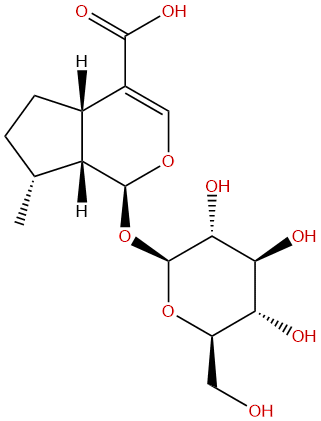


Product name: 8-Epideoxyloganic acid
Synonym name:
Catalogue No.: SBP03181
Cas No.: 88668-99-9
Formula: C16H24O9
Mol Weight: 360.359
Botanical Source:
Type of Compound:
Purity: 95%~99%
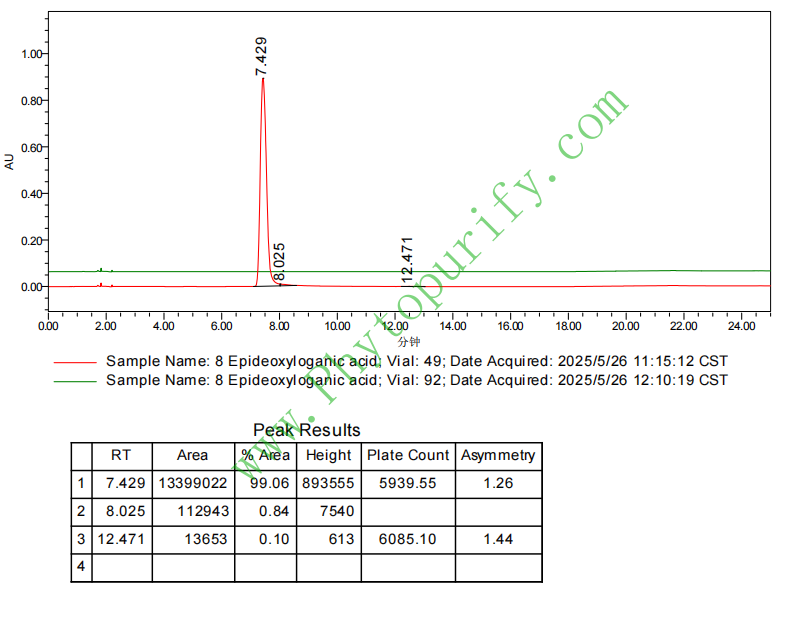
Analysis Method: HPLC-DAD or/and HPLC-ELSD
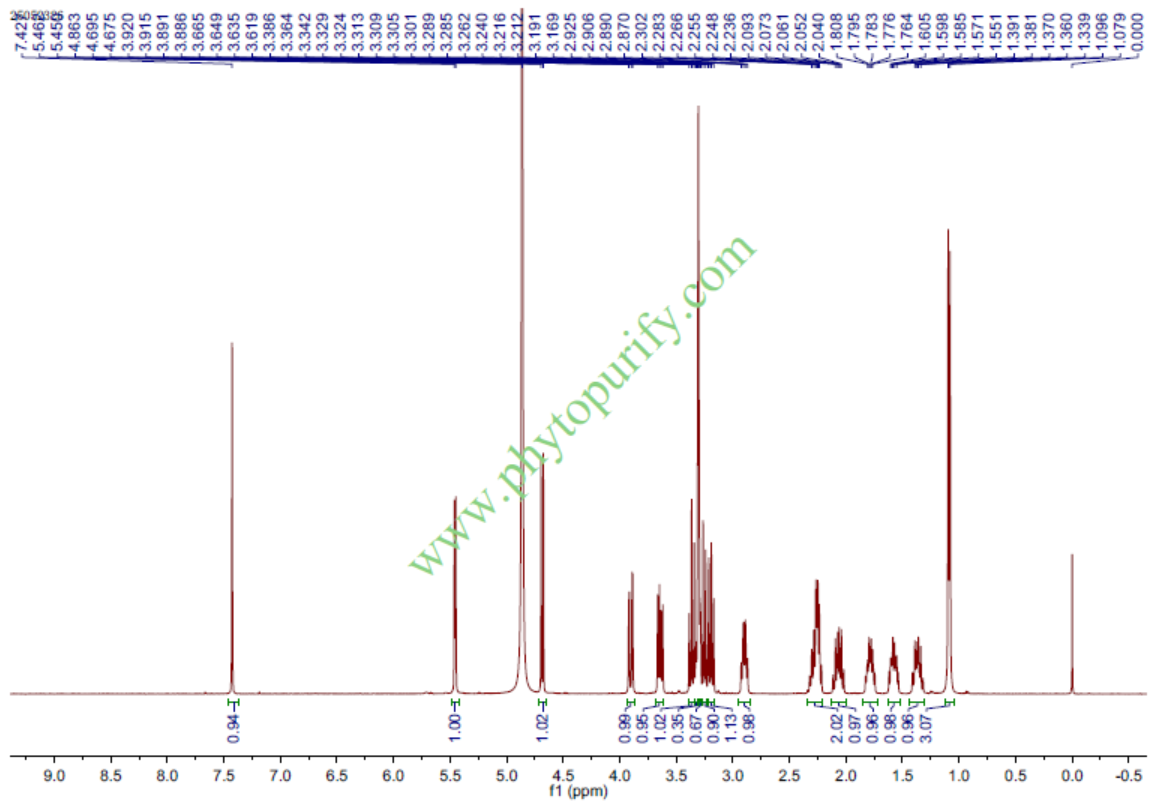
Identification Method: Mass, NMR
Packing: Brown vial or HDPE plastic bottle
Storage: Store in a well closed container, protected from air and light. Put into refrigerate or freeze for long term storage.
Whenever possible, you should prepare and use solutions on the same day. However, if you need to make up stock solutions in advance, we recommend that you store the solution as aliquots in tightly sealed vials at -20℃. Generally, these will be useable for up to two weeks.
The product could be supplied from milligrams to grams
Inquire for bulk scale.
For Reference Standard and R&D, Not for Human Use Directly.
HPLC of 8-Epideoxyloganic acid
HNMR of 8-Epideoxyloganic acid
Storage conditions:Short-term storage at 2~8℃, long-term storage at -20 ~ -80℃
145.9100
-.5547
-2.7752
31.0797
.4411
.4414
Low
47.5190
4.5970
Yes
No
No
No
No
No
0.0
Yes
No
Yes
No
Natural products, as an important source of drug discovery, play an irreplaceable role in the long history of human struggle against diseases. Iridoid glycosides are a class of secondary metabolites widely present in the plant kingdom, characterized by monoterpenes containing cyclopentane [c] pyran nuclei. These compounds have long been closely monitored by medicinal chemists and pharmacologists due to their diverse biological activities, including anti-inflammatory, antioxidant, neuroprotective, hepatoprotective, anti-tumor, and analgesic effects.
8-Deoxyloganic acid (CAS number: 88668-99-9), also known as 7-Deoxy-8-epiloganic acid, is a naturally occurring iridoid glycoside compound. This compound was initially isolated from the plant Incarvilla delavayi in the family Verbenaceae. It is worth noting that 8-epideoxyquercetin belongs to the stereoisomer of loganic acid in structure, and its unique C-8 configuration endows it with biological characteristics that distinguish it from other iridoid glycosides. Preliminary pharmacological studies have shown that the compound has weak pain relieving activity, providing important scientific basis for its development as a novel analgesic lead compound.
Pain, as a complex physiological and pathological process, seriously affects the quality of life of billions of patients worldwide. The commonly used analgesics in clinical practice, such as opioid drugs and nonsteroidal anti-inflammatory drugs (NSAIDs), although effective, all have varying degrees of side effects, including addiction, gastrointestinal injury, and cardiovascular risk. Therefore, searching for analgesic lead compounds with novel structures, unique mechanisms of action, and higher safety from natural products has become one of the important directions in the current field of drug development. The emergence of 8-epideoxyquercetin has injected new vitality into this field.
The chemical structure of 8-epideoxyquercetin belongs to the typical cyclohexene ether terpenoid glycoside skeleton. Its core structure is composed of iridoid aglycone and a molecule of glucose connected by a β - glycosidic bond. Specifically, its glycoside moiety is a cyclopentane [c] pyran ring system, with a glucose group attached at C-1, a carboxyl group substituted at C-4, and a methyl group substituted at C-8. Compared with loganic acid, the key structural difference of 8-epideoxy loganic acid lies in the stereoconfiguration of the C-8 position: the methyl group at the C-8 position in loganic acid is in the alpha configuration, while in 8-epideoxy loganic acid it is in the beta configuration. In addition, the compound is in a deoxygenated state at the C-7 position, meaning that it is substituted with a methylene group instead of a hydroxyl group, which distinguishes it from similar compounds substituted with a 7-hydroxyl group.
From a chemical naming perspective, the IUPAC name for 8-epideoxyquercetin is (1S, 4aS, 6S, 7R, 7aS) -1- (β - D-glucopyranosyloxy) -7-methyl-1,4-a, 5,6,7,7a-hexahydrocyclopenta [c] pyran-4-carbonyl acid. Its molecular formula is C16H24O9, with an accurate molecular weight of 360.3590 g/mol. This molecule contains multiple chiral centers, including C-1, C-4a, C-6, C-7, and C-7a positions. The absolute configuration of these chiral centers determines its specific three-dimensional spatial structure, which in turn affects its interaction with biological targets.
The pharmacokinetic parameters obtained based on computational chemistry methods show that 8-epideoxyloganin acid has the following key physicochemical properties:
Lipid water partition coefficient (LogP)-0.5547. This negative value indicates that the compound has strong hydrophilicity, with a much higher solubility in the aqueous phase than in the lipid phase. This characteristic is closely related to the presence of multiple hydroxyl groups (on the glucose group) and one carboxyl group in its molecular structure. High hydrophilicity usually means that the absorption of the compound in the body may be limited to some extent, but it also reduces its risk of accumulation in adipose tissue.
Topological Polarity Surface Area (TPSA): 145.9100 Å ². TPSA is an important parameter for evaluating the oral bioavailability and blood-brain barrier penetration ability of compounds. Generally speaking, compounds with TPSA greater than 140 Å ² are considered to have poor oral absorption and difficulty penetrating the blood-brain barrier. The TPSA value of 8-deoxyquercetin is just above this threshold, indicating that its oral bioavailability may be low and its distribution in the central nervous system is limited.
Water solubility:31.0797 mg/mL。 This value indicates that the compound has good water solubility, which is consistent with its hydrophilic characteristics reflected by its LogP value. Good water solubility is beneficial for the development of drug formulations, especially for the preparation of injectable forms.
Blood-brain barrier penetrability: Low. Based on the TPSA value and molecular weight, 8-epideoxyquercetin is predicted to be a compound with low blood-brain barrier penetration. This characteristic has a dual significance for the development of analgesic drugs: on the one hand, if the analgesic target is located in the central nervous system, low penetration may limit its efficacy; On the other hand, if the target of action is located in the periphery, low penetration can help reduce central related side effects.
HERG inhibition: No. HERG (human Ether - à - go Related Gene) potassium channel inhibition is an important predictor of drug cardiac toxicity. 8-Epideoxyquercetin is predicted to have no hERG inhibitory activity, indicating a low risk of cardiac toxicity.
Ames test: 0.0. The Ames test is used to evaluate the mutagenicity of compounds. The Ames test result of this compound is negative, indicating a low risk of genetic toxicity and providing a safety basis for subsequent drug development.
8-Epideoxyquercetin was initially isolated from Incarvilla delavayi in Dianchuan. Dianchuan Artemisia belongs to the Bignoniaceae family and the Incarvilliea genus. It is a perennial herbaceous plant mainly distributed in high-altitude mountains in southwestern China, such as Yunnan and Sichuan. This genus of plants has a long history of application in traditional medicine and is commonly used to treat diseases such as rheumatism, rheumatism, and traumatic injuries. Its chemical composition and pharmacological activity have always been a focus of research.
In addition to Dianchuan Artemisia scoparia, subsequent studies have shown that 8-epideoxyquercetin is also present in other plants. For example, the presence of this compound has also been detected in the rhizomes of Morinda officinalis, a plant in the Rubiaceae family, and in some Caprifoliaceae plants. These findings suggest that the distribution of 8-epideoxyquercetin in the plant kingdom may be more widespread than initially expected, and its biosynthetic pathway may be conserved across different plant families and genera.
From the perspective of plant chemical taxonomy, iridoid glycosides are commonly found in plants such as the Wisteriaceae, Rubiaceae, Lonicera japonica, Gentianaceae, etc. These plants often have traditional medicinal values such as anti-inflammatory, analgesic, and hepatoprotective properties. It is worth further exploring whether there is an inherent relationship between the distribution pattern of 8-epideoxyquercetin as a member and the medicinal efficacy of these plants.
The extraction and separation of 8-epideoxyquercetin usually follow the classic process of natural product chemistry, which mainly includes the following steps:
1. Raw material pretreatment Collect fresh plant materials (usually whole plants or rhizomes), wash, shade dry or low-temperature dry them, and grind them to appropriate particle size. The control of drying temperature is crucial, as excessively high temperatures may lead to the degradation of thermosensitive components.
2. Solvent extraction Common extraction solvents include methanol, ethanol, or methanol water mixed solvents. Usually, cold soaking or reflux extraction methods are used, and the extraction time varies depending on the solvent and temperature. To improve extraction efficiency, modern technologies such as ultrasound assisted extraction or microwave-assisted extraction can be used. The crude extract was obtained by vacuum concentration of the extraction solution.
3. Liquid liquid extraction Suspend the crude extract in water and extract it sequentially with solvents of different polarities such as petroleum ether, ethyl acetate, n-butanol, etc. 8-Epideoxyquercetin is mainly enriched in the n-butanol extraction layer due to its strong hydrophilicity.
4. Chromatographic separation: n-butanol extract was separated and purified by silica gel column chromatography, ODS (octadecylsilane bonded silica gel) reverse phase column chromatography, Sephadex LH-20 gel column chromatography, etc. The commonly used elution systems include chloroform methanol water, methanol water gradient elution, etc. Thin layer chromatography (TLC) and high-performance liquid chromatography (HPLC) are used to monitor the separation efficiency and purity during the separation process.
5. Structural identification The purified compound was structurally confirmed by techniques such as nuclear magnetic resonance spectroscopy (NMR, including 1H-NMR, 13C-NMR, HMBC, HSQC, etc.), mass spectrometry (MS, including HR-ESI-MS), and circular dichroism (CD). Among them, NMR technology is particularly crucial for determining the connection position and stereoconfiguration of glycosidic bonds.
It is worth noting that the isolation and purification of 8-epideoxyquercetin is challenging due to its typically low content in plants and coexistence with other structurally similar cyclohexene ether terpenoid glycosides. In recent years, the application of efficient separation techniques such as high-speed countercurrent chromatography (HSCCC) and preparative HPLC has significantly improved the separation efficiency and yield of this compound.
The most noteworthy pharmacological activity of 8-epideoxyloganin is its ability to relieve pain. The currently available research data indicates that the compound has "weak pain relieving activity". Although the term 'weak' suggests that its analgesic efficacy may not be as good as commonly used clinical drugs, this discovery still holds significant importance as it provides a starting point for subsequent structural modification and structure-activity relationship studies.
In classic analgesic pharmacology models, the analgesic effect of compounds is usually evaluated using hot plate method (thermal stimulation), acetic acid writhing method (chemical stimulation), or formalin test (persistent pain). The preliminary study may have used the acetic acid writhing method, which simulates visceral pain by inducing abdominal contractions in mice through intraperitoneal injection of acetic acid. The performance of 8-deoxyquercetin in this model may be manifested as a reduction in the number of twists, but the strength of the effect is limited.
It is worth noting that the "weak" analgesic activity may be due to multiple factors: firstly, the compound may act on specific pain pathways rather than broad-spectrum analgesia; Secondly, its pharmacokinetic properties (such as absorption, distribution, metabolism, excretion) may limit the amount of exposure in the body; Thirdly, the affinity of its target may be low. These factors have pointed the way for subsequent research.
Given the broad-spectrum biological activity of iridoid glycosides, 8-epideoxyloganin may also have other pharmacological effects that have not been fully explored. Based on the study of its structural analogues, the following potential activities can be inferred:
anti-inflammatory activity Cycloterpenoid glycosides typically have significant anti-inflammatory effects, which involve inhibiting the nuclear factor kappa B (NF - κ B) pathway and reducing the expression of pro-inflammatory cytokines such as TNF - α, IL-6, IL-1 β. 8-Epideoxyquercetin may exert anti-inflammatory effects through a similar mechanism, and inflammation is closely related to pain, and its analgesic activity may be partially derived from anti-inflammatory effects.
antioxidant activity The molecular structure of iridoid glycosides contains multiple hydroxyl groups, which endow them with the ability to scavenge free radicals. 8-Epideoxyquercetin may exert antioxidant effects by directly clearing reactive oxygen species (ROS) or enhancing endogenous antioxidant enzyme activity.
Neuroprotective activity Partial iridoid glycosides, such as geniposide and loganin, have been reported to have neuroprotective effects and can be used for the treatment of neurodegenerative diseases such as Alzheimer's disease and Parkinson's disease. It is worth exploring whether 8-deoxyquercetin has similar activity.
Hepatoprotective activity There are also many reports on the hepatoprotective effects of iridoid glycosides, and their mechanisms involve antioxidant, anti-inflammatory, and lipid metabolism regulation.
It should be emphasized that the potential activities mentioned above are currently mainly based on the speculation of structurally similar compounds, and still need to be verified through systematic pharmacological experiments.
Although the exact analgesic mechanism of 8-epideoxyquercetin has not been fully elucidated, based on the common characteristics of iridoid glycosides and existing research data, the following possible mechanism hypotheses can be proposed:
1. Peripheral anti-inflammatory mechanism Pain is closely related to inflammation. 8-Epideoxyquercetin may indirectly alleviate pain by inhibiting the production and release of inflammatory mediators. Specifically, it may inhibit the expression of cyclooxygenase-2 (COX-2) or inducible nitric oxide synthase (iNOS), reduce the production of prostaglandin E2 (PGE2) and nitric oxide (NO), and thus decrease the sensitivity of peripheral nociceptors.
2. Transient receptor potential (TRP) channel regulation The TRP channel family, particularly TRPV1 (capsaicin receptor) and TRPA1, play a crucial role in pain signaling. Partial iridoid glycosides have been reported to regulate the activity of TRP channels. 8-Epideoxyquercetin may affect the transmission of nociceptive signals by interacting with TRPV1 or TRPA1 channels.
3. Regulation of opioid receptor system Although the structure of 8-epicatechin acid is far from classical opioid drugs, certain natural products can exert analgesic effects by indirectly activating the endogenous opioid system. For example, by promoting the release of beta endorphins or inhibiting the degradation of enkephalins. This possibility requires molecular docking and receptor binding experiments to verify.
4. Glutamic acid system regulation Glutamate is an important excitatory neurotransmitter in the central nervous system, playing a crucial role in pain transmission. Cycloiridoid glycosides may exert analgesic effects by regulating the activity of glutamate receptors or inhibiting the release of glutamate.
At present, research on the direct molecular targets of 8-epideoxyquercetin is still in its infancy. Based on computational chemistry and pharmacophore models, possible targets can be predicted:
COX-2 As a classic analgesic target, COX-2 inhibitors can effectively reduce the synthesis of PGE2. Molecular docking studies may reveal the binding mode between 8-epideoxyloganine and COX-2 active sites.
TRPV1 This channel is activated by various harmful stimuli, and its antagonists have analgesic potential. The hydrophilic characteristics of 8-epideoxyquercetin make it possible to act on the extracellular domain of TRPV1.
Adenosine A1 receptor Activation of adenosine A1 receptors can produce analgesic effects. Some natural products exert analgesic effects through this receptor.
GABAA receptor The activation of the GABAergic system can inhibit neuronal excitability, producing analgesic and sedative effects.
It should be pointed out that the above target predictions still need to be validated through experimental techniques such as surface plasmon resonance (SPR), drug affinity response target stability (DARTS), or cell thermal transition analysis (CETSA).
Based on the provided pharmacological parameters in the early stage, 8-epideoxyquercetin has shown certain potential for pharmacological properties, but also faces some challenges.
Advantage aspects:
-Good water solubility (31.08 mg/mL) is beneficial for formulation development
-No hERG inhibitory activity, low risk of cardiac toxicity
-Ames test negative, low risk of genetic toxicity
-Moderate molecular weight (360 Da), meeting the requirement of Lipinski's Rule of Five for molecular weight less than 500
Challenge aspect:
-High hydrophilicity (LogP=-0.55) may lead to poor oral absorption and low bioavailability
-High TPSA (145.91 Å ²) further limits oral absorption and blood-brain barrier penetration
-The analgesic activity is' weak ', indicating that its intrinsic activity needs to be improved
Based on the computational pharmacokinetic model, it is possible to preliminarily predict the in vivo process of 8-epideoxyquercetin:
absorb Oral absorption may be poor, mainly due to its high hydrophilicity and high TPSA. This compound may belong to Class III or IV in the Biopharmaceutical Classification System (BCS), i.e. low permeability or low solubility low permeability. Improving oral bioavailability may require the use of prodrug strategies or nanoformulation technology.
distribution Due to its strong hydrophilicity, this compound is mainly distributed in extracellular fluid, and the tissue distribution volume may be relatively small. Low blood-brain barrier permeability means limited distribution of the central nervous system.
Metabolism Cycloterpenoid glycosides mainly undergo glycosidic bond hydrolysis and further metabolism of the aglycone moiety in the body. 8-Epideoxyquercetin may be hydrolyzed into aglycones (8-Epideoxyquercetin aglycones) and glucose under the action of gut microbiota or liver enzymes. Glycosides may undergo further oxidation, reduction, or binding reactions.
excretion Due to its strong hydrophilicity, this compound and its metabolites may be mainly excreted through the kidneys in their original form or as conjugates.
Although its analgesic activity is "weak", the potential for structural optimization as a lead compound cannot be ignored. By means of medicinal chemistry, its structure can be modified to enhance activity and improve pharmacokinetic properties
1. Glycoside modification Modifying the iridoid glycoside moiety, such as introducing hydrophobic groups (alkyl, aryl, etc.), may enhance lipid solubility and improve oral absorption. Meanwhile, the deoxygenation feature at the C-7 position provides space for introducing other substituents.
2. Glycosyl modification The glucose moiety can be acylated, alkylated, or replaced with other sugar moieties (such as galactose, mannose, etc.) to regulate hydrophilicity and metabolic stability.
3. Carboxyl modification The carboxyl group at position C-4 can be converted into esters, amides, or alcohols to alter polarity and interact with the target.
4. Pre medication strategy Preparing carboxyl or hydroxyl groups into ester prodrugs can improve oral absorption and release the original drug after enzymatic hydrolysis in the body.
Considering the weak analgesic activity of 8-epideoxyloganine, it may be more suitable as an adjuvant therapy drug, in combination with other analgesic drugs, to enhance efficacy and reduce side effects. For example, when used in combination with nonsteroidal anti-inflammatory drugs, it may synergistically alleviate pain through different mechanisms; Combined use with opioid drugs may reduce the dosage and addiction risk of opioid drugs.
Based on the broad-spectrum activity of cyclohexene ether terpenoid glycosides, 8-epideoxyloganin acid also has certain application prospects in the following disease fields:
Neurodegenerative diseases If its neuroprotective activity is validated, it can be used as an adjuvant therapy for Alzheimer's disease and Parkinson's disease.
Metabolic diseases: Some iridoid glycosides have hypoglycemic and hypolipidemic effects, and 8-epideoxymaganylic acid may have therapeutic effects on diabetes and its complications.
liver disease The hepatoprotective activity makes it possible for the treatment of alcoholic liver disease and non-alcoholic fatty liver disease.
In order to promote the clinical application of 8-epideoxyquercetin, future research should focus on the following aspects:
Systematic structure-activity relationship research Synthesize a series of structurally similar compounds, systematically evaluate their analgesic activity, and identify key pharmacophores.
In depth pharmacological mechanism research Using gene knockout animal models and molecular biology techniques, elucidate its exact analgesic targets and signaling pathways.
Comprehensive pharmacokinetic evaluation Establish a sensitive LC-MS/MS analysis method to study its absorption, distribution, metabolism, and excretion characteristics in animal bodies.
toxicological evaluation Conduct safety evaluations on acute toxicity, subchronic toxicity, and reproductive toxicity.
Formulation development Develop new drug delivery systems such as liposomes, nanoparticles, and phospholipid complexes to address the issue of low oral bioavailability.
As a natural cyclohexene ether terpenoid glycoside compound, 8-epideoxyquercetin, although currently in the early stages of research, its unique chemical structure and preliminary discovery of analgesic activity make it a worthy research object in the field of natural product drug development. The compound has good water solubility, low cardiac toxicity, and low genetic toxicity risk, providing a safety basis for its structural optimization as a lead compound. However, the challenge of its weak analgesic activity and low oral bioavailability also suggests that we still have a considerable distance to go before clinical application.
Looking ahead to the future, with the collaborative research of multiple disciplines such as medicinal chemistry, pharmacology, and pharmacokinetics, especially the application of structure based drug design (SBDD) and computer-aided drug design (CADD) technologies, 8-epideoxyquercetin is expected to be transformed into a new analgesic candidate drug with higher activity and better pharmacokinetic properties through rational structural modification. Meanwhile, in-depth elucidation of its mechanism of action will also provide important scientific basis for understanding the analgesic effects of iridoid glycosides and promote innovative applications of natural products in the field of pain treatment.
From a more macro perspective, the research process of 8-epideoxyquercetin once again confirms the eternal value of natural products as a source of drug discovery. In today's highly developed synthetic chemistry, nature remains the greatest treasure trove of structural diversity and biological activity diversity. In depth research on natural products with "weak" activity, such as 8-epideoxyquercetin, may not only discover new lead compounds, but also reveal novel mechanisms and targets of action, contributing to human health.
