


Product name: Linderane
Synonym name:
Catalogue No.: BP0870
Cas No.: 13476-25-0
Formula: C15H16O4
Mol Weight: 260.289
Botanical Source: Lindera strychnifolia and Cryptocarya densiflora
Physical Description: Powder
Type of Compound: Sesquiterpenoids
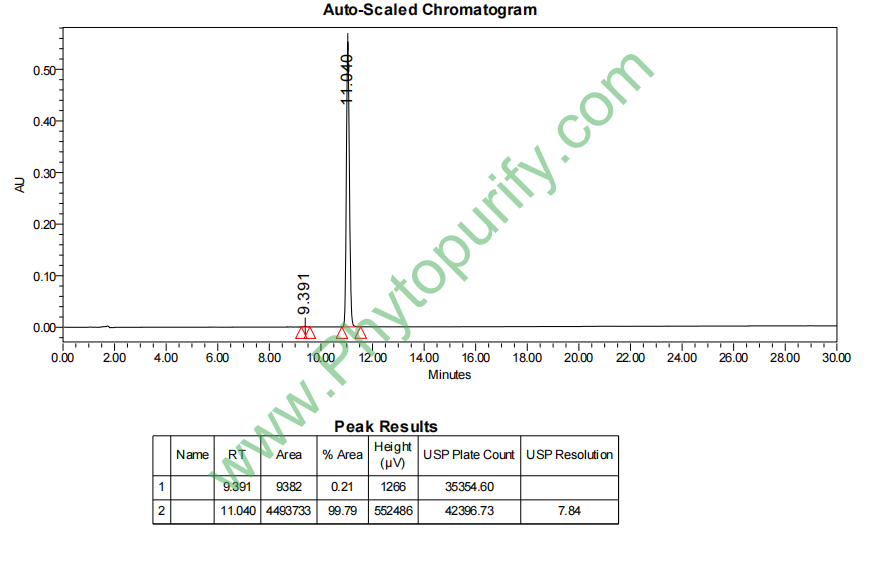
Purity: 95%~99%
Analysis Method: HPLC-DAD or/and HPLC-ELSD
Identification Method: Mass, NMR
Packing: Brown vial or HDPE plastic bottle
Storage: Store in a well closed container, protected from air and light. Put into refrigerate or freeze for long term storage.
Whenever possible, you should prepare and use solutions on the same day. However, if you need to make up stock solutions in advance, we recommend that you store the solution as aliquots in tightly sealed vials at -20℃. Generally, these will be useable for up to two weeks.
The product could be supplied from milligrams to grams, up to kilograms
Inquire for bulk scale.
Descriptions:
Linderane (LDR), a furan-containing sesquiterpenoid, is found in Lindera aggregata (Sims) Kosterm, a common traditional Chinese herbal medicine, was characterized as a mechanism-based inactivator of CYP2C9.[1]
References:
[1] Wang H, Wang K, Mao X, et al. Xenobiotica, 2015, 45(12):1037-46.
[2] Shi-Hui L I, Guang-Jun H E, Ying L U, et al. Guide of China Medicine, 2015(6):32-3.
HPLC of Linderane
Storage conditions:Short-term storage at 2~8℃, long-term storage at -20 ~ -80℃
51.9700
2.4619
2.4618
.0736
4.1461
14.1786
High
73.1321
5.7978
Yes
Yes
Yes
No
Yes
No
0.9
Yes
No
Yes
Yes
Linderane (CAS number: 13476-25-0) is a natural product isolated from the traditional Chinese medicine plant Lindera aggregata, belonging to the lactone class. In recent years, with the rapid development of natural product pharmacology, wuyao ether lactone has received widespread attention due to its unique biological activity. Research has shown that wuyao ether lactone not only acts as an irreversible inhibitor of cytochrome P450 2C9 (CYP2C9), but also exhibits significant pharmacological effects in relieving pain and spasms. In addition, its potential in the field of anti-inflammatory is gradually being revealed, involving various inflammation related molecular targets such as IL-6, STAT3, TNF, etc. This article aims to systematically review the chemical structure, pharmacological activity, mechanism of action, and pharmacological evaluation of wuyao ether lactone, and explore its clinical application prospects as a new natural drug candidate molecule.
The molecular formula of Wuyao ether lactone is C15H16O4, with a molecular weight of 260.2890. Its structural feature is a typical lactone ring system, containing multiple oxidative functional groups, endowing it with certain polarity and reactivity. The LogP value is 2.4619, indicating that it has moderate lipophilicity, which facilitates penetration through the cell membrane and blood-brain barrier (BBB). The topological polar surface area (TPSA) is 51.97 Å ², further supporting its excellent biofilm penetration ability. Low water solubility (0.0736 mg/mL) suggests potential solubility limitations in vivo, but moderate lipid solubility facilitates oral absorption and brain tissue distribution. The negative result of hERG channel inhibition experiment indicates a low risk of cardiac toxicity. The Ames mutagenicity test score is 0.9, indicating a low risk of genotoxicity and a good safety basis.
Ulva ether lactone is mainly isolated from Lindera aggregata, a plant in the Lauraceae family. Wuyao is a traditional Chinese medicinal herb widely distributed in southern China and East Asia. It has always been used to treat gastrointestinal diseases, rheumatic pain, and menstrual disorders in women. Its rhizome contains abundant volatile oils, flavonoids, sesquiterpenes, and lactones.
The common methods for extracting wuyao ether lactone include:
Solvent extraction Using ethanol or methanol for reflux extraction of dried root powder of black medicine, followed by vacuum concentration to obtain crude extract.
Liquid liquid distribution Using solvents of different polarities (such as ethyl acetate and n-hexane) for stepwise distribution and enrichment of lactone components.
chromatographic separation Further purification was carried out using techniques such as silica gel column chromatography and reverse phase high performance liquid chromatography (RP-HPLC) to obtain high-purity wuyao ether lactone.
In recent years, green extraction techniques such as supercritical CO2 extraction and microwave-assisted extraction have also been attempted to be applied to the extraction of wuyao ether lactone, in order to improve yield and purity and reduce the use of organic solvents.
Wuyao ether lactone, as an irreversible inhibitor of cytochrome P450 2C9 (CYP2C9), plays an important role in regulating drug metabolism enzymes. CYP2C9 is the main drug metabolizing enzyme in the liver, involved in the oxidative metabolism of various drugs. Wuyao ether lactone forms covalent binding with the active site of the enzyme, resulting in permanent loss of enzyme activity and affecting pharmacokinetics. This characteristic suggests its potential application value in drug interactions and pharmacokinetic regulation, but at the same time, attention should be paid to the potential risk of drug metabolism inhibition it may bring.
Multiple in vitro and in vivo experiments have shown that wuyao ether lactone has significant analgesic and antispasmodic effects. Its analgesic effect may be related to regulating neurotransmitter release, inhibiting the production of inflammatory mediators, and regulating ion channel activity. In animal models, wuyao ether lactone can alleviate inflammatory and neuropathic pain, reduce spasm frequency and intensity, and demonstrate good efficacy and safety.
The research on the anti-inflammatory properties of wuyao ether lactone is becoming increasingly abundant. It regulates multiple inflammatory signaling pathways through multiple targets, inhibits the expression of pro-inflammatory factors, and reduces tissue inflammatory responses. Specifically manifested as:
Reduce the secretion of pro-inflammatory cytokines such as IL-6 and TNF.
Inhibit the activity of transcription factors such as STAT3 and NFKB1, and block inflammatory signaling.
Regulate the enzymatic activity of PTGS1 (COX-1) and PTGS2 (COX-2) to reduce prostaglandin synthesis.
Inhibit CASP1 (caspase-1) activity and block inflammasome activation.
Regulate TRPV1 and TRPA1 plasma channels to alleviate inflammation related pain.
Inhibit the expression of NOS2 (inducible nitric oxide synthase) and reduce oxidative stress.
In summary, wuyao ether lactone exhibits strong anti-inflammatory potential through multi-target and multi pathway synergistic effects.
The pharmacological basis of wuyao ether lactone lies in its regulation of various key molecules, and the specific mechanism is as follows:
Wuyao ether lactone forms covalent bonds with the active site of CYP2C9 enzyme, causing conformational changes and functional loss of the enzyme, inhibiting drug metabolism processes. This irreversible inhibition mechanism gives it unique advantages in regulating drug metabolism and drug interactions.
IL-6/STAT3 pathway Wuyao ether lactone reduces the expression of IL-6, blocks IL-6-induced STAT3 phosphorylation, and inhibits inflammation gene transcription.
NF - κ B signaling pathway By inhibiting the activation of NFKB1 and reducing the expression of pro-inflammatory genes such as TNF and PTGS2, the inflammatory response is alleviated.
CASP1 inflammasome regulation Inhibit CASP1 activity and block the maturation and release of inflammatory factors such as IL-1 β.
Wuyao ether lactone regulates two pain related ion channels, TRPV1 and TRPA1, reducing neuronal excitability and relieving pain and spasms.
By inhibiting NOS2 expression, reducing excessive nitric oxide production, alleviating oxidative stress damage, and protecting tissue function.
In summary, wuyao ether lactone exerts its analgesic, antispasmodic, and anti-inflammatory effects through the synergistic regulation of multiple molecular targets.
The pharmacological parameters of Wuyao ether lactone show that it has good potential for drug development:
Molecular weight (260.2890)Complying with Lipinski's rules is beneficial for drug absorption and distribution.
LogP(2.4619)Moderate, ensuring both lipid solubility to facilitate cell membrane penetration and avoiding excessive lipid solubility leading to poor solubility.
TPSA(51.97 Ų)Below 90 Å ², it supports good oral bioavailability and blood-brain barrier penetration ability.
Water solubility (0.0736 mg/mL)Although it is relatively low, it can be improved through formulation technology.
High blood-brain barrier penetration ability It suggests that it has advantages in the treatment of central nervous system diseases.
HERG channel inhibition negative Reduce the risk of cardiac toxicity.
Ames test result (0.9)This indicates that its genotoxicity risk is low and its safety is good.
At present, there is limited pharmacokinetic research on wuyao ether lactone. Preliminary in vivo experiments have shown that it has good oral absorption, moderate plasma half-life, wide distribution, and particularly high concentration in brain tissue. The metabolic pathway is mainly through the liver CYP enzyme system, and excretion is mainly through bile and urine. Further systematic pharmacokinetic and toxicological studies are needed in the future to improve the foundation of drug development.
Wuyao ether lactone, as a natural product with multiple pharmacological activities, exhibits broad clinical application potential:
Analgesic and antispasmodic drugs
Its significant pain relief and spasmodic effects make it a promising new treatment option for neuropathic pain, muscle spasms, and related diseases. Especially in chronic pain management, wuyao ether lactone may provide a safer and more effective alternative.
Development of anti-inflammatory drugs
By regulating the inflammatory signaling pathway through multiple targets, wuyao ether lactone can be used to treat various inflammatory diseases, such as rheumatoid arthritis, inflammatory bowel disease, and neuroinflammation. Its natural source and lower toxicity advantages help reduce adverse reactions of long-term medication.
Drug metabolism regulator
As an irreversible inhibitor of CYP2C9, wuyao ether lactone has potential application value in regulating drug metabolism and preventing drug interactions, especially for dose optimization in multi drug combination therapy.
Central nervous system diseases
Its excellent blood-brain barrier penetration gives it potential for development in neurodegenerative diseases, brain inflammation, and pain regulation.
Future research directions should focus on:
Preclinical pharmacokinetic and toxicological evaluation of the system.
In depth molecular biology analysis of the mechanism of action.
Optimize extraction and purification processes and develop formulations.
Clinical trials have verified its safety and efficacy.
Structural modification and derivative design to enhance activity and drug properties.
Wuyao ether lactone, as a natural lactone compound derived from traditional Chinese medicine Wuyao, has shown broad application prospects in the fields of analgesia, anti spasms, and anti-inflammatory due to its unique chemical structure and multi-target pharmacological activity. Its irreversible inhibition of CYP2C9 provides a new approach for drug metabolism regulation. The pharmacological parameters are good, and the preliminary safety evaluation is optimistic, indicating the potential for further development as a new type of natural medicine. In the future, it is necessary to strengthen its pharmacokinetics, toxicology, and clinical research, promote its transition from laboratory to clinical application, and benefit more patients.
