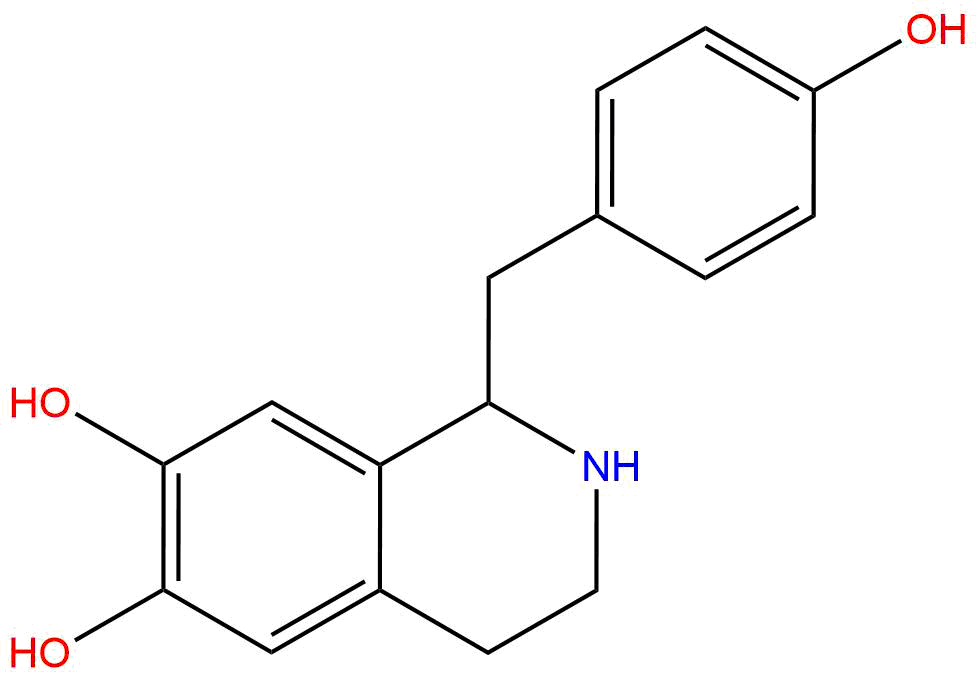


Product name: Higenamine
Synonym name: Demethyl-coclaurine
Catalogue No.: BP3034
Cas No.: 5843-65-2
Formula: C16H17NO3
Mol Weight: 271.316
Botanical Source:
Physical Description:
Type of Compound: Alkaloids
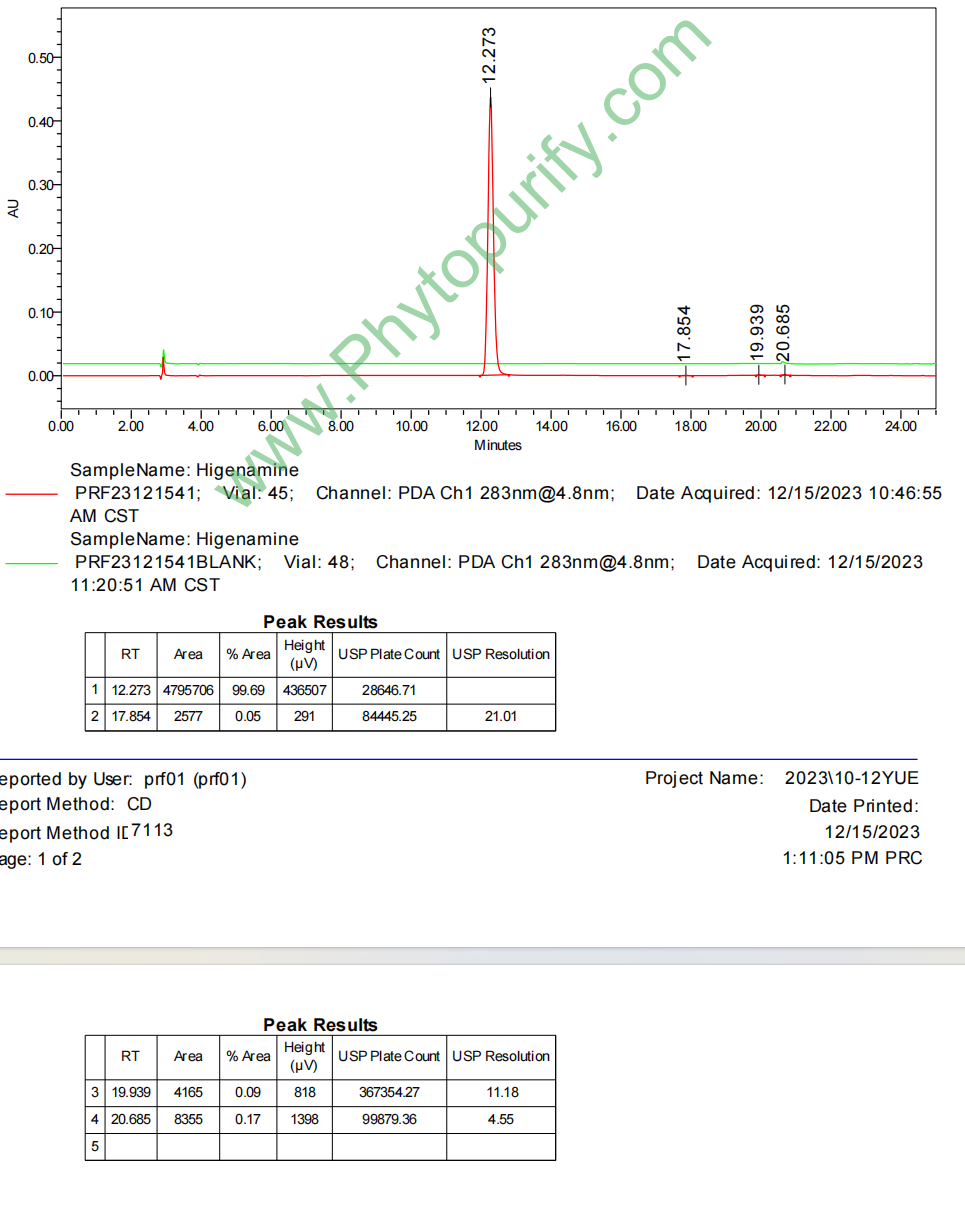
Purity: 95%~99%
Analysis Method: HPLC-DAD or/and HPLC-ELSD
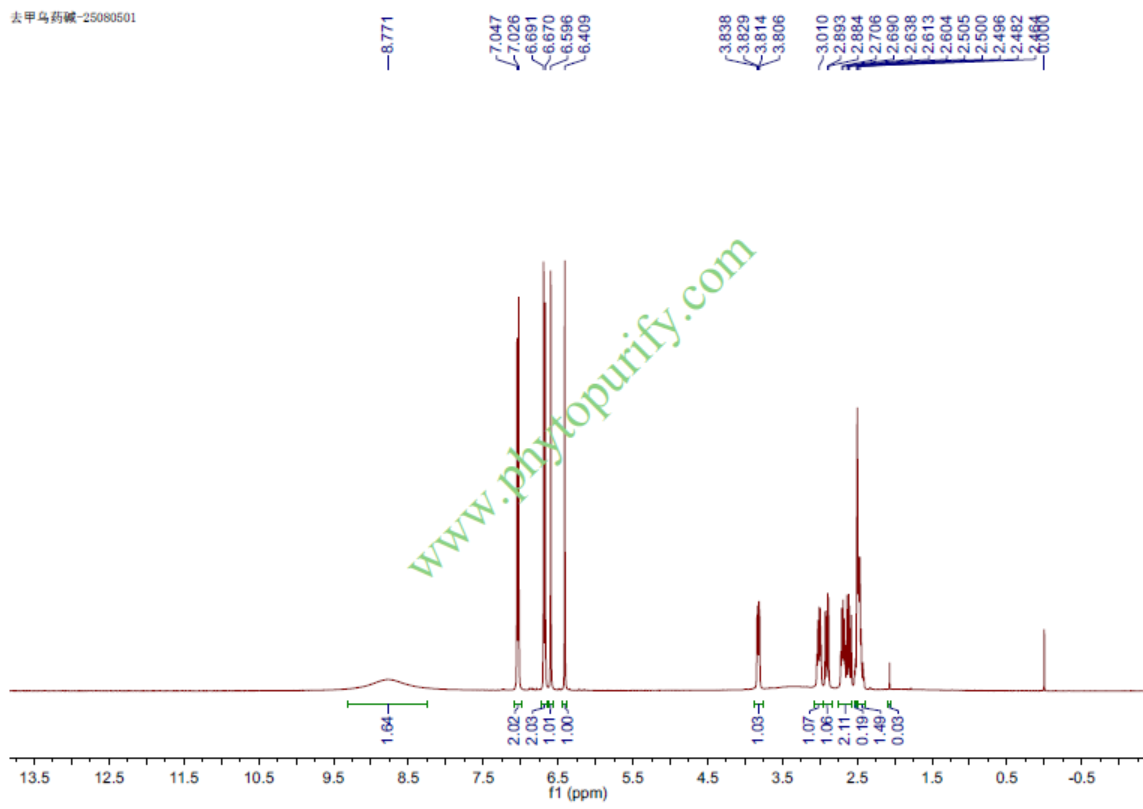
Identification Method: Mass, NMR
Packing: Brown vial or HDPE plastic bottle
The product could be supplied from milligrams to grams. Inquire for bulk scale.
We provide solution to improve the water-solubility of compounds, thereby facilitating the variety of activity tests and clinic uses.
For Reference Standard and R&D, Not for Human Use Directly.
HPLC of Higenamine
HNMR of Higenamine
Storage conditions:Short-term storage at 2~8℃, long-term storage at -20 ~ -80℃
72.7200
1.4946
.4060
1.2970
1.8519
9.7360
Low
59.8349
2.8181
No
Yes
No
No
Yes
No
0.6
Yes
No
No
No
Higenamine, also commonly known as Norcoclaurine, is a benzylisoquinoline alkaloid with a tetrahydroisoquinoline skeleton. Its CAS number is 5843-65-2. As a key active ingredient in various medicinal plants, especially a representative substance in traditional Chinese medicine Aconitum species, it has long been of great concern. Modern pharmacological research has revealed that norepinephrine alkaloids exhibit complex biological activities with multiple targets and pathways, and their core function lies in bidirectional regulation of adrenergic receptors - acting as both β 2-adrenergic receptor (β 2-AR) agonists and α 1-adrenergic receptor antagonists. This characteristic lays the foundation for their research in the treatment of cardiovascular diseases, especially heart failure. In addition, research has found that it has significant activities in anti-inflammatory, antioxidant, anti apoptotic, promoting bone formation, and epigenetic regulation (such as inhibiting histone demethylase LSD1), expanding its research scope to osteoporosis, ischemia/reperfusion injury, inflammatory diseases, and even cancer. This article aims to provide a systematic review of the chemical properties, plant sources, pharmacological activities, molecular mechanisms, medicinal properties, and clinical application prospects of demethylamine alkaloids, in order to provide comprehensive scientific references for the in-depth research and development of this natural product.
The molecular formula of Noraconitine is C16H17NO3, with a molecular weight of 271.3160 g/mol. Its chemical structure belongs to tetrahydroisoquinoline alkaloids, and its basic skeleton is formed by the condensation of a phenylethylamine unit and a dopamine unit, forming a 1-benzyl-1,2,3,4-tetrahydroisoquinoline structure, with hydroxyl and methoxy substituents attached to the benzene ring. This structure is the basis for its interaction with multiple receptors and enzymes.
From the analysis of parameters related to drug properties, its lipophilic water partition coefficient (LogP) is about 1.49, indicating that the compound has a certain degree of lipophilicity, but not high hydrophobicity, which is beneficial for its penetration into cell membranes. The topological polar surface area (TPSA) is 72.72 Å ², which is at a moderate level, indicating that it may have good membrane permeability. The water solubility value is about 1.297 mg/mL, which belongs to the range of slightly soluble to soluble, which poses a consideration for its formulation development. Pharmacokinetic predictions indicate that its blood-brain barrier permeability is low and it mainly acts on the peripheral system, which may reduce the risk of central nervous system side effects to some extent. Importantly, its hERG inhibition risk is negative, reducing the potential risk of inducing QT interval prolongation and apical torsion type ventricular tachycardia, which is particularly critical for cardiovascular drug candidate compounds. The Ames test result is 0.6, indicating a low risk of mutagenicity, but further in vitro and in vivo genetic toxicity assessment is needed to confirm. These physicochemical and preliminary ADMET (absorption, distribution, metabolism, excretion, and toxicity) characteristics indicate that demethylamine has a good foundation as a lead compound or drug candidate.
Noraconitine is widely present in various plants, especially in the Aconitum genus of the Ranunculaceae family, such as Aconitum carmichaelii and Aconitum carmichaelii's lateral root processed products. In addition, it has also been found in lotus plants such as lotus seed hearts and some magnolia plants. In traditional toxic traditional Chinese medicine such as Aconitum, demethylamine often coexists with highly toxic diterpenoid alkaloids (such as Aconitum alkaloids), which poses a challenge to its safe extraction and purification.
The traditional extraction method mainly relies on solvent extraction. The common process includes: crushing dried plant materials (such as Aconitum roots), and then leaching or reflux extraction with alcohols (such as methanol, ethanol) or acid water solutions. After concentration, the extract is preliminarily enriched using the alkaline properties of alkaloids through acid precipitation and alkaline precipitation. Further purification relies heavily on chromatographic techniques, including silica gel column chromatography, reverse phase high performance liquid chromatography (RP-HPLC), etc., to obtain high-purity berberine. With the development of technology, preparative chromatography techniques such as high-speed counter current chromatography (HSCCC) have also been applied for the separation and purification of this compound due to their high efficiency and avoidance of irreversible adsorption by silica gel. It is worth noting that due to the toxicity of Aconitum raw materials, the entire extraction and purification process must be carried out under strict safety regulations. In addition, chemical synthesis and biosynthetic pathways are also important ways to obtain demethylamine alkaloids, especially to meet the demand for a large number of standardized products in pharmacological research and drug development.
The pharmacological activities of berberine are extensive and diverse, mainly covering cardiovascular system protection, anti-inflammatory and antioxidant effects, neuroprotection, bone metabolism regulation, and anti-tumor effects.
Protective effect on cardiovascular system This is the core activity that attracts the most attention in the field of berberine. As a β 2-AR agonist, it can positively increase muscle strength (enhance myocardial contractility) and frequency (moderately increase heart rate), while dilating peripheral blood vessels (partially due to α 1-AR antagonism), thereby improving cardiac pumping function, and is suitable for research on acute heart failure. In the myocardial ischemia/reperfusion (I/R) injury model, norepinephrine can significantly reduce the myocardial infarction area and protect myocardial cells from apoptosis. Its hydrochloride form has also been confirmed to have anti-inflammatory and antibacterial activity, which may have an auxiliary protective effect on infection or inflammation related myocardial injury.
Anti inflammatory and antioxidant effects Noraconitine can scavenge free radicals, inhibit lipid peroxidation, and exhibit direct antioxidant capacity. In the inflammatory model, it can inhibit the production of pro-inflammatory cytokines (such as IL-1 β, TNF - α) and alleviate the inflammatory response. Its anti-inflammatory effect is closely related to its regulation of cellular signaling pathways.
Neuroprotective effect Research has shown that norepinephrine can protect brain cells from hypoxia/ischemic damage, and its mechanism may be related to reducing oxidative stress and inhibiting cell apoptosis, providing a potential research direction for the treatment of stroke and other diseases.
Bone metabolism regulation effect Noraconitine has been proven to promote osteoblast differentiation and bone formation by activating the SMAD2/3 signaling pathway, while inhibiting osteoclast activity, effectively improving osteoporosis symptoms in animal models and demonstrating potential for the treatment of osteoporosis.
Antitumor potential As a selective LSD1 inhibitor (IC50=1.47 μ M), demethylamine can affect the proliferation, differentiation, and apoptosis of tumor cells through epigenetic regulation. LSD1 is highly expressed in various hematological and solid tumors, and its inhibition has become a new strategy for anti-cancer drug development. In addition, its anti-inflammatory and antioxidant properties may also play a role in tumor prevention.
Other potential applications Based on its multi-target properties, norepinephrine has also received attention in the study of complex diseases such as cardiorenal syndrome (a clinical syndrome characterized by the exacerbation of cardiac and renal dysfunction).
The multiple pharmacological effects of norepinephrine stem from its regulation of multiple key molecular targets, forming a complex network.
Adrenergic receptor system This is the core target of its cardiovascular function.β 2-adrenergic receptor (β 2-AR) The activation of is the main mechanism for generating positive muscle strength, protecting myocardial cells from apoptosis and I/R injury. After activation of β 2-AR, adenylate cyclase (AC) is activated by Gs protein, which increases intracellular cAMP levels and activates protein kinase A (PKA), exerting a protective effect. Meanwhile, its impact on α1-adrenergic receptor The antagonistic effect helps to dilate blood vessels, reduce peripheral resistance, and produce a blood pressure lowering effect. This dual effect of stimulating β 2-AR and antagonizing α 1-AR forms a unique pharmacological feature of "strong heart without significant pressure increase" or "strong heart with possible blood pressure reduction", which is highly valuable for the treatment of heart failure.
Intracellular signaling pathways:
Epigenetic targets:Histone demethylase LSD1 (KDM1A) It is an important target for its anti-tumor effect. Noraconitine increases the methylation level of histone H3K4 by inhibiting the activity of LSD1, thereby activating the transcription of a series of tumor suppressor genes and inhibiting tumor cell growth.
Other related targets According to the provided target list, the action of norepinephrine may also involve APP (amyloid precursor protein) related to neurodegenerative diseases, MAOA (monoamine oxidase A) related to monoamine metabolism, ALOX15 (lipoxygenase 15) related to inflammation, ABCB1 and ABCG2 transporters related to drug efflux, and ESR2 (estrogen receptor beta) related to estrogen signaling. These targets suggest their potential research value in broader disease fields such as Alzheimer's disease, depression, inflammation, and multidrug resistance. The association between protein tyrosine phosphatase PTPN1 and histone methyltransferase EHMT2 further enriches their functional network in cell signal transduction and epigenetic regulation.
Despite the extensive pharmacological activity demonstrated by norepinephrine, its drug like and pharmacokinetic (PK) properties still need to be systematically evaluated for drug development.
Based on preliminary computer predictions and some experimental data, its molecular weight is moderate, and its LogP and TPSA values meet the basic requirements of the Rule of Five, indicating that it has good oral absorption potential. The water solubility is acceptable, but further improvement in bioavailability may be required through salt formation (such as its hydrochloride salt) or formulation techniques. The low permeability of the blood-brain barrier makes it mainly act on the periphery, which may avoid central side effects, but also limits its direct therapeutic effect on central nervous system diseases.
Regarding pharmacokinetics, there is relatively limited publicly available detailed research data. As an alkaloid, its absorption efficiency and first pass effect in the small intestine after oral administration need to be clarified. The distribution in the body may be wide, but the specific tissue distribution characteristics need to be studied. In terms of metabolism, demethylamine may undergo oxidative metabolism through the liver's cytochrome P450 enzyme system (such as CYP2D6, CYP3A4), as well as methylation, glucuronidation, or sulfation binding reactions. The activity and toxicity of its metabolites are key concerns. The excretion pathway may mainly pass through the kidneys (prototype or metabolite). The key PK parameters such as half-life and clearance rate need to be determined through standardized animal and human studies.
In terms of safety, hERG inhibition negative is an advantage, but the background of Aconitum origin requires careful overall toxicity assessment. Although its toxicity is much lower than that of diterpenoid alkaloids such as aconitine, comprehensive preclinical toxicology studies are still needed, including acute toxicity, long-term toxicity, reproductive toxicity, etc., to clarify its therapeutic window. Although the preliminary results of the Ames test are optimistic, a complete genotoxicity package test is indispensable.
The clinical application prospects of norepinephrine mainly focus on the following aspects, but also face many challenges.
cardiovascular disease As a compound that combines positive inotropic and vasodilatory effects, its acute decompensated heart failure,ADHF It has unique advantages in treatment. Compared to traditional inotropic drugs such as dobutamine, it may have more balanced hemodynamic effects and lower oxygen consumption. At present, its injectable form has entered the clinical trial stage for treating heart failure in China, which is the direction closest to clinical translation. In addition, its protective effect on myocardial I/R injury also makes it potential for adjuvant therapy during the perioperative period of myocardial infarction.
osteoporosis The mechanism by which it promotes bone formation through the SMAD pathway is clear, providing insights for the development of novel approaches Bone formation promoting and anti osteoporosis drugs Provided candidate molecules. Especially for patients who have poor efficacy of existing anti absorption therapies or need to increase bone mass, it has important value.
tumor therapy As a natural LSD1 inhibitor, it is Epigenetic targeted anticancer drugs Research and development have provided new ideas. It can be considered as a lead compound for structural optimization to improve its selectivity and inhibitory efficacy towards LSD1, or in combination with other anticancer drugs.
Other fields Basic research in inflammatory diseases, cardiorenal syndrome, and even neuroprotection has laid the foundation for the expansion of its future indications.
Challenges and Prospects Faced:
* Selective optimization Although its dual effects on β 2-AR and α 1-AR are distinctive, the precise ratio and intensity may need to be optimized to maximize efficacy and minimize side effects (such as tachycardia and hypotension). Developing derivatives with higher selectivity through structural modification is an important direction.
* Pharmacokinetic optimization The PK characteristics of natural products are often not ideal. It is necessary to improve its oral bioavailability and prolong its half-life through prodrug strategies, formulation techniques, or structural modifications.
* Deep Security Assessment It is necessary to thoroughly clarify the difference between it and the toxic components of Aconitum and prove its long-term safety when used alone through rigorous research.
* Research on Multi target Collaborative Mechanism The benefits of its treatment for complex diseases such as heart failure and osteoporosis are likely to stem from multi-target synergy. In the future, it is necessary to use methods such as systems pharmacology and network pharmacology to thoroughly elucidate the overall action network of "multi-component multi-target multi pathway".
* Modern research paradigm of traditional Chinese medicine Noraconitine is an active ingredient found in traditional toxic Chinese medicine, and its successful research has interpreted the modernization path of traditional Chinese medicine through "reducing toxicity and preserving efficacy" or "removing toxicity and obtaining efficacy", providing an example for the research of other similar traditional Chinese medicines.
Noraconitine, as a tetrahydroisoquinoline alkaloid derived from the traditional Chinese medicine Aconitum, is a successful case in modern natural product pharmacology research. It breaks through the toxicity limitations of the original medicinal materials and has been revealed to have rich pharmacological activities on multiple targets such as β 2/α 1-adrenergic receptors, LSD1, PI3K/Akt, SMAD2/3, etc. It has demonstrated clear potential applications in heart failure, myocardial protection, osteoporosis, anti-tumor and other fields. Its unique pharmacological characteristics of both stimulating and antagonizing adrenergic receptors provide a new approach for the treatment of heart failure. Although further exploration is still needed in terms of selectivity, pharmacokinetics, and comprehensive safety evaluation, with the continuous advancement of chemical, pharmacological, and clinical research, demethylamine and its structurally optimized derivatives are expected to develop into new drugs for treating various major diseases, fully reflecting the enormous potential of exploring the value of modern drugs from traditional natural resources.
