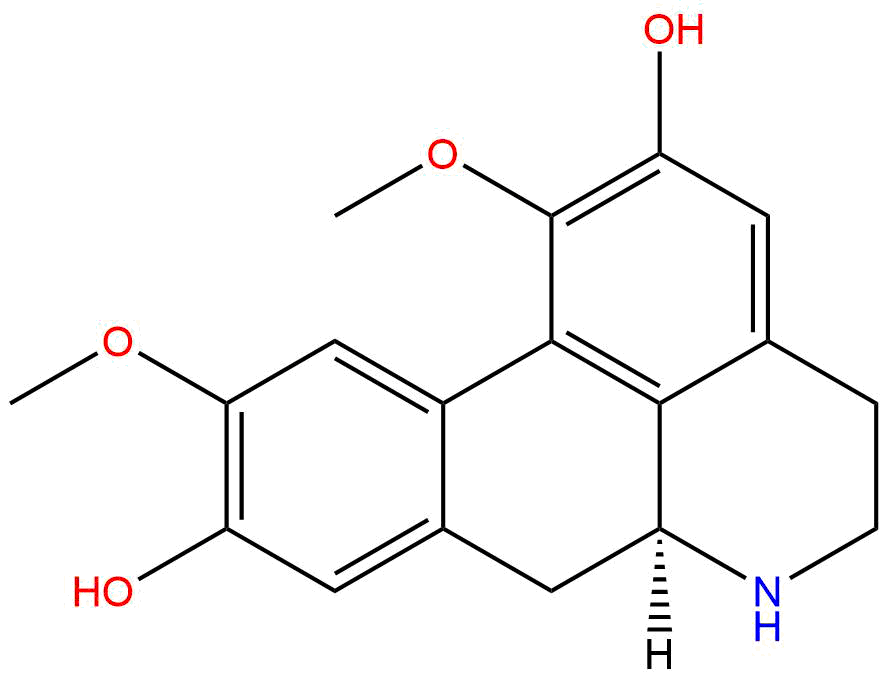


Product name: Norboldine
Synonym name: Laurolistine;Laurolitsine;Norisoboidine;(+)-Norboldine
Catalogue No.: BP2011
Cas No.: 5890-18-6(Free base)
Formula: C18H19NO4
Mol Weight: 349.11
Botanical Source:
Physical Description:
Type of Compound:
Purity: 95%~99%
Analysis Method: HPLC-DAD or/and HPLC-ELSD
Identification Method: Mass, NMR
Packing: Brown vial or HDPE plastic bottle
The product could be supplied from milligrams to grams. Inquire for bulk scale.
We provide solution to improve the water-solubility of compounds, thereby facilitating the variety of activity tests and clinic uses.
For Reference Standard and R&D, Not for Human Use Directly.
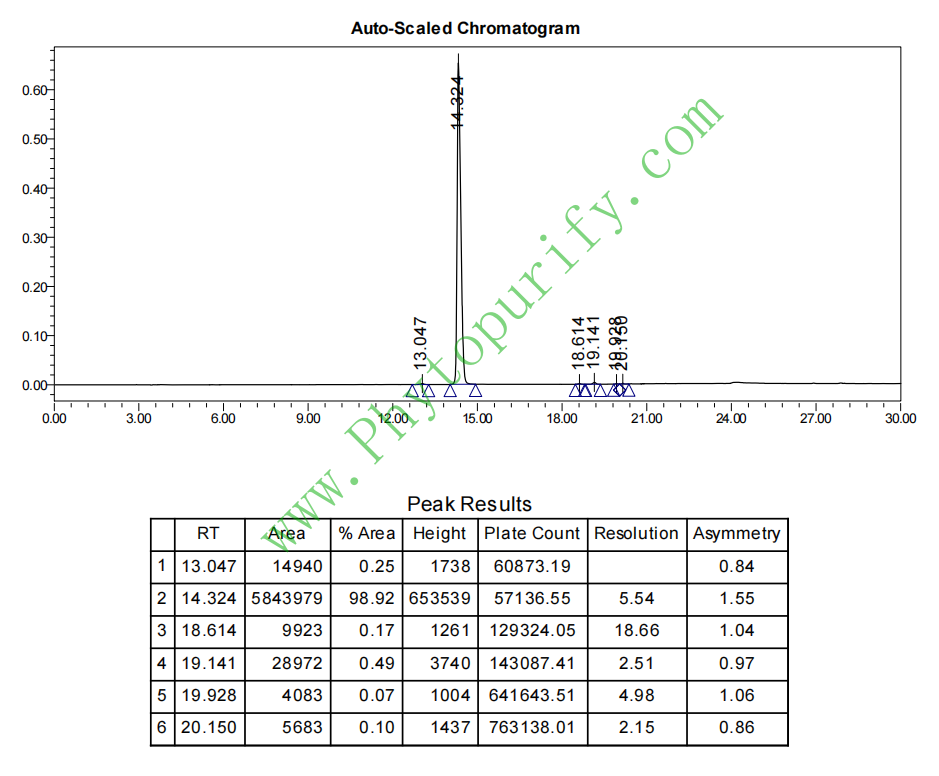
HPLC of Norboldine
Storage conditions:Short-term storage at 2~8℃, long-term storage at -20 ~ -80℃
71.0400
1.7000
1.7000
Low
Unknown
Unknown
Unknown
Unknown
No
Unknown
Norboldine (CAS number: 5890-18-6) is an aporphine alkaloid with unique structural features, originally isolated from plants such as Lindera aggregata and Dioscorea spp. As a derivative of normorphine, norpoldine has a unique biological activity due to its substitution characteristics of hydroxyl groups at positions 2 and 9, as well as methoxy groups at positions 1 and 10 in its molecular structure. In recent years, with the deepening development of natural product pharmacology, demethylprednisolone has attracted much attention due to its inhibitory effect on HIV-1 integrase, demonstrating potential antiviral drug development value. In addition, as a representative of aporphine alkaloids, it has shown broad application prospects in pharmacological activities such as anti-inflammatory, anti-tumor, and neuroprotective studies.
This article aims to provide a systematic review of the chemical structure and physicochemical properties, plant sources, and extraction methods of desmopyramid, and to explore its pharmacological activity and mechanism of action in depth. Combining the evaluation of drug properties and pharmacokinetic characteristics, the potential and future development directions of desmopyramid in clinical applications are discussed, providing theoretical basis and research reference for the drug development of this natural product.
Norpovidone belongs to the aporphine alkaloid class, with a molecular formula of C19H23NO4 and a molecular weight of 313.35. Its structural feature is the substitution of hydroxyl groups (- OH) at positions 2 and 9, as well as methoxy groups (- OCH3) at positions 1 and 10 of the demethylated morphine skeleton, forming functional groups of phenols and aromatic ethers. This structure endows it with high polarity, with a TPSA (topological polar surface area) of 71.04 Å ², indicating that it has a certain hydrogen bond acceptor ability (5 hydrogen bond acceptors), which is conducive to forming stable interactions with biological targets.
The LogP value of norepinephrine is 1.7, indicating moderate lipid solubility that facilitates membrane penetration but has low blood-brain barrier permeability (Blood Brain Barrier permeability is Low), suggesting that its efficacy in the central nervous system may be limited. Its physicochemical properties are stable and suitable for the development of drug formulations, but safety indicators such as hepatotoxicity, cardiotoxicity, hERG channel inhibition, and mutagenicity (Ames test) are not yet clear and require further systematic evaluation.
Norfenapyr is mainly distributed in Lindera spp. and some Dioscorea spp. plants. As a traditional Chinese medicinal herb, Mujiangzi is widely used to treat digestive system diseases and inflammation. Its roots, stems, and leaves contain abundant aporphine alkaloids. Yam is known for its medicinal and edible properties, and the presence of demethylphenol has also been detected in some species.
The commonly used methods for extracting desmopyrazine include:
Solvent extraction Using methanol, ethanol, or a mixture of methanol and water solvents for reflux extraction of plant dried powder, utilizing its polarity characteristics to effectively dissolve target alkaloids.
Liquid liquid distribution By adjusting the pH value, alkaloids are transferred from the aqueous phase to the organic phase (such as chloroform or ethyl acetate) to achieve preliminary purification.
Column chromatography separation Using silica gel or C18 reverse phase column for separation and purification, combined with gradient elution technology, high-purity demethylprednisolone can be obtained.
High performance liquid chromatography (HPLC) analysis Used for qualitative and quantitative testing to ensure the quality and purity of the extract.
In recent years, ultrasound assisted extraction and microwave-assisted extraction technologies have also been introduced, improving extraction efficiency and purity, reducing solvent usage and extraction time, and providing technical support for industrial production.
The most notable pharmacological activity of norepinephrine is its inhibitory effect on HIV-1 integrase (IN). HIV-1 integrase is a key enzyme in the viral replication cycle, responsible for integrating viral DNA into the host genome, and is an important target for antiretroviral therapy. In vitro experiments have shown that demethylamine can effectively inhibit HIV-1 integrase activity, block the integration process of the viral genome, and thus inhibit viral replication.
In addition, further research is needed to investigate the effects of norepinephrine on other key HIV enzymes such as reverse transcriptase (RT) and protease (PR), but its multi-target potential as a natural product provides new ideas for the development of anti HIV drugs.
Apophine alkaloids generally have anti-inflammatory effects, and demethylpheniramine exhibits significant anti-inflammatory effects by inhibiting the nuclear factor kappa B (NF - κ B) signaling pathway and cyclooxygenase-2 (COX-2, PTGS2) expression, reducing the release of inflammatory mediators such as tumor necrosis factor alpha (TNF - α). This mechanism of action provides a theoretical basis for its application in inflammatory diseases such as arthritis and inflammatory bowel disease.
Preliminary studies have shown that desmopyrazine has inhibitory effects on proliferation and induces apoptosis in various tumor cell lines. The mechanism may involve regulating the function of p53 protein (TP53), inhibiting the expression of anti apoptotic protein Bcl-2 (BCL2), and blocking the signaling pathways of epidermal growth factor receptor (EGFR) and vascular endothelial growth factor receptor (KDR), thereby inhibiting the growth of tumor cells and angiogenesis.
Despite its low blood-brain barrier permeability, the inhibitory effect on acetylcholinesterase (ACHE) and its regulation of pathological processes related to β - amyloid precursor protein (APP) and α - synuclein (SNCA) suggest its potential application value in neurodegenerative diseases such as Alzheimer's disease and Parkinson's disease.
The pharmacological effects of norepinephrine depend on its interactions with multiple molecular targets, and the specific mechanisms are as follows:
HIV-1 integrase inhibition Norpovidone blocks the integration process between viral DNA and host chromatin by binding to the active site of integrase, thereby inhibiting viral replication. Molecular docking and dynamic simulations show that its hydroxyl and methoxy groups participate in key hydrogen bonding and hydrophobic interactions, enhancing binding affinity.
Regulation of anti-inflammatory signaling pathway By inhibiting the nuclear translocation of NF - κ B, the expression of pro-inflammatory cytokines such as TNF - α and IL-6 is reduced; Simultaneously inhibiting COX-2 enzyme activity, reducing prostaglandin synthesis, and alleviating inflammatory response.
Intervention of tumor related signaling pathways Regulating the cell cycle and apoptosis pathway mediated by p53, reducing Bcl-2 expression, and promoting tumor cell apoptosis; Simultaneously inhibiting EGFR and KDR signaling, blocking tumor proliferation and angiogenesis.
Neuroprotective mechanism Inhibiting acetylcholinesterase activity, prolonging the duration of acetylcholine action, and improving cognitive function; Regulate APP and SNCA protein metabolism to slow down neurotoxic protein aggregation.
The pharmacological parameters of desmopyrdine indicate that it has certain potential for drug development:
However, the low blood-brain barrier permeability of norepinephrine limits its direct application in central nervous system diseases. In terms of safety, key indicators such as hepatotoxicity, cardiotoxicity, and hERG channel inhibition are not yet clear and need to be evaluated through systematic in vitro and in vivo toxicology studies.
Pharmacokinetic data is currently lacking, and future research should focus on its absorption, distribution, metabolism, and excretion (ADME) characteristics, especially the activity and safety evaluation of metabolic pathways and metabolites.
Norpovidone, as a natural aporphine alkaloid with multi-target effects, exhibits a wide range of pharmacological activities, especially in the field of anti HIV, with significant potential. Its inhibitory effect on HIV-1 integrase provides an important chemical backbone and lead compound for the development of novel antiretroviral drugs. In addition, the anti-inflammatory, anti-tumor, and neuroprotective effects of norepinephrine have expanded its clinical application possibilities.
Future research should focus on:
Structural optimization and derivative design Improving its targeting activity and pharmacokinetic performance through chemical modification, addressing the issues of poor blood-brain barrier permeability and potential toxicity.
Pharmacological and toxicological evaluation of the system Clarify its safety, especially liver and cardiac toxicity, to ensure the safety of clinical applications.
In vivo efficacy and mechanism verification Using animal models to validate its antiviral, anti-inflammatory, and anti-tumor effects, and further elucidate its molecular mechanisms.
Multi target combination therapy strategy Combining other antiviral or anti-tumor drugs to exert synergistic effects and improve treatment efficacy.
Preclinical and clinical research Promote the clinical trial phase of demethylprednisolone and its derivatives to evaluate their efficacy and safety.
As a natural source of aporphine alkaloids, demethylamine has shown significant drug development value due to its unique chemical structure and diverse pharmacological activities, especially its inhibitory effect on HIV-1 integrase. Although its drug properties and safety data are not yet complete, with the development of modern medicinal chemistry and pharmacology techniques, norepinephrine is expected to become a new candidate drug for antiviral and various disease treatments. In the future, through systematic structural optimization, mechanism research, and clinical evaluation, demeprazole is expected to occupy a place in the field of natural product drug development, promoting innovation and progress in related disease treatment strategies.
