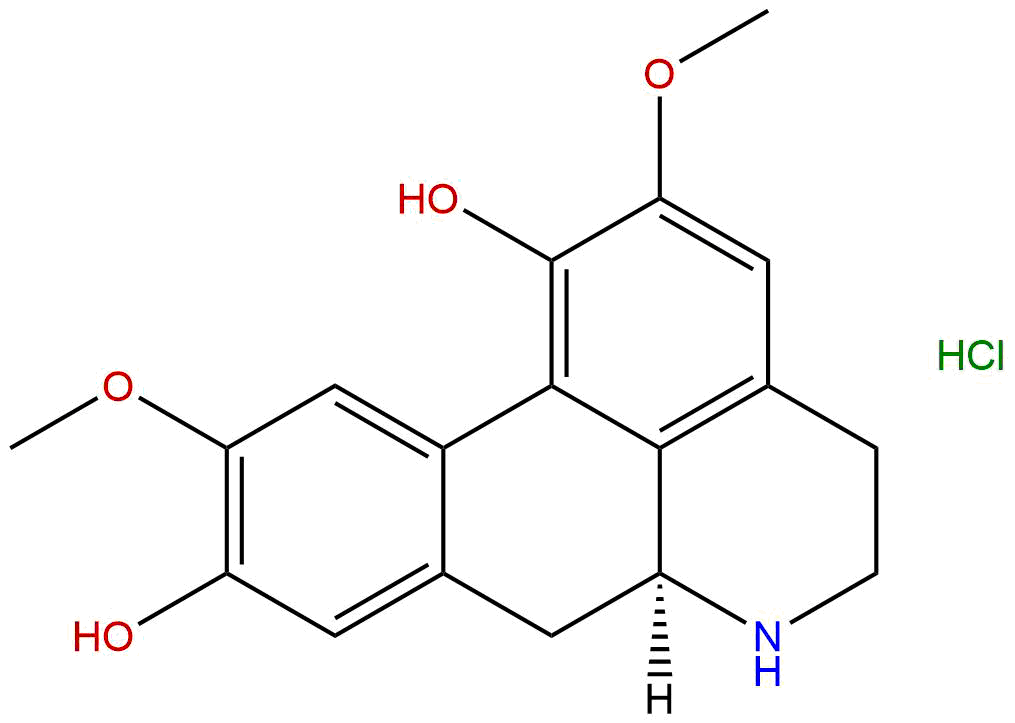


Product name: Norisoboldine hydrochloride
Synonym name: Laurelliptine hydrochloride
Catalogue No.: BP2440
Cas No.: 5083-84-1
Formula: C18H20ClNO4
Mol Weight: 349.811
Botanical Source:
Type of Compound: Alkaloids
Purity: 95%~99%
Analysis Method: HPLC-DAD or/and HPLC-ELSD
Identification Method: Mass, NMR
Packing: Brown vial or HDPE plastic bottle
Storage: Store in a well closed container, protected from air and light. Put into refrigerate or freeze for long term storage.
Whenever possible, you should prepare and use solutions on the same day. However, if you need to make up stock solutions in advance, we recommend that you store the solution as aliquots in tightly sealed vials at -20℃. Generally, these will be useable for up to two weeks.
The product could be supplied from milligrams to grams
Inquire for bulk scale.
For Reference Standard and R&D, Not for Human Use Directly.
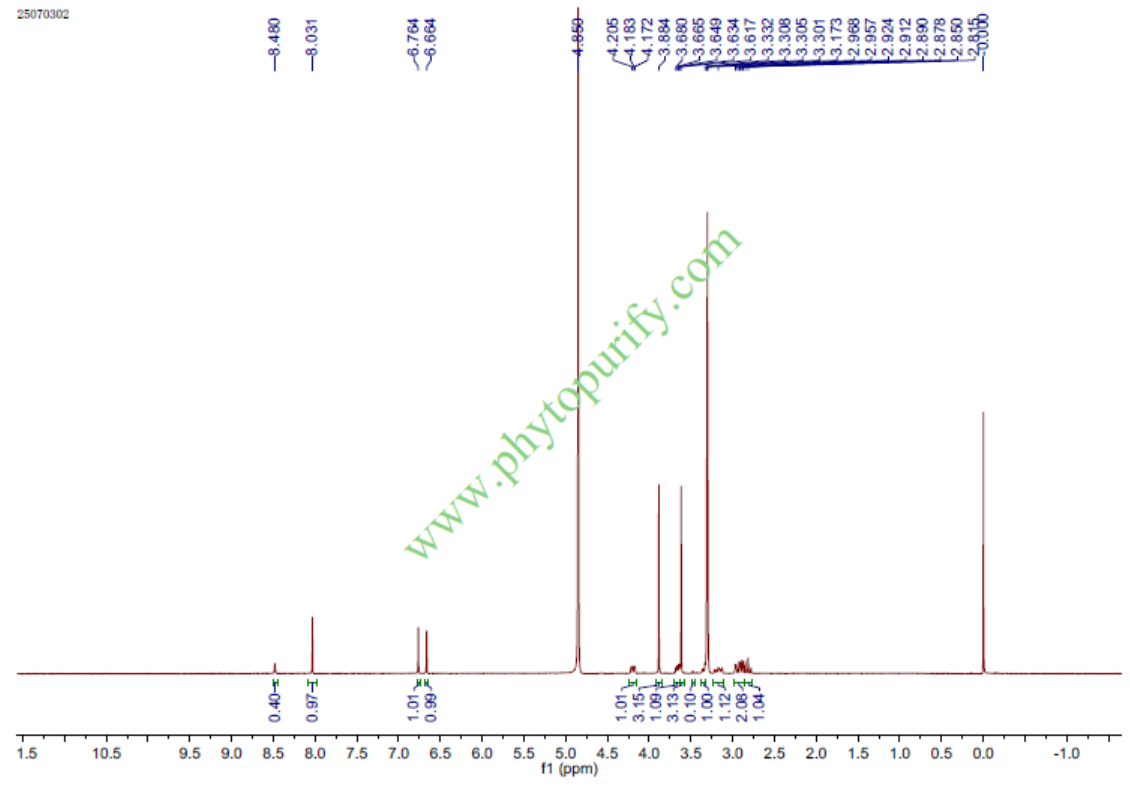
HNMR of Norisoboldine hydrochloride
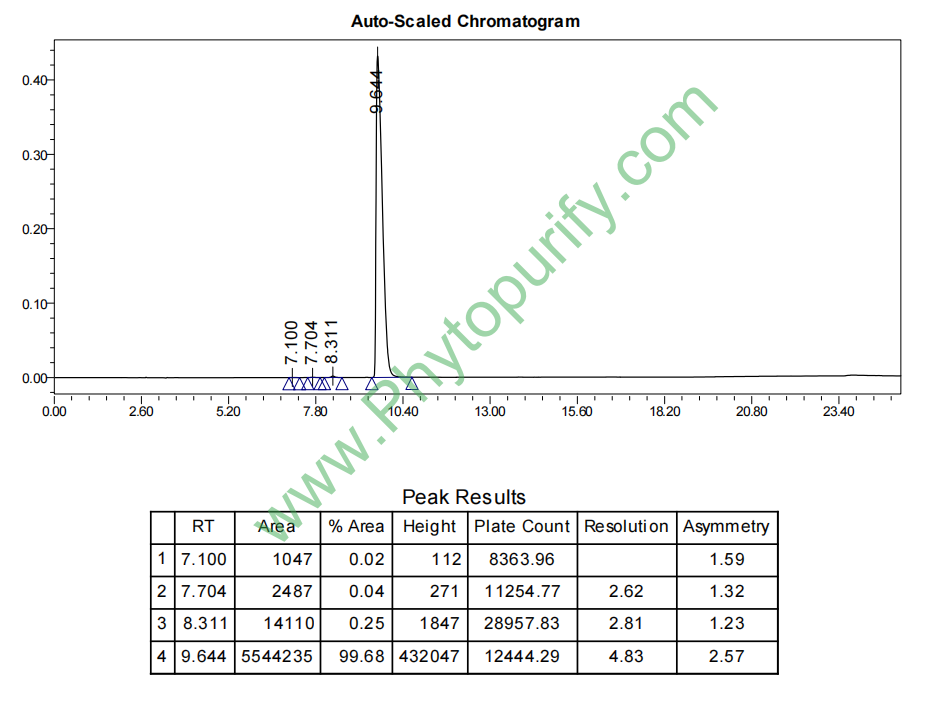
HPLC of Norisoboldine hydrochloride
Storage conditions:Short-term storage at 2~8℃, long-term storage at -20 ~ -80℃
Unknown
Unknown
Unknown
Unknown
Unknown
Unknown
Unknown
Unknown
Unknown
Natural products, as an important source of drug discovery, play an irreplaceable role in the long history of human fight against diseases. Among numerous natural compounds with biological activity, isoquinoline alkaloids have attracted much attention due to their structural diversity and extensive pharmacological activities. Norisoboldine (NOR) is a traditional Chinese medicine derived from black medicine(Lindera aggregata (Sims) Kosterm., The main isoquinoline alkaloids, also known as ginseng, belong to the aporphine alkaloid family. Its hydrochloride form, Noriobodine hydrochloride (CAS number: 5083-84-1), has become a commonly used form in pharmacological research due to its good water solubility and stability.
In recent years, with the in-depth exploration of the molecular mechanisms of immune regulation and inflammatory diseases, demethyl isopole hydrochloride has attracted widespread attention from the international academic and pharmaceutical industries due to its unique pharmacological activity, especially as a natural aryl hydrocarbon receptor (AhR) agonist. AhR is a ligand activated transcription factor initially recognized for mediating the toxic effects of environmental toxins such as dioxins. However, research in the past two decades has completely overturned this traditional understanding, revealing the core role of AhR in maintaining immune homeostasis, regulating intestinal barrier function, regulating inflammatory responses, and cell differentiation. Therefore, the search for safe, efficient, endogenous or natural sources of AhR modulators has become a hot topic in drug development.
Dexmedetomidine hydrochloride stands out in this context. Research has shown that it can directly bind and activate AhR with moderate affinity, thereby regulating the expression of a series of downstream genes, exhibiting significant anti-inflammatory, immune regulatory, and tissue protective effects. Especially in preclinical models of autoimmune and inflammatory diseases such as rheumatoid arthritis (RA) and ulcerative colitis (UC), norepinephrine hydrochloride has shown encouraging therapeutic potential. This article aims to comprehensively review the chemical structure, plant origin, pharmacological activity, molecular mechanism, pharmacological characteristics, and clinical application prospects of norepinephrine hydrochloride, in order to provide a systematic academic reference for the in-depth research and development of this natural product.
The chemical structure of demethyl isopole hydrochloride belongs to the aporphine type alkaloid, with a core skeleton of a four ring system derived from the benzylisoquinoline structure. Its chemical name is 1,2,10-trimethoxy-6-methyl-5,6,6a,7-tetrahydro-4H-dibenzo [de, g] quinoline-11-phenol hydrochloride. Structurally, Norisoboldine is similar in structure to other aporphine alkaloids such as Boldine and Isoboldine. Its key feature is the presence of one phenolic hydroxyl group (- OH) and two methoxy groups (- OCH) on the A ring, one methoxy group on the D ring, and one N-methyl group (- NCH) on the D ring. This specific substitution pattern endows it with unique chemical properties and biological activity.
In terms of physical and chemical properties, demethyl isopole hydrochloride (molecular formula: C ₁₉ H ₂₂ ClNO ₄, molecular weight: 349.81 g/mol) is a crystalline powder that typically appears white to off white. Its hydrochloride form significantly increases the solubility of the parent compound in water, which is crucial for oral administration and in vivo pharmacokinetic studies. This compound is relatively stable in acidic environments, but may degrade under strong alkaline conditions. The characteristic peaks of its UV absorption spectrum are usually around 280 nm and 310 nm, which provides convenience for quantitative analysis using high-performance liquid chromatography (HPLC) or liquid chromatography-mass spectrometry (LC-MS) techniques.
It is worth noting that there is a chiral center (C6a position) in the molecule of demethyl isopole, therefore it has optical activity. The naturally occurring form of demethyl isopole is usually in the left-handed (S configuration) form. Its optical activity not only affects its binding mode with biological targets such as AhR, but may also affect its metabolic pathways and pharmacological characteristics. At present, the detailed crystal structure and eutectic structure analysis with AhR ligand binding domain (LBD) of demethyl isopole hydrochloride are still ongoing, which has important guiding significance for structure based drug design (SBDD). In addition, its logP value (oil-water partition coefficient) is moderate, indicating that it has both hydrophilicity and lipophilicity, which is conducive to transmembrane transport and interaction with intracellular receptor AhR.
The main source of norepinephrine is Lauraceae, a genus of mountain pepper in the Lauraceae family(Lindera)Plants, the most famous source of which is the traditional Chinese medicine Wuyao(Lindera aggregata Also known as Tiantai Wu Yao. The dried root of Wuyao has the effects of promoting qi circulation, relieving pain, warming the kidneys, and dispelling cold in traditional Chinese medicine theory. It is commonly used to treat chest and abdominal distension, dysmenorrhea caused by cold coagulation and qi stagnation, as well as frequent urination caused by bladder deficiency and cold. Modern plant chemistry research has shown that black medicine contains abundant alkaloids, volatile oils, lactones, and flavonoids, with aporphine alkaloids being one of its important active ingredient groups. In addition to black medicine, demethyl isoproterenol also exists in other camphor plants, such as Lindera strychnifolia、Litsea cubeba Among certain plants in the Menispermaceae family, black medicine remains the main source of research.
The extraction and purification process of dexmedetomidine usually follows the classic route of natural product chemistry, combined with modern chromatographic techniques to improve efficiency and purity. A typical extraction process includes the following steps:
Raw material pretreatment and extraction After the dried root tubers of black medicine are crushed, acidic solvents (such as ethanol or methanol solutions containing 0.5% -1% hydrochloric acid) are usually used for percolation or reflux extraction. Acidic conditions help to convert alkaloids from plant cells into salt form for dissolution, improving extraction efficiency. The extract is filtered and concentrated under reduced pressure to obtain a paste.
Preliminary purification The concentrated extract is dispersed in an appropriate amount of water and then subjected to liquid-liquid extraction using organic solvents such as petroleum ether and ethyl acetate to remove fat soluble impurities such as chlorophyll and oil. Subsequently, the aqueous phase is adjusted to alkaline (pH 9-10) with alkaline solution (such as ammonia) to allow the alkaloids to precipitate freely. Then, organic solvents such as chloroform or dichloromethane are used for extraction to obtain the total alkaloid fraction.
chromatographic separation The total alkaloid fraction was preliminarily separated by silica gel column chromatography, and gradient elution was performed using solvent systems such as chloroform methanol ammonia water. Collect fractions rich in demethyl isopole through thin-layer chromatography (TLC) monitoring. Further purification can be achieved by preparative high-performance liquid chromatography (Prep HPLC) using a reverse phase C18 column and acetonitrile water (containing appropriate amounts of formic acid or trifluoroacetic acid) as the mobile phase to achieve high-purity separation.
Salt formation and crystallization The purified free base of levonorgestrel is reacted with equimolar hydrochloric acid in ethanol or methanol solution to generate levonorgestrel hydrochloride salt. By adjusting the polarity of the solvent and lowering the temperature, it can be crystallized and precipitated to obtain high-purity pharmaceutical grade products. The yield of the entire extraction process usually depends on the quality of the raw materials and the degree of process optimization. Generally, the content of demethyl isoproterenol in the root tubers of black medicine is about 0.01% -0.05%.
In recent years, with the promotion of the concept of green chemistry, some new extraction techniques such as ultrasound assisted extraction, microwave-assisted extraction, and supercritical fluid extraction have also been attempted to be applied to the extraction of alkaloids from black medicinal herbs, aiming to shorten the extraction time, reduce the amount of organic solvents used, and improve the yield of target compounds.
The pharmacological activity research of norepinephrine hydrochloride mainly focuses on anti-inflammatory, immunomodulatory, and protective effects against specific autoimmune diseases, and its core mechanism is closely related to its role as an AhR agonist.
In an in vitro cell model, dexmedetomidine hydrochloride can significantly inhibit the production of nitric oxide (NO), prostaglandin E2 (PGE2), and various pro-inflammatory cytokines, including tumor necrosis factor - α (TNF - α), interleukin-1 β (IL-1 β), and interleukin-6 (IL-6), by macrophages (such as RAW264.7 cells) stimulated by lipopolysaccharide (LPS). Meanwhile, it can also downregulate the expression of inducible nitric oxide synthase (iNOS) and cyclooxygenase-2 (COX-2). These effects are closely related to the inhibition of the activation of nuclear factor kappa B (NF - κ B) and mitogen activated protein kinase (MAPK) signaling pathways. More importantly, these anti-inflammatory effects were significantly reversed after the addition of AhR specific antagonists (such as CH-223191), confirming that their anti-inflammatory activity depends on the activation of AhR.
Rheumatoid arthritis is an autoimmune disease characterized by chronic synovitis and joint destruction. In the collagen induced arthritis (CIA) mouse model (the classic animal model of RA), oral administration of dexmedetomidine hydrochloride (usually at a dose of 20-80 mg/kg/day) can significantly reduce joint swelling, lower clinical scores, and inhibit bone and cartilage erosion. Histopathological analysis showed that the synovial hyperplasia, inflammatory cell infiltration, and vascular opacities formation in the treatment group of mice were significantly improved. Mechanistically, norepinephrine hydrochloride promotes the differentiation and function of regulatory T cells (Tregs) by activating AhR, while inhibiting the pathogenic response of Th17 cells. The restoration of Th17/Treg balance is the key immunological basis for its therapeutic effect in RA models. In addition, it can inhibit the abnormal proliferation and invasion ability of synovial fibroblasts (FLS), and reduce the secretion of matrix metalloproteinases (MMPs), thereby directly protecting the joint structure.
Ulcerative colitis is a chronic non-specific inflammatory disease that mainly affects the colonic mucosa. Its onset is closely related to dysbiosis of the intestinal microbiota, dysfunction of the intestinal epithelial barrier, and immune abnormalities. In a mouse model of colitis induced by dextran sulfate sodium (DSS), norepinephrine hydrochloride (orally administered) also showed significant therapeutic effects. It can alleviate clinical symptoms such as weight loss, diarrhea, and rectal bleeding, lower the Disease Activity Index (DAI), and inhibit colon shortening and mucosal damage. Histological examination revealed that the colonic epithelial structure of the treatment group mice was intact, and the infiltration of inflammatory cells was significantly reduced. Its protection mechanism also depends on the activation of AhR. Activated AhR can upregulate the expression of tight junction proteins (such as ZO-1 and Occludin) in intestinal epithelial cells, thereby repairing damaged intestinal barrier function and preventing the translocation of bacteria and their metabolites (such as LPS). In addition, dexmedetomidine hydrochloride can promote the production of IL-22 in the intestinal lamina propria, which is a crucial cytokine for epithelial repair and antibacterial defense. At the same time, it can also regulate the intestinal immune microenvironment, induce the differentiation of tolerogenic dendritic cells (DCs) and Treg cells, and inhibit excessive Th1/Th17 inflammatory responses.
In addition to studies in RA and UC, preliminary exploration has also found that demethyl isoproterenol hydrochloride may have other pharmacological effects. For example, it exhibits certain antioxidant activity, capable of scavenging free radicals and upregulating the expression of antioxidant enzymes. In addition, studies have reported that it exhibits anti proliferative and pro apoptotic effects in certain tumor cell lines, but the relationship between its anti-tumor activity and the AhR signaling pathway is not yet clear, and its intensity of action is much lower than that of classical chemotherapy drugs. Therefore, its anti-tumor potential may be more reflected in its auxiliary role as an immune modulator.
The core mechanism of action of norepinephrine hydrochloride is its role as a natural aryl hydrocarbon receptor (AhR) agonist. AhR is a ligand dependent transcription factor belonging to the bHLH/PAS (basic Helix Loop Helix/Per RNT Sim) protein family. When not bound to ligands, AhR exists in the cytoplasm and forms complexes with partner proteins such as HSP90, XAP2, and p23. When ligands (such as demethyl isoproterenol) enter the cell and bind to the ligand binding domain (LBD) of AhR, they induce conformational changes in AhR, expose its nuclear localization sequence, and promote AhR translocation into the nucleus. In the nucleus, AhR forms a heterodimer with the aromatic hydrocarbon receptor nuclear translocation protein (ARNT), which then binds to the dioxin responsive element (DRE/XRE) in the promoter region of the target gene, initiating transcription of downstream genes.
Norepinephrine hydrochloride activates AhR and regulates multiple signaling pathways related to inflammation and immunity. The specific molecular mechanism is as follows:
Regulating immune cell differentiation In the pathological environment of RA and UC, the AhR signal activated by norepinephrine hydrochloride can directly or indirectly affect the differentiation fate of T cells. On the one hand, it promotes the differentiation of initial CD4+T cells into Treg cells, which depends on the binding of AhR to the Foxp3 gene promoter region, upregulating the expression of Foxp3. On the other hand, it inhibits the differentiation of Th17 cells, partially by downregulating the expression of ROR γ t or interfering with its function. The reshaping of Th17/Treg balance is the core mechanism by which it exerts therapeutic effects in autoimmune diseases.
Regulating cytokine network After AhR activation, it can induce the production of IL-22. IL-22 is a member of the IL-10 cytokine family, which primarily acts on epithelial cells, promoting their proliferation, survival, and repair, and inducing the production of antimicrobial peptides such as beta blockers. In the UC model, upregulation of IL-22 is crucial for maintaining intestinal barrier integrity. Meanwhile, AhR signaling can also inhibit the activity of NF - κ B and MAPK pathways, thereby reducing the production of pro-inflammatory cytokines (TNF - α, IL-1 β, IL-6).
Maintain organizational barrier function Activation of AhR can directly enhance the barrier function of epithelial cells and fibroblast like synovial cells in the intestine and joint synovium. It enhances intercellular connections and reduces permeability by upregulating the expression of tight junction proteins such as ZO-1, Occludin, and Claudin, thereby preventing the invasion and diffusion of harmful substances such as bacterial products and inflammatory mediators.
Metabolic enzymes and detoxification effects As a classic target gene of AhR, the expression of cytochrome P450 family members (such as CYP1A1, CYP1B1) can also be induced by norepinephrine hydrochloride. Although this is typically associated with detoxification processes, these enzymes may also participate in the metabolism of endogenous signaling molecules (such as tryptophan metabolites) in an inflammatory environment, indirectly regulating immune responses.
It is worth noting that compared to potent environmental pollutants such as TCDD, the binding affinity of norepinephrine hydrochloride as an AhR agonist is at a moderate level, and its induced transcriptional profile may be selective, leaning towards genes related to immune regulation and barrier repair, while the induction strength of classical "toxicity" related genes such as CYP1A1 is relatively weak. The characteristic of "biased excitation" or "selective AhR modulator" is considered an important reason for its good safety and therapeutic potential.
Although dexmedetomidine hydrochloride has shown good efficacy in preclinical models, its pharmacological evaluation is a key factor in determining whether it can ultimately enter clinical practice. At present, research on the pharmacological parameters of its system (such as ADMET) is not yet complete, but some data is available for reference.
Oral administration is the main route of administration for dexmedetomidine hydrochloride in animal experiments. Preliminary pharmacokinetic studies have shown that the compound can be absorbed into the systemic circulation after oral administration and has a certain oral bioavailability. In pharmacokinetic studies in rats, after oral administration, the area under the plasma drug concentration time curve (AUC) is positively correlated with dose, and the peak time (Tmax) is usually around 1-2 hours, indicating moderate absorption rate. Its half-life (t1/2) is about several hours, supporting a regimen of multiple daily administrations. Organizational distribution studies have shown that norepinephrine hydrochloride can be widely distributed in various tissues throughout the body, including target organs such as the intestine, liver, spleen, and joints. However, whether it can penetrate the blood-brain barrier (BBB) is currently labeled as "unknown". Given that its target as an AhR agonist is mainly in the peripheral immune system and tissues, BBB penetration may not be a necessary condition for it to exert its main pharmacological effect. However, if its application in neuroinflammation or central nervous system diseases is explored in the future, it needs to be given special attention.
The liver is the main organ for drug metabolism. The main metabolic processes of norepinephrine hydrochloride in the body are phase I metabolism (such as oxidation and demethylation) and phase II metabolism (such as glucuronidation and sulfation). Its metabolites may include demethylated derivatives of demethylated isoproterenol and corresponding complexes. The CYP450 enzyme system, particularly CYP1A1 and CYP3A4, may be involved in its metabolic processes. It is worth noting that due to its ability to induce the expression of CYP1A1, norepinephrine may induce its own metabolism (self induction), thereby affecting the pharmacokinetic behavior after long-term administration. In terms of excretion pathways, bile and urine are the main excretion pathways for its metabolites and prototype drugs.
At present, key safety indicators such as hepatotoxicity, cardiotoxicity (such as hERG potassium channel inhibition), and genotoxicity (Ames test) of norepinephrine hydrochloride are marked as "Unknown", which is the biggest uncertainty in its pharmacological evaluation. However, its safety characteristics can be indirectly inferred from existing pharmacological studies:
Overall, the preliminary evaluation of the pharmacological properties of norepinephrine hydrochloride is positive, and its oral activity, clear targets, and good efficacy lay the foundation for its development. However, systematic and comprehensive pharmacokinetic, toxicological, and safety evaluation studies, especially long-term toxicity, reproductive toxicity, and carcinogenicity tests, are the key to whether it can become a candidate drug.
Norepinephrine hydrochloride, as a novel natural AhR agonist, has shown great clinical application prospects in the treatment of chronic inflammatory and autoimmune diseases.
The treatment of RA currently mainly relies on anti rheumatic drugs (DMARDs) that improve the condition, such as methotrexate, biologics (TNF - α inhibitors, IL-6 receptor inhibitors), and JAK inhibitors. However, these drugs have issues such as insufficient response rates, side effects (such as increased risk of infection, immunosuppression), and high costs. Dexmedetomidine hydrochloride provides a mechanism of action different from existing drugs by restoring Th17/Treg balance, inhibiting synovitis and bone destruction. As an oral small molecule drug, it has the potential advantages of convenient administration and relatively low production costs. In the future, it may be used as a first-line or second-line treatment drug, or in combination with existing drugs such as methotrexate, to improve efficacy and reduce side effects.
The treatment of UC also faces challenges, especially for moderate to severe patients, where the use of biologics and JAK inhibitors has limitations. Dexmedetomidine hydrochloride targets the core of UC by repairing the intestinal barrier, inducing IL-22 production, and regulating the intestinal immune microenvironment. Its oral administration method is particularly suitable for chronic intestinal diseases that require long-term maintenance treatment. In addition, AhR plays a key role in the dialogue between gut microbiota and host immunity, and demethyl isoproterenol may exert a more comprehensive therapeutic effect by regulating gut microbiota composition or metabolism. This provides new ideas for developing treatment strategies for intestinal diseases based on AhR.
Based on the extensive role of AhR in various diseases, the potential indications for norepinephrine hydrochloride can also be extended to other fields, such as:
- Other autoimmune diseases Diseases such as psoriasis and multiple sclerosis also exhibit Th17/Treg imbalance.
- Chronic inflammatory diseases AhR plays an important role in lung immunity, such as in chronic obstructive pulmonary disease (COPD) and asthma.
- Metabolic diseases AhR is involved in lipid metabolism and inflammation regulation in the liver, such as non-alcoholic steatohepatitis (NASH).
- Transplant rejection reaction Inducing Treg cells may help induce immune tolerance.
Despite its broad prospects, the clinical translation of norepinephrine hydrochloride still faces many challenges. Firstly, it is necessary to conduct a comprehensive preclinical safety evaluation, especially in terms of long-term toxicity and genetic toxicity studies. Secondly, it is necessary to develop stable and controllable industrial synthesis or extraction processes to ensure the quality and supply of active pharmaceutical ingredients. Thirdly, in-depth pharmacokinetic studies are needed to optimize the dosing regimen and explore the activity of its metabolites. Fourthly, it is necessary to conduct rigorously designed Phase I and Phase II clinical trials to verify their safety and initial efficacy in humans. Finally, as an AhR agonist, how to avoid the potential risks that long-term activation of AhR may bring (such as promoting certain tumor growth) is a matter that requires continuous attention. Future research directions should focus on developing more selective AhR modulators, or exploring the synergistic effects of dexmedetomidine with other drugs to maximize its therapeutic benefits and minimize risks.
As a natural aporphine alkaloid derived from traditional Chinese medicine Wuyao, demethyl isoproterenol hydrochloride has opened up new research directions in the fields of immune regulation and inflammatory disease treatment with its unique AhR agonist activity. From chemical structure to plant origin, from in vitro mechanisms to in vivo pharmacological effects, a series of studies have revealed its complex mechanism of exerting anti-inflammatory and immunoprotective effects by regulating Th17/Treg balance, repairing tissue barriers, and regulating cytokine networks. Its significant therapeutic effects in animal models of diseases such as rheumatoid arthritis and ulcerative colitis highlight its enormous potential as a novel oral candidate drug.
Although there are still many gaps that need to be filled in the evaluation of drug properties, especially in terms of systematic toxicology and pharmacokinetic data, the discovery of new lead compounds from traditional Chinese medicine and the use of modern molecular pharmacology to elucidate their target of action (AhR) undoubtedly represents a successful example. It not only provides a scientific basis for understanding the pharmacological substance basis of traditional Chinese medicine Wu Yao, but also provides a valuable natural template for developing AhR based "biased" or "selective" agonists to treat autoimmune diseases. With the deepening of research and the advancement of technology, norepinephrine hydrochloride is expected to move from the laboratory to clinical practice, bringing new treatment options for patients suffering from chronic inflammation and autoimmune diseases, and also writing a significant chapter in the value of natural products in modern drug discovery.
