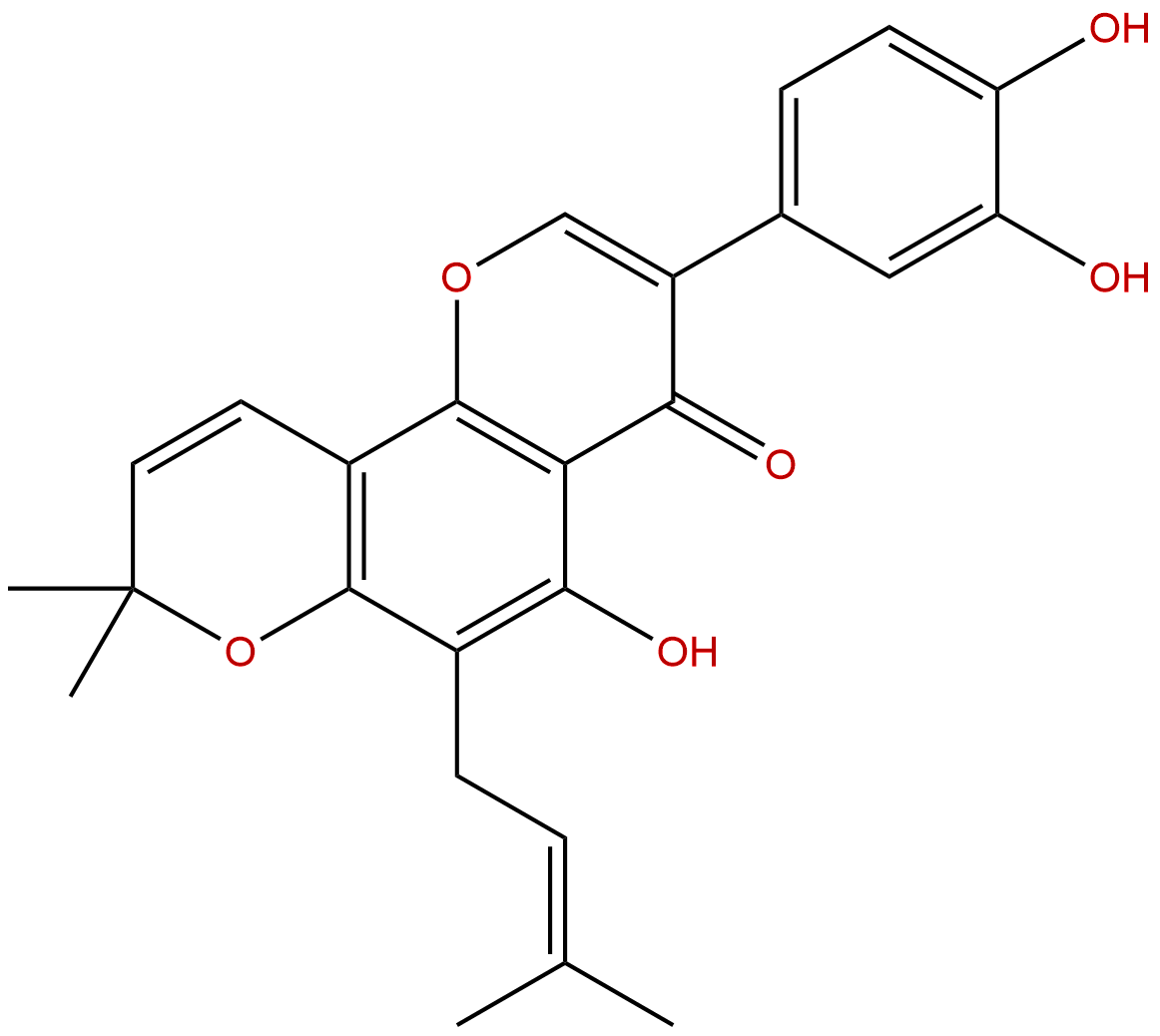


Product name: Pomiferin
Synonym name:
Catalogue No.: BP1845
Cas No.: 572-03-2
Formula: C25H24O6
Mol Weight: 420.461
Botanical Source: Flemingia philippinensis
Physical Description:
Type of Compound: Flavonoids
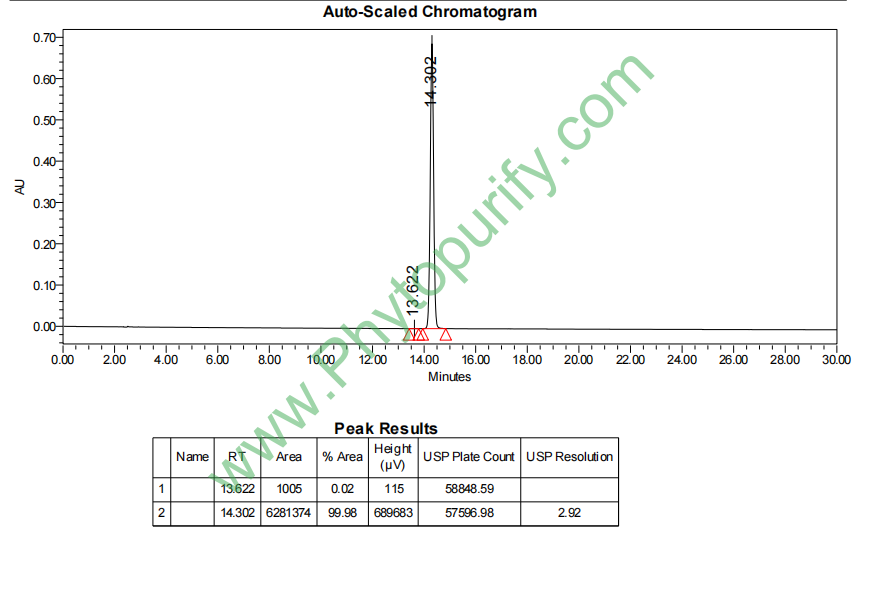
Purity: 95%~99%
Analysis Method: HPLC-DAD or/and HPLC-ELSD
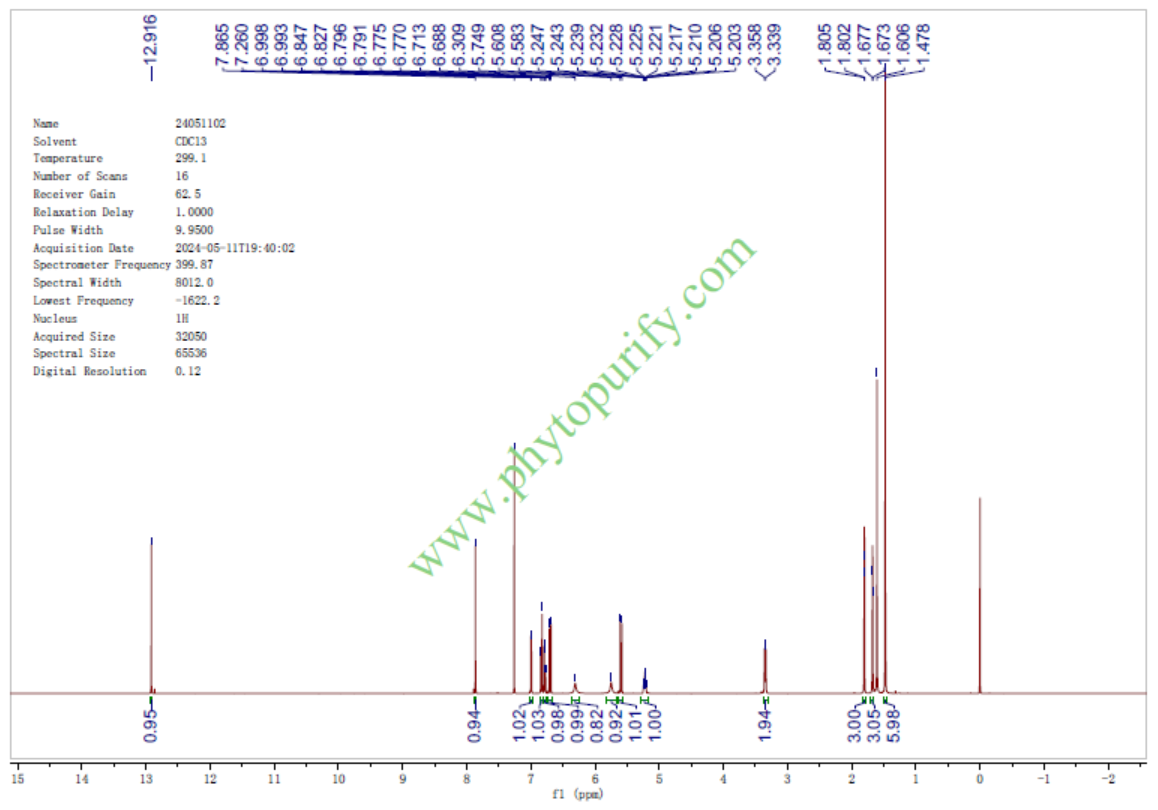
Identification Method: Mass, NMR
Packing: Brown vial or HDPE plastic bottle
The product could be supplied from milligrams to grams. Inquire for bulk scale.
We provide solution to improve the water-solubility of compounds, thereby facilitating the variety of activity tests and clinic uses.
For Reference Standard and R&D, Not for Human Use Directly.
HPLC of Pomiferin
HNMR of Pomiferin
Storage conditions:Short-term storage at 2~8℃, long-term storage at -20 ~ -80℃
100.1300
4.8700
4.8233
.0080
3.8026
17.0701
Low
90.8245
3.2536
Yes
Yes
Yes
No
Yes
Yes
0.6
Yes
Yes
Yes
Yes
Pomiferin, also known as orange mulberry flavonoids, is a natural isopentenyl flavonoid compound isolated from the Rutaceae plant Citrus aurantium. Its CAS number is 572-03-2, molecular formula is C25H24O6, and molecular weight is 420.46 g/mol. Although its name contains "orange mulberry", its main plant source is recorded in literature as citrus aurantium, which is an immature bitter orange fruit. In recent years, orange mulberry flavonoids have attracted much attention due to their wide range of biological activities, especially in the field of prostate cancer research, showing great potential. Research has shown that it is not only an inhibitor of histone deacetylase and mammalian rapamycin target protein, but also a multi-target active molecule that can act on multiple targets closely related to the occurrence and development of prostate cancer, including CYP19A1 and androgen receptors. In addition, it also showed anti-inflammatory, neuroprotective, antibacterial, anti diabetes and other pharmacological activities. This article will provide a systematic professional popularization of this promising natural product from the aspects of its chemical structure, plant origin, pharmacological mechanism, medicinal evaluation, and research prospects.
The chemical structure of orange mulberry flavonoids belongs to the class of flavonoids substituted with isopentenyl groups. The SMILES structural formula is: CC (C)=CCc1c2c (c3acc (- c4ccc (O) c (O) c4) c (=O) c3c1O) C=CC (C) (C) O2. From the molecular formula C25H24O6, it can be seen that its structure contains multiple phenolic hydroxyl and methoxy groups, as well as isopentenyl side chains, which are crucial for its biological activity and physicochemical properties.
According to the provided pharmacological parameters, its molecular weight is 420.46 g/mol, slightly higher than the standard of "less than 500" in Lipinski's five rules, but still within an acceptable range. The LogP of its lipid water partition coefficient is 4.87, indicating that the compound has high lipophilicity, which is related to the presence of hydrophobic isopentenyl groups in its structure. A higher LogP value is usually beneficial for compounds to penetrate cell membranes, but it may also lead to poor water solubility. Its water solubility data is 0.0080, confirming its poor water solubility, which is one of the challenges that need to be overcome in drug development. The topological polarity surface area is 100.13 Å ², which is at a moderate level, indicating that it may have some membrane permeability. The permeability data of Caco-2 cells is 17.07, which belongs to the moderately preferred permeability, but the blood-brain barrier permeability is evaluated as "low", indicating that it is not easy to enter the central nervous system, which may be an advantage for treating peripheral diseases such as prostate cancer and can reduce the risk of central side effects. The plasma protein binding rate is as high as 90.82%, indicating that most drugs in the bloodstream bind to proteins, which may affect their free drug concentration and efficacy.
The main plant source of orange mulberry flavonoids is citrus fruit, which is the dried young fruit of the Rutaceae plant sour orange. In traditional Chinese medicine, Fructus Aurantii is an important qi regulating medicine with a bitter, pungent, sour nature, slight coldness, and can regulate the spleen and stomach meridians. Its traditional efficacy is mainly to break down qi and eliminate accumulation, dissolve phlegm and disperse phlegm. It is commonly used to treat gastrointestinal stagnation, abdominal distension, severe diarrhea, constipation, and chest obstruction caused by phlegm stagnation and qi obstruction. Modern pharmacological research has isolated various active ingredients from Fructus Aurantii, including flavonoids (such as hesperidin and neohesperidin), alkaloids (such as sinomenine), and volatile oils. These ingredients collectively endow Fructus Aurantii with multifaceted pharmacological effects, including regulating gastrointestinal motility, anti-inflammatory, antioxidant, and lipid-lowering.
Orange mulberry flavonoids, as a relatively low content but significantly active isopentenyl flavonoid in Fructus Aurantii immaturus, may partially explain some of the traditional therapeutic effects of Fructus Aurantii immaturus, such as its anti-inflammatory activity, which may be related to "resolving phlegm and dispersing phlegm". However, it should be pointed out that traditional applications are based on compound and whole medicinal herbs, while modern research focuses on a single highly active ingredient, and the perspectives of the two are different. The in-depth study of flavonoids in orange mulberry is not only a modern exploration of the treasure trove of traditional Chinese medicine, but also provides new lead compounds for the development of innovative drugs based on natural products.
Orange mulberry flavonoids exhibit diverse and significant pharmacological activities, and their core mechanism lies in multi-target regulation, especially in the treatment of prostate cancer.
4.1 Core inhibitory activity
The existing description clearly states that hesperetin is an inhibitor of HDAC and mTOR, with IC50 values of 1.05 μ M and 6.2 µ M, respectively. Histone deacetylase is a key enzyme in epigenetic regulation, and its inhibitor can inhibit tumor cell proliferation and induce differentiation or apoptosis by increasing histone acetylation levels, relaxing chromatin structure, activating tumor suppressor gene expression. MTOR is a core signaling pathway node that regulates cell growth, proliferation, and metabolism, and is abnormally activated in various cancers. Simultaneously inhibiting HDAC and mTOR can synergistically strike tumor cells from both epigenetic and signaling levels, which may be an important basis for the potent anti-tumor activity of orange mulberry flavonoids.
4.2 Multi target mechanism of anti prostate cancer
The target information shows that Citrus flavonoids act on five highly correlated targets with prostate cancer, namely CYP19A1, AR, SRD5A2, IGF1R, and PSA.
- CYP19A1 (aromatase)This enzyme is responsible for converting androgens into estrogens. In prostate cancer, the production of local estrogen may promote tumor growth. Inhibition of CYP19A1 can reduce estrogen levels in the tumor microenvironment and interfere with estrogen dependent growth signals.
- AR (androgen receptor)The androgen AR signaling pathway is the core driving force for the occurrence and development of prostate cancer, and is also a key target for castration resistant prostate cancer treatment. The inhibitory effect of orange mulberry flavonoids on AR may directly block the activation of this carcinogenic pathway.
- SRD5A2 (5 α - reductase type 2)This enzyme converts testosterone into the more active dihydrotestosterone, which has a higher affinity for AR. Inhibition of SRD5A2 can reduce the production of potent androgens at the source, and its combination with AR inhibitors may have a synergistic effect.
- IGF1R (insulin-like growth factor 1 receptor)The IGF signaling pathway is closely related to cell proliferation, survival, and metastasis, and is often overactivated in prostate cancer. Inhibition of IGF1R can block downstream pro survival and proliferation signals.
- PSA (prostate-specific antigen)PSA is a classic biomarker for AR pathway activation. The inhibitory effect of orange mulberry flavonoids on PSA is a functional manifestation of their anti AR activity.
By simultaneously targeting key enzymes involved in androgen synthesis, androgen receptors themselves, and related growth factor receptors, orange mulberry flavonoids have constructed a multidimensional and multi link anti prostate cancer network, which is of great strategic significance for overcoming the drug resistance that may arise from single target therapy.
4.3 Other important activities
In addition to anticancer activity, orange mulberry flavonoids also have:
- Anti inflammatory and neuroprotective effects Reduce inflammatory response by inhibiting the activity of inducible nitric oxide synthase and nuclear factor kappa B. Its neuroprotective effect may be related to this.
- Kidney protection It has shown a protective effect in a rat model of renal ischemia-reperfusion injury, indicating its potential value in organ protection.
- Antibacterial and anti diabetes Showing broad-spectrum biological regulatory potential.
Based on the provided pharmacological parameters, we can conduct a preliminary evaluation of the potential of orange mulberry flavonoids as drug candidate molecules.
5.1 Evaluation based on Lipinski's Five Rules
The Lipinski Five Rules are empirical rules for evaluating the pharmacological properties of compounds:
1. molecular weight 420.46 (<500), compliant.
2. LogP 4.87 (<5), meets (but close to the upper limit).
3. Hbond donor From the structural inference, phenolic hydroxyl groups are hydrogen bond donors, with a quantity of approximately 3 (<5), which is consistent.
4. Number of hydrogen bond acceptors The oxygen atoms in the molecule (including carbonyl and ether bonds) act as hydrogen bond acceptors, with a total of approximately 6 (<10), which is consistent.
5. Number of rotatable keys The structure contains multiple single keys, and there may be a large number of rotatable keys, which may violate the rules and requires specific calculation confirmation.
Overall, orange mulberry flavonoids basically comply with Lipinski's five rules and have a good pharmacological basis.
5.2 Advantages and Challenges
- Advantage:
- Good membrane permeability Moderate TPSA and high Caco-2 permeability data, combined with its lipophilicity, indicate that it has good cell membrane penetration ability, which is beneficial for oral absorption and entry into target tissues.
- High plasma protein binding rate Although it affects the free concentration, it may prolong the half-life of the drug in the body.
- Clear multi-target activity For complex diseases such as cancer, multi-target drugs may be more effective and less resistant.
At present, research on orange mulberry flavonoids is still in the preclinical stage, mainly focusing on activity screening, mechanism exploration, and preliminary in vitro and in vivo pharmacological verification. Its outstanding activity in multi-target anti prostate cancer, anti-inflammatory, and neuroprotective aspects makes it a very attractive lead compound.
Future research directions and prospects:
1. Research on Structural Optimization and Structure Performance Relationship This is currently the most urgent direction. In response to its poor water solubility and potential toxicity (especially genetic toxicity), it was structurally modified through medicinal chemical methods. Derivatives can be attempted at its phenolic hydroxyl, isopentenyl, and other sites to improve solubility and reduce toxicity while maintaining or enhancing its multi-target activity. It is crucial to clarify the specific chemical structural origin of its toxicity.
2. Deepening the mechanism of action More precise clarification is needed on its inhibitory strength, selectivity towards various targets, and the synergistic relationship between these inhibitory effects. Using molecular docking, biophysical techniques, and other methods to study its binding mode with target proteins.
3. Pharmacokinetic and Formulation Research Conduct systematic pharmacokinetic studies in animals to clarify their absorption, distribution, metabolism, and excretion characteristics. Develop suitable drug delivery formulations (such as nano formulations, liposomes, cyclodextrin inclusion complexes, etc.) to address their water solubility issues.
4. Preclinical safety and pharmacological evaluation Comprehensively evaluate its efficacy and long-term toxicity in animal models of diseases closer to humans, such as transgenic prostate cancer mouse models, with a particular focus on in-depth assessment of genetic toxicity and hepatotoxicity.
5. Exploration of combination therapy Given its multi-target nature, exploring the combination application with existing standard therapies for prostate cancer, such as AR antagonists and chemotherapy drugs, may result in synergistic effects or overcome drug resistance.
Application Prospects If the toxicity and solubility bottlenecks can be successfully resolved through structural optimization, orange mulberry flavonoids have the potential to be developed into a novel multi-target therapeutic drug for the treatment of castration resistant prostate cancer. In addition, its anti-inflammatory and neuroprotective activities also provide possibilities for its application in the fields of chronic inflammatory diseases and neurodegenerative diseases. As a natural product derived from traditional Chinese medicine, the research on orange mulberry flavonoids is a typical case of modernization and internationalization of traditional Chinese medicine, reflecting the translational medical value from traditional experience to modern scientific interpretation.
Conclusion Orange mulberry flavonoids are a natural flavonoid compound with unique chemical structure, wide biological activity, and multi-target advantages, especially in the treatment of prostate cancer. It conforms to basic drug like rules, but faces significant challenges such as poor water solubility and potential toxicity. The future research focus should be on structural optimization based on structure-activity relationships, aiming to obtain derivative compounds with activity retention or enhancement, significantly reduced toxicity and side effects, and excellent drug properties. Continued in-depth research on it is not only expected to generate new anti-cancer drugs, but also deepen our understanding of the complex pharmacological action network of natural products.
