


Synonym name:
Catalogue No.: BP1131
Cas No.: 55916-51-3
Formula: C39H62O13
Mol Weight: 738.912
Botanical Source:
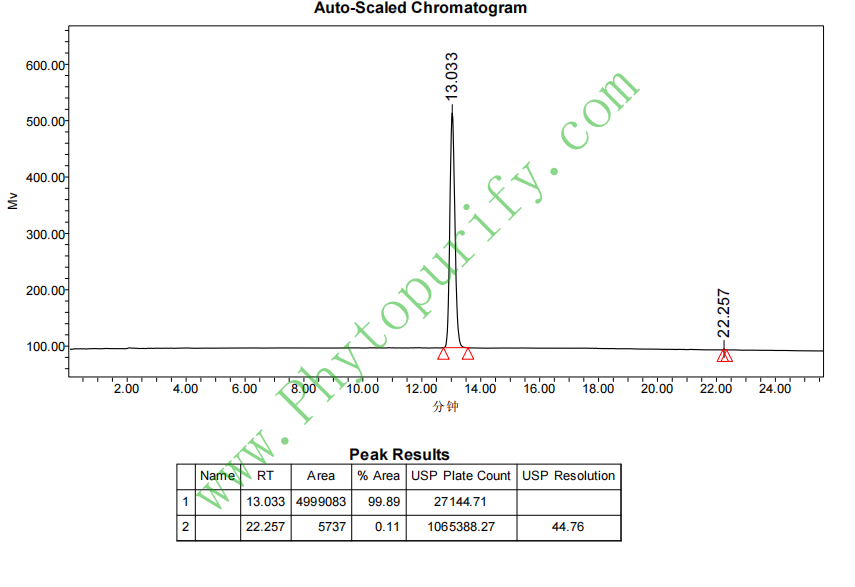
Purity: 95%~99%
Analysis Method: HPLC-DAD or/and HPLC-ELSD
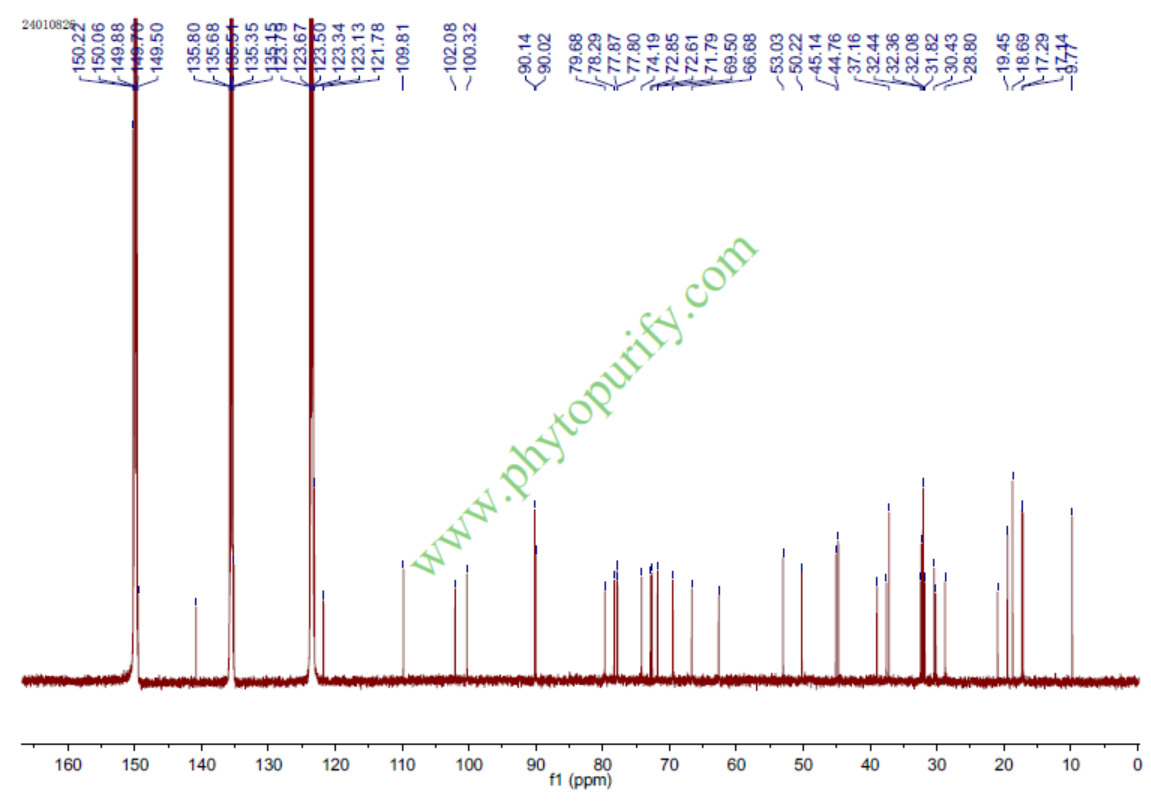
Identification Method: Mass, NMR
Packing: Brown vial or HDPE plastic bottle
Can be supplied from milligrams to grams.
For Reference Standard and R&D, Not for Human Use Directly.
Inquire for bulk scale.
HPLC of Polyphyllin VI
NMR of Polyphyllin VI
Storage conditions:Short-term storage at 2~8℃, long-term storage at -20 ~ -80℃
196.9900
2.1310
2.1310
.0409
.5850
.4179
Low
71.3119
6.3371
No
No
No
No
No
No
0.0
Yes
No
Yes
Yes
Natural products, as an important treasure trove for drug discovery, play an irreplaceable role in the long history of human fight against diseases. Among them, steroidal saponins have always been a hot topic in medicinal chemistry and pharmacology research due to their structural diversity and wide range of biological activities. Polyphyllin VI, CAS number 55916-51-3, is an active spirosteroid saponin isolated from the traditional Chinese medicine Paris polyphylla. In recent years, with the continuous increase of the incidence rate of tumors and the limitations of existing treatment methods, it is urgent to find new antitumor drugs with high efficiency and low toxicity. Zhonglou saponin VI has rapidly become a cutting-edge molecule in tumor pharmacology research due to its significant in vitro and in vivo anti-tumor activity. Research has shown that it can not only inhibit tumor growth through classical cell cycle arrest and apoptosis pathways, but also exert anti-tumor effects by inducing a new type of programmed cell death - pyroptosis, which provides new ideas for overcoming tumor cell apoptosis resistance. This article aims to provide a systematic review of the chemical structure, plant origin, pharmacological activity, multi-target mechanism of action, pharmacological characteristics, and clinical application potential of saponins VI from Polygonatum sibiricum, in order to provide comprehensive scientific references for the in-depth research and future development of this compound.
Zhonglou saponin VI is a spirosteroid saponin with a molecular formula of C39H62O13 and a molecular weight of 738.9120. Its basic skeleton consists of a hydrophobic spirostane core and hydrophilic oligosaccharide chains. The mother nucleus is a typical spirostane structure, and the sugar chain is usually connected to the C-3 hydroxyl group of the mother nucleus, composed of multiple sugar groups (such as glucose, xylose, etc.). This structural feature is an important basis for its water solubility and biological activity.
In terms of physical and chemical properties, the lipophilic water partition coefficient (LogP) of saponins VI from Polygonatum sibiricum is 2.1310, indicating its lipophilicity but not high lipophilicity. Its topological polar surface area (TPSA) is as high as 196.99 Å ², mainly attributed to the abundant hydroxyl groups in the molecule and oxygen atoms on the sugar chain, indicating its high molecular polarity. The water solubility parameter is 0.0409, indicating that its solubility in water is low and it belongs to a poorly soluble compound, which poses a challenge to its formulation development. These basic physicochemical parameters (molecular weight>500, TPSA>140, moderate LogP) comply with the boundary conditions of the Rule of Five, indicating that their oral bioavailability may face challenges, but it is expected to be improved through modern formulation technologies such as nanocrystals, liposomes, etc.
Zhonglou saponin VI mainly comes from various plants in the Paris genus of the Liliaceae family, among which the dried rhizomes of Yunnan Zhonglou (Paris polyphylla var. yunnanensis) and Paris polyphylla have the most abundant content. As a traditional Chinese medicine, Chonglou has the effects of clearing heat and detoxifying, reducing swelling and pain, cooling the liver and calming the nerves. It is commonly used to treat conditions such as carbuncle, sore throat, venomous snake bite, falling pain, and convulsions.
Its extraction and separation usually follow the conventional process of natural product chemistry. Firstly, the dried rhizomes of the Chinese parasol tree are crushed and subjected to heating reflux or ultrasound assisted extraction using methanol, ethanol, or ethanol water mixed solvents. After vacuum concentration, the crude extract was subjected to gradient extraction using organic solvents such as petroleum ether, ethyl acetate, and n-butanol in sequence. Saponin VI was mainly enriched in the n-butanol extraction site. Subsequently, various chromatographic techniques were used for separation and purification, including silica gel column chromatography (using chloroform methanol water system gradient elution), reverse phase silica gel column chromatography (such as ODS, using methanol water or acetonitrile water system elution), and high-performance liquid chromatography (HPLC) preparation. Modern technologies such as high-speed countercurrent chromatography (HSCCC) have also been applied for the separation of this type of saponin due to their high recovery rate and separation efficiency. Attention should be paid to controlling temperature and time during the extraction process to prevent degradation of saponin structures.
The most notable pharmacological activity of Zhonglou saponin VI is its broad-spectrum and highly effective anti-tumor effect. A large number of in vitro studies have confirmed that it has significant proliferation inhibitory activity on a variety of human tumor cell lines, including lung cancer, liver cancer, breast cancer, colorectal cancer, gastric cancer, ovarian cancer, etc.
Its anti-tumor effect is mainly achieved by inducing various forms of cell death.Firstly, it induces cell cycle arrest. Zhonglou saponin VI can block tumor cells in the G2/M phase, preventing them from entering mitosis and thus inhibiting cell proliferation.Secondly, it activates the classical pathway of cell apoptosis. This compound can upregulate pro apoptotic proteins (such as Bax) and downregulate anti apoptotic proteins (such as Bcl-2, Mcl-1), leading to a decrease in mitochondrial membrane potential, release of cytochrome C, and activation of caspase-9 and caspase-3, ultimately triggering DNA fragmentation and cell apoptosis.
Of particular importance, it has been confirmed that saponins VI from Polygonatum sibiricum are an effective inducer of cell apoptosis. Cellular pyroptosis is an inflammatory programmed cell death that relies on Gasdermin family proteins to form plasma membrane pores, characterized by cell swelling, membrane rupture, and the release of large amounts of pro-inflammatory cytokines. In models such as non-small cell lung cancer, saponins VI from Polygonatum sibiricum induce mitochondrial derived reactive oxygen species (ROS) bursts, activate the nuclear factor kappa B (NF - κ B) signaling pathway, and upregulate the expression of NOD like receptor protein 3 (NLRP3) inflammasome. Activated NLRP3 inflammasome recruits and activates caspase-1, which cleaves Gasdermin D (GSDMD) and releases its N-terminal domain to punch holes on the cell membrane; On the other hand, processing the precursors of interleukin-1 β (IL-1 β) and IL-18 to mature and release them. This pyroptosis effect not only directly kills tumor cells, but also releases inflammatory factors that may activate immune responses in the tumor microenvironment, producing a "bystander effect" and possessing unique anti-tumor immune potential.
In addition, the study also suggests that Zhonglou saponin VI has auxiliary anti-tumor activities such as anti-inflammatory, anti angiogenesis, and inhibition of tumor metastasis. It can inhibit the expression of matrix metalloproteinase-2 (MMP-2), thereby weakening the invasion and migration ability of tumor cells.
The anti-tumor effect of Zhonglou saponin VI involves a complex multi-target and multi pathway regulatory network, and its molecular targets are highly correlated with the list provided in the information. The specific mechanism is as follows:
Regulating apoptosis related targets:
Affects cell cycle and DNA metabolism:
Inhibiting tumor invasion, metastasis, and adaptation:
Intervention in hormone related pathways (for hormone dependent tumors):
Core signal axis Overall, in terms of inducing cell apoptosis, the effect of saponins VI from Polygonatum sibiricum can be summarized as follows: ROS/NF - κ B/NLRP3/GSDMD "signal axis ROS, as an upstream trigger factor, activates the NF - κ B pathway, which promotes transcriptional expression of components such as NLRP3 and pro-IL-1 β; Subsequently, under the action of ROS or other signaling, NLRP3 inflammasomes assemble and activate caspase-1, ultimately performing GSDMD mediated cell pyroptosis. This pathway is one of the core mechanisms that distinguishes it from traditional chemotherapy drugs and exerts unique anti-tumor effects.
Despite its significant pharmacological activity, the drug like and pharmacokinetic (PK) properties of saponins VI from Polygonatum sibiricum are the practical challenges that must be faced in their drug conversion process.
According to the provided pharmacological parameters:
* Absorption and distribution A higher TPSA and molecular weight indicate that its membrane permeability may be poor, and oral absorption (BA) may be poor. Its "blood-brain barrier permeability: low" characteristic means that it is difficult to enter the central nervous system, which is a disadvantageous factor for treating brain tumors, but may also reduce the potential risk of central neurotoxicity.
* Metabolism and Safety HERG inhibition is' no ', which is a positive signal indicating a low risk of potential cardiac toxicity (such as inducing long QT syndrome) and good cardiovascular safety. The Ames test result is 0.0, indicating that no mutagenicity was observed under the conditions of this experiment, and the preliminary genetic toxicity risk is low.
* solubility Low water solubility (0.0409) is the main bottleneck restricting its in vivo bioavailability. Whether administered orally or by injection, it is necessary to address the issues of dissolution and release.
At present, there are relatively limited reports on the pharmacokinetic studies of the saponin VI system in Polygonatum sibiricum, which is also a common difficulty in the research of active ingredients in natural products. Limited animal pharmacokinetic studies have shown that the absorption rate of the prototype drug in vivo is slow, the blood drug concentration is low, there may be first pass effects, and the distribution and elimination process are not yet clear. The drug time curve in rats may exhibit a bimodal phenomenon, indicating the presence of hepatic intestinal circulation. These PK characteristics determine that it is difficult to achieve effective therapeutic blood drug concentrations solely using raw materials.
Formulation strategy In order to improve its drug properties, researchers are actively exploring new drug delivery systems. For example:
1. nano-formulation Preparing it into liposomes, polymer nanoparticles, solid lipid nanoparticles, or nanosuspensions can significantly improve its solubility and stability, target tumor tissues through enhanced permeability and retention (EPR) effects, and potentially achieve sustained release.
2. Prodrug strategy By chemically modifying (such as esterification) the hydroxyl group on its sugar group, a more lipophilic prodrug is prepared to improve membrane permeability, which is then enzymatically interpreted and released in vivo.
3. combination therapy Combined use with anti-tumor drugs or P-glycoprotein inhibitors with other mechanisms of action may enhance efficacy and reverse multidrug resistance.
Zhonglou saponin VI shows broad clinical application prospects, but also faces a series of challenges.
prospect:
1. New anti-tumor candidate drugs Its multi-target and multi death mode (apoptosis+pyroptosis) characteristics may be particularly effective against tumor cells that resist apoptosis, providing a unique approach for the development of new anti-tumor drugs. It may be applicable to lung cancer, liver cancer, breast cancer, colorectal cancer and other solid tumors.
2. Overcoming the potential for drug resistance By inducing non apoptotic death pathways such as pyroptosis, it is expected to bypass the traditional chemotherapy drug dependent apoptotic pathway defects and become a new strategy to overcome tumor drug resistance.
3. Combination therapy enhances efficacy Combined with existing chemotherapy drugs, targeted drugs, or immune checkpoint inhibitors, it may produce synergistic effects, improve efficacy, and reduce dosage and toxic side effects. For example, the inflammatory factors induced by pyroptosis may activate the tumor immune microenvironment and be linked to immunotherapy.
4. Model of modernization of traditional Chinese medicine As one of the effective ingredients of traditional Chinese medicine, its in-depth research is a concrete practice to interpret the scientific connotation of traditional Chinese medicine and achieve modernization and internationalization of traditional Chinese medicine.
Challenges and Prospects:
1. Optimization of drug properties The primary task is to use modern pharmaceutical technology to solve the problems of poor solubility and low bioavailability. The research and development of systematic formulation is a crucial step in promoting its clinical translation.
2. In depth pharmacokinetic research It is necessary to comprehensively elucidate its absorption, distribution, metabolism, and excretion (ADME) characteristics and clarify its in vivo fate in higher-level animal models such as tumor bearing mice, dogs, or monkeys.
3. System security evaluation Although the preliminary genotoxicity and hERG inhibition are good, a comprehensive preclinical safety evaluation (GLP toxicology study) is still needed, including acute toxicity, chronic toxicity, reproductive toxicity, etc., to clarify their safety window.
4. Deep exploration of mechanisms The precise mapping of its target network is still needed, such as direct binding with various targets, interactive dialogue of signaling pathways, etc. Its role in regulating the tumor microenvironment, such as its impact on immune cells, also deserves further exploration.
5. clinical research Ultimately, rigorous clinical trials need to be designed to validate its safety, tolerability, and efficacy in humans, exploring the optimal dosing regimen (dosage, route, cycle) and indications for the population.
Zhonglou saponin VI, as a steroid saponin compound derived from traditional Chinese medicine, has become a star molecule in the field of natural anti-tumor drug research due to its excellent anti-tumor activity, especially its dual death mechanism of inducing cell apoptosis and cell pyroptosis. It constructs a multidimensional anti-tumor network by acting on multiple key targets such as MCL1, BCL2, STAT3, MMP2, TOP1/2A, HIF1A, and activating the ROS/NF - κ B/NLRP3/GSDMD signaling axis. Although its low solubility and imperfect pharmacokinetic properties are currently the main obstacles to clinical translation, modern medicinal chemistry and pharmaceutical technologies, such as nano delivery systems, provide feasible solutions for this. In the future, through interdisciplinary in-depth research, including formulation optimization, system pharmacology evaluation, precise analysis of the mechanism of action, and final clinical validation, Zhonglou Saponin VI is expected to move from the laboratory to the clinical stage, developing into a new type of anti-tumor drug with Chinese characteristics and multi mechanism synergy. It not only brings new treatment hope to cancer patients, but also provides a successful example for the modernization development of active ingredients in traditional Chinese medicine.
