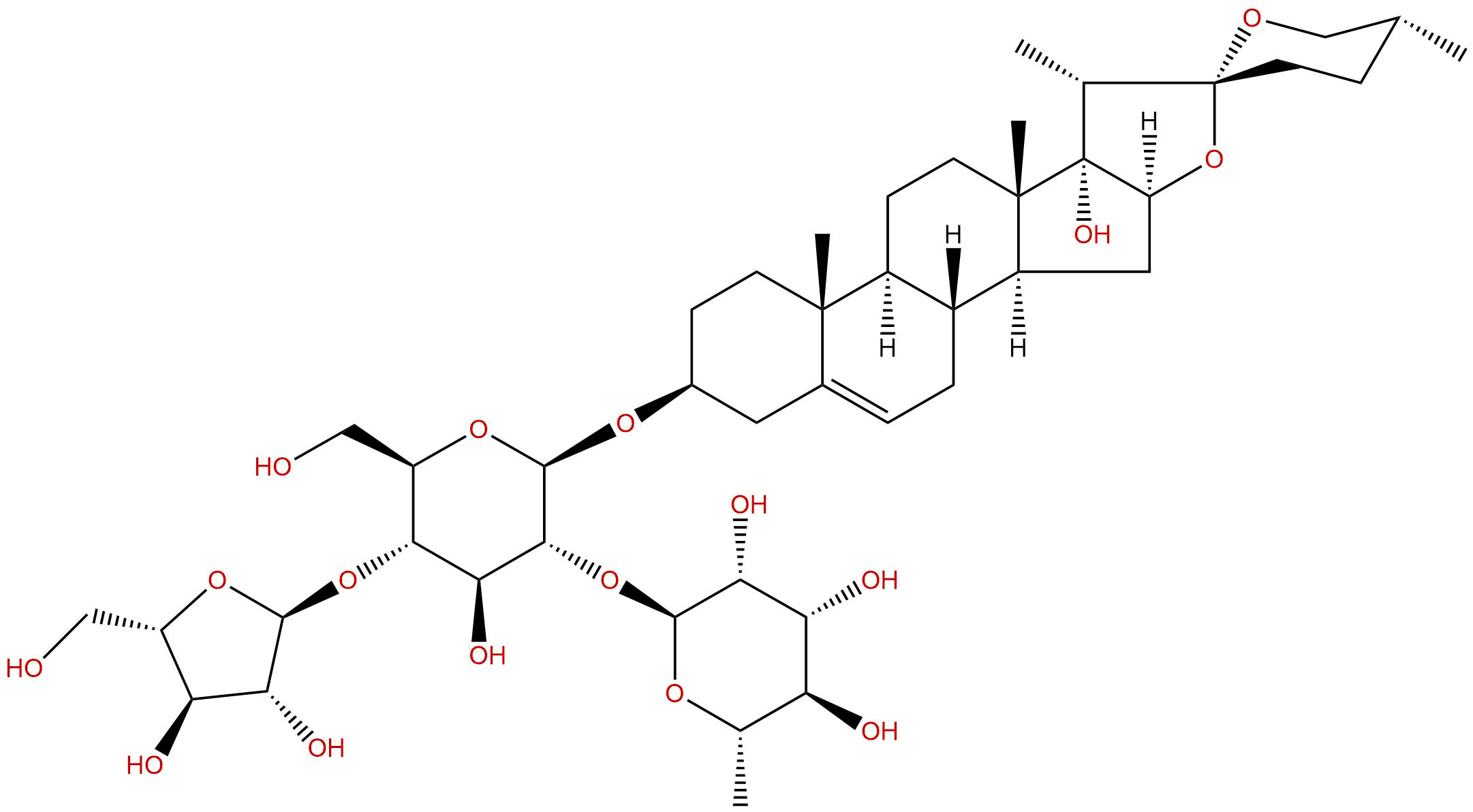


Product name: Polyphyllin H
Synonym name:
Catalogue No.: BPF0701
Cas No.: 81917-50-2
Formula: C44H70O17
Mol Weight: 871.027
Botanical Source: Paridis rhizoma
Type of Compound: Steroids
Purity: 95%~99%
Analysis Method: HPLC-DAD or/and HPLC-ELSD
Identification Method: Mass, NMR
Packing: Brown vial or HDPE plastic bottle
Storage: Store in a well closed container, protected from air and light. Put into refrigerate or freeze for long term storage.
Whenever possible, you should prepare and use solutions on the same day. However, if you need to make up stock solutions in advance, we recommend that you store the solution as aliquots in tightly sealed vials at -20℃. Generally, these will be useable for up to two weeks.
The product could be supplied from milligrams to grams
Inquire for bulk scale.
For Reference Standard and R&D, Not for Human Use Directly.
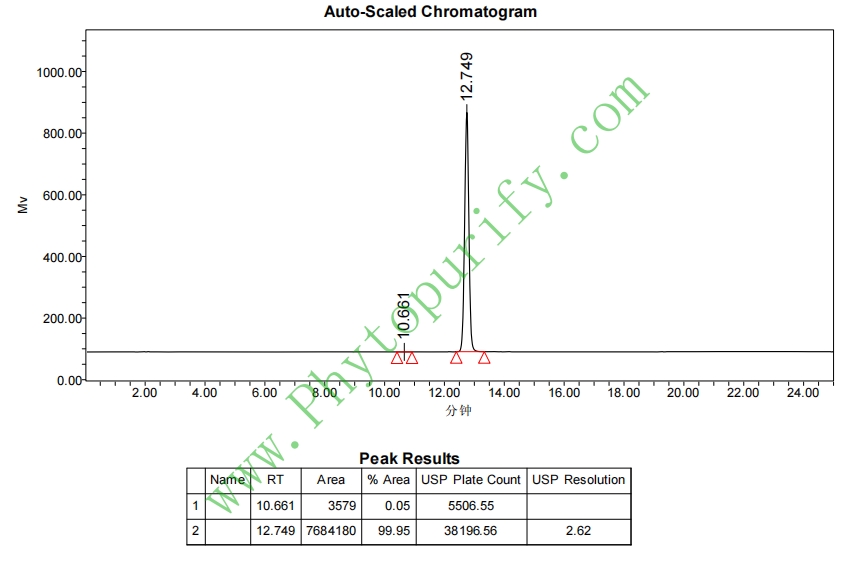
HPLC of Polyphyllin H
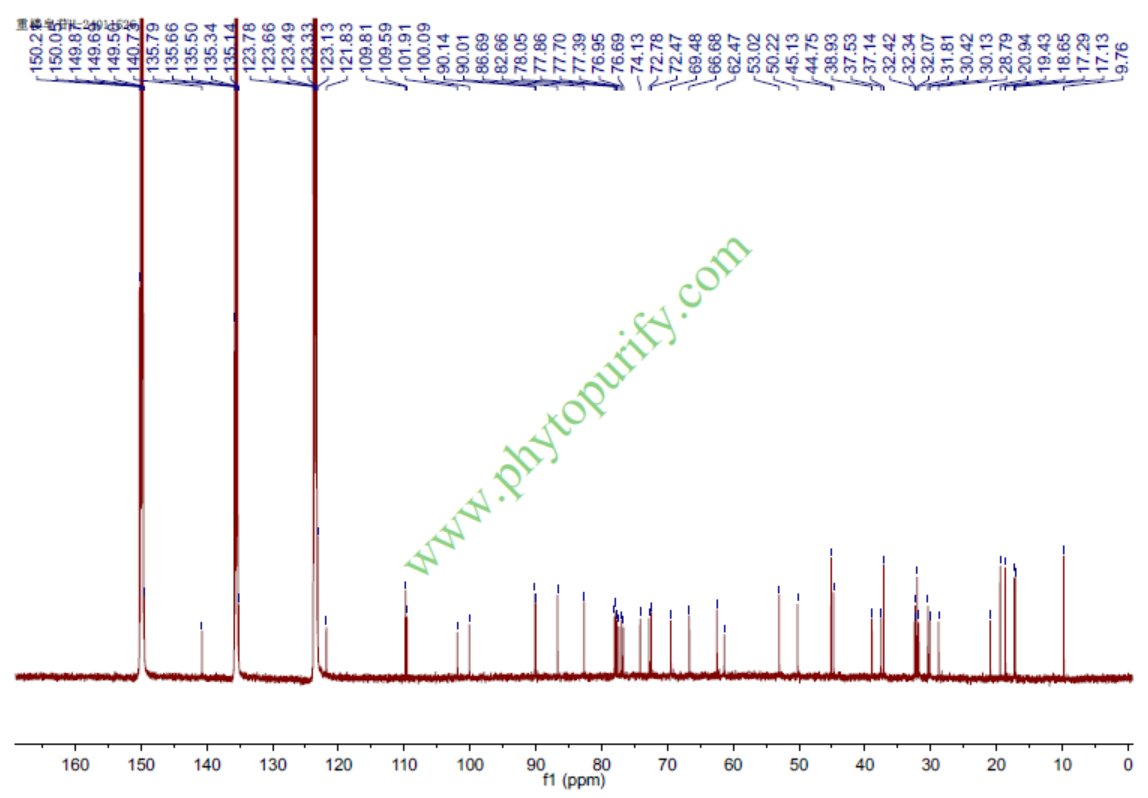
NMR of Polyphyllin H
Storage conditions:Short-term storage at 2~8℃, long-term storage at -20 ~ -80℃
255.9100
1.6942
1.6941
.0857
.5623
.3795
Low
68.3321
6.7243
No
No
No
No
No
No
0.3
Yes
No
Yes
Yes
Natural products, as an important source of drug discovery, play an irreplaceable role in the long history of human fight against diseases. In traditional Chinese medicine, Paris polyphylla Smith, as an important medicinal plant, can be traced back to the "Shennong Bencao Jing" for its medicinal history. It has the effects of clearing heat and detoxifying, reducing swelling and pain, and cooling the liver and calming the nerves. Modern pharmacological research has revealed that the main active ingredients of Polygonatum sibiricum are a group of structurally diverse steroidal saponins, among which Polyphyllin H has attracted much attention due to its significant biological activity and unique chemical structure.
Polyphyllin H, CAS number 81917-50-2, is a natural steroidal saponin isolated from plants of the genus Polygonatum. This compound has been widely used in traditional Chinese medicine preparations, especially in the treatment research of diseases such as inflammation, fractures, and convulsions, showing potential application value. In recent years, with the advancement of separation and purification technology and the improvement of pharmacological evaluation system, breakthrough progress has been made in the activity research of Zhonglou saponin H in the field of anti-tumor. Its mechanism of action involves multiple key signaling pathways and molecular targets, demonstrating the regulatory characteristics of multi-target and multi pathway.
This review aims to systematically summarize the chemical structure characteristics, plant sources, extraction methods, pharmacological activities, mechanisms of action, pharmacological evaluation, and clinical application prospects of saponins H from Polygonatum sibiricum, in order to provide comprehensive academic references for the in-depth research and development of this natural product.
Zhonglou saponin H belongs to the class of steroidal saponins, and its chemical structure consists of two parts: aglycones and sugar chains. The glycoside component is a spirostanol skeleton, which is a typical structural feature of saponin components in plants of the genus Polygonatum. Specifically, the glycoside of Diosgenin H is a derivative of Diosgenin, and its parent nucleus contains six rings: A, B, C, D, E, and F. The E and F rings are connected by a spiroketide structure, forming a unique spirostane configuration. The sugar chain is usually composed of 1-4 sugar groups, which are connected to the C-3 hydroxyl group of the aglycone through β - glycosidic bonds. The common sugar groups include D-glucose, L-rhamnose, D-galactose, etc. The composition and connection order of sugar chains determine the structural differences of different saponins in Polygonatum sibiricum.
From the perspective of physical and chemical properties, the molecular weight of Zhonglou saponin H is 871.0270 Da, which belongs to a natural product with medium molecular weight. Its lipophilic water partition coefficient (LogP) is 1.6942, indicating that the compound has a certain degree of lipophilicity, but overall tends towards moderate polarity. This characteristic is closely related to the hydrophobicity of its steroid parent nucleus and the hydrophilicity of its sugar chain. The topological polar surface area (TPSA) is 255.9100 Å ², and a higher TPSA value reflects the presence of a large number of polar groups such as hydroxyl and ether bonds in the molecule, which have a significant impact on its transmembrane transport and bioavailability.
The water solubility of Zhonglou saponin H is 0.0857 mg/mL, making it a poorly soluble compound. This characteristic is common in natural products, but it also poses challenges for their formulation development and in vivo delivery. It is worth noting that the blood-brain barrier permeability evaluation of this compound is "low", indicating that its application in the treatment of central nervous system diseases may be limited. In addition, the hERG inhibition evaluation was negative, indicating a low risk of cardiac toxicity; The Ames test result is 0.3, indicating a low potential genetic toxicity risk. These pharmacological parameters provide positive reference for subsequent development.
Zhonglou saponin H mainly comes from plants in the Paris genus of the Liliaceae family, with Yunnan Zhonglou (Paris polyphylla var. yunnanensis) and Paris polyphylla var. chinensis being the main sources. There are about 24 species of the genus Chonglou worldwide, mainly distributed in eastern and southern Asia. China is the distribution center of Chonglou plants, with about 19 species, many of which are used as traditional Chinese medicine. The Chinese medicinal herb Chonglou is made from roots and stems, and its saponin content varies significantly depending on the species, place of origin, growth period, and harvest season.
In terms of extraction methods, traditional solvent extraction is still the most commonly used approach. Due to the moderate polarity of saponins H from the Chinese plant, ethanol or methanol is usually used as the extraction solvent, with a concentration generally between 50% and 80%. During the extraction process, factors such as the solid-liquid ratio, extraction temperature, extraction time, and extraction frequency can all affect the extraction efficiency. Research has shown that using 70% ethanol reflux extraction with a solid-liquid ratio of 1:10, extracting twice for 2 hours each time, can achieve a higher yield of saponins. In recent years, new technologies such as ultrasound assisted extraction, microwave-assisted extraction, and enzyme assisted extraction have been introduced, significantly improving extraction efficiency and selectivity.
Separation and purification are key steps in obtaining high-purity saponins H from Polygonatum sibiricum. Crude extracts typically require steps such as liquid-liquid extraction, macroporous adsorption resin column chromatography, silica gel column chromatography, reverse phase silica gel column chromatography, and preparative high-performance liquid chromatography (pre HPLC). Macroporous adsorption resins such as D101 and AB-8 can effectively enrich saponin components and remove impurities such as sugars and pigments. Subsequently, by using silica gel column chromatography and gradient elution with chloroform methanol water system, saponins of different polarities can be preliminarily separated. Further use of reverse phase silica gel (such as ODS) column chromatography and preparative HPLC, with acetonitrile water or methanol water system as the mobile phase, can obtain high purity of over 98% for the monomers of saponins H.
It is worth noting that the resources of the genus Chonglou are becoming increasingly scarce, and wild resources are facing depletion. Therefore, developing sustainable access pathways is of great significance. Plant tissue culture, hairy root culture, and artificial cultivation techniques are becoming potential solutions to resource issues. In addition, the analysis of biosynthetic pathways and the construction of heterologous expression systems also provide new ideas for the sustainable production of saponins H in Paris polyphylla.
The anti-tumor activity of Zhonglou saponin H is its most concerned pharmacological effect. In vitro experiments showed that the compound had significant proliferation inhibitory effects on a variety of tumor cell lines, including breast cancer cells (MCF-7, MDA-MB-231), lung cancer cells (A549, H1299), liver cancer cells (HepG2, SMMC-7721), gastric cancer cells (SGC-7901, BGC-823), colorectal cancer cells (HCT-116, SW480) and prostate cancer cells (PC-3, DU145). Its half maximal inhibitory concentration (IC50) is usually in the range of 1-20 μ M, demonstrating broad-spectrum anti-tumor activity.
In the study of breast cancer, Paris polyphylla saponin H can inhibit the proliferation of estrogen receptor positive (ER+) and triple negative breast cancer (TNBC) cells, and its toxicity to normal breast epithelial cells is relatively low, suggesting a certain selectivity. In lung cancer models, this compound can induce cell cycle arrest in the G2/M phase and activate caspase dependent apoptotic pathways. It is worth noting that the saponin H from Polygonatum sibiricum also exhibits cytotoxic activity against drug-resistant tumor cells, suggesting its potential to overcome multidrug resistance.
In vivo anti-tumor research further validated its efficacy. In nude mouse xenograft tumor models, intraperitoneal injection or oral administration of paeoniflorin H can significantly inhibit tumor growth, and no significant weight loss or major organ toxicity was observed. Studies on combination therapy have shown that the combination of saponins H from Polygonatum sibiricum with chemotherapy drugs such as cisplatin, paclitaxel, and doxorubicin can produce synergistic effects, reduce the dosage of chemotherapy drugs used, and thus alleviate toxic side effects.
Zhonglou saponin H also shows a protective effect in inflammation related diseases. In the lipopolysaccharide (LPS) - induced macrophage inflammation model, this compound significantly reduces the release of pro-inflammatory factors such as tumor necrosis factor - α (TNF - α), interleukin-6 (IL-6), and interleukin-1 β (IL-1 β). Meanwhile, the production of nitric oxide (NO) and prostaglandin E2 (PGE2) is also inhibited, which is closely related to the downregulation of inducible nitric oxide synthase (iNOS) and cyclooxygenase-2 (COX-2) expression.
In animal inflammation models, saponins H from Polygonatum sibiricum can alleviate carrageenan induced toe swelling, xylene induced ear swelling, and cotton ball induced granuloma formation. In addition, in the ulcerative colitis model, this compound can improve colonic tissue pathological damage, reduce myeloperoxidase (MPO) activity and inflammatory cytokine levels. These results indicate that saponins H from Polygonatum sibiricum may regulate inflammatory responses through multiple targets and have the potential to be developed as anti-inflammatory drugs.
In traditional applications, heavy buildings are commonly used for fracture treatment. Modern research has confirmed that saponins H from Polygonatum sibiricum can promote osteoblast differentiation and mineralization. In MC3T3-E1 osteogenic precursor cells, this compound upregulates alkaline phosphatase (ALP) activity, osteocalcin (OCN) and osteopontin (OPN) expression, and promotes the formation of calcium nodules. Mechanism studies have shown that saponins H from Polygonatum sibiricum may promote osteogenic differentiation by activating the BMP-2/Smad and Wnt/β - catenin signaling pathways.
In a rat model of osteoporosis induced by ovariectomy, saponins H from Polygonatum sibiricum can increase bone density, improve bone microstructural parameters, and reduce bone turnover rate. Meanwhile, the compound can also inhibit the formation and activity of osteoclasts, reducing bone resorption. This bidirectional regulatory effect gives it unique advantages in the treatment of bone metabolism diseases.
Zhonglou saponin H also shows potential activity in neurological diseases. In the PTZ induced seizure model, this compound can prolong the latency of seizures and reduce seizure scores. Its anticonvulsant mechanism may be related to enhancing gamma aminobutyric acid (GABA) neurotransmission and inhibiting glutamate excitotoxicity. In addition, in the model of cerebral ischemia-reperfusion injury, saponins H from Polygonatum sibiricum can reduce the volume of cerebellar infarction and improve the neurological deficit score. Its protective effect is related to antioxidant stress and anti apoptotic mechanisms.
The anti-tumor effect of Zhonglou saponin H involves multiple signaling pathways and molecular targets, exhibiting characteristics of multi-target regulation.
Apoptosis regulatory pathway Zhonglou saponin H can regulate both endogenous (mitochondrial) and exogenous (death receptor) apoptosis pathways simultaneously. In the intrinsic pathway, this compound can downregulate the expression of anti apoptotic proteins MCL1 and BCL2, while upregulating the levels of pro apoptotic proteins BAX and BAK, leading to loss of mitochondrial membrane potential, release of cytochrome c, and activation of caspase-9 and caspase-3. It is worth noting that MCL1 and BCL2, as key anti apoptotic proteins, are overexpressed in various tumors and associated with chemotherapy resistance. The inhibitory effect of resveratrol H on them provides a molecular basis for overcoming resistance.
STAT3 signaling pathway Signal transducer and activator of transcription factor 3 (STAT3) is continuously activated in various tumors, promoting cell proliferation, survival, and angiogenesis. Zhonglou saponin H can inhibit the phosphorylation of STAT3 (Tyr705 site), block its nuclear translocation and transcriptional activity. The expression of downstream target genes such as Cyclin D1, Survivor, VEGF, and MMP-2 decreases with STAT3, thereby inhibiting tumor cell proliferation and metastasis.
MAPK signaling pathway The mitogen activated protein kinase (MAPK) pathway includes three main branches: ERK, JNK, and p38. The regulation of MAPK pathway by Zhonglou saponin H is cell type dependent. In some tumor cells, this compound can inhibit the phosphorylation of ERK1/2 while activating JNK and p38. This differential regulation may be related to its induction of apoptosis and autophagy.
Topoisomerase inhibition Zhonglou saponin H has inhibitory effects on both topoisomerase I (TOP1) and topoisomerase II α (TOP2A). Topoisomerase is a key enzyme in DNA replication and transcription processes, and its inhibition can lead to DNA damage and cell cycle arrest. This mechanism is similar to commonly used clinical anticancer drugs such as camptothecin and anthracycline, providing a basis for the study of polyphenolic acid H as a topoisomerase inhibitor.
Hypoxia inducible factor pathway Hypoxia inducible factor 1 alpha (HIF1A) is a key transcription factor for tumors to adapt to the hypoxic microenvironment. Zhonglou saponin H can inhibit the accumulation and transcriptional activity of HIF1A protein, downregulate the expression of its target genes such as VEGF, GLUT1, and CA9, thereby inhibiting tumor angiogenesis and reprogramming of glycolytic metabolism.
Estrogen signaling pathway In breast cancer cells, Paris polyphylla saponin H can down regulate the expression of estrogen receptor α (ESR1) and inhibit the transcription of estrogen response genes. Meanwhile, the compound can also inhibit the activity of aromatase (CYP19A1) and reduce the synthesis of estrogen. This dual regulatory effect makes it potentially valuable in the treatment of hormone dependent breast cancer.
Matrix metalloproteinases Matrix metalloproteinase-2 (MMP2) plays a crucial role in tumor invasion and metastasis. Zhonglou saponin H can inhibit the expression and activity of MMP2, while upregulating the levels of tissue metalloproteinase inhibitors (TIMPs), thereby inhibiting the migration and invasion ability of tumor cells.
The anti-inflammatory effect of Zhonglou saponin H is mainly achieved by inhibiting the NF - κ B and MAPK signaling pathways. This compound can inhibit the phosphorylation and degradation of I κ B α, prevent the nuclear translocation of NF - κ B p65 subunit, and thus downregulate the transcription of pro-inflammatory genes. Meanwhile, inhibition of p38 and JNK phosphorylation in the MAPK pathway also contributes to anti-inflammatory effects. In addition, saponins H from Polygonatum sibiricum can activate the Nrf2/ARE antioxidant pathway, induce the expression of antioxidant enzymes such as heme oxygenase-1 (HO-1), and alleviate oxidative stress-induced inflammatory damage.
In terms of osteogenic differentiation, Zhonglou saponin H promotes the expression of osteogenic specific transcription factors Runx2 and Osterix by activating the BMP-2/Smad1/5/8 and Wnt/β - catenin signaling pathways. In terms of osteoclast inhibition, this compound can interfere with RANKL/RANK signaling, inhibit the activation of NF - κ B and MAPK pathways, and reduce the expression of the key transcription factor NFATc1 for osteoclast differentiation.
Based on computational predictions and experimental data, the pharmacological characteristics of Zhonglou saponin H can be summarized as follows:
Drug Evaluation According to Lipinski's Five Rules, the molecular weight (871.03 Da) of Zhonglou saponin H exceeds 500 Da, LogP (1.69) is within an acceptable range, and the number of hydrogen bond donors (about 12) and hydrogen bond acceptors (about 20) both exceed the rule limits. This indicates that the compound does not meet the classical oral pharmacological standards and belongs to a natural product that exceeds the rules. However, many successful natural medicines such as paclitaxel and rapamycin also do not comply with the Lipinski rule, so their development potential cannot be denied solely based on this.
Water solubility The low water solubility of 0.0857 mg/mL is one of the main challenges faced by saponins H in Polygonatum sibiricum. Low solubility can affect the dissolution rate and oral absorption of drugs, leading to a decrease in bioavailability. Formulation strategies such as nanoparticles, liposomes, cyclodextrin inclusion complexes, etc. can be used to improve their solubility and bioavailability.
Metabolic stability Steroid saponins may be metabolized by gut microbiota in the gastrointestinal tract, and the sugar chain portion can be gradually hydrolyzed into secondary glycosides or aglycones. This metabolic transformation may affect its pharmacological activity and pharmacokinetic characteristics. The liver microsomal experiment showed that saponins H from Polygonatum sibiricum are mainly metabolized in the liver through the cytochrome P450 enzyme system, and the main metabolic pathways include hydroxylation and sugar chain hydrolysis.
safety evaluation A negative hERG inhibition indicates a low risk of cardiac toxicity; A negative Ames test indicates no significant genetic toxicity. Acute toxicity experiments showed that the LD50 value of Zhonglou saponin H was in the range of 50-100 mg/kg (intraperitoneal injection), and the therapeutic index was relatively narrow. Long term toxicity studies are not yet sufficient and require further evaluation.
At present, there is relatively limited research on the pharmacokinetics of Zhonglou saponin H. Existing data shows that the absolute bioavailability of the compound is low (<5%) after oral administration, mainly due to low water solubility and first pass effects. After intravenous administration, saponins H from Polygonatum sibiricum are widely distributed in the body, with higher concentrations in liver, kidney, and lung tissues. The plasma protein binding rate is relatively high (>90%), with a half-life of about 2-4 hours. The main excretion pathways are bile and feces, with less excretion in urine.
It is worth noting that the metabolites of saponins H from Polygonatum sibiricum may have pharmacological activity. For example, its deglycosylated metabolites (such as diosgenin) have been reported to have anti-tumor and anti-inflammatory activities. Therefore, the compound may act in its prodrug form, and the active contribution of its metabolites deserves further investigation.
The multi-target anti-tumor mechanism of Zhonglou saponin H provides unique advantages for its clinical application. Compared to single targeted drugs, multi-target drugs may have higher efficacy and lower incidence of drug resistance. Based on its mechanism of action, Zhonglou saponin H has potential application value in the following tumor types:
The following formulation strategies are worth exploring in order to overcome the pharmacological barriers of Zhonglou saponin H:
Structural modification of saponins H from the Chinese medicinal plant is an important way to optimize their pharmacological activity and drug properties. Preliminary structure-activity relationship studies indicate that:
Despite the excellent pharmacological activity of Zhonglou saponin H, its clinical translation still faces multiple challenges:
Zhonglou saponin H, as an important active ingredient in the genus Zhonglou, has shown broad application prospects in the fields of anti-tumor, anti-inflammatory, bone protection, and neuroprotection due to its unique chemical structure and multi-target pharmacological activity. Its mechanism of action involves multiple molecular targets such as MCL1, BCL2, STAT3, MMP2, TOP1, HIF1A, TOP2A, MAPK1, ESR1, and CYP19A1, reflecting the unique advantage of multi-target regulation of natural products.
However, the clinical translation of Zhonglou saponin H still faces challenges such as poor water solubility, low oral bioavailability, and insufficient resource sustainability. Future research should focus on formulation development, structural modification, in-depth mechanism analysis, and preclinical systematic evaluation to promote the clinical application of this natural product from the laboratory. With the development of modern medicinal chemistry, nanotechnology, and systems pharmacology, Zhonglou saponin H is expected to become a new candidate drug for the treatment of tumors and other complex diseases, providing an important example for the development of natural product drugs.
In summary, the study of saponins H in Chinese herbal medicine not only deepens our understanding of the active ingredients in traditional Chinese medicine, but also provides valuable natural lead compounds for modern drug discovery. Under the guidance of the concept of "inheriting essence, preserving integrity and innovating", this active molecule in the ancient Chinese medicine will certainly glow new vitality in modern medicine.
