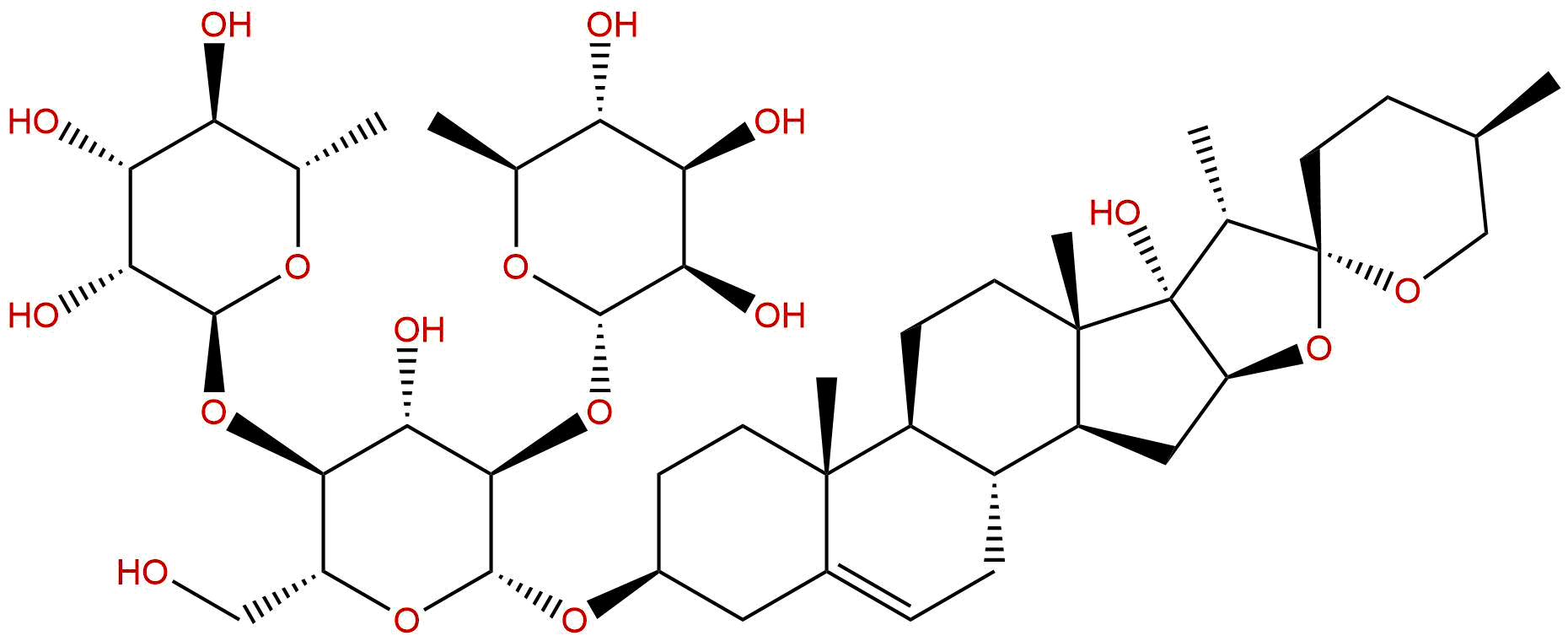


Product name: Pennogenin 3-O-beta-chacotrioside
Synonym name: Pennogenin3-O-α-L-rhamnopyranosyl-(1→2)-[α-L-rhamnopyranosyl-(1→4)]-β-D-glucopyranoside
Catalogue No.: BP4012
Cas No.: 55916-52-4
Formula: C45H72O17
Mol Weight: 885.054
Botanical Source:
Physical Description:
Type of Compound: Steroids
Purity: 95%~99%
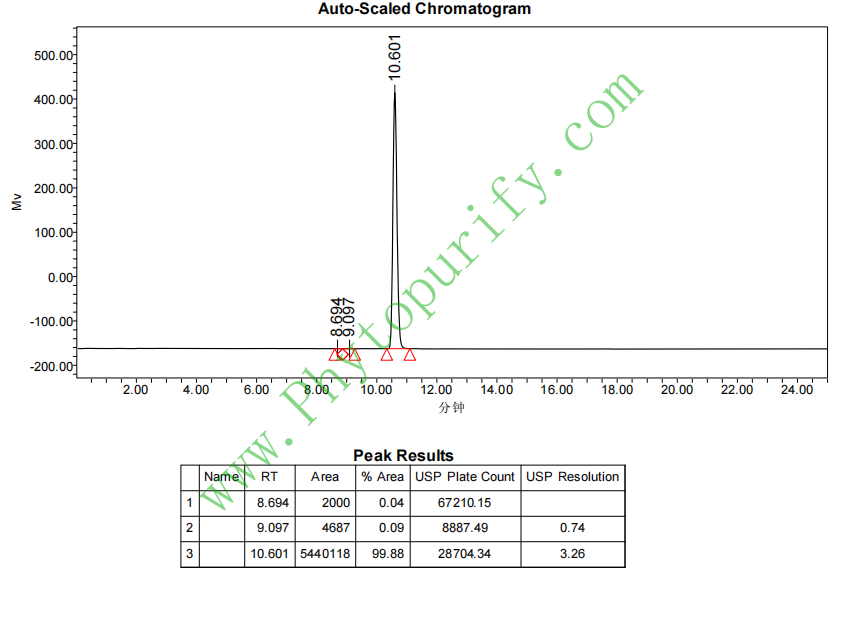
Analysis Method: HPLC-DAD or/and HPLC-ELSD
Identification Method: Mass, NMR
Packing: Brown vial or HDPE plastic bottle
Storage: Store in a well closed container, protected from air and light. Put into refrigerate or freeze for long term storage.
Whenever possible, you should prepare and use solutions on the same day. However, if you need to make up stock solutions in advance, we recommend that you store the solution as aliquots in tightly sealed vials at -20℃. Generally, these will be useable for up to two weeks.
The product could be supplied from milligrams to grams
Inquire for bulk scale.
For Reference Standard and R&D, Not for Human Use Directly.
HPLC of Pennogenin 3-O-beta-chacotrioside
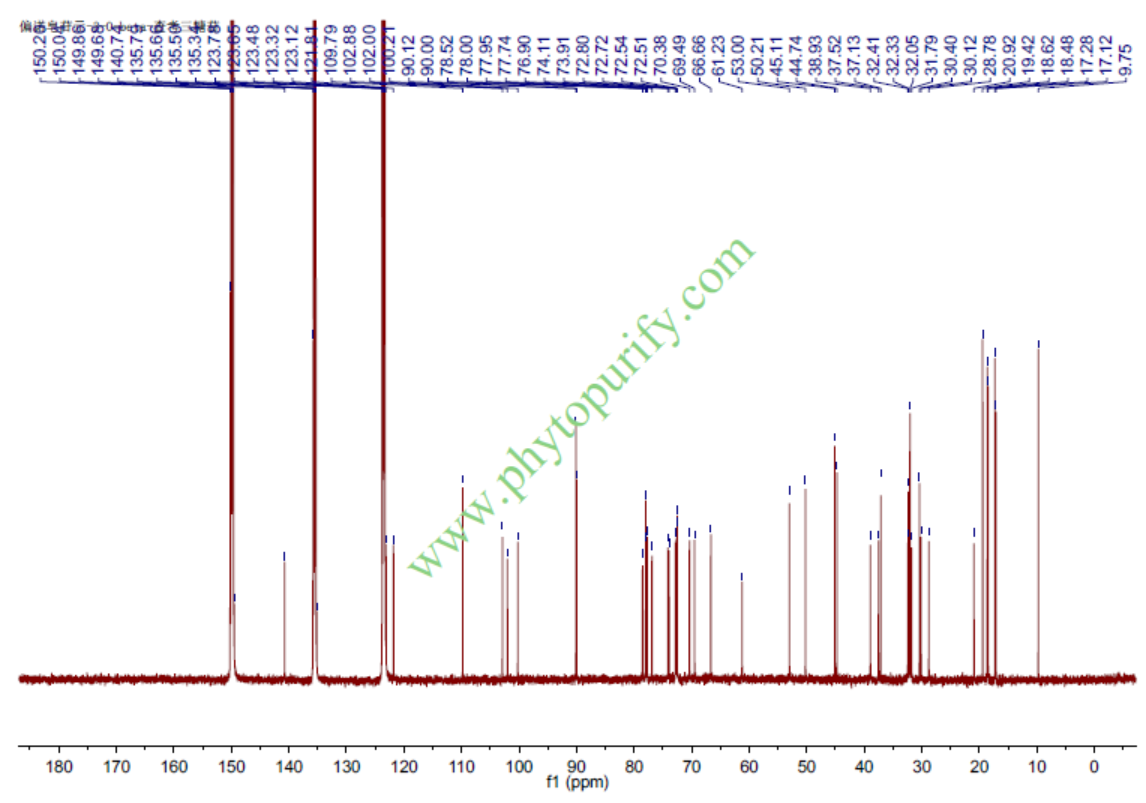
NMR of Pennogenin 3-O-beta-chacotrioside
Storage conditions:Short-term storage at 2~8℃, long-term storage at -20 ~ -80℃
255.9100
1.9344
1.9345
.0763
.5591
.4671
Low
69.4834
6.7933
No
No
No
No
No
No
0.0
Yes
No
Yes
Yes
Natural products have always been an important source of drug discovery, especially in the field of anti-inflammatory drug development. Plant derived active compounds have attracted much attention due to their structural diversity and unique pharmacological mechanisms. As an important natural product, steroidal saponins are widely present in plants such as Liliaceae, Dioscoreaceae, and Scrophulariaceae, and have various biological activities such as anti-tumor, anti-inflammatory, immune regulation, and antifungal effects. Among them, Pennogenin and its glycosides have become a research hotspot due to their significant pharmacological activities.
Pennogenin-3-O-beta-chcotrioside (CAS number: 55916-52-4) is a steroid saponin compound isolated from plants in the lily family. This compound consists of a linear trisaccharide chain (i.e. chacotriose) composed of β - D-glucose, α - L-rhamnose, and β - D-xylose, connected at the C-3 position by a sapogenin glycoside. In recent years, this compound has received widespread attention due to its potential application value in anti-inflammatory, analgesic, anti-tumor and other fields, especially its regulatory effect on various inflammation related targets, making it a candidate molecule for developing new anti-inflammatory drugs.
This article will provide a systematic review of the research progress on the chemical structure and physicochemical properties, plant sources and extraction methods, pharmacological activity research, mechanism of action and molecular targets, drug evaluation and pharmacokinetics, clinical application prospects and prospects, in order to provide reference for the in-depth research and development of this compound.
Pianosogenin-3-O - β - Chacao triterpenoid belongs to the class of steroidal saponins, and its chemical structure consists of two parts: the glycoside (Pianosogenin-3-O - β - Chacao triterpenoid) and the sugar chain. Pennogenin is a typical spirostane type steroidal sapogenin, with a 27 carbon spirostane skeleton as its parent nucleus and trans fused A/B, B/C, and C/D rings. The glycoside has a hydroxyl group at position C-3 and is connected to a spiroketide side chain at position C-17. The side chain consists of an E ring and an F ring, with the F ring being an oxygen-containing heterocyclic ring.
The sugar chain of this compound is composed of three monosaccharide units connected by glycosidic bonds called chacotriose. Specifically, the sugar chain consists of β - D-glucose, α - L-rhamnose, and β - D-xylose, which are connected in a β - configuration by glucose forming an O-glycosidic bond with the C-3 hydroxyl group of the aglycone through the C-1 position; Rhamnose is connected to the C-2 hydroxyl group of glucose in an alpha configuration; Xylose is connected to the C-4 hydroxyl group of glucose in a β - configuration. This specific sugar chain structure endows the compound with unique physicochemical properties and biological activity.
From the perspective of physical and chemical properties, the molecular formula of 3-O - β - chalcotrioside is C ₄₅ H ₇₂ O ₁₇, with a molecular weight of 885.0540 Da. Its lipid water partition coefficient (LogP) is 1.9344, indicating that the compound has a certain lipophilicity, but it also contains multiple hydroxyl groups, making it soluble in the aqueous phase. The topological polar surface area (TPSA) is 255.9100 Å ², and a higher TPSA value suggests that the compound may have difficulty penetrating the cell membrane, but is advantageous for forming hydrogen bonding interactions with protein targets. The water solubility parameter is 0.0763 mg/mL, indicating that the compound has a low solubility in water, which may limit its oral bioavailability. In addition, the compound has low permeability to the blood-brain barrier, suggesting that its role in the central nervous system may be limited.
In terms of chemical stability, steroidal saponins are usually sensitive to acids, bases, and enzymes, especially under acidic conditions where glycosidic bonds may undergo hydrolysis. Therefore, it is necessary to control appropriate pH conditions and temperature during the extraction, separation, and storage processes to maintain its structural integrity.
Pianosogenin-3-O - β - Chacao triterpenoid mainly comes from plants in the Liliaceae family, especially in the genus Paris(Paris)Plants. As a traditional Chinese medicinal herb, Chonglou plants have a long history of medicinal use and are commonly used to treat diseases such as inflammation, bleeding, and tumors. Among them, Yunnan Heavy Building(Paris polyphylla var. yunnanensis)And seven leaves and one branch of flowers(Paris polyphylla var. chinensis)It is the main source. In addition, the compound may also be present in other Liliaceae plants such as the genus Elongation(Trillium)In plants.
The distribution of this compound in plants is mainly present in the rhizomes and underground parts, and its content is influenced by various factors, including plant species, growth environment, harvest season, processing methods, etc. Research has shown that there are significant differences in the content of this compound in plants of the genus Chonglou from different sources, which may be related to genetic background and ecological factors. In addition, plant age is also an important factor, as perennial plants typically have higher levels of active ingredients in their rhizomes.
In terms of extraction methods, traditional solvent extraction is the main means of obtaining the compound. Due to the moderate lipophilicity of the compound, ethanol or methanol is usually used as the extraction solvent. The commonly used extraction process includes crushing dried plant roots and stems, soaking or percolating them in 70% -95% ethanol at room temperature or heating conditions, and concentrating the extract under reduced pressure to obtain a crude extract. In order to improve the extraction efficiency, modern extraction techniques such as ultrasound assisted extraction, microwave-assisted extraction, supercritical fluid extraction, etc. have also been applied to the extraction of this compound. Ultrasonic assisted extraction utilizes cavitation effect to destroy cell walls, promote solvent permeation, significantly shorten extraction time, and improve yield. Microwave assisted extraction utilizes the rapid vibration of polar molecules in a microwave field to generate heat, accelerating the dissolution of the target compound.
Separation and purification are key steps in obtaining high-purity compounds. Crude extracts usually contain a large amount of impurities, including polysaccharides, proteins, pigments, other saponin compounds, etc. Common separation methods include liquid-liquid extraction (such as extracting saponins with n-butanol), macroporous adsorption resin column chromatography (such as D101, AB-8, etc.), silica gel column chromatography, reverse phase silica gel column chromatography (such as ODS), preparative high-performance liquid chromatography, etc. Specifically, the crude extract was initially purified using a macroporous adsorption resin column, and then subjected to gradient elution using a chloroform methanol water system via silica gel column chromatography. It was further separated using a methanol water system via reverse phase silica gel column chromatography, and finally purified by preparative HPLC, resulting in a purity of over 98% for the glycoside 3-O - β - Chacao.
In terms of structural identification, the structure of the compound is usually determined by spectroscopic methods, including nuclear magnetic resonance spectroscopy (¹ H-NMR, ¹ ³ C-NMR, DEPT, HSQC, HMBC, NOESY, etc.), mass spectrometry (ESI-MS, HR-ESI-MS), infrared spectroscopy (IR), and ultraviolet spectroscopy (UV). Among them, two-dimensional nuclear magnetic resonance technology is crucial for determining the connection order of sugar chains and the configuration of glycosidic bonds. By comparing with the spectral data reported in the literature, the structure of the compound can be confirmed.
The pharmacological activity research of Pianosaponin-3-O - β - Chacao triterpenoid mainly focuses on anti-inflammatory, analgesic, anti-tumor, and immune regulation aspects, among which anti-inflammatory activity is the most prominent research direction.
anti-inflammatory activity Multiple studies have shown that this compound exhibits significant anti-inflammatory effects in various inflammatory models. In the lipopolysaccharide (LPS) - induced macrophage inflammation model, this compound can dose dependently inhibit the production of inflammatory mediators such as nitric oxide (NO), prostaglandin E ₂ (PGE ₂), tumor necrosis factor - α (TNF - α), interleukin-6 (IL-6), and interleukin-1 β (IL-1 β). In animal models, the compound can alleviate carrageenan induced toe swelling in rats, xylene induced ear swelling in mice, and cotton ball induced granuloma formation in rats, indicating its inhibitory effect on both acute and chronic inflammation. In addition, in the ulcerative colitis model, this compound can alleviate inflammatory infiltration and mucosal damage in colon tissue, reduce myeloperoxidase (MPO) activity and inflammatory cytokine levels.
Analgesic activity Related to anti-inflammatory activity, this compound also exhibits certain analgesic effects. In the acetic acid writhing test and hot plate test, this compound can prolong the latency of pain response in mice, reduce the number of writhing times, and its analgesic effect may be related to inhibiting the release of inflammatory mediators and regulating pain signaling pathways.
Antitumor activity: Preliminary studies have shown that this compound has cytotoxic effects on a variety of tumor cell lines, including human liver cancer cells (HepG2), human lung cancer cells (A549), human breast cancer cells (MCF-7) and human cervical cancer cells (HeLa). Its anti-tumor mechanism may involve inducing cell apoptosis, blocking the cell cycle, inhibiting angiogenesis, and so on. It is worth noting that the compound has relatively low toxicity to normal cells and exhibits a certain degree of selectivity.
Immune regulatory activity This compound has a bidirectional regulatory effect on the immune system. At low concentrations, it can promote the proliferation of splenic lymphocytes and the phagocytic function of macrophages, enhancing the body's immune function; At high concentrations, it may inhibit overactivated immune responses and exert anti-inflammatory effects. This immune regulatory property makes it potentially valuable for the treatment of autoimmune diseases.
Other activities In addition, the compound also exhibits antifungal, antiviral, and antioxidant activities. In terms of antifungal activity, it has inhibitory effects on pathogenic fungi such as Candida albicans and Cryptococcus neoformans; In terms of antiviral effects, preliminary studies have shown that it has a certain inhibitory effect on influenza virus and herpes simplex virus; In terms of antioxidant properties, this compound can scavenge DPPH free radicals and ABTS ⁺ free radicals, and reduce intracellular reactive oxygen species levels.
The pharmacological activity of Pianosaponin-3-O - β - Chacotrioside is closely related to its regulation of multiple molecular targets. Based on existing research, its mechanism of action mainly involves the following aspects:
Inhibition of NF - κ B signaling pathway NF - κ B is the core transcription factor of inflammatory response, regulating the expression of various inflammatory and chemokines. Research has shown that this compound can inhibit the activity of I κ B kinase (IKK, encoded by the IKBKB gene), prevent the phosphorylation and degradation of I κ B α, and thus inhibit the nuclear translocation and transcriptional activity of NF - κ B (composed of subunits such as RELA). By inhibiting the NF - κ B pathway, this compound downregulates the expression of inflammation related genes such as TNF - α, IL-6, IL-1 β, COX-2 (encoded by PTGS1/PTGS2), and iNOS (encoded by NOS2).
Regulating the STAT3 signaling pathway Signal transducer and activator of transcription factor 3 (STAT3) plays an important role in inflammation and tumorigenesis. This compound can inhibit the phosphorylation of STAT3, block its dimerization and nuclear translocation, thereby suppressing STAT3 mediated gene transcription. The inhibition of STAT3 further downregulates the expression of inflammatory factors such as IL-6, forming a negative feedback regulation.
Regulating inflammasome activity Inflammatory inflammasome is an important component of the innate immune system, among which NLRP3 inflammasome plays a key role in various inflammatory diseases. This compound can inhibit the activation of caspase-1 (encoded by CASP1), reduce the maturation and secretion of IL-1 β and IL-18. In addition, it may also exert anti-inflammatory effects by inhibiting the assembly of NLRP3 inflammasomes.
Affects transient receptor potential channels The transient receptor potential (TRP) channel family plays an important role in pain and inflammation perception. This compound can regulate the activity of TRPV1 and TRPA1 channels. TRPV1 is a thermal pain sensor, while TRPA1 is a chemical stimulus sensor, and their activation is closely related to inflammatory pain. This compound may exert analgesic effects by antagonizing the excessive activation of these channels.
Inhibition of arachidonic acid metabolism Cyclooxygenase (COX, encoded by PTGS1) is a key enzyme involved in the metabolism of arachidonic acid into prostaglandins and plays an important role in inflammatory responses. This compound can inhibit the activity of COX-2, reduce the synthesis of PGE ₂, and thus alleviate inflammatory reactions. In addition, it may also affect the lipoxygenase (LOX) pathway and regulate the production of leukotrienes.
anti-oxidative stress This compound can activate the nuclear factor E2 related factor 2 (Nrf2) signaling pathway, promote the expression of antioxidant enzymes such as superoxide dismutase (SOD), glutathione peroxidase (GPx), and heme oxygenase-1 (HO-1), thereby reducing oxidative stress damage to cells.
In summary, the anti-inflammatory and analgesic activities of 3-O - β - chalcotrioside are exerted through a multi-target and multi pathway mechanism, and its action network involves multiple key nodes such as NF - κ B, STAT3, inflammasomes, TRP channels, etc. This multi-target mode of action gives it unique advantages in treating complex inflammatory diseases, but it also increases the difficulty of fully understanding its mechanism of action.
The evaluation of drug properties is a crucial step in determining whether natural products can enter the stage of new drug development. The pharmacological parameters of Pianosaponin-3-O - β - Chacotrioside show that this compound has certain development potential, but also faces some challenges.
Physical and chemical properties and drug like properties According to Lipinski's "Five Rules", the molecular weight of the compound (885.0540 Da) exceeds the threshold of 500 Da, and the LogP (1.9344) is within a reasonable range. However, there are many hydrogen bond donors (multiple hydroxyl groups) and hydrogen bond acceptors, and the TPSA (255.9100 Å ²) is high. These characteristics suggest that its oral bioavailability may be low. However, for natural products, many active compounds do not fully comply with the "five rules", but can still exert pharmacological effects through other routes of administration (such as injection, local administration).
Water solubility The water solubility parameter of this compound is 0.0763 mg/mL, which belongs to low solubility compounds. Low water solubility is one of the main factors limiting its in vivo absorption and bioavailability. Through formulation techniques such as nanoemulsions, liposomes, cyclodextrin inclusion complexes, etc., their solubility and bioavailability can be improved.
Blood-brain barrier permeability The compound has low permeability to the blood-brain barrier, which to some extent limits its application in the treatment of central nervous system diseases. However, for peripheral inflammatory diseases, low brain permeability may actually reduce central nervous system side effects.
safety evaluation The Ames test result was 0.0, indicating that the compound did not exhibit mutagenicity in the bacterial recovery mutation test, suggesting a low risk of genetic toxicity. The hERG inhibition test result was negative, indicating that the compound has a weak inhibitory effect on cardiac potassium ion channels and a low risk of cardiac toxicity. These security data provide favorable conditions for its further development.
Pharmacokinetic characteristics At present, there is insufficient pharmacokinetic research on this compound. Preliminary studies have shown that the compound has poor absorption and low bioavailability after oral administration, which may be related to its high molecular weight, poor water solubility, and intestinal metabolism. After intravenous administration, the compound is widely distributed in the body, mainly in tissues such as the liver, kidneys, and lungs. Its metabolic pathway may involve hydrolysis of sugar chains and further metabolism of aglycones, such as hydroxylation and glucuronic acid binding. The elimination pathway is mainly through bile excretion and renal excretion. Due to the lack of systematic pharmacokinetic studies, the half-life, clearance rate, and other parameters of this compound need further clarification.
Drug interactions This compound may interact with other drugs by affecting drug metabolizing enzymes (such as CYP450 enzyme system) and transporters (such as P-glycoprotein). For example, its inhibitory effect on the NF - κ B pathway may affect the efficacy of other anti-inflammatory drugs. Therefore, it is necessary to carefully evaluate potential drug interactions when using combination therapy.
As a natural steroidal saponin with multi-target anti-inflammatory activity, 3-O - β - chalcotrioside has shown potential application prospects in the treatment of various diseases.
Inflammatory diseases Given its significant anti-inflammatory activity, this compound is expected to be used for the treatment of chronic inflammatory diseases such as rheumatoid arthritis, osteoarthritis, ulcerative colitis, dermatitis, etc. Compared with traditional nonsteroidal anti-inflammatory drugs (NSAIDs), this compound works through a multi-target mechanism and may have better efficacy and lower gastrointestinal side effects. In addition, its inhibitory effect on inflammatory bodies makes it have potential application value in NLRP3 related diseases such as gout and diabetes nephropathy.
pain management The regulatory effect and anti-inflammatory activity of this compound on TRPV1 and TRPA1 channels make it potential for the treatment of inflammatory pain and neuropathic pain. Compared to opioid drugs, this compound may have lower addictive and respiratory depression risks.
neoadjuvant therapy The anti-tumor activity and immune regulatory effect of this compound suggest that it can be used as a candidate drug for adjuvant therapy of tumors. By inhibiting pro cancer signaling pathways such as STAT3 and NF - κ B, this compound may enhance the sensitivity of chemotherapy drugs and reduce the occurrence of tumor resistance. In addition, its immunomodulatory effect may help improve the tumor microenvironment and enhance anti-tumor immune response.
Autoimmune diseases The compound's bidirectional regulatory effect on the immune system makes it potentially valuable in the treatment of autoimmune diseases such as systemic lupus erythematosus and multiple sclerosis. By inhibiting overactivated immune responses, this compound may alleviate autoimmune inflammation and tissue damage.
However, the compound still faces many challenges from laboratory research to clinical application. Firstly, its low water solubility and low oral bioavailability are the main bottlenecks restricting its clinical translation. We need to develop advanced drug delivery systems, such as nanomaterials, liposomes, phospholipid complexes, etc., to improve their solubility and bioavailability. Secondly, the pharmacokinetic characteristics and long-term toxicity of this compound still require systematic research. In addition, although its multi-target mechanism of action has advantages, it also increases the complexity of mechanism of action research, and further clarification of its main targets and signaling pathways is needed.
Future research directions should include: 1) optimizing the pharmacokinetic properties and activity of the compound through structural modification and structure-activity relationship studies; 2) Develop new formulation technologies to improve their bioavailability and targeting; 3) Conduct systematic pharmacokinetic and toxicological studies to evaluate their safety; 4) Using omics techniques and network pharmacology methods to thoroughly elucidate its mechanism of action; 5) Explore the synergistic effects of this compound with other drugs and develop combination therapy plans.
As a natural steroidal saponin isolated from plants in the Liliaceae family, Pianosogenin-3-O - β - Chacotrioside exhibits significant anti-inflammatory, analgesic, anti-tumor, and immunomodulatory activities. Its mechanism of action involves multiple signaling pathways and molecular targets such as NF - κ B, STAT3, inflammasomes, TRP channels, etc., reflecting the multi-target and multi pathway characteristics of natural products. The drug efficacy evaluation shows that the compound has a good safety basis, but low water solubility and low oral bioavailability are the main obstacles to its clinical translation.
With the development of modern medicinal chemistry, pharmacology, and formulation technology, through structural optimization, formulation innovation, and in-depth mechanism research, the 3-O - β - Chacao Triphosphatid glycoside is expected to become a new candidate drug for the treatment of inflammatory diseases, pain, and tumors. In the future, research on this compound will continue to deepen, laying a solid scientific foundation for its clinical application and providing useful references for discovering and developing innovative drugs from traditional Chinese medicine.
