| Catalog No | Package | Original Price | Price | Inventory | Quantity | Operating |
|---|---|---|---|---|---|---|
| BP1360-20mg | 20mg | $30.00 | Sign in |
|


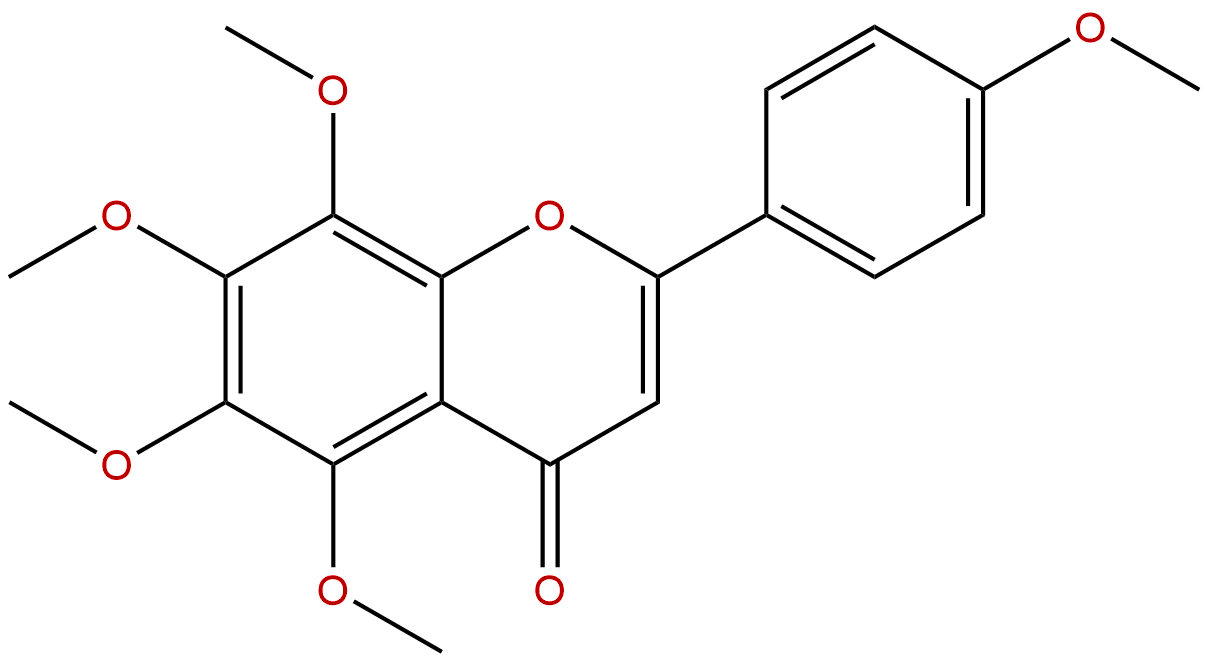
Synonym name: 4',5,6,7,8-Pentamethoxyflavone; Tangeritin; Ponkanetin
Catalogue No.: BP1360
Cas No.: 481-53-8
Formula: C20H20O7
Mol Weight: 372.373
Botanical Source: the peel of tangerines and of Deuterophoma traceiphila and Fortunella japonica (round kumquat)
Purity: 95%~99%
Analysis Method: HPLC-DAD or/and HPLC-ELSD
Identification Method: Mass, NMR
Packing: Brown vial or HDPE plastic bottle
Can be supplied from milligrams to grams, up to kgs.
For Reference Standard and R&D, Not for Human Use Directly.
Inquire for bulk scale.
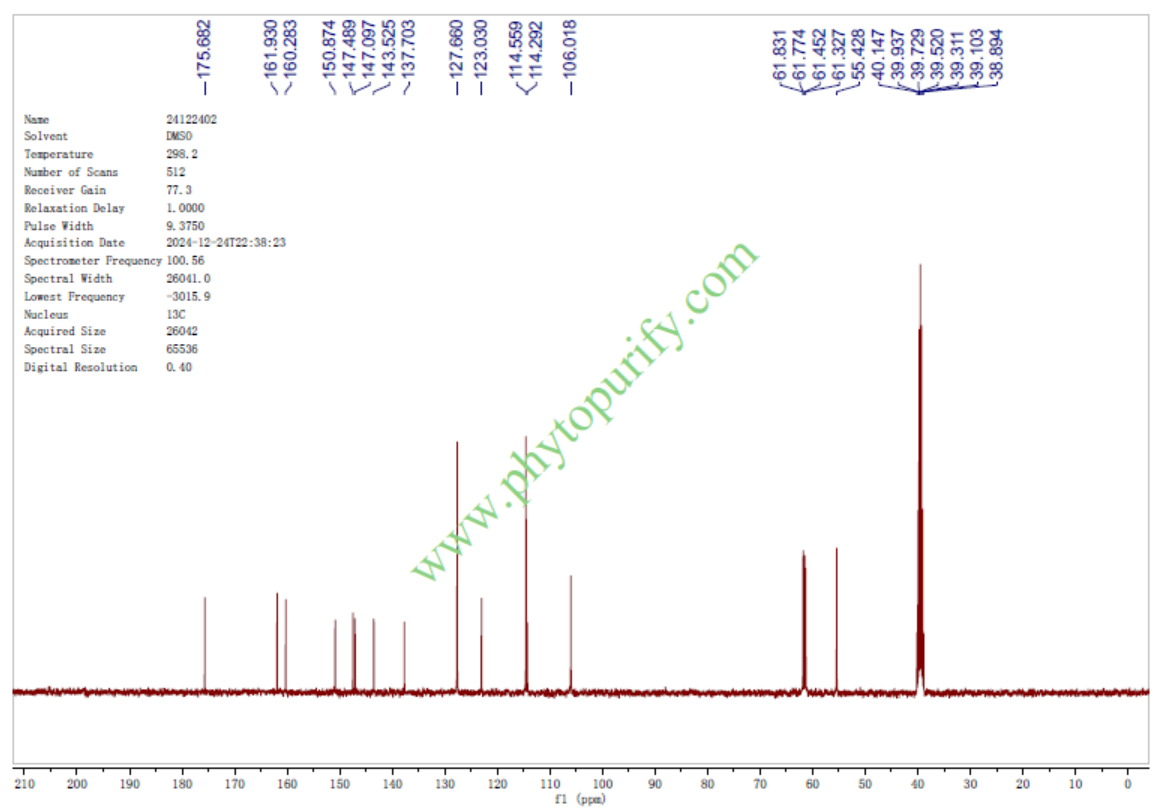
NMR of Tangeretin
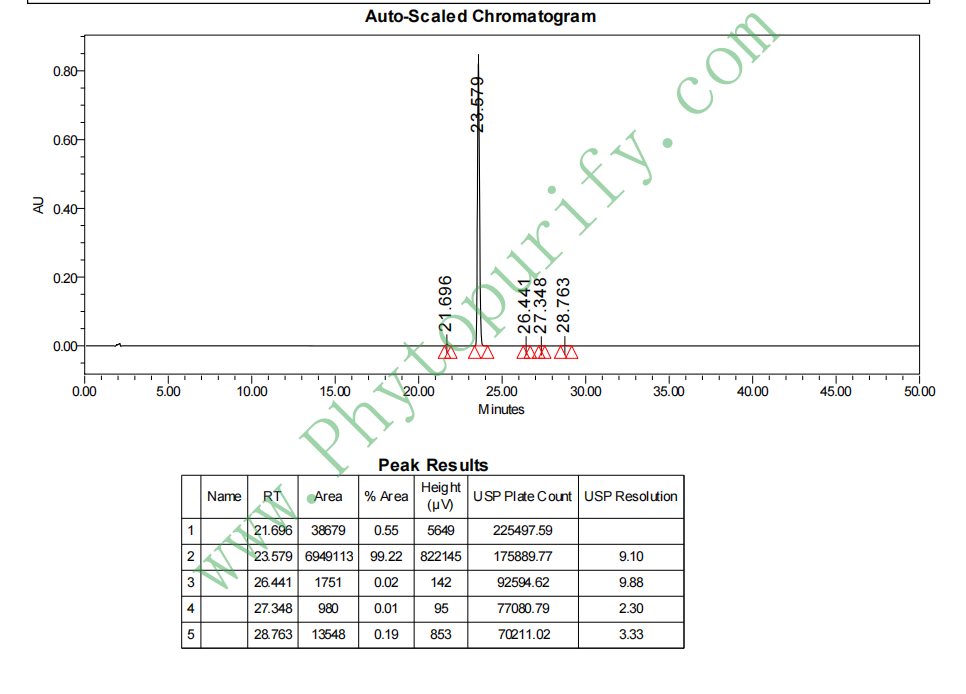
HPLC of Tangeretin
Storage conditions:Short-term storage at 2~8℃, long-term storage at -20 ~ -80℃
Tangeretin, CAS number 481-53-8, is a natural product of multi methoxy flavonoids widely present in citrus peels. As a typical representative of flavonoids, hesperidin has attracted widespread attention in the field of natural product pharmacology in recent years due to its unique chemical structure and diverse biological activities. Research has shown that hesperidin not only has significant anti-inflammatory, antioxidant, and neuroprotective effects, but also demonstrates good anti-tumor potential due to its ability to regulate various cancer-related signaling pathways. Especially as an effective inhibitor of the Notch-1 signaling pathway, it plays a crucial role in tumor cell proliferation, apoptosis, and metastasis, and has become one of the important targets in current anti-cancer drug development.
This article aims to systematically review the chemical structure and physicochemical properties, plant sources and extraction methods, pharmacological activity and mechanism of action, pharmacological evaluation and pharmacokinetic characteristics of hesperidin. Combining its molecular targets and related disease research progress, it explores its clinical application prospects and challenges, providing theoretical basis and research direction for natural product pharmacology and new drug development.
Orange peel extract belongs to the class of multi methoxy flavonoids, with a chemical formula of C20H20O7 and a molecular weight of 372.3730. Its structural feature is that the flavonoid skeleton contains five methoxy substituents, which endow it with strong hydrophobicity and stable molecular conformation. The presence of multiple methoxy groups in the molecular structure not only enhances its lipophilicity (LogP of approximately 2.72), but also affects its binding ability with biomolecules and cell membrane penetration.
In terms of physical and chemical properties, the topological polar surface area (TPSA) of hesperidin is 76.36 Å ², indicating its moderate polarity and favorable transmembrane absorption. Low water solubility (about 0.0040 mg/mL) suggests that its bioavailability in vivo may be limited, and it is often necessary to improve its solubility and stability through formulation modifications or carrier systems. The high permeability of the blood-brain barrier indicates its potential to enter the central nervous system, supporting research on its neuroprotective effects. The hERG channel inhibition experiment result was negative, indicating a low risk of cardiac toxicity from hesperidin. The Ames mutagenicity test score is 0.6, indicating a low risk of genotoxicity and a good safety foundation.
Citrus peel extract is mainly found in the skin of citrus plants, especially in the outer skin of fruits such as orange (Citrus reticulata), grapefruit (Citrus paradisi), and lemon (Citrus limon). Its content varies greatly with variety, maturity, and harvesting season. In traditional Chinese medicine, citrus peel (Chenpi) has a long history as a medicinal material, and modern research has also confirmed that it is rich in hesperidin and other flavonoid active ingredients.
The extraction methods mainly include solvent extraction, ultrasound assisted extraction, microwave-assisted extraction, and supercritical fluid extraction. The commonly used solvents are mixed solutions of ethanol or methanol with water, and the combination of ultrasound or microwave technology can significantly improve extraction efficiency and purity. After extraction, it is usually separated and purified by methods such as silica gel column chromatography and high-performance liquid chromatography (HPLC). In recent years, the application of nanotechnology and molecular imprinting technology has provided new ideas for the efficient separation and targeted delivery of hesperidin.
The pharmacological activities of hesperidin are diverse, covering multiple aspects such as anti-inflammatory, antioxidant, anti-tumor, neuroprotective, and metabolic regulation.
Orange peel extract effectively reduces inflammation by inhibiting the expression of various inflammatory mediators, such as nitric oxide synthase (NOS2), cyclooxygenase-2 (COX-2), and pro-inflammatory cytokines (TNF - α, IL-6, etc.). Its inhibitory effect on the nuclear factor kappa B (NF - κ B) signaling pathway is the core of its anti-inflammatory mechanism, demonstrating potential applications in chronic inflammatory diseases.
As a flavonoid compound, hesperidin has excellent free radical scavenging ability and can alleviate cell damage caused by oxidative stress. It activates the Nrf2/ARE signaling pathway, enhances the expression of intracellular antioxidant enzymes such as glutathione peroxidase and superoxide dismutase, and protects cells from oxidative damage, especially in neurological disease models.
Citrus peel extract exhibits significant anti proliferative and pro apoptotic activities in various tumor cell lines. Its targets include BCL2 family proteins, STAT3, PI3K/Akt pathway, and MAPK signaling pathway, which can regulate cell cycle, induce apoptosis, and inhibit tumor cell migration and invasion. Especially as an inhibitor of the Notch-1 signaling pathway, it blocks the self-renewal of tumor stem cells and the support of the tumor microenvironment, enhances the sensitivity of chemotherapy drugs, and demonstrates the potential for synergistic anti-cancer effects.
Orange peel extract can penetrate the blood-brain barrier and exert neuroprotective effects. Research has shown that it alleviates nerve damage in neurodegenerative disease models by inhibiting neuroinflammatory responses, reducing oxidative stress, and regulating neurotransmitter balance. In addition, hesperidin has a certain regulatory effect on the pathological processes related to Alzheimer's disease and Parkinson's disease, indicating its application value in the prevention and treatment of neurological diseases.
The multi-target mechanism of action of hesperidin is the basis for its broad pharmacological activity. Its main molecular targets and signaling pathways include:
Through the synergistic regulation of the above multiple targets, hesperidin exhibits a complex and effective pharmacological action network, supporting its potential as a multifunctional drug candidate molecule.
The pharmacological evaluation of hesperidin shows that it has certain advantages and challenges. The molecular weight is moderate, and the LogP value indicates that it has good lipid solubility, which is beneficial for cell membrane penetration. TPSA is moderate, supporting its oral absorption and blood-brain barrier permeability. The low water solubility is the main limiting factor for its bioavailability, which needs to be improved through pharmaceutical methods.
Pharmacokinetic studies in vivo have shown that hesperidin is absorbed rapidly and widely distributed after oral administration, especially at high concentrations in brain tissue, which meets the requirements for its neuroprotective effects. Liver metabolism is the main clearance pathway, mainly through CYP450 enzyme system metabolism. The activity and toxicity of metabolites need further evaluation. Citrus peel extract does not significantly inhibit hERG channels, reducing the risk of cardiac toxicity. Low genotoxicity and good safety.
At present, hesperidin has a moderate half-life in the body and is suitable for multiple administrations to maintain effective concentrations. Further research is needed on its interactions with other drugs, especially the pharmacokinetic changes in combination therapy.
Orange peel extract, as a multifunctional natural product, has broad clinical application prospects. Its anti-tumor activity makes it a potential candidate drug for cancer adjuvant therapy, especially in tumor types targeting Notch-1 and related signaling pathways, which may improve the efficacy and safety of existing treatment options. The neuroprotective effect provides new ideas for the treatment of neurodegenerative diseases, especially in the early intervention of diseases such as Alzheimer's disease and Parkinson's disease, which has potential value.
However, the low water solubility and bioavailability of hesperidin limit its clinical application. Future research should focus on pharmaceutical improvements, such as nanocarriers, liposome encapsulation, and chemical modifications, to enhance in vivo stability and targeting. In addition, the toxicological assessment and preclinical research of the system are key to achieving its clinical translation.
The multi-target mechanism of action provides a theoretical basis for the combination therapy of hesperidin, and in the future, its synergistic effects with chemotherapy drugs and immune modulators can be explored to develop new composite treatment strategies.
Orange peel extract, as a naturally occurring product with unique structure and diverse functions, exhibits significant pharmacological activities such as anti-inflammatory, anti-tumor, and neuroprotective effects. It exerts a wide range of biological effects by regulating Notch-1 and multiple key molecular signaling pathways, and has a good pharmaceutical basis and safety characteristics. Despite challenges such as water solubility and bioavailability, with the continuous advancement of extraction and purification technologies and pharmaceutical strategies, hesperidin is expected to become an important direction for the development of natural product drugs.
In the future, combining modern molecular biology, pharmacology, and clinical research, in-depth analysis of the mechanism of action of hesperidin and optimization of its drug properties will lay a solid foundation for its clinical application and new drug development, and promote the widespread application of natural products in modern medicine.
