


Product name: Salvianolic acid D
Synonym name:
Catalogue No.: BP1250
Cas No.: 142998-47-8
Formula: C20H18O10
Mol Weight: 418.354
Botanical Source: Salviae Miltiorrhizae Radix et Rhizoma
Physical Description:
Type of Compound: Phenylpropanoids
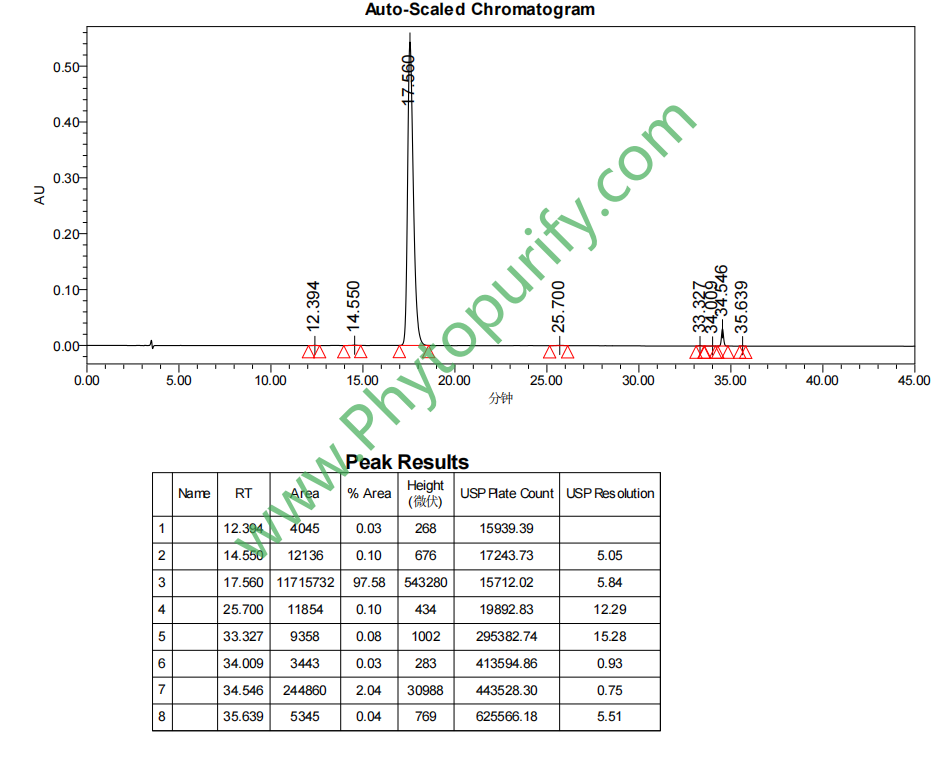
Purity: 95%~99%
Analysis Method: HPLC-DAD or/and HPLC-ELSD
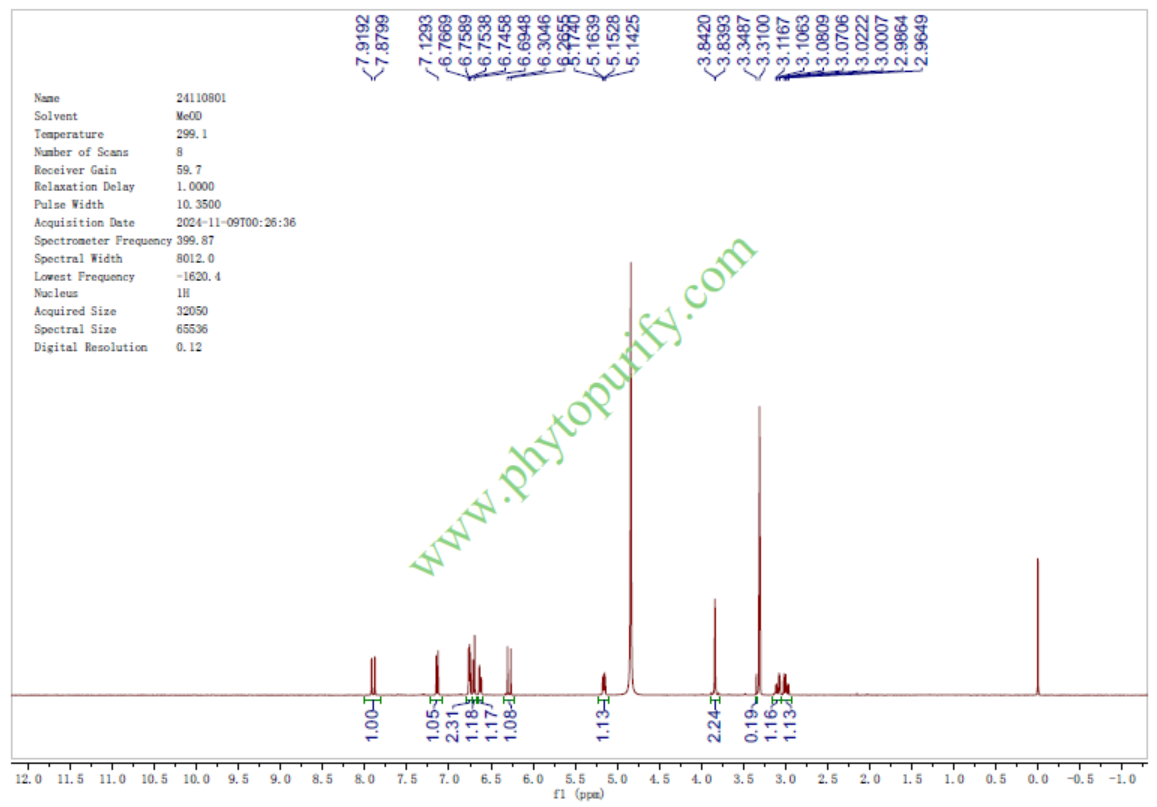
Identification Method: Mass, NMR
Packing: Brown vial or HDPE plastic bottle
Storage: Store in a well closed container, protected from air and light. Put into refrigerate or freeze for long term storage.
Whenever possible, you should prepare and use solutions on the same day. However, if you need to make up stock solutions in advance, we recommend that you store the solution as aliquots in tightly sealed vials at -20℃. Generally, these will be useable for up to two weeks.
The product could be supplied from milligrams to grams
Inquire for bulk scale.
Description:
Salvianolic acid and notoginseng triterpenes can promote EA-hy926 and expression of protein, have protective effects on angiogenesis in EA-hy926 cells in vitro.
References:
Acta Pharmaceutica Sinica BVolume 5, Issue 3, May 2015, Pages 246–253
Pharmacokinetic study of salvianolic acid D after oral and intravenous administration in rats
METHODS AND RESULTS:
A sensitive, specific and rapid LC-MS method was developed and validated for the determination of Salvianolic acid D (SalD) in rat plasma. This method used a single quadrupole mass spectrometer with an electrospray ionization (ESI) source. A single ion monitoring scanning (SIM) mode was employed. It showed good linearity over the concentration range from 3.3 to 666.7 ng/mL for the determination of Salvianolic acid D. The R.S.D.% of intra-day and inter-day precision values were no more than 7.69%, and the accuracy was within 91%−104% at all quality control levels.
CONCLUSIONS:
This LC-MS method was applied to the pharmacokinetic study of Salvianolic acid D in rats. A two-compartmental model analysis was employed. The bioavailability of Salvianolic acid D was calculated to be 4.159%±0.517%.
HPLC of Salvianolic acid D
HNMR of Salvianolic acid D
Storage conditions:Short-term storage at 2~8℃, long-term storage at -20 ~ -80℃
Salvianolic acid D (CAS number: 142998-47-8) is a polyphenolic natural product isolated from the traditional Chinese medicine Salvia miltiorrhiza. Danshen, as a classic traditional Chinese medicine, has been widely studied for its significant therapeutic effects in various diseases such as cardiovascular and cerebrovascular diseases, liver diseases, etc. Danshensu acid D, as one of the important active ingredients in Danshen, has attracted much attention in recent years due to its potential antiplatelet activity and liver protective effects. This compound not only has good biological activity, but also exhibits good safety and potential for drug development, becoming a research hotspot in the fields of natural product pharmacology and new drug development.
This review aims to systematically summarize the chemical structure and physicochemical properties, plant sources and extraction methods, pharmacological activity and mechanism of action, pharmacological evaluation and pharmacokinetic characteristics of salvianolic acid D. Combined with its molecular targets in liver protection and other related diseases, it explores its clinical application prospects and future research directions, providing theoretical basis and reference for the in-depth development and application of salvianolic acid D.
Danshensu acid D belongs to polyphenolic compounds, with a molecular formula of C22H18O9 and a molecular weight of 418.3540. Its structure contains multiple phenolic hydroxyl groups and caffeic acid derived groups, endowing it with significant antioxidant activity. The LogP value of salvianolic acid D is 1.1271, indicating that it has moderate lipid solubility, which is beneficial for distribution in the body but not prone to excessive lipid solubility and accumulation. Its topological polar surface area (TPSA) is 181.82, and a higher polar surface area suggests that it may have certain limitations in cell membrane permeability.
The water solubility is 0.6944, indicating that salvianolic acid D has good water solubility, which is beneficial for the absorption and circulation of oral administration. The low permeability of the blood-brain barrier suggests its limited distribution in the central nervous system, which may reduce the risk of central adverse reactions. The negative result of hERG channel inhibition experiment indicates a low risk of cardiac toxicity. The result of Ames mutagenicity test is 0, supporting its genotoxicity safety.
In summary, salvianolic acid D has good physicochemical properties and safety foundation, laying a solid foundation for its further drug development.
Danshensu acid D mainly comes from Salvia miltiorrhiza Bunge, a plant in the family Lamiaceae, especially its roots. Danshen is a widely used medicinal herb in traditional Chinese medicine, containing abundant phenolic acid compounds, including salvianolic acid A, salvianolic acid B, and salvianolic acid D. Although the content of salvianolic acid D is not as abundant as salvianolic acid B, its unique pharmacological activity has made it a research focus.
The common methods for extracting salvianolic acid D include water extraction and alcohol precipitation, ultrasound assisted extraction, and high-performance liquid chromatography (HPLC) separation and purification. The general process is:
In recent years, green extraction techniques such as supercritical CO2 extraction and microwave-assisted extraction have also been attempted to be applied to the extraction of salvianolic acid D, aiming to improve extraction efficiency and environmental friendliness.
The pharmacological activity research of salvianolic acid D mainly focuses on its antiplatelet aggregation, antioxidant, anti-inflammatory, and liver protective effects.
Danshensu acid D can significantly inhibit platelet activation and aggregation, and the mechanism involves inhibiting the increase of Ca ^ 2+concentration in platelets and regulating related signaling pathways. Its antiplatelet effect helps prevent thrombosis and reduce the risk of cardiovascular and cerebrovascular events. In vitro experiments have shown that salvianolic acid D has inhibitory effects on ADP and collagen induced platelet aggregation, and the dose dependence is significant.
As a natural polyphenol product, salvianolic acid D has excellent free radical scavenging ability and can reduce oxidative stress damage. Both in vitro and in vivo experiments have shown that salvianolic acid D can upregulate the expression of antioxidant enzymes such as SOD1, SOD2, CAT, and GPX1, reduce reactive oxygen species (ROS) levels, and alleviate cell damage. In addition, salvianolic acid D enhances the antioxidant defense ability of cells by regulating the nuclear factor erythroid 2-related factor 2 (NRF2) signaling pathway.
Its anti-inflammatory effect is reflected in the inhibition of the expression of pro-inflammatory cytokine TGFB1 and the regulation of related inflammatory pathways, reducing tissue inflammatory responses.
Danshensu acid D exhibits significant protective effects in liver injury models. Its mechanism includes inhibiting the activity of matrix metalloproteinase 9 (MMP9) to prevent the progression of liver fibrosis; Activate detoxification enzymes such as NQO1 and HMOX1 to promote liver cell detoxification and repair; Regulating the activation marker ACTA2 of hepatic stellate cells (HSC) to alleviate liver fibrosis.
In animal experiments, salvianolic acid D can alleviate liver dysfunction and histopathological changes caused by chemical liver injury, demonstrating good liver protective potential.
The multi-target mechanism of action of salvianolic acid D is the basis of its pharmacological activity, mainly involving the following key targets and signaling pathways:
In addition, salvianolic acid D may inhibit platelet aggregation and reduce the risk of thrombosis by regulating the Ca2+signaling and related enzyme activity in platelets in terms of antiplatelet activity.
The pharmacological parameters of salvianolic acid D show that it has good potential for drug development. The medium molecular weight (418.3540) and moderate LogP (1.1271) make its distribution in the body ideal. Although a higher TPSA (181.82) may limit its cell membrane permeability, its good water solubility (0.6944) facilitates oral absorption.
The low permeability of the blood-brain barrier reduces the risk of central nervous system toxicity and side effects. The negative inhibition of hERG channel and the absence of mutagenicity in Ames test support its safety.
In terms of pharmacokinetics, existing literature reports that salvianolic acid D is absorbed quickly after oral administration, with a moderate plasma half-life, mainly through hepatic metabolism and renal excretion. Its bioavailability is limited by intestinal metabolism and first pass effects, and its pharmacokinetic performance can be improved in the future through nanocarriers or structural modifications.
The metabolites of salvianolic acid D have not been fully elucidated, and further research is needed on its metabolic pathways and possible active metabolites to comprehensively evaluate its efficacy and safety.
Danshensu acid D has shown broad clinical application potential in the fields of liver protection and antiplatelet therapy due to its multi-target and multi mechanism pharmacological properties. Its protective effects on liver fibrosis, hepatitis, and liver injury provide new ideas for the adjuvant treatment of liver diseases. Antiplatelet activity makes it promising for the prevention and treatment of cardiovascular and cerebrovascular diseases, especially in patients at high risk of thrombosis.
Future clinical research should focus on the safety verification, dose optimization, and efficacy evaluation of salvianolic acid D, and combine modern pharmaceutical formulation technology to enhance its bioavailability and targeting. In addition, the synergistic effect of salvianolic acid D with other active ingredients of Danshen such as salvianolic acid B and the development of compound formulations are also worth further exploration.
With the development of precision medicine and molecular targeted therapy, the mechanism of action of salvianolic acid D in regulating oxidative stress, inflammatory response, and fibrosis process will be further clarified, providing scientific basis for its clinical translation.
Danshensu acid D, as an important polyphenolic active ingredient in Danshen, has significant antiplatelet and hepatoprotective effects. Its multi-target, multi mechanism pharmacological characteristics and good pharmacological parameters make it a research hotspot in the fields of natural product pharmacology and new drug development. Although the research on its pharmacokinetics and clinical application is still in its preliminary stage, its safety and efficacy have been verified to a certain extent.
In the future, combining modern medicinal chemistry, pharmacology, and clinical research methods, in-depth exploration of the mechanism of action of salvianolic acid D, optimization of its pharmacokinetic properties, and systematic clinical trials will help promote its clinical application and benefit more patients. The study of salvianolic acid D not only enriches the theoretical system of natural product pharmacology, but also provides valuable resources and ideas for the modernization of traditional Chinese medicine and the development of innovative drugs.
