Introduction/Overview
Natural products, as an important source of drug discovery, play an irreplaceable role in the long history of human struggle against diseases. In recent years, with the rapid development of modern separation and analysis techniques and molecular pharmacology, a large number of natural compounds with unique biological activities have been continuously discovered and deeply studied. Among them, isopentenyl flavonoid glycosides derived from traditional kidney tonifying Chinese medicine Epimedium plants have attracted much attention due to their significant physiological activities. Icaroside I hydrate (CAS number: 128988-55-6) is one of the important members of this compound family.
Maohuo glycoside A, also commonly known as icariin I hydrate, is a compound from the genus Epimedium(Epimedium Flavonol glycosides isolated from plants (spp.). Compared with the more well-known icariin, Maohuo glycoside A has unique structural characteristics and a differentiated biological activity spectrum. Traditional Chinese medicine theory holds that Epimedium has the effects of tonifying kidney yang, strengthening muscles and bones, and dispelling wind and dampness. Modern pharmacological research has confirmed that its extracts and main active ingredients have various pharmacological effects such as anti-inflammatory, anti osteoporosis, antioxidant, improving sexual function, and neuroprotection. Maohuo glycoside A, as one of the active ingredients in Epimedium, has not been studied as deeply as icariin. However, in recent years, significant progress has been made in exploring its anti-inflammatory activity, revealing its enormous potential in regulating various inflammation related diseases.
Inflammation is a defensive response of the body to infections, tissue damage, or stressors, but uncontrolled chronic inflammation is a common pathological basis for many major diseases, such as autoimmune diseases, cardiovascular diseases, neurodegenerative diseases, and even cancer. Therefore, the search for efficient and low toxicity natural anti-inflammatory molecules has always been a hot topic in drug development. Maohuo glycoside A is gradually becoming a rising star in the field of natural product pharmacology due to its unique chemical structure and clear anti-inflammatory targets. This article aims to systematically review the chemical structure, plant origin, pharmacological activity, mechanism of action, pharmacological characteristics, and clinical application prospects of Maohuo glycoside A, in order to provide comprehensive academic references for the in-depth research and development of this compound.
Chemical structure and physicochemical properties
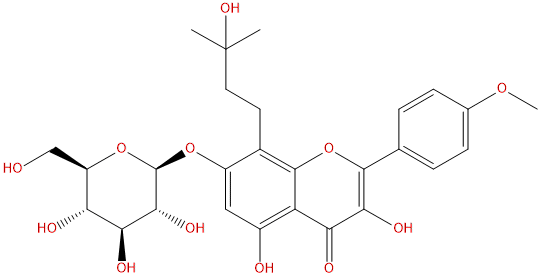
The chemical essence of Icariside I hydrate is a glycoside derivative of 8-isoprenyl flavonol. Its aglycone is a derivative of Kaempferol, which has an isopentenyl (3,3-dimethylallyl) side chain attached to the C-8 position of the Kaempferol parent nucleus. The sugar moiety is usually Rhamnose, which is connected to the C-3 hydroxyl group of the aglycone through an oxygen glycosidic bond. Therefore, its complete chemical name can be expressed as: 3- [(6-deoxy - α - L-mannopyranosyl) oxy] -8- (3-methyl-2-buten-1-yl) -5,7-dihydroxy-2- (4-methoxyphenyl) -4H-1-benzopyran-4-one. Its molecular formula is C ₂₇ H ∝ ₂ O ₁₁, and its molecular weight is 548.5410 g/mol.
From the perspective of physical and chemical properties, Maohuo glycoside A exhibits a series of typical natural flavonoid glycoside characteristics. The LogP of its lipid water partition coefficient is 1.0544, indicating that the compound has a certain degree of lipophilicity, but overall it still tends to be hydrophilic, which is related to the presence of multiple phenolic hydroxyl and sugar moieties in its molecule. Its polar surface area (TPSA) is as high as 199.5100 Å ², far exceeding the recommended upper limit of 140 Å ² for oral medications. A high TPSA value usually indicates poor membrane permeability, which poses a challenge to its oral absorption and blood-brain barrier penetration ability. In fact, the evaluation of pharmacological parameters shows that its blood-brain barrier penetration ability is "low", which limits its direct application in the treatment of central nervous system diseases. In terms of water solubility, its predicted water solubility value is 0.9691 mg/mL, which is at a moderate to low level, which to some extent affects its bioavailability. In terms of safety, key toxicological predictive indicators show that the inhibitory risk of Maohuo glycoside A on hERG potassium channels is "no", indicating a low risk of inducing QT interval prolongation and arrhythmia in the heart. The Ames test result is 0.6, indicating a low risk of mutagenicity. These preliminary toxicological evaluations provide a favorable safety basis for it as a lead compound or candidate drug.
Plant sources and extraction methods
Maohuo glycoside A is mainly derived from the Epimedium genus in the Berberidaceae family(Epimedium)Plants. There are about 50 species of this genus of plants worldwide, mainly distributed in temperate and subtropical regions of Asia, Europe, and Africa. China is the modern distribution center and diversity center of Epimedium plants, with abundant germplasm resources. Common types of medicinal Epimedium include Epimedium sagittatum(E. brevicornum)Arrow leaf Epimedium(E. sagittatum)Soft haired Epimedium(E. pubescens)Korean Epimedium(E. koreanum)Heshan Epimedium(E. wushanense)Wait. The dry aboveground parts (mainly stems and leaves) of these plants are listed as the legal source of the traditional Chinese medicine Epimedium in the Chinese Pharmacopoeia. The content of Maohuo glycoside A varies significantly in Epimedium plants of different species, origins, and harvest periods. Generally speaking, Korean Epimedium and Arrow Leaf Epimedium have relatively high content and are one of their characteristic components.
The extraction method of Maohuo glycoside A usually follows the classic paradigm of natural product chemistry, namely the "extraction separation purification" process. In the extraction stage, due to its polarity, polar solvents such as methanol, ethanol, or aqueous ethanol are often used for reflux extraction or cold soaking extraction. In order to improve extraction efficiency and selectivity, modern extraction techniques such as ultrasound assisted extraction, microwave-assisted extraction, enzyme assisted extraction, etc. have also been widely used. After the extraction solution is concentrated under reduced pressure, crude extract is obtained. Separation and purification are key steps in obtaining high-purity Maohuo glycoside A. Due to the presence of a large number of structurally similar flavonoid glycosides (such as icariin, baohuo glycoside I, chaohuoding A, B, C, etc.) in the crude extract, separation is difficult. Classical separation methods include silica gel column chromatography, polyamide column chromatography, Sephadex LH-20 gel column chromatography, etc. In recent years, high-performance counter current chromatography (HSCCC) and preparative high-performance liquid chromatography (Pre HPLC) have become the mainstream technologies for separating and preparing high-purity paeoniflorin A due to their advantages of high separation efficiency and automated operation. By optimizing the gradient elution conditions, it is possible to efficiently isolate monomers of Maohuo glycoside A with a purity of over 98% from the total flavonoid extract of Epimedium. The structural identification mainly relies on ultraviolet spectroscopy (UV), infrared spectroscopy (IR), mass spectrometry (MS), as well as one-dimensional and two-dimensional nuclear magnetic resonance spectroscopy (NMR) techniques.
Pharmacological activity research
The pharmacological activity research of Maohuo glycoside A is currently mainly focused on the anti-inflammatory field, while there are also a few reports on its antioxidant, anti osteoporosis, and neuroprotective effects.
1. Anti inflammatory activity:
This is the most in-depth core pharmacological activity of Maohuo glycoside A. Numerous in vitro cell experiments and in vivo animal model studies have confirmed its significant anti-inflammatory effects.
* In vitro studies: In a lipopolysaccharide (LPS) - stimulated macrophage model (such as RAW264.7 cells), etoposide A can dose dependently inhibit the production of pro-inflammatory cytokines such as tumor necrosis factor - α (TNF - α), interleukin-6 (IL-6), and nitric oxide (NO). In addition, it can downregulate the protein and mRNA expression levels of key inflammatory enzymes such as inducible nitric oxide synthase (iNOS/NOS2) and cyclooxygenase-2 (COX-2/PTGS1). These results indicate that Maohuo glycoside A can effectively suppress the inflammatory cascade reaction at the cellular level.
* In vivo studies: In various animal models of acute and chronic inflammation, Maohuo glycoside A has also shown good therapeutic effects. For example, in a rat model of foot swelling induced by carrageenan, gavage of paeoniflorin A can significantly reduce the degree of foot swelling. In more complex disease models, such as the collagen induced arthritis (CIA) mouse model (simulating rheumatoid arthritis), the joint swelling, bone erosion, and cartilage destruction of mice treated with Maohuo glycoside A were significantly alleviated, and the levels of inflammatory factors in serum were also significantly reduced. In addition, in a mouse model of ulcerative colitis, paeoniflorin A can effectively improve colon length shortening, histopathological damage, and inhibit the expression of pro-inflammatory cytokines in colon tissue.
2. Other pharmacological activities:
* Antioxidant activity: As a flavonoid compound, Maohuo glycoside A has the ability to scavenge free radicals. DPPH and ABTS free radical scavenging experiments have shown that it has certain antioxidant activity, but its strength is usually weaker than its aglycone or some other flavonoid compounds. Its antioxidant effect may partially contribute to its anti-inflammatory mechanism.
* Anti osteoporosis activity: Epimedium plants are known for their anti osteoporosis properties. Research has shown that Maohuo glycoside A can promote the proliferation, differentiation, and mineralization of osteoblasts (such as MC3T3-E1 cells), while inhibiting the formation of osteoclasts and bone resorption activity. This bidirectional regulatory effect makes it potentially valuable in the prevention and treatment of osteoporosis.
* Neuroprotective effect: Despite its low blood-brain barrier penetration ability, there are still studies reporting the neuroprotective potential of Maohuo glycoside A. In the model of neuronal damage induced by oxygen glucose deprivation/reoxygenation (OGD/R), pretreatment with paeoniflorin A can reduce neuronal apoptosis and may exert protective effects through anti-inflammatory and antioxidant mechanisms. The specific mechanism and whether it can achieve effective brain concentration in vivo still need further verification.
Mechanism of action and molecular targets
The anti-inflammatory effect of Maohuo glycoside A is not achieved through a single pathway, but involves precise regulation of multiple inflammatory signaling pathways, and its mechanism of action is complex and orderly. According to existing research, its core mechanism can be summarized as follows:
1. Inhibition of NF - κ B signaling pathway:
Nuclear factor kappa B (NF - κ B) is the core transcription factor in inflammatory response. In the resting state, NF - κ B (usually a p50/p65/RELA dimer) binds to its inhibitory protein I κ B and exists in an inactive form in the cytoplasm. When stimulated by inflammation such as LPS and TNF - α, I κ B kinase (IKK, including IKK α, IKK β/IKBKB) is activated, phosphorylating I κ B protein and leading to its ubiquitination degradation. The released NF - κ B immediately translocates into the nucleus, initiating the transcription of downstream pro-inflammatory genes such as TNF - α, IL-6, iNOS, COX-2. Research has shown that Maohuo glycoside A can significantly inhibit the activity of IKK β (IKBKB), thereby blocking the phosphorylation and degradation of I κ B, ultimately inhibiting the nuclear translocation and transcriptional activity of NF - κ B. This is one of the most upstream and critical mechanisms by which Maohuo glycoside A exerts anti-inflammatory effects.
2. Regulating the STAT3 signaling pathway:
Signal transducer and activator of transcription factor 3 (STAT3) is another important inflammatory signaling pathway. After binding to cytokines such as IL-6 and their receptors, JAK kinase is activated, which phosphorylates STAT3 to form dimers and integrate into the nucleus, regulating the expression of target genes. The abnormal activation of STAT3 is closely related to chronic inflammation and autoimmune diseases. Research has found that Maohuo glycoside A can inhibit IL-6-induced STAT3 phosphorylation, thereby blocking the STAT3 signaling pathway and reducing the production of downstream inflammatory mediators. This explains why it can effectively inhibit the biological effects of IL-6.
3. Intervention in inflammasome activation:
CASP1/caspase-1, which contains cysteine, is a key effector protein for the activation of inflammasomes such as NLRP3 inflammasome. After inflammasome activation, CASP1 is cleaved and activated, which then cleaves pro-IL-1 β and pro-IL-18, producing mature IL-1 β and IL-18, and inducing cell apoptosis. Maohuo glycoside A has been found to inhibit the assembly and activation of NLRP3 inflammasomes, reduce the activation of CASP1, and thus decrease the secretion of IL-1 β. This mechanism provides a theoretical basis for its application in inflammasome related diseases such as gout and colitis.
4. Regulating transient receptor potential (TRP) channels:
Transient receptor potential vanillic acid subtype 1 (TRPV1) and transient receptor potential anchor protein subtype 1 (TRPA1) are non selective cation channels expressed on sensory neurons, which can be activated by various inflammatory mediators and physical stimuli, and participate in the production of pain and neurogenic inflammation. Although direct evidence is not yet sufficient, TRPV1 and TRPA1 are listed as potential targets in the pharmacological parameters, suggesting that Maohuo glycoside A may exert analgesic and anti-inflammatory effects by regulating the activity of these channels. This may be a unique mechanism that distinguishes it from other anti-inflammatory compounds and is worth exploring in depth.
In summary, Maohuo glycoside A exerts a synergistic inhibitory effect on multiple inflammatory signaling pathways such as NF - κ B, JAK/STAT, and inflammasome by simultaneously acting on multiple key nodes such as IKBKB, STAT3, and CASP1, thereby achieving comprehensive regulation of downstream effector molecules such as TNF - α, IL-6, NOS2, and PTGS1. This multi-target and multi pathway mode of action is the structural basis for its strong anti-inflammatory activity and potentially low side effects.
Evaluation of drug properties and pharmacokinetics
To promote the clinical application of Maohuo glycoside A from the laboratory, a rigorous evaluation of its pharmacological properties is necessary. As mentioned earlier, its physical and chemical properties exhibit a "double-edged sword" characteristic.
Advantages:
* Good safety: The preliminary toxicological prediction (low risk of hERG inhibition and negative Ames test) provides a positive signal for its safety. This suggests that it may have lower risks of cardiac toxicity and genetic toxicity at therapeutic doses.
* Multi target activity: Its anti-inflammatory effect involves multiple targets, which is in line with the concept of "multi-target therapy" in modern drug development. It may have better efficacy and lower risk of drug resistance than single target drugs.
Challenges and shortcomings:
* Low oral bioavailability: This is the biggest challenge faced by Maohuo glycoside A. Its high TPSA (199.5 Å ²) and moderate water solubility (0.9691 mg/mL) indicate poor transmembrane absorption capacity. In addition, as a glycoside, it may be hydrolyzed by gut microbiota or brush edge enzymes in the gastrointestinal tract, leading to its absorption in the form of glycosides or other metabolites. Therefore, its oral bioavailability is usually very low, which severely limits the development of its oral formulations.
* Metabolic stability: Flavonoid glycosides are prone to extensive phase II metabolism (such as glucuronidation and sulfation) in the body, leading to their rapid clearance. The metabolic pathway and metabolites of Maohuo glycoside A are not fully understood, but it can be foreseen that its half-life in vivo may be short.
* Low blood-brain barrier penetration: The low BBB penetration ability makes it difficult to achieve effective therapeutic concentrations in the central nervous system, limiting its application in fields such as neurodegenerative diseases.
Pharmacokinetic characteristics: At present, there are few systematic studies on the pharmacokinetics of Maohuo glycoside A in vivo. Limited animal experimental data indicate that after oral administration, the peak blood concentration (Cmax) is low, the time to peak (Tmax) may be long (indicating slow absorption), and the overall exposure (AUC) is limited. Intravenous administration can achieve higher blood drug concentrations, but the clearance rate is faster. The key information regarding its organizational distribution, metabolic enzymes, and transporter mediated interactions still needs to be elucidated.
Improvement strategy: In order to improve the pharmacological properties of Maohuo glycoside A, future research can focus on the following directions: 1) Drug delivery system: Develop new formulations such as liposomes, nanoparticles, phospholipid complexes, etc. to improve their solubility and oral bioavailability. 2) Structural modification: Design prodrugs for its sugar or phenolic hydroxyl groups, such as introducing phosphate groups or amino acid esters, to improve its water solubility and membrane permeability. 3) Optimization of administration route: Explore non oral routes such as transdermal and nasal administration to avoid first pass effects and absorption barriers.
Clinical application prospects and prospects
Although there are challenges in the development of pharmacological properties of Maohuo glycoside A, its unique pharmacological activity and multi-target mechanism of action have opened up broad prospects for its application in specific therapeutic fields.
1. Autoimmune/chronic inflammatory diseases:
This is the most promising application area of Maohuo glycoside A. Given its effective inhibition of NF - κ B, STAT3, and inflammasome pathways, as well as its significant therapeutic effects in animal models such as CIA and colitis, Maohuo glycoside A is expected to be developed as a candidate drug for the treatment of chronic inflammatory diseases such as rheumatoid arthritis, inflammatory bowel disease (such as Crohn's disease and ulcerative colitis), and psoriasis. Its multi-target properties may make it more effective than certain single target biologics, while potentially reducing the immunosuppressive side effects caused by completely blocking a single pathway (such as TNF - α).
2. Acute inflammation and sepsis:
In the LPS induced sepsis model, mogroside A can effectively reduce mortality and alleviate multi organ damage. This indicates its potential value in treating systemic inflammatory response syndrome (SIRS) and sepsis caused by bacterial infections. The ability to rapidly inhibit core factors such as TNF - α and IL-6 in the "inflammatory storm" is crucial.
3. Metabolic inflammation related diseases:
More and more evidence shows that metabolic diseases such as obesity, type 2 diabetes and atherosclerosis are also a low-grade chronic inflammatory state in essence. The anti-inflammatory and antioxidant properties of Maohuo glycoside A may help improve insulin resistance, alleviate endothelial inflammation, and thus play a role in the prevention and treatment of metabolic syndrome.
4. Bone related diseases:
Based on its dual activity of promoting osteogenesis and inhibiting osteoclastogenesis, Maohuo glycoside A can be a potential drug for treating osteoporosis, especially postmenopausal osteoporosis. The synergistic effect with icariin is also worth exploring.
Future research prospects:
* In depth mechanism research: It is necessary to use techniques such as gene knockout and knockdown to verify its direct binding and regulatory relationship with targets such as TRPV1 and TRPA1 at a more refined level. Meanwhile, utilizing omics techniques such as transcriptomics and proteomics to comprehensively depict its functional network.
* Pharmacodynamics and Metabolomics: Conducting systematic research on the absorption, distribution, metabolism, and excretion (ADME) of Maohuo glycoside A in animal bodies, clarifying its metabolites and biological activities, is crucial for understanding its in vivo efficacy and designing better dosing regimens.
* Structure performance relationship research: By synthesizing a series of structural analogues of Pogostemon A, the effects of isopentenyl, glycosyl, methoxy and other functional groups on its anti-inflammatory activity and pharmacokinetic properties were systematically studied, providing guidance for drug design based on this skeleton.
* Clinical translational studies: After completing sufficient preclinical efficacy, toxicology, and pharmacokinetic studies, clinical trials should be actively promoted, starting with local administration (such as topical treatment for psoriasis, enema treatment for colitis) or short-term intravenous administration with higher safety (such as treatment of acute inflammation), gradually verifying its safety and effectiveness.
Conclusion
Maohuo glycoside A, as a characteristic isopentenyl flavonoid glycoside in Epimedium plants, has shown important research value in the field of natural product pharmacology due to its unique chemical structure and clear anti-inflammatory pharmacological activity. It effectively inhibits core inflammatory mediators such as IL-6, TNF - α, and NOS2 by simultaneously regulating multiple key inflammatory signaling pathways, including NF - κ B, STAT3, and inflammasomes, demonstrating significant therapeutic effects in various animal models of acute and chronic inflammation. Its good preliminary safety assessment (low hERG inhibition risk, low mutagenicity) has laid a safety foundation for its subsequent development. However, bottlenecks such as low oral bioavailability and unstable metabolism are the main obstacles to its transition from laboratory to clinical use.
In the future, research on Maohuo glycoside A should not be limited to verifying its anti-inflammatory activity, but should focus more on addressing its pharmacokinetic deficiencies and delving into its complex mechanism of action network. By combining modern medicinal chemical modifications, novel drug delivery systems, and precise molecular pharmacology techniques, this natural product is expected to be transformed into a candidate drug for the treatment of refractory chronic inflammatory diseases such as rheumatoid arthritis and inflammatory bowel disease. The research process of Maohuo glycoside A not only deepens our understanding of the traditional pharmacological substance basis of Epimedium, but also provides valuable examples for discovering and developing modern innovative drugs with multi-target characteristics from traditional Chinese medicine. With the continuous deepening of research, Maohuo glycoside A and its derivatives are expected to play a more important role in the future stage of anti-inflammatory drugs.