


Product name: Asiatic acid
Synonym name: Dammarolic acid
Catalogue No.: BP0203
Cas No.: 464-92-6
Formula: C30H48O5
Mol Weight: 488.709
Botanical Source: Dipterocarpus pilosus, Dryobalanops aromatica and others
Physical Description: Powder
Type of Compound: Triterpenoids
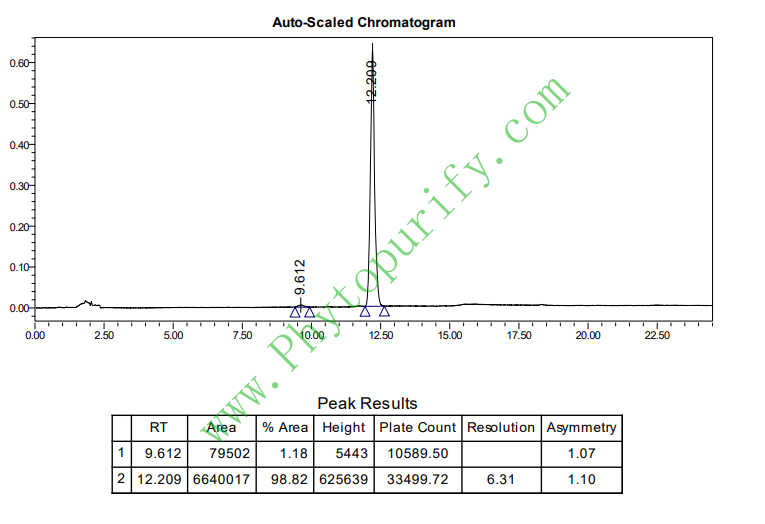
Purity: 95%~99%
Analysis Method: HPLC-DAD or/and HPLC-ELSD
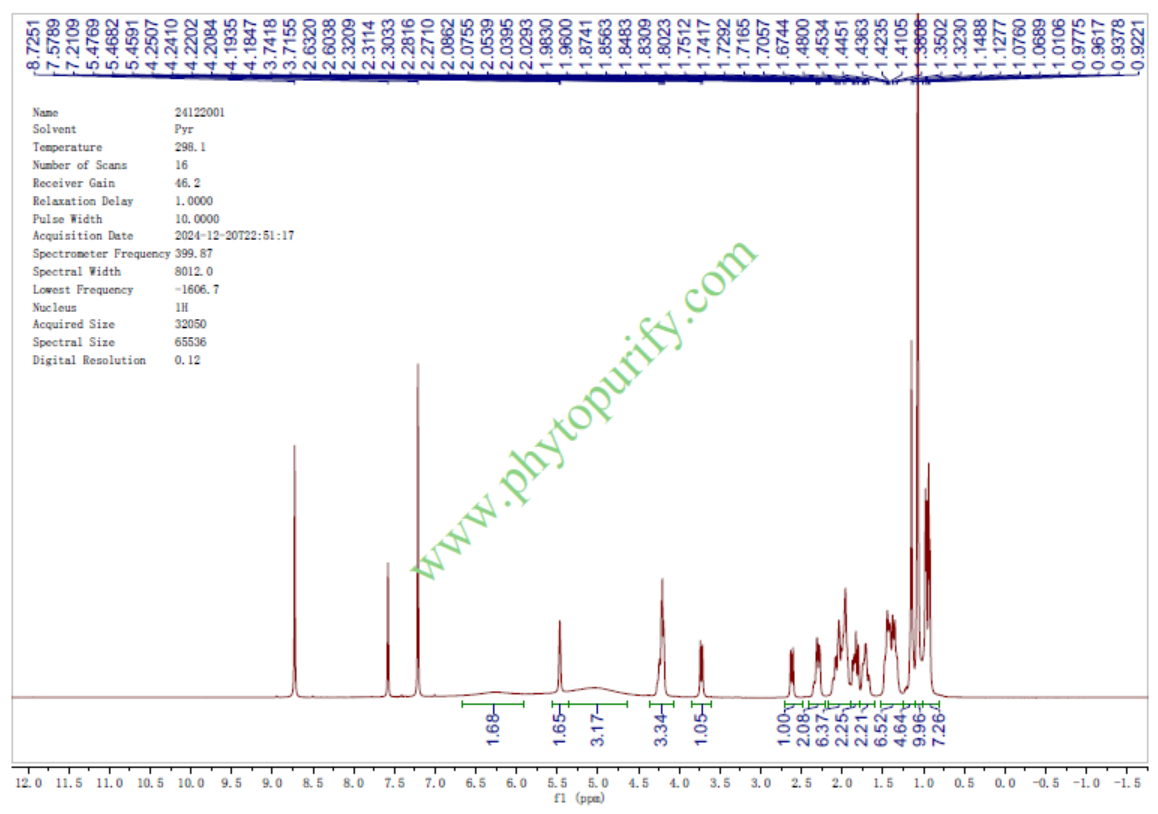
Identification Method: Mass, NMR
Packing: Brown vial or HDPE plastic bottle
Storage: Store in a well closed container, protected from air and light. Put into refrigerate or freeze for long term storage.
Whenever possible, you should prepare and use solutions on the same day. However, if you need to make up stock solutions in advance, we recommend that you store the solution as aliquots in tightly sealed vials at -20℃. Generally, these will be useable for up to two weeks.
The product could be supplied from milligrams to grams, up to kilograms
Inquire for bulk scale.
Descriptions:
Asiatic acid is a pentacyclic triterpene contained in medicinal plants, can be used as an agent for increasing sensitivity of colon cancer cells to treatment with CPT-11 or as an agent for reducing adverse effects of CPT-11.[1]
Asiatic acid has been reported to induce apoptosis of various human cancer cells, it may exert anti-tumorigenesis through inhibitory actions in NO and COX-2 signals.[2]
Asiatic acid ameliorates dextran sulfate sodium-induced murine experimental colitis via suppressing mitochondria-mediated NLRP3 inflammasome activation, its potential usage in the treatment of inflammatory bowel disease.[3]
Asiatic acid shows antidiabetic and antihyperlipidemic activity in diabetic rats.[4]
Asiatic acid (AA) has anti-inflammatory and antioxidant effects, it inhibits LPS-induced ALI in mice by inhibiting inflammatory cytokine production, which is mediated via blocking of the TLR4/NF-kB signaling pathway.[5]
Asiatic acid can inhibit cell proliferation through regulating the expression of focal adhesion kinase in multiple myeloma cells.[6]
References:
[1] Bunpo P, Kataoka K, Arimochi H, et al. J Med Invest, 2005, 52(1-2):65-73.
[2]Park B C, Paek S H, Lee Y S, et al. Biol Pharm Bul, 2007, 30(1):176-9.
[3] Guo W, Liu W, Jin B, et al. Int Immunopharmacol, 2015, 24(2):232-8.
[4] Ramachandran V, Saravanan R, Senthilraja P. Phytomed IntJ Phytothery Phytopharmacol, 2014, 21(3):225-32.
[5] Zhiling Li, Xianzhong Xiao, Mingshi Yang. Inflammation, 2016:1-7.
[6] Zhang J, Ai L, Lv T, et al. Oncol Lett, 2013, 6(6):1762-6.
[7] Tiwari R K, Chanda S, Deepak M, et al. J Chem Pharm Res, 2010(3):223-9.
HPLC of Asiatic acid
HNMR of Asiatic acid
Storage conditions:Short-term storage at 2~8℃, long-term storage at -20 ~ -80℃
97.9900
4.4094
2.7915
.0109
1.6535
4.7660
Low
91.0511
5.0368
No
No
No
No
No
No
0.0
Yes
No
Yes
No
Natural products, as an important treasure trove for drug discovery and development, play an irreplaceable role in the long history of human fight against diseases. Among them, pentacyclic triterpenoids have always been a hot topic in medicinal chemistry and pharmacology research due to their structural diversity and wide range of biological activities. Asiatic acid (AA), also known as 2 α, 3 β, 23-trihydroxyurso-12-en-28-oic acid, is a pentacyclic triterpenoid compound with unique chemical modifications. Its CAS number is 464-92-6, and its molecular formula is C30H48O5. Asiatic acid was initially isolated from the traditional medicinal plant Centella asiatica L., which has long been used in Asian traditional medicine systems such as Ayurveda and traditional Chinese medicine to promote wound healing, treat skin diseases, and improve cognitive function.
Modern pharmacological research has revealed that oxalic acid has much more than its traditional "muscle generating" effect, exhibiting a multidimensional and multi-target biological activity spectrum. Research has shown that oxalic acid has significant anti-inflammatory, antioxidant, anti-tumor, neuroprotective, cardiovascular protective, and regulatory effects on glucose and lipid metabolism. Its mechanism of action involves the regulation of key signaling pathways such as NLRP3 inflammasome, NF - κ B, MAPK, PI3K/Akt, AMPK, and can directly or indirectly affect the activity of various enzymes and transcription factors. Especially in preclinical models of metabolic diseases (such as hyperglycemia and hyperlipidemia) and central nervous system diseases (such as Alzheimer's disease and spinal cord injury), oxalic acid has shown good therapeutic potential.
This article aims to provide a systematic review of the chemical structure, plant origin, pharmacological activity, molecular mechanism of action, medicinal characteristics, and clinical application prospects of oxalic acid, in order to provide comprehensive academic references for the in-depth development and transformation research of this natural product.
Asiatic acid belongs to the class of pentacyclic triterpenoids of the Ussurine type. Its basic skeleton is composed of six isoprene units, forming five fused ring systems A/B/C/D/E, and belongs to the hydride derivatives of ursolic acid. Its structural features are:
1. Mother nucleus and double bond It has a typical five ring structure of Ursuline, with a double bond (Δ 12) between positions C-12 and C-13.
2. Hydroxyl substitution There is one hydroxyl group (2 α, 3 β - dihydroxy) at each of the 2 (α configuration) and 3 (β configuration) positions of the A ring, and another hydroxyl group at the C-23 position of the side chain. These three hydroxyl groups are important pharmacophores for its various biological activities, contributing to its hydrophilicity and hydrogen bonding ability.
3. Carboxyl substitution Replaced by a carboxyl group at position C-28, making it a monocarboxylic acid. The carboxyl group is crucial for the acidity, solubility, and ion interaction with the target protein of the compound.
Based on the above structure, the physicochemical properties of oxalic acid in snow are as follows:
* molecular weight:488.7090 g/mol。
* Lipid water partition coefficient (LogP)The calculated value is about 4.41, indicating that the compound has high lipophilicity, which is beneficial for its penetration of cell membranes, but may also affect its water solubility and oral bioavailability.
* Topological Polarity Surface Area (TPSA)Approximately 97.99 Å ², it reflects the surface area of polar atoms (oxygen atoms) in the molecule, with a moderate value indicating a certain degree of membrane permeability, but not highly optimized.
* Water solubility: Low, about 0.0109 mg/mL, belonging to insoluble compounds. This is one of the main challenges facing the development of its drug properties, which typically requires improvement through structural modifications (such as salt formation, prodrug preparation) or formulation techniques (such as nanoparticles, cyclodextrin inclusion complexes, solid dispersions).
* Blood-brain barrier permeability Predicted as low. Despite its high LogP value, its larger molecular weight and polar surface area may limit its ability to freely pass through the blood-brain barrier. However, the neuroprotective effects observed in some models of neuroinflammation or injury suggest that they may indirectly affect the central nervous system by regulating peripheral inflammation or the existence of specific transport mechanisms, or play a role when barrier permeability increases under injury conditions.
* Preliminary Safety Prediction According to the calculation model, the inhibitory risk of oxalic acid on hERG potassium channels is "no", and the predicted value of Ames test (mutagenicity) is 0.0, indicating that it may have good cardiac safety and low genetic toxicity risk, but this needs experimental verification.
Asiatic acid mainly exists in the whole plant of Centella asiatica L. in the Umbelliferae family. Snow grass is widely distributed in tropical and subtropical regions around the world, growing in China, India, Southeast Asia, South Africa and other places, with abundant resources. In addition, literature reports that oxalic acid from snow can also be isolated from other plants, such as Symplocos lancifolia and Vateria indica However, snow grass remains its primary and most economical source.
Extracting oxalic acid from plant materials usually follows the conventional process of natural product chemistry and continues to develop towards high efficiency and environmental protection:
1. Traditional extraction methods:
* Solvent extraction method The most commonly used method. Usually, methanol, ethanol, or aqueous ethanol is used for extraction, reflux, or ultrasound assisted extraction of dried and crushed centella asiatica medicinal materials. Due to the moderate to high polarity of oxalic acid in snow, alcohol solvents with moderate polarity are excellent extraction solvents.
* Acid-base treatment Sometimes, taking advantage of the carboxyl group content in oxalic acid, alkaline water (such as NaOH solution) is used for extraction, followed by acidification precipitation for preliminary enrichment.
2. Modern extraction and separation techniques:
* Microwave assisted extraction (MAE) and ultrasound assisted extraction (UAE)Using the energy of microwaves or ultrasound to destroy plant cell walls, accelerate solvent penetration and effective ingredient dissolution, has the advantages of short extraction time, high efficiency, and low solvent dosage.
* Supercritical fluid extraction (SFE)Especially in supercritical CO2 extraction, selective extraction of triterpenoids can be achieved in the presence of suitable solvents (such as ethanol), resulting in high product purity and no residual organic solvents, but the equipment cost is relatively high.
* Separation and purification After segmented extraction with organic solvents such as petroleum ether, ethyl acetate, and n-butanol, the crude extract was mainly enriched in the ethyl acetate fraction. Further purification mainly relies on column chromatography techniques, such as silica gel column chromatography, reverse phase silica gel (such as ODS) column chromatography, and high-performance liquid chromatography (HPLC) preparative chromatography. Gradient elution systems such as chloroform methanol or petroleum ether ethyl acetate are commonly used.
3. analysis and testing During the extraction and separation process, thin-layer chromatography (TLC) combined with a color reagent (such as 10% sulfuric acid ethanol solution) is commonly used for preliminary identification, and high-performance liquid chromatography (HPLC) is used in conjunction with ultraviolet detectors (UV, usually with absorption around 210 nm) or mass spectrometry (MS) for quantitative and qualitative analysis.
Snow oxalic acid exhibits a wide range of pharmacological activities, and its research has penetrated from the cellular level to animal models, covering multiple disease fields.
Anti inflammatory and immune regulatory activity Asiatic acid is a potent natural anti-inflammatory agent. It can significantly inhibit the assembly and activation of NLRP3 inflammasomes in macrophages induced by stimuli such as lipopolysaccharide (LPS), ATP, or monosodium urate crystals, thereby suppressing the activation of caspase-1 and the maturation and release of downstream interleukin-1 β (IL-1 β) and IL-18. At the same time, it can inhibit the activation of the NF - κ B signaling pathway, reduce the expression of pro-inflammatory mediators such as tumor necrosis factor - α (TNF - α), interleukin-6 (IL-6), inducible nitric oxide synthase (iNOS), and cyclooxygenase-2 (COX-2). In various animal models of acute and chronic inflammation, such as arthritis, colitis, and pneumonia, oxalic acid has shown good therapeutic effects.
Antioxidant and neuroprotective activities Asiatic acid has the ability to scavenge free radicals and enhance endogenous antioxidant systems, such as upregulating the activity of superoxide dismutase (SOD) and glutathione peroxidase (GSH Px). In the Alzheimer's disease (AD) model, it can reduce the neurotoxicity induced by β - amyloid protein (A β), inhibit the activity of β - secretase 1 (BACE1), and may improve energy metabolism by regulating the AMPK signaling pathway. In the rat spinal cord injury (SCI) model, treatment with oxalic acid can alleviate tissue edema, reduce neuronal apoptosis, and promote neurological function recovery. Its mechanism is closely related to the inhibition of inflammatory response and oxidative stress.
Antitumor activity Centella asiatica acid has growth inhibition and apoptosis inducing effects on many tumor cell lines, including melanoma, liver cancer, lung cancer, breast cancer, colon cancer, etc. Its anti-tumor mechanisms are diverse: inducing cell cycle arrest (such as G1 phase arrest by stabilizing the p21WAF1/CIP1 protein), activating the mitochondrial apoptosis pathway (regulating the Bcl-2/Bax ratio, inducing a decrease in mitochondrial membrane potential, and releasing cytochrome c), inhibiting tumor cell invasion and metastasis (downregulating MMPs expression), and inhibiting tumor angiogenesis. For example, in liver cancer HepG2 cells, it enhances the stability of p21 and inhibits cell proliferation by inhibiting NDR1/2 kinase expression and reducing its phosphorylation of p21WAF1/CIP1.
Metabolic regulatory activity:
Cardiovascular protection and anti angiogenic activity Asiatic acid has a protective effect on endothelial function. It can alleviate endothelial barrier dysfunction caused by inflammatory factors such as TNF - α and maintain vascular integrity. Its anti angiogenic activity has been widely studied in the context of tumor therapy, as it can inhibit endothelial cell proliferation, migration, and tubular formation induced by vascular endothelial growth factor (VEGF), thereby cutting off the nutritional supply to tumors.
Skin repair and anti fibrotic activity Due to its traditional use, research has shown that oxalic acid can promote fibroblast proliferation and collagen synthesis, accelerating wound healing. Meanwhile, it can also counteract the fibrosis process of tissues such as liver, lung, and skin by inhibiting the TGF - β 1/Smad signaling pathway.
The multiple pharmacological effects of asiatic acid stem from its extensive regulation of cellular signaling networks. Its mechanism of action is complex, involving multiple direct or indirect molecular targets and pathways.
Regulation of core signaling pathways:
Key enzymes and protein targets:
Epigenetic regulation The potential impact on histone modifying enzymes such as EHMT2 suggests that oxalic acid may have epigenetic regulatory ability, providing a new perspective for explaining its long-term and persistent metabolic improvement and neuroprotective effects.
Although oxalic acid has excellent pharmacological activity, there are significant challenges in its drug likeness, which directly affects its conversion into clinical drugs.
Drug Challenge:
Structural modification and formulation strategy:
To improve its medicinal properties, researchers have adopted various strategies:
safety evaluation Numerous preclinical toxicity studies have shown that oxalic acid has good safety within the effective dose range. Acute and long-term toxicity tests have shown that its toxicity is relatively low. However, as a drug development, it is still necessary to systematically conduct toxicological studies under GLP conditions, including reproductive toxicity, genetic toxicity, and carcinogenicity assessments.
The transition of oxalic acid from traditional medicinal plants to modern clinical treatment has broad prospects, but the road is winding.
Potential therapeutic areas:
Current limitations and future directions:
Asiatic acid, as a natural pentacyclic triterpenoid compound derived from traditional wisdom, has become a star molecule in modern natural product pharmacology research due to its unique chemical structure and multidimensional pharmacological activity. Its significant effects in anti-inflammatory, antioxidant, metabolic regulation, anti-tumor, and neuroprotective aspects reveal its enormous potential in dealing with various complex chronic diseases. However, its inherent pharmaceutical defects, especially low solubility and low oral bioavailability, are a gap between laboratory research and clinical success.
Future research should adopt a strategy of "walking on two legs": on the one hand, it should deeply utilize systems biology and computational chemistry methods to clarify the precise map of its multi-target and networked mechanisms of action, and search for its direct targets of action; On the other hand, by vigorously utilizing modern pharmaceutical and medicinal chemistry technologies, innovative formulations and rational structural modifications can be made to break through its delivery bottleneck and optimize its pharmacokinetic properties. Only by closely combining the profound traditional medical heritage, cutting-edge molecular mechanism insights, and advanced drug research and development technology can oxalic acid, an ancient natural gift, truly be transformed into a modern drug that benefits patients worldwide, and play its due value in the prevention and treatment of major public health challenges such as metabolic diseases, neurodegenerative diseases, and tumors.
